Executive summary
robotic solar panel cleaning Maharashtra. The 150 MW ground-mount solar project in Yavatmal, Rampur, faced many difficult operational hurdles. The local environment created constant problems for energy production. Fine agricultural dust from nearby farms covers the panels regularly. Heavy road grit also settles on the glass surfaces. Local humidity cycles make these issues even worse. This moisture causes the dust to stick to the modules. It creates uneven soiling patterns across the entire solar array.
These patterns cause unpredictable power losses at the string level. Site supervisors struggled to manage these losses effectively. They also had trouble verifying which areas were actually clean. Traditional cleaning methods required a lot of water. Moving water to the site was a major logistical challenge. Scheduling night cleaning crews often clashed with other site work. These tasks often competed with vegetation management and civil maintenance. This created a visibility gap in maintenance accountability.
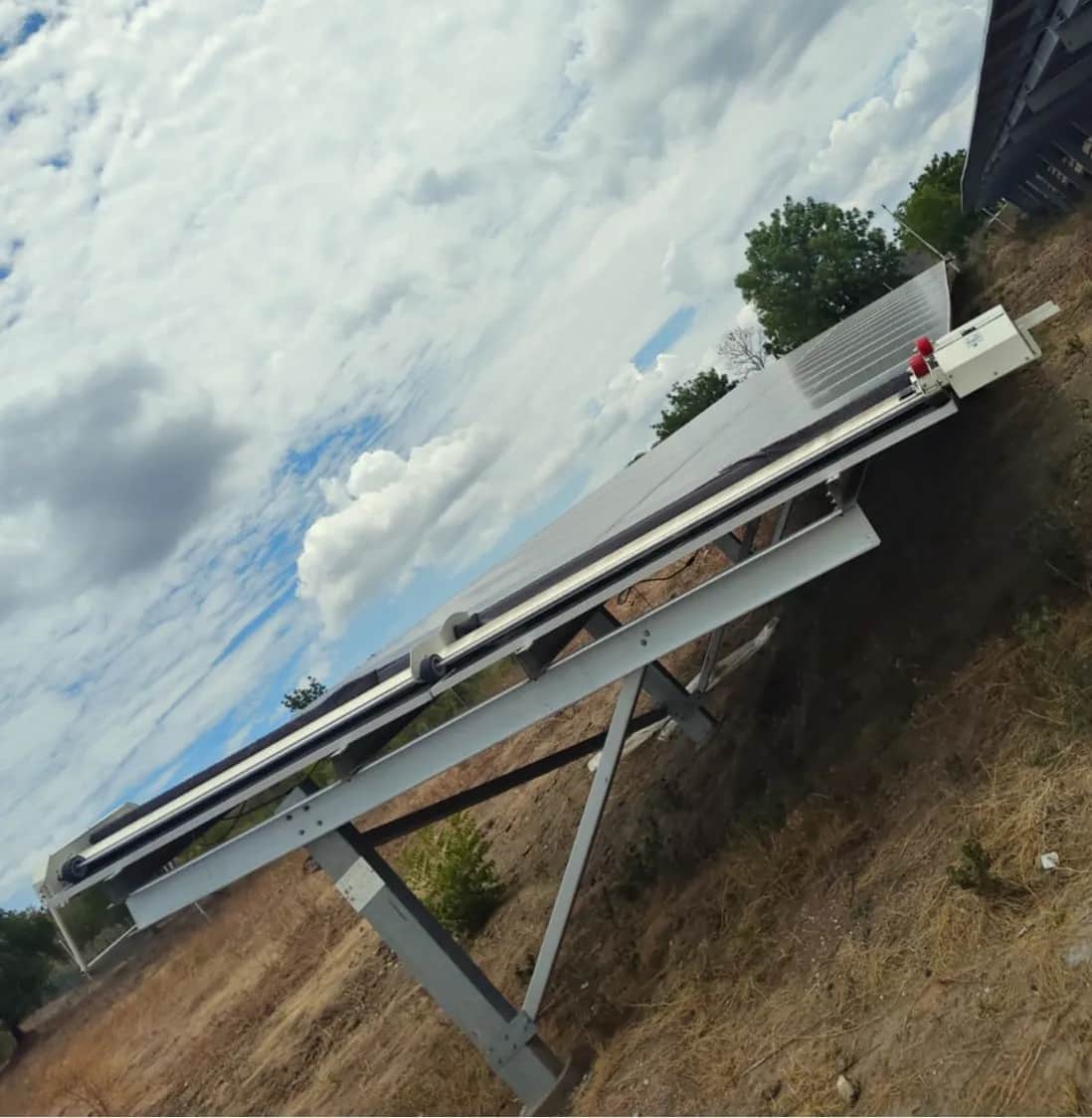
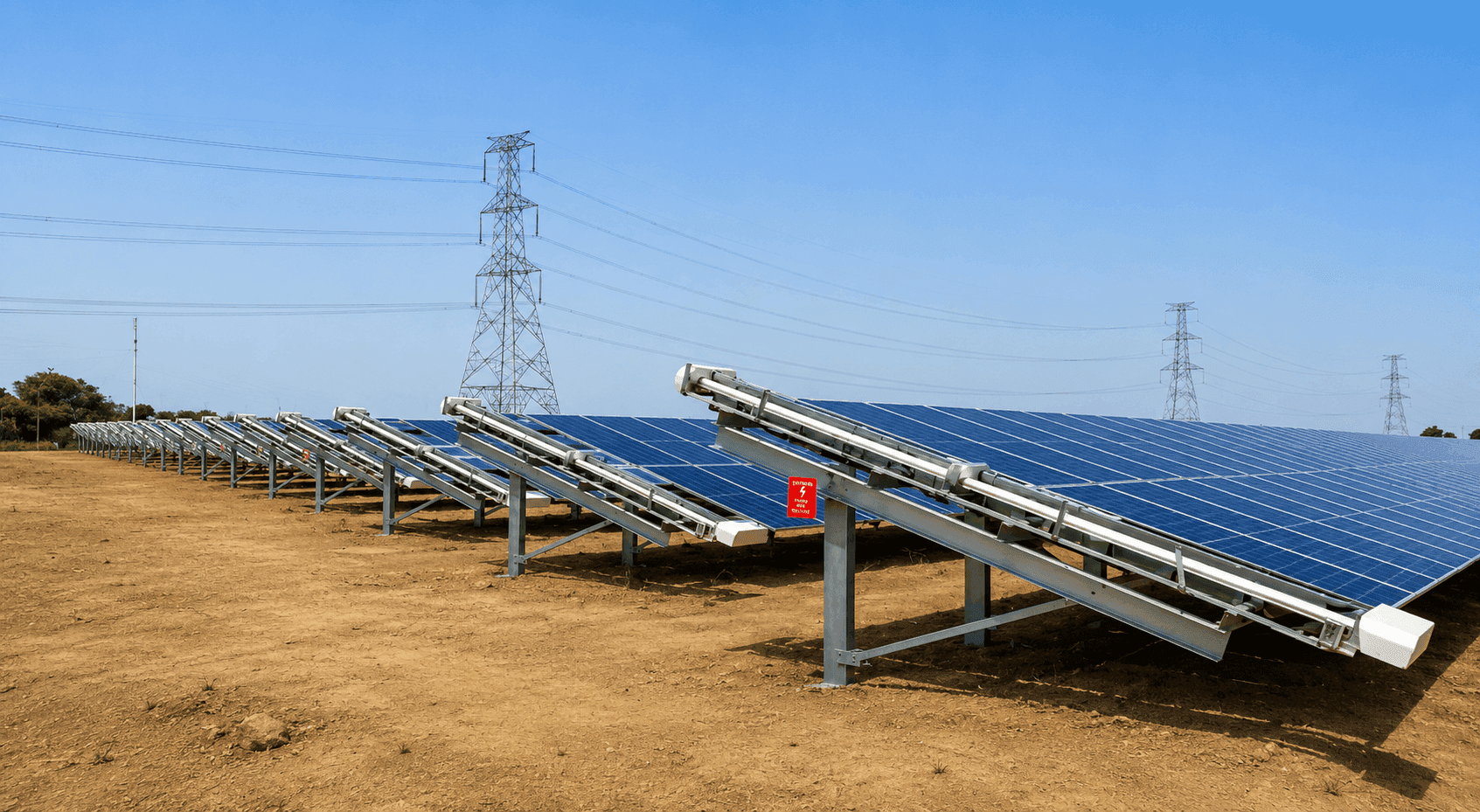
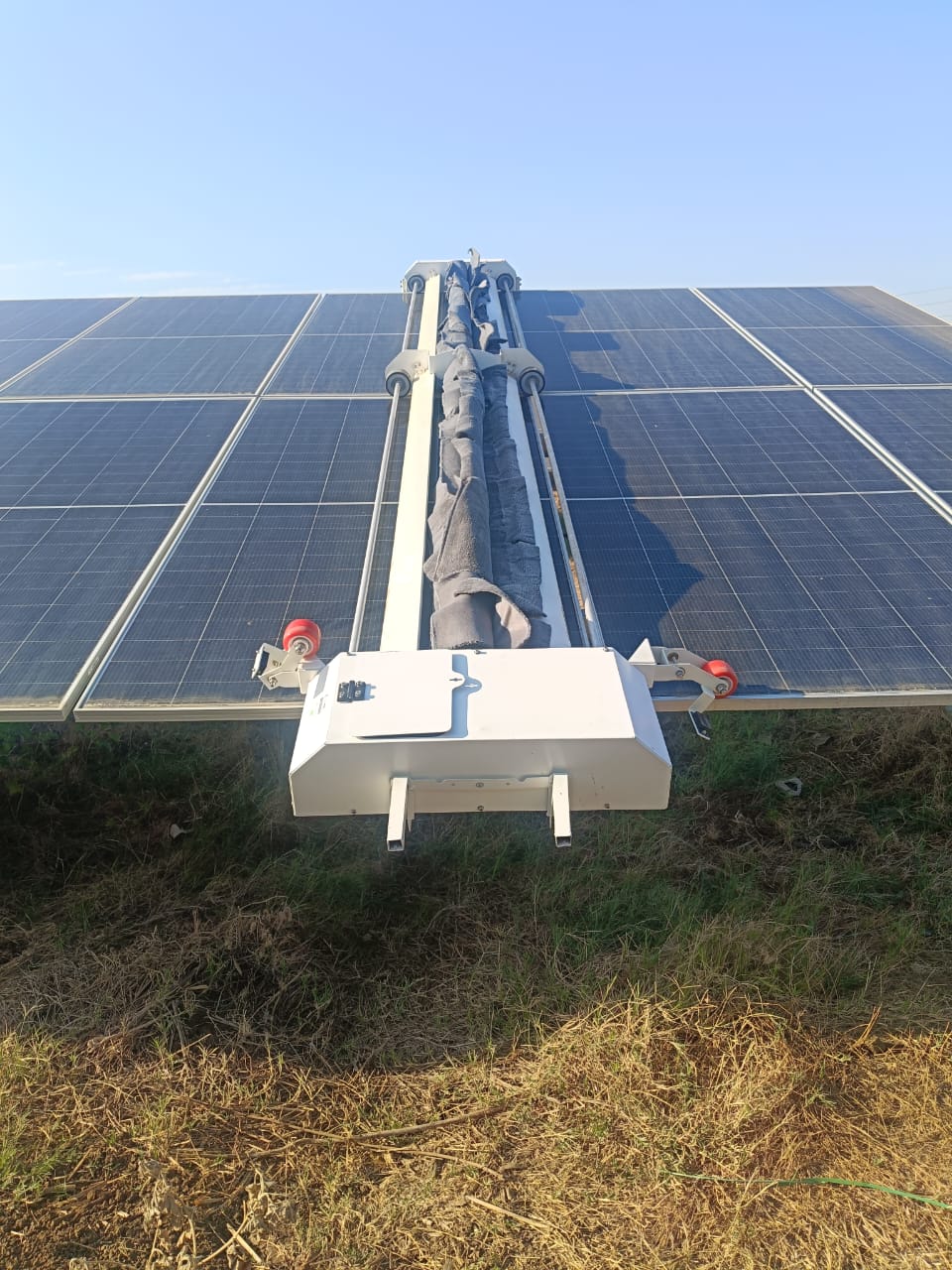
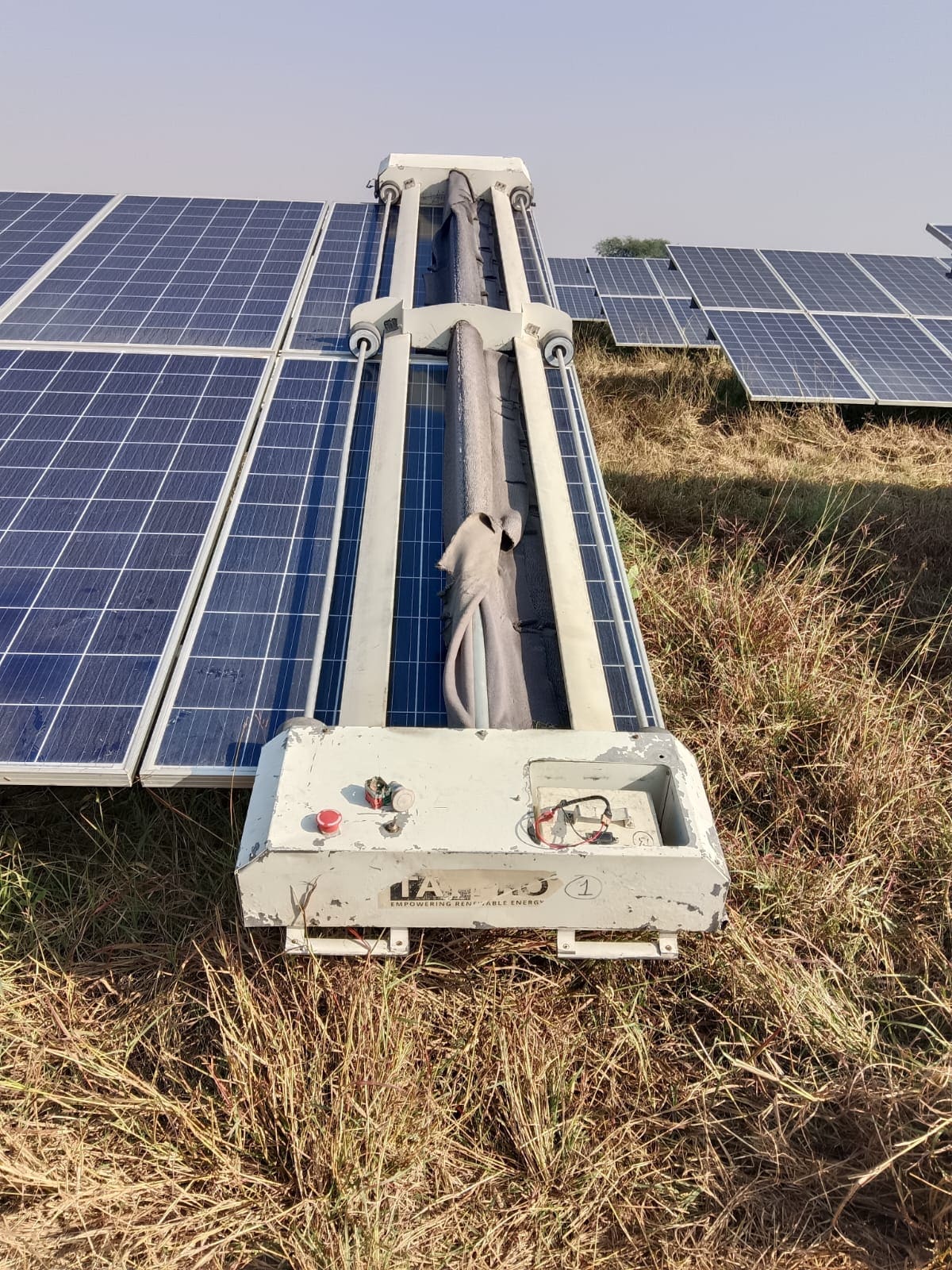
To solve these problems, Taypro deployed two HELYX robots. This setup uses a semi-automatic configuration. This strategy helps the O&M team work more efficiently. It allows them to integrate robotic cleaning into their current workflows. The team uses the NECTYR fleet management platform. This gives supervisors clear proof of cleaning for every string. This precision model resolved all visibility issues. The project also saved 560,000 litres of water annually. Furthermore, the site recovered 150 MWh of additional generation per year. This proves the value of robotic solar panel cleaning in Maharashtra.
Environment and soiling at Yavatmal, Rampur
Managing agricultural dust and humidity cycles in Yavatmal
The 150 MW site in Rampur, Yavatmal, has a complex environmental profile. This is common for inland Maharashtra. The area deals with fine agricultural dust from surrounding fields. It also faces heavy road grit from nearby transport routes. This dust creates a persistent layer of grime on the solar modules. These particles do not stay loose on the surface. Local humidity cycles change how the dirt behaves. Moisture often causes the dust to cement onto the glass. This creates a very hard layer that is difficult to remove.
This moisture-driven buildup leads to highly non-uniform soiling patterns. Some strings experience much higher losses than others. The exact loss depends on the position of the string. For example, strings near access roads catch more grit. Strings near wind breaks may catch different types of dust. This unevenness makes it very hard to predict power output. It also makes it hard to plan regular maintenance schedules.
Prior to using Taypro robots, the O&M team faced severe challenges. Traditional cleaning methods were often ineffective against this cemented dust. The unpredictable nature of the soiling made verification difficult. Supervisors could not easily tell if crews had cleaned the most impacted strings. Logistics also caused significant stress for the management team. Water delivery schedules were hard to coordinate. Night cleaning crews often had to work when other site activities were happening. These activities included vegetation management and civil maintenance. Because of this, supervisors lacked concrete proof of cleaning. They could not verify which strings were actually cleaned in each cycle.
To fix these issues, Taypro implemented a precision-led robotic model. We used semi-automatic units to handle the specific site needs. This approach allows the O&M team to run scheduled dry cleaning cycles. These cycles typically occur 3 to 10 times per month. The frequency is based on real-time soiling assessments. By using the NECTYR platform, the project gained high accountability. This ensures that even areas with inconsistent soiling are cleaned. It eliminates the visibility gaps that once hurt the project's efficiency.
O&M before Taypro
Managing agricultural dust and humidity cycles in Yavatmal
The 150 MW project in Yavatmal experiences a very difficult environment. This is typical for the inland regions of Maharashtra. The site deals with pervasive agricultural dust and road grit. These materials create an abrasive layer on the solar modules. The particles are not static. They move and change based on the weather. Local humidity cycles act as a binding agent. This causes the dust to cement onto the glass surface. This buildup results in non-uniform soiling patterns. Specific strings suffer higher generation losses than others. This happens based on their proximity to roads or wind breaks.
Before using Taypro solutions, the O&M team struggled with manual cleaning. Manual cleaning is often inefficient and inconsistent. The unpredictability of the dust made it impossible to plan well. Supervisors could not verify if crews cleaned the worst strings. They had to rely on manual reports which were often inaccurate. Operational logistics added even more friction to the site. Water delivery is a heavy task. It requires trucks, storage, and constant movement. Night crew scheduling also created many conflicts. These crews often clashed with vegetation management windows. These overlapping activities meant that supervisors lacked proof of work. They could not see which strings were actually cleaned during a cycle.
To resolve these pain points, Taypro deployed a robotic strategy. We used two specialized HELYX semi-automatic units. This allowed the team to move away from heavy manual labor. The team can now run 3 to 10 cleaning cycles per month. These cycles are based on real-time soiling data. This prevents cleaning when it is not needed. By leveraging the NECTYR monitoring platform, the project now maintains accurate logs. The system provides per-block records for every cleaning event. This digital visibility eliminates the old gaps in reporting. It ensures consistent panel performance despite the tough conditions in Yavatmal.
Fleet and deployment at 150 MW
Fleet composition and procurement for the 150 MW Yavatmal project
The 150 MW Rampur site needed a robust cleaning strategy. It required a plan that could handle its large ground-mount layout. After evaluating the site, the project chose a CAPEX procurement model. This means the site purchased two HELYX semi-automatic robots. This model gives the O&M team full control over their operations. They do not have to pay recurring service fees. They can integrate high-performance PBT brush technology into their own workflow. This allows for immediate and consistent maintenance.
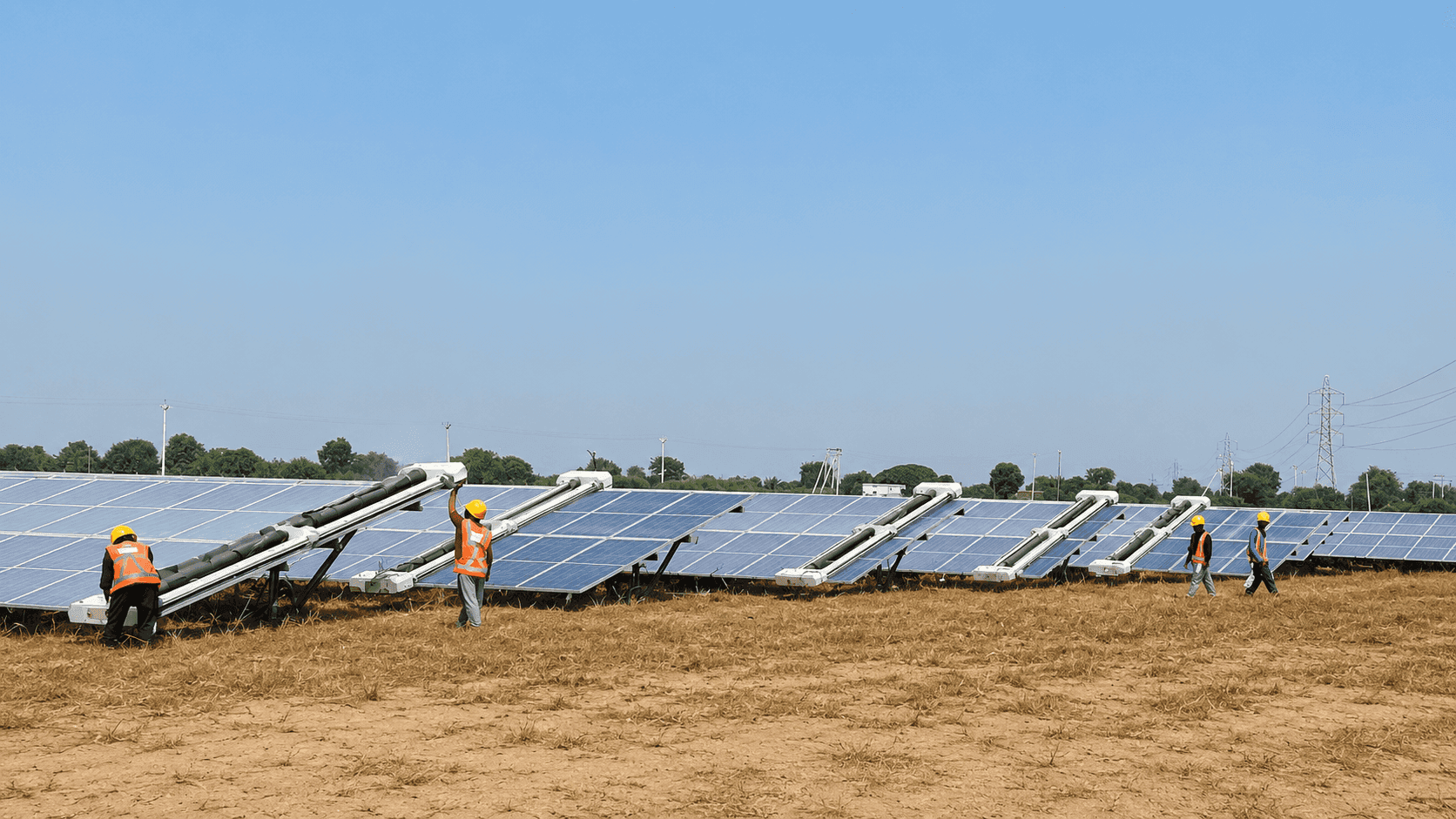
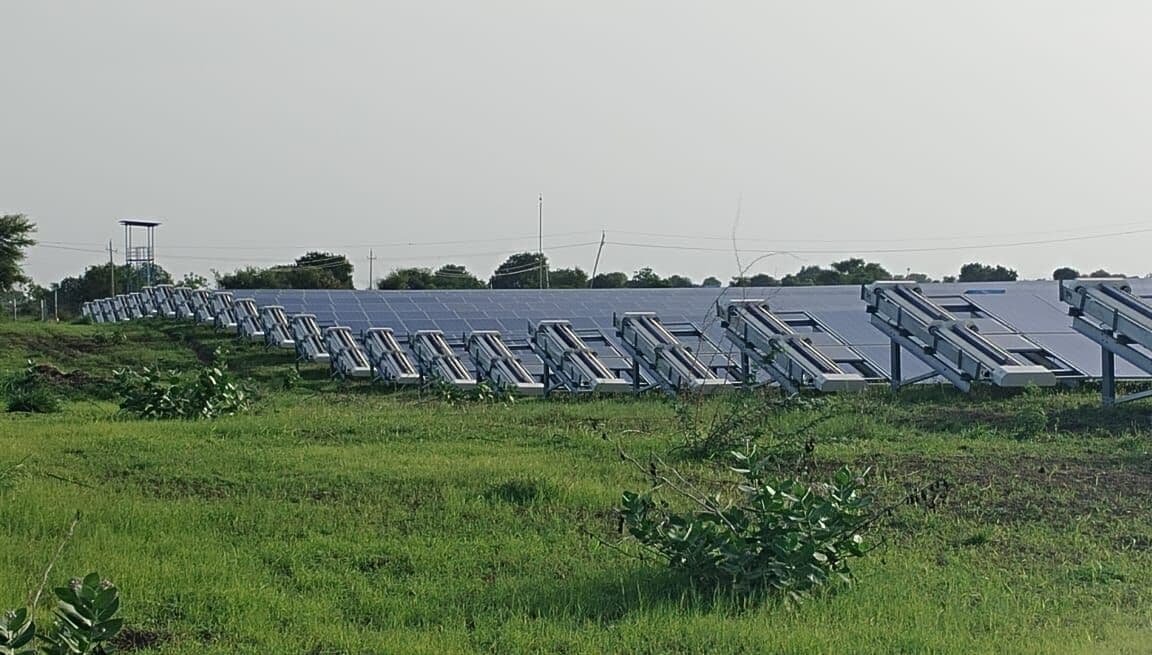
The deployment of these two units was carefully engineered. We wanted to solve the site's main operational hurdle. That hurdle was ensuring every string was cleaned on a verifiable schedule. The site layout includes many scattered blocks. These blocks are often separated by civil infrastructure. The HELYX fleet is perfect for this layout. These robots are designed for pick-and-place operations. This makes them highly portable across the site. This approach optimizes the cleaning cadence to 3 to 10 cycles per month. This frequency directly targets the buildup of road grit and agricultural dust. It prevents the localized power losses that occurred previously.
The commissioning of the fleet focused on four main goals:
- Full integration with the NECTYR fleet monitoring platform. This provides per-block data logs for every cycle.
- Alignment with existing site schedules. Robot paths are planned to avoid conflicts with vegetation management.
- Validation of single-pass PBT cleaning performance. This ensures effective dust removal without damaging the panels.
- Establishment of a water-free maintenance cycle. This contributes to the annual saving of 560,000 litres of water.
By shifting to this CAPEX-based model, the site has fixed its visibility gaps. Manual cleaning verification is no longer a problem. The deployment offers a scalable path for the future. The project can expand the fleet as needed. Currently, the site recovers 150 MWh of additional generation every year. The management team also maintains strict control over all site logistics.
Operations and monitoring
Optimizing O&M Accountability through NECTYR-Monitored Cleaning
The 150 MW Yavatmal facility needed to move past manual labor. It needed a verifiable robotic maintenance model. The main challenge was the unpredictable nature of the dust. Agricultural dust and road grit accumulate unevenly. Previously, supervisors had no way to prove cleaning happened. They lacked actionable data regarding which strings were serviced. This led to significant power losses at the block level.
The project solved this by using two HELYX semi-automatic robots. This system replaces inconsistent manual cleaning with a controlled process. The robots follow a scheduled cadence of 3 to 10 dry cycles per month. This schedule is tailored to local humidity cycles. Humidity dictates how severe the soiling will be. This controlled frequency is very efficient. It ensures resources are only used when necessary. It prevents the waste seen in non-data-driven schedules.
The transition to an inspection-led model relies on NECTYR. NECTYR is the Taypro fleet management portal. It automatically logs every cleaning cycle. This provides O&M managers with granular records. They get block-by-block data on performance. This digital verification is the critical proof of work. It provides what manual teams could never offer. Key operational improvements include:
- Automated NECTYR logs confirm which strings were serviced. This eliminates all reporting gaps.
- Strategic scheduling of dry cycles. This avoids conflicts with vegetation and civil maintenance windows.
- Data-driven cleaning adjustments. Cycles are based on real-time environmental data instead of calendars.
- A waterless cleaning process. This removes grit without the need for on-site water transport.
These improvements help the plant maximize energy capture. They also maintain high operational transparency. The transition stabilizes the power output. It ensures all segments of the 150 MW array meet high engineering standards.
Results and impact
Results and Impact of Robotic Solar Panel Cleaning in Yavatmal
The move to a robotic maintenance model has changed the Yavatmal site. It has shifted from reactive manual labor to a data-driven operation. The site replaced intermittent manual crews with two HELYX semi-automatic robots. This has successfully mitigated output variability. The robots handle the persistent agricultural dust and road grit. As a result, there is a measurable increase in yearly energy generation. The 150 MW capacity now operates much closer to its theoretical peak.
The project has also reached significant environmental and operational goals. These benchmarks prove the value of the new system:
- Annual water consumption has dropped significantly. This eliminates the cost of water trucking and storage.
- NECTYR integration provides granular proof of cleaning. Managers now have block-level visibility. This closes the previous reporting gap.
- The cleaning cadence of 3 to 10 cycles per month matches regional humidity. This keeps panels clear without causing unnecessary wear.
- Conflicts with vegetation management have ended. Strategic scheduling through NECTYR coordinates site access perfectly.
This deployment proves a key point. Even in high-soiling environments, robotic solar panel cleaning in Maharashtra works. It delivers consistent and high-value outcomes. The combination of waterless PBT brush technology and automated oversight is powerful. It has transformed the Yavatmal project into a model for sustainable operations. It is now a transparent and efficient utility-scale site.
Peer comparison and planning checklist
Peer Comparison and Planning Checklist for Robotic Cleaning
The Yavatmal 150 MW site is a benchmark for Maharashtra. It shows how waterless operations should work. We can compare it to the Yavatmal-Kupti 14 MW installation. That site uses similar semi-automatic strategies. However, the 150 MW site shows better scalability. It centralizes all O&M logistics through the NECTYR portal. We can also look at the Soyegaon project. That project is a good reference for fixed-tilt performance. However, the Yavatmal deployment is better at handling string-level soiling. It provides verifiable records that manual labor simply cannot replicate.
Plant managers should use a checklist when moving to robotic cleaning. This ensures a successful transition. Follow these steps for a smooth integration:
- Evaluate your local soil composition. Determine if you need specific PBT brush densities for dust or grit.
- Map your existing site access paths. Ensure HELYX pick-and-place routes do not block vegetation management.
- Verify your cleaning cadence. Ensure 3 to 10 cycles per month accounts for your regional humidity.
- Establish a NECTYR-monitored baseline. Compare your pre-cleaning and post-cleaning energy data.
- Define clear personnel roles. Assign specific tasks for robot transport and battery management to maximize uptime.