Executive summary
robotic solar panel cleaning Maharashtra. The 150 MW ground-mount solar facility in Sangalwadi, Yavatmal, faces intense operational challenges. This site is located within the busy Maharashtra solar belt. The local environment is harsh. It features persistent agricultural dust and abrasive road grit. Changing humidity cycles also play a major role. These factors combine to create complex soiling patterns. These patterns are often uneven across individual solar strings.
Historically, these conditions hurt energy production. Inconsistent soiling levels made maintenance very difficult. Operations and maintenance (O&M) teams struggled to keep a steady generation baseline. To fix these performance gaps, Taypro deployed two HELYX semi-automatic robots. We provided a targeted, waterless cleaning solution for the site. This deployment solved critical O&M verification gaps. Previously, supervisors had no way to see if cleaning was actually finished. They lacked transparent, per-block proof of work.
By using the HELYX pick-and-place system, the plant changed its approach. The site moved away from labor-intensive cleaning schedules. These old schedules often clashed with vegetation control or civil maintenance tasks. This strategic shift has delivered massive benefits. The plant now saves 560,000 liters of water every year. It also sees a yield boost of 150 MWh per year. This ensures consistent power output. It also improves asset longevity through systematic, robotic solar panel cleaning in Maharashtra.
Environment and soiling at Yavatmal, Sangalwadi
Managing Unpredictable Soiling Cycles in Yavatmal
The 150 MW facility in Sangalwadi, Yavatmal, has a unique micro-climate. This is common in the interior of Maharashtra. This location is not like coastal or desert sites. Coastal sites have predictable dust. Deserts have uniform dust. Yavatmal is different. The environment is defined by a volatile mix of local farming and moisture. Seasonal harvesting creates huge amounts of airborne organic debris. Regional transport also brings in heavy road grit.
These particles settle on the solar modules. The problem gets worse at night. High-humidity cycles transform loose dust into a hard layer. This grime effectively cements itself to the glass. This creates non-uniform soiling patterns across different solar strings. Some strings may be very dirty, while others stay relatively clean. This variance makes standard cleaning schedules ineffective.
Because soiling intensity changes so much between blocks, a single plan does not work. A "one-size-fits-all" manual cleaning approach is a waste of resources. It often leads to over-cleaning clean panels. At the same time, it leaves heavily soiled arrays underperforming for weeks. The lack of granular visibility was a major problem. Site supervisors had to manage cleaning crews blindly. Without per-block proof of completion, they could not track progress. It was impossible to link water use or labor to actual yield gains.
To fix these site-specific challenges, Taypro implemented a semi-automatic robotic solution. This system adapts to shifting conditions. The HELYX robots allow O&M teams to be flexible. They no longer need rigid, calendar-based labor schedules. Instead, cleaning cycles are now based on actual soiling levels. This shift addresses the main friction points at the Yavatmal plant:
- The site moved from high-water manual labor to targeted, waterless robotic cleaning.
- Cleaning operations no longer clash with vegetation maintenance or civil work windows.
- The team established verifiable data logs for every block. This ensures high-quality cleaning.
- The plant is recovering performance losses caused by uneven string-level soiling.
O&M before Taypro
Operational Friction: Overcoming Manual Constraints at the Yavatmal 150 MW Plant
Before Taypro arrived, the 150 MW site faced high yield volatility. This was caused by inefficient manual maintenance. The facility is exposed to agricultural dust and road grit. Nighttime humidity cycles make the situation even worse. Together, these factors create a hardened, uneven layer of grime. It was nearly impossible to keep module transparency consistent using only manual labor.
The operational burden had two main parts: logistics and accountability. First, supervisors struggled with logistics. They had to coordinate large manual cleaning crews. These crews had to work within very narrow time windows. Often, cleaning schedules clashed with other essential tasks. These tasks included vegetation management and civil O&M activities. This created constant scheduling conflicts.
Second, there was a major lack of accountability. Manual cleaning is very difficult to track accurately. Site management had no way to verify which blocks were actually cleaned. They lacked per-block proof of completion. Because of this, asset managers were essentially operating in the dark. This led to localized underperformance. Some areas would stay dirty for weeks between cleaning cycles.
The reliance on manual work also caused high water consumption. This made site logistics very complex in the Maharashtra region. To solve these issues, the facility moved to a semi-automatic strategy. They chose HELYX robots to replace manual methods. This shift addressed four critical pain points:
- It eliminated the "Accountability Gap." Manual estimates were replaced with verified, site-specific logs.
- It removed logistical bottlenecks. Cleaning crews no longer compete with other maintenance teams.
- It drastically reduced annual water use. The site now uses targeted, waterless robotic cycles.
- It corrected uneven string-level soiling. This fixed the gaps that manual schedules could not reach.
Fleet and deployment at 150 MW
Deployment at 150 MW: Transitioning to Semi-Automatic Cleaning
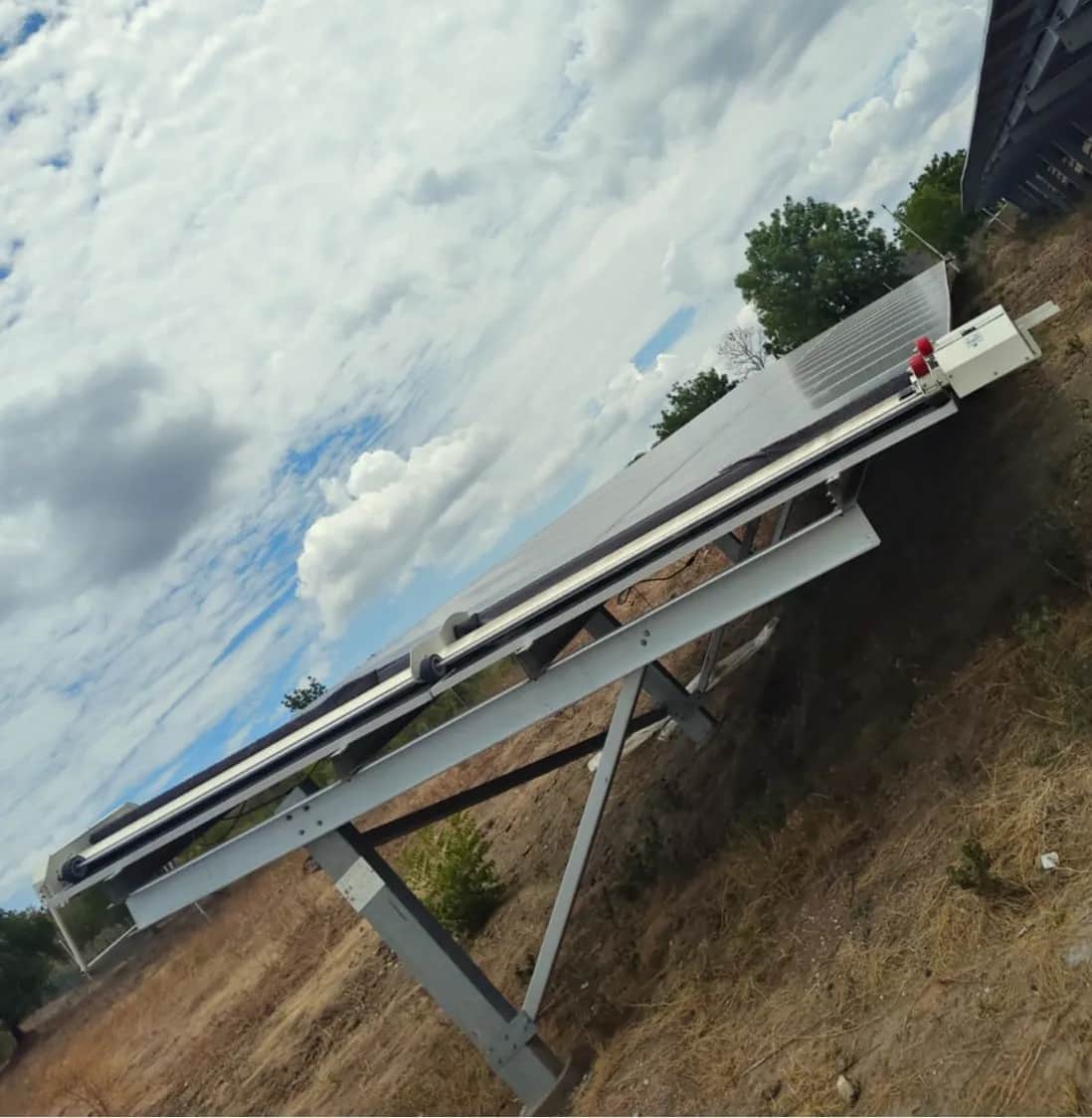
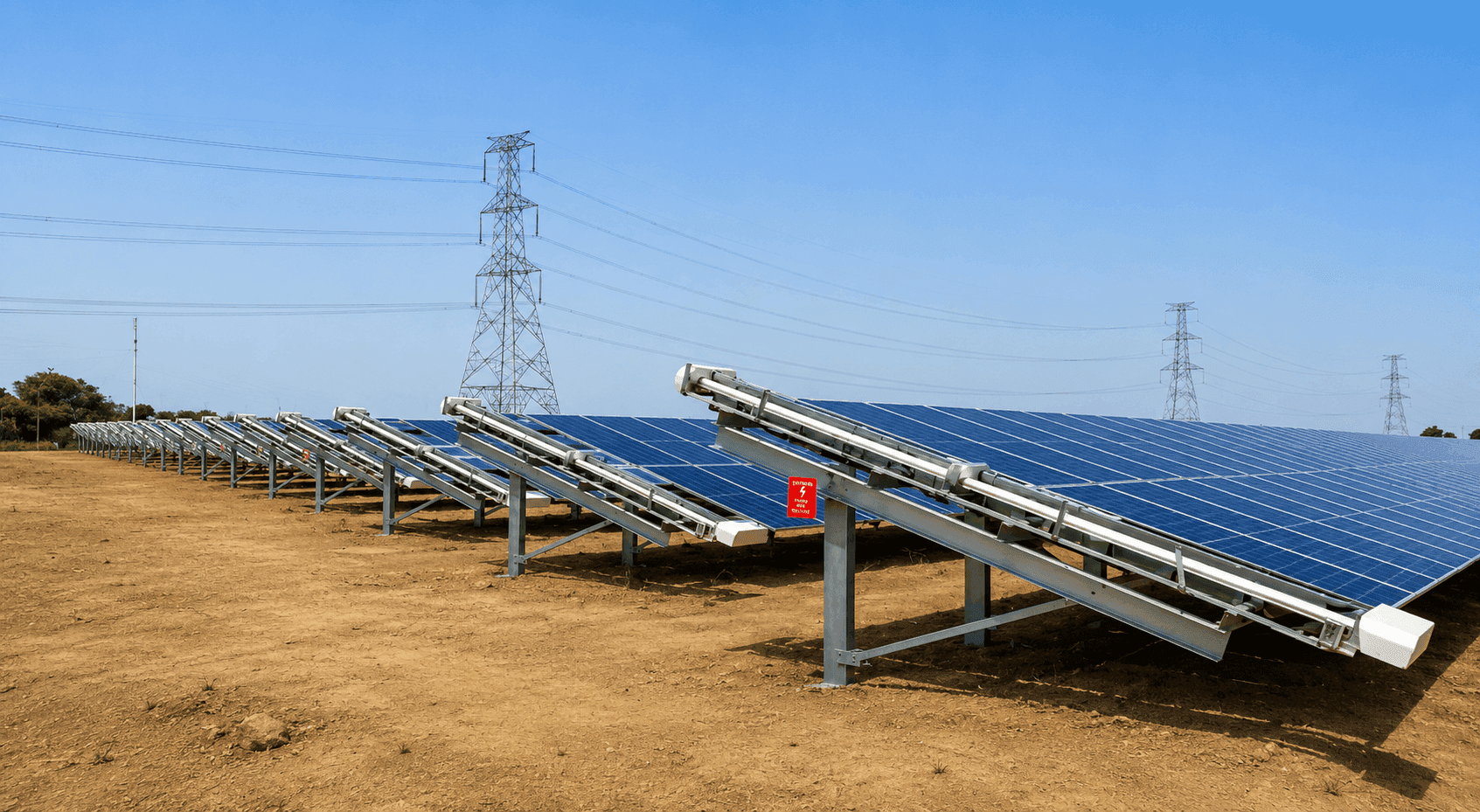
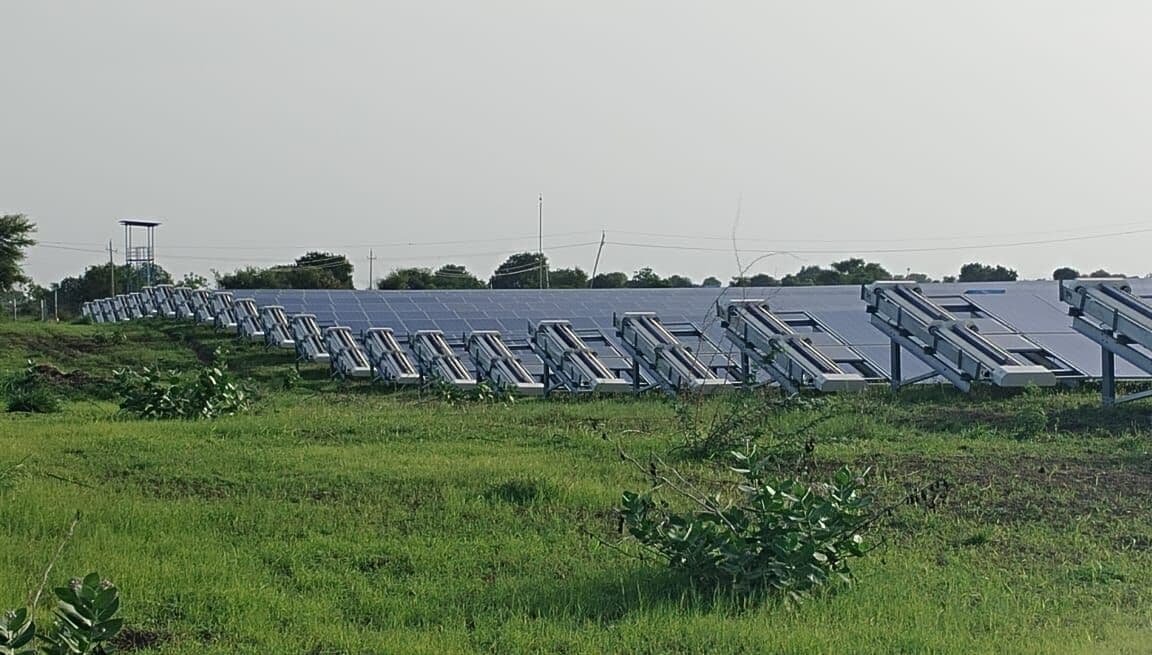
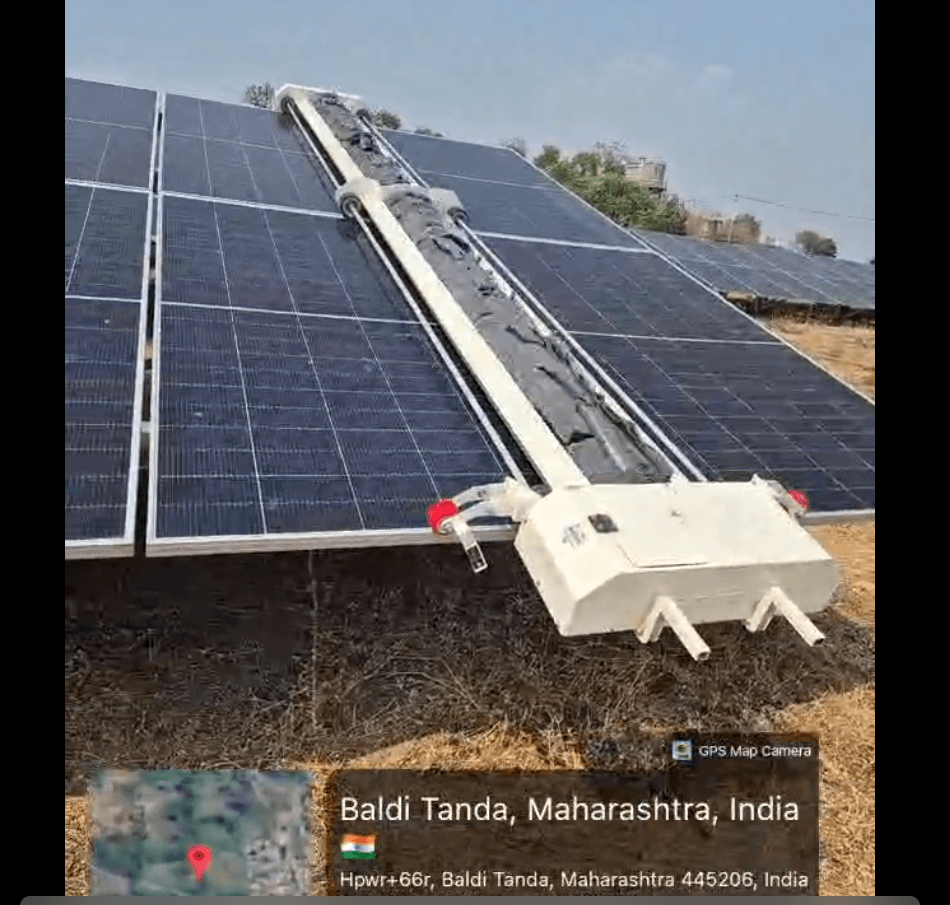
To solve these performance issues, Taypro used a CAPEX investment model. We deployed a semi-automatic fleet to the Yavatmal site. This fleet included two HELYX robot systems. HELYX is designed specifically for distributed utility-scale layouts. These robots are perfect for scattered blocks. By adding these robots, the plant operator successfully reduced their reliance on manual labor. They also reduced their high-volume water consumption.
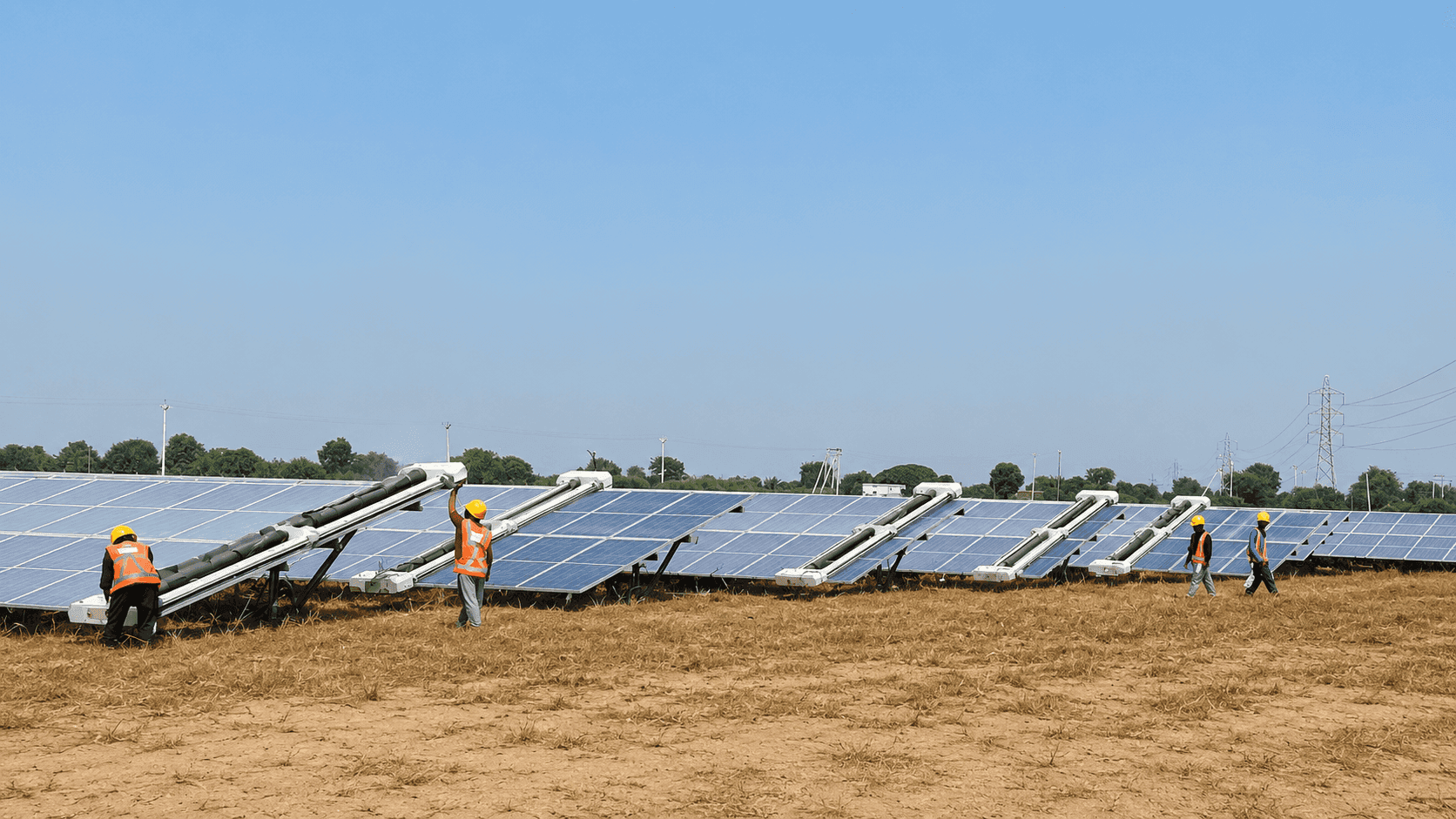
The commissioning phase focused on local operational readiness. After we mobilized to the site, our technical teams began intensive training. We trained the local Yavatmal crew on how to use the units safely. The curriculum covered several key areas. It included efficient pick-and-place maneuvers across scattered blocks. It also covered the proper handling of the single-pass PBT brush system. The training ended with an audit-verified cleaning cycle. This confirmed that the robots could remove the stubborn agricultural dust and road grit. These materials had previously escaped manual efforts.
After commissioning, the site moved to a structured cleaning cadence. The robots perform 3 to 10 dry cycles per month. This schedule is carefully calibrated. It accounts for local humidity and soiling severity. This frequency maximizes the plant’s annual generation. By using waterless robotic cleaning, the site saves 560,000 liters of water every year. This transition also boosts yield by 150 MWh per year. This directly recovers energy lost to the region's unique environmental challenges.
This deployment creates a clear chain of custody for all maintenance. Site supervisors now use the output of each cycle to verify service. They can confirm cleaning completion at the string level. This visibility solves the O&M challenges regarding night crew scheduling. It also provides a reliable framework for future site expansions in Maharashtra. The HELYX units are central to this strategy. They provide a portable, durable solution that scales with the plant's needs.
Operations and monitoring
Operations and Accountability via NECTYR
Managing 150 MW of capacity requires more than just cleaning. It requires precision. In Yavatmal, supervisors previously struggled to verify cleaning accuracy. They could not tell which specific strings received attention. This led to inconsistent performance across the facility. The introduction of the NECTYR fleet portal changed everything. It provided digital proof of work for every single cleaning cycle. This granular data allows managers to track progress at the block level in real time. It eliminates the uncertainty that once hindered site performance.
Operational stability is now maintained through a disciplined schedule. The robots run 3 to 10 dry cycles per month. This frequency is perfect for the agricultural dust and road grit in Maharashtra. By using NECTYR, supervisors can audit cleaning logs. They compare these logs against historical soiling data. This ensures maximum coverage across the entire site. This level of accountability replaces subjective visual inspections. It provides a transparent, digital record of all maintenance activities.
The site strategy also prioritizes safety and efficiency. We focus on three main areas:
- Weather-sensitive protocols: The team uses mandatory wind holds during high-velocity events. This protects the equipment integrity.
- Water-neutral logistics: The team has removed water from the cleaning workflow. This eliminates the need for complex night crew scheduling and water transport.
- Resource optimization: Cleaning cycles are timed to avoid conflicts. They do not overlap with vegetation management or civil O&M windows.
Some old maintenance myths suggest that daily washing is the only way to get high yields. This project proves those myths wrong. A targeted, data-backed approach delivers superior results. With NECTYR-verified cycles, the plant achieves huge resource savings. It also reliably recovers energy lost to uneven soiling.
Results and impact
Results and Impact of Robotic Solar Panel Cleaning in Yavatmal
The transition to a robotic strategy has changed O&M performance. This is true for the 150 MW Yavatmal plant. By replacing manual, blind cleaning with a data-driven approach, managers have stabilized energy yields. They have eliminated the problem of inconsistent power output. This shift has recovered significant generation capacity. It proves that scheduled, precise maintenance is the best defense against local soiling patterns.
The NECTYR fleet portal is the foundation of this recovery. Previously, supervisors could not verify if all strings were serviced. Today, the platform provides clear, digital proof. It shows exactly what was cleaned and when. This transparency allows the O&M team to audit performance in real time. They ensure the semi-automatic fleet maintains maximum coverage across the ground-mount array.
The operational improvements go far beyond power output. The plant has seen benefits in several key areas:
- Water conservation: The project achieved a massive reduction in annual water use. This eliminated the costs of high-volume water transport. It also simplified site logistics.
- Resource efficiency: Panel maintenance is now decoupled from water logistics. This helps the site avoid conflicts with vegetation and civil maintenance teams.
- Environmental impact: The system ensures consistent surface cleanliness. It protects the modules from the abrasive effects of road grit and dust. It does this without constant manual intervention.
This deployment shows that large-scale solar assets can stay highly productive. They do not need to rely on heavy, resource-intensive cleaning methods. By using robotic systems to manage site-specific soiling, Yavatmal sets a new standard for automated O&M in Maharashtra.
Peer comparison and planning checklist
Peer Comparison and Operational Planning
The Yavatmal 150 MW project uses a semi-automatic fleet. This is different from other regional projects. For example, the 14 MW Yavatmal-Kupti project uses a smaller footprint. At that site, the focus is on rapid, manual-assisted deployment. On the other hand, the 10 MW Soyegaon Solar Project shows how different string challenges dictate robot density. Unlike those smaller sites, Yavatmal uses a strategic semi-automatic fleet. This allows it to manage high-volume, wide-area cleaning. It also maintains precise control over agricultural dust and humidity-driven grime.
The semi-automatic approach at Yavatmal allows for flexible scheduling. This is a major advantage compared to fully autonomous setups. It ensures cleaning cycles do not interfere with other O&M windows. This includes vegetation management and civil maintenance. By mapping cleaning paths to specific blocks, the site achieves more consistent yield recovery than manual models. It also remains more adaptable than fixed-route autonomous systems in uneven terrains.
Facility managers should use the following checklist when planning robotic cleaning. This will ensure maximum ROI and operational readiness:
- Assess seasonal soiling patterns. Look at agricultural dust and road grit. Use this to define your robot-to-block ratio.
- Audit regional humidity cycles. This helps you determine the best dry-cleaning frequency for consistent performance.
- Coordinate schedules within the NECTYR fleet portal. This prevents overlaps with vegetation and civil maintenance.
- Establish site access protocols. This makes it easier to move pick-and-place robot units efficiently.
- Verify network coverage. Ensure all array blocks have signal for real-time telemetry and proof-of-work reporting.
- Review power yield data monthly. Use this to adjust your cleaning cadence based on actual recovery metrics.