Executive summary
robotic solar panel cleaning Maharashtra. The 187.5 MW ground-mount solar facility is in Yavatmal, Sawana. This site faced major operational hurdles. The local environment created many problems. Intensive agriculture produces heavy dust in this region. Nearby roads also contribute road grit. Additionally, humidity cycles change how dirt sticks to the panels. These factors create stubborn and uneven soiling patterns. The dirt levels vary between different solar strings.
Traditional cleaning methods could not solve these issues. Manual water-based cleaning was not effective. It was also very difficult to verify. Supervisors lacked precise proof of cleaning quality. They could not confirm which blocks were cleaned during each cycle. Furthermore, water logistics were difficult to manage. Scheduling night crews often clashed with other site tasks. These tasks included vegetation control and civil maintenance. This created a constant conflict in site management.
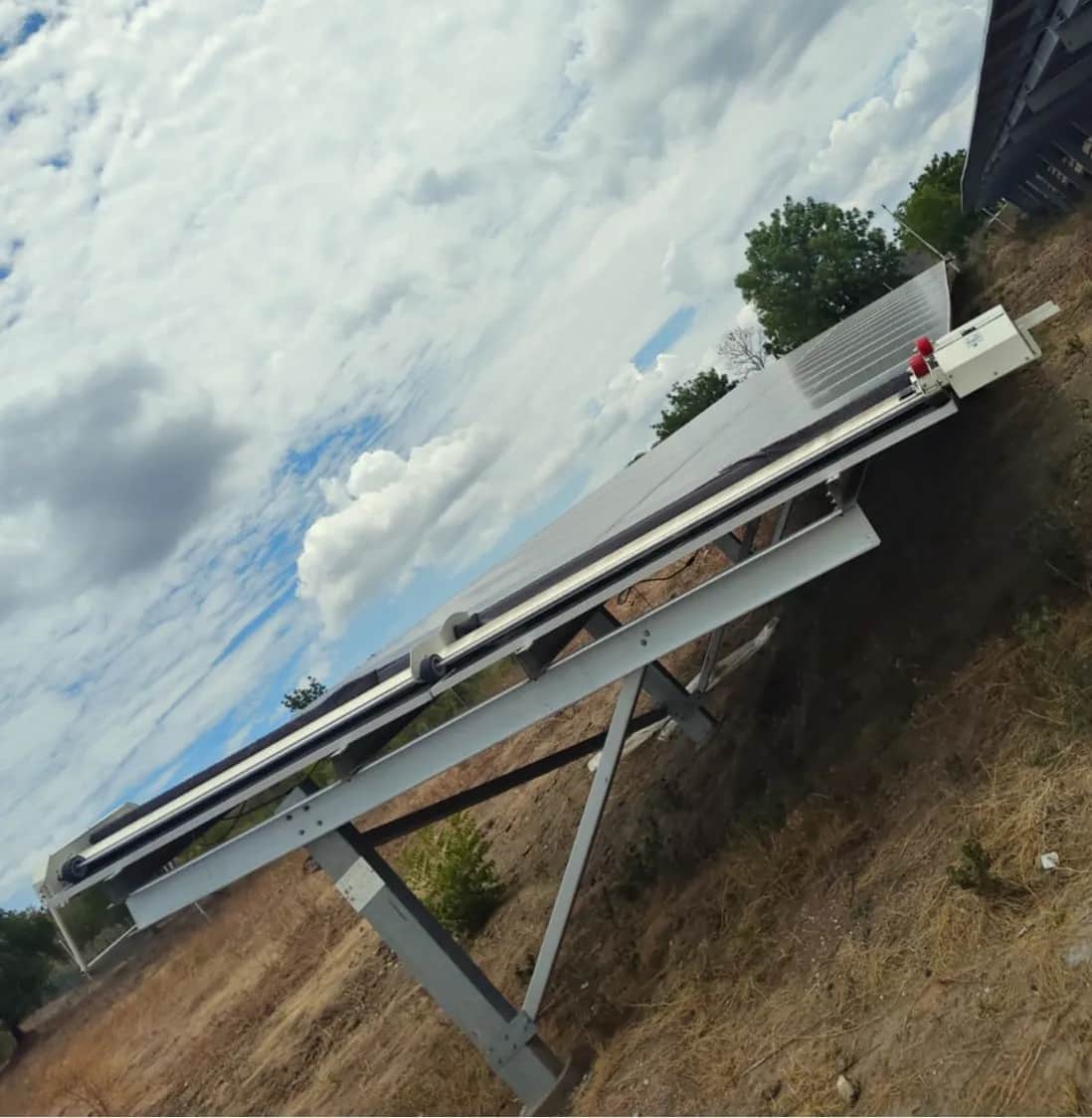
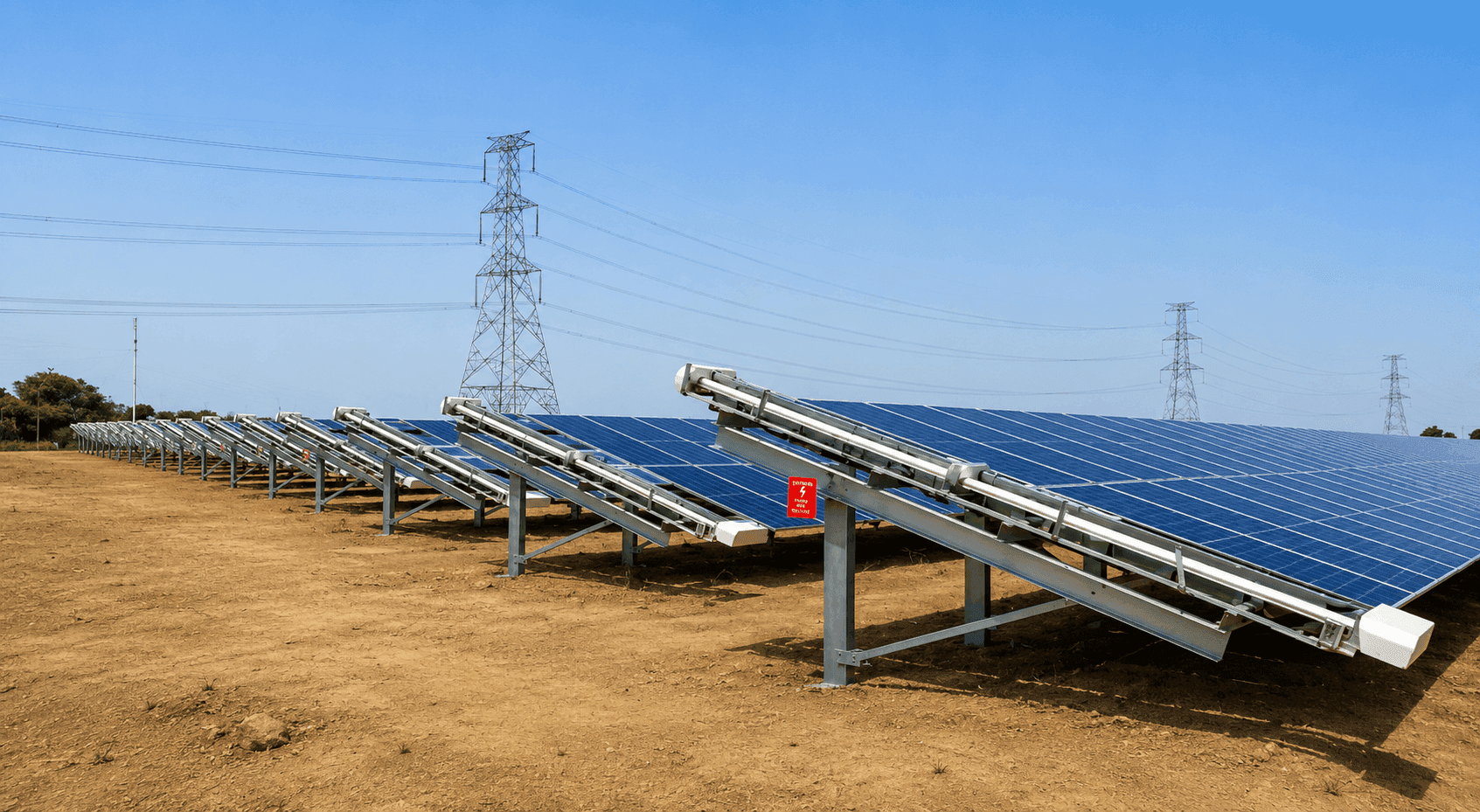
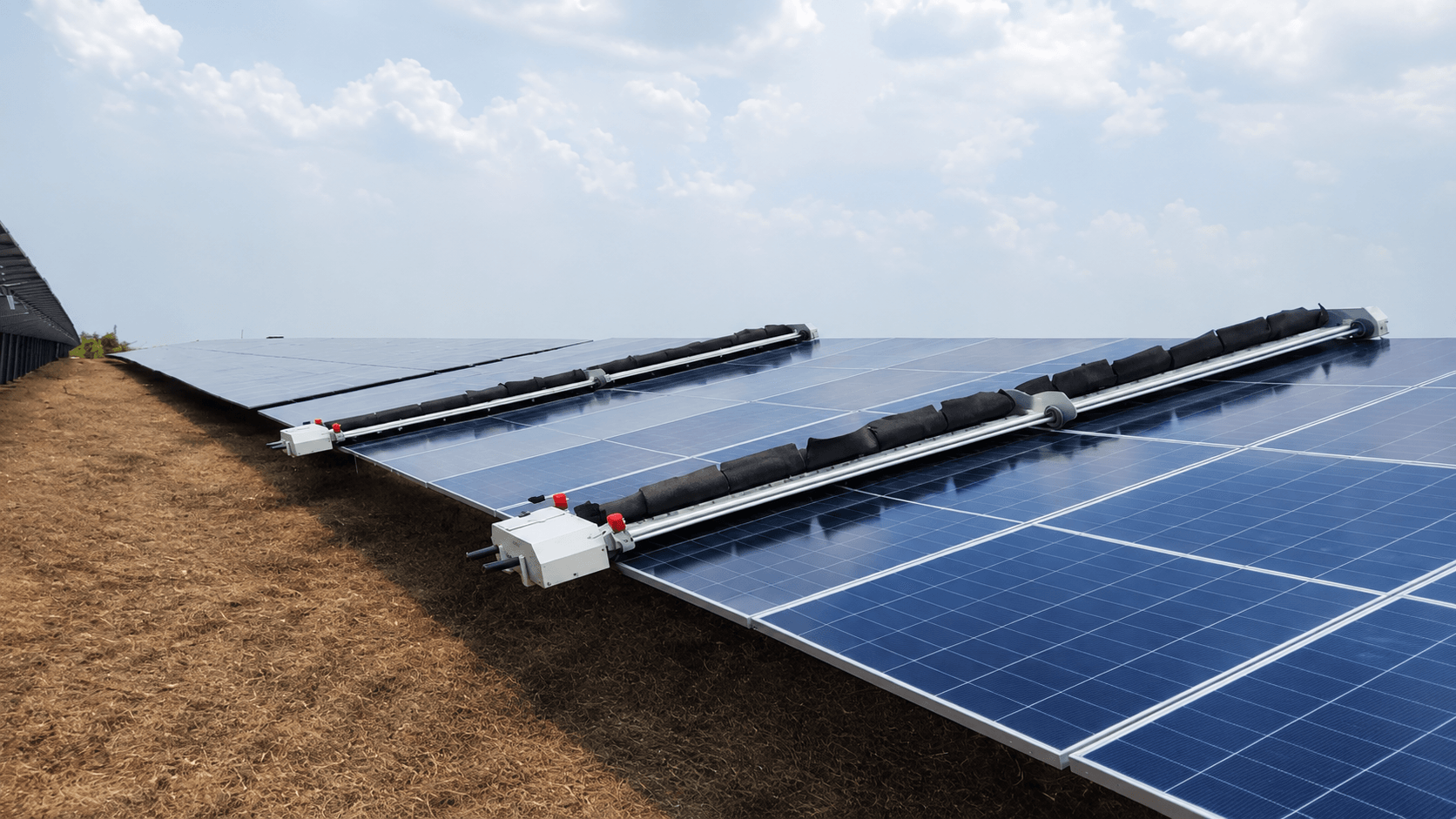
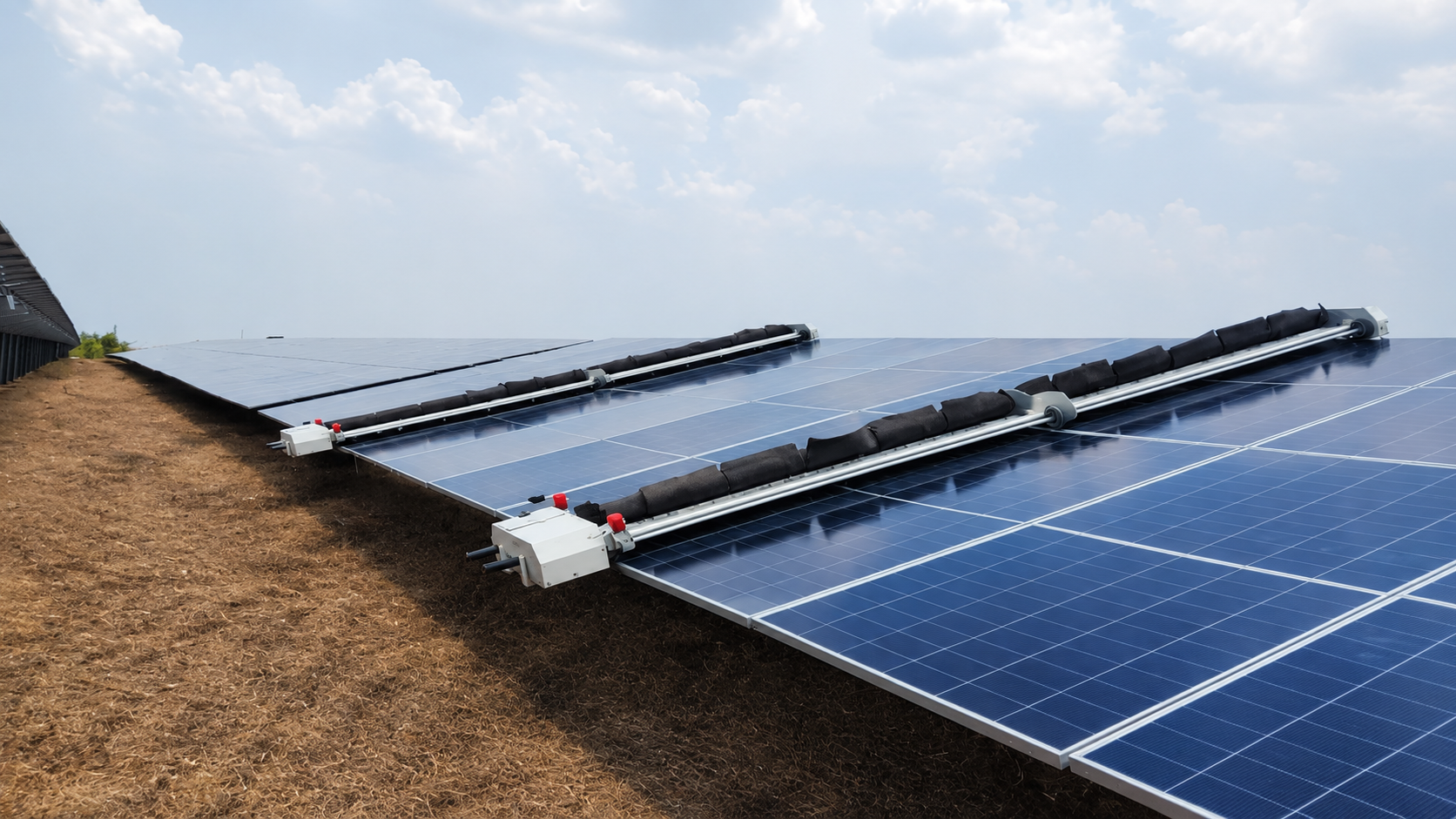
To solve these problems, Taypro deployed two HELYX semi-automatic robots. These units provide a high-performance cleaning solution. They use single-pass PBT brush technology. This method is completely waterless. The robots allow for a controlled cleaning cadence. The site now performs 3 to 10 dry cycles per month. This transition helped the site recover 187.5 MWh of generation per year. This robotic solar panel cleaning Maharashtra deployment also saved massive amounts of water. The site now saves 700,000 liters of water annually. Management now has verifiable data for every cleaning task.
Environment and soiling at Yavatmal, Sawana
Managing agricultural soiling and string-level variations in Yavatmal
The 187.5 MW solar facility sits in the Sawana region. This landscape is defined by intensive agricultural work. This activity creates a very complex soiling environment. Unlike desert solar plants, this site does not face uniform dust. Instead, it deals with heavy seasonal agricultural dust. The nearby rural road networks also add road grit. These materials settle on the solar modules in uneven ways. Local wind currents influence where the dust lands. The orientation of the module rows also causes variations.
The primary O&M challenge involves humidity cycles. The high humidity in Maharashtra changes how dust behaves. Dust particles in this region can become hygroscopic. This means they absorb moisture from the air. The moisture turns the dust into a sticky film. This film glues the particles to the glass surface. It creates a persistent layer that is hard to remove. This layer is not the same across the entire plant. One string might be very dirty while another is relatively clean.
These uneven patterns lead to erratic power losses. The plant does not see a simple, global decline in energy. Instead, managers see unpredictable drops across different strings. This makes it very hard to plan maintenance. Traditional cleaning methods cannot keep up with these changes. Management faced two major hurdles in the past:
- Logistical friction from water procurement. Water delivery often competed with vegetation control and civil maintenance.
- A lack of granular data. Supervisors could not verify which specific strings were cleaned during manual tasks.
The site now uses a modern robotic solar panel cleaning Maharashtra strategy. This strategy relies on disciplined, dry cleaning cycles. The HELYX robots allow for very targeted maintenance. They address these uneven soiling patterns directly. The robots remove even the most stubborn dust. This methodical approach ensures high visibility into plant health. It helps optimize generation across the entire 187.5 MW array.
O&M before Taypro
Operational friction and audit gaps in Yavatmal
The 187.5 MW solar facility in Sawana deals with a tough environment. The regional agriculture is very intense. This creates a mix of agricultural dust and gritty road particles. When these materials meet high humidity, they form an adhesive film. This film requires frequent and precise maintenance. Without a good system, the plant loses significant energy.
Before using Taypro robots, the site faced many operational hurdles. The O&M team struggled with labor and resource management. These challenges impacted the overall efficiency of the plant. The team dealt with several specific issues:
- Water logistics caused constant friction. Moving water to the site took too much effort. It often competed with other tasks like vegetation management.
- Scheduling was a major headache. Night crews often had to clean panels at the same time as other technical teams. This caused confusion and wasted time.
- There was a lack of visibility. Supervisors could not confirm if the cleaning was actually effective. They had no way to audit the work at the string level.
These challenges led to poor cleaning quality. It also led to unpredictable generation losses. The team could not guarantee that cleaning efforts actually fixed the soiling. They were essentially working without a clear map. Without verified data, the plant stayed at risk for energy loss.
The project has now addressed these inefficiencies directly. The site moved to a structured, robotic cleaning schedule. This ensures every module gets the care it needs. It preserves output across the 187.5 MW capacity. It also eliminates the need for manual, water-heavy labor. The transition has brought order to the O&M workflow.
Fleet and deployment at 187.5 MW
Fleet and deployment at 187.5 MW
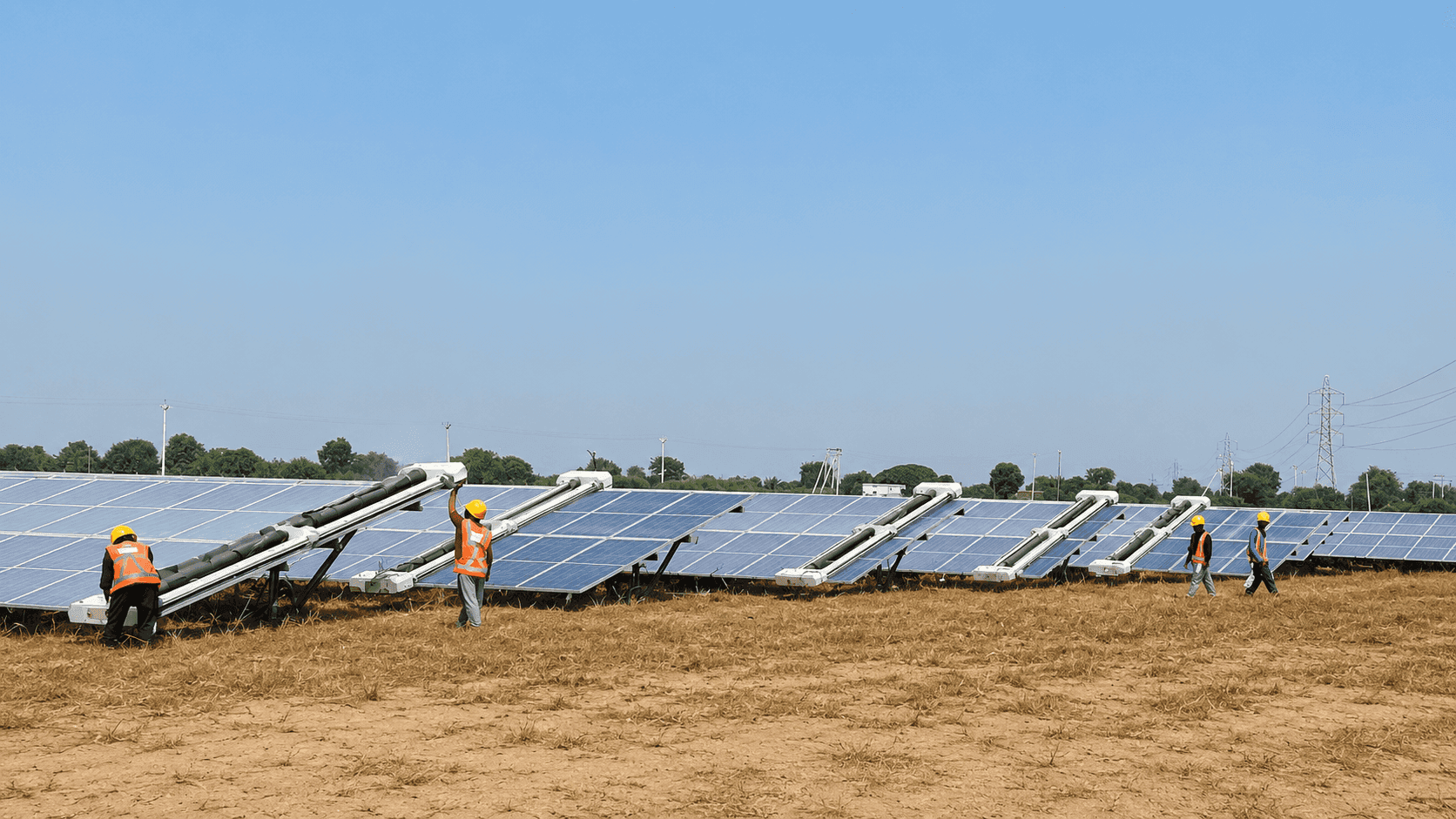
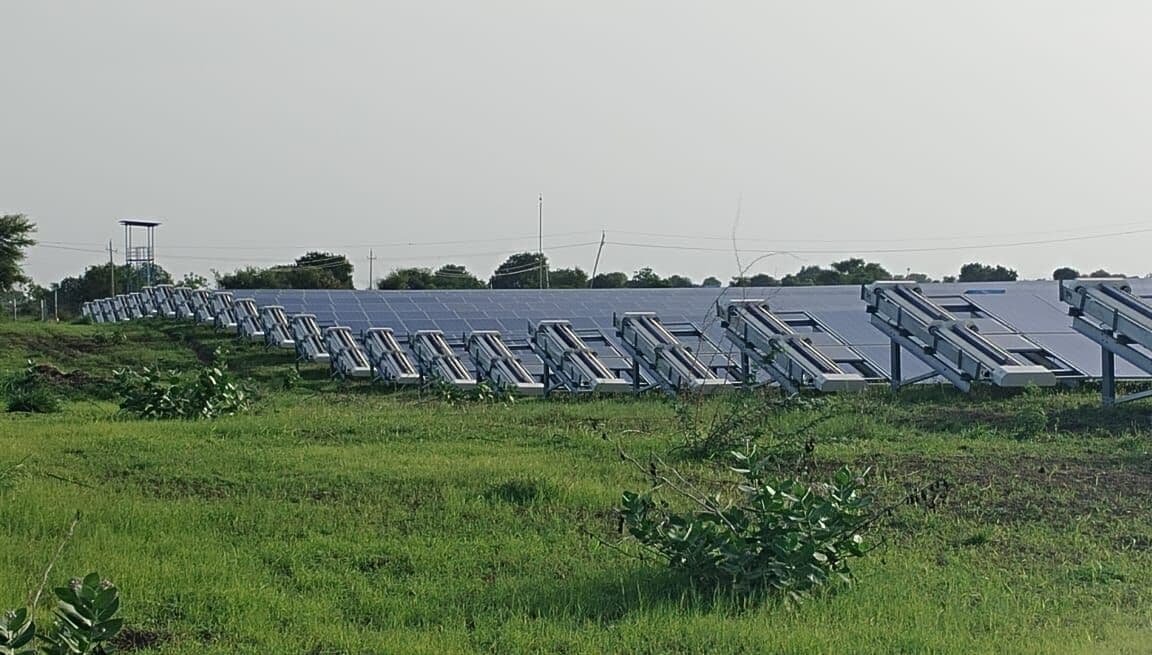
The 187.5 MW Sawana site needed a scalable approach. It had to fight local soil buildup without hurting site logistics. To solve this, the project deployed two HELYX robotic systems. HELYX is a semi-automatic, pick-and-place robot. It is ideal for this ground-mount layout. The robots offer the flexibility needed for scattered plant blocks. This is important because vegetation and civil work change the site layout often.
The site uses a CAPEX procurement model. This means the local O&M team owns the hardware directly. This gives them full control over their assets. By using these semi-automatic robots, the site changed its entire routine. It moved from manual cleaning to a systematic, robotic schedule. The site requires roughly 3 to 10 dry cleaning cycles per month. The HELYX units fit this rhythm perfectly. They adapt to changing humidity and seasonal dust patterns.
The deployment began with a careful mobilization phase. The team calibrated both HELYX units for the Yavatmal topography. The ground-mount terrain can be uneven. The deployment team provided hands-on training for the O&M staff. They taught the team how to move from basic pick-and-place tasks to advanced brush handling. The goal was a smooth transition to steady-state operations. The first successful cycles proved the robots worked well. They navigated between arrays without any manual interference. They also did not damage the sensitive panel surfaces.
The fleet is now a formal part of the maintenance flow. Every cleaning cycle is accounted for at the string level. This replaced the uncertainty of manual labor with precise, waterless cleaning. The plant no longer relies on water trucks. It also no longer struggles with night-crew scheduling. This shift saves 700,000 liters of water every year. It also recovers significant generation capacity for the site.
Operations and monitoring
Operations and Monitoring: Integrating Accountability with NECTYR
Success at the 187.5 MW Yavatmal array depends on the NECTYR fleet portal. NECTYR provides granular visibility into every cleaning cycle. It removes the guesswork from maintenance. Supervisors no longer wonder which strings were cleaned. Instead, they use NECTYR to verify HELYX unit progress in real time. This replaces old manual logs. It also removes conflicts with vegetation clearing and civil maintenance.
The cleaning cadence matches the Sawana region's profile. The area faces constant agricultural dust and road grit. High humidity also plays a role. To fight this, the plant follows a specific schedule. It performs 3 to 10 dry cleaning cycles per month. This frequency keeps the panels clear. It prevents the uneven soiling patterns that used to lower energy harvest. Because HELYX is a pick-and-place system, it is very mobile. Robots can move across scattered blocks to hit the dirtiest areas.
Safety and asset protection are always priorities. HELYX robots include advanced fall prevention. They also use panel-safe contact mechanics. However, supervisors still follow strict wind hold protocols. This keeps both the equipment and the modules safe. This inspection-led accountability is the core of the project. It is built on four pillars:
- Systematic Scheduling: NECTYR triggers 3 to 10 monthly cycles. These are based on real-time soiling data.
- Evidence-Based Reporting: Supervisors use digital logs. These logs confirm cleaning status for every block. This replaces unverifiable manual checklists.
- Strategic Mobility: The two HELYX units are highly portable. They can navigate scattered blocks and bypass site obstructions.
- Resource Efficiency: Precise deployment stops the need for water logistics. This lets the crew focus on other high-priority O&M tasks.
Results and impact
Quantifiable Operational Improvements in Yavatmal
The integration of the HELYX system has transformed this plant. The Sawana site now has a much better maintenance profile. It moved from manual labor to an autonomous, waterless strategy. This transition fixed the output volatility issues. Heavy agricultural dust and humidity-driven soiling are no longer a threat. The robotic process is repeatable. It ensures every module gets high-quality maintenance. This directly reverses the energy losses seen in the past.
The impact is measured in two main ways. First, there is significant annual water conservation. Second, there is a meaningful boost in total energy generation. Removing water-based cleaning was a huge win. The facility no longer relies on complex water logistics. This also removes the need for site-wide coordination. The O&M team can now focus on more important tasks. They can spend more time on vegetation and civil maintenance. This improves the overall reliability of the entire site.
The HELYX system has closed the gap in power production. The 187.5 MW array now operates much closer to its theoretical limit. Supervisors can verify the status of individual blocks via digital logs. They no longer have to guess if a job was done correctly. This level of oversight provides a sustainable roadmap. It ensures long-term performance for the Yavatmal installation.
- Enhanced Energy Harvest: The site reclaimed substantial annual power. This was done by addressing persistent string-level soiling.
- Resource Preservation: The plant achieved massive annual water savings. This eliminated the need for complex water procurement.
- Verified Maintenance: Unverifiable manual logs are gone. They were replaced by data-driven performance monitoring.
- Operational Synergy: Robot activity now works with other site tasks. This streamlines all project management.
Peer comparison and planning checklist
Peer Deployment Benchmarking and Operational Planning
The 187.5 MW Yavatmal Sawana site is a large-scale success. It shows how robotic cleaning works in Maharashtra. We can compare it to the 14 MW Yavatmal Kupti project. We can also compare it to the 10 MW Ahmadnagar-Jalalpur site. The Sawana deployment shows how to scale up. It uses robust infrastructure to beat regional challenges. Smaller sites like Kupti use concentrated semi-automatic fleets. Sawana uses semi-automatic robots to manage much larger, vast arrays. This is necessary because of the complex soiling patterns.
The Ahmadnagar-Jalalpur site is different in scale. The Sawana facility must balance cleaning with large-scale civil work. There is a regional trend in Maharashtra. O&M teams are moving toward professionalized methods. They now prefer data-backed verification. They do not want the uncertainty of manual cleaning. Sawana mirrors the success seen in Bheewandi. It maintains high output despite road grit and humidity. This proves that robotic cleaning works for high-capacity plants.
Use this checklist to align your own site strategy. Follow these metrics for success in Maharashtra:
- Audit your daily soiling patterns. Use this to define how often you should clean each block.
- Map your manual O&M windows. Ensure robot use does not clash with civil or vegetation work.
- Move away from manual logs. Use NECTYR digital verification to document every single cleaning cycle.
- Create a water logistics exit strategy. Transition to waterless PBT or microfiber technology.
- Assign specific staff to oversee semi-automatic robots. This maintains a consistent schedule across the site.