
Executive summary
robotic solar panel cleaning Maharashtra. This 112.5 MW ground-mount solar site is located in Dongarkharda, Yavatmal. The plant faced many performance issues. These issues came from very heavy regional soiling. The solar panels suffered from uneven degradation. This happened at the string level. The cause was a mix of agricultural dust, road grit, and humidity cycles. These factors created thick layers of grime. This grime reduced power generation. It also made maintenance very difficult.
O&M supervisors faced many daily hurdles. They had to schedule night crews for cleaning. They also struggled with high water use. Most importantly, they lacked clear data. They could not prove which strings were cleaned. They needed better visibility across the whole facility.
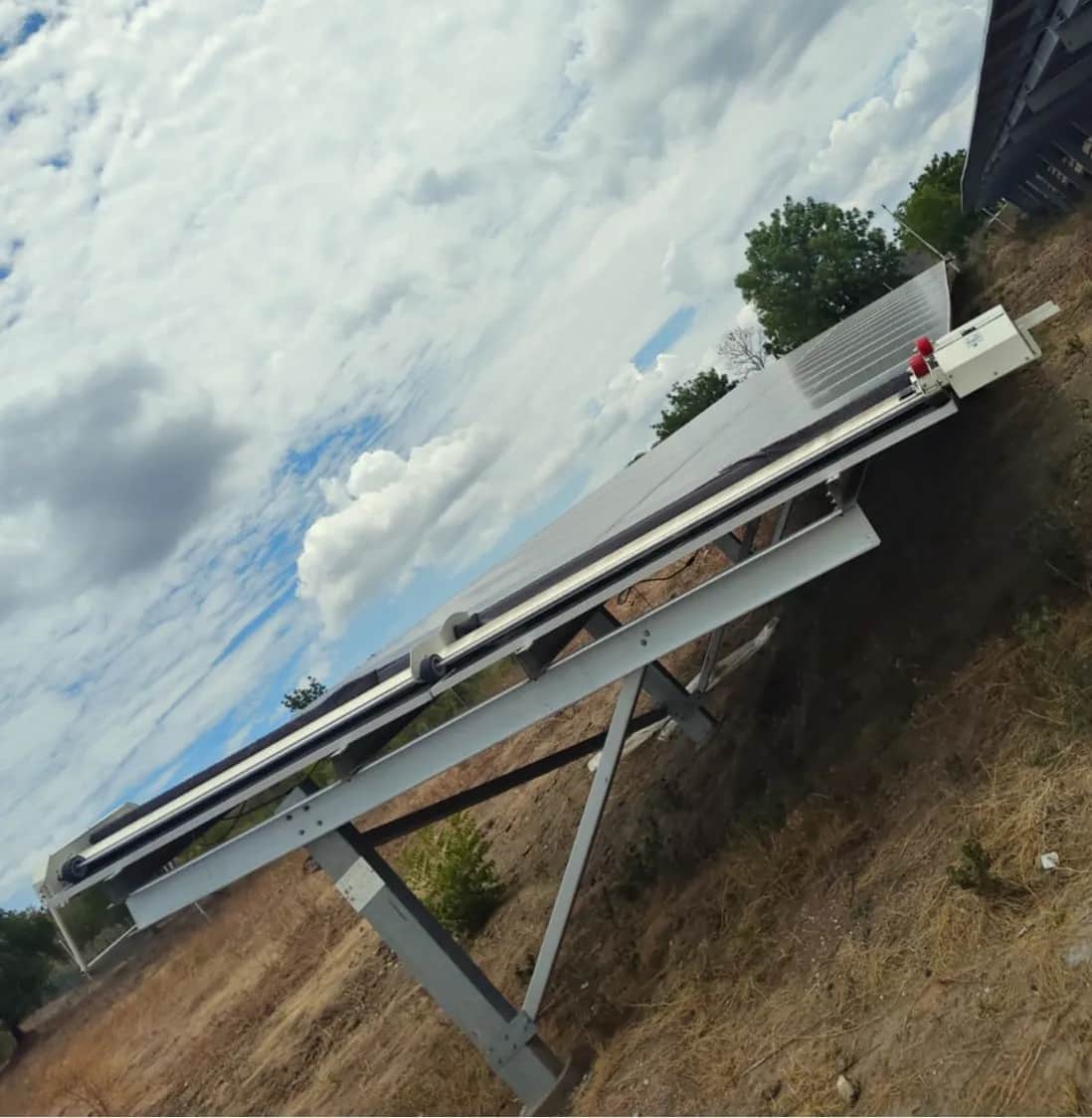
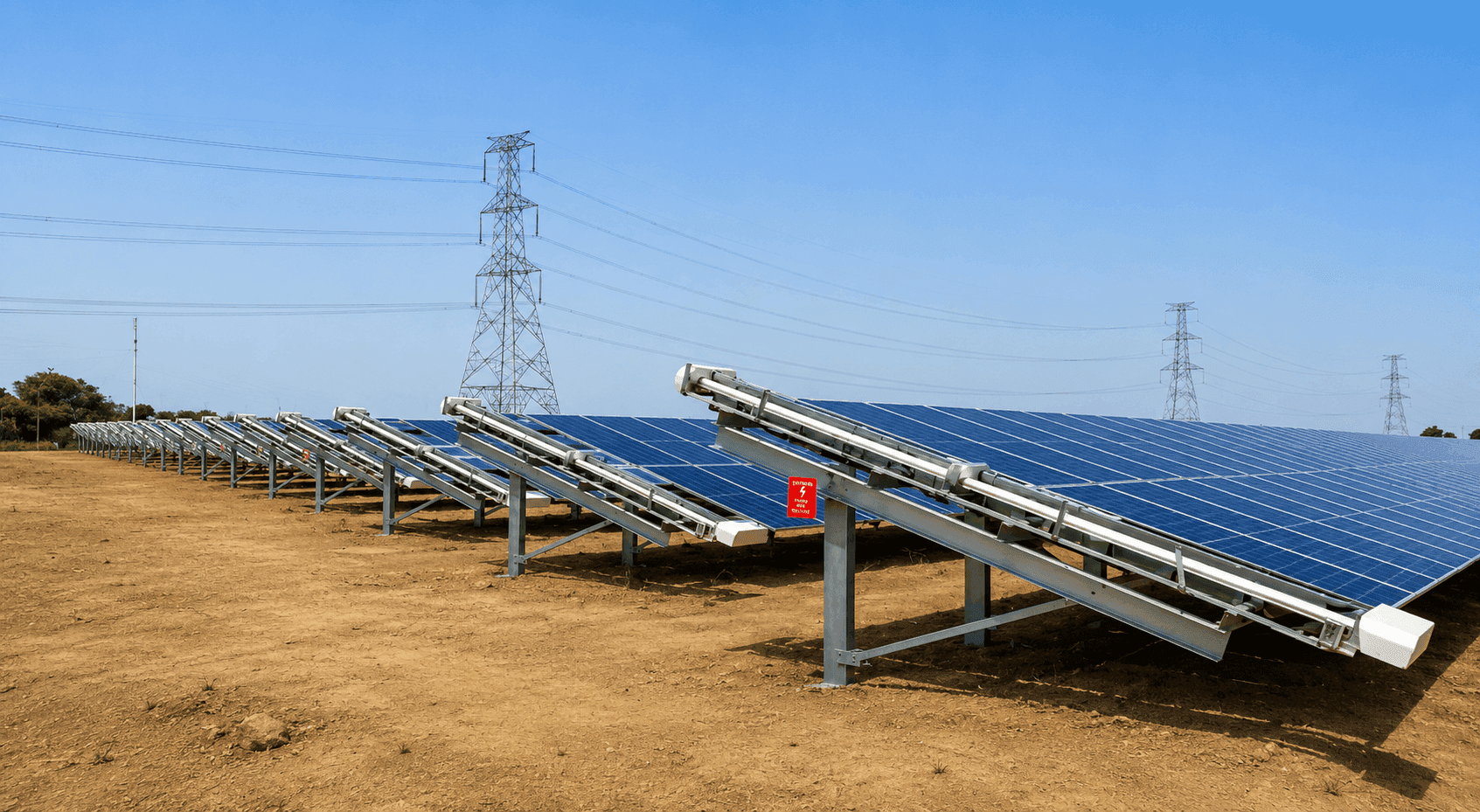
To solve these problems, the site deployed two HELYX semi-automatic robots. This is a waterless, pick-and-place cleaning solution. The site moved to a more efficient model. The project now follows a set schedule of dry cleaning cycles. This has improved plant uptime and performance. The results are very clear. The site saves 420,000 litres of water every year. It also recovers 112.5 MWh of generation per year. This project shows how robotic cleaning works in Maharashtra.
Environment and soiling at Yavatmal,Dongarkharda
Environment and soiling at Yavatmal, Dongarkharda
The 112.5 MW Dongarkharda project is in a unique micro-climate. It is located in the Yavatmal district of Maharashtra. This area has a lot of agricultural activity. It is also near major transport routes. These two factors make maintenance very hard for solar assets.
The soiling at this site comes from three main sources. Each source creates a different problem for the solar panels:
- Agricultural dust: Farming happens constantly in the Yavatmal belt. These seasonal cycles release fine dust. This dust settles on the modules and stays there.
- Heavy road grit: The site is close to regional transport roads. Large vehicles move through this area often. They kick up coarse and abrasive grit. This grit builds up on the panel surfaces.
- Humidity cycles: The humidity levels in this region shift often. These shifts act like a glue. They turn loose dust into a hard, uneven grime. This grime covers the array strings in thick layers.
These factors cause non-uniform soiling. This means some strings get dirtier than others. This uneven dirt leads to power losses at the string level. Traditional cleaning methods often fail here. Manual cleaning struggles to remove this hardened residue. This leads to steady power losses during the dry season. The high humidity also makes logistics harder. Water-based cleaning often clashes with other site work. It can interfere with vegetation management or civil O&M tasks. The O&M team needed a better way. They moved to robotic solar panel cleaning in Maharashtra. This helped them move away from night crews and high water use. They now have a predictable and data-backed model.
O&M before Taypro
Overcoming Manual Cleaning Hurdles in Yavatmal
Before Taypro arrived, the 112.5 MW Dongarkharda project used manual methods. This created many operational obstacles for O&M managers. Traditional cleaning relied on large manual labor crews. These crews usually worked through the night. This schedule caused many problems for site management.
Night cleaning often clashed with other essential work. For example, it interfered with vegetation management. It also conflicted with civil engineering tasks. These clashes created logjams in the daily operations. The team could not do everything at once. This made the site harder to manage efficiently.
Manual cleaning also lacked transparency. Supervisors had no way to verify the work. They could not see which specific strings were actually cleaned. This gap in visibility was a major issue. It was impossible to connect cleaning to power recovery. The team could not address uneven soiling effectively. They were essentially working with guesswork.
Finally, water logistics were a massive burden. Manual cleaning requires a lot of water. The team had to transport and store this water. They had to move it across a very large site. This required constant coordination. It also used a lot of expensive resources. Switching to semi-automatic cleaning solved these issues. It removed the need for complex water logistics. It also allowed for a consistent cleaning rhythm. The project replaced manual guesswork with a systematic process. This ensures every module is cleaned. This directly fixes the audit and performance gaps found in the old system.
Fleet and deployment at 112.5 MW
Fleet Deployment and Procurement for 112.5 MW
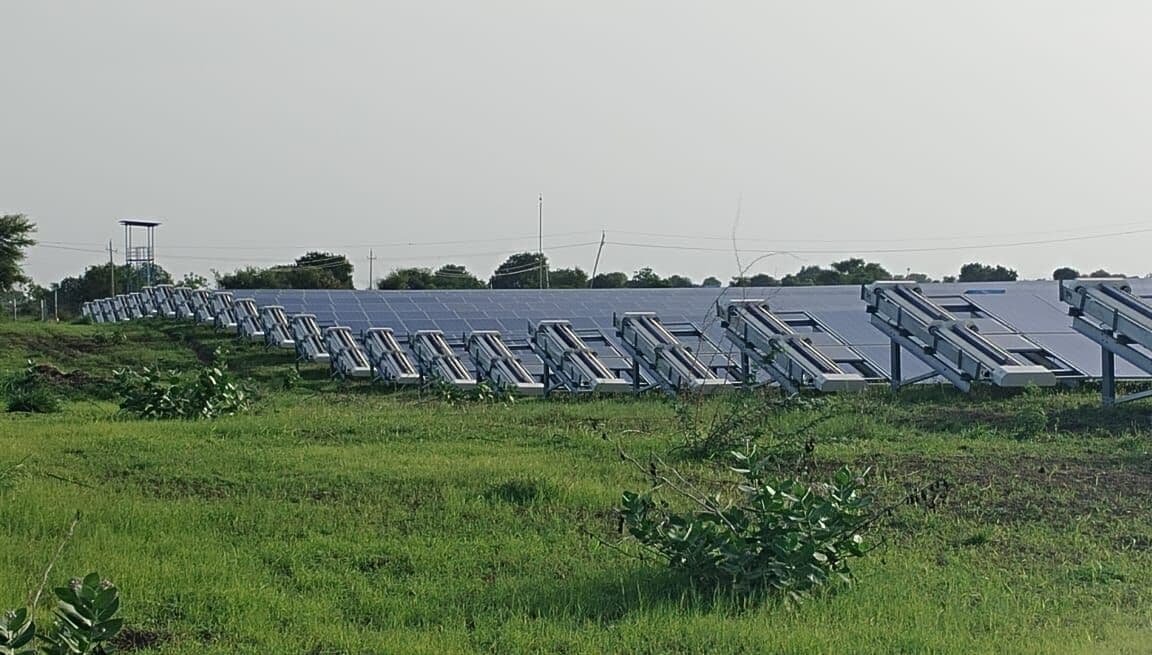
The Dongarkharda facility needed a strong solution. It had to handle dust from farms and road grit. The owners chose a Capex procurement model. They invested in two HELYX pick-and-place cleaning units. This capital investment is a long-term move. It allows the site team to own their cleaning assets. They can then manage the large array footprint more effectively.
The team chose a semi-automatic fleet for a reason. They needed to balance performance with site reality. The Yavatmal site has specific logistical needs. The deployment strategy focuses on four main pillars:
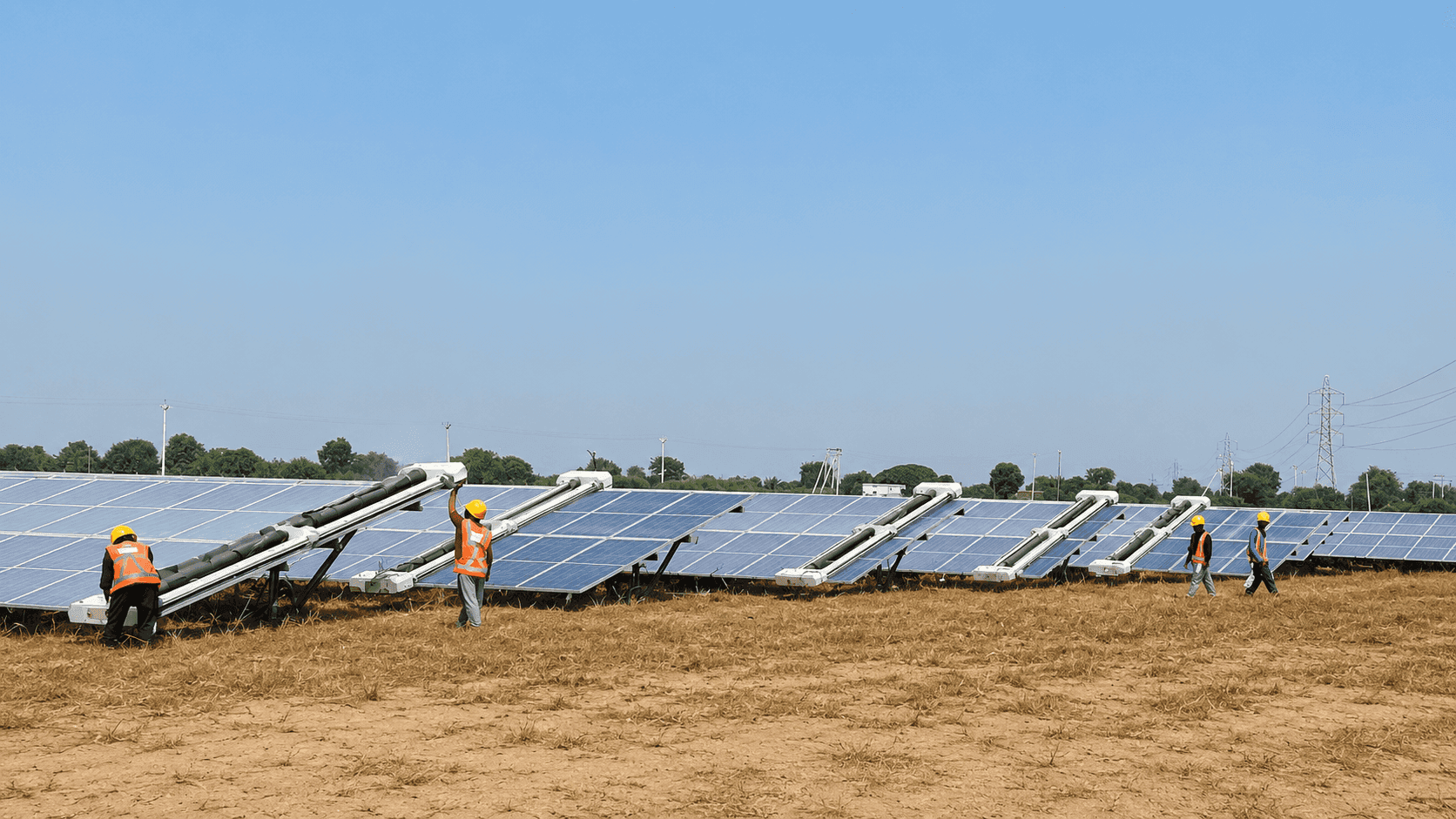
- Targeted Deployment: The two HELYX units move across the site. They perform scheduled dry cleaning cycles. These cycles happen 3 to 10 times per month. The frequency depends on real-time dust levels.
- Single-Pass PBT Technology: Each HELYX robot uses UV-stable PBT brushes. This technology removes hard agricultural residue. It works in a single pass. Most importantly, it requires no water at all.
- Commissioning Emphasis: The rollout focused on the O&M workflow. We ensured the pick-and-place process fits the site. It works seamlessly alongside vegetation management windows.
- Verified Operations: This fleet provides real proof. Unlike manual methods, supervisors can track progress. They can ensure every solar block gets the right attention.
The shift to this robotic model is working well. The Dongarkharda project has already reduced water use. They save about 420 thousand litres of water every year. This deployment proves the value of Capex investment. Semi-automatic robotics provide the oversight needed for large sites. They also provide the cleaning consistency required in Maharashtra.
Operations and monitoring
Operations and Monitoring at the 112.5 MW Dongarkharda Solar Project
Success at Dongarkharda depends on good coordination. The team must match robot use with site maintenance. The plant has uneven soiling from grit and dust. Because of this, the O&M team uses NECTYR. NECTYR is a monitoring platform for the two HELYX robots. This system gives supervisors clear visibility. They can verify exactly which strings are cleaned during every pass.
The cleaning schedule is very smart. It matches the local Maharashtra climate. The team does not use a fixed, ineffective schedule. Instead, they schedule 3 to 10 dry cleaning cycles per month. This frequency changes based on real-time data. The robots only deploy when they are truly needed. This helps maintain the best possible energy yield.
- NECTYR Oversight: Every cleaning session is logged. This happens through the NECTYR portal. It provides the accountability that manual labor lacked.
- Strategic Scheduling: Robot work is timed carefully. It avoids overlap with vegetation and civil tasks. This prevents site congestion and delays.
- Wind and Safety Protocols: HELYX units are very safe. They have fall prevention sensors. They also have panel-safe contact sensors. This keeps operations safe even during high winds in Yavatmal.
- Pick-and-Place Flexibility: The semi-automatic workflow is very versatile. The team can focus on the dirtiest blocks first. This maximizes the performance of every robot charge.
Results and impact
Results and Impact of Robotic Solar Cleaning in Dongarkharda
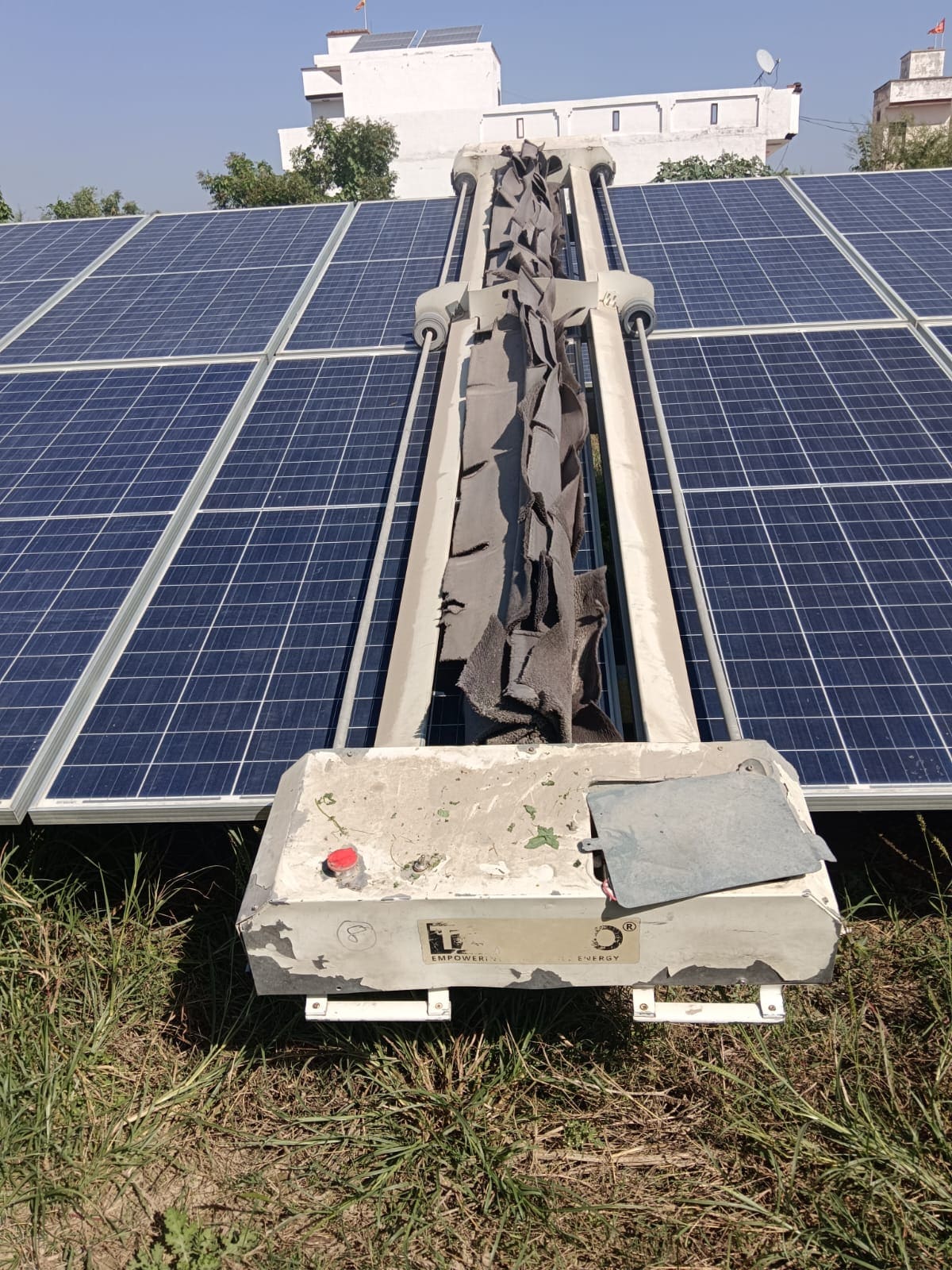
Semi-automatic robotic cleaning has changed this plant. The 112.5 MW Dongarkharda site is no longer unpredictable. It has moved from labor-intensive work to a data-backed routine. By moving away from manual cleaning, the site fixed its performance drops. It successfully fought the effects of agricultural dust, road grit, and humidity.
The biggest result is more energy. Annual energy generation has increased significantly. The site uses consistent, waterless maintenance. This ensures the modules stay clean. The facility has recovered a lot of power. This power was once lost to heavy soiling. This energy uplift justifies the Capex investment. It creates a clear path to higher profits for the project.
The project also reached key sustainability goals. It achieved important logistical milestones as well:
- Water Conservation: The site uses dry cleaning technology. This has ended the need for water-based washing. It has led to a massive drop in water use.
- Operational Accountability: The NECTYR platform is a game changer. Supervisors now have documented proof of cleaning. This solves the old problem of verifying string-level work.
- Resource Optimization: The robots have changed how staff work. Night crews and logistics teams are now free. They can focus on vegetation and civil maintenance. This makes the whole site more efficient.
Peer comparison and planning checklist
Peer Deployment Benchmarking and Operational Planning
The Dongarkharda project is a key reference point. It is a great example of robotic solar panel cleaning in Maharashtra. We can compare it to other sites to see its value. The Soyegaon and Ahmadnagar (Jalalpur) projects use automatic systems. Dongarkharda shows the value of a semi-automatic approach. It works well for many different site layouts. The Kupti 14 MW project shows the baseline for the Yavatmal district. However, this 112.5 MW site shows how pick-and-place robots handle large, distributed blocks. It manages areas where the terrain or farming makes autonomous movement hard.
The cleaning cadence is also different. Fully automatic sites often run daily cleaning cycles. The semi-automatic fleet here follows a strategic schedule. They typically perform 3 to 10 dry cleaning cycles per month. This allows the team to react to real-time needs. They can respond to uneven soiling caused by humidity and road grit. This ensures the cleaning intensity always matches the dirt levels.
Use this checklist to plan your next deployment:
- Assess how much dust your site gets each season. This helps you choose between semi-automatic or fully automatic robots.
- Map out where the soil builds up most. Check if your chosen robot needs extra charging points.
- Integrate the NECTYR fleet monitoring system. Move from manual sign-offs to digital proof of cleaning.
- Coordinate your robot schedule with vegetation management. This prevents labor congestion on your site.
- Calculate how much water you will save. This helps justify the move to waterless robotic cleaning.