Executive summary
The 10 MW ground mount solar plant in Ahmadnagar, Maharashtra, faced significant operational hurdles due to uneven string-level soiling. This was primarily caused by a combination of road grit, agricultural dust, and humidity cycles. These challenges were compounded by complex water logistics and night crew scheduling that frequently conflicted with essential civil and vegetation O&M windows, while supervisors lacked verifiable proof of which strings were cleaned during each cycle.
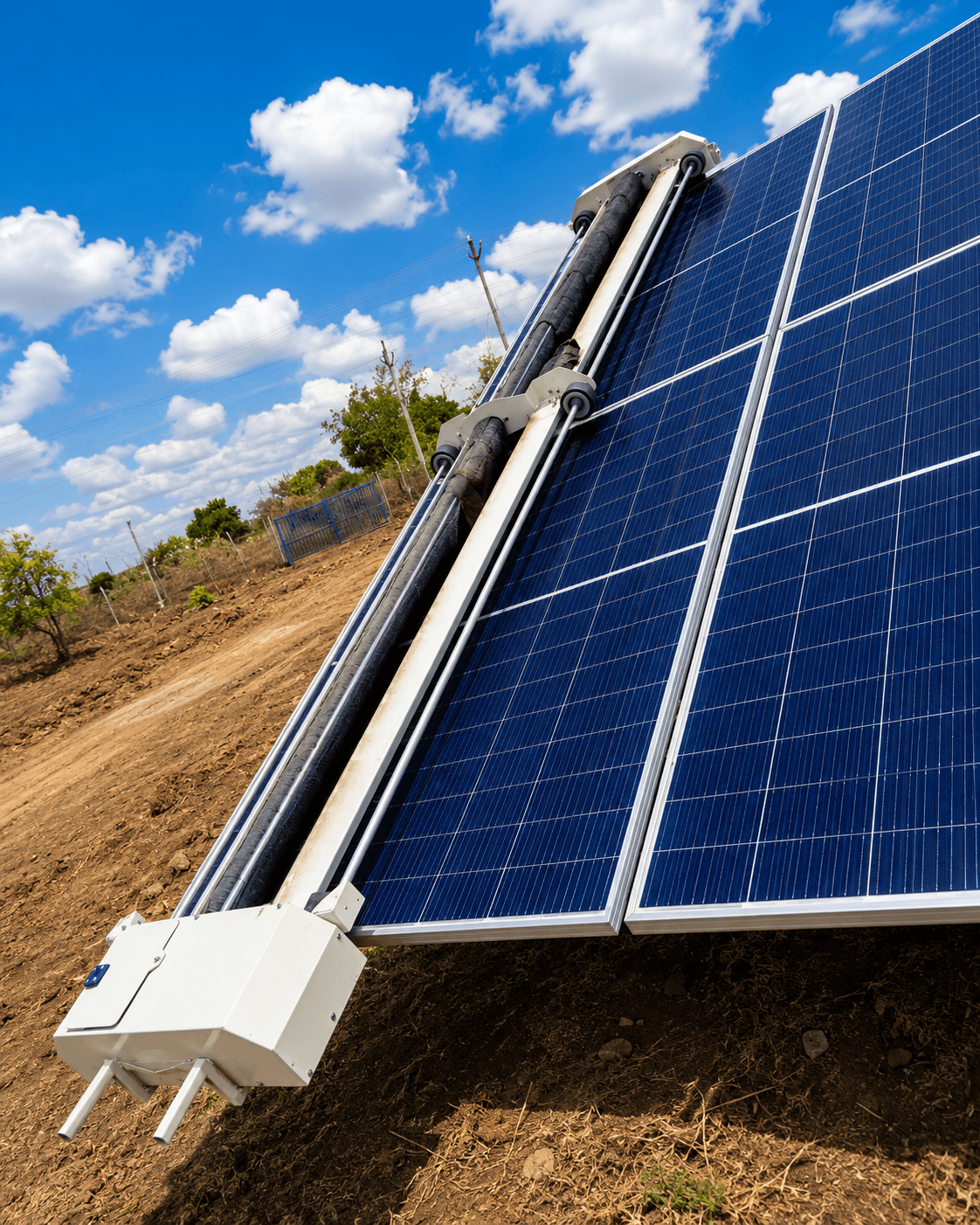
To resolve these inefficiencies, Taypro deployed four semi-automatic NYUMA robots under a Capex model. These waterless robots were integrated to streamline the cleaning process and eliminate the reliance on manual labor and water transport, ensuring consistent cleaning across the site's fixed-tilt arrays.
The transition to robotic cleaning has delivered measurable sustainability and operational gains, saving 1.4 million litres of water annually. Additionally, the deployment has provided the O&M team with better oversight and documented cleaning cycles, effectively removing the scheduling conflicts previously associated with manual cleaning crews.
Environment and soiling at Ahmadnagar
Environmental Context and Soiling Profile
The 10 MW ground mount installation in Ahmadnagar is exposed to the distinct environmental conditions of Maharashtra, where soiling is characterized by more than just ambient dust. The accumulation of agricultural dust and road grit, combined with regional humidity cycles, creates a challenging, adhesive layer of grime on the modules.
These factors result in non-uniform, string-level soiling patterns across the site. Because the deposits are uneven, certain strings experience higher degradation than others, complicating the maintenance of a consistent Performance Ratio. In a ground-mount configuration, this specific regional soiling profile makes standardized manual cleaning cycles inadequate, as they cannot precisely address the variable intensity of dust accumulation across different plant blocks.
O&M before Taypro
The O&M Challenge
At the 10 MW ground mount site in Ahmadnagar, Maharashtra, the O&M team faced a persistent "O&M collision." The logistics of transporting water and scheduling night crews frequently conflicted with critical windows for vegetation control and civil maintenance, creating operational bottlenecks that hindered overall plant upkeep.
This challenge was intensified by regional soiling from agricultural dust, road grit, and humidity cycles, which produced uneven string-level grime. Because manual cleaning lacked precision, supervisors had no verifiable, per-block proof of which strings were actually cleaned during each cycle. This audit gap made it impossible to guarantee consistent cleaning quality or accurately track the impact of soiling on the plant's Performance Ratio.
Fleet and deployment at 10 MW
Fleet and Deployment at 10 MW
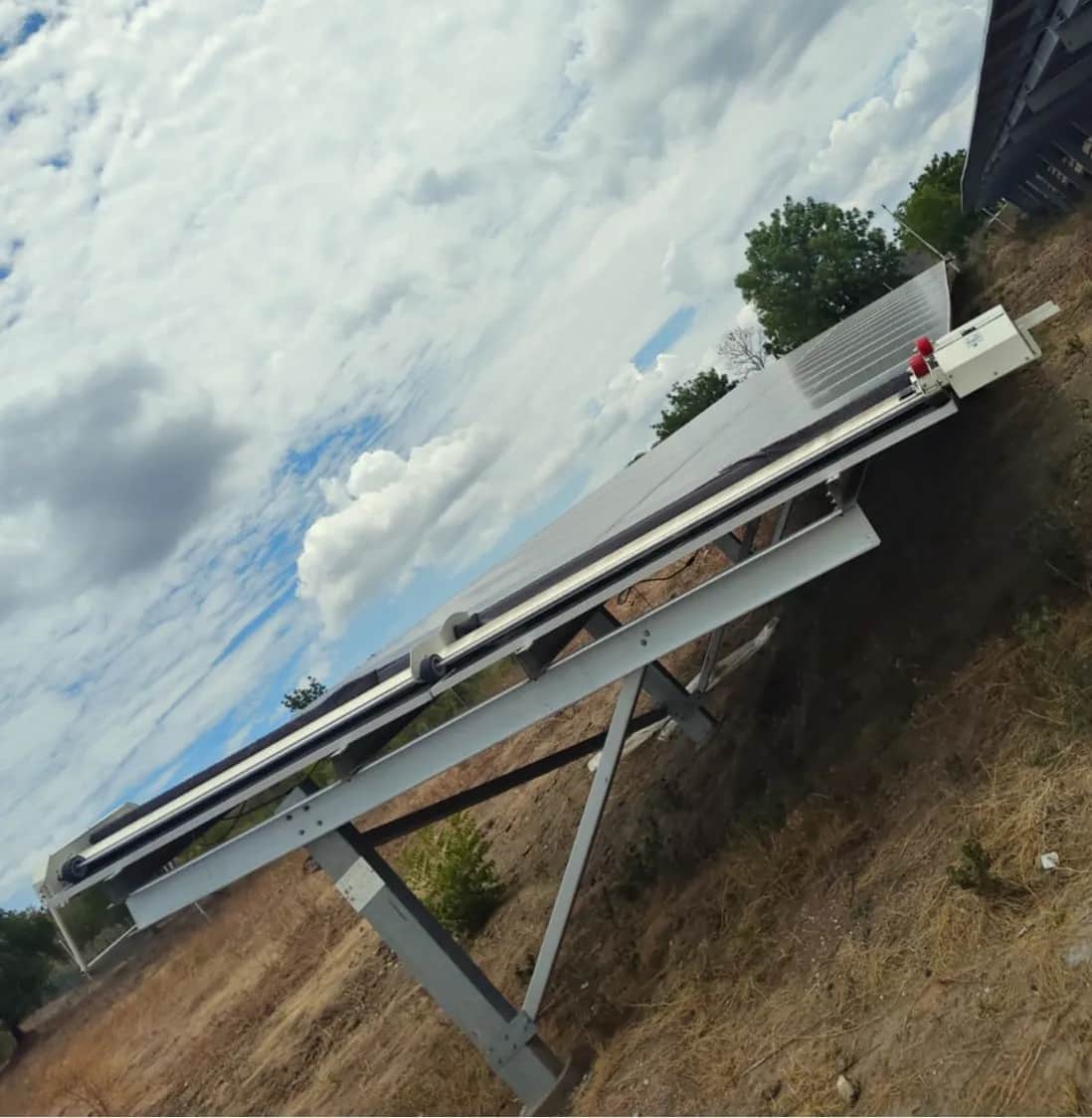
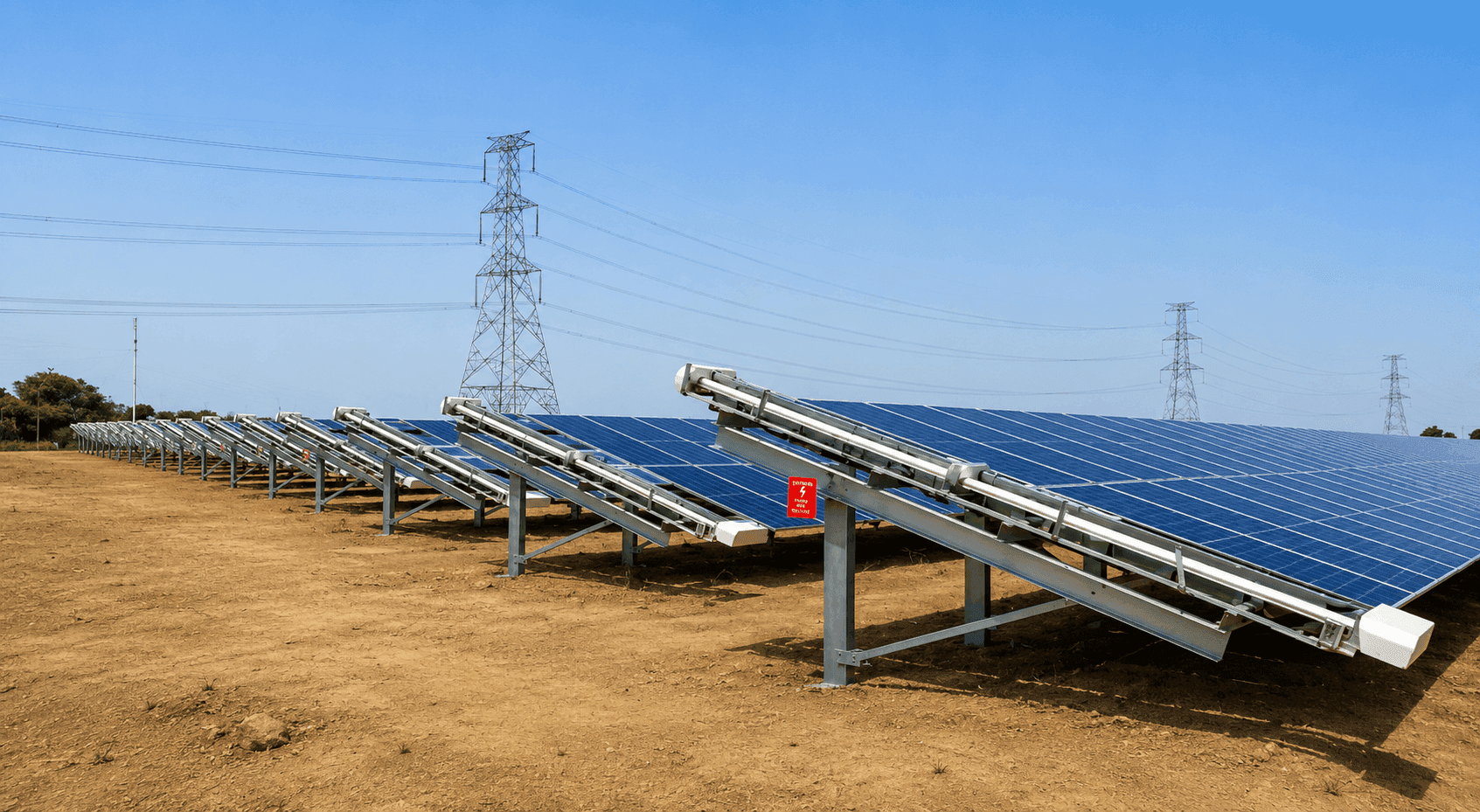
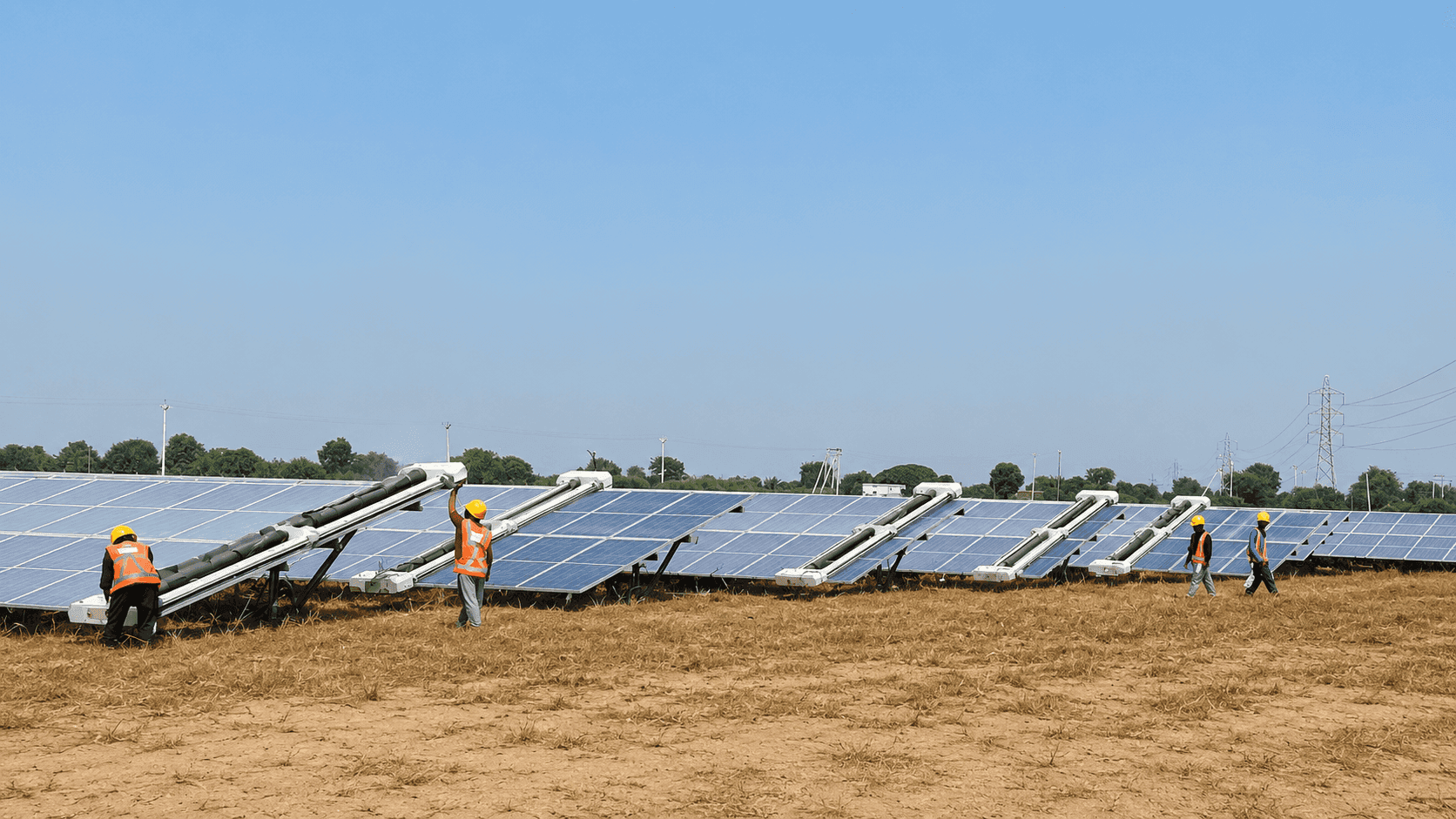
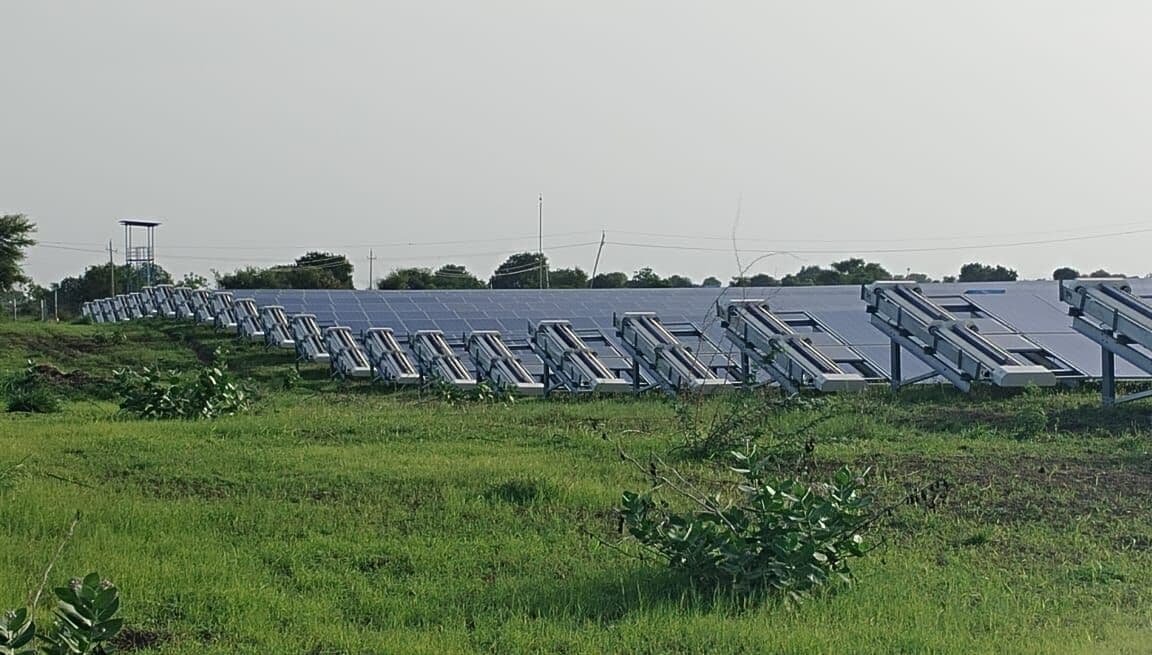
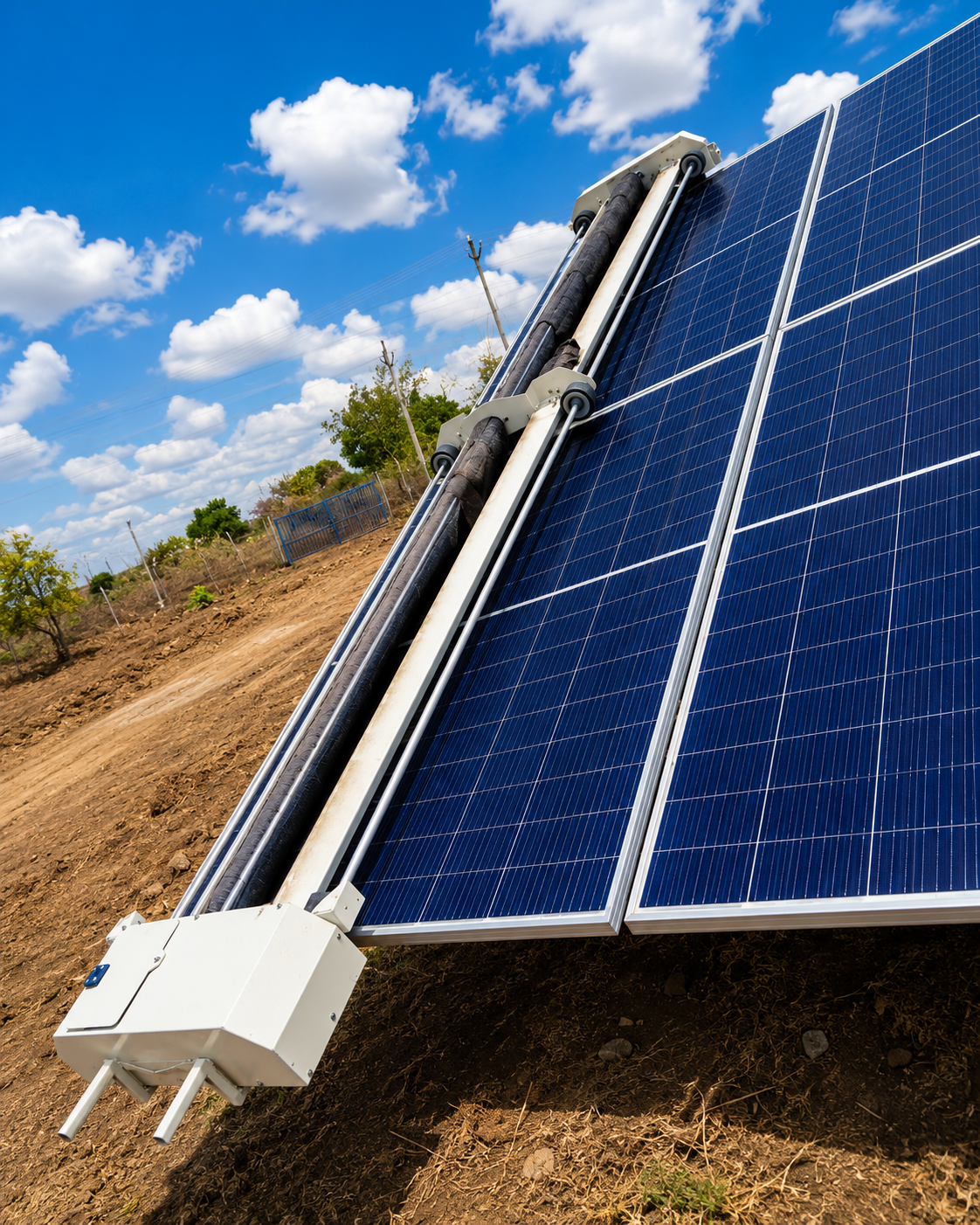
To address the operational challenges at the 10 MW ground mount facility in Ahmadnagar, Maharashtra, Taypro executed a Capex-based deployment of the NYUMA robotic system. The fleet comprises four semi-automatic units, specifically commissioned to manage the site's ground mount configuration and regional soiling profile. This deployment was designed to replace manual cleaning cycles, which were frequently disrupted by water logistics and night crew scheduling conflicts with vegetation and civil O&M windows.
The commissioning phase emphasized the transition to a documented cleaning workflow. By utilizing the NYUMA system, the site eliminates the reliance on manual labor for routine cleaning and removes the associated logistics bottlenecks. This transition provides supervisors with verifiable, per-block proof of which strings have been cleaned in each cycle, directly resolving the previous audit gap. This structured approach ensures that uneven string-level soiling, caused by regional agricultural dust and road grit, is addressed consistently across the entire 10 MW installation.
Operations and monitoring
Operations and Monitoring
The transition to the NYUMA system in Ahmadnagar shifts the plant from a water-dependent manual cycle to a streamlined robotic workflow. By removing the need for night crews and water logistics, the site eliminates scheduling frictions with civil O&M and vegetation windows. Cleaning cadence is now governed by environmental triggers and wind holds rather than the myth of required daily washing, ensuring operational safety and resource efficiency.
Accountability is managed via NECTYR, which provides supervisors with the per-block proof of cleaning that was previously missing. This digital audit trail allows the team to monitor progress across the 10 MW array, ensuring that uneven soiling from road grit and agricultural dust is addressed systematically and verifiably.
Results and impact
Results and Impact
The deployment of the NYUMA system at the 10 MW Ahmadnagar site resulted in the saving of 1.4 million litres of water annually. This transition has fundamentally improved operational discipline by replacing unpredictable manual cycles with a verifiable robotic workflow.
Site supervisors now possess precise, per-block proof of cleaning, effectively eliminating the previous visibility gap regarding which strings were serviced during each cycle. By removing the dependence on night crews and water logistics, the plant has also resolved scheduling conflicts with civil O&M and vegetation windows. This structured approach ensures that the uneven soiling patterns caused by regional agricultural dust and road grit are addressed consistently across the entire facility.