Executive summary
Located in Ahmadnagar, Maharashtra, this 4 MW ground mount facility faced significant performance hurdles due to uneven, string-level soiling. The combination of agricultural dust, road grit, and humidity cycles created inconsistent grime patterns, while manual cleaning logistics created persistent conflicts between night crew scheduling and critical vegetation or civil O&M windows.
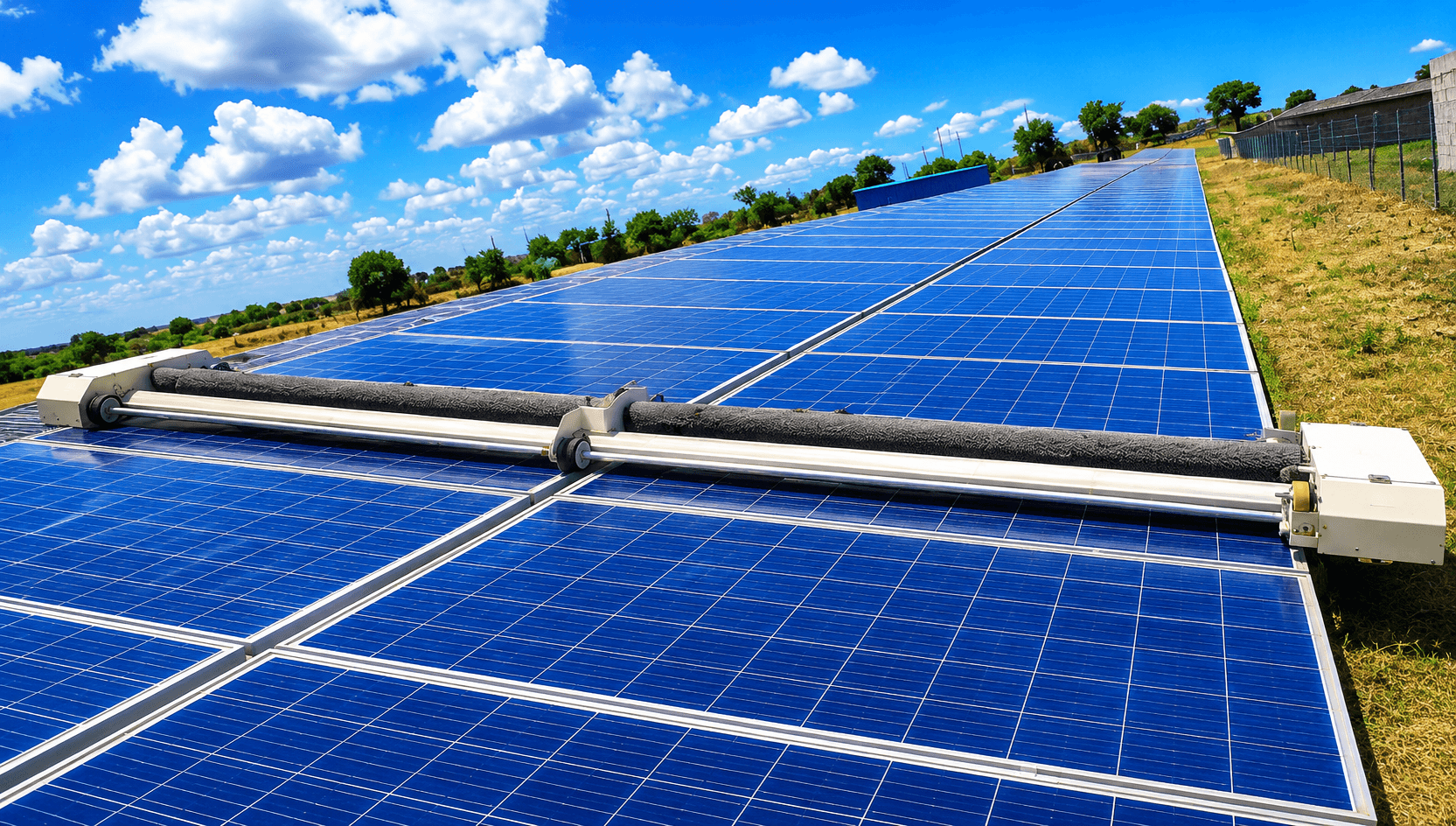
To resolve these operational gaps, the plant implemented a Capex-driven cleaning strategy utilizing two semi-automatic NYUMA robots. This transition enabled the O&M team to stabilize maintenance cycles and provided supervisors with the per-block verification necessary to ensure every string was cleaned consistently.
The deployment successfully eliminated water logistics constraints, resulting in 560,000 liters of annual water savings. By resolving critical scheduling and verification gaps, the site now maintains a reliable cleaning frequency that protects energy yield against aggressive regional soiling.
Environment and soiling at Ahmadnagar
Environmental Factors and Soiling
The 4 MW ground mount array in Ahmadnagar operates in a landscape characterized by heavy agricultural activity and proximity to road traffic. This environment generates a specific combination of agricultural dust and road grit that settles across the modules. When coupled with regional humidity cycles, these particulates create unpredictable and uneven soiling patterns at the string level.
Unlike uniform dust accumulation, this erratic grime distribution made it difficult for site supervisors to maintain consistent cleaning standards. Because soiling varied significantly across the site, supervisors lacked per-block proof of which strings were actually cleaned during each cycle, leading to operational gaps where some sections of the array remained under-cleaned while others were serviced unnecessarily.
O&M before Taypro
Operational Challenges and Logistical Constraints
Prior to adopting robotic cleaning, the 4 MW ground mount facility in Ahmadnagar faced a persistent logistical tug-of-war. The coordination of water delivery and night-shift cleaning crews frequently conflicted with critical vegetation and civil O&M windows, creating scheduling bottlenecks that hampered overall plant maintenance.
These logistical hurdles were compounded by regional environmental factors. Agricultural dust, road grit, and humidity cycles created uneven soiling patterns at the string level. Without an automated system, supervisors lacked per-block proof of which strings were actually cleaned during each cycle, making it impossible to verify cleaning consistency or identify skipped sections across the array.
Fleet and deployment at 4 MW
Fleet Composition and Deployment
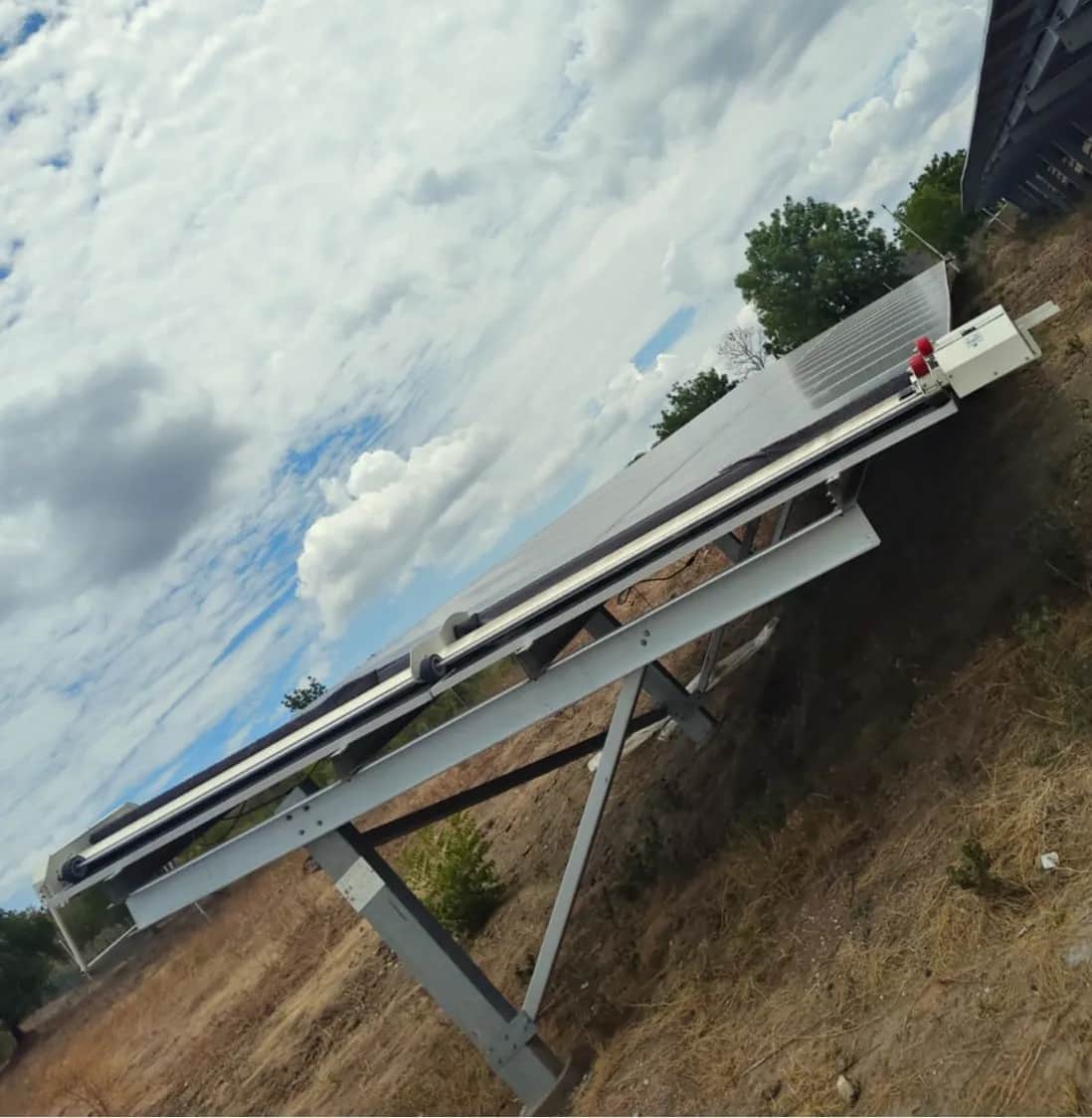
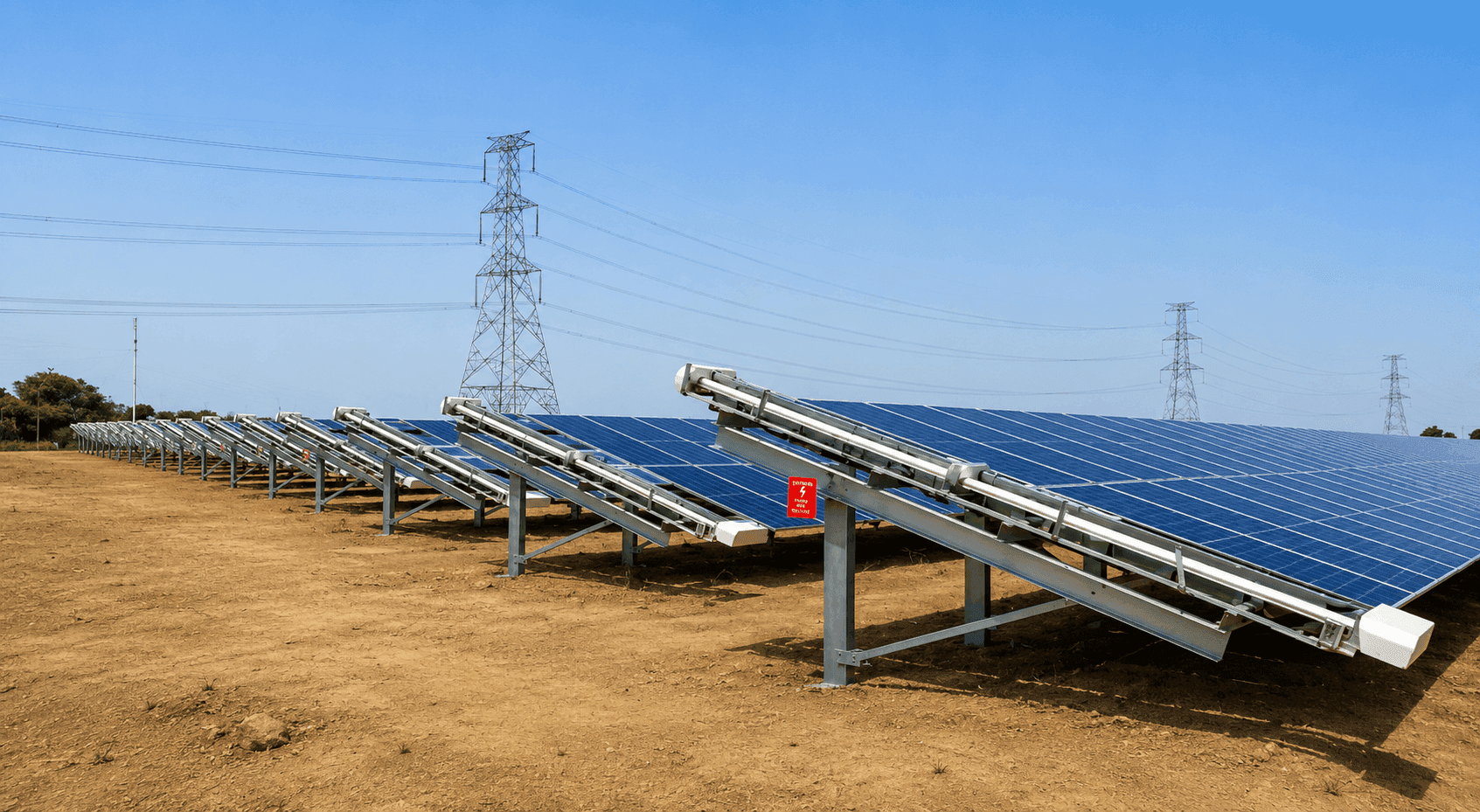
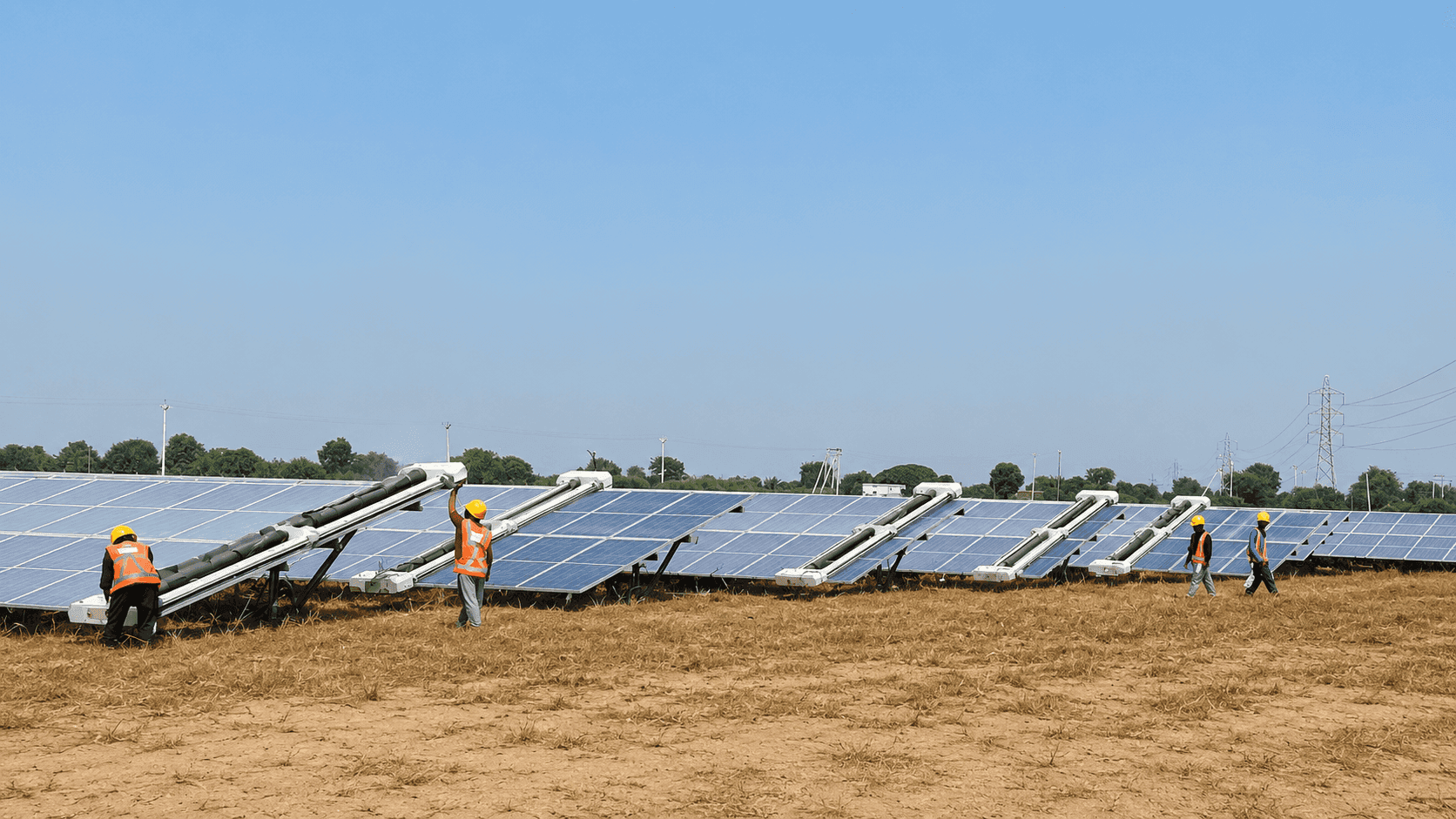
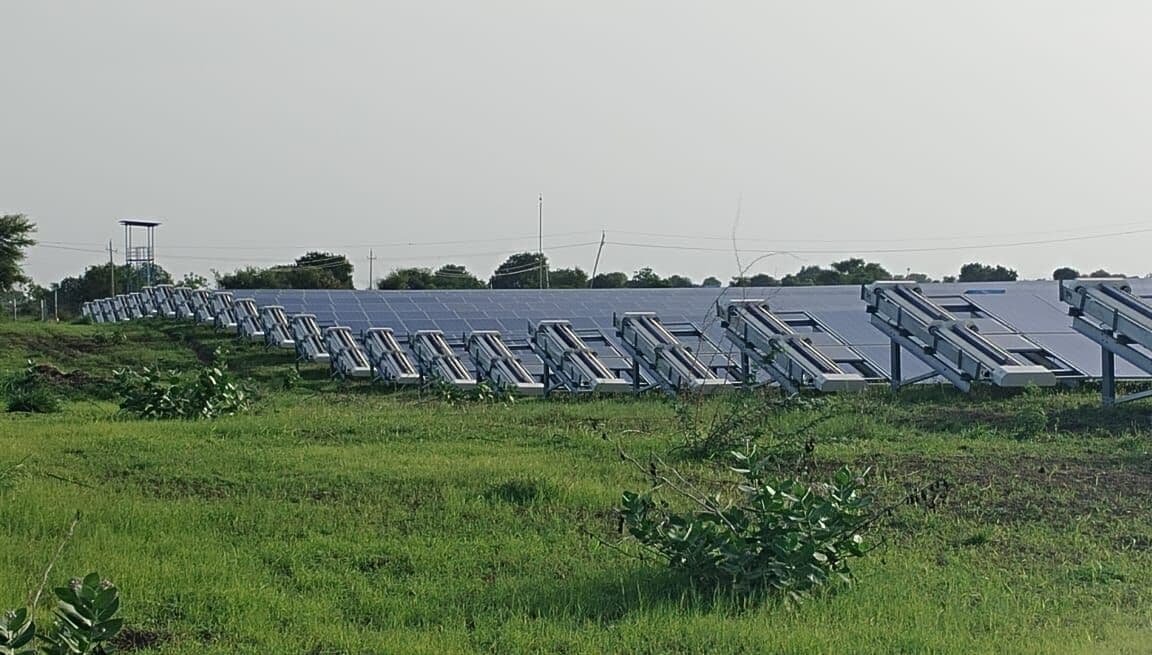
The 4 MW ground mount plant in Ahmadnagar adopted a Capex procurement model to integrate waterless cleaning into its standard O&M workflow. The deployment consists of two semi-automatic NYUMA robots, specifically selected to establish a controlled cleaning rhythm across the facility. This configuration allows the site to systematically address the uneven string-level soiling caused by agricultural dust and road grit without the logistical burden of water tankers.
Commissioning focused on transitioning from manual, water-dependent methods to a robotic system that saves 560,000 litres of water annually. By deploying a semi-automatic fleet, the plant resolved previous verification gaps where supervisors lacked per-block proof of cleaning. This deployment ensures that each section of the Maharashtra site is serviced consistently, eliminating scheduling conflicts between cleaning cycles and critical vegetation or civil O&M windows.
Operations and monitoring
Operations and Monitoring
The Ahmadnagar plant has transitioned from reactive, water-dependent manual cleaning to a structured robotic workflow. By deploying NYUMA robots, the 4 MW facility now integrates cleaning cycles directly into existing maintenance windows, eliminating the scheduling conflicts previously seen with vegetation and civil O&M tasks.
To resolve the lack of per-block verification, the site utilizes NECTYR for fleet monitoring, providing supervisors with definitive proof of which strings were cleaned. The cleaning cadence is driven by actual soiling levels from agricultural dust and road grit, avoiding the inefficiency of daily wash myths. Operational safety is maintained through programmed wind holds, ensuring a consistent and sustainable cleaning rhythm across the Maharashtra site.
Results and impact
Results and Impact
The deployment of NYUMA robots at the 4 MW Ahmadnagar site has transformed the plant's approach to soiling management. By transitioning to a waterless system, the facility achieved substantial annual water savings, eliminating the logistical burden of water tankers in the Maharashtra region. More importantly, the site has gained critical operational certainty. Through NECTYR, supervisors now have verified proof of which specific strings were cleaned during each cycle, removing previous gaps in per-block documentation. This shift ensures a consistent cleaning rhythm that no longer competes with vegetation or civil O&M windows, effectively mitigating the impact of agricultural dust and road grit.