Executive summary
robotic solar panel cleaning Maharashtra. The 3.8 MW solar facility in Hirasar, Maharashtra, faced many operational challenges. These issues came from uneven soiling at the string level. The local environment is quite difficult for solar owners. It contains a mix of agricultural dust and heavy road grit. Additionally, regional humidity cycles create complex residue patterns. Traditional cleaning methods could not solve these problems effectively.
Water logistics also caused major problems for the site. The team had to schedule night crews for cleaning. This often conflicted with vegetation maintenance and civil O&M windows. Because of this, supervisors lacked verifiable proof of cleaning. They could not confirm which blocks were actually cleaned during each cycle. This led to inconsistent hygiene across the solar arrays.
Taypro solved these inefficiencies with a robotic solution. We deployed four GLYDE autonomous robots to the site. These robots execute daily waterless cleaning cycles. The GLYDE system uses patented dual-pass microfiber technology. This ensures consistent module hygiene. It also eliminates the need to transport water to the site. This automated approach has successfully recovered 3.8 MWh of additional generation per year. It also saves 14,000 litres of water annually. Most importantly, the system provides reliable, loggable proof of performance for every string.
Environment and soiling at Hirasar
Environment and soiling at Hirasar
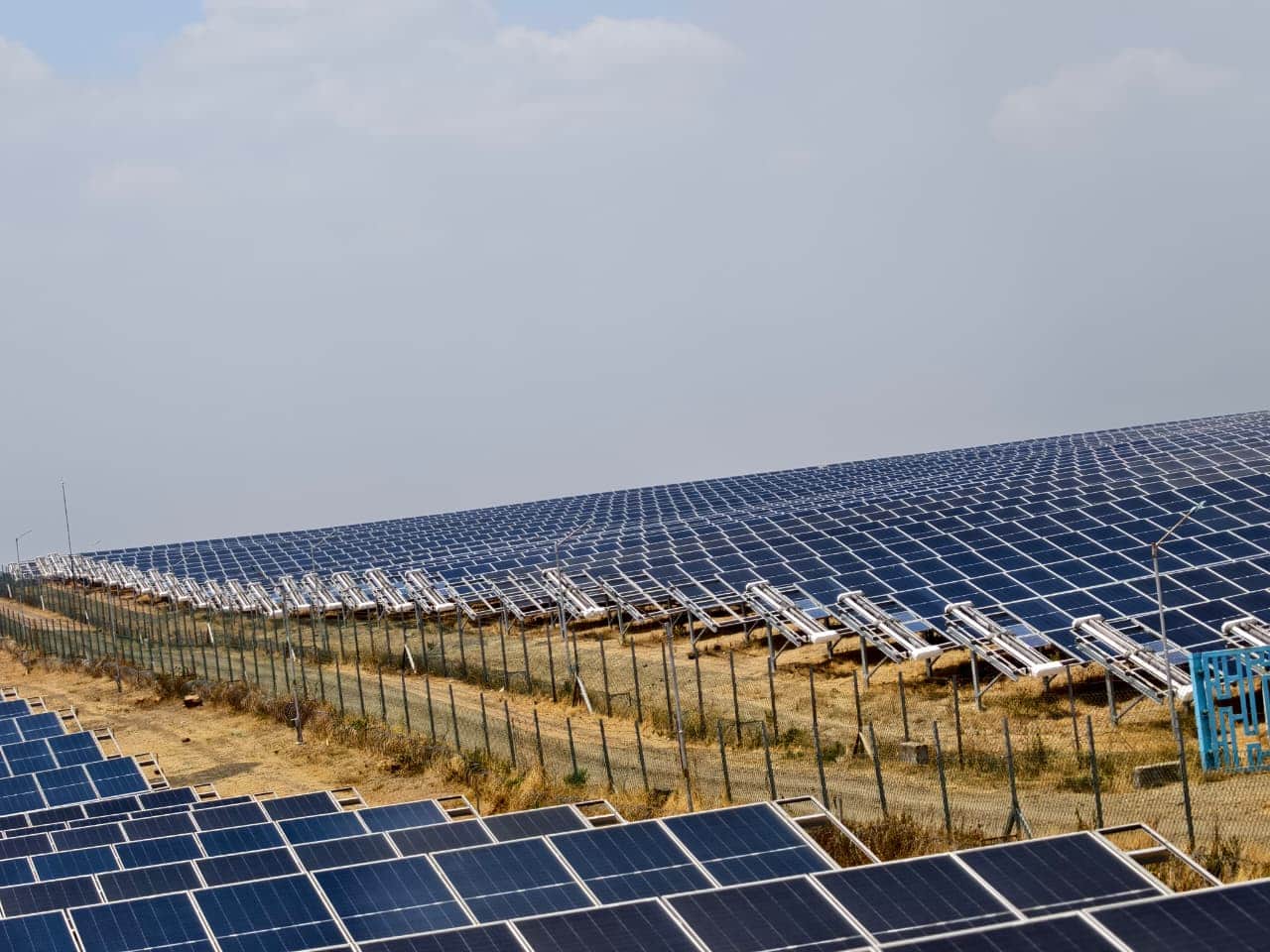
The 3.8 MW Hirasar plant sits in a unique agricultural landscape. This site is located in Maharashtra. The dust profile here is very specific. It is not like the heavy industrial dust seen at sites like Yavatmal. Instead, Hirasar deals with fine soil particles from nearby fields. It also faces heavy grit from local roads. This combination makes cleaning very difficult.
Regional humidity cycles make the problem even worse. The moisture acts as a binding agent for the dust. It turns loose particles into a sticky layer on the modules. These conditions create uneven soiling patterns. The dirt does not settle in uniform sheets. Instead, it varies drastically from one string to another. This irregularity makes it hard for manual crews to manage.
Manual cleaning crews often lack visibility. They cannot easily see which specific segments need immediate attention. Furthermore, local agricultural activities create competition for resources. The site team must compete for water and manpower. This makes it hard to schedule traditional O&M windows. This logistical bottleneck historically left supervisors without proof of cleaning. This led to inconsistent module hygiene across the entire facility.
O&M before Taypro
Managing soiling and O&M logistics at the Hirasar 3.8 MW site
Before using Taypro robots, the Hirasar plant faced significant friction. The unique blend of agricultural dust and road grit was a constant issue. These deposits often became hardened by local humidity. This hardened grime reduced the energy yield of the plant significantly. Manual cleaning crews struggled to maintain consistent results.
A major visibility gap also hampered the O&M process. Supervisors could not verify which specific rows or strings were cleaned. They had no data to prove cleaning coverage. This lack of transparency made performance tracking nearly impossible. The site team also faced constant resource competition. Water logistics were difficult to manage in this region. Night-crew labor requirements also clashed with other essential tasks.
These clashes often occurred with vegetation maintenance and civil works. The team had to choose between cleaning panels or managing the grounds. This forced a difficult trade-off. Often, panel hygiene suffered to keep the site clear. This left the plant prone to persistent soiling losses and reduced revenue.
Fleet and deployment at 3.8 MW
Fleet and deployment at 3.8 MW
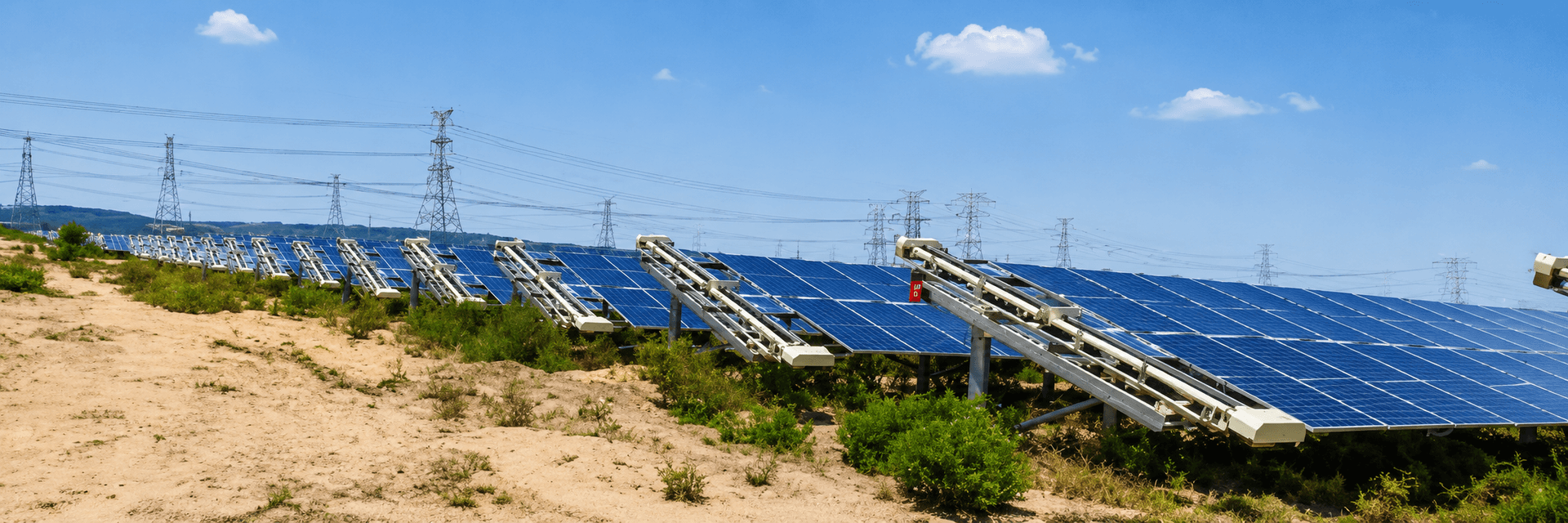
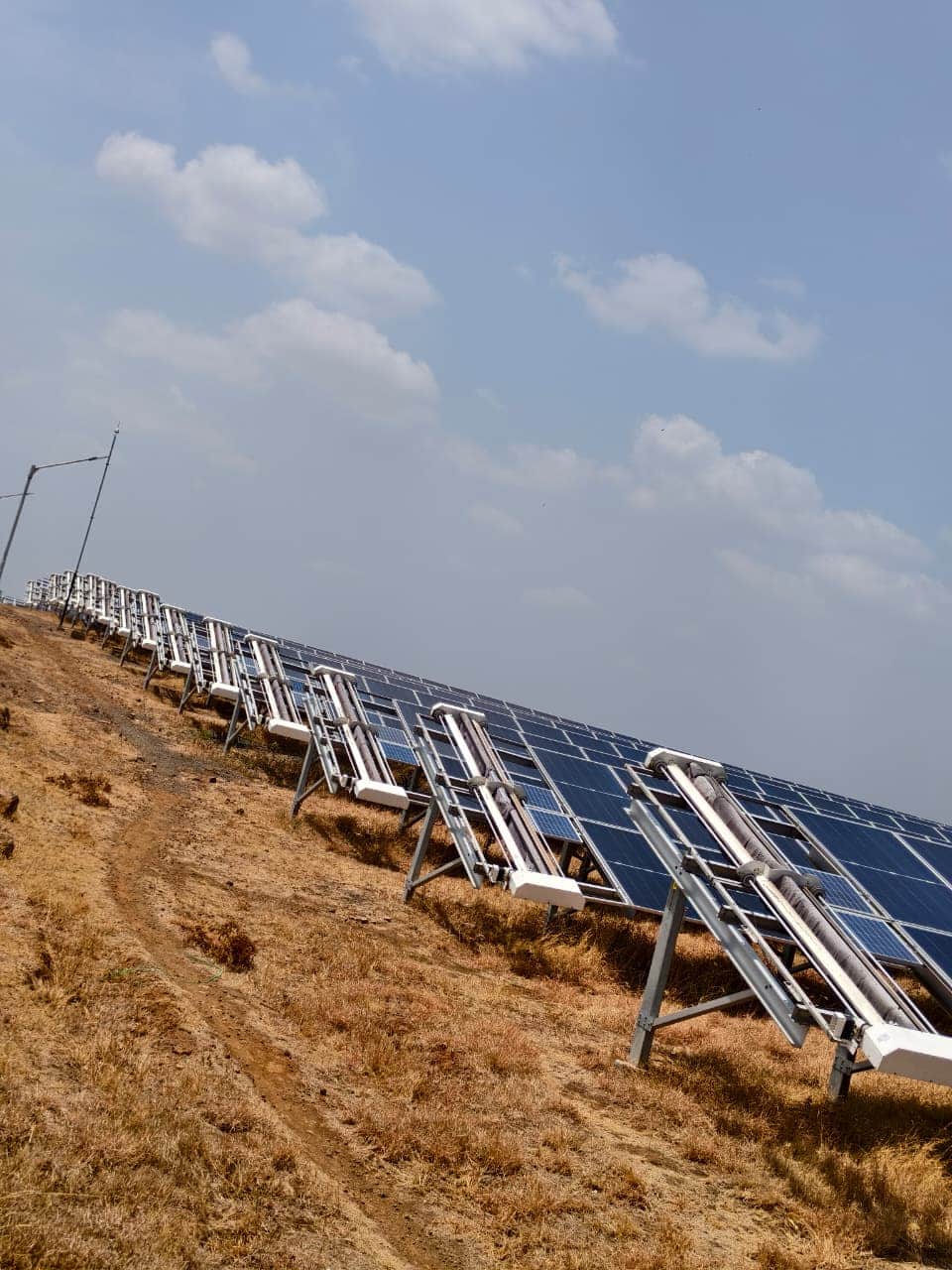
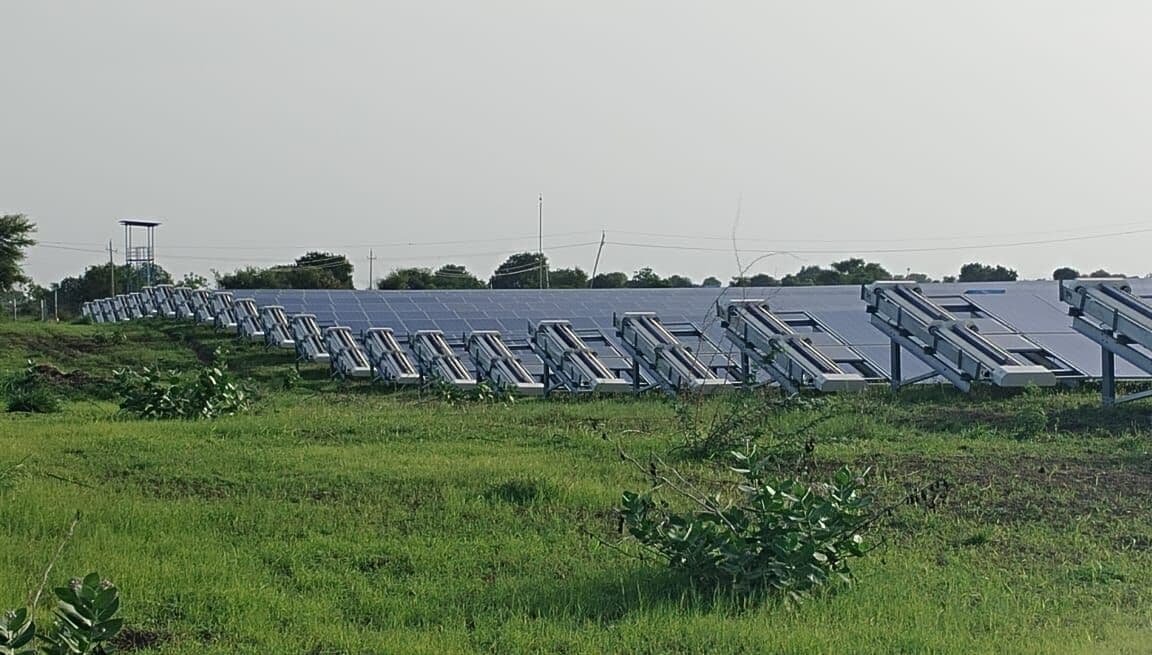
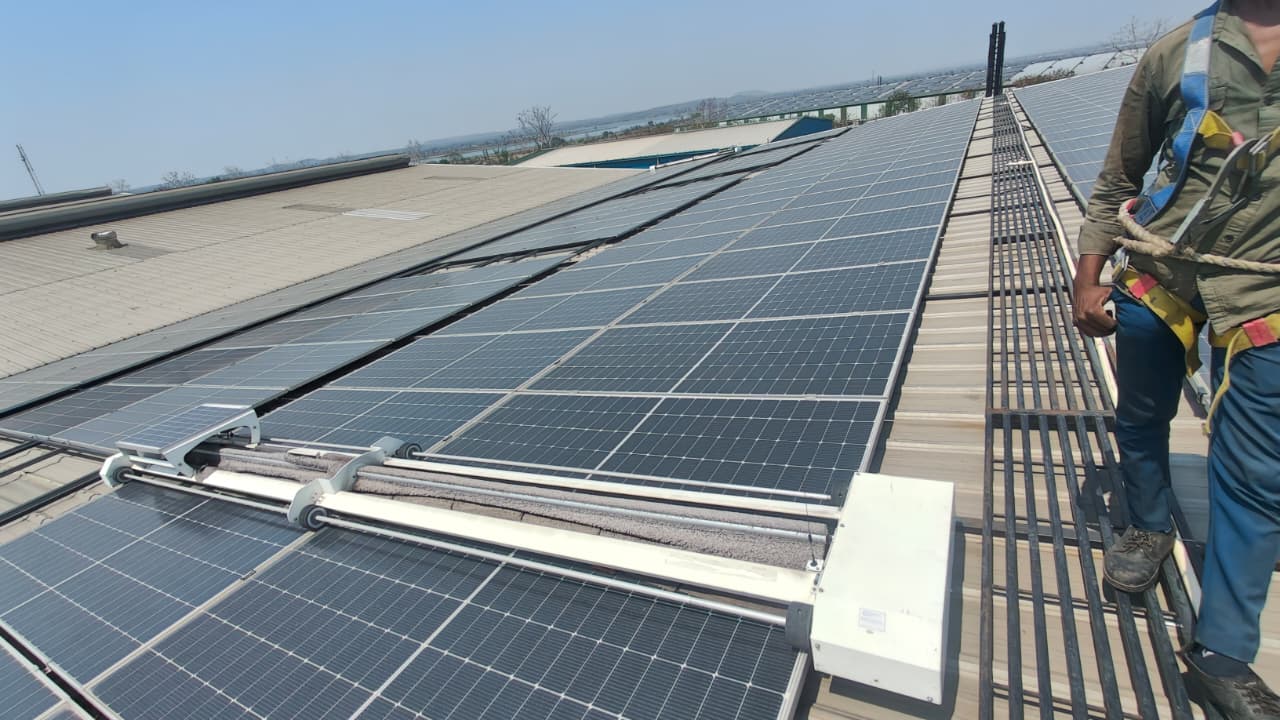
To fix these uneven soiling patterns, we equipped the site with 4 GLYDE robots. This deployment uses a Capex procurement model. This model ensures full asset ownership for the client. It also allows for long-term control over the O&M budget. The GLYDE units were the ideal choice for this environment. They can handle complex agricultural dust and road grit easily.
The GLYDE system uses patented dual-pass microfiber technology. This provides a much deeper clean than standard brush systems. It is specifically designed for fixed-tilt modules. This technology ensures that even sticky residue is removed effectively. The robots operate fully autonomously without human intervention.
We focused heavily on NECTYR integration during commissioning. NECTYR is our dedicated fleet monitoring portal. It solves the previous lack of per-block visibility. The robots now perform daily waterless cleaning cycles. These cycles are fully scheduled and autonomous. The system automatically generates logs for every task. These logs provide supervisors with proof of performance for every string. This transition removes the reliance on manual labor. The site team can now focus on vegetation and civil maintenance. They no longer have to compete for water or crew scheduling. This stabilizes the output of the 3.8 MW block.
Operations and monitoring
Optimizing operations with daily autonomous cleaning
The Hirasar facility has moved past the unpredictability of manual labor. It now uses a fully autonomous cleaning regime. By deploying four GLYDE robots, the site performs daily waterless cleaning cycles. This regular schedule is critical for this location. It ensures that dust and grit are removed quickly. This prevents the particles from bonding to the panels during high-humidity cycles. As a result, the plant maintains consistent energy output across its 3.8 MW capacity.
Operational accountability is now driven by NECTYR. This platform provides precise, string-level verification. Supervisors can see exactly when a cycle was completed. They can also see which specific strings were serviced. This system effectively eliminates all uncertainty regarding cleaning coverage. There is no longer a need to guess which blocks were cleaned.
The autonomous nature of the GLYDE fleet also improves site management. It removes the need for complex manual scheduling. Vegetation and civil maintenance teams can work without interference. They no longer have to coordinate with cleaning crews or water tankers. This creates a much smoother workflow for the entire O&M team.
Results and impact
Results and impact
The GLYDE fleet has transformed energy yield management at Hirasar. Moving to daily autonomous cycles has changed everything. The project now achieves consistent cleaning performance. This mitigates the uneven soiling patterns common in Maharashtra. The panels remain free of grime buildup. This has led to a measurable recovery of annual generation capacity. The plant now generates 3.8 MWh of additional energy every year.
The impact also covers operational sustainability and resource management. The project has achieved several key goals:
- Significant annual water conservation. The site no longer needs water tankers or large storage tanks.
- Improved O&M efficiency. Supervisors can reallocate labor to critical civil maintenance tasks.
- Full performance transparency. NECTYR provides verifiable data for every cleaning cycle.
- Consistent string-level hygiene. The dual-pass microfiber technology ensures a deep clean every time.
- Reduced logistical complexity. The site team no longer manages conflicting night-crew schedules.
By choosing robotic cleaning, the Hirasar plant has stabilized its output. It has also created a more efficient and transparent O&M environment. The combination of GLYDE technology and NECTYR monitoring provides a complete solution for utility-scale solar farms.