Executive summary
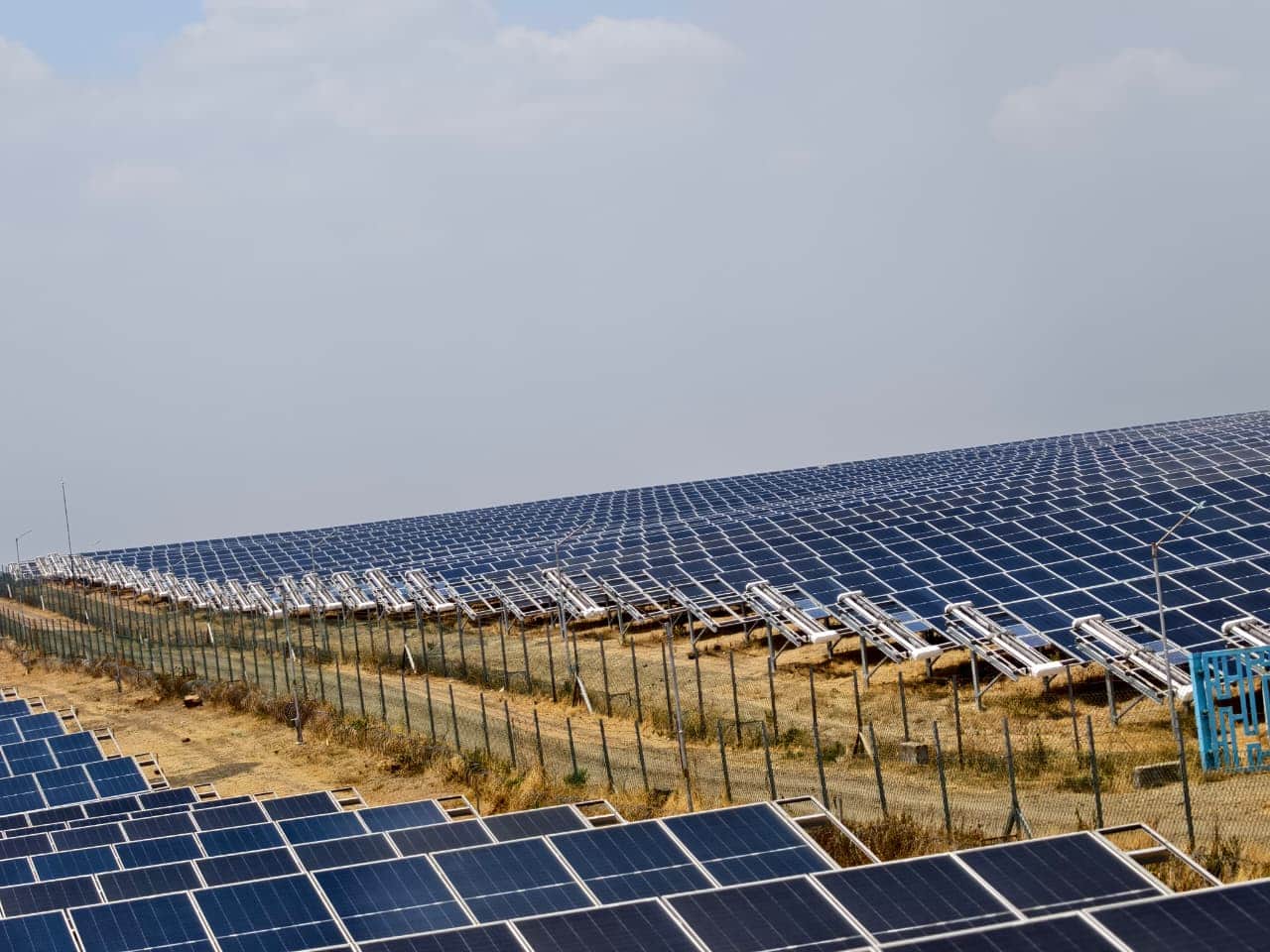
This case study looks at robotic solar panel cleaning Maharashtra. The 75 MW solar facility is located in Lakshim Lada, Kolhapur. The site faced many operational problems. These problems came from a complex local environment. The area has high levels of agricultural dust. It also has heavy road grit from nearby roads. Local humidity cycles made these issues much worse. These factors created uneven soiling patterns on the solar strings. This caused unpredictable power losses across the entire site.
The plant used manual night crews for cleaning. This created many logistical problems. It also caused scheduling conflicts with other tasks. For example, cleaning often clashed with vegetation control. Supervisors also had no way to prove cleaning was done. They lacked per-block proof for specific solar strings. This made maintenance very hard to manage.
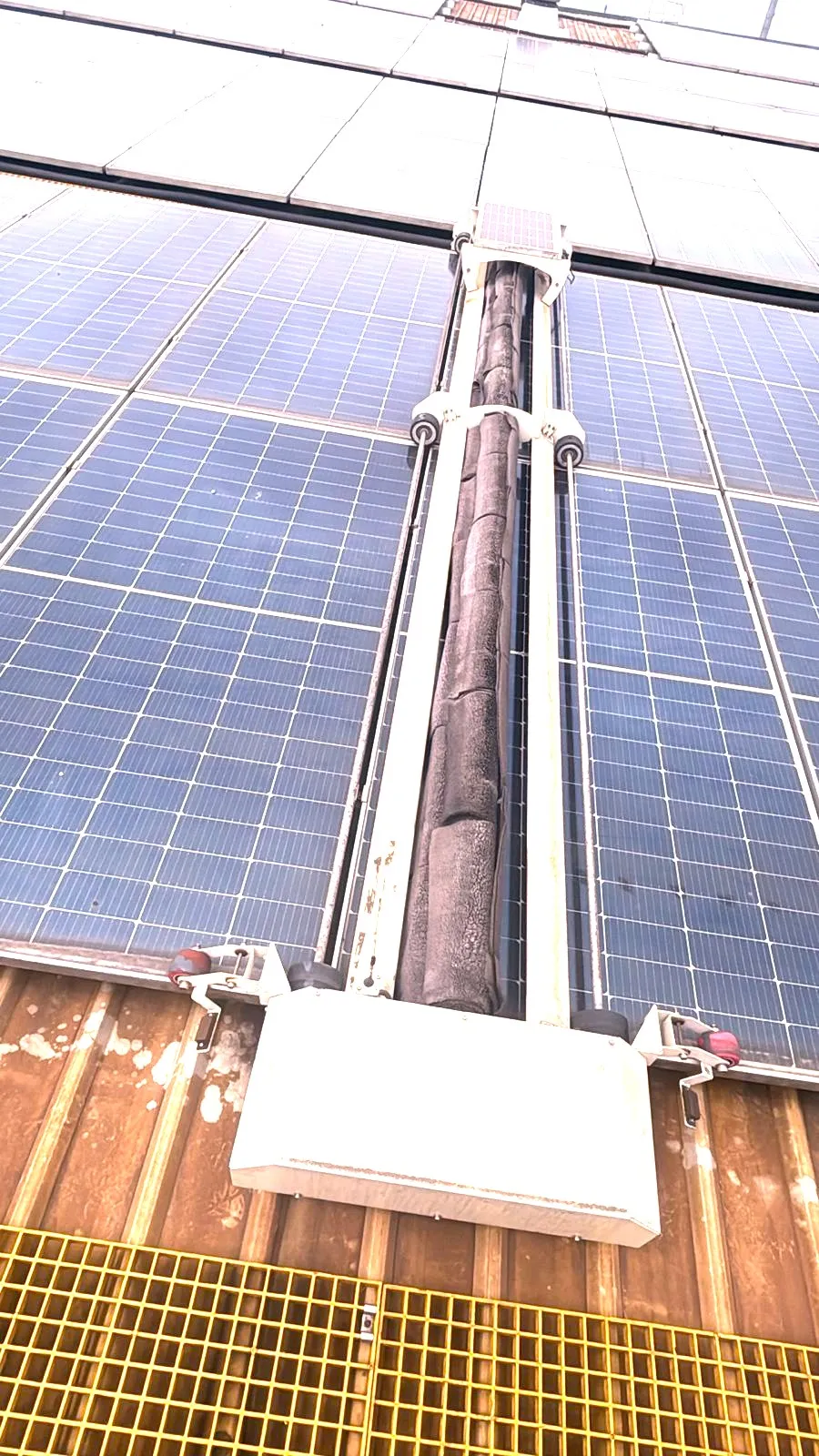
Taypro solved these issues with a new strategy. We deployed six GLYDE automatic robots. The site chose a Capex procurement model. The GLYDE units use patented dual-pass microfiber technology. They provide daily autonomous, waterless cleaning. This ensures consistent performance without manual labor. The deployment has restored 75 MWh of annual generation. It also saves 280,000 liters of water every year. This makes the plant more efficient and predictable.
Environment and soiling at Lakshim Lada, Kolhapur
Managing Site-Specific Soiling at Lakshim Lada
The 75 MW solar facility in Lakshim Lada, Kolhapur, has a unique microclimate. This climate makes routine maintenance very difficult. The site is often covered in heavy road grit. This grit comes from nearby transit routes. It acts as a primary abrasive on the panels. When this grit mixes with agricultural dust, it creates a thick layer. This layer is not uniform across the solar arrays.
Humidity cycles in the region add another layer of difficulty. Moisture levels change during the cooler hours of the day. This moisture causes the dust and grit to bind to the modules. The result is a hardened, uneven crust on the surface. Because the soiling is not even, the power loss is also uneven. Some strings produce much less power than others. This makes predicting the total plant yield very hard.
This uneven soiling creates three main problems for O&M teams in Maharashtra:
- String-level inconsistency: Soiling density changes across the field. This makes standard, blanket cleaning schedules very inefficient.
- Maintenance visibility issues: Supervisors could not verify which strings were actually clean. They lacked per-block proof of cleaning completion. This led to missed areas and steady power loss.
- Logistical friction: The site relied on night crews for cleaning. These crews often had to work during vegetation control windows. This made it hard to coordinate different maintenance tasks.
The site has now moved to an autonomous strategy. We use GLYDE robots to handle these issues. These robots perform daily waterless cleaning cycles. This prevents dust from hardening on the glass. It ensures consistent performance across the whole 75 MW portfolio. The site no longer relies on rigid, manual schedules.
O&M before Taypro
Overcoming Operational Constraints at the 75 MW Lakshim Lada Facility
Before Taypro, the Lakshim Lada site faced high operational costs. The 75 MW plant struggled with intense regional soiling. Agricultural dust and road grit were constant problems. These materials created uneven soiling patterns at the string level. Humidity cycles made these patterns shift constantly. This variability meant that manual cleaning was very hard to manage. It was never efficient at this scale.
The site also dealt with heavy logistical burdens. These included several major bottlenecks:
- Logistical Bottlenecks: The plant depended heavily on water tankers. Coordination of night crews was also very difficult. This created constant scheduling conflicts for the manager.
- Operational Clashes: Cleaning cycles often happened at the same time as other work. For example, cleaning would clash with vegetation or civil O&M. This made site management very complicated.
- Audit Gaps: There was no way to verify cleaning results. Supervisors lacked per-block proof of work. It was impossible to know which strings were actually cleaned. This led to unverified maintenance claims and power gaps.
The project transitioned to an automatic system using GLYDE robots. This moved the plant from a reactive approach to a proactive one. The autonomous fleet now manages daily waterless cleaning. This removes the need for water logistics entirely. It also removes the need for night crews. This shift ensures consistent cleaning across all blocks. It provides the auditability and recovery needed for utility-scale solar in Maharashtra.
Fleet and deployment at 75 MW
Fleet Deployment and Technology Selection for 75 MW
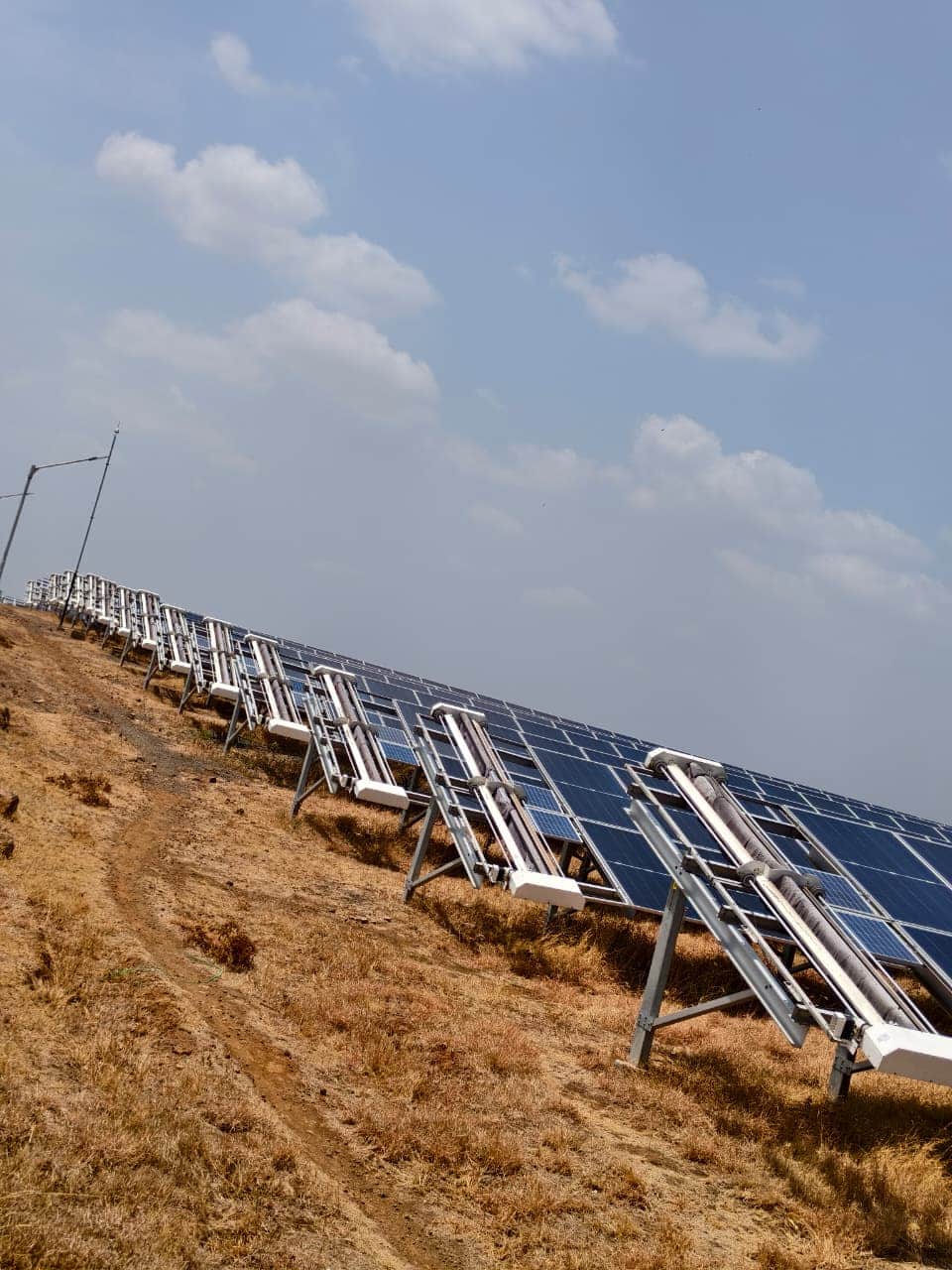
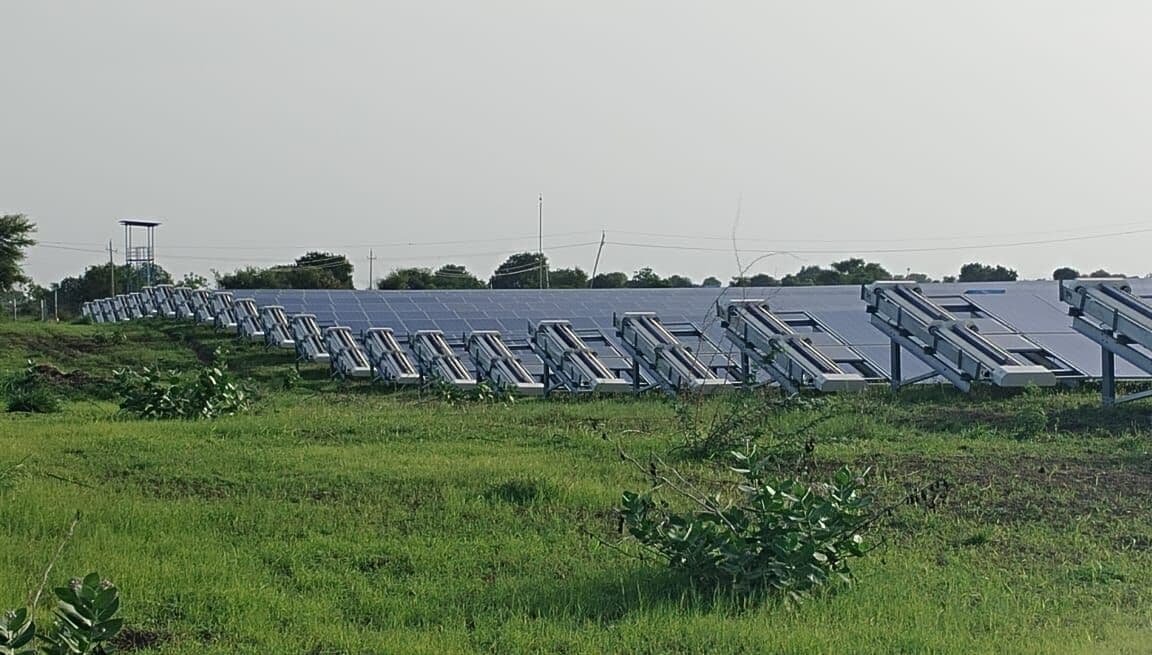
The 75 MW Lakshim Lada facility used a Capex procurement model. They integrated six GLYDE automatic robots into their system. This fleet was designed for the specific needs of Maharashtra. The region suffers from agricultural dust and heavy road grit. It also deals with residue from humidity cycles. The GLYDE robots are perfect for these conditions.
We chose GLYDE technology for its special cleaning method. It uses a patented dual-pass microfiber system. Most cleaning robots use simple brushes that scrub the glass. This can sometimes be abrasive. The GLYDE system is different. It uses a combination of airflow and microfiber. The airflow lifts the fine dust first. Then, the microfiber pad wipes the surface clean. This dual-pass method works without using any water.
This technology is vital for preserving the panels. The airflow and microfiber prevent grit from scratching the glass. This protects the long-term integrity of the solar modules. By using a waterless method, the facility removed many manual labor issues. It also eliminated the scheduling bottlenecks caused by water tankers. The maintenance process is now much smoother.
The deployment also included full NECTYR fleet integration. This ensures that every robot sends real-time data to the O&M team. Every robot provides telemetry to the supervisors. This allows for daily waterless cleaning cycles on all programmed rows. The results are very clear. The plant has recovered 75 MWh of generation every year. It has also reduced water use by 280,000 liters annually. NECTYR gives supervisors granular control. They can now verify cleaning performance block-by-block. This completely eliminates the previous audit gaps.
Operations and monitoring
Operations and Monitoring: Eliminating Manual Guesswork in Maharashtra
At the 75 MW Lakshim Lada site, O&M teams used to guess. They had erratic cleaning schedules. They did not have proof of which strings were actually clean. Managing manual water logistics was a constant struggle. Coordinating night crews often clashed with other site maintenance tasks. This led to uneven soiling from dust and humidity cycles.
The transition to six GLYDE automatic robots changed everything. The site now uses daily waterless cleaning cycles. This fleet operates fully autonomously. Every panel receives consistent microfiber maintenance. This happens regardless of water scarcity or labor issues. By using the NECTYR portal, supervisors now have digital certainty. They no longer have to rely on manual reports.
- Per-block proof: NECTYR provides detailed audit logs at the string level. This confirms that every programmed row is serviced on schedule.
- Performance accountability: The system generates verifiable reports. This allows managers to make data-driven decisions about cleaning frequency.
- Automated wind holds: The robots have integrated sensors. NECTYR protocols manage automatic pauses during high-wind events. This protects both the robots and the solar arrays.
- Generation recovery: Daily cleaning addresses uneven soiling immediately. This leads to a recovery of 75 MWh in annual generation. It also provides significant water savings.
This automated layer removes the myths of limited cleaning. Some people believe robots can only clean a few times a month. That is not true for automatic systems. Using NECTYR allows for real-time oversight. The 75 MW plant maintains peak performance through disciplined, daily waterless operations. This system scales effectively with the local environment.
Results and impact
Quantifiable Operational Gains for the 75 MW Lakshim Lada Plant
The move to robotic solar panel cleaning Maharashtra has changed this site. The 75 MW Lakshim Lada facility has seen a massive transformation. We replaced manual, labor-intensive cycles with six GLYDE robots. This helped the site fight agricultural dust and road grit. Daily waterless cleaning has stabilized the power output. Uneven soiling no longer disrupts energy production.
The impact goes beyond just energy. The shift to waterless technology has cut costs. It has eliminated high logistics costs and water consumption. This transition is a benchmark for sustainable operations. It improves site public relations. This is due to documented environmental stewardship and water conservation.
- Generation Recovery: Automated maintenance has recovered a lot of annual generation. It has eliminated the soiling losses that used to plague the plant.
- Water Conservation: The facility is now fully waterless. This saves huge volumes of water every year. It supports local sustainability and reduces dependency on water logistics.
- Operational Stability: The transition removed the unpredictability of manual crews. The GLYDE fleet provides consistent, high-frequency maintenance. It meets strict O&M standards.
- Data-Backed Oversight: NECTYR gives supervisors verifiable proof of cleanliness. This connects robotic activity directly to better site output and asset health.
Peer comparison and planning checklist
Peer Comparison: Maharashtra Robotic Solar Panel Cleaning
The 75 MW Lakshim Lada project uses a specialized strategy. This is different from other regional projects. For example, the Soyegaon solar project focuses on baseline cleaning. The Ahmadnagar-Jalalpur 10 MW site uses smaller-scale logistics. In contrast, Lakshim Lada uses full-scale GLYDE robotics. This addresses the specific dust and humidity cycles in Kolhapur. Unlike smaller setups, this fleet provides NECTYR-verified data. It replaces manual night-crew schedules with a disciplined, daily waterless routine. This proves that fixed-tilt utility sites can eliminate soiling losses. They do this through high-frequency, automated intervention.
Planning Checklist for Robotic Solar Deployments
- Audit your regional soiling patterns first. Decide if you need dual-pass microfiber or single-pass PBT cleaning.
- Map your existing site infrastructure. Identify the best areas for charging and docking.
- Integrate NECTYR fleet monitoring. Replace manual sign-offs with verified, string-level data.
- Synchronize your daily robotic cleaning windows. This avoids conflicts with vegetation and civil maintenance.
- Assess your water logistics costs. Use this to validate the long-term ROI of a CAPEX robotic fleet.