
Executive summary
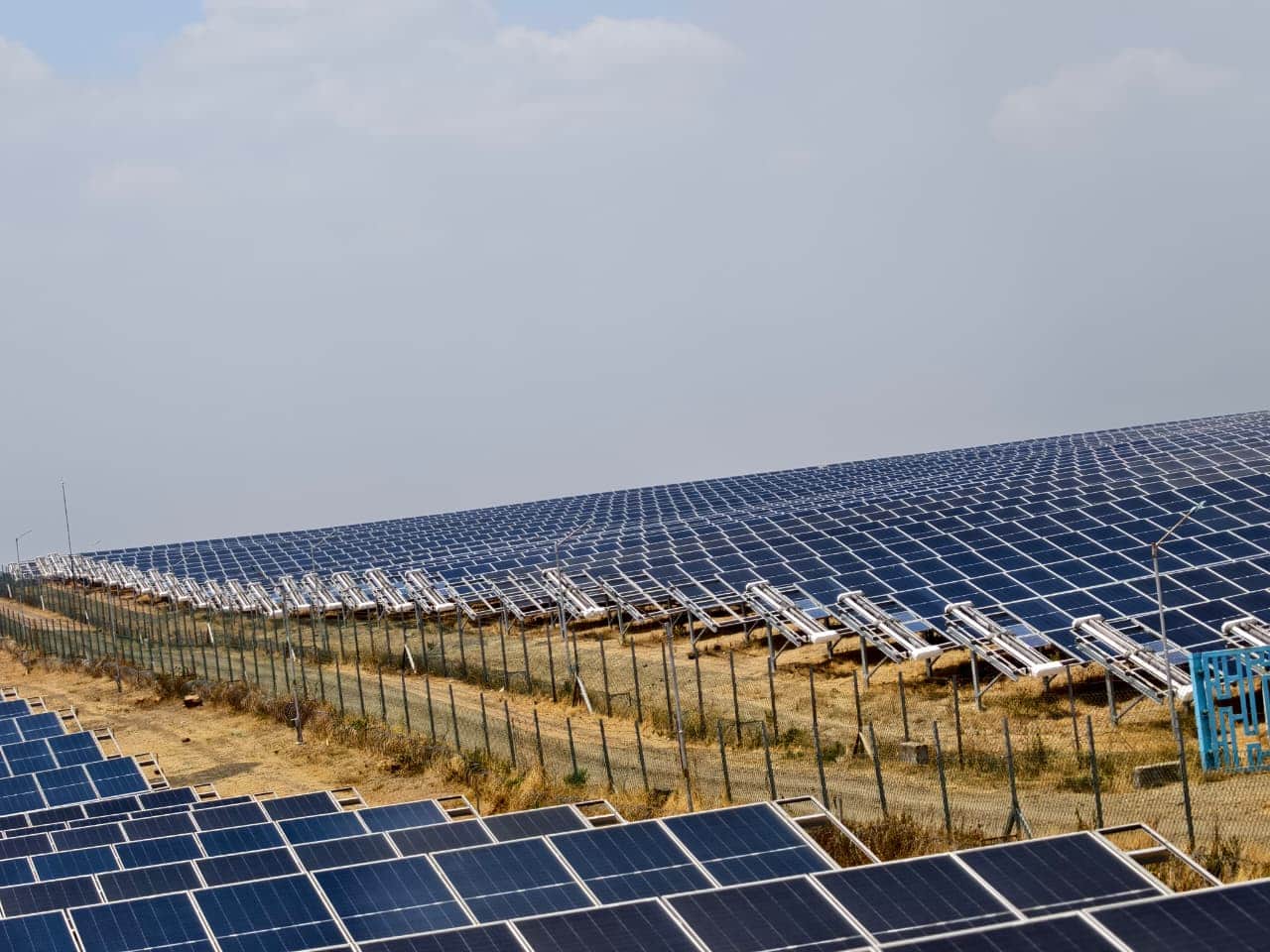
solar panel cleaning robot India, The 375 MW Nayveli solar plant in Tamil Nadu faces unique operational hurdles. These challenges stem from the local environment. The site deals with two main types of debris. First, coastal film dust drifts in from the nearby shoreline. Second, local traffic grit settles on the modules from surrounding roads. This combination creates heavy soiling on the border rows. Eventually, this dust moves toward the plant center and reduces energy output.
Traditional cleaning methods were not enough for this scale. High salinity levels make water-based cleaning risky. Salt residue can cause corrosion on module frames. Furthermore, water is scarce in this region. Relying on manual labor and flooding washes was both expensive and unsustainable. To fix this, the facility moved to an automated, Capex-driven maintenance model. The plant deployed three GLYDE solar panel cleaning robots to manage the site.
These robots provide daily waterless cleaning cycles. They use patented dual-pass microfiber technology to keep panels clear. The system is managed through the NECTYR operations portal. This allows the team to sync cleaning with the grid export schedule. The results are impressive. The plant now recovers an additional 375 MWh of energy every year. It also saves 1.4 million litres of water annually through this waterless approach.
Environment and soiling at Nayveli
Managing Coastal Film and Traffic Grit at Nayveli
The 375 MW Nayveli solar facility operates in a complex micro-climate. Its location in Tamil Nadu creates specific soiling patterns. The site is inland but still feels the impact of the coast. Fine coastal film dust drifts toward the facility. This dust is light and can be quite adhesive. At the same time, heavy grit from local road traffic settles on the panels. These two factors create a high-density layer of grime on the module surfaces.
The soiling follows a predictable path. The border rows of the array catch the most debris. This accumulation happens quickly because of the wind and traffic patterns. As the border rows become heavily soiled, the dust migrates deeper into the plant. This movement can cause massive energy losses if not managed. A solar panel cleaning robot India solution is necessary to stop this migration before it hits the center of the array.
Standard water washing is not a viable solution here. The local water has high salinity. Using this water for cleaning can leave salt deposits behind. These deposits can damage the glass or corrode the metal components. Additionally, moving large amounts of water to a site of this size is a logistical nightmare. The plant needed a way to clean without water and without the risk of salt damage.
The deployment of three GLYDE robots solved these issues. The technical strategy focused on three main pillars:
- Daily Waterless Cycles: The robots perform daily dry cleaning. This prevents the coastal film from hardening on the glass.
- Syncing with the Grid: Using the NECTYR portal, cleaning is scheduled during non-export hours. This ensures the plant meets its energy delivery targets.
- Superior Cleaning Physics: The dual-pass microfiber system handles sticky grime better than standard brushes. This keeps the panels transparent and efficient.
This automated transition has replaced costly manual labor. The plant now maintains consistent performance across all rows. The robotic system handles the aggressive local dust profile with ease.
O&M before Taypro
Managing Salinity and Grid Conflicts in 375 MW Operations
Before Taypro arrived, the Nayveli plant struggled with several O&M constraints. The first major issue was the water quality. The available water supply contained high levels of salt. Frequent manual washing was a major liability. Salt residue and mineral deposits often remained on the modules. Over time, this threatened to corrode the frames and degrade the glass surfaces.
The second challenge was the high cost of manual labor. Managing large cleaning crews is difficult at a 375 MW scale. It requires massive amounts of water hauling. It also requires strict safety oversight to protect workers. Because water is a limited resource in this region, the plant could not afford repeated flooding washes. This created a constant struggle to balance cleaning needs with water availability.
The third challenge involved timing and the electrical grid. The plant had to follow strict export schedules. Manual cleaning often conflicted with these windows. This created several operational friction points:
- Export Interference: Cleaning had to be timed so it did not disrupt plant telemetry. It also could not interfere with revenue-critical export windows.
- Scheduling Conflicts: O&M teams struggled to coordinate manual cleaning with electrical maintenance. The two tasks often overlapped, causing delays.
- Lack of Data: Without an automated system, it was hard to track cleaning quality. There was no way to verify if every module was actually clean. This led to gaps in performance reports.
The site needed an autonomous strategy to remove these manual dependencies. Shifting to a waterless, robotic model allowed the site to solve the water scarcity problem. It also fixed the labor and scheduling issues. The plant can now maintain high output despite the coastal salinity.
Fleet and deployment at 375 MW
Fleet composition and Capex deployment for 375 MW arrays
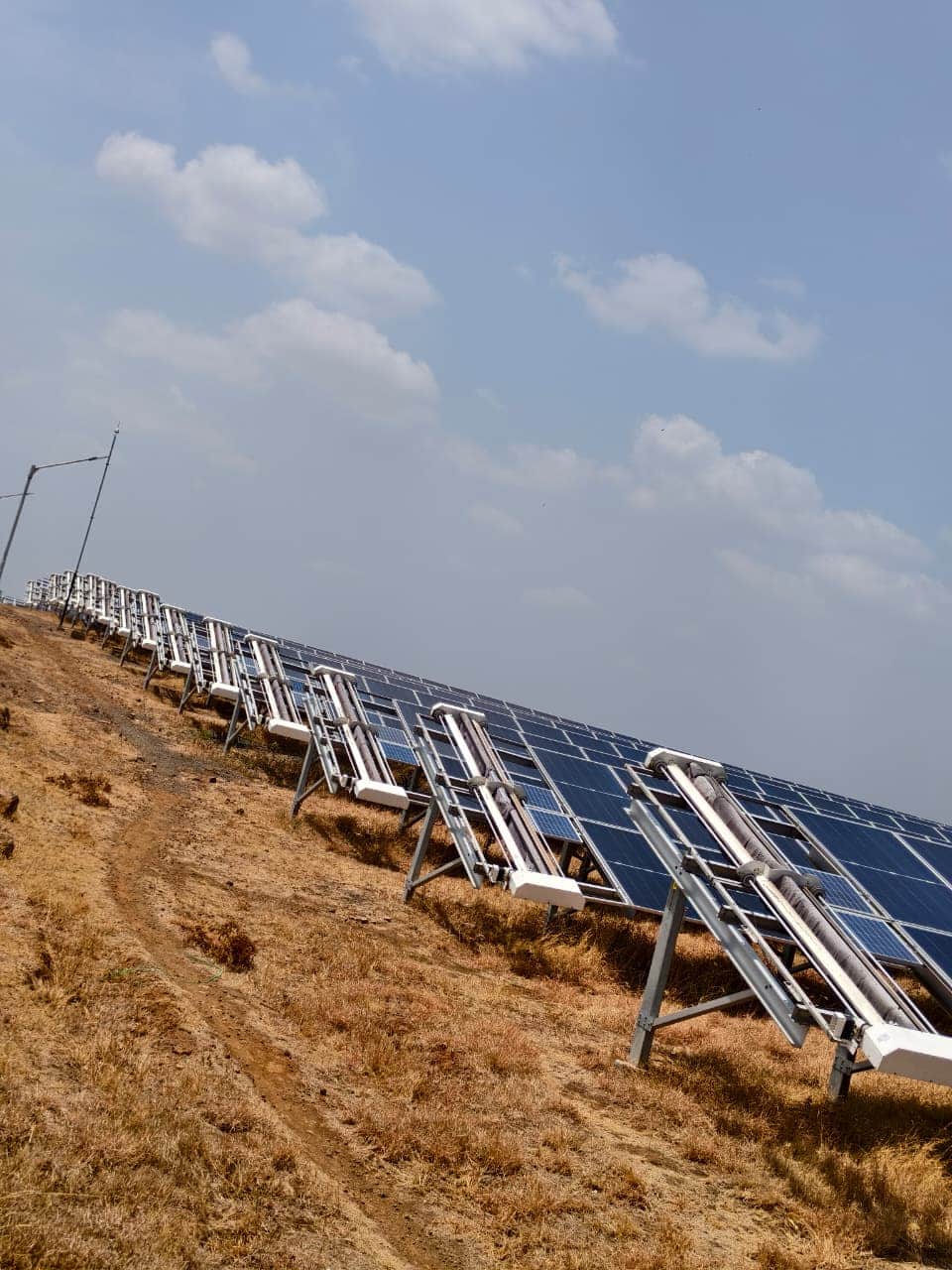
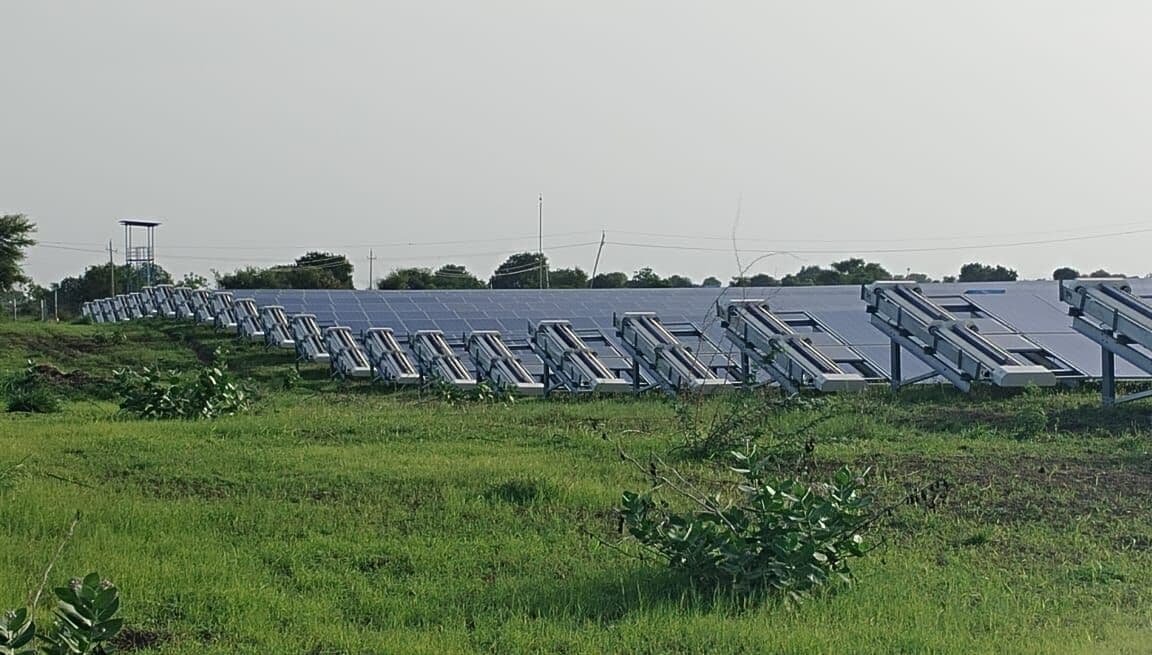
To protect the performance of the 375 MW Nayveli plant, management changed its approach. They moved away from manual cleaning. Instead, they chose a Capex procurement model. They deployed a fleet of three GLYDE robots. This fleet provides a consistent cleaning layer for the entire site. It is specifically designed to tackle coastal film and traffic grit.
The decision to use the GLYDE system was based on the site's technical needs. This plant uses a fixed-tilt ground mount layout. The GLYDE robot is a perfect fit for this setup. Several key features made it the right choice:
- Patented Dual-Pass Technology: The GLYDE uses a unique method. It combines airflow with microfiber. This lifts settled dust without any liquid. It preserves the modules in the high-salinity environment.
- Full Autonomy: These robots work on a daily cycle. They integrate into the site's workflow without needing constant human help.
- Grid Compliance: The robots follow schedules set in NECTYR. This ensures cleaning happens only when it is safe for the grid.
The commissioning process was very detailed. Engineers calibrated the robots to the specific terrain of the Nayveli site. They also ensured the robots could communicate perfectly with the NECTYR fleet portal. By using this automated method, the plant avoids the problems of water management. The site no longer relies on heavy flooding washes to clean the panels.
This transition has changed the plant's economics. The deployment recovers significant energy every year. It also protects the local water supply. The GLYDE fleet ensures all cleaning tasks are logged and verified. This provides the plant owner with reliable, data-driven maintenance. It turns a difficult environmental challenge into a streamlined industrial process.
Operations and monitoring
Optimising daily cleaning cycles via NECTYR monitoring
The Nayveli facility uses the NECTYR fleet monitoring portal to manage performance. This platform is the central hub for the GLYDE fleet. It allows the operations team to run daily waterless cleaning cycles with high precision. The robots operate autonomously. They typically perform their cycles overnight. This prevents any interference with daytime energy production or grid export requirements.
Managing a 375 MW site requires constant attention to dust levels. The robots must clean the border rows before the grit reaches the center. The NECTYR dashboard gives management total control over this process. Each robot sends real-time data back to the portal. The team can monitor:
- Robot Status: See if a robot is active, charging, or idle.
- Battery Levels: Ensure every robot has enough power for its route.
- Row Coverage: Confirm exactly which modules have been cleaned.
This data allows the O&M team to integrate cleaning logs into the larger maintenance calendar. The system also handles environmental risks automatically. For example, high winds can be a problem for robotic movement. When regional wind speeds hit a certain limit, the NECTYR portal triggers a wind hold. This alerts the operations lead immediately. It prevents the robots from operating in unsafe conditions and protects the hardware.
This inspection-led approach is much better than manual washing. Manual cleaning relies on unpredictable flooding cycles. In contrast, the NECTYR system provides a predictable, data-backed schedule. This ensures the Nayveli plant stays at peak efficiency. It also reduces the need for human oversight on the field. The result is a safer, more efficient, and more reliable operation.
Results and impact
Quantifiable recovery and water conservation at the Nayveli plant
The switch to robotic maintenance has changed the Nayveli facility. The plant no longer suffers from the volatility caused by dust. By using an automated fleet for high-frequency cleaning, the project has stabilized its output. The main success is the large amount of clean energy recovered each year. This is a major improvement over the old manual cleaning methods.
The impact is seen in both energy and environmental metrics. The 375 MW installation has achieved several key goals:
- Water Preservation: The plant has eliminated all water use for cleaning. This saves over 1.4 million litres of local water every year.
- Consistent Cleaning: Daily cycles prevent dust from hardening. This is vital for modules located near coastal zones.
- Lower Labor Costs: The plant has reduced its reliance on manual crews. This avoids the difficulty of scheduling labor during peak export windows.
- Asset Protection: The robots help prevent scratching and salt damage. This keeps the modules in healthy condition for longer.
The plant owner has turned a difficult O&M problem into a stable asset. The GLYDE fleet ensures that every row is cleaned regularly. This prevents dust from building up at the borders. The proactive approach ensures the project meets its generation targets consistently. Nayveli now serves as a model for large-scale utility projects in India. It proves that waterless robotic cleaning is the best way to balance energy recovery with sustainability.
Peer comparison and planning checklist
Peer deployment comparison and scale assessment
The Nayveli project shows how Taypro scales automation for massive sites. This 375 MW facility overcomes the limits of smaller installations. For example, a 10 MW site in Chennai often uses fewer robots. In those smaller sites, staff can manually check batteries and charging. In contrast, the Nayveli plant is a large-scale industrial asset. It requires a fully autonomous approach to maintain hundreds of thousands of panels.
Large sites like Nayveli need high-frequency maintenance. The coastal film and traffic grit are too aggressive for occasional cleaning. Smaller 10 MW projects can use simpler logistics. However, a 375 MW site must sync perfectly with the grid. It needs advanced coordination to ensure zero downtime. This deployment proves that waterless robotic cleaning is the most effective strategy for large solar farms in India.
Project deployment planning checklist
- Check Grid Windows: Identify when the grid can accept power. Schedule daily waterless cleaning during non-export hours.
- Map Soiling Patterns: Find where the dust is heaviest. Focus on border rows near roads or coasts to stop dust migration.
- Evaluate Salt Levels: Check the salinity of local water. Use dual-pass microfiber to avoid salt-based corrosion.
- Verify Connectivity: Ensure the site has RF mesh or NECTYR coverage. You need real-time monitoring for a full fleet.
- Align Maintenance: Sync robot charging with the plant's maintenance calendar. This prevents downtime during peak sunlight hours.