Executive summary
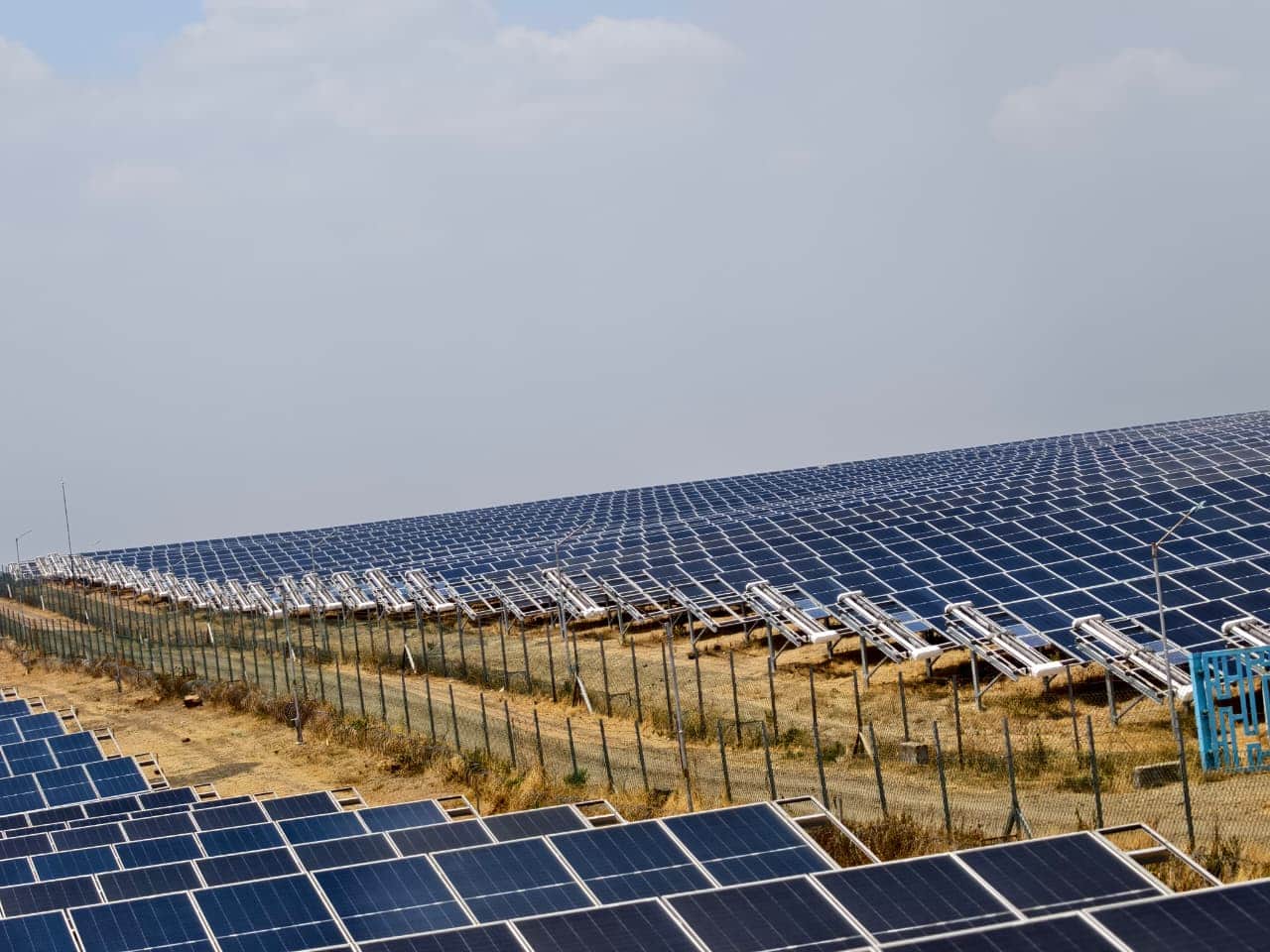
The 250 MW ground-mount solar facility in Neneva, Gujarat, serves as a critical case study in addressing the regional challenges of cementitious and coastal film dust. These persistent soiling layers, combined with the presence of quarry-adjacent strings and heavy haul roads, frequently compromised plant performance and introduced significant month-to-month PR variance. Faced with limited groundwater and heavy reliance on water tankers, the plant required a shift away from traditional wet washing to protect its long-term financial viability.
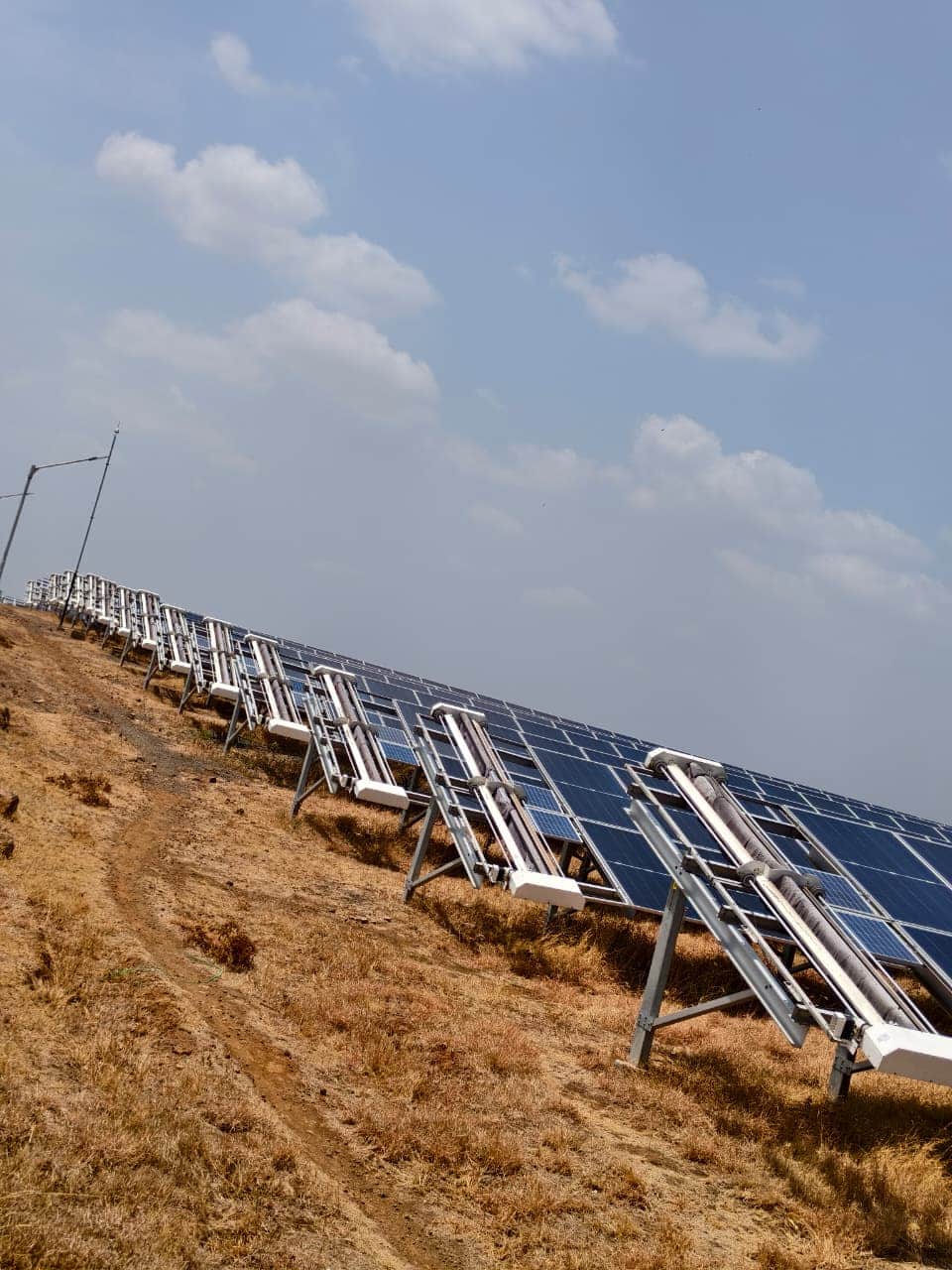
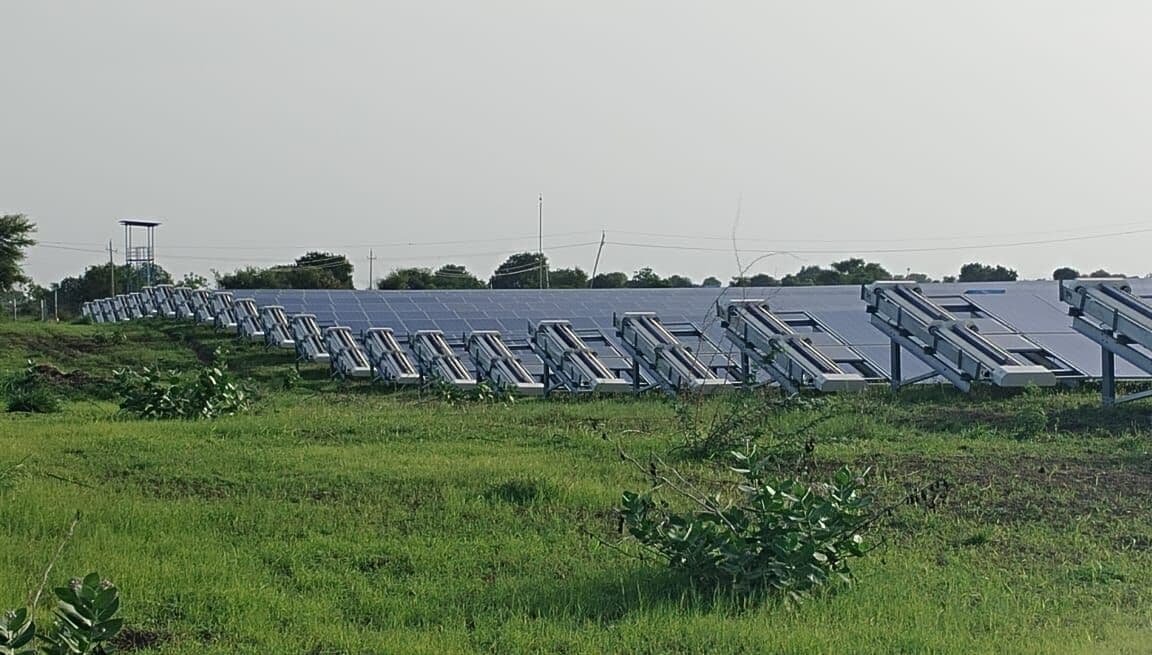
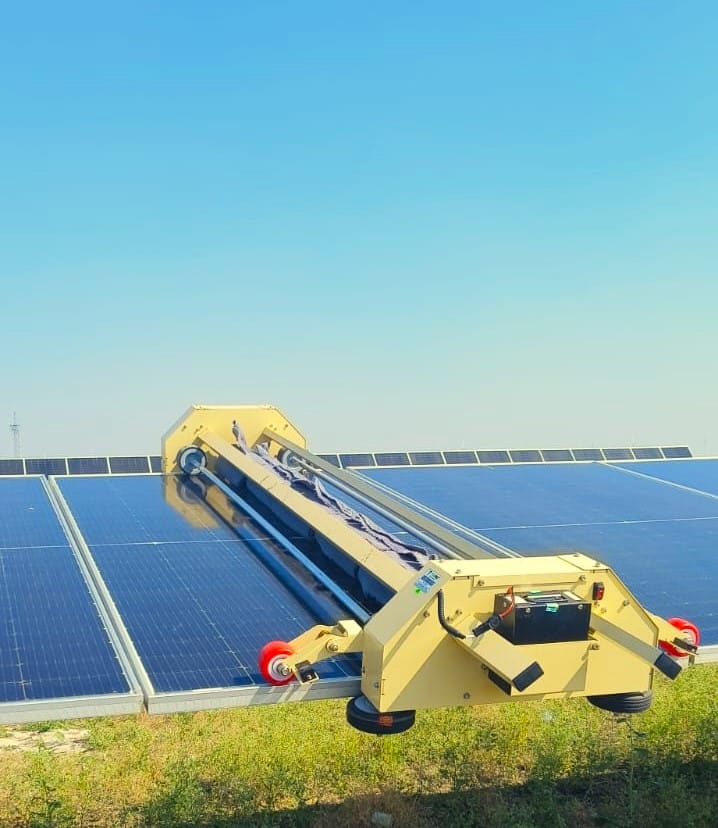
To stabilize energy output, Taypro deployed a fleet of 10 GLYDE fully automatic robots using a Capex-based procurement model. By implementing daily waterless cleaning cycles powered by patented dual-pass microfiber technology, the site eliminated its dependence on external water logistics. This transition has proven transformative for the portfolio, resulting in 9.38 GWh of additional annual power generation. Furthermore, the site now achieves a reduction of 35 million liters of water consumption per year, demonstrating a sustainable model for utility-scale operations in arid regions.
Environment and soiling at Neneva Gujarat
Managing Site-Specific Soiling at Neneva: Cementitious Dust and Coastal Film
The 250 MW Neneva project presents a complex soiling profile that diverges from typical inland dust accumulation. The facility is subject to dual-threat soiling, characterized by heavy inland cementitious dust from nearby quarries alongside a persistent, moisture-trapping coastal film. These particulates do not settle uniformly, often creating localized hotspots that degrade panel transparency faster than regional averages.
The impact of this environment is most acute along the plant perimeter and infrastructure corridors. Specifically, strings adjacent to active haul roads experience accelerated soiling rates due to airborne particulate disturbance from transport vehicles. This uneven distribution frequently complicates performance reporting, as specific arrays fall significantly behind the average Performance Ratio (PR) of the wider 250 MW site.
The Neneva site faces significant operational constraints regarding traditional cleaning methods:
- Groundwater resources are limited and sensitive to high-frequency extraction.
- Tanker logistics for wet cleaning are unreliable and expensive during peak dusty months.
- Large IPP portfolios require a verified, logged cleaning cadence to satisfy financial audits.
- Manual wet washing introduces safety risks and creates inconsistent module cleaning quality across the fleet.
These conditions necessitate an autonomous, waterless approach to maintain output stability. By utilizing a fleet of 10 GLYDE robots, the site transitions from reactive, manual intervention to daily waterless cleaning cycles. This strategy mitigates the specific impact of quarry dust and coastal film, providing O&M teams with the granular data required to explain month-to-month PR variance to stakeholders. This proactive management of site-specific environmental variables is fundamental to protecting the long-term yield of the 250 MW asset.
O&M before Taypro
Neneva: Cementitious Dust and Coastal Film
The 250 MW Neneva project presents a complex soiling profile that diverges from typical inland dust accumulation. The facility is subject to dual-threat soiling, characterized by heavy inland cementitious dust from nearby quarries alongside a persistent, moisture-trapping coastal film. These particulates do not settle uniformly, creating localized hotspots that degrade panel transparency faster than regional averages.
The impact of this environment is most acute along the plant perimeter and infrastructure corridors. Strings adjacent to active haul roads experience accelerated soiling rates due to airborne particulate disturbance from transport vehicles. This uneven distribution frequently complicates performance reporting, as specific arrays fall significantly behind the average Performance Ratio of the wider 250 MW site.
The Neneva site faces significant operational constraints regarding traditional cleaning methods:
- Groundwater resources are limited and sensitive to high-frequency extraction.
- Tanker logistics for wet cleaning are unreliable and expensive during peak dust months.
- Large IPP portfolios require a verified, logged cleaning cadence to satisfy financial audits.
- Manual wet washing introduces safety risks and creates inconsistent module cleaning quality across the fleet.
These conditions necessitated an autonomous, waterless approach to maintain output stability. By deploying a fleet of 10 GLYDE robots, the site transitioned from reactive, manual intervention to daily waterless cleaning cycles. This strategy mitigates the specific impact of quarry dust and coastal film, providing O&M teams with the granular data required to justify month-to-month performance variance to finance. Proactive management of these environmental variables is fundamental to protecting the long-term yield of the asset.
Fleet and deployment at 250 MW
Deployment Strategy for the 250 MW Neneva Fleet
The 250 MW Neneva project utilizes a strategic CAPEX procurement model for its robotic fleet. By investing in a dedicated fleet of 10 GLYDE robots, the asset owner retains full control over long-term O&M costs while eliminating the variable expenditures associated with water-reliant cleaning services. This procurement strategy ensures the immediate integration of autonomous hardware into the plant balance sheet.
The deployment scales across the ground-mount footprint by focusing on high-soiling priority zones identified by site sensors. The GLYDE system is specifically suited for this installation, providing:
- Patented dual-pass microfiber cleaning to remove stubborn coastal films and cementitious dust.
- Fully autonomous operation to maintain a consistent daily cleaning schedule across critical strings.
- Integrated RF mesh and NECTYR connectivity to provide real-time status updates and cleaning logs.
Commissioning of the fleet focused on precise mapping of the plant layout within the NECTYR operations portal. Each robot was calibrated for the specific row lengths and terrain of the Neneva site, ensuring seamless navigation and self-docking at charging stations. This setup allows for continuous, daily waterless cleaning cycles that prevent the accumulation of uneven soiling layers.
By automating the cleaning process, the 250 MW facility reduces the reliance on limited groundwater and tanker logistics during peak dust months. The NECTYR portal provides O&M teams with a granular, auditable record of every cleaning cycle. This digital proof of operation is essential for reconciling month-to-month Performance Ratio variance with financial stakeholders, directly securing the projected 9.38 GWh of additional annual generation. The deployment validates that high-frequency autonomous cleaning is a scalable solution for utility-scale assets facing complex, high-soiling environmental conditions.
Operations and monitoring
Operations and Monitoring at Neneva
The 250 MW Neneva project utilizes a strategic CAPEX procurement model for its robotic fleet. By investing in a dedicated fleet of 10 GLYDE robots, the asset owner retains full control over long-term O&M costs while eliminating the variable expenditures associated with water-reliant cleaning services. This procurement strategy ensures the immediate integration of autonomous hardware into the plant balance sheet.
The deployment scales across the ground-mount footprint by focusing on high-soiling priority zones identified by site sensors. The GLYDE system is specifically suited for this installation, providing:
- Patented dual-pass microfiber cleaning to remove stubborn coastal films and cementitious dust.
- Fully autonomous operation to maintain a consistent daily cleaning schedule across critical strings.
- Integrated RF mesh and NECTYR connectivity to provide real-time status updates and cleaning logs.
Commissioning of the fleet focused on precise mapping of the plant layout within the NECTYR operations portal. Each robot was calibrated for the specific row lengths and terrain of the Neneva site, ensuring seamless navigation and self-docking at charging stations. This setup allows for continuous, daily waterless cleaning cycles that prevent the accumulation of uneven soiling layers.
By automating the cleaning process, the 250 MW facility reduces the reliance on limited groundwater and tanker logistics during peak dust months. The NECTYR portal provides O&M teams with a granular, auditable record of every cleaning cycle. This digital proof of operation is essential for reconciling month-to-month Performance Ratio variance with financial stakeholders, directly securing the projected 9.38 GWh of additional annual generation. The deployment validates that high-frequency autonomous cleaning is a scalable solution for utility-scale assets facing complex, high-soiling environmental conditions.
Results and impact
Optimizing Performance Ratio at Neneva: Robotic Cleaning Outcomes
The transition to autonomous waterless cleaning has fundamentally shifted the performance profile of the 250 MW Neneva installation. By moving away from water-intensive manual methods, the project has successfully mitigated the logistical constraints of groundwater scarcity and tanker dependency. This shift provides the plant operator with a reliable, repeatable cleaning cadence that is no longer dictated by external resource availability.
The qualitative impact on plant health is defined by the stability of the generation curve. By implementing a daily cleaning cycle across critical strings, the GLYDE fleet prevents the accumulation of inland cementitious dust and coastal film. This consistent upkeep ensures that the modules operate at their peak designed efficiency, even during the peak dust months that previously caused significant performance drops.
Key operational outcomes from this transition include:
- Significant annual preservation of local groundwater resources, reducing the environmental footprint of plant operations.
- Consistent recovery of generation potential, ensuring that the plant yields a stable and predictable output.
- Data-driven transparency through NECTYR, which allows management to reconcile cleaning logs with PR fluctuations for financial stakeholders.
The Neneva deployment demonstrates that proactive robotic maintenance is the most effective defense against localized soiling disparities. By maintaining a uniform panel surface across the entire 250 MW array, the facility avoids the performance degradation typical of haul road and quarry-adjacent modules. The successful integration of this automated layer proves that high-frequency, robotic intervention is essential for maintaining the long-term viability and profitability of large-scale solar assets in Gujarat.
Peer comparison and planning checklist
Peer Comparison and Operational Planning for Large-Scale Gujarat Assets
The 250 MW Neneva installation sits between the operational profiles of the 50 MW Maya project and the 300 MW Bachau DVC site. While the Maya project utilizes a smaller footprint, Neneva mirrors the scale of the Bachau DVC asset, requiring a robust, autonomous solution to manage vast surface areas. Unlike smaller sites where manual or semi-automatic interventions may suffice, Neneva demands the high-frequency coverage provided by the GLYDE system. This prevents the performance degradation that typically impacts large-scale Gujarat assets exposed to inland cementitious dust and coastal film.
By comparing the 250 MW Neneva deployment to the 300 MW Bachau DVC project, operators can observe that automated daily waterless cycles are the benchmark for maintaining consistent Performance Ratio (PR) at this scale. The Neneva site successfully replaces the manual labor intensity found at mid-sized 50 MW assets with a CAPEX-focused robotic strategy. This ensures that haul roads and quarry-adjacent strings remain as productive as the core array, mitigating the financial risks associated with uneven soil-induced losses.
Use the following checklist to plan your utility-scale robotic integration:
- Audit site-specific soiling sources, such as nearby quarries or coastal winds, to determine necessary cleaning frequency.
- Evaluate current groundwater availability to justify the transition from wet washing to waterless robotic CAPEX models.
- Map the NECTYR integration points to ensure all cleaning logs are accessible for monthly financial and PR reporting.
- Establish a preventive maintenance schedule for robot charging stations to ensure continuous daily autonomous operation.
- Coordinate with O&M teams to designate specific zones for robot storage and battery management during peak dust seasons.