Executive summary
solar panel cleaning robot India. The 26.3 MW utility-scale solar plant in Parliament, Delhi, sits in a high-visibility urban area. This site faces constant challenges from local pollution. Particulate matter and a thick smog film settle on the solar modules very quickly. This buildup happens frequently between rain events. Traditional cleaning methods are not practical here. Using water tankers for wet washing is difficult in dense urban zones. The site needed a sustainable and waterless maintenance strategy to protect its power output.
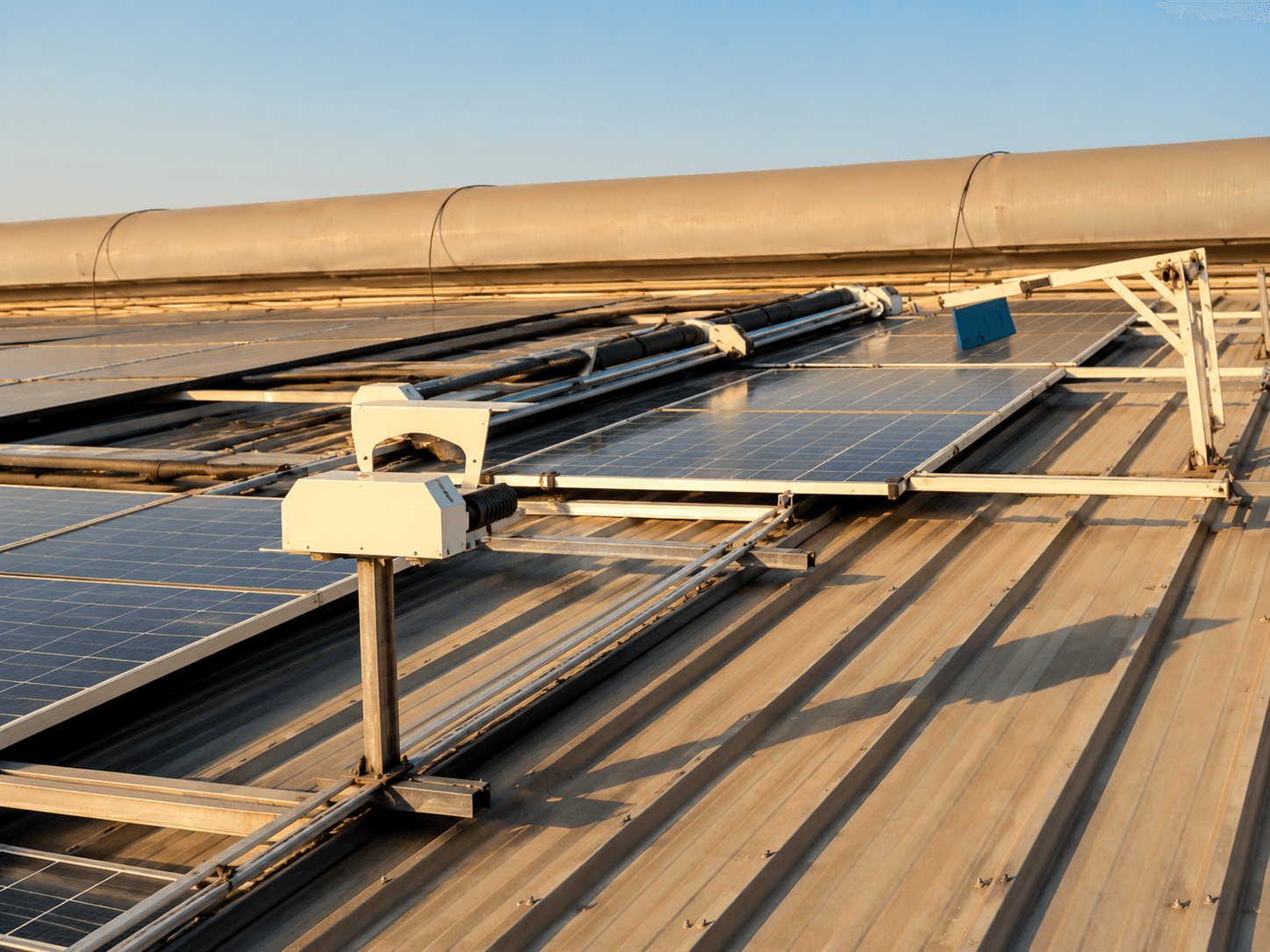
Taypro addressed these needs by deploying two NYUMA automatic robots. The plant chose a Capex procurement model for this project. These robots perform daily autonomous cleaning cycles. This keeps the module surfaces clear and transparent. The system uses NECTYR connectivity for full fleet monitoring. This allows managers to get clear, auditable reports for all stakeholders. The deployment eliminates water use entirely. It also secures an extra 26.3 MWh of clean energy every year. This proves that robotic automation is the best choice for Delhi's urban climate.
Environment and soiling at Parliament Delhi
Managing Urban-Edge Soiling in Delhi
The 26.3 MW installation in Parliament, Delhi, operates in a very specific environment. Standard dust is not the only problem here. The site deals with unique urban-edge pollutants. Local smog creates a thin and tacky film on the glass. This residue is quite stubborn. It acts like a glue for other wind-blown particles. This layer builds up rapidly between rain events. It creates a barrier that blocks sunlight from reaching the cells. This process severely reduces solar transmittance and energy yield.
Wet cleaning with heavy water tankers is often a bad fit for this site. There is limited space for large equipment in such a dense area. Manual labour for wet washing is also very expensive. Furthermore, this is a high-visibility asset. Stakeholders expect consistent performance and clean modules. Frequent manual washes are hard to schedule and track. The site requires a recurring and low-impact solution. A continuous cleaning cycle is the only way to stop the smog film from hardening. This prevents the cumulative buildup of airborne pollutants.
O&M before Taypro
Managing Urban-Edge Soiling and Operational Gaps
Before the robotic solution, the 26.3 MW Parliament plant faced many O&M hurdles. The plant sits in a dense urban zone. This means it suffers from constant smog and particulate buildup. This residue bonds to the modules between rain events. Traditional cleaning methods often fail to remove this sticky film. The plant could not maintain peak performance through manual methods alone.
Manual maintenance was not a good fit for this compact location. Managing water tankers was logistically difficult. It often caused access issues and high labour costs. The reliance on human workers also made the process unpredictable. There were several major gaps in the old system:
- There were no detailed or auditable cleaning logs for stakeholders.
- Manual labour and water logistics created high costs in the urban area.
- Smog film buildup caused energy losses that manual cleaning could not stop.
These issues meant the facility often produced less power than expected. Plant managers needed a precise and data-driven approach. They required a way to ensure accountability and steady asset health.
Fleet and deployment at 26.3 MW
Fleet and Deployment Strategy at 26.3 MW
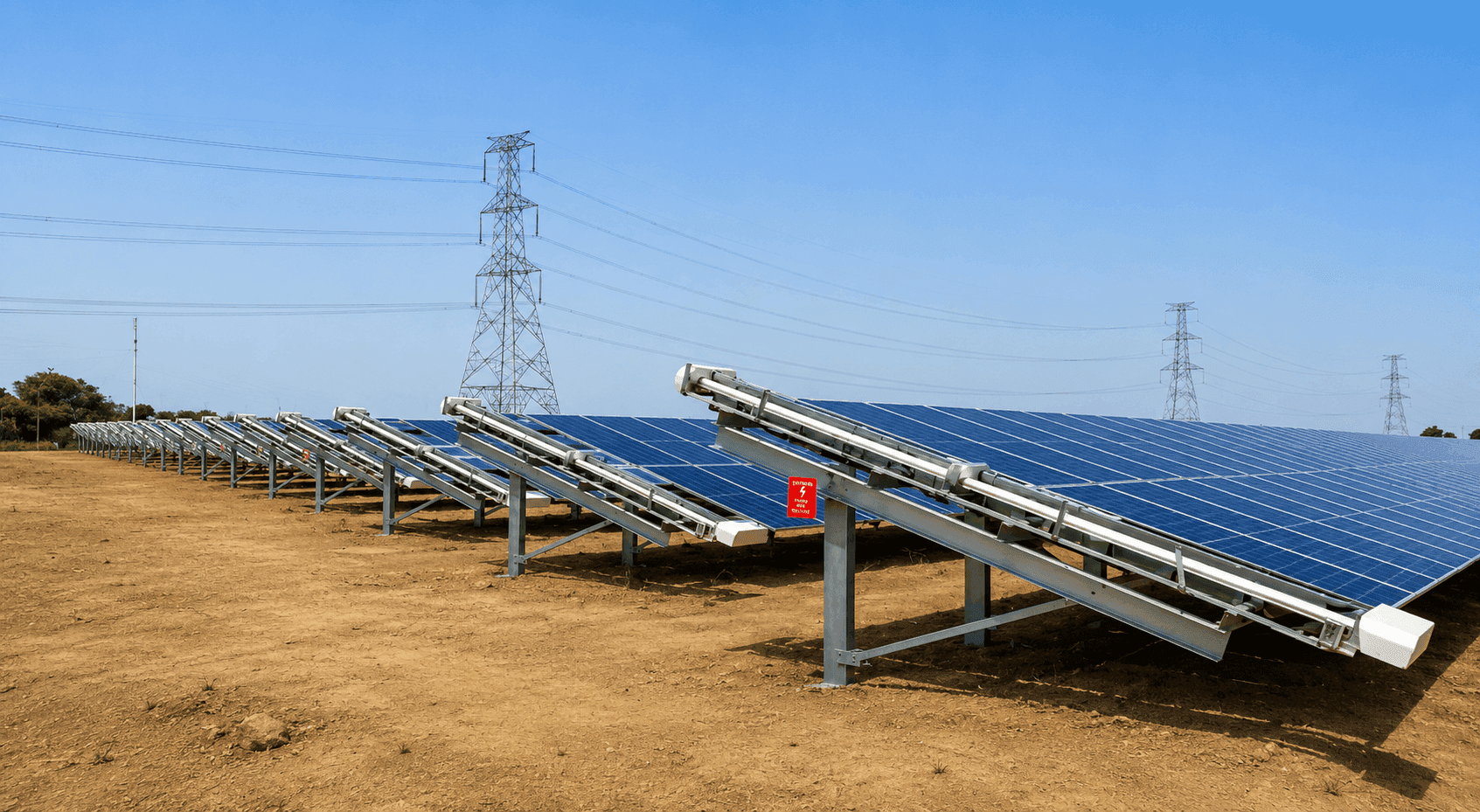
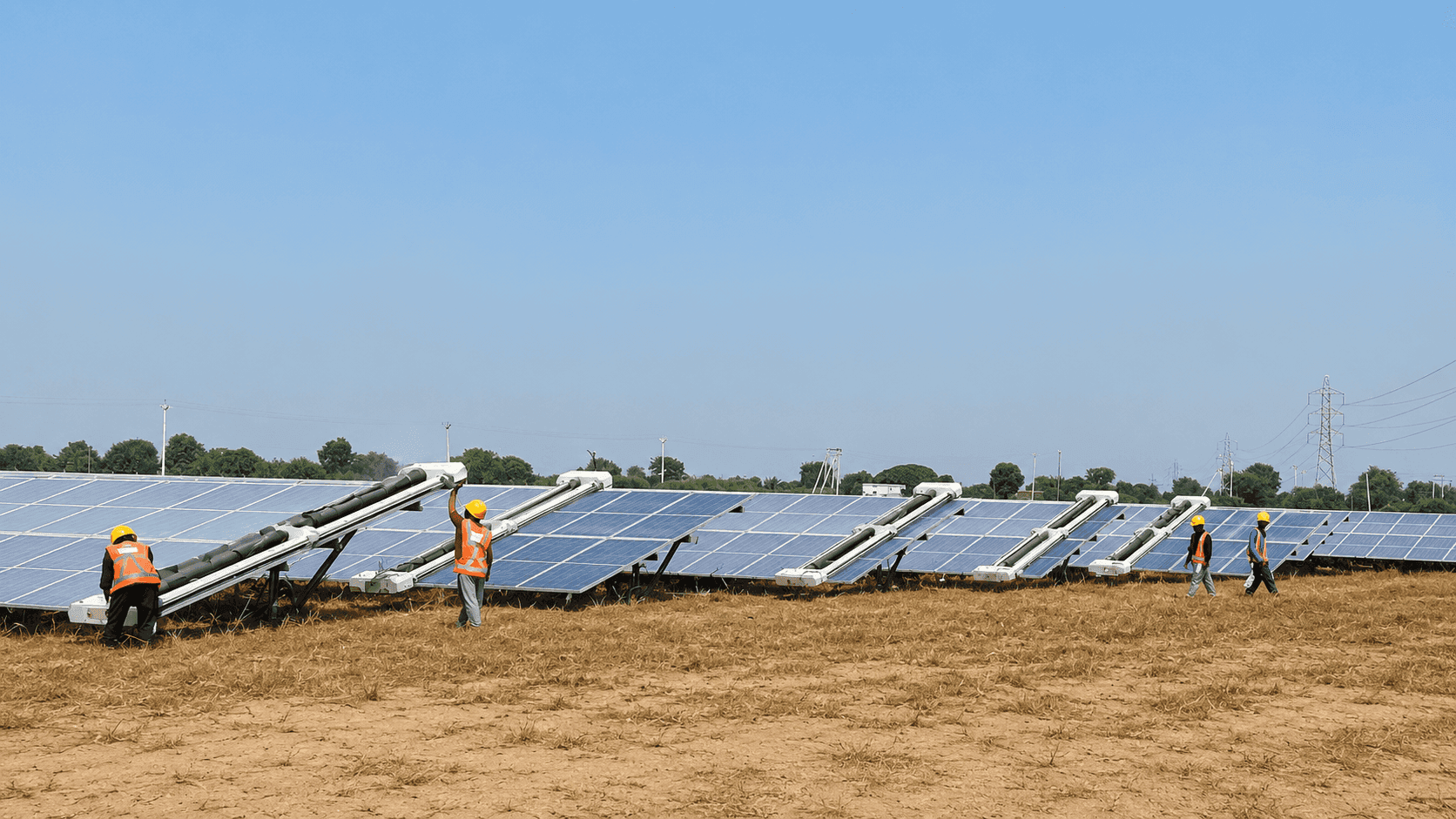
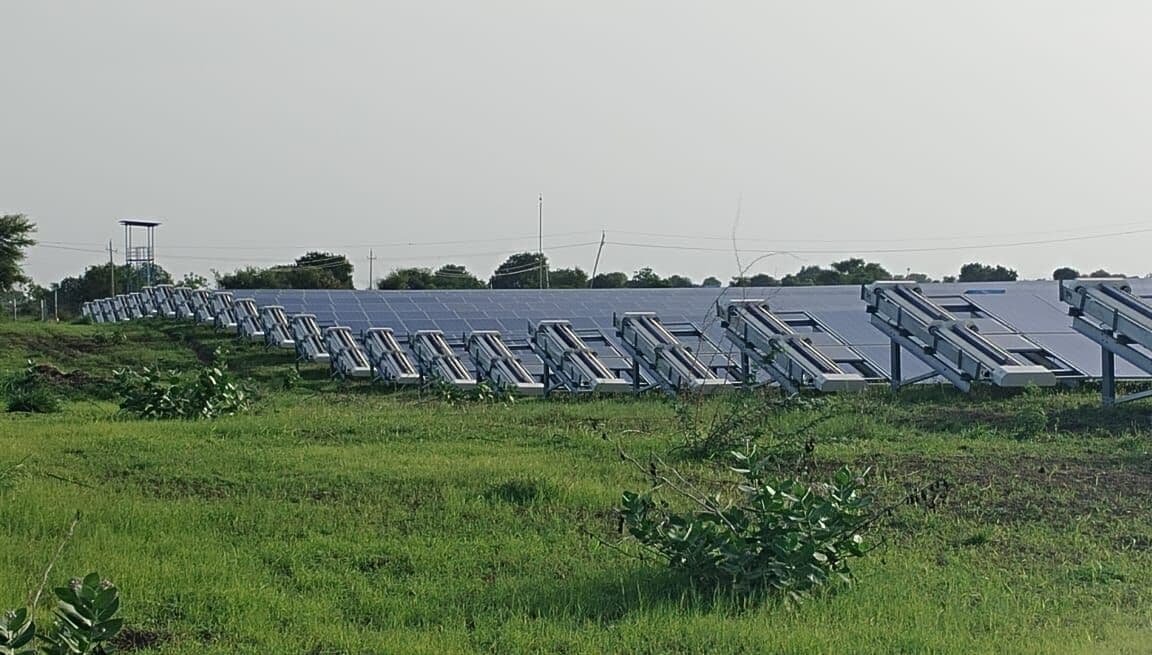
The 26.3 MW Parliament site uses a Capex model. This allows the owners to have full control over their cleaning assets. The fleet includes two NYUMA automatic solar panel cleaning robots. These robots are built for fixed-tilt utility plants. By choosing a Capex path, the plant manages its own O&M. This removes the high costs of third-party water-based services. It also simplifies the logistics of cleaning in a busy city.
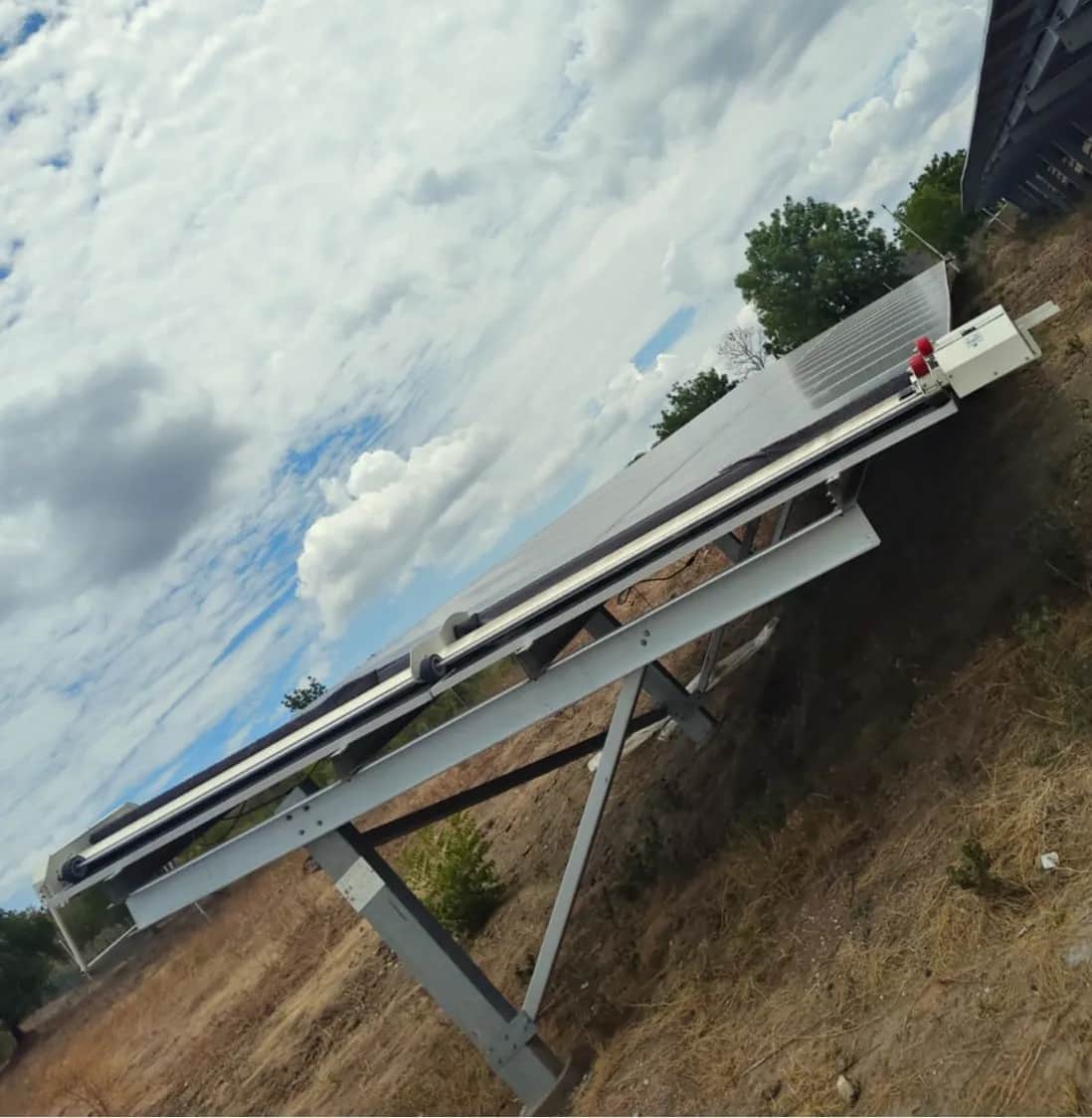
The NYUMA robots are set for daily waterless cleaning cycles. This frequency is vital to fight the Delhi smog. It prevents the soot from sticking to the modules. The robots are highly capable machines. Each unit features a UV-stable PBT brush with a 5-star helix design. This provides effective single-pass cleaning. The robots are IP65 rated for durability. They can operate in temperatures up to 90°C. They move at a steady speed of 10 to 15 metres per minute. This ensures the entire site is covered efficiently.
The deployment focused on seamless site integration. Key features of this setup include:
- Two NYUMA units cover the full 26.3 MW capacity.
- Daily dry cleaning removes dust without using any water.
- The system saves 98 thousand litres of water every year.
- NECTYR connectivity provides real-time data and auditable logs.
- The Capex model stabilizes the long-term O&M budget.
- The system delivers an extra 26.3 MWh of generation annually.
Operations and monitoring
Optimized Operations and NECTYR Accountability
Managing a 26.3 MW plant in Delhi requires strict operational discipline. The smog film can damage energy yields if left alone. To prevent this, the site uses two NYUMA robots. They follow a daily waterless cleaning schedule. This proactive approach cleans the modules before the grime can bond. It keeps the panels bright even when it does not rain for long periods.
The site uses the NECTYR platform for all monitoring. NECTYR provides digital logs for every single cleaning cycle. This gives stakeholders a clear way to audit the cleaning performance. Managers do not have to rely on visual inspections. The software also helps protect the hardware. It includes advanced skip logic to handle bad weather. For example, the robots enter a wind-hold mode during high winds. This prevents any damage to the robots or the modules. This level of automation turns cleaning from a chore into a precise science.
The automated regime also removes the need for water tankers. This makes the site much more efficient. The Parliament project shows how daily maintenance works. It turns solar O&M into a predictable and high-yield strategy. Every cycle is captured and logged for total transparency.
Results and impact
Quantifiable Operational Gains for High-Visibility Assets
The shift to robotic maintenance at Parliament Delhi has worked well. The plant has seen big gains in resource saving and power output. By using two NYUMA robots, the site replaced manual cleaning. The new daily dry cleaning regimen is much more consistent. It also removes the risks of using water tankers on site. This makes the whole operation safer and cleaner.
The main benefits of this deployment include:
- Significant water savings through a waterless cleaning process.
- Higher energy generation by removing smog and urban dust.
- Total auditability of all tasks via the NECTYR platform.
- Lower and more stable O&M costs through Capex procurement.
- Better protection of the solar modules from grime buildup.
The facility no longer reacts to dirt. Instead, it uses a predictable and automated strategy. This optimizes energy output despite the tough Delhi environment. The plant now operates with much higher efficiency.
Peer comparison and planning checklist
Peer Comparison and Implementation Strategy
The Parliament Delhi site is a model for high-visibility asset management. It is much better than traditional manual cleaning. A typical 20 MW site might use irregular manual wet washing. That method wastes water and lacks data. In contrast, the Parliament site uses NYUMA robots for daily, waterless cleaning. It is also different from a 30 MW tracker plant using semi-automatic HELYX robots. HELYX robots require manual pick-and-place moves by staff. The Parliament facility is fully autonomous. This removes human error and reduces labor costs. It also provides the strict audit trails that urban stakeholders demand.
If you are planning robotic cleaning for an urban site, follow these steps:
- Analyze the local soiling to understand the smog and dust levels.
- Check the plant layout to ensure NYUMA robots can navigate the rows.
- Set up audit protocols in NECTYR for clear stakeholder reporting.
- Create a local support plan to keep the robots running without downtime.
- Compare the ROI of Capex robots against manual labor and water costs.