
Quick answer
- Tracker panels rotate roughly -55° to +55°; fixed-tilt robots assume static geometry.
- Tracker robots need parking integration, angle tolerance, and inter-row transfer (7 to 10 m gaps).
- Cleaning runs at dawn/dusk; parking loss is ~0.1 to 0.2% of daily output vs 3 to 5% soiling.
- GLYDE-X class robots are engineered for single-axis rows; GLYDE for fixed-tilt.
- Evaluate weight limits on torque tubes before fleet orders.
Robotic Cleaning Systems Designed for Single-Axis Solar Trackers: Compatibility, Challenges, and What to Look For
Single-axis trackers are now the default configuration for new utility-scale solar plants in India above 50 MW. They deliver 15–25% higher annual energy yield than fixed-tilt arrays by following the sun through the day. But they also introduce a cleaning problem that fixed-tilt robots cannot solve: the panel surface tilts, rotates, and moves, and most robotic cleaning systems were built for stationary surfaces.
This article covers which robotic systems are specifically designed and compatible with single-axis tracker installations in India, what the key engineering challenges are, and what O&M teams should evaluate before deploying robots on a tracker plant.
Why Fixed-Tilt Robots Don't Work on Single-Axis Trackers
Fixed-tilt robotic cleaning systems, like most rail-mounted units designed for ground-mounted plants, are built around a static panel geometry. The robot's docking, brush engagement, and end-of-row transfer systems assume the panel surface stays at a fixed angle. On a single-axis tracker, the panel torque tube rotates from approximately −55° to +55° through the day, and the inter-row spacing changes as adjacent rows tilt.
Deploying a fixed-tilt robot on a tracker plant creates three critical failure modes: the robot cannot dock reliably at varied angles, brush pressure is uneven across the rotated panel surface, and end-of-row transfers to adjacent tracker rows require inter-row crossing mechanisms that fixed-tilt systems don't include.
Key Design Requirements for Tracker-Compatible Cleaning Robots
Angle-adaptive mounting or bridge mechanism: The robot must either tolerate a range of panel angles (typically 0° to ±55°) or dock only when the tracker is parked at a fixed cleaning angle (usually horizontal, 0°). Both approaches are used commercially.
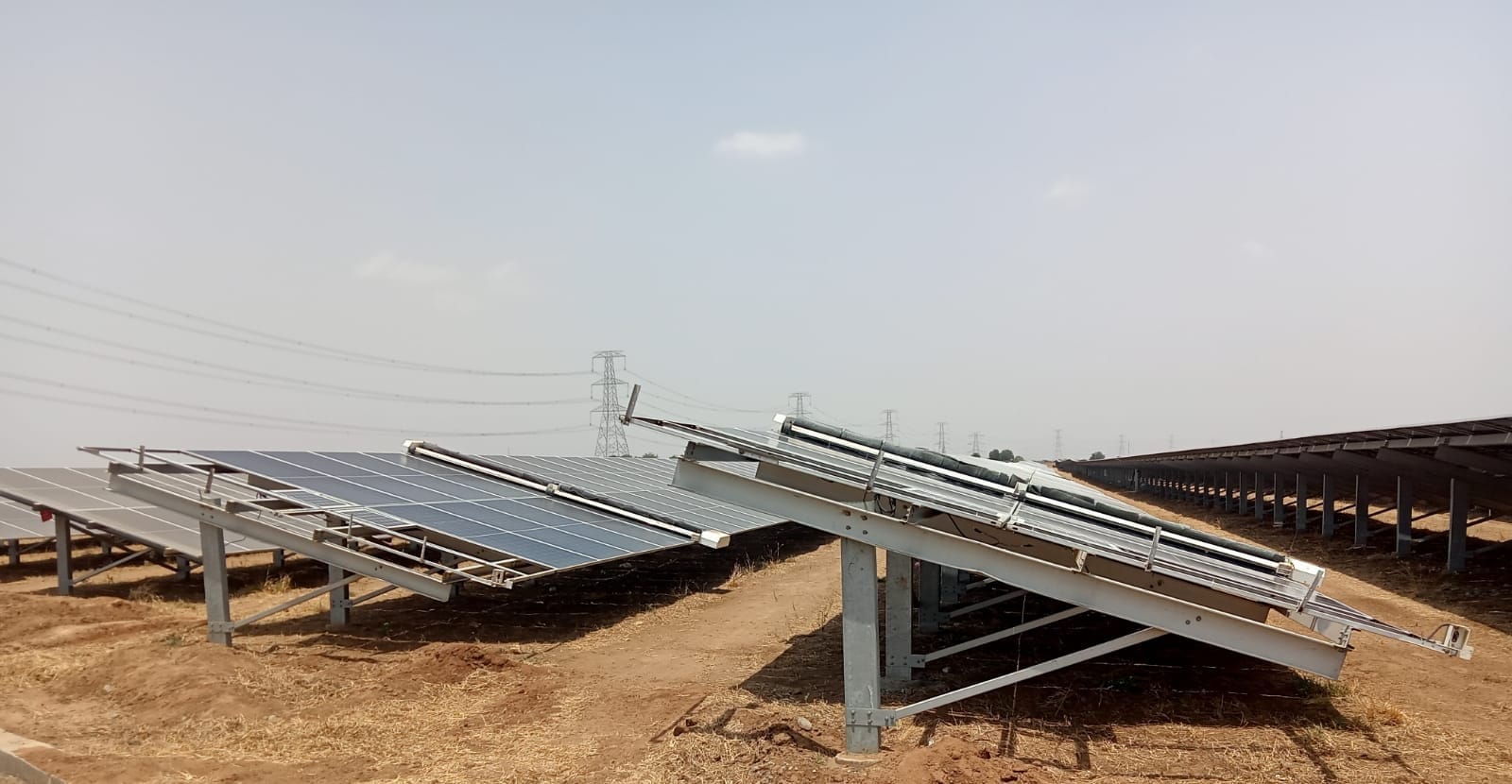
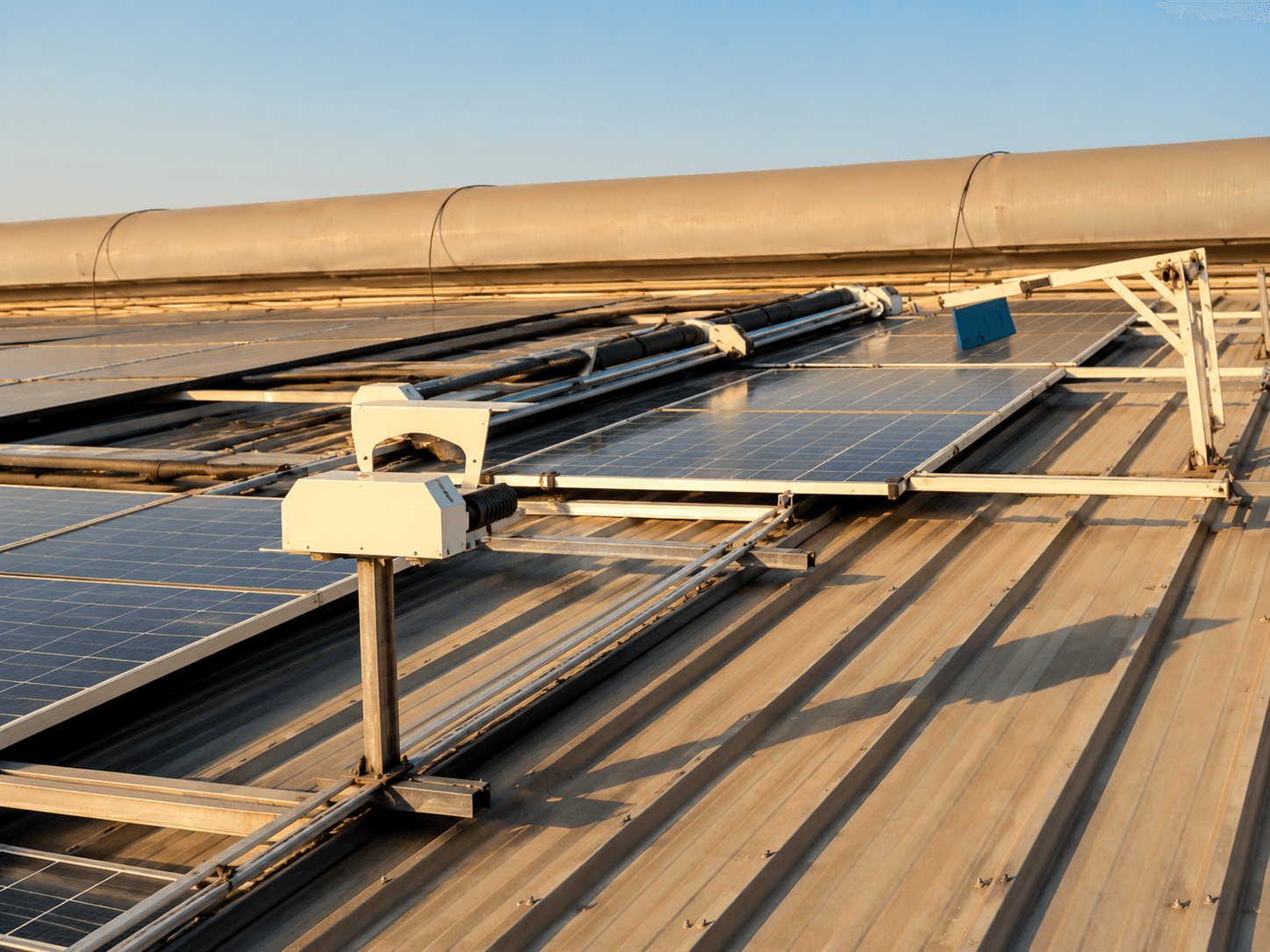
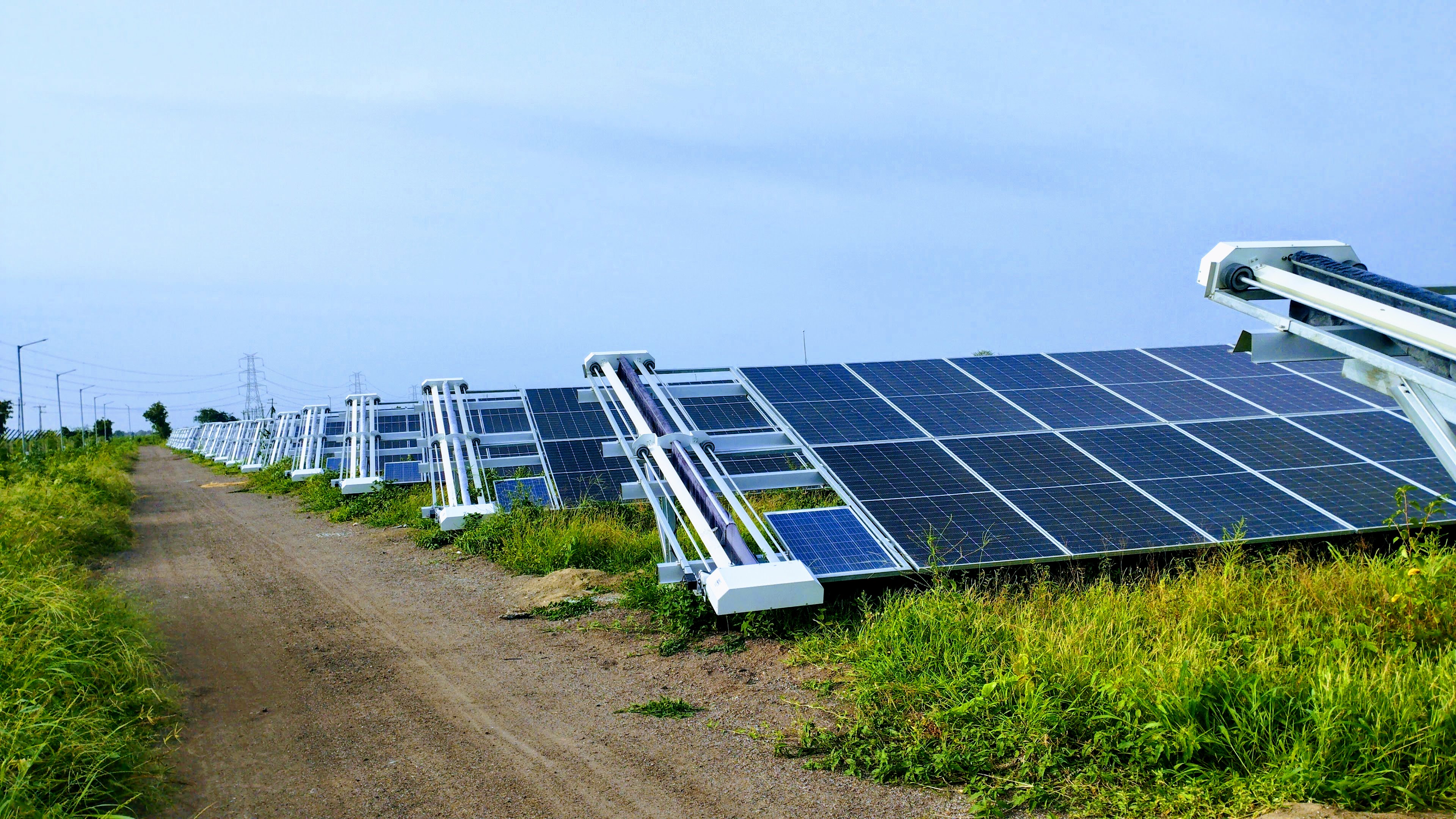
Autonomous inter-row transfer: Tracker rows are separated by 7–10 metres of inter-row space. The robot must cross between rows without human intervention, using dedicated bridge structures or a self-positioning transfer vehicle.
Tracker controller integration: The cleaning robot must communicate with the tracker's control system to command a parking position before cleaning and release after, without interfering with normal tracking operation or creating safety interlocks.
Lightweight build: Tracker torque tubes and purlins have lower load ratings than fixed-tilt racking. Robot weight must be compatible with tracker structural specs, typically under 25 kg for the cleaning head assembly.
Module compatibility: Tracker plants increasingly use frameless bifacial modules. The robot's wheel/track system must not contact the frameless module edge, which is a warranty-invalidating condition for most module manufacturers.
Robotic Systems Specifically Designed for Single-Axis Trackers
TAYPRO GLYDE-X
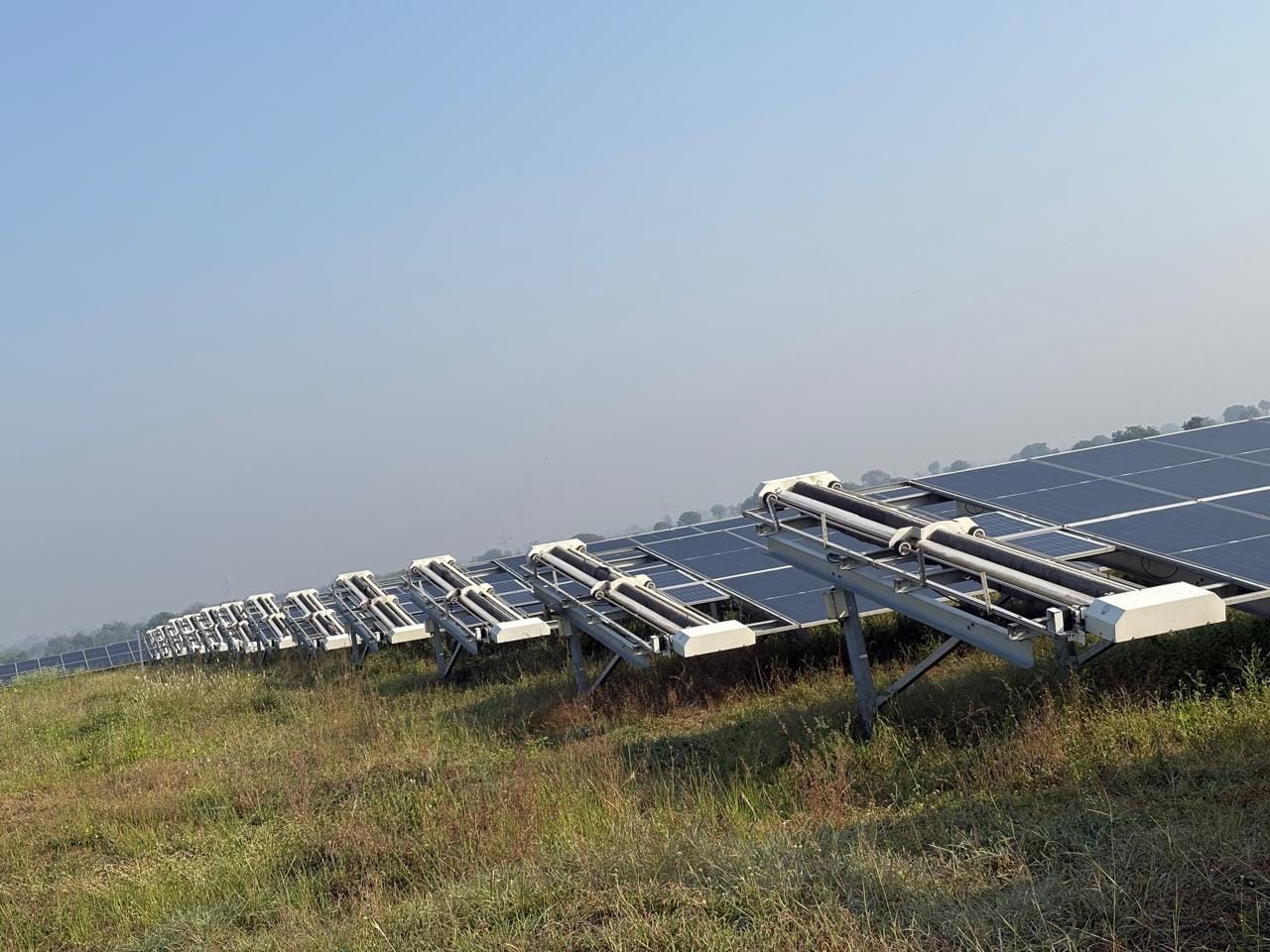
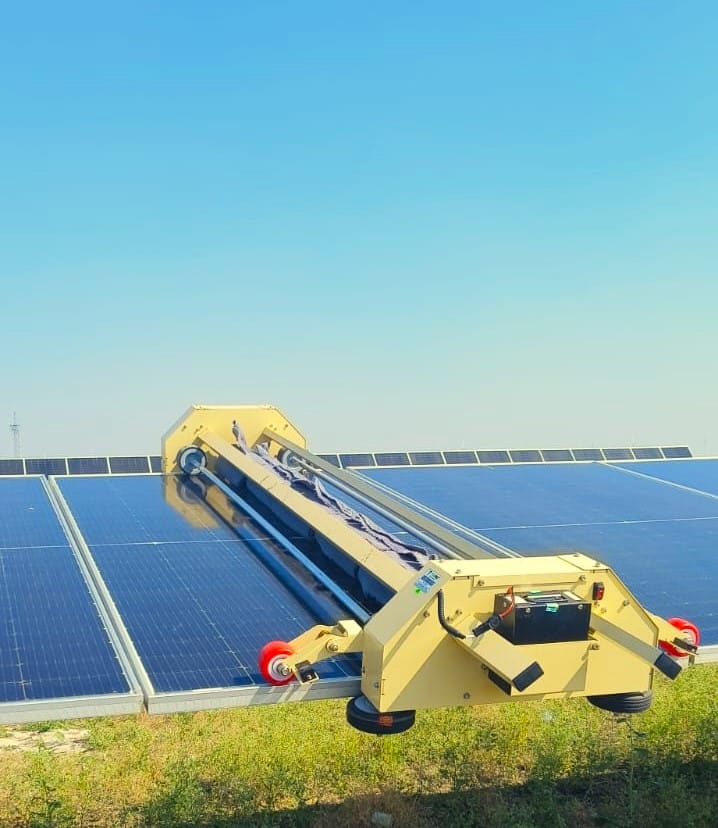
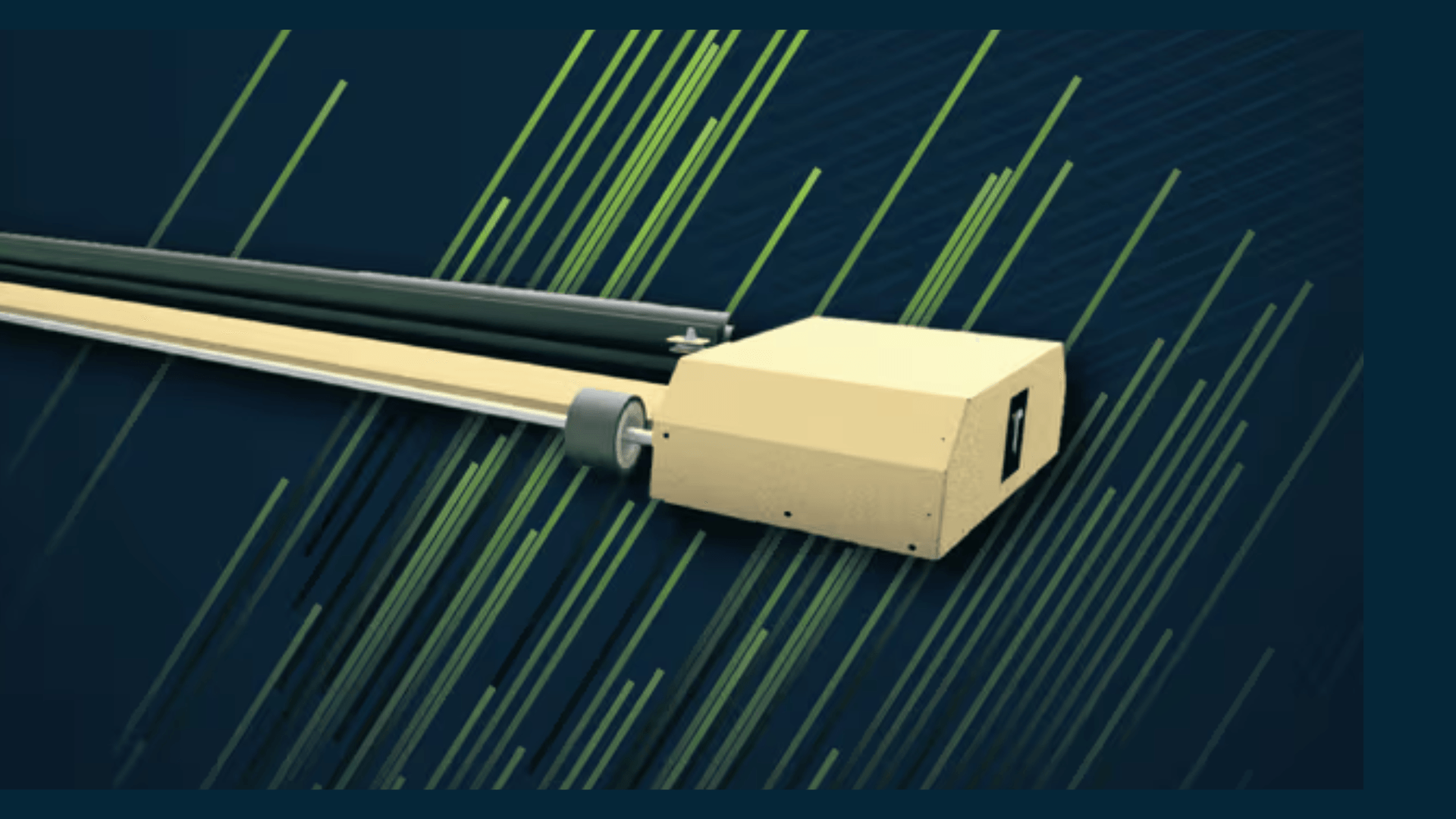
TAYPRO's GLYDE-X is TAYPRO's tracker-specific robot, engineered for single-axis tracker plants in India. It uses a 360° flexible bridge mechanism that accommodates the variable inter-row geometry of tracker installations. The dual-pass microfibre cleaning system operates at the tracker's parked position, with cleaning scheduled during dawn, dusk, or non-peak-irradiance windows to minimise generation impact. GLYDE-X is deployed across tracker plants in TAYPRO's portfolio and integrates with NECTYR fleet management for remote dispatch and performance tracking.
Advertisement
Ecoppia T4
Ecoppia (now part of the Ecoppia group, with India presence) launched the T4 specifically for single-axis tracker installations. The T4 uses soft microfibres and controlled airflow (no water) and is compatible with all tracker types and module formats including frameless and thin-film. It uses autonomous bridges to move between adjacent tracker rows. The T4 received compatibility certification from Nextracker and SunPower for their tracker systems. First commercial deployments were in the Middle East, with India projects including Fortum's 427 MW Pavagada and Bhadla installations.
KPI Green OMS Intelligent PV Cleaning Robot
KPI Group's robotic cleaning system received official compatibility approval from Nextracker USA in April 2025, confirming compliance with Nextracker's NX Horizon Smart Solar Tracking System warranty and service conditions. This system is deployed across 25 sites with 184 robots covering over 484 MW of solar capacity, primarily in Gujarat. In FY2023–25, the system saved over 4.81 crore litres of water versus manual wet cleaning.
Arctech Integrated Cleaning Robot
Arctech, a leading tracker manufacturer, has developed an integrated cleaning robot designed for its SkyLine tracker systems. The advantage of a tracker-manufacturer-developed robot is tight hardware integration, the robot docking, parking command, and structural compatibility are designed as a system rather than retrofitted. Arctech demonstrated this system at REI 2024.
Key Operational Challenges: Tracker vs Fixed-Tilt
Challenge | Fixed-Tilt Robot | Single-Axis Tracker Robot |
|---|---|---|
Panel geometry | Static, robot adapts once during installation | Dynamic, panel rotates ±55°; robot must accommodate or park tracker |
Inter-row transfer | Simple, fixed gap between rows | Complex, gap changes with tilt angle; bridge must adjust or robot parks tracker at 0° for transfer |
Tracker controller integration | Not required | Required, robot commands parking position; must handle tracker fault modes without triggering safety shutdowns |
Cleaning window | Any time | Dawn / dusk / low-irradiance windows preferred to minimise generation lost during parking; typically 30–45 min per row |
Structural load | Fixed racking rated for high static loads | Tracker torque tube load limits constrain robot weight, typically <25 kg |
Module edge contact | Framed modules, wheel on frame acceptable | Frameless bifacial increasing, wheel contact on glass edge risks cracking; robot must use alternative guidance |
Wind stow interaction | Not applicable | Tracker stows at high wind, robot must disengage before stow, or be designed to tolerate stow angle; unexpected stow events can trap or damage robot |
Maintenance complexity | Lower, simpler mechanical interface | Higher, bridge mechanism, tracker API, and wind stow logic all require ongoing calibration and firmware updates |
What to Evaluate Before Deploying a Cleaning Robot on Your Tracker Plant
Tracker manufacturer compatibility certification: Confirm the robot provider has written compatibility approval from your tracker OEM (Nextracker, Array Technologies, Arctech, Soltec, etc.). Unapproved robots may void tracker structural warranties.
Parking duration impact on generation: Measure the generation loss from parking the tracker during cleaning windows. For dawn/dusk cleaning on a 100 MW plant, this is typically 0.1–0.3% daily, well below the soiling loss it prevents.
Inter-row clearance at your site's GCR: Ground coverage ratio determines how much inter-row space is available for bridge traversal. High-GCR sites (0.4+) may constrain which bridge systems are deployable.
Module warranty compliance: Get written confirmation from the robot provider that their cleaning system is covered under the module OEM's cleaning compatibility statement. TAYPRO issues formal NOC/compatibility statements to this effect.
Wind stow protocol: Confirm the robot's behaviour when the tracker triggers a wind stow. The robot must either safely park or be designed to tolerate the stow angle without damage to itself or the module.
Frequently Asked Questions
Can the same robot clean both fixed-tilt and single-axis tracker panels?
Not typically. Fixed-tilt and tracker robots are different mechanical designs. Some providers offer a family of robots, one per configuration, rather than a single unit that adapts to both. TAYPRO's GLYDE covers fixed-tilt and seasonal-tilt; GLYDE-X is specifically engineered for single-axis trackers.
Does parking a tracker for cleaning significantly reduce energy generation?
No. Cleaning is scheduled for dawn, dusk, or low-irradiance windows. For a 100 MW tracker plant, the generation lost from a 30–45 minute parking window is approximately 0.1–0.2% of daily output, a fraction of the 3–5% daily soiling accumulation the cleaning prevents.
What is the cleaning frequency for robots on single-axis tracker plants?
Optimal frequency follows the same soiling-rate logic as fixed-tilt: in arid zones (Rajasthan, Gujarat), daily or every-other-day cleaning during pre-monsoon, and every 3–5 days in post-monsoon and winter. The tracker parking window constraint does not change the optimal frequency, it only changes the scheduling window within each day.
Related resources
For procurement and O&M teams evaluating robotic cleaning in India:
Related reading
Frequently asked questions
Generally no. Fixed-tilt robots assume constant panel angle for docking, brush pressure, and end-of-row transfer. Single-axis trackers rotate through the day and change inter-row clearance. Tracker-specific robots park rows at a cleaning angle or use adaptive mounting, plus autonomous inter-row crossing.
No. Cleans schedule at dawn, dusk, or low-irradiance windows. For a 100 MW tracker plant, a 30 to 45 minute parking window costs roughly 0.1 to 0.2 percent of daily output, far less than the 3 to 5 percent daily soiling accumulation cleaning prevents in arid zones.
Frequency follows the same soiling-rate economics as fixed-tilt: daily or every-other-day in Rajasthan and Gujarat pre-monsoon, every 3 to 5 days in milder seasons. Tracker parking only changes the daily time window, not the optimal interval between passes.
Confirm tracker controller integration for stow commands, inter-row bridge or transfer design, robot weight against torque tube ratings, and pilot coverage on longest rows. Review abort logs for wind and obstacle rates during a full dust-season week before portfolio rollout.
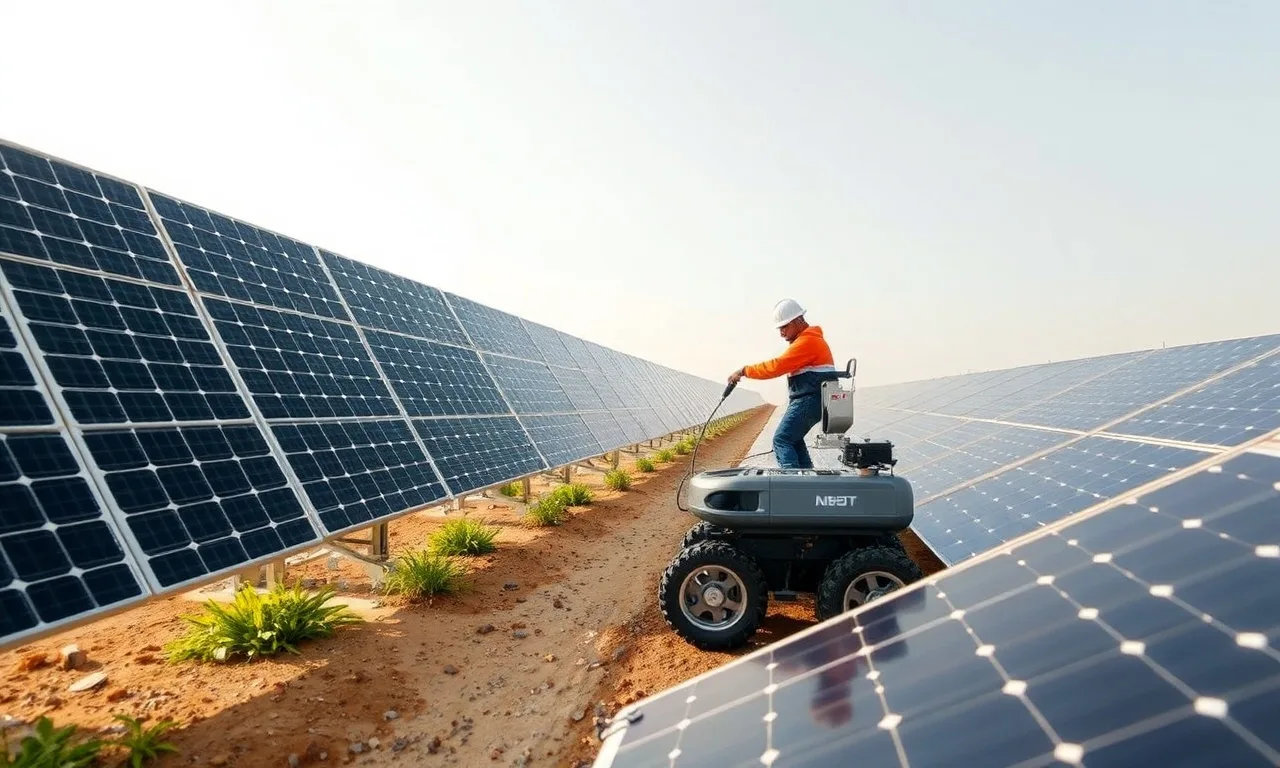
Trackers add parking coordination, variable brush engagement angle, and wider inter-row gaps. Fixed-tilt sites simplify routing but may still need longer nightly hours for the same MW. Labor-based manual cleaning on trackers also faces access issues when rows are not parked, which robots solve with programmed stow.