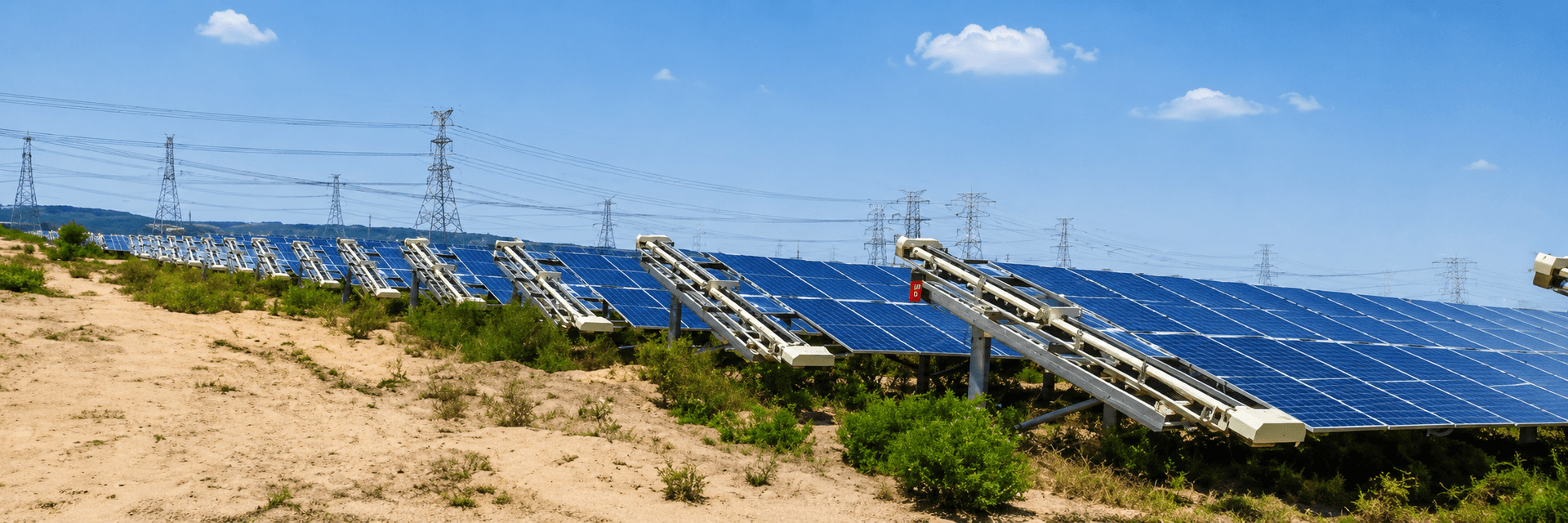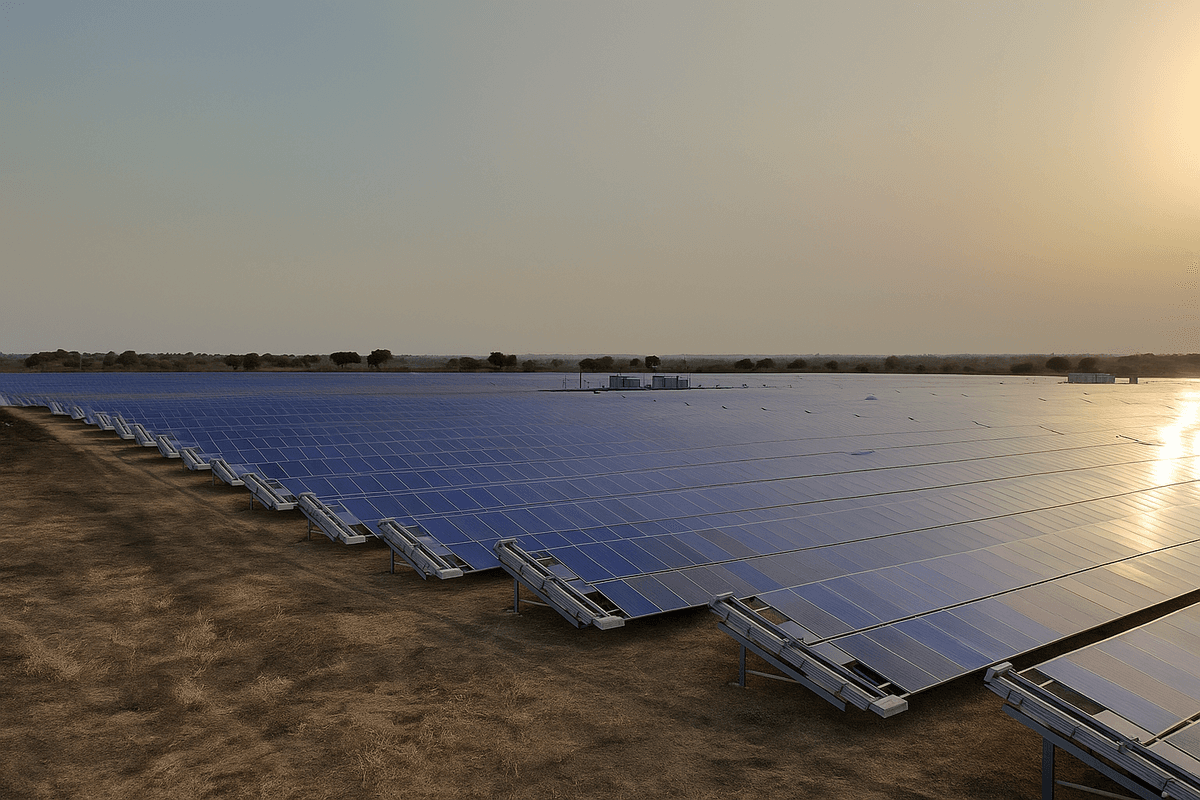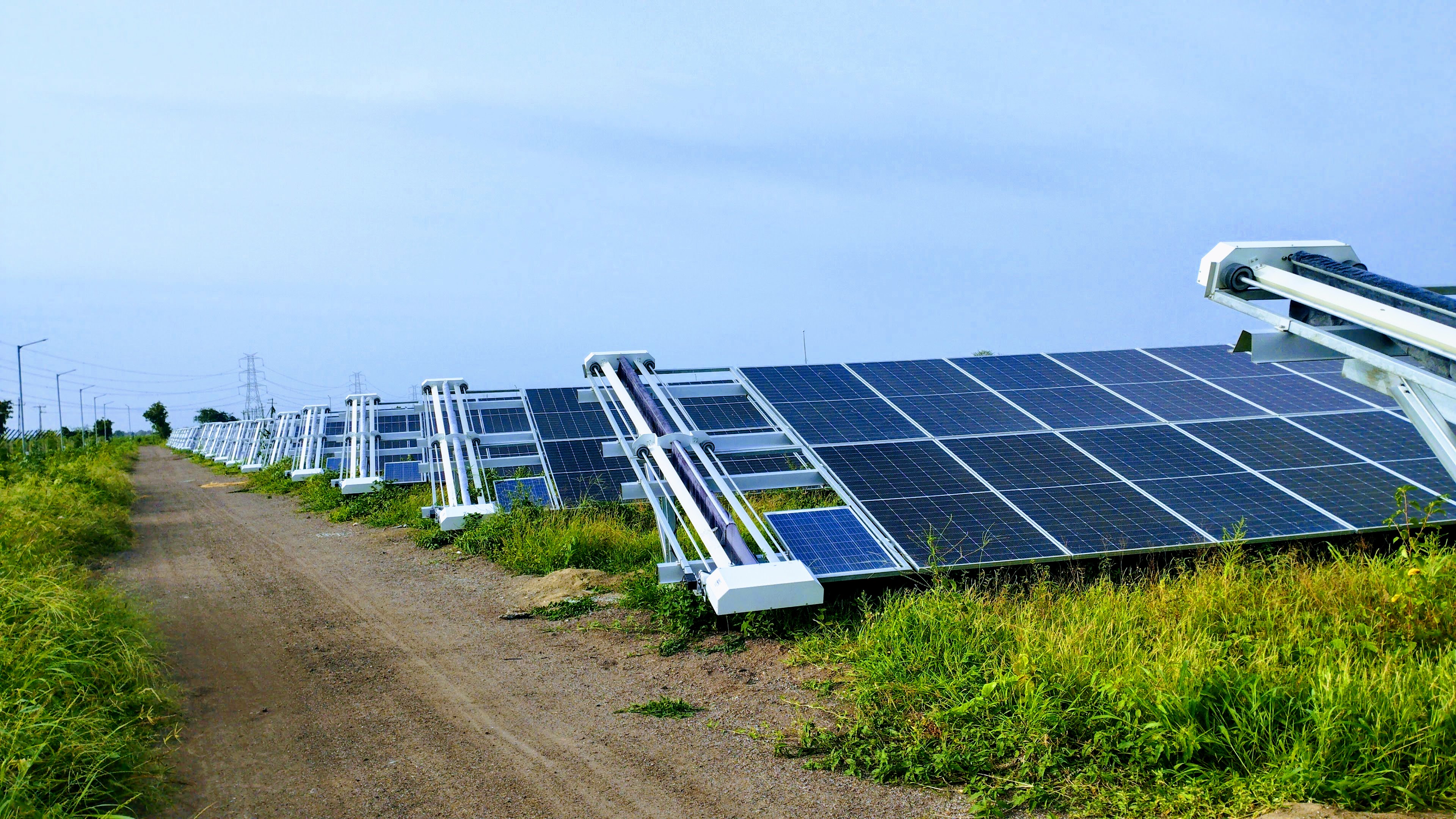

Cleaning robots have become a critical asset for utility-scale plants in India, specifically for maintaining the energy yield of bifacial modules across 5MW+ sites. For these installations, the primary challenge is removing dust and debris from both the front-side and the light-sensitive rear-side without disrupting tracker kinetics or increasing water consumption in arid, water-stressed regions.
Successfully integrating cleaning technology requires choosing a method that supports the delicate glass-on-glass bifacial architecture while ensuring high cleaning efficiency. By automating this process, plant managers can reliably capture the bifacial gain, mitigate hotspot risks caused by uneven soiling, and reduce the long-term O&M costs associated with manual site labor.
Summary for plant managers
- Bifacial Performance: Rear-side cleaning is essential to capture the 5% to 25% energy gain dependent on albedo reflectivity.
- Water Conservation: Dry robotic cleaning reduces water consumption by up to 90% compared to traditional manual pressure-washing.
- Soiling Strategy: Shift from calendar-based cleaning to data-driven, trigger-based cycles based on PR drops of 2% to 3% to ensure the cost of cleaning is justified by immediate energy gains.
- Operational Compatibility: Ensure selected equipment is compatible with tracker-articulation ranges (typically -52 to +52 degrees) and that the weight of the robotic unit remains within the load-bearing capacity of the bifacial mounting structure.
- Impact on PR: Consistent robotic intervention prevents the accumulation of particulate matter that leads to performance degradation and module-level hotspots in high-dust regions like Rajasthan and Gujarat.
Understanding bifacial soiling: Front-side vs. Albedo-driven losses

In a bifacial utility-scale plant, the soiling dynamic splits between the energy-generating front-side and the secondary capture rear-side. Front-side soiling is straightforward, often resulting in direct production loss due to light-scattering dust and organic debris. However, rear-side soiling poses a unique challenge because it directly degrades the albedo-driven gain that justifies the bifacial investment. When dust accumulates on the back of the module, the diffuse light reflected from the ground cannot reach the PV cells effectively, potentially shaving off 5% to 15% of your expected bifacial yield bonus.
For asset managers, the critical threshold for action is the differential between front-side and rear-side cleaning needs. Front-side modules are exposed to atmospheric pollutants, bird droppings, and industrial particulates that accumulate rapidly in regions like Rajasthan. The rear-side, while protected by the tracker structure, collects dust blown by ground-level wind currents. If you deploy robotic cleaning, the strategy must account for these different rates of accumulation. Relying on standard manual cycles often ignores this discrepancy, leading to suboptimal performance ratio (PR) and wasted labor costs on under-soiled or over-soiled surfaces.
Industry-typical data suggests that leaving rear-side soiling unaddressed can negate the efficiency gains achieved by high-albedo ground coverings like white gravel. To maintain the integrity of your bifacial modules, cleaning frequency should be data-driven rather than time-based. Integrating sensors that monitor ground reflectivity and module-level current helps determine when the cost of a cleaning cycle, whether through manual service or automated robots, is justified by the subsequent boost in energy production. For a clearer view on how these operational choices impact your financial bottom line, consider reading our analysis on comparing solar panel cleaning robots vs manual cleaning to understand the cost dynamics at scale.
How do cleaning robots work for bifacial utility-scale plants?
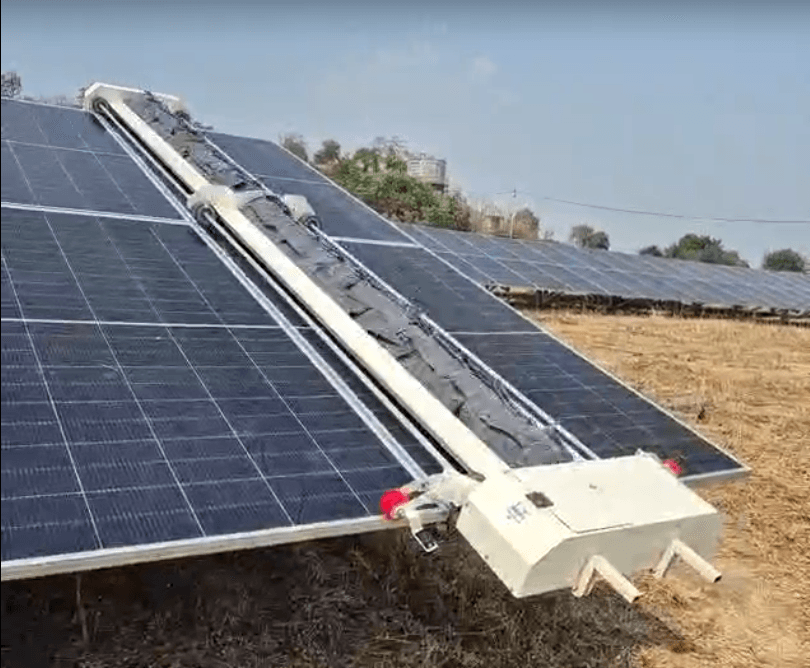
Robotic systems designed for bifacial modules focus on independent front and rear-side maintenance while ensuring compatibility with tracker kinetics. The most effective units utilize a lightweight, flexible body design that allows the robot to navigate the underside of the modules without applying excessive pressure to the frame. By using a dual-pass microfiber system or high-efficiency PBT brush contact, these robots remove soil layers that typically scatter light and obstruct the albedo-induced production gains on the rear of the panel.
For utility-scale sites in India, these robots must operate within the constraints of single-axis tracker ranges, often handling tilts between -52 and +52 degrees. The cleaning process is integrated via an autonomous navigation system that uses sensors to detect panel edges and avoid obstacles, such as tracker drive motors or inter-row cabling. This automation minimizes human foot traffic on the site, which is essential to prevent micro-cracking and hardware damage on delicate high-efficiency modules.
Technical implementation involves the following core components:
Advertisement
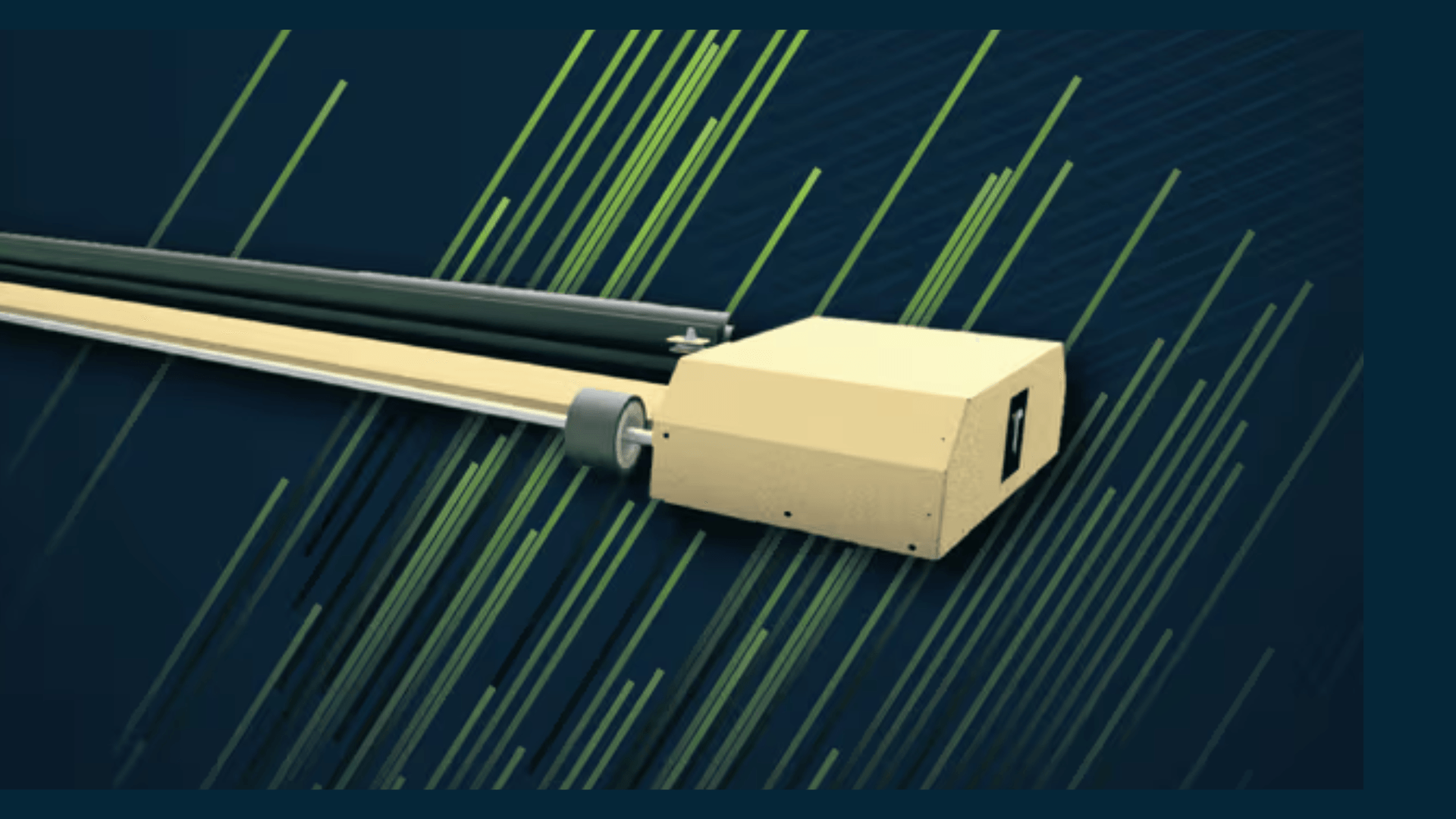
- Locomotion Mechanics: Flexible, low-weight chassis (26 kg to 39 kg) designed for mounting on tracker rails or frames without exceeding load-bearing limits.
- Cleaning Interface: Dual-pass microfiber technology for sensitive surfaces or robust PBT brushes for high-abrasion environments, ensuring 95%+ to 99%+ dust removal per cycle (by robot model).
- Connectivity and Scheduling: NECTYR-integrated communication via RF mesh or LTE, which allows managers to set specific cycles based on real-time soiling data and plant-wide PR monitoring.
- Obstacle Detection: Integrated edge and obstacle sensors that stop the robot or trigger safe-docking protocols if debris or mechanical inconsistencies are detected on the array.
By automating the rear-side cleaning, plant managers can reliably capture the additional 5% to 25% energy yield expected from bifacial setups. Without this consistent, low-impact intervention, rear-side dust accumulation often creates hotspots and reduces the overall performance ratio of the plant over time. For teams evaluating the integration of these systems at scale, our guide on deploying the Taypro Helyx robot details the workflow for mapping and initial site commissioning at the 5MW+ level.
How often should you clean bifacial modules to maintain PR?
For utility-scale bifacial plants in India, cleaning frequency must be decoupled from fixed calendar schedules. In regions like Rajasthan or Gujarat, where dust accumulation is rapid, setting a fixed 30-day cycle often results in over-cleaning during clear periods and significant under-performance during high-wind intervals. Instead, asset managers should implement a trigger-based schedule linked to a 2% to 3% drop in the Performance Ratio (PR) at the string level.
Bifacial modules complicate this frequency because the rear-side albedo gain is hypersensitive to ground soiling. If rear-side dust blocks reflected light, your plant loses the 5% to 25% yield boost that defines the bifacial ROI. Our analysis on seasonal solar soiling rates on Indian utility plants highlights that during monsoon transitions or peak summer dust storms, the optimal window for intervention often shrinks to 7–10 days to protect the PR. If you maintain a consistent rear-side cleaning schedule using automated systems, you effectively mitigate the risk of hotspots caused by uneven soiling patterns on the panel backsheet.
Technical thresholds for cleaning frequency should consider:
- Real-time PR Monitoring: Initiate cleaning when site-wide PR deviates by more than 2.5% from the clear-day baseline.
- Albedo Thresholds: In high-albedo sites (e.g., white-gravel ground cover), prioritize rear-side cleaning when ground reflection values drop below 60% of the initial commissioning measurement.
- Soiling Rates: In heavy-soiling zones (e.g., arid desert parks), schedule robotic passes every 5–8 days to prevent caking that necessitates aggressive, moisture-based scrubbing.
- Operational Cost vs Gain: Calculate the break-even energy cost for each robot cleaning cycle; for 50MW+ sites, automated scheduling via NECTYR allows for granular, block-by-block intervention that saves labor and prevents premature degradation of module coatings.
By shifting to an on-demand, sensor-informed approach, you maximize the life of your modules while avoiding the high water consumption of manual wet cleaning, which is often inefficient at the 5MW+ scale. Integrating this workflow with your comparison of robotic vs manual cleaning will provide the financial justification needed to transition from legacy manual teams to a modern, automated maintenance architecture.
Implementing a robotic cleaning workflow on 5MW+ Indian sites
For a 5MW+ utility-scale site in India, successful robotic integration requires a phased approach that bridges local environmental constraints with existing plant SCADA systems. Start by mapping your plant into distinct cleaning blocks based on topography, tilt angles, and soiling patterns. This allows you to prioritize high-soiling zones, such as those bordering unpaved roads or arid dust traps, while applying less frequent cleaning to sheltered array blocks. Our guide on solar plant commissioning and robot integration provides a comprehensive checklist to ensure that infrastructure such as end-row docking stations and communication relays are in place before the first robot fleet arrives.
Technical implementation should follow these critical phases:
- Baseline Mapping: Conduct a 15-day PR monitoring study to identify per-block soiling rates. Use this data to define the 'critical soiling threshold' that triggers an automatic cleaning run, preventing the need for fixed-interval cycles that may be unnecessary.
- Communication Infrastructure: Deploy a localized wireless mesh network to link robots with the NECTYR operations portal. Ensure signal coverage across the entire 5MW+ footprint, including areas where module height variation could impede data transmission.
- Safety and Access: Confirm that all row ends have at least 1.5 meters of clearance for robot docking or transit. For sites with scattered blocks, consider using a dedicated row-transfer platform to move units between rows without relying on manual intervention.
- Pilot Testing: Begin deployment with a single robot on a representative pilot block. Validate cleaning coverage and PR improvement against manual brush controls before scaling the fleet to the full plant capacity.
By automating the scheduling process, your O&M team shifts from reactive manual labour to proactive fleet management. Asset managers should coordinate closely with EPC teams to ensure that tracker motor controls are configured to allow robots to navigate the array without triggering fault codes or mechanical lockouts. This integration ensures that your bifacial assets are maintained to retain their full albedo-driven energy gain, which is vital for meeting PPA generation guarantees in high-dust regions like Rajasthan and Gujarat.
Managing technical constraints: Tracker compatibility and module weight
Integrating cleaning robots onto utility-scale sites requires careful alignment between robotic hardware and your existing tracker infrastructure. For sites utilizing single-axis trackers, the primary mechanical constraint is the torsional range and the stability of the cleaning unit during stow mode. Advanced solutions are specifically designed with flexible bodies and 360-degree rotational bridges, allowing them to navigate arrays with tilt ranges between -52 and +52 degrees without inducing mechanical stress or triggering safety lockouts in the tracker control unit.
Module weight and frame integrity also dictate your equipment selection. Modern bifacial modules, especially those utilizing glass-on-glass designs, are significantly heavier and more susceptible to surface-contact damage than older monofacial panels. When selecting a robot for a 5MW+ site, verify that the unit weight, such as the 26 kg typical for tracker-optimized robots, does not exceed the mechanical load limits of the module mounting system. For projects that require frequent deployment across scattered blocks, implementing an autonomous row-transfer system is a proven method to mitigate the physical strain of moving robots between rows. This setup eliminates the need for manual lifting and prevents potential micro-cracking caused by human-handled machinery.
Furthermore, ensure your SCADA integration accounts for robot telemetry data, such as battery health and path completion logs, via a unified fleet portal like NECTYR. This connectivity allows O&M teams to confirm that the robot has safely cleared the array before the tracker initiates its sun-tracking sweep or stow-mode transition. By mapping the mechanical constraints of your tracker fleet during the initial commissioning phase, you prevent operational bottlenecks and protect the warranty status of your bifacial modules, ensuring the equipment maintains its design-life performance without compromising structural integrity.
Checklist for integrating cleaning robots into utility-scale O&M
Successfully transitioning to automated cleaning on utility-scale bifacial sites requires a systematic approach to hardware deployment, data integration, and site maintenance. Use this checklist during the commissioning phase of your O&M program to ensure long-term site uptime and PR stability.
- Pre-deployment site survey: Confirm that all module rows have uniform gap clearance. Ensure end-of-row rail systems for robots are installed level to prevent tilt-related faults.
- Mechanical and tracker check: Verify that tracker controllers support remote override signals. This allows the cleaning robot to request a specific tilt angle, such as zero degrees, during the cleaning pass to prevent collision with the module structure.
- Network infrastructure verification: Confirm signal strength for your RF or Wi-Fi mesh across the entire 5MW+ footprint. Obstructions like tall vegetation or terrain variations in Rajasthan or Gujarat can disrupt telemetry; verify coverage at the furthest point from the gateway.
- NECTYR integration: Map your site layout into the fleet portal. Define specific block boundaries to enable autonomous route scheduling, which prevents robots from attempting to clean beyond row ends.
- Safety and emergency stop protocols: Conduct a full-site test of the manual emergency stop and remote lockout features. Ensure the O&M team knows how to isolate a row if a module, tracker, or robot exhibits signs of mechanical wear.
- Pilot-to-scale transition: Deploy on a single 1MW block to validate cleaning coverage and verify that soiling removal meets your target PR. Collect three months of telemetry data via NECTYR before rolling out the full fleet across the entire plant portfolio.
By following this rigorous integration process, you mitigate the risk of mechanical downtime or module damage. Proper commissioning allows you to leverage the full bifacial energy gain while reducing the manual O&M burden that typically plagues large-scale solar assets. For a deeper look at the financial models guiding these technology choices, refer to our guide on OPEX vs CAPEX solar O&M contracts in India. If your team is evaluating technical deployment steps specifically, our guide on deploying the Taypro Helyx robot provides additional field-level insights.
Key takeaways for plant managers
- Maximize bifacial yield: Prioritize cleaning the rear-side of bifacial modules to capture albedo gains, which can contribute 5% to 25% of your total site energy production.
- Automate for scale: Manual labor is difficult to manage on 5MW+ sites in remote Indian regions; autonomous systems provide consistent cleaning frequency regardless of localized labor availability.
- Technical validation: Always verify that your robot weight, cleaning method, and tracker-articulation range are certified for your specific module type and tracking hardware.
- Data-driven scheduling: Use real-time monitoring platforms like NECTYR to base your cleaning cycles on actual soiling levels rather than fixed, inefficient time-based schedules.
Sources and further reading
Frequently asked questions
Bifacial Performance: Rear-side cleaning is essential to capture the 5% to 25% energy gain dependent on albedo reflectivity. Water Conservation: Dry robotic cleaning reduces water consumption by up to 90% compared to traditional manual pressure-washing.
Rear-side soiling blocks the diffuse light reflected from the ground, which prevents the PV cells from capturing albedo-driven energy. This degradation can reduce the expected bifacial yield bonus by 5% to 15%, making rear-side cleaning essential for maximizing the return on investment for bifacial assets.
Rather than relying on a fixed schedule, the optimal cleaning frequency should be determined by real-time performance ratio drops or specific dust accumulation thresholds. This data-driven approach ensures robots are deployed only when necessary, balancing operational costs against the need to maintain energy output in high-soiling environments.
When managed properly with equipment compatible with tracker kinetics, dry robotic cleaning is designed to minimize mechanical stress. Modern systems allow for automated O&M that reduces water consumption by up to 90% while maintaining structural integrity and protecting the module warranties, provided the equipment is correctly calibrated for the site.