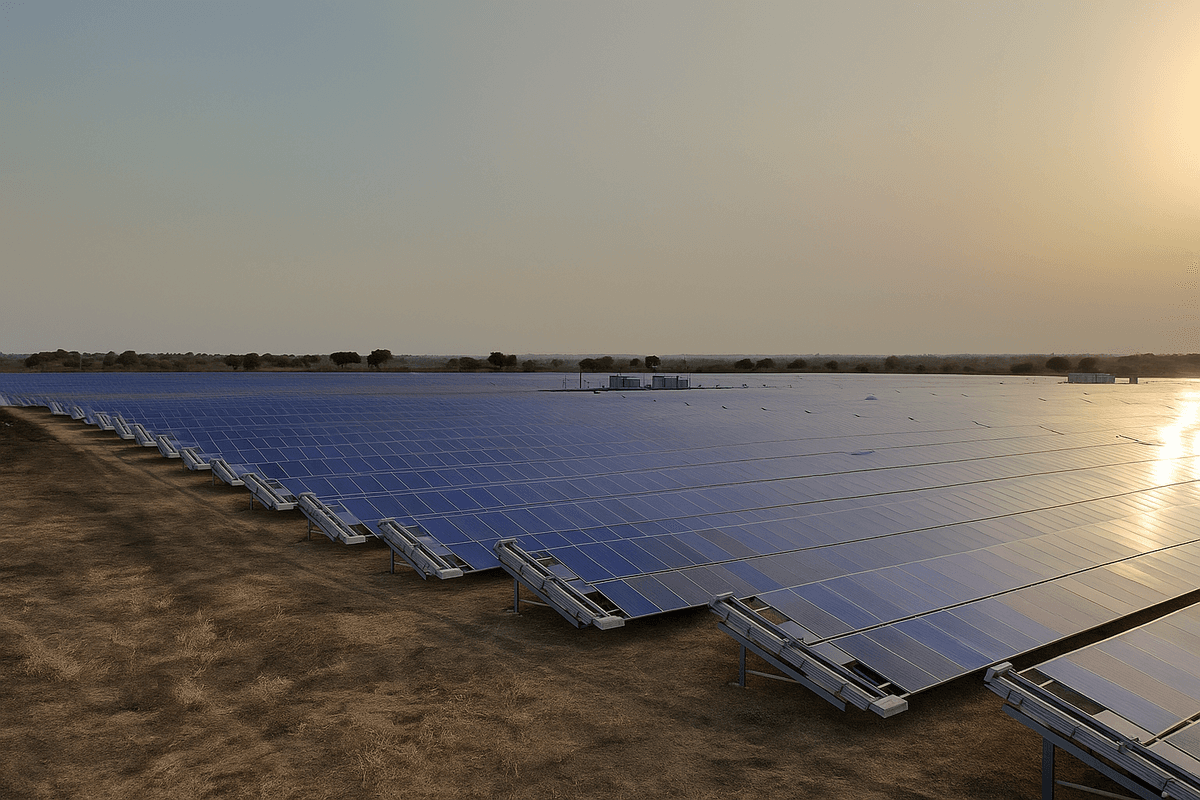
Soiling is the single largest controllable loss on any utility-scale solar plant. In India alone, dust, bird droppings, and industrial particulates silently erase 8–30% of annual generation. In 2026, the answer is no longer a water tanker and a crew, it is autonomous, waterless robots that clean every row while you sleep. This guide compares the top solar panel cleaning robots of 2026, ranked for Indian and global utility-scale operators.
Stat | Figure |
|---|---|
Annual generation lost to soiling (India) | 8–30% |
Global solar cleaning robot market by 2033 | $1.67 billion |
Water saved annually by Taypro robots | 700 million+ litres |
Typical robot payback period | 18–36 months |
Why Solar Panel Cleaning Robots Matter in 2026
The solar energy industry is at an inflection point. Global solar PV capacity reached 1,419 GW by 2023, a 73% increase from 2021, and India is now among the top three solar markets worldwide. But scale brings a problem that manual operations cannot solve: soiling.
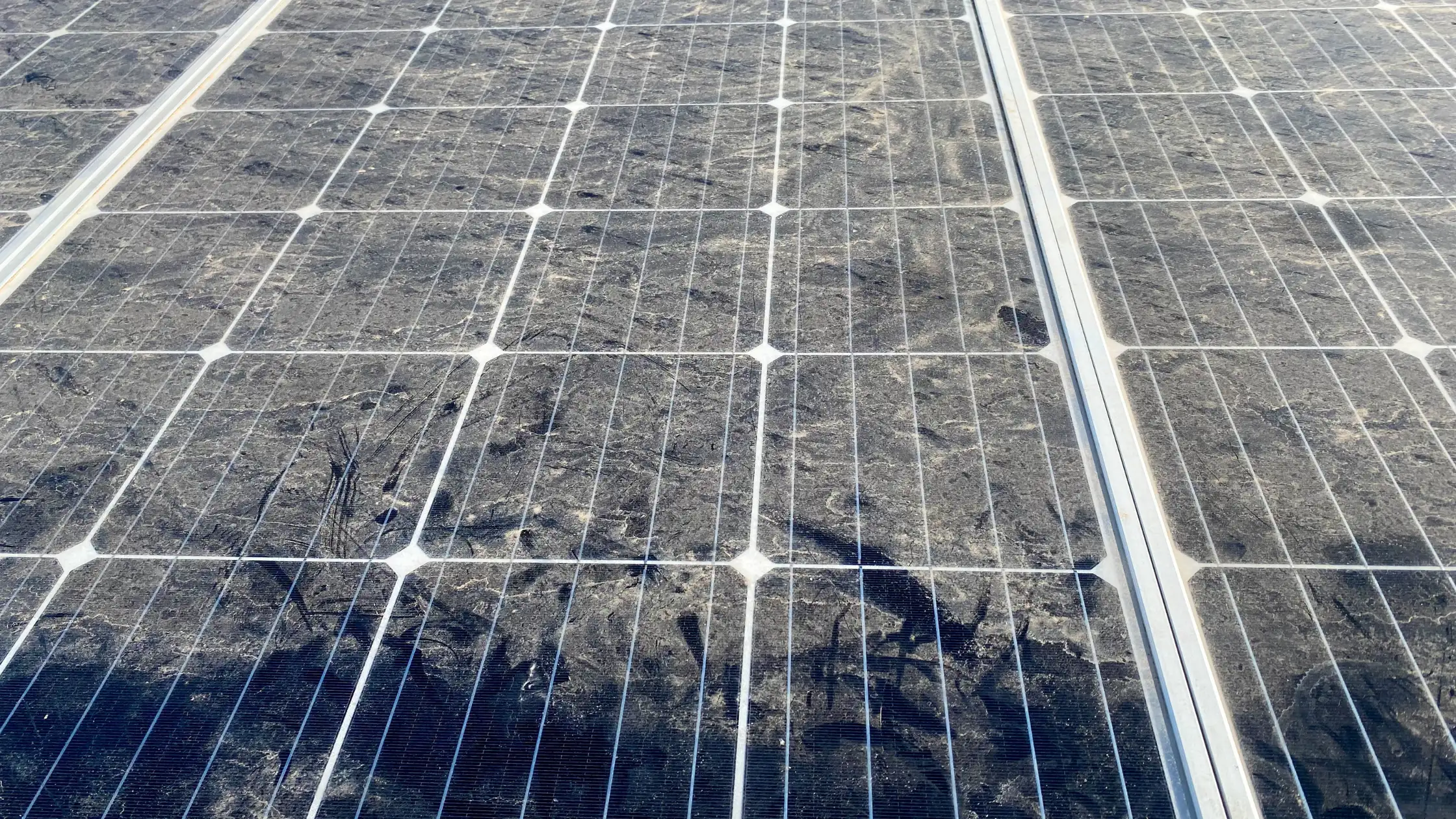
Dust, pollen, bird droppings, and industrial aerosols accumulate on panel glass every single day. On a utility-scale plant with 500,000+ modules, the performance ratio deteriorates between every cleaning event. Studies on Indian utility plants show soiling can reduce energy generation by up to 30% under extreme conditions, particularly in arid, agricultural, and industrial environments.
"For a 1 MW ground-mounted solar plant generating approximately 15 lakh units annually, a 3% soiling loss alone results in nearly 45,000 units of unrealised generation each year.", pv magazine India, April 2026
At ₹3/kWh, a 100 MW plant losing just 5% to soiling loses over ₹2 crore per year in generation revenue, money a well-deployed robot fleet recovers on a recurring basis.
The Limits of Manual Cleaning
Traditional manual cleaning crews face fundamental constraints that no amount of operational discipline can fully solve:
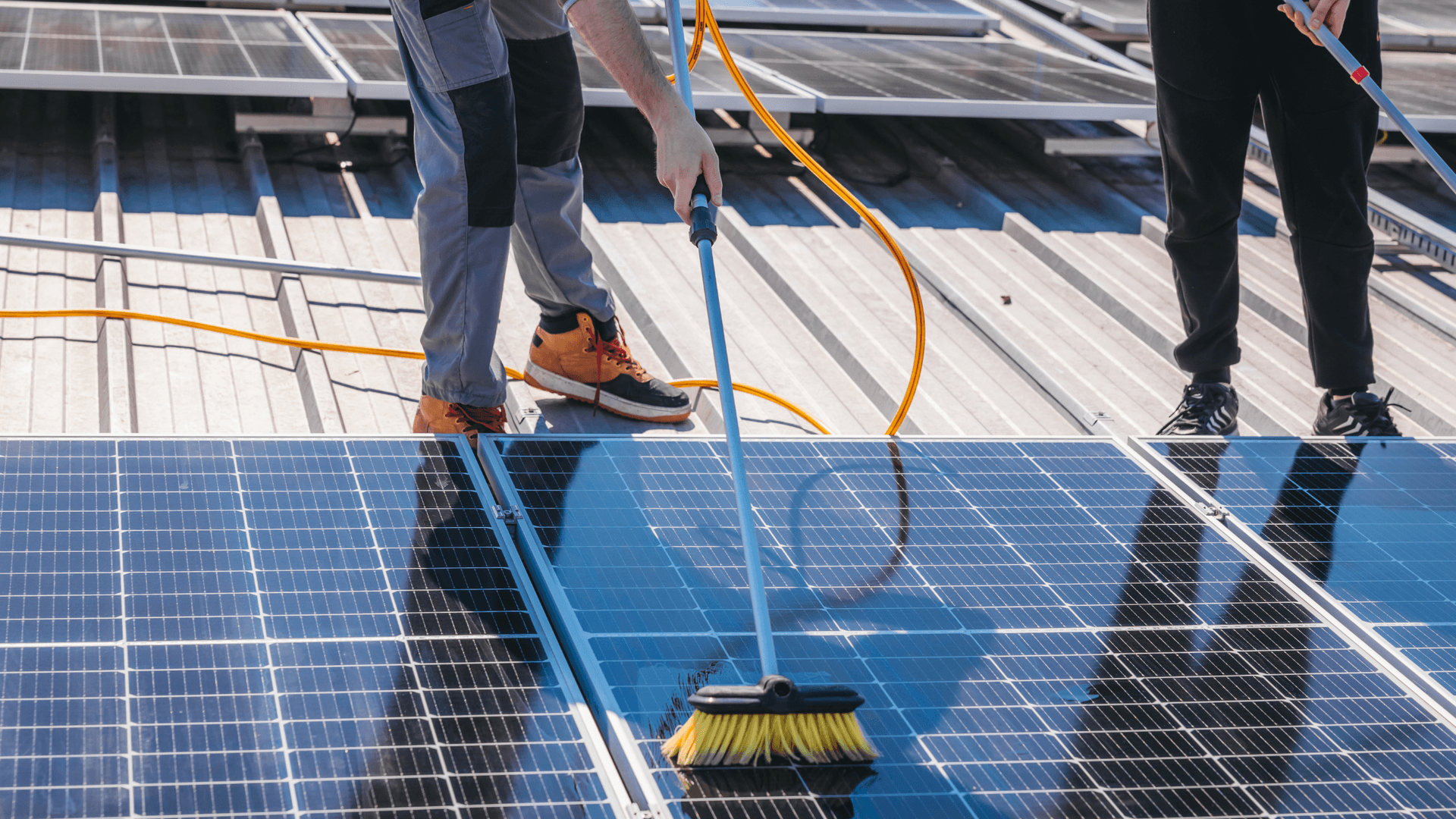
Water scarcity. Rajasthan, Gujarat, Andhra Pradesh, and Telangana, India's biggest solar corridors, are among the most water-stressed regions in the country. Wet washing a large utility farm can consume millions of litres per year.
Frequency limits. Manual crews typically clean 4–8 times a year, keeping average annual efficiency around 85%. Robotic systems cleaning nightly push that to 99%+.
Labour risks. Working at height and in extreme heat creates safety and liability exposure for plant operators.
No data trail. A manual clean leaves no systematic record of which rows were cleaned, when, or how thoroughly, making O&M optimisation impossible.
The global solar panel cleaning robot market was valued at $0.52 billion in 2025 and is estimated to reach $1.67 billion by 2033, growing at a CAGR of 14.65%. India is the fastest-growing segment, driven by MNRE mandates, falling robot prices, and increasing IPP operational sophistication.
How to Evaluate a Solar Panel Cleaning Robot in 2026
Before reviewing specific products, here are the six dimensions that separate a great robot purchase from an expensive mistake.
1. Plant Type Compatibility
Fixed-tilt and seasonal-tilt plants are served by most cleaning robot designs. Single-axis tracker plants, increasingly common in large Indian projects, require a fundamentally different robot architecture with a flexible bridge that can navigate tilt transitions between tracker rows. Buying a fixed-tilt robot for a tracker plant is a common and costly error.
2. Cleaning Method: Dry vs. Wet
In water-scarce geographies like most of India's solar belt, waterless dry cleaning is not just preferable, it is often the only commercially viable approach. Look for multi-stage dry systems (airflow + microfiber contact) that match wet-wash cleaning efficiency without any water infrastructure.
3. Autonomy Level
Fully autonomous robots self-navigate, self-dock, self-charge, and self-schedule. Semi-automatic robots are placed by a technician on each row. For plants above 10 MW, fully autonomous systems are almost always the better TCO choice despite higher upfront investment.
4. Connectivity and Fleet Software
A robot without software is a mop on wheels. Modern systems log every cleaning pass, detect exceptions, enable remote diagnostics, and feed data into O&M workflows. Platforms with LTE, Wi-Fi, LoRa/LoRaWAN, and RF mesh ensure robots stay connected even on remote sites with poor cellular coverage.
5. After-Sales Support and Uptime
Indian utility plants expect same-day breakdown resolution. Evaluate the manufacturer's pan-India service network, spare parts availability, and mean time to repair. AMC (Annual Maintenance Contract) structure and remote diagnostics capabilities are key differentiators.
6. Total Cost of Ownership (TCO) vs. CAPEX
The cheapest robot per unit is almost never the lowest TCO robot. Factor in AMC costs, spares, expected downtime, cleaning coverage per robot, and the revenue recovered from improved performance ratio. A higher-priced robot with 99% uptime often delivers better five-year returns than a cheaper alternative with frequent breakdowns.
CAPEX vs. Opex tip: If upfront capital is constrained, several manufacturers (including Taypro) offer pay-per-panel-cleaned Opex models where the operator retains no hardware risk. This is worth evaluating seriously before committing to a CAPEX purchase.
Top 7 Solar Panel Cleaning Robots of 2026
The following robots are evaluated on autonomy, cleaning efficacy, tracker compatibility, software ecosystem, Indian market presence, and total cost of ownership. Rankings are editorial, specific plant needs may shift the order for your site.
#1 Taypro GLYDE & GLYDE-X, Best for India
Taypro · Made in India · Chakan, Pune
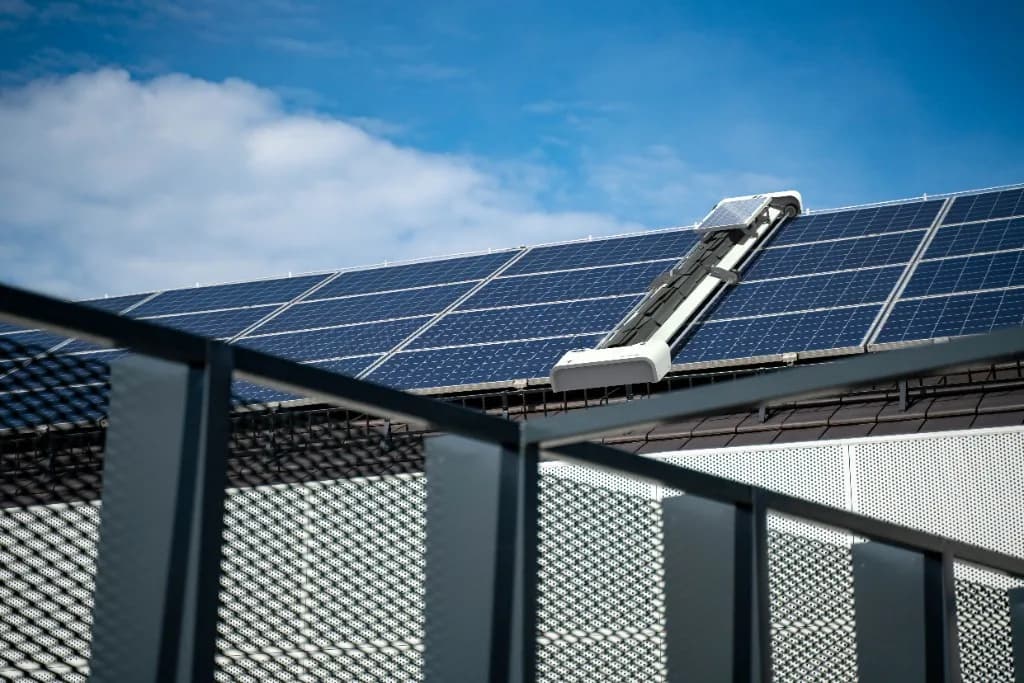
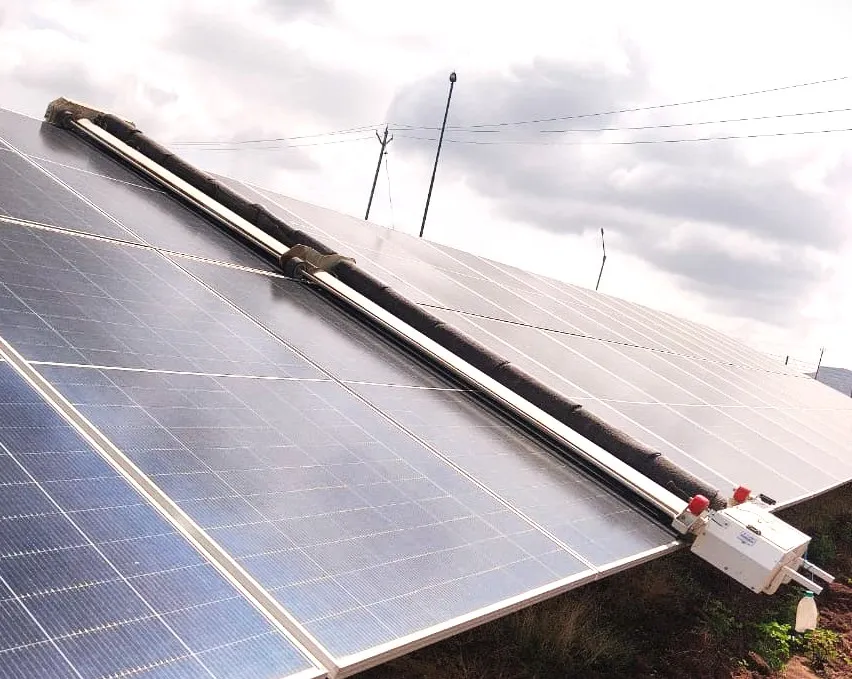
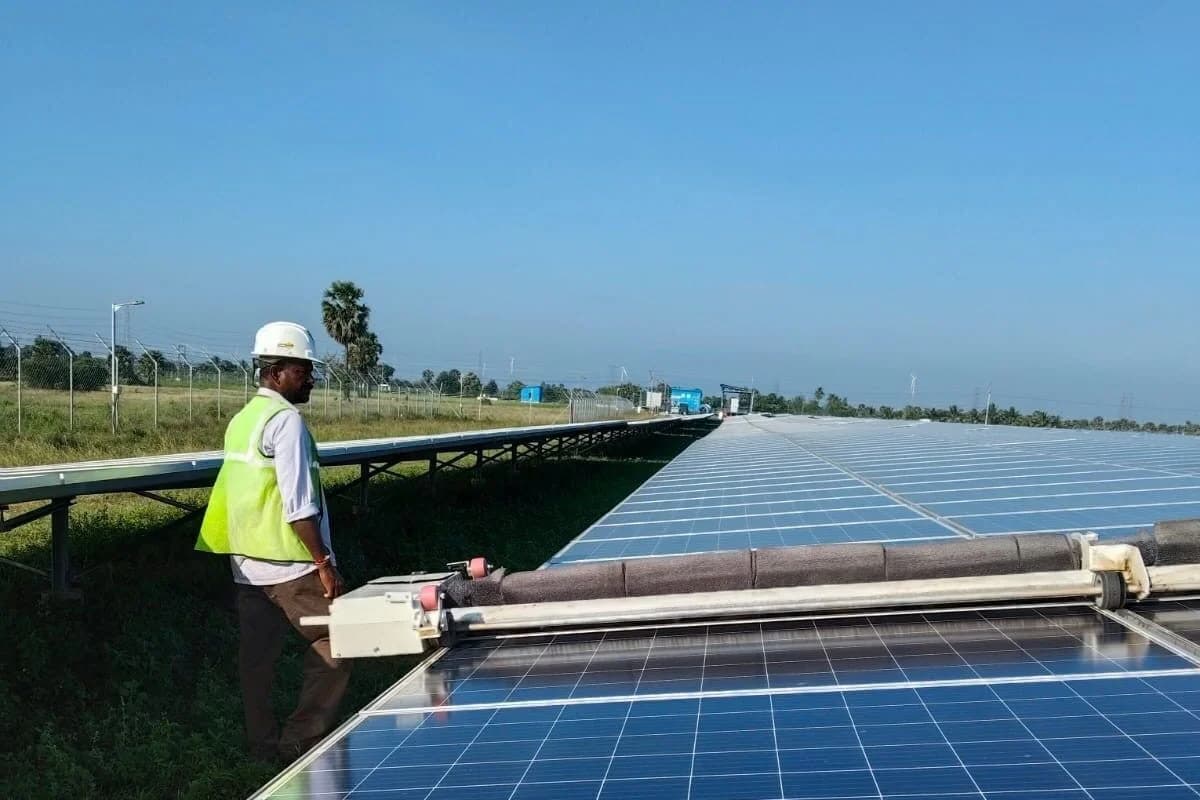
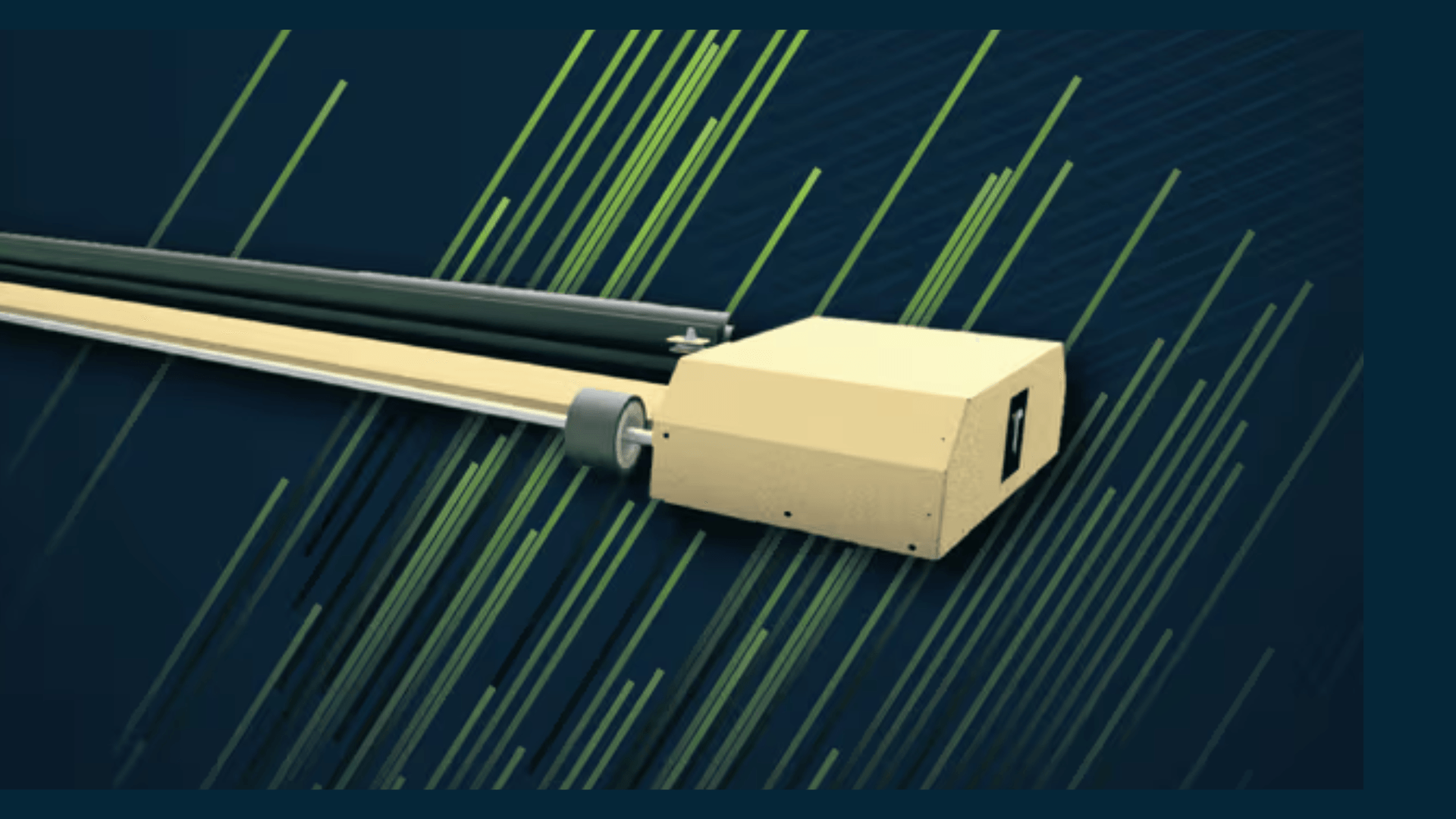
The GLYDE is Taypro's flagship fully autonomous robot for fixed and seasonal-tilt utility plants, built around a patented dual-pass microfiber cleaning system. In Pass 1, airflow lifts dry dust from the panel surface. In Pass 2, a precision microfiber array completes the contact wipe. The result matches or exceeds wet-wash performance without a single litre of water.
The GLYDE-X is its tracker-optimised sibling, featuring a flexible 360° bridge that handles single-axis tracker transitions seamlessly. Both robots integrate natively with the NECTYR fleet operations portal for scheduling, live monitoring, AMC ticketing, and cleaning audit logs. Deployed across 5 GW+ of Indian utility solar, including 250 MW Agar (MP), 100 MW Soyegaon (Maharashtra), and 70 MW Banda (UP), the GLYDE series is the most battle-tested autonomous cleaning platform in the Indian market.
Specification | Detail |
|---|---|
Cleaning Method | Dual-Pass Dry (Airflow + Microfiber) |
Plant Type | Fixed Tilt + Single-Axis Trackers (GLYDE-X) |
Water Use | Zero |
Autonomy | Fully Automatic |
Fleet Software | NECTYR Portal |
Connectivity | LTE / LoRa / RF Mesh |
Certification | TÜV NORD |
India O&M | Pan-India |
Strengths: Patented dual-pass cleaning with highest dry-system efficacy; deepest India service network; NECTYR fleet software included; TÜV NORD certified; tracker (GLYDE-X) and fixed-tilt variants; Opex model available with zero CAPEX.
Considerations: Premium pricing vs. generic imports; international delivery lead times longer than locally stocked alternatives.
#2 Taypro NYUMA & NYUMA-X, Best Value Autonomous
Taypro · Made in India · Chakan, Pune
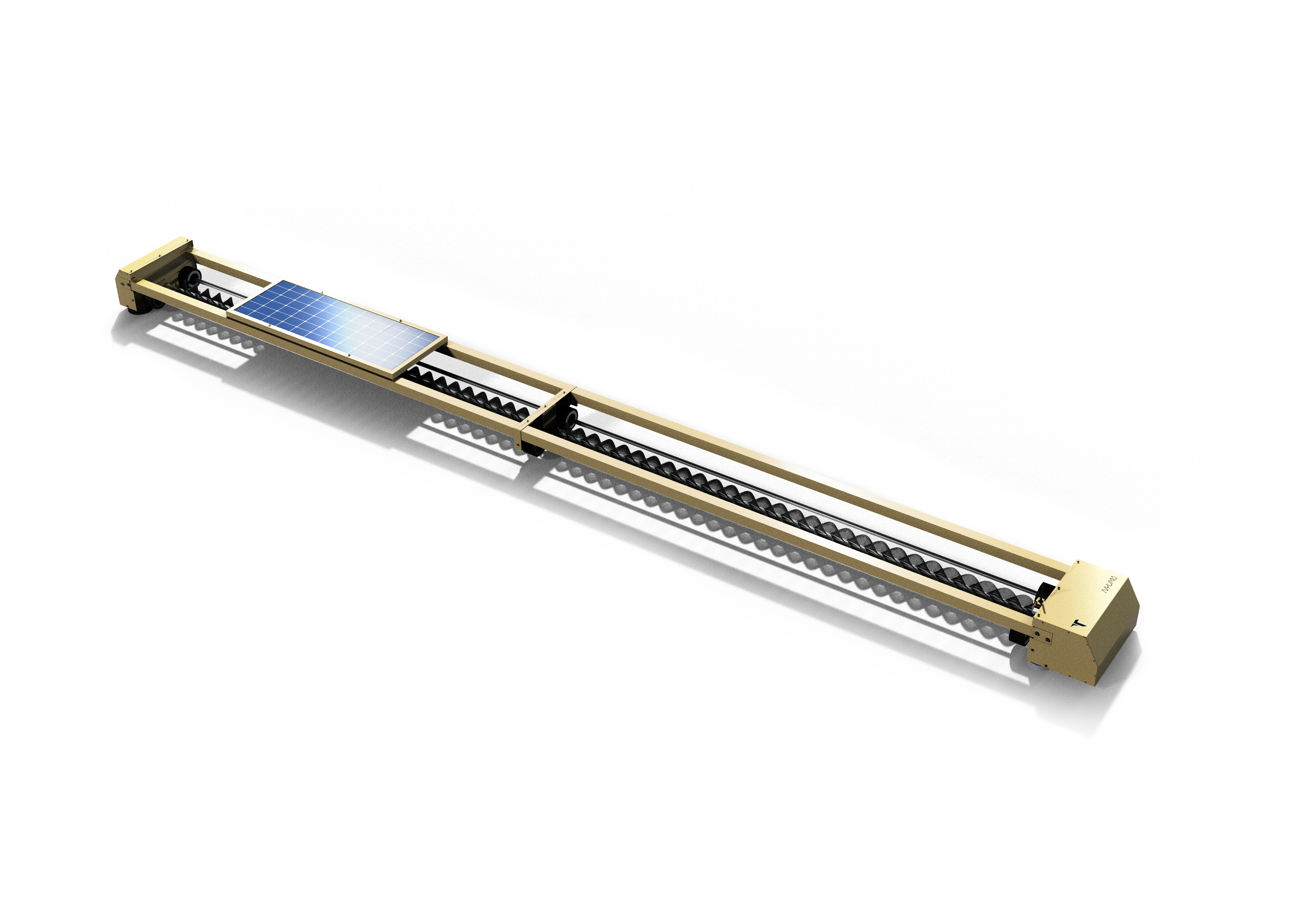
The NYUMA delivers fully autonomous single-pass PBT (Polybutylene Terephthalate) waterless cleaning for fixed and seasonal-tilt utility-scale plants. It is Taypro's high-throughput model, optimised for plants where cleaning frequency and coverage speed are the primary requirements. The NYUMA-X extends the same platform to single-axis trackers with a flexible articulating body. Both models connect to NECTYR and are manufactured in India with pan-India AMC support.
Specification | Detail |
|---|---|
Cleaning Method | Single-Pass PBT Waterless |
Plant Type | Fixed Tilt + Trackers (NYUMA-X) |
Water Use | Zero |
Autonomy | Fully Automatic |
Fleet Software | NECTYR Portal |
Best For | High-throughput, moderate-soiling sites |
Strengths: High coverage speed per robot; same NECTYR ecosystem as GLYDE; tracker-ready NYUMA-X variant; made in India with local spare chain.
Considerations: Single-pass may be less effective than dual-pass in heavy dust zones like Rajasthan; best suited for moderate-soiling environments.
#3 Taypro HELYX, Best Semi-Automatic
Taypro · Made in India · Chakan, Pune
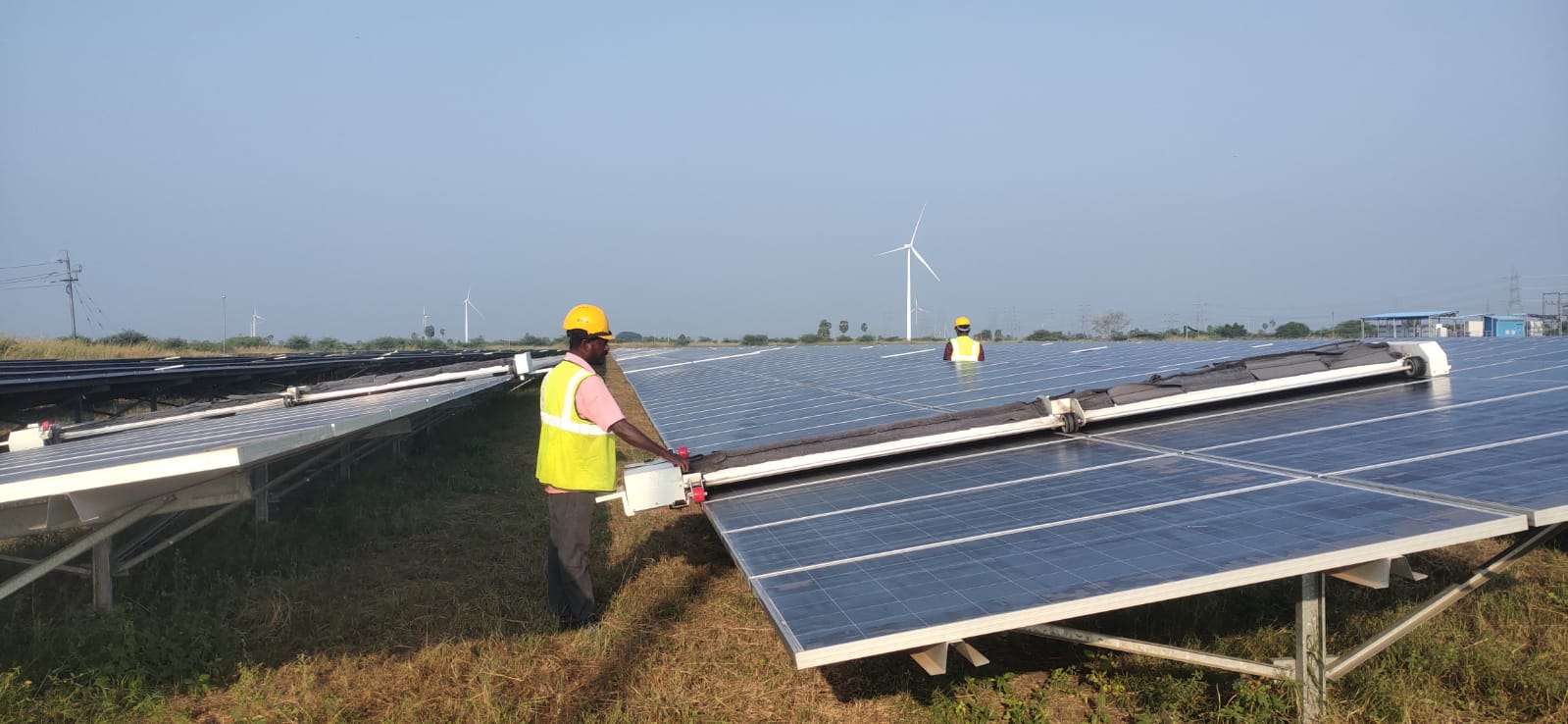
For scattered blocks, distributed utility plants, or smaller installations where full autonomy ROI is not yet justified, the HELYX semi-automatic robot delivers the same patented waterless cleaning technology in a pick-and-place format. One technician carries the HELYX from row to row; the robot self-traverses and cleans the row before being relocated. This makes HELYX ideal for heterogeneous plant layouts, rooftop industrial systems, and satellite blocks too small for a full autonomous fleet but too large for manual crews.
Specification | Detail |
|---|---|
Cleaning Method | Single-Pass PBT Waterless |
Plant Type | Fixed Tilt |
Autonomy | Semi-Automatic (pick-and-place) |
Water Use | Zero |
Labour Required | 1 Technician per robot |
Best For | Scattered blocks, small-to-mid installations |
Strengths: Lower entry price than fully autonomous; works on scattered, non-contiguous blocks; no rail or track infrastructure required; proven on 150+ Indian sites.
Considerations: Requires one technician per robot; not suited for very large contiguous utility fields.
#4 Ecoppia T4 & E4, Best Global Track Record
Ecoppia · Israel / Global
Ecoppia is the most globally deployed solar cleaning robot brand, with a fleet that has cleaned over 15.7 billion panels and saved nearly 1.8 billion gallons of water across 35+ large-scale sites. The T4 is their flagship autonomous waterless model for fixed-tilt utility plants; the E4 adds rail-mounted autonomous cleaning for certain tracker configurations. Ecoppia's nocturnal autonomous operation model, cleaning every night, is the global reference benchmark for maximum panel performance.
Specification | Detail |
|---|---|
Cleaning Method | Waterless Dry Brush |
Plant Type | Fixed Tilt + Trackers (E4) |
Water Use | Zero |
Autonomy | Fully Automatic (Nocturnal) |
Best Market | MENA / Global |
India O&M | Limited |
Strengths: Largest global deployment base; proven in extreme desert environments (MENA); nocturnal operation with zero daytime interference; strong data and reporting platform.
Considerations: Limited India service network vs. Taypro; higher import costs and longer spare part lead times for Indian plants; less suited for India's diverse plant layout profiles.
#5 SolarCleano B1 & F1, Best for Large Rooftops
SolarCleano · Switzerland / Global
SolarCleano offers two compelling models for the commercial and utility market. The B1 is a semi-autonomous robot for large solar farms using a rotating brush system on flat and tilted arrays. The F1 adds remote-control capabilities and versatile cleaning modes. SolarCleano is particularly strong in the European C&I segment and on large rooftop industrial installations globally.
Specification | Detail |
|---|---|
Cleaning Method | Rotating Brush / Water-optional |
Plant Type | Ground Mount + Rooftop |
Autonomy | Semi-Automatic / Remote Control |
Best Market | Europe / C&I |
India O&M | Limited |
Strengths: Versatile across rooftop and ground-mount; good for European C&I segment; remote-control option for operator flexibility.
Considerations: Not fully autonomous at utility scale; water-based option impractical for arid India; limited India O&M ecosystem.
#6 NOMADD Desert Solar Solutions, Best for Desert / MENA
NOMADD · Saudi Arabia
NOMADD (NO Water Mechanical Automated Dusting Device) was purpose-engineered for desert environments, the extreme dust and heat of Saudi Arabia and the MENA region. A specialized brush system with fully protected motors makes it one of the most sand-resistant designs available. For Indian operators evaluating robots for Rajasthan's Thar Desert region, NOMADD is worth noting, though local support presence in India remains minimal.
Specification | Detail |
|---|---|
Cleaning Method | Dry Mechanical Brush |
Plant Type | Fixed Tilt |
Water Use | Zero |
Best Market | MENA / Desert |
India O&M | Minimal |
Strengths: Extreme dust-tolerance design; no water required; proven in harshest desert conditions.
Considerations: No meaningful India service network; high import and support costs for Indian plants; limited tracker compatibility.
#7 Bladeranger / AX System Class, Innovation Pick
Various Global Innovators
Several newer entrants, including Bladeranger (Germany) and AX System, are pushing the frontier of AI-driven path planning and multi-robot coordination. Bladeranger uses a rail-mounted design with AI coverage optimisation; AX System focuses on modular, scalable IoT-integrated cleaning. Not yet at the deployment scale of Taypro or Ecoppia, but these platforms represent the next generation of intelligent solar O&M automation and are worth watching for future procurement cycles.
Strengths: Cutting-edge AI/ML integration; modular and scalable architecture; strong European R&D ecosystem.
Considerations: Limited real-world scale deployment; no India O&M support; unproven at utility scale in Indian conditions.
Side-by-Side Comparison: Top Solar Panel Cleaning Robots 2026
Robot | Manufacturer | Cleaning Method | Autonomy | Tracker Ready | Water Use | Fleet Software | India O&M |
|---|---|---|---|---|---|---|---|
GLYDE / GLYDE-X | Taypro | Dual-Pass Dry | Full Auto | Yes (GLYDE-X) | Zero | NECTYR | Pan-India |
NYUMA / NYUMA-X | Taypro | Single-Pass PBT | Full Auto | Yes (NYUMA-X) | Zero | NECTYR | Pan-India |
HELYX | Taypro | Single-Pass PBT | Semi-Auto | No | Zero | NECTYR | Pan-India |
T4 / E4 | Ecoppia | Dry Brush | Full Auto | Yes (E4) | Zero | Ecoppia Cloud | Limited |
B1 / F1 | SolarCleano | Rotating Brush | Semi / Remote | No | Optional | Basic | Limited |
NOMADD | NOMADD DSS | Dry Mechanical | Full Auto | No | Zero | Basic | Minimal |
Bladeranger / AX | Various | AI Dry / Rail | Varies | Limited | Zero | IoT Platform | Minimal |
Choosing a Solar Panel Cleaning Robot for India's Utility Solar Market
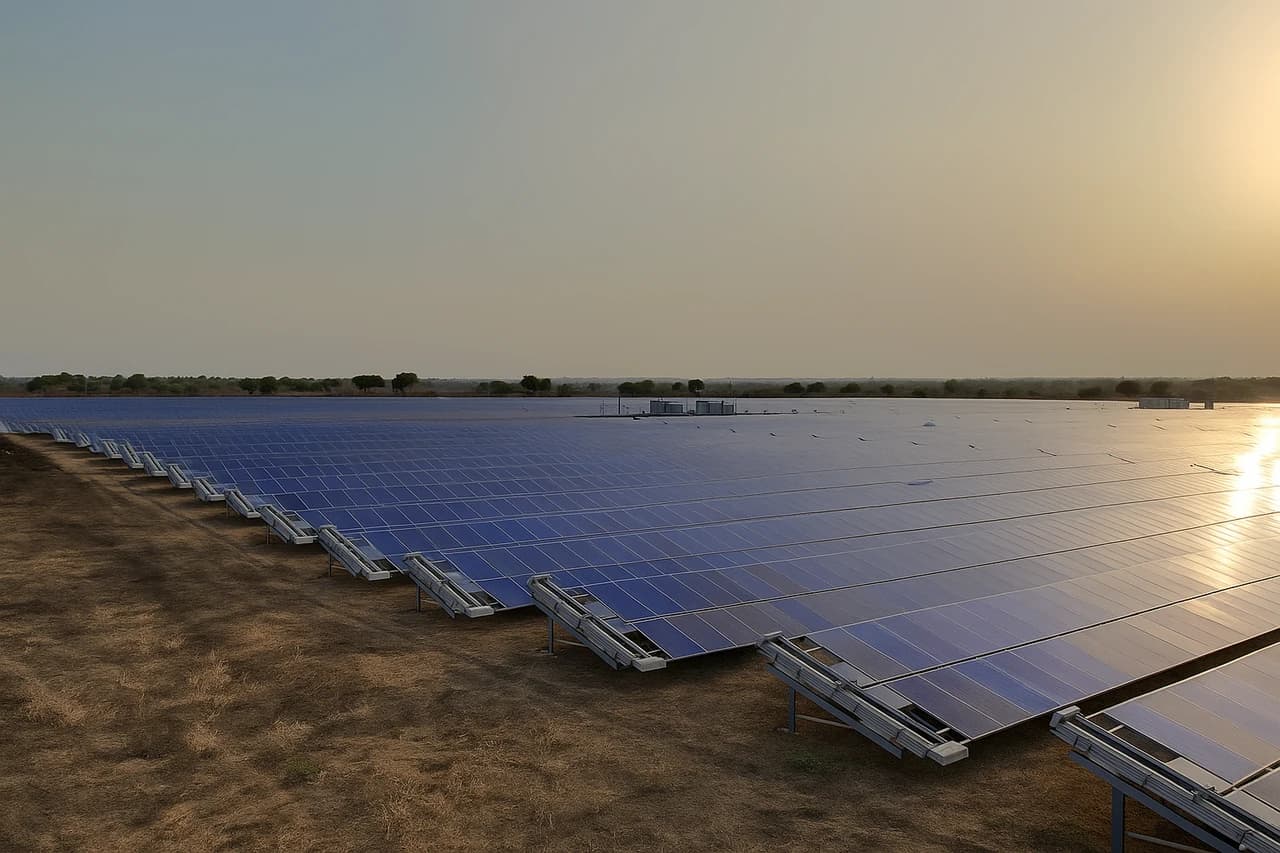
India is not a generic solar market. Extreme heat, high particulate environments, water scarcity, diverse plant topographies, and a utility sector spanning GW-scale IPP portfolios to 10 MW state schemes create unique requirements that most globally designed robots are not optimised to handle.
What Indian Plant Operators Must Check
Waterless operation: Rajasthan, Gujarat, Karnataka, AP/Telangana, virtually all of India's major solar states are water-stressed. Wet-wash robots are operationally impractical at scale.
Tracker compatibility: Single-axis trackers are now standard on most new utility projects for the ~15–25% additional yield they deliver. Ensure your robot has a proven tracker variant.
Heat tolerance: Panel surface temperatures in Rajasthan and Gujarat routinely exceed 70°C in summer. Robot hardware, brush materials, drive systems, and battery packs, must be rated for Indian ambient conditions.
Pan-India service: A plant in Agar (MP) or Yadgir (Karnataka) cannot wait three weeks for an international spare. Confirm same-day or next-day breakdown response before signing any contract.
Indian manufacturing advantage: Robots manufactured in India benefit from faster customs clearance, ALMM-list ecosystem familiarity, and lower import duty exposure. Taypro's Chakan, Pune facility is the only major solar cleaning robot manufacturer in India.
AMC structure: Evaluate the Annual Maintenance Contract carefully. Hidden per-call charges, long response SLAs, or parts-not-included clauses can make a seemingly affordable robot very expensive over a five-year plant horizon.
India Solar Soiling Profile by Region
Not all soiling is equal. Understanding your plant's soiling profile determines optimal cleaning frequency, which directly impacts robot count, scheduling, and ROI.
Region | Primary Soiling Type | Typical Annual Soiling Loss | Recommended Cleaning Frequency |
|---|---|---|---|
Rajasthan (Thar Desert) | Sand / Desert dust | 15–30% | Daily / Every 2 days |
Gujarat (Kutch / Morbi) | Industrial + Salt particulate | 12–22% | Every 2–3 days |
Madhya Pradesh (Agar, Rewa) | Agricultural dust + pollen | 8–15% | Every 3–5 days |
Karnataka (Yadgir, Pavagada) | Red laterite dust | 10–18% | Every 2–4 days |
Maharashtra (Solapur, Aurangabad) | Road + agricultural dust | 8–14% | Every 3–5 days |
Andhra Pradesh / Telangana | Mixed dust + bird droppings | 8–16% | Every 3–4 days |
AI/ML-powered scheduling, as implemented in Taypro's NECTYR platform, automatically adjusts cleaning frequency based on weather data, soiling sensors, and performance ratio monitoring. This avoids both over-cleaning (wasted robot cycles) and under-cleaning (revenue loss), optimising robot longevity and plant performance simultaneously.
ROI & Payback: What the Numbers Actually Say
The question every plant owner asks before investing in a cleaning robot fleet is simple: when does it pay back? Below is a realistic model for a 100 MW fixed-tilt utility plant in central India.
Parameter | Without Robots (Manual) | With Autonomous Robots |
|---|---|---|
Annual Generation (baseline) | 170 GWh | 170 GWh |
Average Soiling Loss | ~12% | ~1.5% |
Generation Lost to Soiling | 20.4 GWh | 2.55 GWh |
Recovered Generation | , | +17.85 GWh/yr |
Revenue Recovered (@ ₹3/kWh) | , | ~₹5.35 Cr/yr |
Water Cost Saved | , | ~₹40–60 L/yr |
Labour Cost Saved | , | ~₹30–50 L/yr |
Total Annual Benefit | , | ~₹6.2–6.5 Cr/yr |
Robot Fleet CAPEX (indicative) | , | ~₹8–12 Cr |
Payback Period | , | ~18–24 months |
Note: Illustrative figures. Actual ROI depends on your soiling profile, PPA tariff, O&M costs, and plant layout. Use Taypro's free ROI & Price Calculator for a plant-specific estimate.
CAPEX vs. Opex, Which Model Is Right for You?
Taypro offers both. CAPEX means owning the robots outright with a Taypro AMC, you capture the full upside of generation recovery. Taypro Opex is a pay-per-panel-cleaned model where Taypro operates the entire fleet on your plant with zero upfront hardware cost. For operators with capital constraints or who want to avoid hardware risk, Opex is frequently the better commercial structure. For operators with strong balance sheets and long plant tenors, CAPEX typically delivers higher lifetime returns.
Cleaning Technology Deep-Dive: Dry vs. Wet
One of the most consequential choices in solar cleaning robot selection is the underlying cleaning technology. In 2026, the case for waterless dry cleaning in India is overwhelming.
Waterless Dry Cleaning: The Indian Standard
Dry cleaning robots use mechanical action, microfiber pads, polyester brushes, or air-jet systems, to remove dust without any water. The best dry systems use a multi-stage approach:
Stage 1, Air lift: Directed airflow loosens dust from the panel surface, preventing it from being ground in during contact cleaning.
Stage 2, Contact wipe: Microfiber material makes contact with the panel in a controlled traverse, capturing the loosened dust without scratching module glass.
This is the principle behind Taypro's patented dual-pass system. It achieves panel cleanliness comparable to water washing while eliminating water infrastructure, thermal shock to modules from cold water on hot panels, and the mineral deposits left by hard water.
Wet / Water-Assisted Cleaning
Wet cleaning robots use water, from deionized to regular municipal supply, with rotating brushes. They are effective for stubborn, caked-on soiling. However, for Indian utility plants, the practical constraints are severe:
Water tanker logistics in remote locations cost ₹3,000–8,000 per trip and require road access to every site block.
Hard water (high TDS) leaves mineral deposits that reduce panel transmittance over time.
Cold water on hot panels creates thermal stress that can micro-crack cells over years.
Wet cleaning carries electrical safety risks requiring full plant shutdown or very careful insulation practices.
Verdict: For the vast majority of Indian utility solar plants, waterless dry cleaning is the correct technology choice. Water-assisted cleaning should be reserved for periodic spot-cleaning of stubborn deposits, not routine O&M operations.
Why Fleet Software Is Now Non-Negotiable
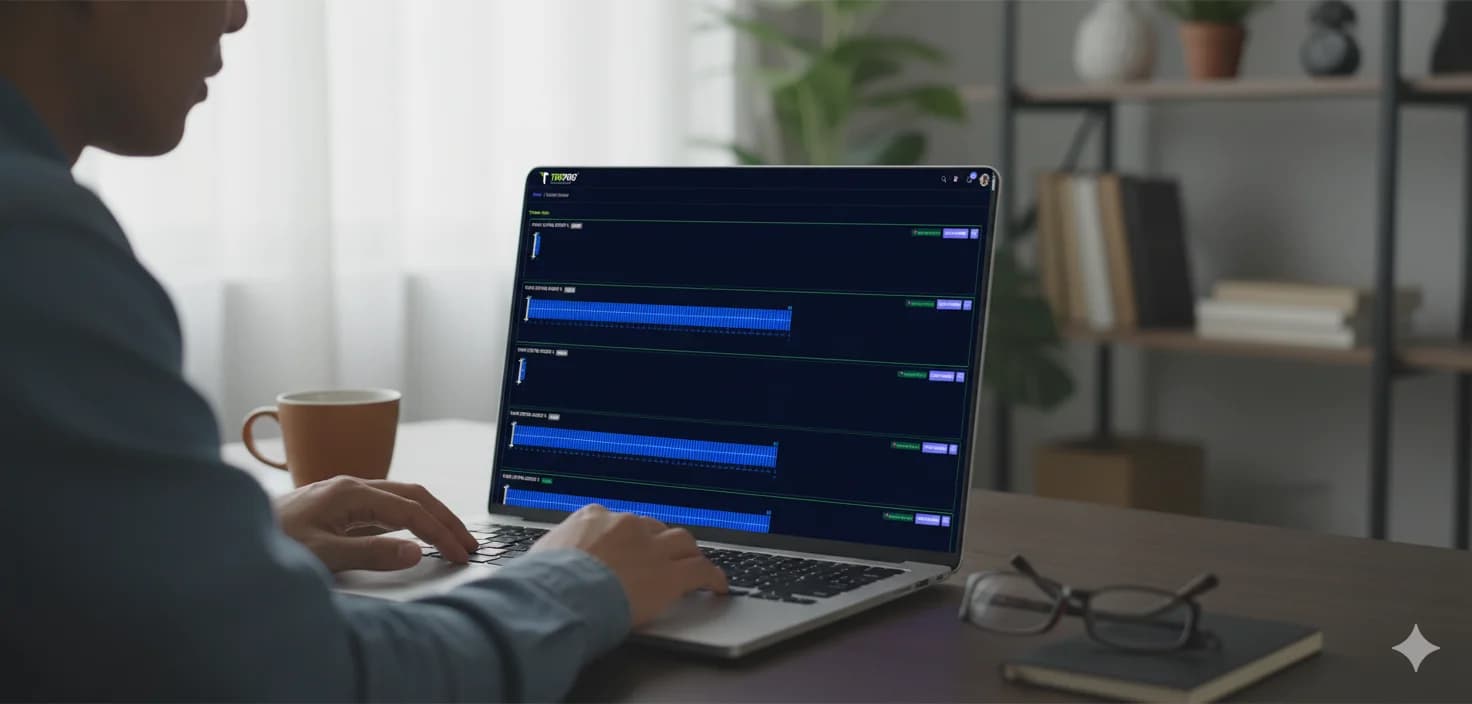
In 2026, purchasing a solar cleaning robot without a robust fleet software platform is like buying a car without a dashboard. The robot is the hardware; the software is what turns cleaning operations into a competitive advantage.
What Modern Fleet Software Must Deliver
AI/ML scheduling: Cleaning frequency adjusts automatically based on soiling sensor data, weather feeds, and historical performance ratio trends, eliminating wasted cycles and missed cleanings.
Real-time fleet monitoring: Every robot's position, cleaning status, battery level, and alert state visible in a single dashboard across all sites.
Cleaning audit logs: Every cleaning pass logged with timestamp, robot ID, row ID, and completion status, creating a defensible, auditable O&M record for IPP reporting, lender compliance, and insurance.
Integrated AMC ticketing: Spare parts requests, field engineer dispatch, and service history on the same platform as cleaning data. Taypro's NECTYR portal has operated this integrated model since 2022 across 150+ live sites.
The Next Layer: ORION Plant Intelligence
Taypro's upcoming ORION plant intelligence platform takes the next step: correlating cleaning events with SCADA generation data to identify underperforming blocks, predict soiling-driven generation drop-off, and close the loop between O&M operations and commercial performance. For IPPs managing multi-site portfolios, ORION represents a genuine step-change in operational visibility.
NECTYR fleet telemetry has been logging data since 2022 across 150+ live sites and 5 GW+ of deployed robot capacity. This dataset is Taypro's most durable advantage, AI models trained on it improve scheduling accuracy and fault prediction with every additional site-season of data.
Conclusion & Final Recommendations
The solar panel cleaning robot market in 2026 is no longer a niche category, it is core infrastructure for any seriously operated utility-scale solar plant. With soiling losses consistently accounting for 8–30% of annual generation in India's solar belt, the question is no longer whether to deploy robotic cleaning, but which system and what commercial model.
Use Case | Best Pick 2026 | Why |
|---|---|---|
Large utility, fixed-tilt, India | Taypro GLYDE + NECTYR | Dual-pass cleaning; deepest India service network; proven at 250 MW+ |
Single-axis tracker plant, India | Taypro GLYDE-X / NYUMA-X | Only Indian-made tracker robot; NECTYR integration; local AMC |
Scattered / small blocks, India | Taypro HELYX | Flexible semi-auto; waterless; low entry point; 150+ sites proven |
No upfront capital budget | Taypro Opex Service | Pay-per-panel-cleaned; Taypro operates fleet; zero CAPEX |
MENA / Desert global sites | Ecoppia T4 / NOMADD | Battle-tested in extreme desert; global deployment base |
European C&I rooftop | SolarCleano B1 / F1 | Versatile rooftop + ground; remote control; European support |
Taypro is India's only dedicated manufacturer of utility-scale solar panel cleaning robots, designed, built, and supported in India. With 5 GW+ of robot capacity deployed and 150+ live sites on NECTYR, the fleet data and service network advantage compounds with every additional site.
Stop leaving generation on the table. Run the ROI numbers for your plant, evaluate whether CAPEX or Opex is the right commercial model, and deploy the right robot for your plant type and soiling profile. Get in touch with the Taypro applications team for a plant-specific recommendation.
Related resources
For procurement and O&M teams evaluating robotic cleaning in India:
- GLYDE-X single-axis tracker cleaning robot
- waterless vs water-based solar cleaning
- robotic vs manual solar panel cleaning
Related reading
Frequently asked questions
For utility-scale plants, the Taypro GLYDE (fixed tilt) and GLYDE-X (single-axis trackers) are the strongest overall choice — combining patented dual-pass waterless cleaning, the deepest India service network, TÜV NORD certified hardware, and the NECTYR fleet software platform. For smaller or scattered blocks, the HELYX semi-automatic robot offers an economical entry point with the same waterless technology.
Soiling can reduce solar panel output by 8–30% annually depending on location in India. A robotic cleaning program with cycles every 1–5 days can reduce effective soiling loss to under 2%. For a 100 MW plant, that can mean recovering 15–25 GWh of generation annually.
Purpose-built robots like the Taypro GLYDE series use soft microfiber materials and controlled contact pressure designed specifically to avoid scratching panel glass. Major panel manufacturers including LONGi, Trina, JA Solar, and Canadian Solar have certified compatible robot models. Always verify panel manufacturer compatibility confirmation before deploying any robot.
Robot count depends on panel count, row length, required cleaning frequency, and the robot's cleaning speed. As a rough benchmark, a 100 MW fixed-tilt plant in a moderate-soiling zone typically requires 40–80 fully autonomous robots for every-2-day cleaning cycles. Use Taypro's free ROI calculator for a plant-specific estimate.
Both are valid. CAPEX gives owned hardware with Taypro AMC and the highest long-term ROI. Taypro Opex (pay-per-panel-cleaned) eliminates upfront capital, hardware risk, and maintenance burden — Taypro operates the fleet on your plant. For IPPs with constrained capital or wanting predictable O&M costs, Opex is increasingly the preferred structure. For owners with strong balance sheets and long plant tenors, CAPEX typically delivers better lifetime returns.
Yes. The GLYDE-X and NYUMA-X are specifically designed for single-axis tracker plants, featuring a flexible 360° bridge for tracker row transitions. With trackers now standard on most new Indian utility projects, these tracker-specific models represent the growing edge of Taypro's deployed portfolio.