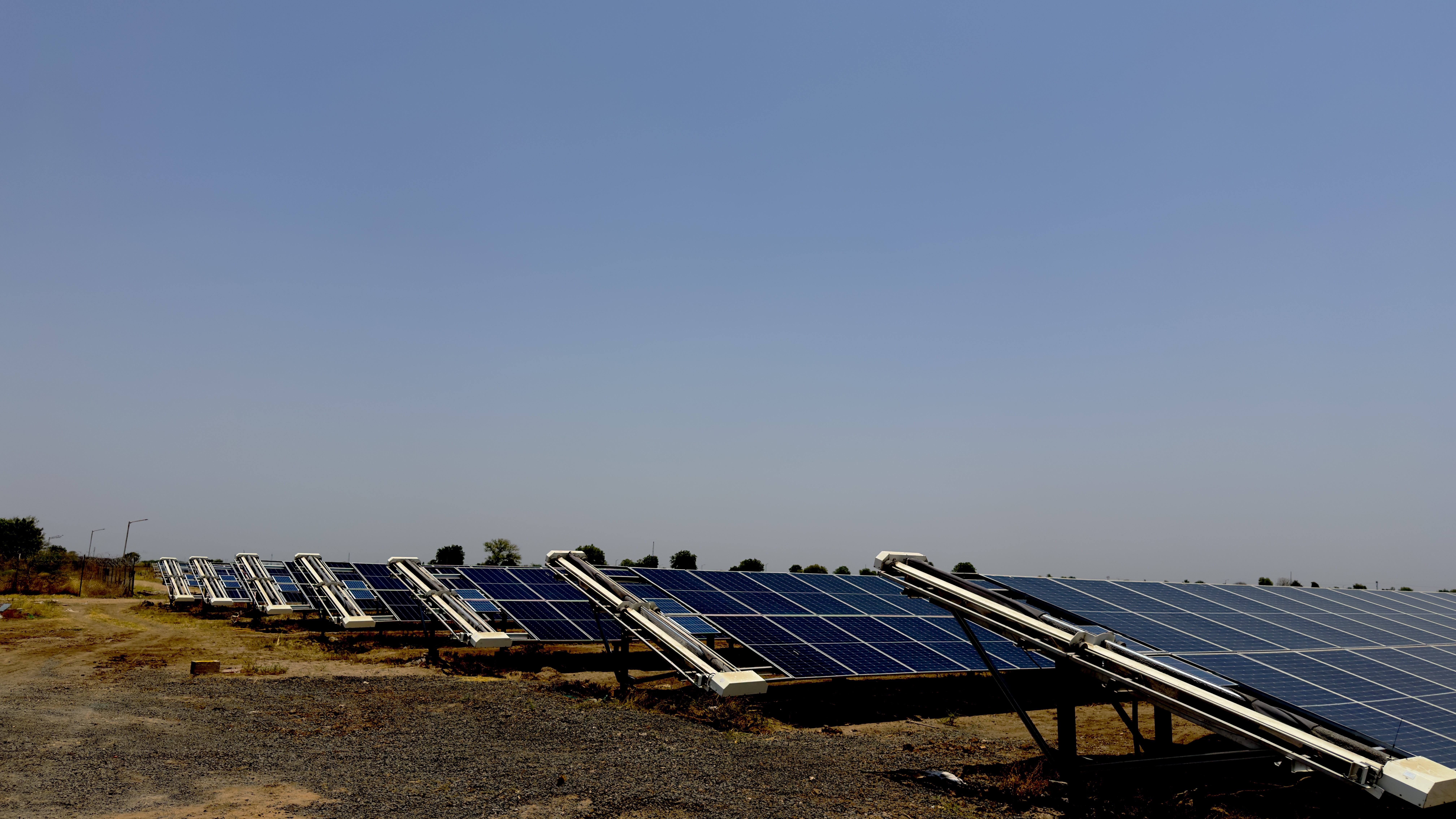
Quick answer
- Manual wet on 10 MW arid sites: roughly ₹45–80 lakh/year all-in (labour, water, mobilization).
- Waterless robots: higher capex but often lower water and labour at scale; five-year TCO depends on uptime.
- Compare on ₹ per recovered MWh, not one cleaning invoice.
- Rajasthan/Gujarat dust makes frequent cleans material to PR.
- Use site PR data in the ROI calculator.
Which method wins on a 10 MW Rajasthan plant?
When manual full-plant cycles slip beyond your economic soiling window after dust storms, robots often clear hurdle rates at roughly 85%+ fleet uptime. If manual passes stay on schedule with cheap water, wet methods may remain optimal until scale grows.
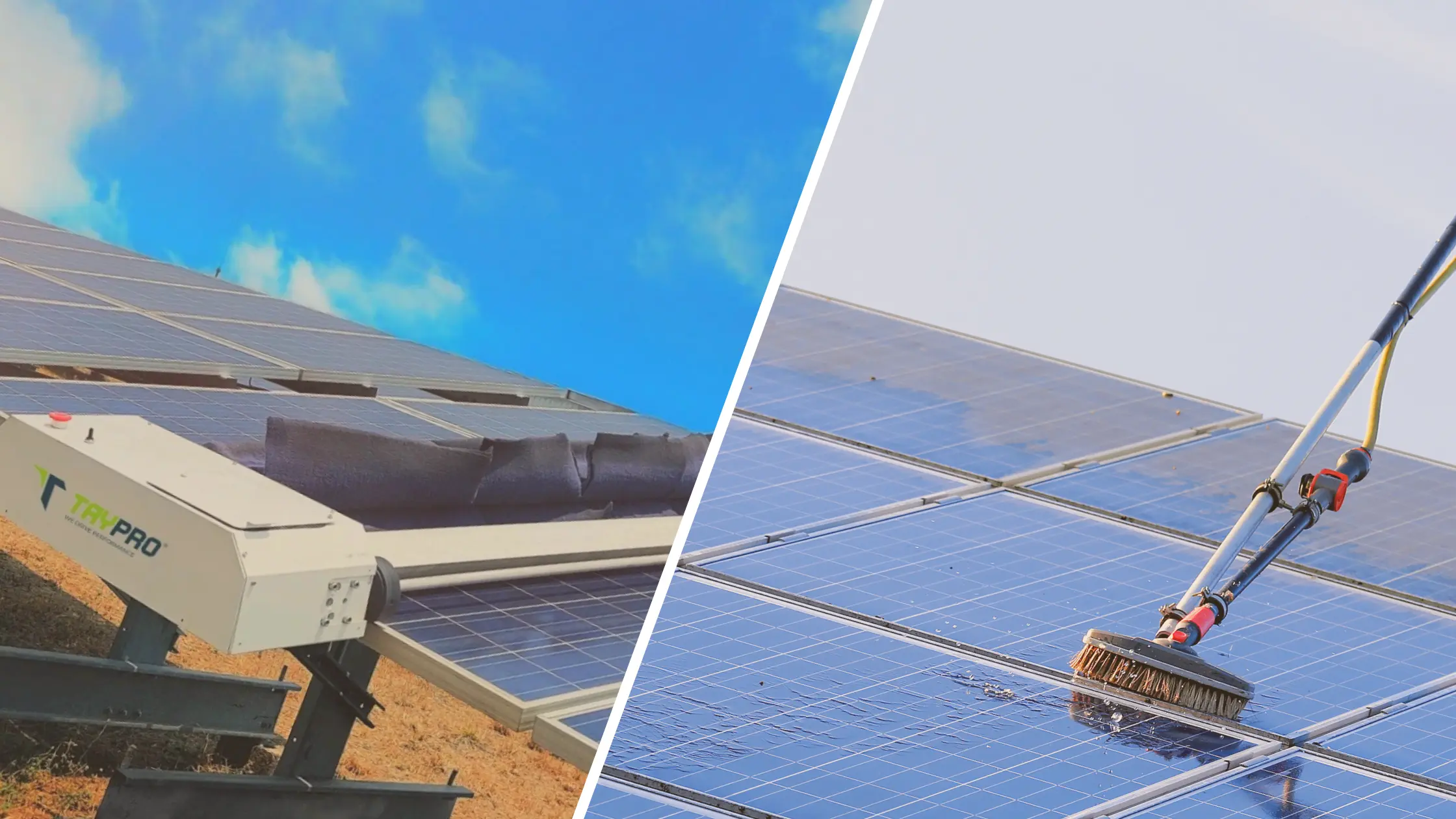
Waterless Robotic Cleaning vs Manual Labor: Total Cost Comparison for a 10 MW Solar Plant in India
The conversation about solar panel cleaning has shifted. It's no longer about whether to clean, that's settled. The question Indian plant owners are now asking is: what does manual cleaning actually cost in total, and at what scale does robotic cleaning win on pure economics, ignoring the ESG arguments entirely?
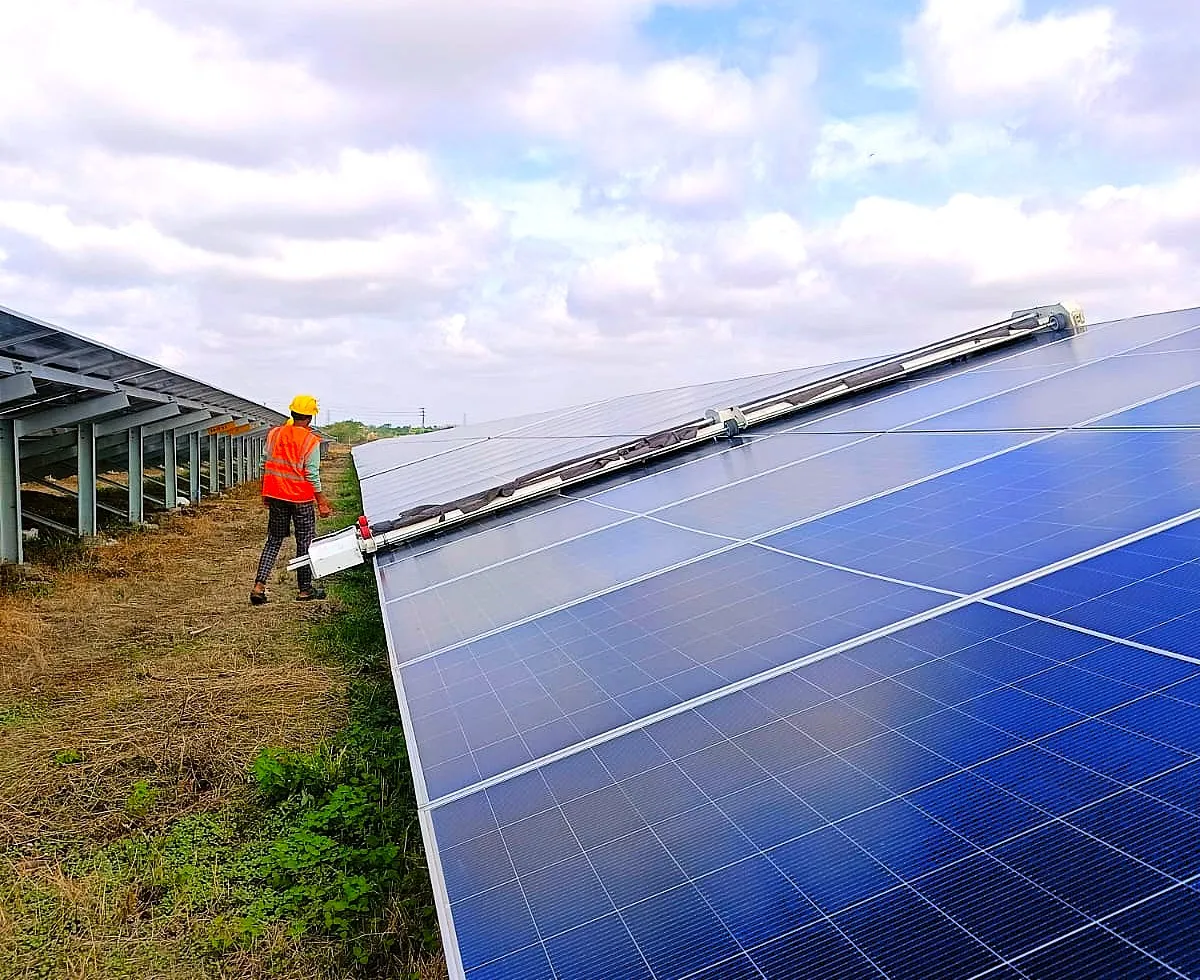
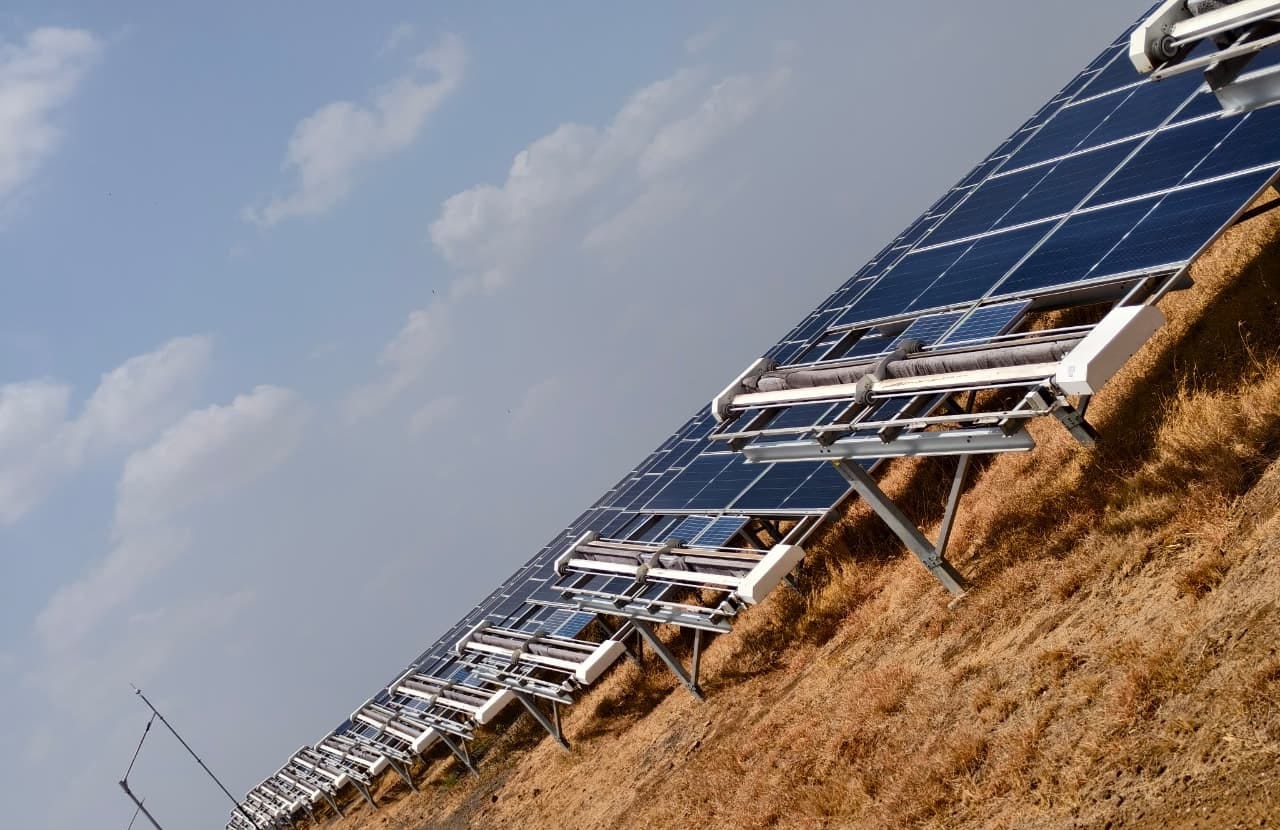
This article builds a complete cost comparison for a 10 MW utility-scale solar plant in an arid Indian location (Rajasthan / Gujarat), using published industry data, regulatory cost benchmarks, and TAYPRO's operational figures across 5 GW+ of deployed capacity.
Assumptions for This Comparison
Plant size: 10 MW, fixed-tilt, ground-mounted
Location: Arid / semi-arid (Rajasthan or Gujarat)
Panel count: approximately 22,000–25,000 panels (400–450 Wp modules)
Cleaning frequency modelled: once per week (manual), daily/smart-scheduled (robotic)
Electricity tariff: ₹3.50/kWh
Annual generation at clean PR of 80%: ~16.5 million kWh
Analysis period: 5 years
Manual Wet Cleaning: Full Cost Breakdown
Labour
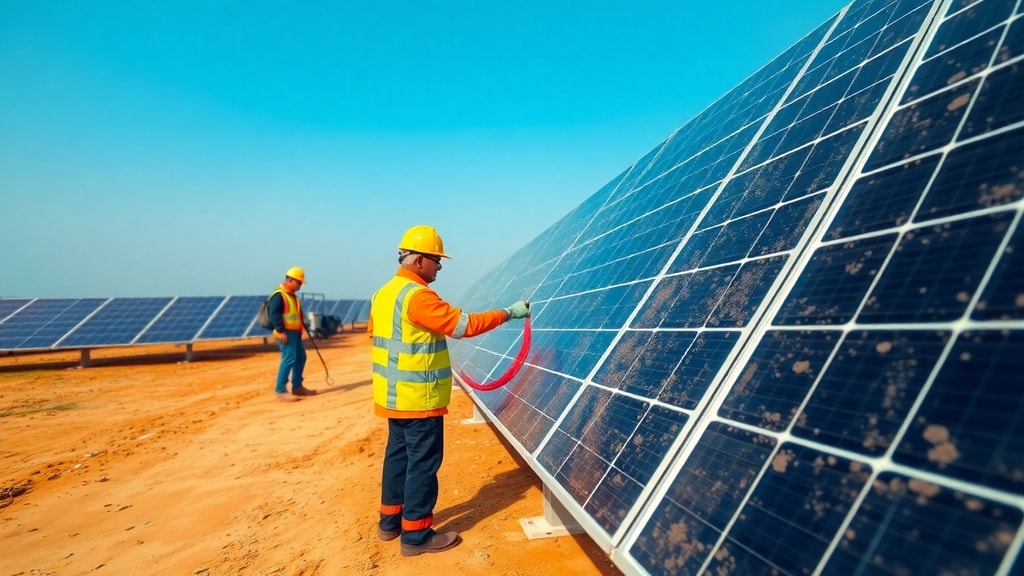
A 10 MW plant requires approximately 220,000–250,000 panel-cleaning operations annually at weekly frequency. At 12–15 panels per labour-hour using water-fed pole systems, each cleaning cycle (full plant) requires 1,500–2,000 labour hours. At ₹400–600 per unskilled labourer per day (8-hour shift), and accounting for supervisory overhead:
Labour Component | Annual Cost |
|---|---|
Cleaning crew wages (weekly cleaning, 10 MW) | ₹18 – 24 lakh/year |
Supervisor / site foreman | ₹3 – 4 lakh/year |
Safety equipment, PPE, consumables | ₹1 – 1.5 lakh/year |
Total Labour (annual) | ₹22 – 29.5 lakh/year |
Water
Manual wet cleaning for a 10 MW plant consumes 150,000–250,000 litres of water annually, based on the industry benchmark of 15,000–25,000 litres per MW per year in water-stressed regions (IndexBox India Dry Cleaning Market Report, 2026). In Rajasthan and Kutch, where groundwater must be trucked or tanker-supplied to remote sites:
Water Component | Annual Cost |
|---|---|
Water procurement (tanker supply at remote sites) | ₹3 – 6 lakh/year |
Water quality treatment (DM water, softener) | ₹1 – 2 lakh/year |
Storage infrastructure, piping maintenance | ₹0.5 – 1 lakh/year |
Total Water (annual) | ₹4.5 – 9 lakh/year |
Revenue Loss from Residual Soiling
Even with weekly cleaning, residual soiling loss between cleaning cycles in Rajasthan/Gujarat averages 4–7% of annual generation. At 0.45%/day soiling accumulating between Monday and the next Monday:
Residual Soiling Loss | Annual Generation Lost | Revenue Lost at ₹3.50/kWh |
|---|---|---|
5% of 16.5M kWh | 825,000 kWh | ₹28.9 lakh/year |
Panel Damage and Accelerated Degradation
Manual cleaning using hard water causes mineral scaling, calcium and magnesium deposits, that permanently reduces light transmission through panel glass. Industry data suggests hard-water scaling can cause 0.3–0.5% permanent annual transmission loss per panel, accelerating effective degradation beyond the manufacturer's 0.5%/year warranty rate. Abrasive cleaning also risks micro-scratches on anti-reflective coatings. These are difficult to monetise precisely but represent a real long-term asset value cost.
Total Manual Cleaning Cost (10 MW, Annual)
Cost Category | Annual Cost |
|---|---|
Labour | ₹22 – 30 lakh |
Water | ₹4.5 – 9 lakh |
Residual soiling revenue loss | ₹28 – 35 lakh |
Panel damage / scaling (estimated) | ₹3 – 6 lakh |
Total (annual) | ₹57.5 – 80 lakh/year |
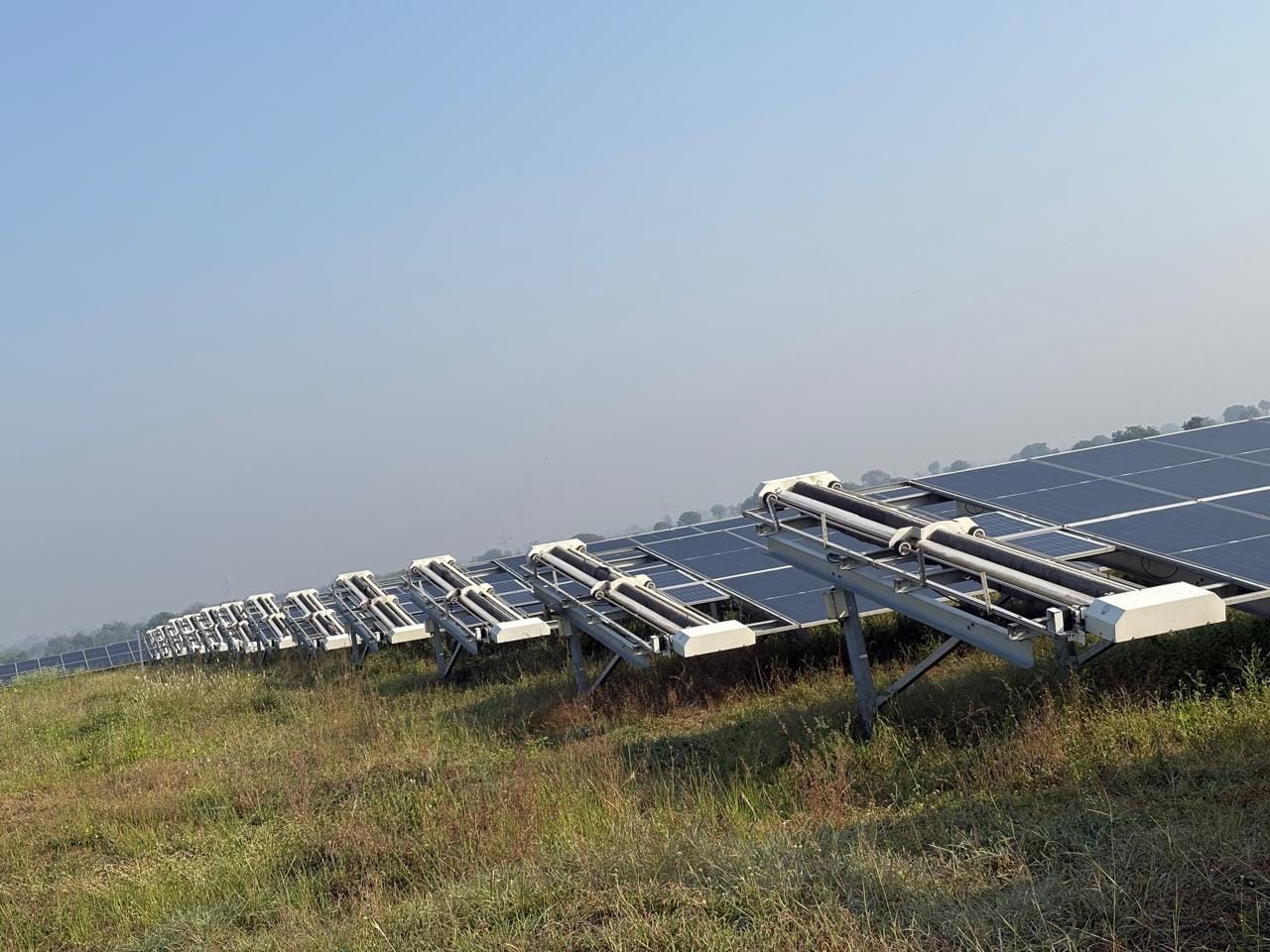
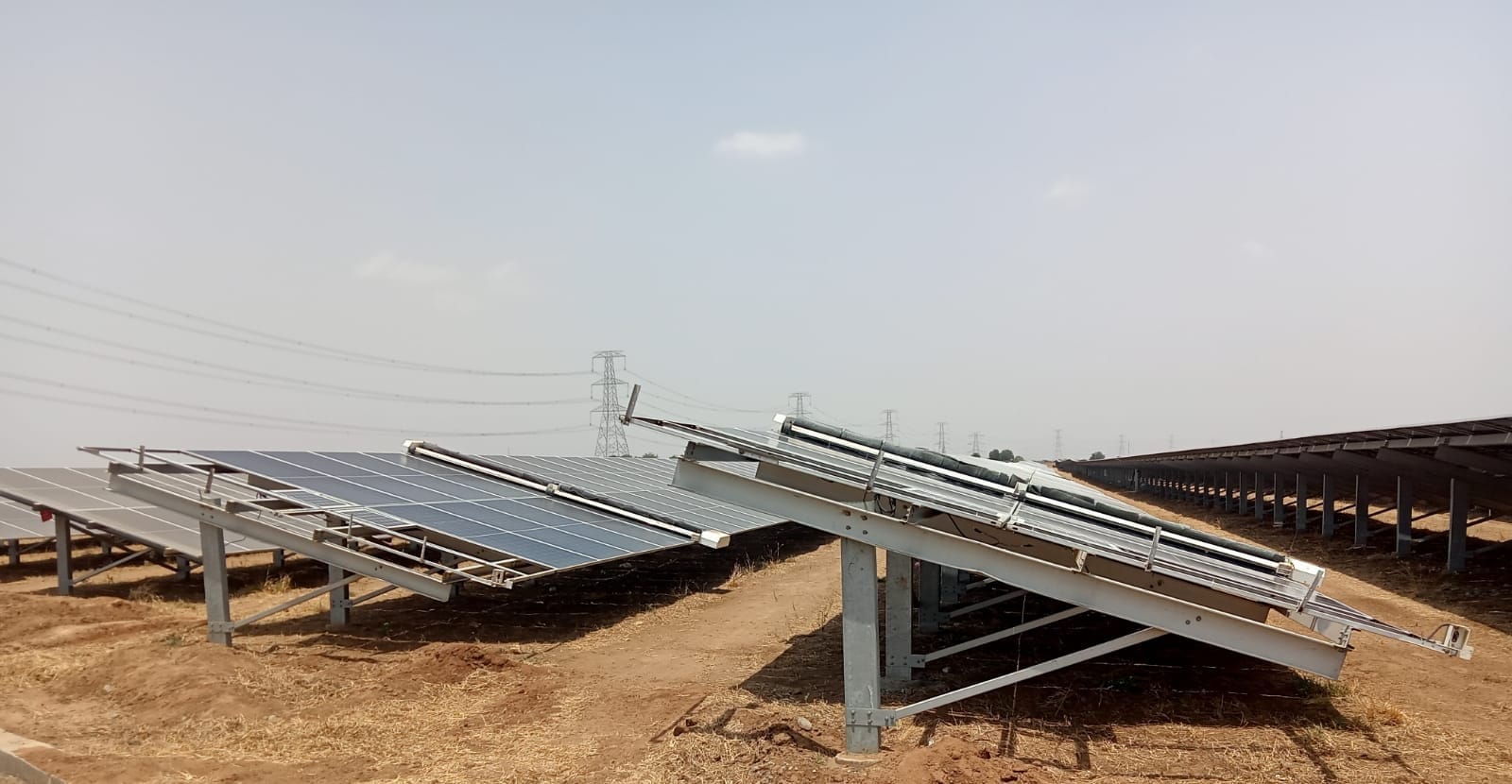
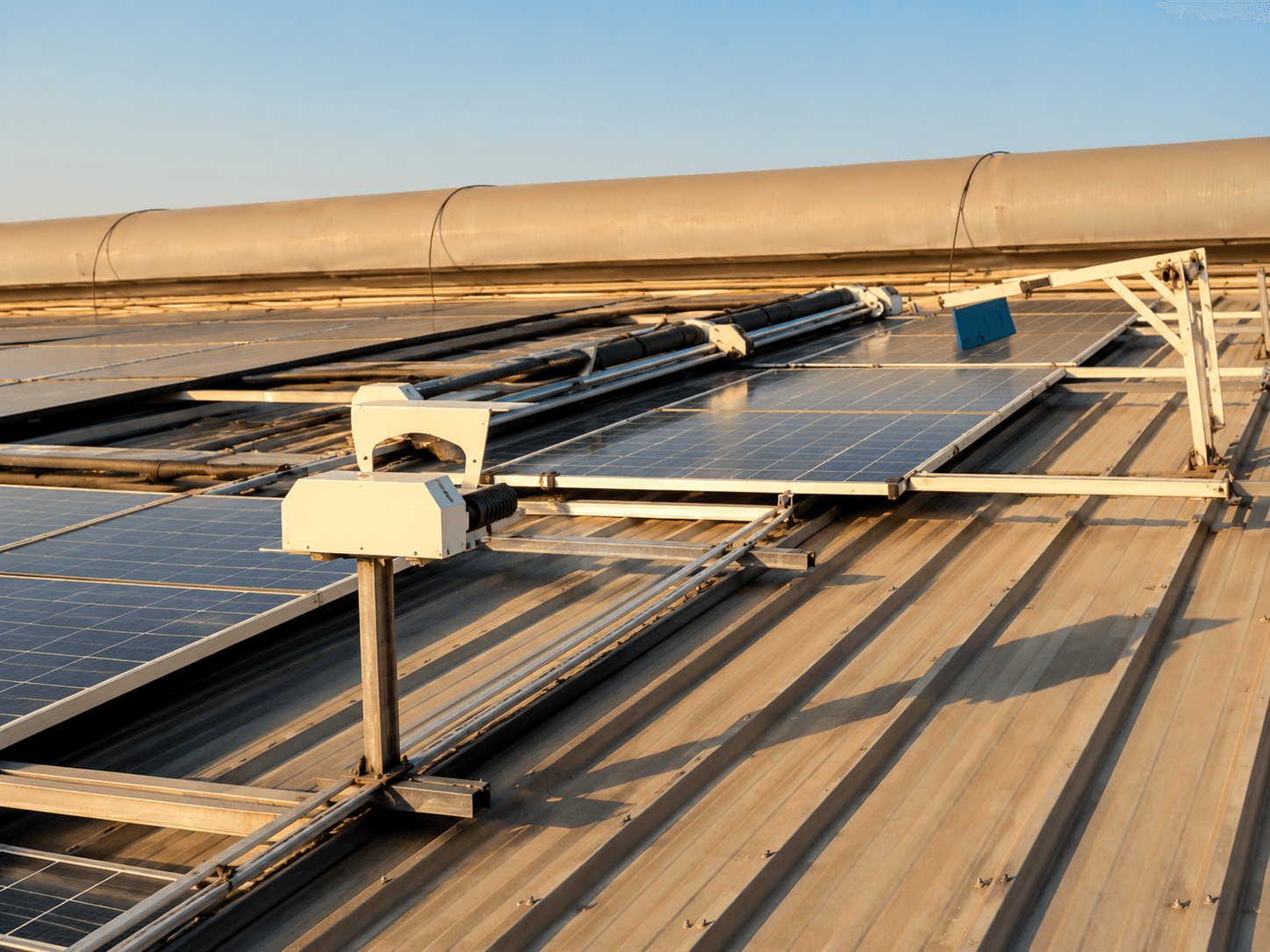
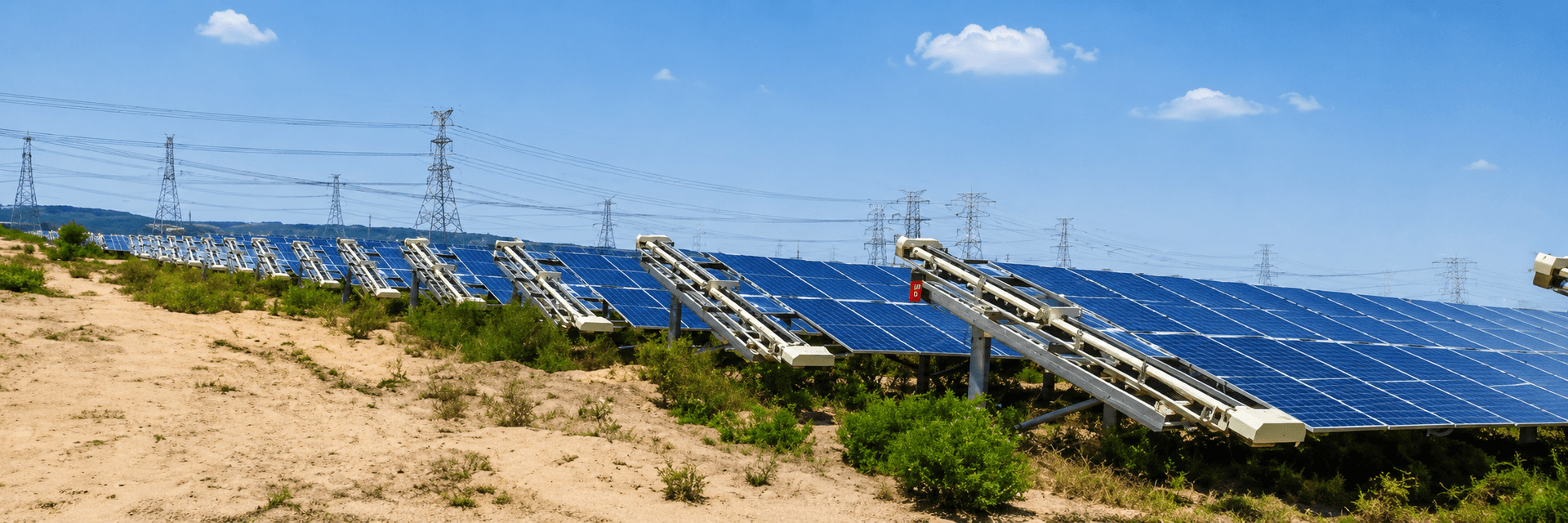
Waterless Robotic Cleaning: Full Cost Breakdown
CAPEX Model
Hardware capex for autonomous dry-cleaning robotic systems in India ranges from ₹100–200 lakh per MW for track-mounted systems and ₹80–150 lakh per MW for mobile autonomous systems, based on 2026 market data (IndexBox, 2026). For a 10 MW plant:
CAPEX Component | Cost |
|---|---|
Robot hardware (10 MW coverage) | ₹80 – 150 lakh (one-time) |
Track installation and commissioning | ₹15 – 25 lakh (one-time) |
Annual maintenance / parts replacement | ₹4 – 8 lakh/year |
Software / fleet management subscription | ₹1.5 – 3 lakh/year |
5-Year Total Cost (CAPEX model) | ₹122 – 215 lakh |
OPEX Model (Cleaning-as-a-Service)
TAYPRO and comparable providers offer OPEX-based cleaning contracts where the robot hardware is owned and maintained by the service provider. Published contract rates from India's dry cleaning market: ₹1.5–3 lakh per MW per year for weekly cleaning service contracts, and ₹8,000–15,000 per MW per cleaning cycle for on-demand visits.
OPEX Component | Annual Cost (10 MW) |
|---|---|
Annual service contract (daily/smart-scheduled) | ₹15 – 30 lakh/year |
Residual soiling revenue loss (daily cleaning) | ₹5 – 8 lakh/year |
Water cost | ₹0 (waterless) |
Panel damage / scaling | ₹0 (microfibre, no abrasion) |
Total (annual, OPEX model) | ₹20 – 38 lakh/year |
Head-to-Head: 5-Year Cost Comparison (10 MW Plant, Rajasthan)
Cost Category | Manual Wet Cleaning (5 years) | Robotic OPEX (5 years) | Robotic CAPEX (5 years) |
|---|---|---|---|
Labour / service contract | ₹110 – 150 lakh | ₹75 – 150 lakh | ₹27.5 – 55 lakh (maintenance only) |
Water costs | ₹22.5 – 45 lakh | ₹0 | ₹0 |
Residual soiling revenue loss | ₹140 – 175 lakh | ₹25 – 40 lakh | ₹20 – 35 lakh |
Hardware / installation | ₹0 | ₹0 | ₹95 – 175 lakh (one-time) |
5-Year Total | ₹272 – 370 lakh | ₹100 – 190 lakh | ₹142 – 265 lakh |
The OPEX robotic model saves ₹170–200 lakh over 5 years versus manual cleaning at a 10 MW plant in an arid Indian location, a saving of approximately ₹34–40 lakh per MW over the analysis period. The CAPEX model delivers larger savings in years 3–5 once the hardware investment amortises.
The Water Saving Argument Is Secondary, But Real
At 10 MW scale, switching from manual wet cleaning to waterless robotic cleaning saves 1.5–2.5 million litres of water annually. In Rajasthan's Barmer or Jaisalmer districts, where groundwater is classified as overexploited by the Central Ground Water Board, this is not an ESG talking point, it is a regulatory risk mitigation. Several state solar policies now require water-use justification for cleaning operations above a threshold. This regulatory direction will tighten, not loosen.
When Does Manual Cleaning Still Make Sense?
Manual cleaning retains a cost advantage in two narrow situations: plants below 2 MW where robot capital cost per MW is high, and plants in high-rainfall coastal zones (Kerala, coastal Tamil Nadu) where natural cleaning events are frequent enough to reduce required cleaning cycles to 6–8 times per year. At 10 MW and above in arid India, the economics of robotic cleaning are unambiguous.
Related resources
For procurement and O&M teams evaluating robotic cleaning in India:
- waterless vs water-based solar cleaning
- robotic vs manual solar panel cleaning
- Taypro robotic solar panel cleaning service
Related reading
Frequently asked questions
Manual wet programs typically show higher recurring labour and water opex on arid 10 MW blocks. Waterless robots add capex or lease cost but can reduce litres per MW and improve pass frequency. Compare five-year loaded cost against recovered MWh at your PPA tariff.
Industry-typical ranges cite roughly 2–5 litres per module per wet pass, scaling to lakhs of litres per full-plant round. Waterless robotic methods target near-zero routine withdrawal.
When soiling is mild, water is cheap and reliable, and crews complete full-plant passes within your PR recovery window. Fixed-tilt sites with good roads often stay manual longer than tracker deserts.
Include storm surge weeks, tanker demurrage, robot uptime sensitivity, downtime during day wet cleans, and soiling MWh valued at ₹/kWh. Stress-test robot uptime at 75% and 90%.
Run reference-block PR for 14 days before and 7 days after cleans. Log water litres, labour hours, or robot pass maps. Extrapolate to annual ₹ and MWh before portfolio rollout.