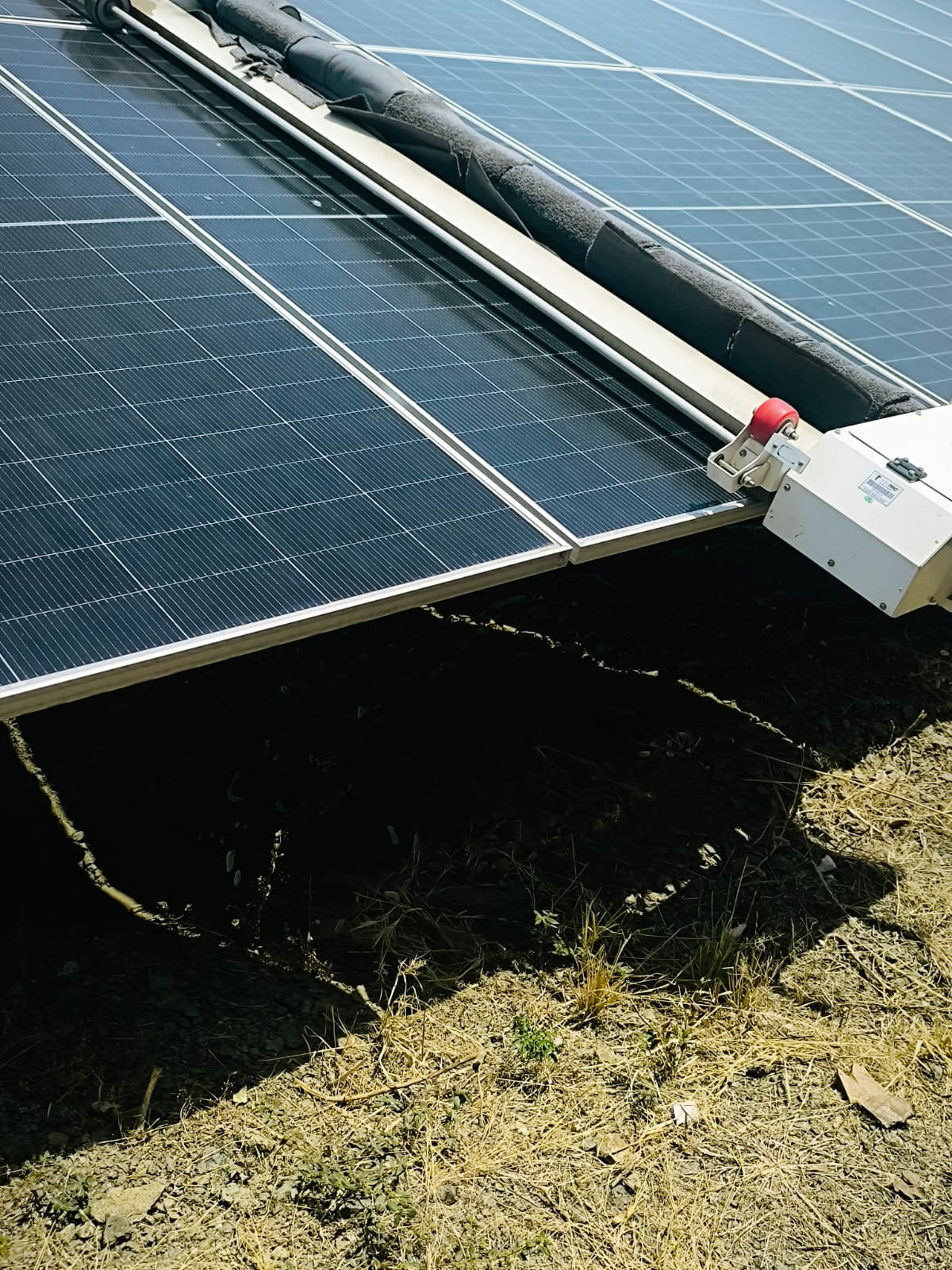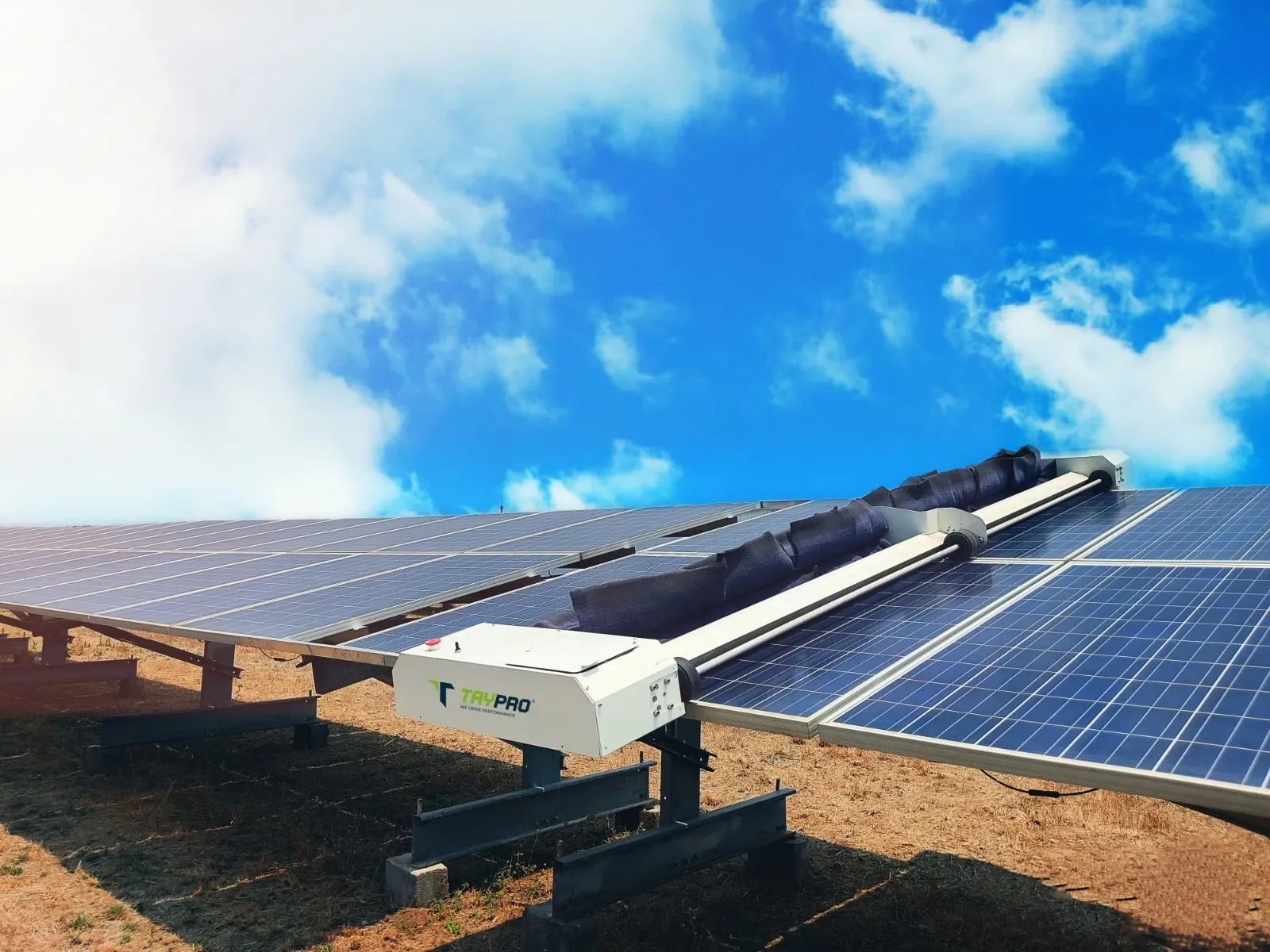

Waterless robotic cleaning is the right default for most Indian utility plants, but waterless does not mean ignore moisture. Dew, overnight humidity, mist, and light rain leave microfiber or brush elements damp before a scheduled cycle. Run a nominally dry pass on dusty glass with wet media and you risk particulate smear and micro-abrasion. Generation may look acceptable the next morning while glass accumulates damage that holds dust longer for weeks.
Rain detection and on-element moisture sensing exist to postpone those cycles automatically. This article covers triggers, O&M policy, and module protection logic for 10 to 200 MW sites using autonomous cleaners in dust belts with sharp weather swings.
Quick answer
- Moisture on cleaning elements turns dry dust into abrasive slurry.
- Automatic postpone beats operator guesswork at night.
- Combine on-robot sensors + weather forecast for rain detection.
- Log defer reasons in fleet dashboard for AMC and PR reviews.
- Planned wet cleans are exceptions; accidental damp dry passes are not.
What goes wrong on a damp dry pass
Desert dust on Rajasthan modules is largely silica-rich fine particulate. Dry dual-pass brushing lifts and removes when element pressure and speed match OEM limits. Add moisture without controlled wet protocol and particles embed in media contact patches. Streaks appear within one pass. Repeated damp dry attempts scratch glass microscopically, increasing surface area for future soiling.
Operators under PR pressure sometimes push cycles on marginal nights. Damage is insidious: SCADA shows small next-day dips while warranty photos months later show etching patterns tied to cleaning logs.
Detection stack: element moisture plus weather
| Input | What it detects | Typical action |
|---|---|---|
| Element moisture sensor | Dew, humidity uptake, residual rain on media | Hard postpone until dry threshold |
| Live rain gauge / API | Active precipitation at site | Fleet-wide hold |
| Forecast probability | Incoming cells in next 2 to 4 hours | Delay dispatch |
| Humidity + clear-sky dew model | Winter high dew nights | Shift start time later |
| Operator manual hold | Known flooding or mud splash event | Block-level skip |
Postpone triggers common on Indian utility sites
- Heavy dew after clear winter nights in western Gujarat and Rajasthan.
- Monsoon shoulder humidity in Maharashtra when modules cool fast after sunset.
- Coastal and river-basin corridors with mist and salt aerosol uptake on media.
- Early-morning condensation on robots staged in open blocks overnight.
- Light rain that stops before manual crews cancel but leaves surfaces damp.
Each event should generate a defer code visible in O&M dashboards, not a silent skip. Root-cause visibility separates weather from mechanical faults when PR recovery slips.
Why postponing is correct O&M economics
One skipped night trades short-term coverage for protected 25-year module life, especially on aggressive cadence sites. Finance should model cost of defer as delayed MWh recovery, not zero, and compare to cost of streak remediation and warranty claims from improper passes.
| Decision | Short-term PR | Long-term risk |
|---|---|---|
| Auto postpone on wet element | May lag 24 to 48 hours | Lower glass damage probability |
| Force dry pass on damp media | Small apparent gain | Streaks, abrasion, warranty dispute |
| Planned wet clean after storm | Strong mud removal | Water cost, OEM compliance needed |
Integration with weather scheduling
Rain detection works best inside broader schedule optimization. Forecast-driven windows align cleaning with dry intervals; on-robot moisture confirms reality before brushes contact glass. Read dust storm and weather scheduling science and weather impact on panel cleanliness in India.
Operator playbook after a postpone alert
- Confirm alert type: element wet vs forecast vs active rain.
- Do not override unless elements pass dry check per OEM procedure.
- Reschedule block in next dry window; prioritize if soiling score high.
- Log override exceptions with name, reason, and photo if ever required.
- Review seven-day PR on affected blocks to validate defer was cheaper than damage.
Wet microfiber vs planned wet cleaning
Controlled wet methods with approved flow rates suit adhered mud after monsoon surges when dry brushing under-removes. Those passes require water logistics, discharge compliance, and module OEM sign-off. Accidental damp dry passes have none of that control. Rain detection protects the default waterless program from becoming an uncontrolled wet wipe.
Compare methods in solar panel cleaning methods overview and waterless vs water-based cleaning.
Commissioning checks for rain and moisture logic
- Simulate wet element signal in factory or pilot row; verify postpone and alert.
- Inject forecast rain API test; confirm fleet hold and resume rules.
- Document dry threshold and time-to-dry after dew in operator manual.
- Align SCADA weather station if on-site gauge feeds logic.
- Export defer codes in telemetry contract for lender reviews.
Should a Gujarat tracker IPP enable automatic wet postpones?
Yes, on any waterless robotic program where night dew and pre-monsoon humidity are common. Enable element moisture plus forecast rain detection, prohibit routine manual override, and tie defer logs to monthly PR bridges. Emergency storm recovery may still use planned wet protocols on specific blocks, but damp dry passes should remain blocked by default.
Regional rain and dew patterns to plan around
| Region / season | Primary moisture risk | Scheduling note |
|---|---|---|
| Gujarat winter clear nights | Heavy dew by 03:00 to 05:00 | Start later or defer until dry |
| Rajasthan pre-monsoon | Dry dust + sudden thunder cells | Forecast hold before dispatch |
| Coastal Maharashtra | Mist and salt aerosol | Extended element dry time |
| Post-light-rain mornings | Damp glass + dust paste | Hard postpone on dry protocol |
Linking defer logs to monthly PR bridges
Asset managers should show deferred block-hours alongside MWh recovery in investor packs. A defer is not failure; it is asset protection with documented reason. Compare PR slope on deferred blocks versus forced-pass blocks in the same weather week if historical overrides exist. Most teams find forced passes underperform on seven-day PR when moisture was present at start.
Module OEM and warranty documentation
File automatic postpone policies with module OEM cleaning approvals. Warranty disputes after streak damage often ask for cleaning logs. Timestamped defer codes prove the operator followed waterless protocol rather than negligent dry wiping on wet glass. Include policy excerpt in O&M manuals given to technical advisors at refinancing.
Does rain detection replace human weather judgment?
It augments, not replaces. Local supervisors still cancel fleet-wide campaigns when flooding, mud splash, or lightning risk dominates. Element sensors and forecast APIs handle routine dew and light rain margins humans miss at night. Combined stack reduces both damage risk and unnecessary skips when elements are dry but operators fear invisible moisture.
What PR impact should finance expect after a defer week?
Short defer periods on high-soiling blocks may cost 0.5 to 1.5 percent PR until the next dry window, often less than damage from forced damp passes that create streaks holding dust for weeks. Finance models should compare defer cost to remediation and warranty risk, not treat every postponed night as O&M failure.
Storm sequences may stack multiple defers; prioritize blocks by economic soiling score when dry nights return rather than attempting full plant in one shift.
Document dry verification steps in local language for contract operators rotating between sites during peak season.
Key takeaways
- Moisture turns dry dust into smear and abrasion risk on utility modules.
- Rain detection and element sensors automate safe postpones.
- Log defer reasons for O&M transparency and AMC reviews.
- Planned wet cleans differ from accidental damp dry passes.
- Protect module life over one marginal night of coverage.
Related resources
Frequently asked questions
Dust plus moisture forms a slurry that microfiber or brush elements can smear across glass instead of lifting soil. Particles trapped in wet media cause micro-abrasion. The result is persistent streaks and higher post-clean soiling adhesion, not a one-night PR blip.
Systems combine on-robot moisture sensing on cleaning elements with forecast and live weather inputs. If elements read wet or rain probability exceeds threshold, the controller defers the pass and logs reason codes to the fleet dashboard without waiting for a 4 a.m. operator call.
Only after physical dry verification of elements and glass, OEM approval, and documented exception for emergency soiling after storms. Routine overrides for PR pressure cause warranty and long-term glass damage disputes. Default should stay automatic defer.
Controlled wet methods with approved pressure and chemistry suit adhered mud after monsoon surges when dry brushing is insufficient. These are planned exceptions with water logistics, not accidental dry passes on damp modules from dew or mist.
Winter clear nights with heavy dew in Gujarat and Rajasthan, monsoon shoulder humidity in Maharashtra and Karnataka, coastal corridors with mist, and mornings after light rain that did not trigger full manual wash cancellation.