References
360 MW
Largest single-site automatic deployment
Multi-robot GLYDE fleets on Rajasthan and Gujarat utility plants, not demonstration units.
50–500 MW utility solar
100 MW is not a pilot, it is a production O&M challenge. Taypro deploys multi-robot fleets on SECI, DVC, and IPP projects from 50 MW to 360 MW single sites. For pan-India service coverage proof, see the national fleet coverage page; for OPEX commercial terms, use the primary cleaning service page.
MW-scale capability
References
360 MW
Multi-robot GLYDE fleets on Rajasthan and Gujarat utility plants, not demonstration units.
Fleet model
Multi-robot
Site mapping, CRADYL transfer points, battery swap strategy, and operator teams scaled to block count.
Mobilisation
Weeks
Site assessment, robot mapping, connectivity (LTE/mesh), operator training, and NECTYR onboarding.
Commercial
CAPEX + OPEX
IPPs choose robot CAPEX with AMC or OPEX for balance-sheet efficiency on 50–500 MW portfolios.
Enterprise requirements
SECI, state discom, and IPP case studies with named MW capacity, not marketing claims without deployment evidence.
Engineering models for robots-per-MW, night-window coverage, and cycle count to hit PR recovery targets.
Regional breakdown response, spare parts inventory, and remote diagnostics for fleets operating in remote solar parks.
NECTYR block-level cleaning logs and monthly settlement for lender, SECI, and internal O&M audits.
Zone-by-zone robot deployment on 200 MW+ sites minimises operational disruption. Commissioning playbook includes mapping, connectivity, operator training, and parallel O&M coordination.
Cleaning SOPs, NECTYR logs, and monthly reconciliation structured for utility tender compliance and lender technical due diligence.
Deployment model
There is no universal robots-per-MW ratio, it depends on fixed tilt vs tracker, row length, transfer points, target cycles per month, and battery swap strategy. Taypro engineers model fleet size during site assessment using stored row geometry and throughput targets.
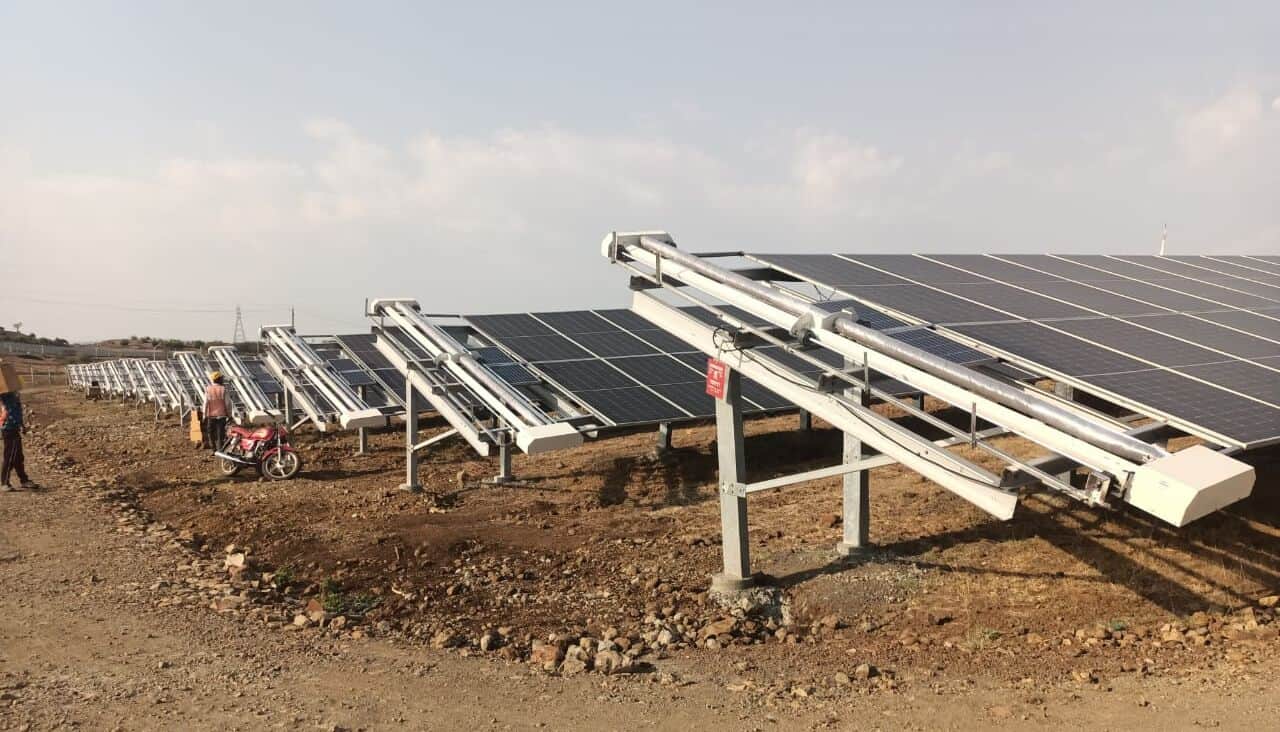
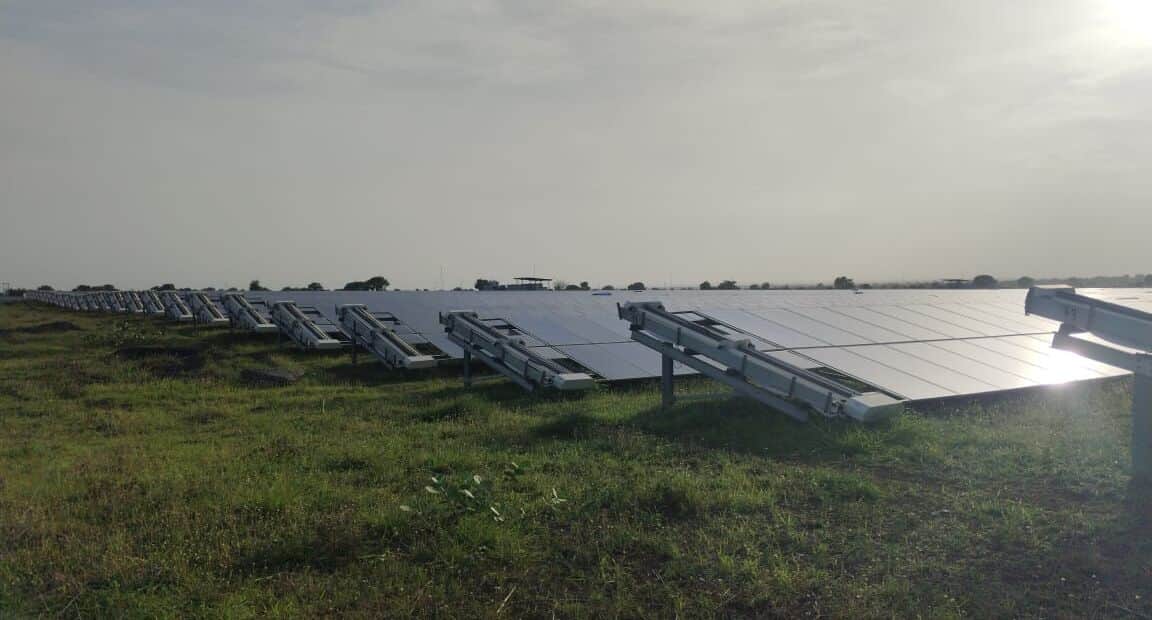
On 100 MW+ tracker plants, GLYDE-X or NYUMA-X fleets with CRADYL row transfer are standard. Fixed-tilt blocks at 200–360 MW may deploy tens of GLYDE units with coordinated NECTYR scheduling across zones.
Browse Taypro's automatic project references or request a fleet model for your specific plant layout.
References
Akhadana Rajasthan 360 MW, Bachau DVC Gujarat 300 MW, and Neneva Gujarat 250 MW represent automatic-first Taypro GLYDE fleets at the upper end of Indian utility scale. These are production deployments, not demonstration arrays.
Fleet sizing on 100 MW tracker plants typically involves GLYDE-X or NYUMA-X with CRADYL transfer stations at row ends. Fixed-tilt 200 MW blocks may run coordinated multi-zone GLYDE fleets with NECTYR scheduling across zones.
Request enterprise proposal with plant layout, or browse automatic project case studies filtered by MW capacity.
Large-scale solar panel cleaning requires production fleet operations, not a handful of demo robots.
Taypro deploys tens of robots on 200–360 MW sites with NECTYR fleet oversight, regional spares, and dedicated operators. That is the bar for MW-scale cleaning procurement in India.
Enterprise deployment
Share single-site MW or multi-site portfolio, installation mix, SECI/IPP context, and commercial model preference (CAPEX vs OPEX).
Robots-per-MW calculated from row geometry, tracker vs fixed tilt, cycle targets, and CRADYL placement. Not generic industry ratios.
Pricing, breakdown response, reporting cadence, and escalation matrix scaled to plant size. OPEX or CAPEX terms issued.
Zone-by-zone mobilisation on large sites. Operators, spares, and NECTYR onboarding per phase.
3–10 cycles monthly with monthly panel-volume reconciliation and quarterly programme reviews.
Scale fit
Enterprise guides
MW-scale references
50–360 MW robotic cleaning deployments across India.
India's largest utility solar parks sit in Rajasthan, Gujarat, Maharashtra, Karnataka, and Madhya Pradesh. Explore state-specific robotic cleaning guides.
Yes. Taypro has multiple 100 MW+ references and single-site deployments up to 360 MW with automatic GLYDE fleets. Fleet size and mobilisation timeline are modelled per site.
Robots-per-MW varies by installation type, row geometry, and cycle count. Taypro provides a site-specific fleet model during engineering assessment, not a generic brochure number.
Phased mobilisation is typical: site mapping, zone-by-zone robot deployment, operator training, and NECTYR onboarding. Timeline depends on row count and access, proposed during commercial engagement.
Yes. Taypro has experience on SECI-tendered and state discom utility plants with robotic cleaning fleets and managed OPEX programmes.
Both models are used at scale. CAPEX suits long hold periods and balance-sheet capacity. OPEX suits fast mobilisation and predictable per-panel opex. Many IPPs run portfolio-level analysis using our ROI calculator.
This page focuses on MW-scale fleet deployment capability and references. Our utility operations page covers industry context, soiling, PR, and O&M gaps. Our O&M services page covers procurement scope and SLAs.
GLYDE for fixed tilt, GLYDE-X and NYUMA-X for trackers, with CRADYL row transfer on long tracker tables. HELYX for scattered blocks within large sites.
Share plant MW, location, installation type, SECI/IPP context, target go-live, and preferred commercial model. Taypro will assign engineering and propose fleet plan and pricing.
360 MW automatic GLYDE deployment in Rajasthan (Akhadana reference). Contact Taypro for current fleet references matching your MW scale.
Phased mobilisation over weeks depending on zone count, access, and row geometry. Detailed schedule proposed during commercial engagement.
Yes. Mixed fixed-tilt and tracker blocks within large solar parks are common. Fleet model assigns GLYDE, GLYDE-X, or NYUMA-X per block with unified NECTYR oversight.
NECTYR cycle logs, coverage maps, monthly panel-volume reconciliation, and cleaning SOPs. Taypro programmes are structured for technical due diligence on utility solar finance.
50 MW to 500 MW: share your plant details for a fleet deployment proposal.