Growth
Rising
Tracker share of new utility MW
Gujarat, Rajasthan, and Karnataka lead tracker adoption, manual crews cannot match row length at 50 MW+ scale.
Single-axis tracker segment
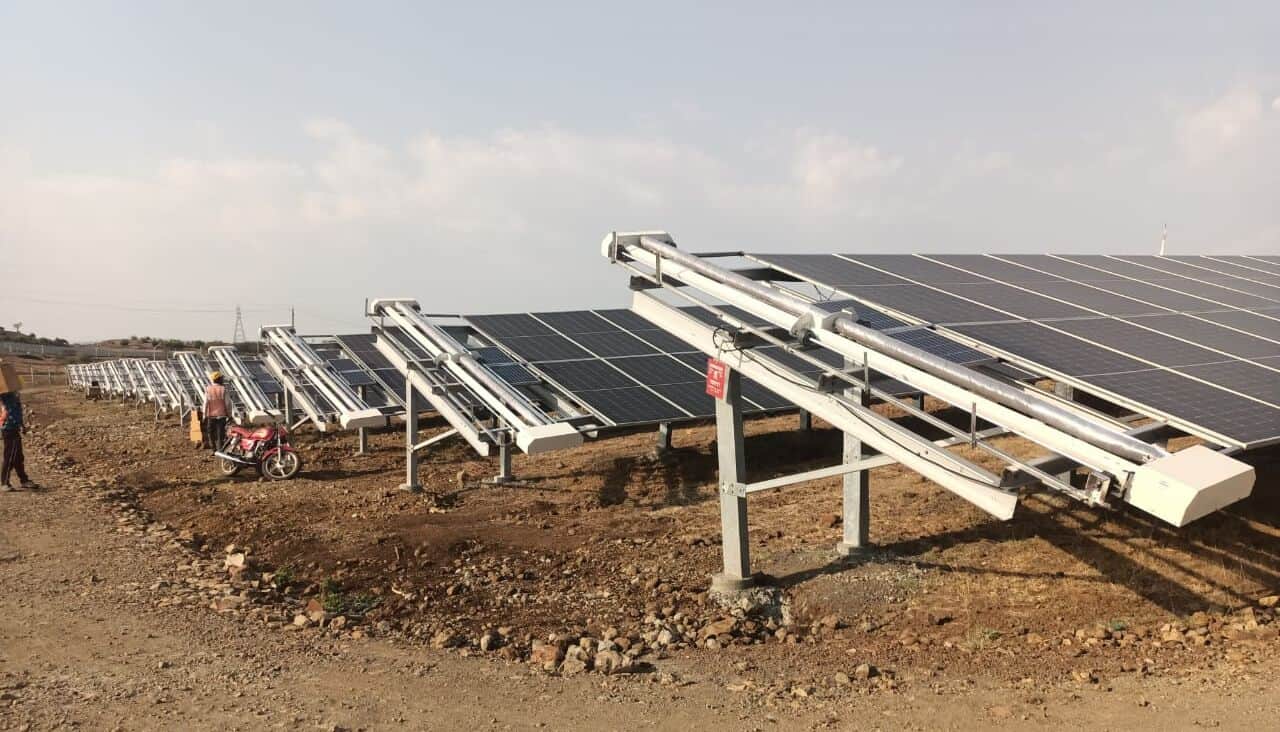
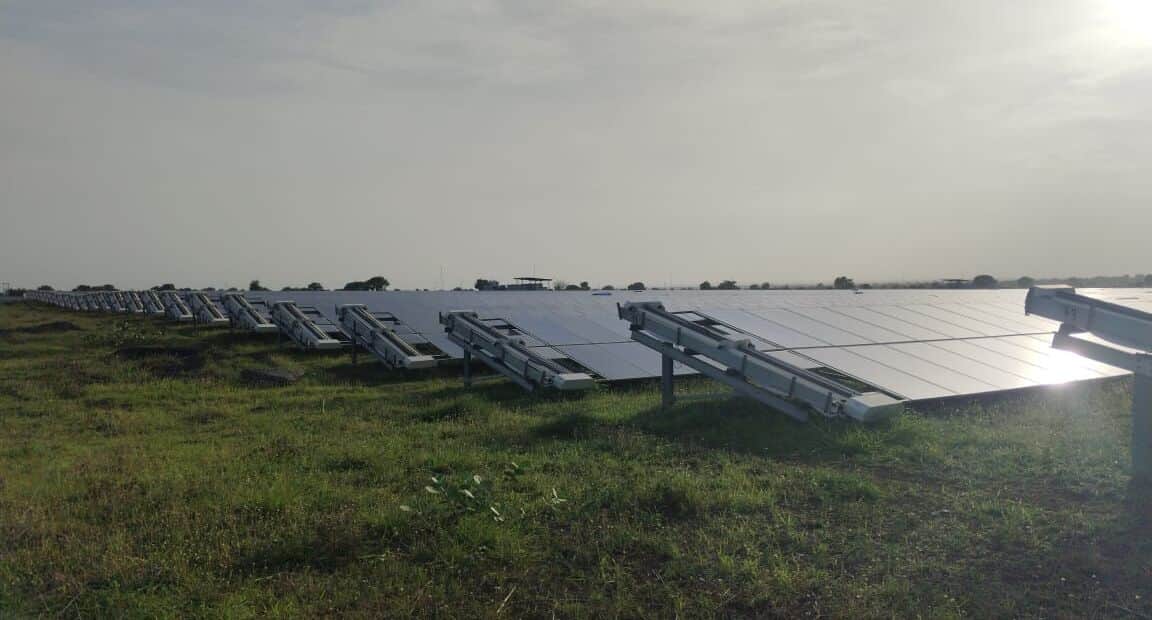
Tracker adoption is accelerating across Gujarat, Rajasthan, and Karnataka: but manual brush crews cannot keep pace with row length and stow angles. Taypro GLYDE-X and NYUMA-X traverse tracker tables with CRADYL row-transfer docking for 50–300 MW fleets.
Tracker market
Growth
Rising
Gujarat, Rajasthan, and Karnataka lead tracker adoption, manual crews cannot match row length at 50 MW+ scale.
Products
2 robots
Dual-pass microfiber vs PBT single-pass, choose based on PR targets and capex efficiency.
Transfer
CRADYL
Essential for multi-row tracker blocks without manual robot carry between tables.
Scale
50–300 MW
SECI and state discom references with tracker-compatible Taypro fleets.
Tracker-specific challenges
Fixed-tilt robots and manual crews hit limits as tracker row length and MW scale grow.
Single-axis rows exceed 100 modules. Robots need autonomous row-end transfer, CRADYL docking stations move fleets between rows without manual carry.
Cleaning must work across tracker stow positions and seasonal tilt ranges without damaging modules or drive systems.
100 MW tracker sites need 3–10 dry cycles per month. Manual crews cannot cover full block geometry in available cleaning windows.
Robots-per-MW planning must match row count, transfer points, and battery swap strategy, not generic fixed-tilt assumptions.
GLYDE-X and NYUMA-X are deployed across major tracker brands in India. Site assessment maps stow angles, row length, and ground clearance before fleet sizing.
Engineering models available cleaning hours vs row count to hit 3–10 monthly cycles, the minimum for high-soiling tracker belts.
Deployment experience
Taypro has commissioned tracker-compatible cleaning fleets on SECI and state discom projects across Gujarat and Rajasthan: including 100 MW+ single-site references. Deployment includes site mapping, CRADYL placement planning, operator training, and NECTYR onboarding.
Choosing GLYDE-X vs NYUMA-X depends on your PR recovery targets, dust chemistry, and capex vs cycle-speed trade-offs. Use our head-to-head comparison or request Taypro engineering to model robots-per-MW for your row layout.
Tracker plants also qualify for OPEX: pay per panel cleaned without upfront robot CAPEX.
GLYDE-X vs NYUMA-X
GLYDE-X uses Taypro's patented dual-pass microfiber system, highest dust removal per pass, ideal when soiling chemistry is sticky or cementitious and PR recovery per cycle is the priority.
NYUMA-X uses PBT single-pass brush technology, faster coverage per night window and lower capex, suited when dust is predominantly dry and cycle throughput is the bottleneck.
Both integrate with CRADYL for row transfer and NECTYR for fleet scheduling. Request engineering modelling for your tracker layout.
100-module rows need autonomous transfer, not crews carrying brushes at row ends.
Taypro GLYDE-X and NYUMA-X with CRADYL row-transfer docking are engineered for Indian single-axis tracker plants from 50 MW to 300 MW.
Tracker deployment
Share MW, tracker type, row count, module dimensions, stow range, and current cleaning method. Taypro models robots-per-MW.
Dual-pass quality (GLYDE-X) vs single-pass speed and capex (NYUMA-X). Head-to-head comparison available or engineering recommendation.
Row-end docking stations positioned for autonomous transfer, minimising operator carry on 100+ module rows.
Robots mapped to blocks, operators trained on tracker-specific SOPs, connectivity commissioned.
3–10 dry cycles monthly with NECTYR coverage logs correlated against block PR trends.
Tracker resources
Tracker robot lineup
Flagship dual-pass microfiber cleaning for single-axis trackers. Highest cleaning quality per pass for premium PR recovery on utility fleets.
GLYDE-X specificationsPolymer brush technology single-pass robot for tracker sites prioritising cycle speed and capex efficiency.
NYUMA-X specificationsAutonomous docking station for robot transfer between tracker rows, essential for multi-row blocks without operator carry.
CRADYL docking stationTracker references
Automatic robotic cleaning on tracker and utility-scale plants in Gujarat and India.
GLYDE-X (dual-pass microfiber) and NYUMA-X (PBT single-pass) are engineered for single-axis tracker arrays. Fixed-tilt GLYDE and NYUMA are not recommended for tracker installations.
CRADYL is Taypro's row-transfer docking station. It autonomously moves cleaning robots between tracker rows at row ends, eliminating manual carry on long single-axis tables.
Robots-per-MW depends on row count, row length, transfer point layout, and target cycles per month. Taypro engineers model fleet size during site assessment, typically different from fixed-tilt ratios.
GLYDE-X delivers higher cleaning quality per pass (dual-pass microfiber). NYUMA-X prioritises faster single-pass coverage and capex efficiency. Compare specifications on our head-to-head page or request Taypro engineering input.
Manual crews struggle with tracker row length, night-window throughput, and consistent coverage at utility scale. Robotic dry cleaning is the economical path for 3–10 cycles per month on 50 MW+ tracker fleets.
Yes. OPEX deploys GLYDE-X or NYUMA-X with operators and bills per panel cleaned. Tracker installations carry an OPEX rate multiplier versus fixed tilt.
Typical mobilisation includes site mapping, CRADYL placement, connectivity setup, operator training, and NECTYR onboarding. Timeline depends on plant size and row geometry, Taypro provides a schedule during proposal.
Share plant MW, tracker vendor, row geometry, location, and current cleaning method. Taypro will recommend robot model, fleet size, and CAPEX or OPEX commercial terms.
Taypro tracker robots operate across multiple single-axis tracker installations in Gujarat and Rajasthan. Share your tracker vendor during assessment for compatibility confirmation.
Robots traverse module surfaces without loading tracker mechanical drives. Cleaning schedules respect stow positions defined in site SOPs.
Tracker installations use approximately 1.8× the fixed-tilt per-panel rate due to geometry and transfer complexity. See OPEX pricing guide.
Cleaning programmes are scheduled for agreed stow angles and night windows, defined in the plant-specific cleaning SOP during mobilisation.
Share your tracker layout and MW capacity. Taypro will recommend GLYDE-X, NYUMA-X, and fleet deployment plan.
Related: GLYDE-X product page, NYUMA-X product page, OPEX pricing.