GLYDE
Fully autonomous waterless cleaning with patented dual-pass airflow and microfiber for fixed and seasonal-tilt utility plants.


Row-transfer docking for scattered solar plants
Multi-row
One robot, many rows
Autonomous
End-row rail transfer
Scattered blocks
Built for non-contiguous plants
Taypro CRADYL is an autonomous mobility platform for solar panel cleaning robots. It is installed on dedicated railing tracks at the end of solar panel rows and transfers a cleaning robot from one row to another without manual lift-and-shift, unlocking multi-row coverage with a single robot where buying one robot per block is not economical.
The docking station uses rail-based linear travel along precision-aligned end-row tracks supported by RCC or ballast foundations. An integrated solar panel charges the lithium-ion battery, supporting continuous daily operations under standard daylight. Sensor-guided positioning aligns CRADYL precisely with each target row before secure pick-up and drop-off of the cleaning robot.
CRADYL is shipping today across India and integrates with Taypro cleaning robots including HELYX semi-automatic robots, GLYDE automatic robots, and compatible GLYDE fleets. Movement, charge level, and sensor data are visible in the NECTYR cloud portal alongside your existing robot schedules.
Explore the full Taypro robot lineup or read about solar panel cleaning methods on the Taypro blog.
Product at a glance
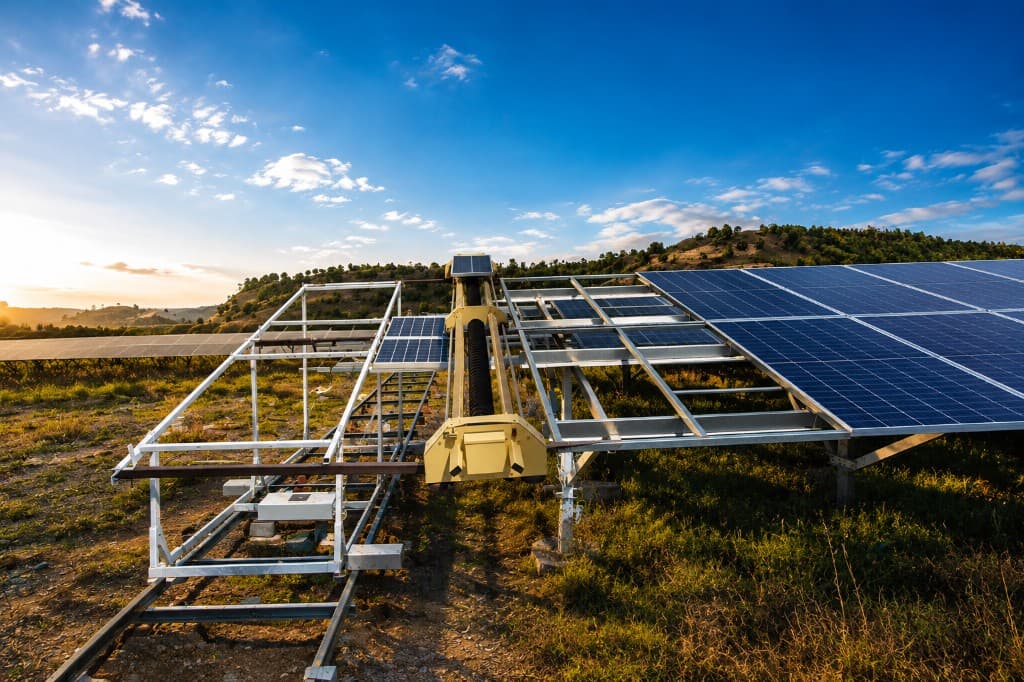
Taypro CRADYL movable docking station on end-row rail tracks at a utility-scale solar plant
End-row rail installation with no modifications to solar modules, quick modular setup once columns and railing are aligned.
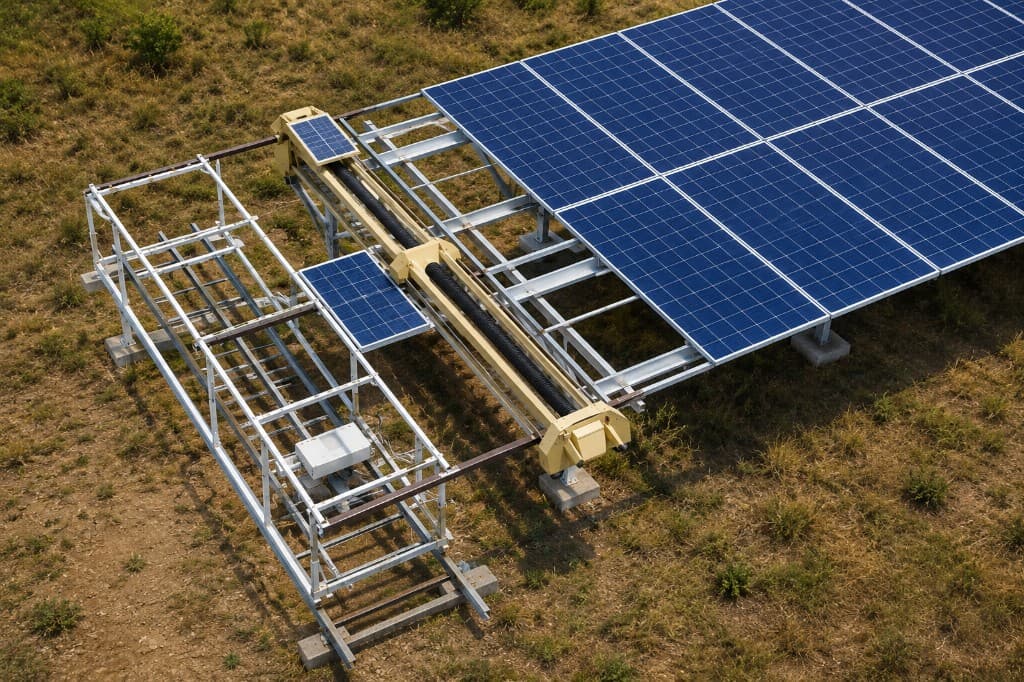
CRADYL on end-row rail tracks.
Once railing is installed and aligned at row ends, CRADYL automates the full pick-up, transit, alignment, and redeployment cycle with no panel modifications required.
When a solar row cleaning cycle finishes, the Taypro cleaning robot returns to the CRADYL docking station at the end of the row and drives into the cradle for secure locking before transit.
CRADYL secures the robot in the docking cradle with sensor-verified locking, protecting the unit during rail travel and in high-wind conditions when stationary.
The self-propelled platform travels along end-row railing tracks at up to 5 metres per minute to the next designated row, with edge-detection sensors preventing derailment.
Integrated sensors stop CRADYL precisely aligned with the new row endpoints so the cleaning robot can deploy onto the correct module line without operator adjustment.
The robot is released from the cradle to continue its waterless cleaning cycle on the new row while CRADYL waits for the next transfer or returns per your fleet schedule.
Movement, position, charge level, and fault diagnostics are scheduled and monitored through the remote portal with LTE and Wi-Fi connectivity, repeating per your plant cleaning programme.
Eliminates manual lift-and-shift between arrays, cutting labour hours and transfer downtime on multi-block Indian utility plants.
Stretch one cleaning robot across more rows per shift where capex for a robot per contiguous block is not justified.
Precision-aligned railing at row ends, no modifications to solar panels, modular installation on RCC or ballast foundations.
Dedicated onboard solar panel charges the lithium-ion pack for self-sustaining daily operations under standard daylight.
Integrated sensors align pick-up and drop-off precisely with each row for secure robot transfer and redeployment.
Designed to hold and operate robots when docked in wind zones up to 180 km/h, and travel safely up to 40 km/h in motion.
LTE and Wi-Fi integration with NECTYR for movement scheduling, position tracking, charge visibility, and maintenance alerts.
Critical systems enclosed for dust, moisture, and harsh field conditions on Indian utility-scale sites up to 90°C operating temperature.
Every subsystem, from rail drive to docking cradle to cloud telemetry, is built for reliable autonomous transfers on real-world scattered solar portfolios.
CRADYL travels on dedicated end-row railing tracks mounted on rigid ground columns, ensuring smooth, level transit between rows without crossing roads, drains, or buffer land that block continuous robot paths.
Automated docking and undocking with secure locking holds Taypro cleaning robots during transfer, reducing fall risk and protecting modules and equipment compared with ad-hoc manual moves.
Fully integrated with Taypro's remote monitoring platform: schedule movements, track position, review sensor data and battery charge in the cloud portal alongside existing robot cleaning cycles.
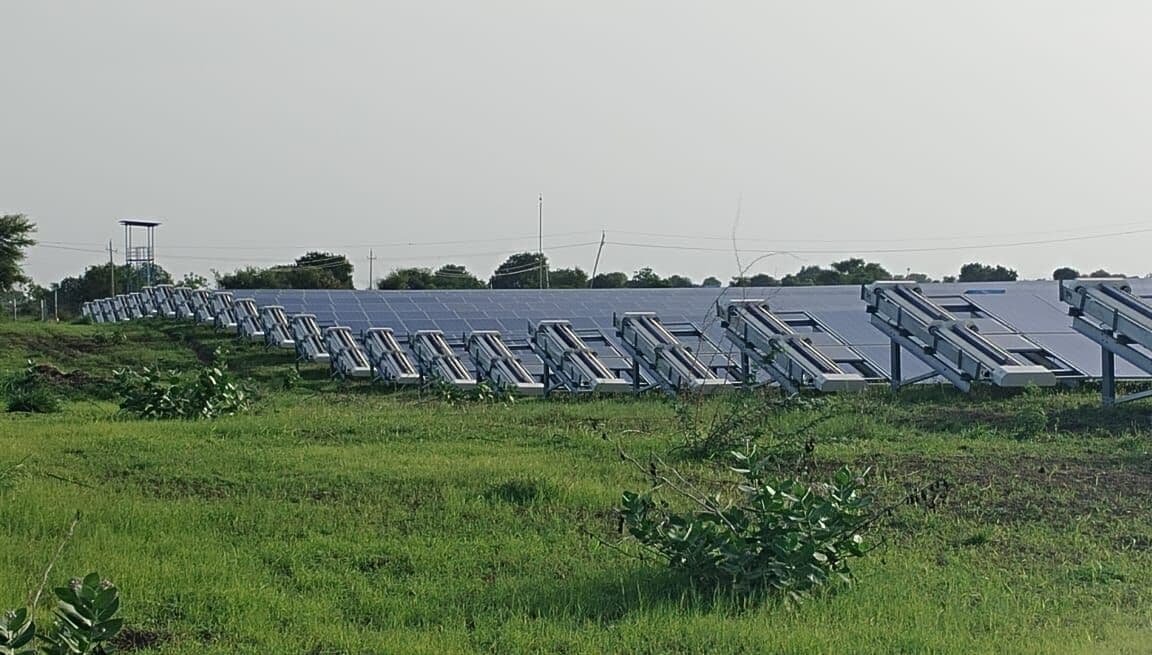
No changes to solar panels themselves. After columns and railing are installed and aligned, the CRADYL unit is placed on the track and connected to the robot control system for rapid deployment.
Edge-detection sensors prevent derailment during rail travel. Enclosed drive and control systems protect against dust ingress and environmental exposure in desert and coastal Indian conditions.
Maintenance activities are performed on a scheduled basis to eliminate breakdowns and sustain operational life, with fault diagnostics and alerts routed through the cloud system.
Docking compatibility with Taypro GLYDE and other Taypro cleaning robots in the field, including natural pairing with HELYX pick-and-place fleets and GLYDE autonomous rows.
Operates on sites with up to 18° slope and maximum operating temperatures up to 90°C, matching the demanding envelope of utility-scale solar plants across India.
Typical deployment follows Taypro's movable docking station installation methodology used on live Indian utility sites.
CRADYL deployments follow the same Taypro pan-India support model as our cleaning robot fleet.
Maintenance is planned to eliminate unplanned downtime and sustain best operational life across the docking station and rail infrastructure.
Cloud-connected fault diagnostics and charge monitoring through NECTYR, with most issues triaged before a site visit is required.
When physical intervention is needed, Taypro targets same-day on-site resolution across India, backed by regional spares and AMC programmes.
Let us help you
| Specification | Value |
|---|---|
| Product name | CRADYL |
| Footprint | 1000 mm × 4000 mm |
| Weight | 220 kg |
| Movement mechanism | Rail-based linear travel on end-row tracks |
| Energy source | Solar-powered battery charging |
| Battery type | Lithium-ion |
| Max. operating speed | 5 metres / minute |
| Wind resistance (docked) | Up to 180 km/h |
| Wind resistance (in motion) | Up to 40 km/h |
| Max. operating temperature | 90°C |
| Max. slope | 18° |
| Communication | LTE / Wi-Fi (cloud-connected) |
| IP rating | IP65 |
| Docking compatibility | Taypro GLYDE and compatible cleaning robots |
| Installation | End-row rails on RCC or ballast columns; no panel modification |
| Monitoring | Remote portal: schedules, position, sensors, charge level |
Manual lift-and-shift between scattered blocks consumes crew time, slows cleaning cycles, and increases safety and damage risk compared with autonomous docking.
| Criterion | Manual row transfer | Taypro CRADYL |
|---|---|---|
| Labour per transfer | Crew lift-and-shift between rows or blocks | Hands-free autonomous docking and rail travel |
| Transfer time | Variable; depends on crew availability and distance | Scheduled rail transit up to 5 m/min on aligned tracks |
| Robot utilisation | Robot idle during moves; fewer rows per shift | One robot services more rows per shift |
| Safety and damage risk | Higher drop, scratch, and handling risk | Secure cradle locking and sensor-guided alignment |
| CAPEX strategy | Often leads to buying more robots per block | Extends one robot across scattered layouts |
| Fleet visibility | Little telemetry on inter-row moves | Position, charge, and faults in cloud portal |
| Wind and weather | Ad-hoc handling in harsh conditions | IP65 enclosure; high wind rating when docked |
| Scattered plant fit | Labour cost scales with blocks and roads | Purpose-built for gaps between non-contiguous arrays |
On scattered plants, transfer automation can defer an extra robot purchase while preserving multi-row coverage.
| Criterion | CRADYL docking | Additional cleaning robot |
|---|---|---|
| Upfront investment | Docking station + end-row rail civil works | Full robot capex per block or row group |
| Rows covered per robot | Multi-row via autonomous transfer | One contiguous row group per unit |
| Labour for moves | Minimal; cloud-scheduled transfers | Zero if fully automatic per array; high if semi-auto pick-and-place |
| Best plant type | Scattered blocks, roads, irregular spacing | Contiguous arrays with dedicated assignment |
| Pairs with | HELYX, GLYDE, GLYDE fleets | Standalone cleaning per array |
| Monitoring | Transfer status in NECTYR | Standard robot cleaning telemetry |
| Payback driver | Avoided second robot + labour savings | Extra MW cleaned per day on one block |
| When to choose | Gaps between rows; one robot under-utilised across site | Large contiguous plant; labour-free daily autonomy needed |
Multi-block plants where rows are separated by roads, drainage, or buffer land and one robot cannot traverse continuously.
Sites running HELYX or similar pick-and-place robots that need faster inter-row movement without adding headcount.
Owners who want autonomous cleaning coverage but need to defer buying additional robots until transfer automation proves ROI.
Existing Taypro robot deployments where end-row rail and CRADYL extend reach without replacing the cleaning robot fleet.
Dust, heat, wind, and water-scarce O&M realities across Rajasthan, Gujarat, Karnataka, and Tamil Nadu portfolios where scattered blocks are common.
When blocks cannot be cleaned as one continuous array, CRADYL keeps one robot productive across more rows per day instead of idling during manual moves.
IP65 enclosure and 90°C operating rating with enclosed critical systems for dust storms and extreme summer field conditions.
High wind resistance when docked supports plants in exposed corridors where manual transfers are slowed or halted.
Same-day on-site targets, NECTYR remote diagnostics, and AMC-backed maintenance aligned with Taypro's national robot service network.
No projects available at the moment.
CRADYL is Taypro's autonomous row-transfer movable docking station, a battery-powered platform on end-row rails that moves a solar cleaning robot between rows. It is the fleet-integrated platform name used on taypro.in today.
After a row is cleaned, the robot returns to CRADYL and locks into the cradle. CRADYL travels along end-row railing to the next row, aligns using integrated sensors, releases the robot to clean the new row, and repeats on schedule. Movement and status are visible in the cloud monitoring portal with LTE or Wi-Fi connectivity.
CRADYL is designed for Taypro GLYDE and compatible Taypro cleaning robots, including fleets already using HELYX semi-automatic pick-and-place robots and GLYDE automatic robots on scattered or multi-block layouts. Confirm rail layout, row spacing, and robot model with Taypro engineering before procurement.
No modifications to solar modules are required. Installation uses dedicated end-row railing tracks on columns fixed with RCC foundations or ballast. Once rails are aligned, the CRADYL unit is placed on the track and connected to robot control and cloud systems.
CRADYL is a launched Taypro product shipping for Indian utility-scale plants. It is not a roadmap or pilot-only offering. Contact Taypro with your plant layout for integration planning, compatibility confirmation, and commercial quotation.
Representative specifications include a 1000 mm × 4000 mm footprint, 220 kg weight, rail-based travel up to 5 m/min, solar-charged lithium-ion battery, IP65 rating, LTE/Wi-Fi cloud connectivity, up to 180 km/h wind resistance when docked, 40 km/h in motion, 18° max slope, and 90°C max operating temperature. Site-specific rail design may adjust details.
CRADYL is strongest on scattered plants where one robot could clean more rows if transfers were automated, but buying a second robot for each non-contiguous block is uneconomical. If you have large contiguous arrays needing daily unattended cleaning, a fully automatic robot such as GLYDE may be the primary answer; CRADYL complements scattered layouts.
CRADYL integrates with Taypro's remote monitoring platform. Operators can schedule movement, track position, and review sensor data and battery charge levels in the cloud portal alongside existing robot cleaning schedules on NECTYR.
Taypro performs scheduled preventive maintenance on docking stations and rails, provides remote diagnostics through the cloud system, and targets same-day on-site intervention across India when physical service is required, consistent with Taypro's robot fleet AMC and support model.
Pricing depends on number of transfer paths, rail civil scope, robot models in use, and AMC coverage. Share MW capacity, row spacing, block layout, and current robot fleet with Taypro for a site-specific quote and deployment plan.
Share your plant layout, row spacing, and robot model. Our robotics team will follow up with rail integration notes, compatibility confirmation, and deployment planning.
GLYDE
Fully autonomous waterless cleaning with patented dual-pass airflow and microfiber for fixed and seasonal-tilt utility plants.
GLYDE-X
Autonomous waterless robot for single-axis trackers with patented dual-pass microfiber and a flexible 360° bridge.

NYUMA
Fully autonomous waterless cleaning with single-pass PBT brush technology for fixed and seasonal-tilt utility-scale plants.

Specifications may vary by site rail layout and robot model; confirm with Taypro engineering before procurement.
taypro.in/solar-panel-cleaning-system/cradyl-row-transfer-docking-station