
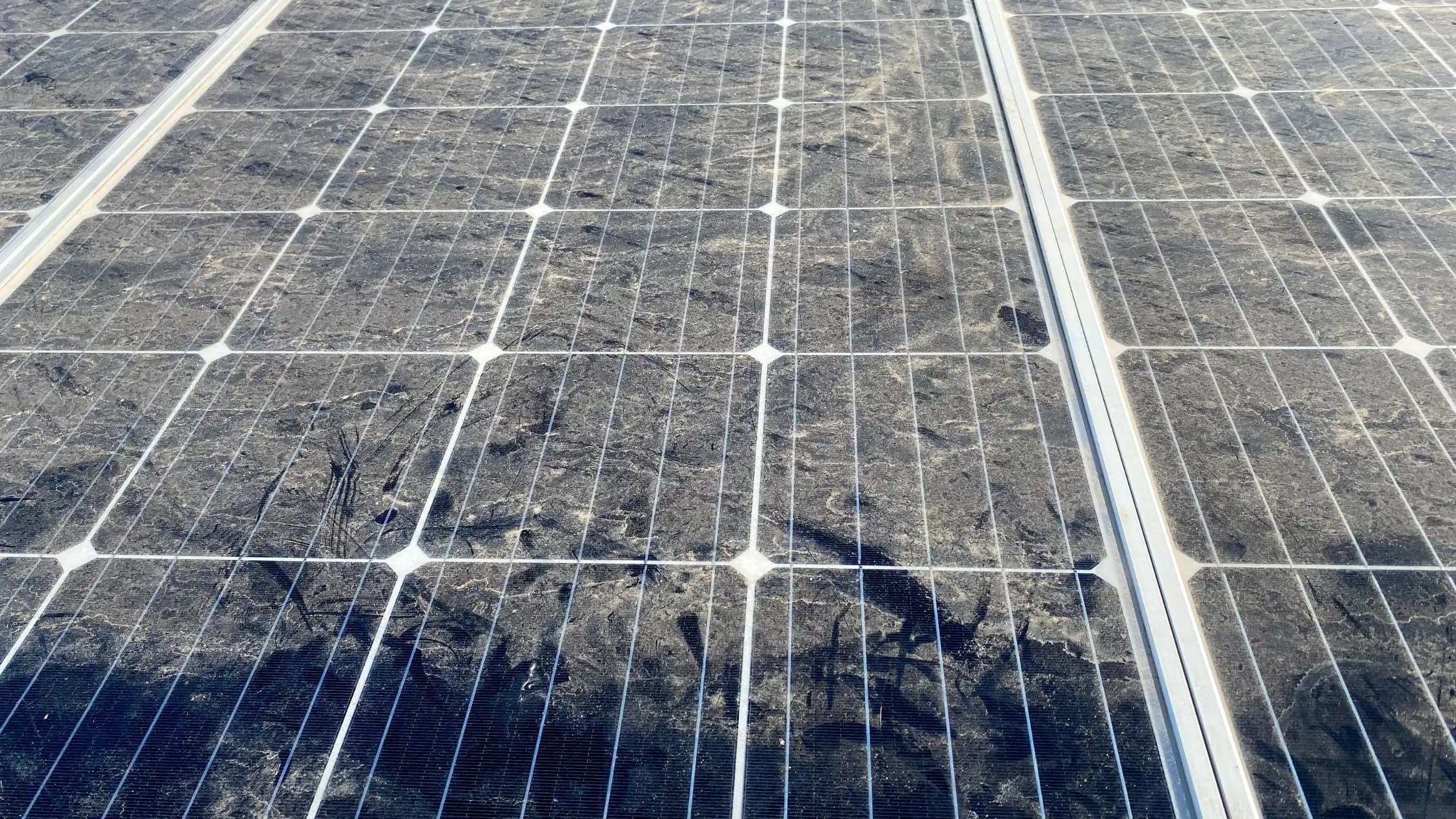
The performance of solar panels is important for uninterrupted power generation. There are many factors that can impact the performance of solar panels. In this blog, we will explore the top reasons responsible for underperforming solar panels and the possible solutions.
Currently the Monocrystalline Solar Panels (Mono-Si) are the most popular type of solar panels giving efficiency of up to 24%. This-film solar panels are also a preferred type of solar panels used for commercial applications, giving efficiency of up to 13%.
Apart from the type of Solar Panels used, there are other factors that impact the performance of solar panels.
1. Soiling and Dust Accumulation
Dust and soiling is one of the most common causes of reduced solar performance. The accumulated dust blocks the sunlight from reaching the photovoltaic cells. This leads to a significant drop in energy generation which could be as much as 30% depending on the dust conditions.
Even the thin film of dust can disrupt the irradiance and can create hotspots that result in module degradation.
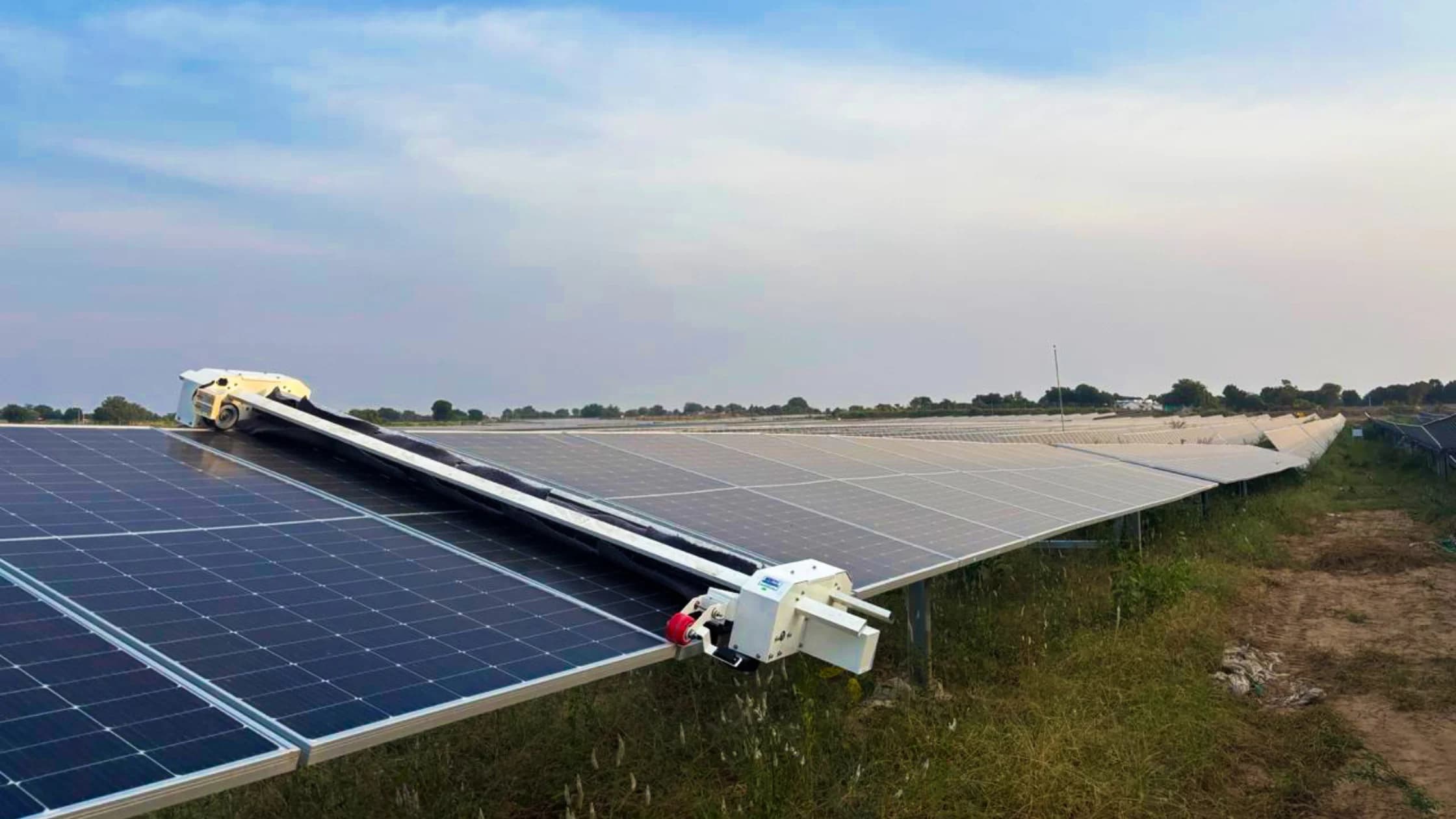
Therefore, it is important to eliminate the dust accumulation through regular cleaning of the solar panels. A solar cleaning robotic system is one of the best ways to eliminate the soiling effectively and efficiently.
2. Shading and Structural Obstructions
Your Solar panels might be underperforming due to the shading or the obstructions. As the power generation from solar panels depends on the sunlight, shading caused by trees and nearby buildings can impact the power output.
It is important to consider the identify the shading or structural obstruction and remove if possible. These issues can be avoided in the design and layout stages.
Also, the regular site visits and drone based inspection are effective measures that can eliminate the shading issues and avoid the power generation losses.
3. Wrong Solar Panel Cleaning System
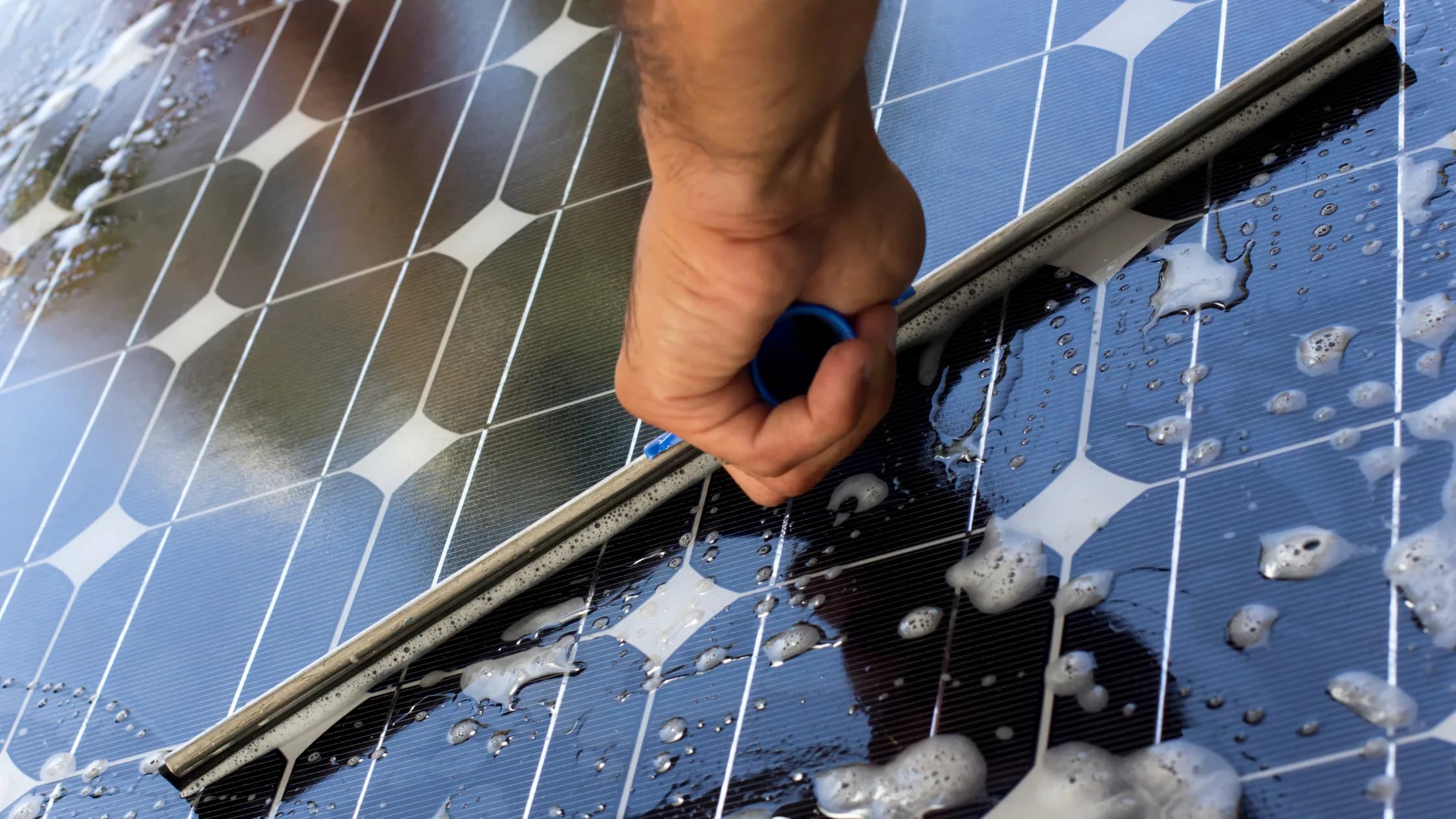
Solar panel cleaning is paramount to maintain the power generation. Using improper methods like manual or water cleaning can impact the overall efficiency of the solar panel system.
Manual cleaning can damage the solar panels and have a negative long term impact on the power generation.
Robotic solar cleaning systems have been a great alternative to conventional cleaning systems. The automated robotic cleaning systems give superior cleaning and cleans based on the weather conditions.
Here is the comparison between the conventional manual solar cleaning systems and the automated robotic cleaning.
4. Electrical Inefficiencies
Electrical systems can cause significant losses in solar panel performance. A greater portion of the generated energy can be drained due to loose connections, cable quality, inefficient inverters and resistive losses.
Even the minor imperfections in the electrical apparatus like cabe or connectors can cause voltage drops. This further reduces the overall efficiency and causes the component wear.
Here is the chart that shows the typical efficiency range of the various electrical components.
Component | Function | Typical Efficiency Range |
DC Cables & Connectors | Carry current from modules to combiner box | 97–99% |
String Combiner Box (SCB) | Aggregates multiple strings into a single output | 98–99% |
Inverter | Converts DC to AC power | 95–98% |
AC Cables | Carry AC power to transformer | 97–99% |
Transformer | Steps up voltage for grid transmission | 97–99% |
Switchgear & Protection System | Ensures safe transmission and control | 98–99% |
Power Evacuation (Grid Interface) | Transfers power to grid | 96–99% |
Overall System Efficiency | Net energy from sunlight to grid | 75–85% |
The solar panel performance impacted due to the electrical systems can be minimised due to thermographic inspections, periodic inverter calibration and Ai-powered real time monitoring.
5. Module Degradation
Solar Panels undergo gradual performance loss over the time. On an average solar panels lose 0.5-1% efficiency per year
Though the module degradation is naturally occurring, it is necessary to understand its causes. UV Radiation, Thermal Cycling, Moisture Ingress and Mechanical Stress are some of the main drivers of the module degradation.
Also the accumulation of dust and manual cleaning methods can cause surface wear and cause performance loss.
The module degradation can be minimized by periodic IV curve testing and performance audits, Regular visual inspections, timely replacement or re-stringing of solar panels and using waterless non-abrasive cleaning systems.
How to Enhance The Performance of Solar Panels
For consistent energy generation and better solar plant efficiency, it is necessary to maximise the performance of solar panels.
Here are some key ways you can keep your solar plant performance at its peak.
Use high quality modules and inverters
Keep the solar panels clean with smart automated robotic cleaning systems. It will save operational cost and maximise the efficiency of the solar plant
Do regular preventive maintenance
Select high quality electrical system equipments
Use predictive AI for data driven cleaning and maintenance scheduling
Minimize the downtime by responding to the breakdowns quickly
FAQs
What is the most common reason for underperforming solar panels? Soiling and dust accumulation is the leading cause, suppressing generation by up to 30% in high-particulate environments. Even a thin film of dust disrupts irradiance and accelerates hotspot formation in photovoltaic cells.
How much efficiency do solar panels lose per year due to degradation? Solar panels lose approximately 0.5 to 1% output efficiency annually through UV exposure, thermal cycling, and moisture ingress. Using non-abrasive, waterless cleaning systems keeps degradation at the lower end of that range across a 25-year plant life.
Why does shading cause a disproportionate drop in solar panel output? Shading on even one cell activates the bypass diode for that entire substring, removing it from the electrical circuit. A shadow covering just 5% of a module can suppress 30 to 50% of that string's output.
What electrical losses reduce solar plant performance the most? The inverter is the largest single variable, operating at 95 to 98% efficiency. Combined with cable resistance, connection degradation, and transformer losses, end-to-end system efficiency typically falls between 75 and 85%.
What is the difference between manual and robotic solar panel cleaning? Manual cleaning is inconsistent, labour-dependent, and risks surface damage that voids module warranties. Robotic waterless systems clean autonomously on AI-scheduled cycles, removing over 99% of particulate per pass without water or abrasive contact.