
"Regular" cleaning on Indian utility plants is not about shiny modules for site tours. It is how operators keep performance ratio near financial model assumptions when PPA tariffs sit in the ₹2.80–4.00/kWh band and every sustained PR point matters at 30 MW and above. Dust in Rajasthan and Gujarat does not wait for quarterly board meetings; it taxes generation daily through dry season.
Benefits show up on the revenue meter and in O&M stability: fewer emergency mobilizations, predictable budgets, and audit trails lenders accept. This article explains what plant finance and operations teams should expect when cleaning follows soiling data rather than hope and rain.
Quick answer
- Protect PPA revenue by limiting sustained soiling loss between passes.
- Prevent cemented dust films that need aggressive, costly deep cleans.
- Support warranty and audit trails with documented OEM-aligned methods.
- Stabilize generation forecasts for off-takers and internal budgeting.
- Reduce emergency storm costs when crews and tankers are scarce.
Revenue protection: the primary benefit
Soiling blocks irradiance before it reaches cells. A 20 MW plant with 5% average PR depression across six dry months can lose on the order of 1,000+ MWh depending on yield, which translates to ₹35–40 lakh or more at typical tariffs. Regular cleaning aligned to soiling measurement recovers a large share of that loss for a fraction of the revenue at risk.
The benefit is not the spike immediately after a wash; it is the higher average PR across the year. Finance should model cleaning as revenue recovery, not a pure cost line. See importance of keeping panels clean at MW scale for portfolio framing.
Preventing cemented films and deep-clean debt
Light dust removed on schedule stays light. Dust left through multiple storms, combined with morning dew and agricultural drift, can form films that need more water, brush time, and manual touch per module. Irregular deep cleans cost more per MW than frequent light passes and still leave weeks of PR loss before the crisis mobilization.
On tracker rows near cotton or mustard belts in Gujarat, pollen and soil splash behave differently from pure mineral dust in Thar fringe sites. Regular programs adapt method and frequency by block rather than one annual heroic pass.
Benefit vs cleaning frequency (illustrative 25 MW, west India)
| Program style | Typical avg. dry-season PR vs baseline | Illustrative annual cleaning spend | Net revenue picture |
|---|---|---|---|
| Irregular manual (storm-driven) | −4% to −7% | ₹40–70 lakh | Often negative after MWh loss |
| Scheduled manual (data-triggered) | −1.5% to −3% | ₹55–85 lakh | Usually positive in dust belts |
| Waterless robot (high uptime) | −0.5% to −2% | ₹70–110 lakh loaded | Positive when soiling is material |
Ranges are planning illustrations. Validate with block pilots and your PPA tariff in the ROI calculator.
Warranty, lender, and ESG documentation
Regular documented cleaning supports warranty conversations when module performance is questioned. It also satisfies lender technical advisors who compare actual PR to base case. Methods must match OEM guidance; logs should show dates, blocks, water use, and responsible vendor.
Water-stressed districts increasingly expect withdrawal reporting. Waterless robotic programs that clean regularly without tanker dependency strengthen ESG narratives separate from MWh recovery. Compare waterless vs water-based approaches.
Operational predictability for O&M teams
Emergency cleans disrupt inverter maintenance windows, tracker schedules, and safety planning. Regular programs let O&M contractors staff predictably, negotiate annual rates, and sequence work across zones. Control room engineers see fewer unexplained PR stair-steps that trigger panicked calls to asset management.
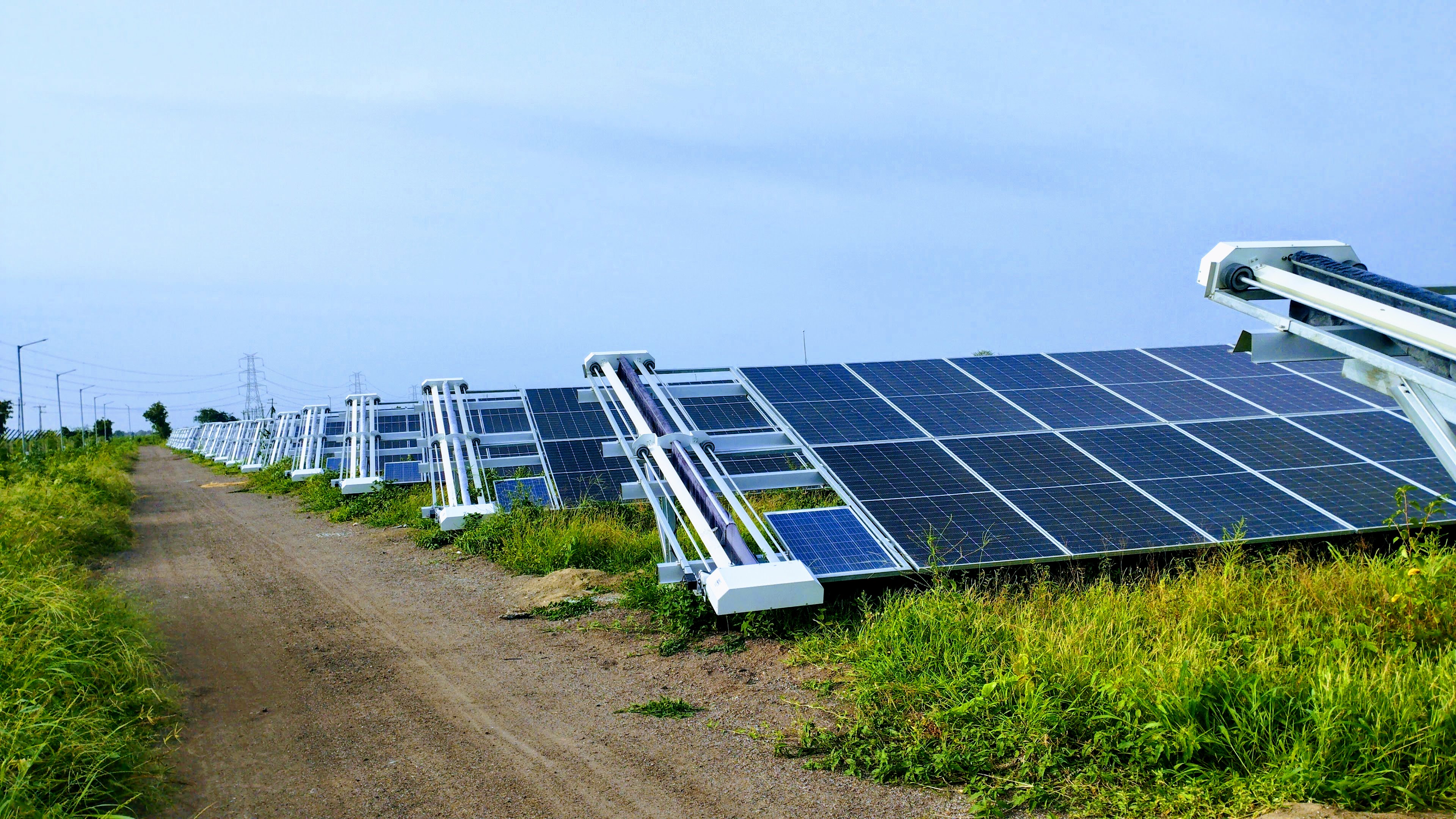
Robot fleets amplify predictability when pass schedules run at night on trackers with defined stow rules. Benefits fail if fleet uptime drops below roughly 85–90% without manual backup, vendor and site dependent.
Forecast stability for off-takers and traders
IPP off-takers and internal traders model monthly generation with assumed soiling loss. Regular cleaning tightens variance bands, reducing penalties or makeup energy discussions. After monsoon, when humidity and soil splash rise in some regions, a defined post-monsoon pass prevents Q3 surprises.
Regular programs also stabilize vendor relationships. Contractors who know annual pass volume invest in better supervision and equipment rather than sending untrained seasonal labour. That operational maturity compounds into fewer warranty incidents and more predictable PR year on year.
Monsoon-to-dry-season transition planning
Post-monsoon weeks are when many Indian plants either win or lose Q3 PR targets. Soil splash on lower module edges, weed seeds, and humidity films appear while teams relax after monsoon rains. A defined post-monsoon pass on vulnerable blocks prevents carrying 2–3% PR loss into the high-irradiance autumn window when MWh value per day is large.
Transition planning should be on the annual O&M calendar: inventory brushes, confirm robot batteries after monsoon storage, retrain crews on OEM limits, and reset reference module baselines before October generation peaks in many states.
| Metric | What regular cleaning improves |
|---|---|
| Average annual PR | Less time spent below baseline |
| Post-storm recovery time | Faster return to model band |
| Reference module gap | Smaller soiled vs clean spread |
| Cleaning ₹ per recovered MWh | Lower than crisis mobilization |
Off-taker reporting cycles often lag field reality by weeks. Regular cleaning with logged dates helps explain intra-month PR variance when settlement disputes arise. Benefits include fewer retroactive adjustments and stronger relationships with dispatch teams reviewing daily schedules.
Insurance and warranty risk reduction
Insurers reviewing fire or equipment claims may ask whether vegetation or dust contributed to overheating narratives. Regular cleaning plus vegetation control demonstrates proactive risk management. Warranty claims on modules damaged by unauthorized deep abrasive cleaning are denied; regular OEM-aligned passes reduce temptation for crisis shortcuts.
Portfolio-level benefits for multi-site IPPs
IPP asset managers running 200+ MW across Rajasthan and Gujarat benefit when every site uses the same measurement and documentation standard. Consolidated PR analytics reveal which blocks chronically underperform after rain assumptions, guiding capital allocation to robots or extra manual capacity on specific sites rather than blanket policy.
Regular programs also simplify budgeting: annual cleaning O&M becomes a forecastable line tied to soiling indices, not a surprise crore draw after board review shows dry-season PR missed target by 4%. Treasury and asset teams prefer that predictability when refinancing or reporting to infrastructure funds.
Comparison to reactive deep-clean cycles
Reactive deep cleans after visible dust crises cost premium mobilization, overtime, and tanker surcharges in May. Regular light passes keep modules in a state where each pass is faster and gentler on glass and coatings. The total annual labour hours often fall even when pass count rises, because each pass handles less cemented film.
On a 35 MW fixed-tilt site near Bikaner, owners reported illustrative savings of ₹12–18 lakh annually by replacing two crisis deep cleans with biweekly data-triggered lighter passes, while average dry-season PR improved roughly 2 percentage points versus the crisis-only prior year. Validate on your meters; do not copy anecdote as guarantee.
Is regular cleaning worth it if rain falls sometimes?
Occasional rain rinses light dust on some modules but rarely replaces mechanical cleaning on utility scale in arid India. Rain can also leave mud spots when dust was already heavy. Regular programs incorporate rain as a factor in soiling models, not as a substitute for measured recovery on reference blocks.
Key takeaways for plant managers
- Regular means data-triggered cadence, not vanity frequency or calendar-only habit.
- Measure benefits in average PR and ₹ MWh, not post-wash sparkle.
- Prevent film buildup to avoid expensive deep-clean cycles.
- Document methods for warranty, lenders, and water reporting.
- Revisit frequency after each dry season with real PR data.
Regular cleaning pays when frequency matches measured loss. Over-cleaning wastes O&M; under-cleaning shows up silently in PR trends.
Related resources
Frequently asked questions
Restored MWh and PR, reduced risk of cemented dust films that need expensive deep cleans, better warranty and lender documentation, and fewer emergency storm recoveries at premium mobilization cost. Regular here means aligned to measured soiling, not necessarily daily or weekly on every site.
No. It means cleaning when soiling economics justify it, which may be two to three robotic passes per week in western Rajasthan deserts or monthly manual rounds in milder zones. The benefit comes from keeping average annual PR near model assumptions, not from arbitrary high frequency.
Yes. Long gaps allow heavy films requiring more water, labour, and time per module, while sustained PR loss accumulates between rare deep cleans. Owners often spend more on emergency tankers and overtime after skipped dry seasons than on a disciplined program would have cost.
Track PR recovery after each campaign on reference modules, and calculate ₹ per recovered MWh versus fully loaded cleaning cost. Compare average annual PR with and without the program using the same irradiance normalization method each month.
Robots can increase feasible pass frequency without linear labour growth, which matters when dust redeposits within days. Benefits appear only if uptime and row coverage stay high; a robot fleet on irregular panic schedules delivers little over manual crisis cleaning.