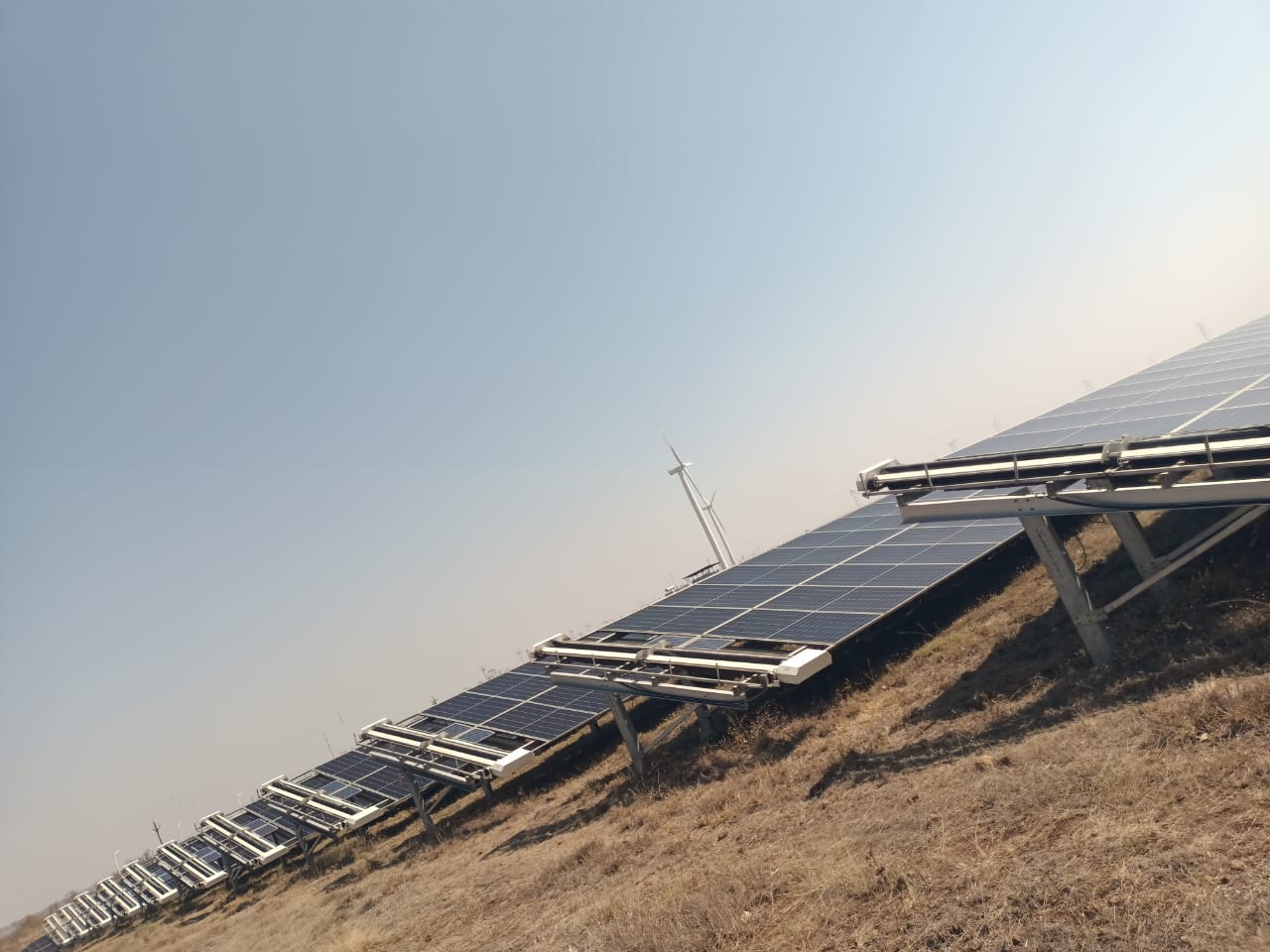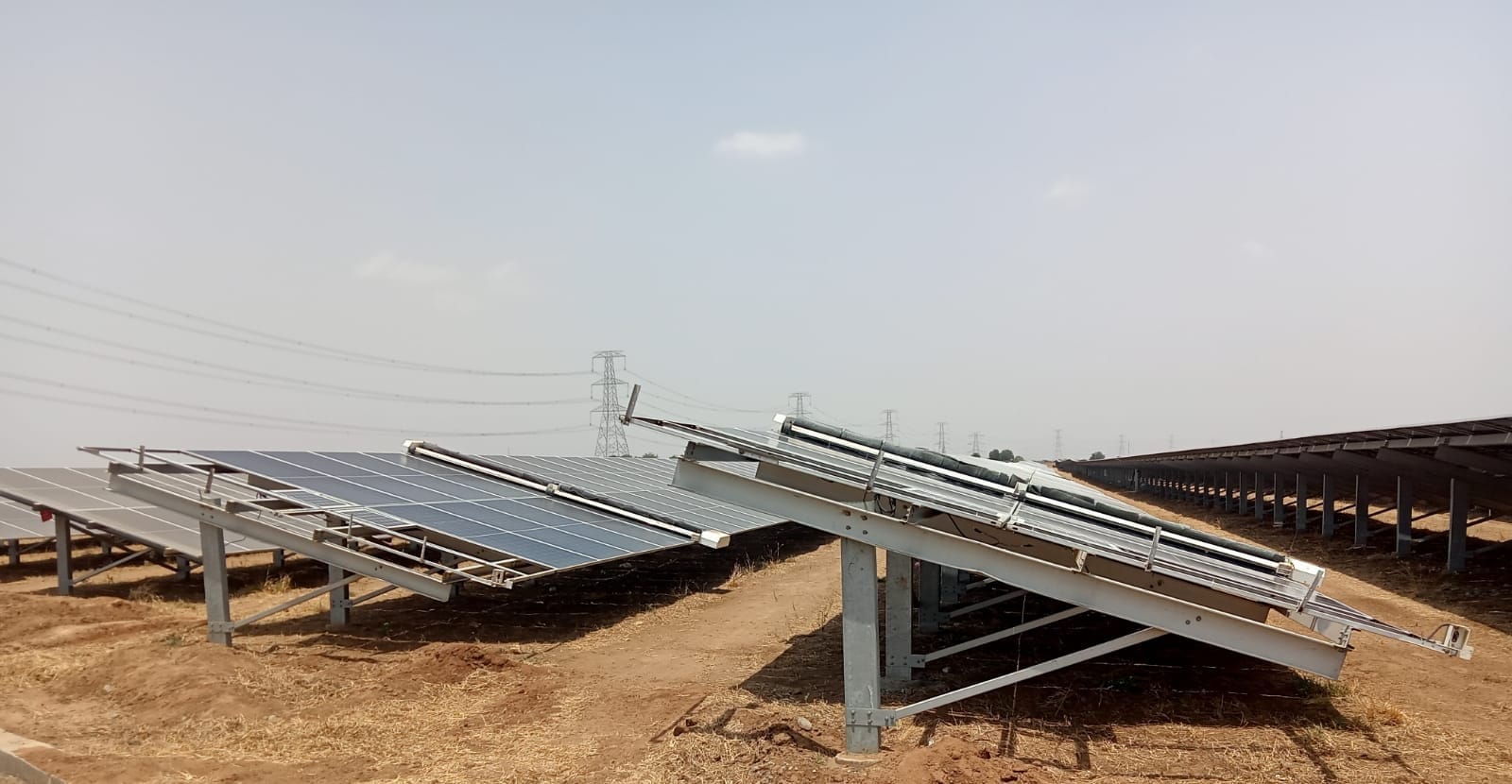

Calendar cleaning fails on Indian utility plants because dust does not respect months. A "quarterly wash" spec written at EPC stage becomes a revenue leak by the second dry season in Jaisalmer. The right frequency is an economic trigger: clean when lost MWh costs more than the clean itself, and adjust when labour, water, or robots change that math.
This guide gives regional starting points for 10–100 MW operators, then shows how to replace dates with data. Rooftop owners should not copy desert utility schedules; this article targets ground-mount and tracker fleets.
Quick answer
- High dust west: 7–14 days manual baseline; robots can run more often on priority blocks.
- Moderate inland: 14–28 days typical starting point, tuned with soiling meters.
- Coastal: salt films need planned rinses year-round, not just dry-season dust.
- Trigger on soiling % or PR delta, not dates alone.
- Document triggers in O&M contracts so contractors cannot hide behind "as per schedule."
Why fixed calendars break in India
Soiling in India is seasonal, agricultural, and event-driven. Pre-monsoon dust storms, harvest ploughing, construction nearby, and canal bed drying all shift deposition rates within the same state. A plant 40 km from another in the same district can show different curves if one sits downwind of quarry traffic or fallow fields.
Fixed calendars also ignore method. Manual wet crews need mobilization days robots do not. When your method cannot hit the calendar, the calendar lies about average cleanliness. Seasonal soiling variation in India should inform annual O&M budgets, not a single line item copied from an EPC manual.
Regional starting points (dry season)
These intervals are starting hypotheses for utility ground-mount sites. Validate on reference modules within 90 days of COD and after each major method change.
| Region profile | Manual wet starting interval | Notes |
|---|---|---|
| Rajasthan / Gujarat arid | 7–14 days | Storm weeks may need 48-hour surge |
| Punjab / Haryana agri dust | 10–21 days | Spikes post-harvest and stubble season |
| Madhya Pradesh / Maharashtra interior | 14–21 days | Monsoon mud on lower tables after heavy rain |
| Coastal TN / Gujarat | 14–28 days + salt plan | Salt film needs rinse even when dust looks low |
| Karnataka plateau | 14–28 days | Generally moderate; watch construction dust |
Loss context: Rajasthan and Gujarat soiling ranges and weather impact on cleanliness.
The economic trigger: when cleaning pays
Stop cleaning on habit. Start when marginal revenue from recovered MWh exceeds marginal clean cost. Illustrative math for a 10 MW block in western India:
- Annual generation near 16 GWh at typical yield.
- 2% avoidable soiling for 60 days between overdue cleans ≈ 52 MWh lost.
- At ₹3.50/kWh PPA ≈ ₹1.8 lakh foregone from one extended gap on 10 MW alone.
Scale to 50 MW and repeat gaps across dry season, and "monthly is fine" stops being true. Use PR calculation monthly and ROI tools when comparing method changes.
Illustrative annual clean count by method (10 MW arid site)
| Method | Typical dry-season passes | Indicative annual O&M (₹, ranges) |
|---|---|---|
| Manual wet (weekly intent) | 25–35 full or zone passes | ₹45–80 lakh labour + water |
| Manual wet (stretched biweekly) | 12–18 passes | ₹25–45 lakh; higher soiling loss |
| Waterless robot fleet | 40–60 row passes possible | ₹35–55 lakh O&M + amortized capex |
Detailed comparison: 10 MW robotic vs manual costs and traditional vs waterless robots.
Monsoon and post-monsoon adjustments
Rain washes dust but creates mud splash, vegetation growth, and inverter pad drainage issues. Many operators reduce full-plant wet frequency June through September while increasing targeted work:
- Lower module rows after heavy rain mud splash.
- Perimeter dust from renewed construction or harvest.
- Coastal salt deposits when rain evaporates quickly.
Pre-monsoon surge matters as much as monsoon reduction. April-May dust in Rajasthan often demands maximum cleaning capacity before the first storms. Seasonal maintenance guide covers vegetation and drainage alongside glass.
How robots change frequency economics
Night passes avoid daytime generation loss. Marginal cost per pass can fall versus crew mobilization, especially when water is rationed. A site manually cleaning every 14 days might robot-clean priority tracker blocks every 5–7 nights if fleet uptime holds.
Robots do not eliminate the trigger logic. They change how often you can afford to respond. Demand pass logs so frequency claims are auditable. Read robotic vs manual overview and how cleaning robots work before rewriting contracts.
Building triggers into O&M contracts
- Install reference soiling modules or accept PR-based triggers in SLAs.
- Define storm response windows (e.g., partial recovery within 72 hours).
- Separate curtailment, inverter faults, and soiling in monthly reports.
- Review intervals after first full dry season with SCADA evidence.
- Re-benchmark when cleaning method changes (wet to waterless, manual to robot).
Worked example: 50 MW Rajasthan dry season
Consider a 50 MW single-axis plant in Jodhpur district with PPA near ₹3.40/kWh and annual generation budget near 90 GWh at target PR. O&M runs manual wet cleaning with weekly intent. Reality in April-May:
- Full-plant pass takes 11–13 days with available crews and two tankers.
- Blocks cleaned on day 1 lose 2–3% PR by day 10 while other blocks wait.
- Post-storm May 8 event drops plant PR 6% within 72 hours.
- Next full mobilization starts May 14; priority blocks only partially recovered by May 22.
Monthly PR averages 2.5% below clean baseline despite "weekly" contract language. Annualized loss near 2.2 GWh at ₹3.40/kWh is roughly ₹7.5 crore. Shifting priority tracker blocks to 7-day robot passes while keeping manual on fixed service roads might recover 40–60% of that gap in pilot data, depending on fleet uptime.
This is not a universal outcome. It is the arithmetic that triggers interval review when calendars lie.
Coastal and urban fringe adjustments
Coastal Tamil Nadu and Gujarat sites face salt films that dust-only logic misses. Saline deposit can hold even when modules look visually acceptable from the inverter room. Plan rinses on a separate trigger from desert dust schedules. Inland urban fringe plants near highways may need more frequent edge-row cleaning than center blocks due to pollution fallout.
Instrument one coastal and one inland reference module if your portfolio spans both. Weather impact on panel cleanliness covers humidity, salt, and rain interaction patterns.
Contract language that survives audit
Replace "quarterly cleaning" with measurable triggers in EPC and O&M contracts:
- Clean within 96 hours when reference soiling exceeds agreed percent.
- Clean within 72 hours after regional dust storm alerts above defined PM thresholds.
- Report litres per MW for wet methods monthly.
- Separate curtailment reporting from soiling attribution in monthly PR packs.
Contracts with teeth prevent contractors from hiding behind force majeure when the real issue was mobilization delay. Best practices for cleaning align field methods with SLA language.
Integrating cleaning frequency with inverter and tracker maintenance
Cleaning schedules should not fight other O&M windows. If tracker maintenance requires stow for gearbox work, combine planning so crews or robots do not make duplicate trips. Inverter outage windows are opportunities for daytime manual spot cleans on nearby blocks without production loss on the isolated string. Central O&M calendars that show cleaning, vegetation, and tracker grease on one timeline reduce mobilization waste across a 50 MW site.
During annual shutdowns for substation work, run full-plant wet cleans only if water and labour are already mobilized for the outage. Otherwise prioritize blocks with highest measured soiling from the prior quarter ranking. Complete solar panel maintenance guide helps unify calendars.
Key takeaways
- No national one-size answer exists; measure on your blocks.
- High-dust west: weekly intent manual, more with robots if economics clear.
- Trigger cleans when PR or soiling crosses ₹-justified thresholds.
- Surge capacity before pre-monsoon dust, not after PR collapses.
- Document triggers in O&M contracts and revisit annually.
Publish a written frequency policy tied to PR triggers and storm SLAs, not a calendar PDF. Contractors and robots perform better when triggers are explicit.
Related resources
Frequently asked questions
During dry season many operators target 7–14 day cycles with manual wet methods, or more frequent passes with robots on critical blocks. Intervals should follow measured soiling on reference modules, not a fixed calendar. If PR drops 2% within ten days post-clean, your interval is too long.
In high-dust belts monthly is often too sparse between major dust events. A 50 MW plant losing 4% PR for three weeks between monthly cleans can forfeit roughly ₹40–60 lakh annually at typical tariffs. Moderate inland sites may survive 2–4 week cycles if soiling stays below economic thresholds.
Reduce fixed dry-season intensity when rain helps, but plan mud recovery, vegetation trimming, and post-storm targeted cleans. July-August sites in central India often need fewer full-plant wet passes but more localized work after heavy rain splashes mud onto lower modules.
Reference module soiling percent or PR drop of roughly 1.5–2.5% versus a clean baseline, combined with forecast dusty weeks. Tie triggers to ₹ recovered MWh exceeding clean cost at your PPA rate, not habit.
Night passes reduce production disruption and can lower marginal cost per row versus crew mobilization. Sites that could afford manual cleans only every 14 days may run robots every 5–7 days on priority blocks when fleet uptime exceeds roughly 85–90%, improving average annual PR.