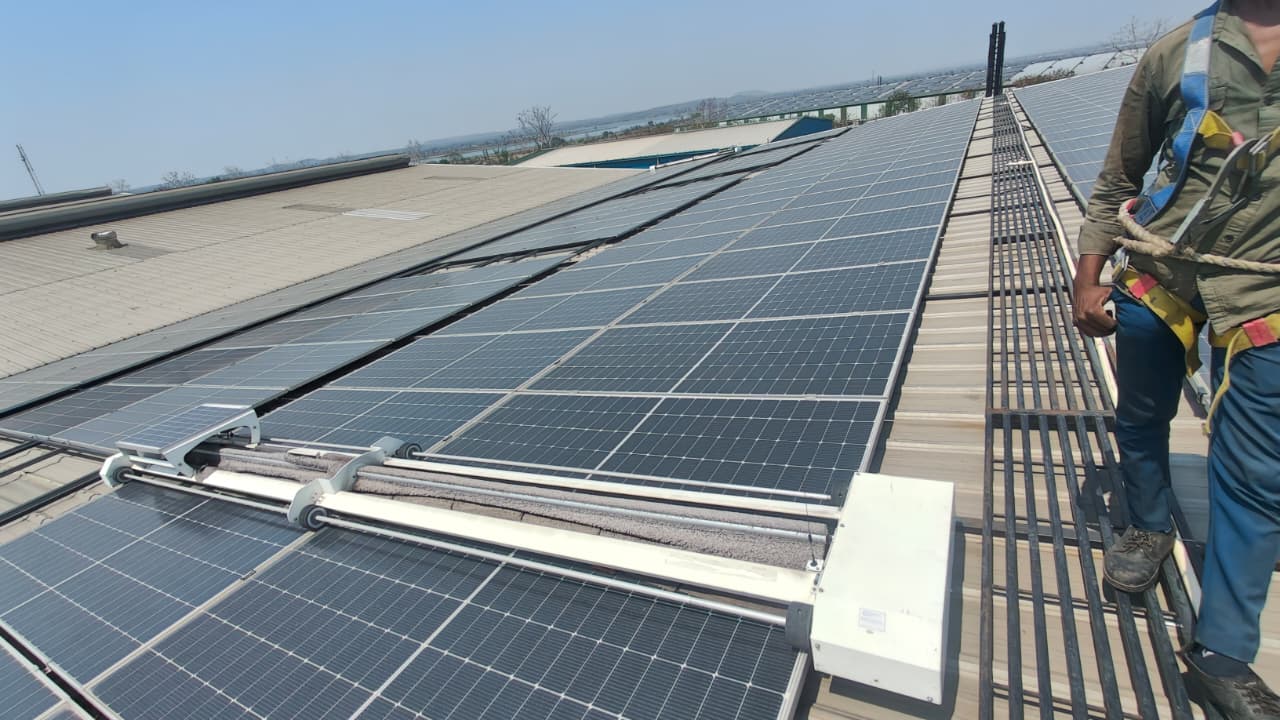
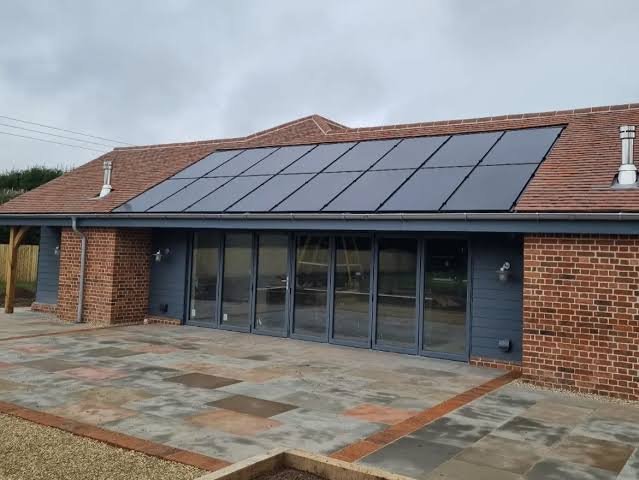
Rooftop and canopy PV share modules with utility plants but not operations. Fall risk, tight setbacks, irregular layouts, and building plumbing limits mean the playbook from a 100 MW Gujarat ground-mount site does not copy-paste to a 2 MW factory roof in Pune or a solar carport at a logistics hub outside Bengaluru.
This guide clarifies when rooftop owners should think like utility asset managers, when robots from utility marketing do not apply, and how to schedule cleaning without betting worker safety on informal contractors.
Quick answer
- Rooftop cleaning is safety-first manual work for most Indian C&I sites.
- Utility cleaning robots rarely fit without custom engineering.
- Frequency follows local dust, bird, and urban patterns, not desert utility calendars.
- Portfolio owners need monitoring + SLAs across many small roofs.
- Ground-mount utility guidance: utility O&M hub.
Rooftop vs utility-scale: different physics, different economics
Utility plants amortize mobilization over thousands of modules per visit. Rooftop sites pay fixed mobilization per building: scaffolding, harness teams, water hose setup, and security clearances. A quarterly clean on ten factories costs ten mobilizations, not one spread across 50 MW.
| Factor | Rooftop / canopy | Utility ground-mount |
|---|---|---|
| Access | Ladders, lifts, harnesses | ATVs, internal roads, robots |
| Scale economics | Per-site mobilization | Per-MW crews or fleets |
| Water | Building plumbing, tank limits | Borewells, tankers, canals |
| Soiling type | Bird, urban dust, pollen, grease | Agricultural and desert dust |
| Automation | Rare; manual dominant | Robots common at 30 MW+ |
| Typical capacity | 100 kW–5 MW per site | 10–300 MW single plant |
Soiling patterns on Indian rooftops
Urban and industrial rooftops face uneven soiling. Bird droppings create hot spots on individual modules. Nearby construction raises fine dust for months. Food processing plants may see grease films. Agricultural warehouses downwind of harvest see seasonal spikes unlike steady desert dust on utility tables.
Measure loss at inverter or string level when possible. A single dirty corner can drag a string while the rest looks clean from ground level. Why cleaning matters applies to C&I even when absolute MWh is smaller than utility scale.
Cleaning frequency: practical rules for facility managers
- Minimum: quarterly visual inspection and generation review.
- Trigger clean: when monthly energy drops versus irradiance-adjusted baseline beyond 3–5% without equipment fault.
- Event-based: after nearby construction, painting, or harvest season if exposed.
- Bird-heavy sites: monthly spot clean on affected modules may beat annual full-array wash.
Do not import utility desert cleaning intervals without local data.
Illustrative C&I cleaning economics (2 MW factory roof, Pune)
| Line item | Indicative annual (₹) | Notes |
|---|---|---|
| Quarterly manual clean (4 visits) | ₹2.5–4.5 lakh | Includes harness team, water |
| Neglected annual loss (4% avg) | ₹8–12 lakh opportunity | At ₹4/kWh C&I tariff, ~2 GWh/year |
| Centralized monitoring add-on | ₹50k–1.5 lakh/year | Alerts catch faults masked as soiling |
Numbers are illustrative. The point: on C&I, skipping cleans often costs more than contracting them when tariffs are high.
Safety and compliance
Rooftop work kills when treated casually. Minimum expectations:
- Contractors with documented working-at-height training.
- Harness and anchor points per factory safety rules.
- No cleaning during electrical storms or high wind.
- Awareness of live DC strings; no damaged connector work by cleaners.
- Insurance certificates and method statements on file.
Utility sites have open terrain; rooftops have parapets, skylights, and production lines below. Budget safety cost in every quote comparison.
When robots from utility marketing do not apply
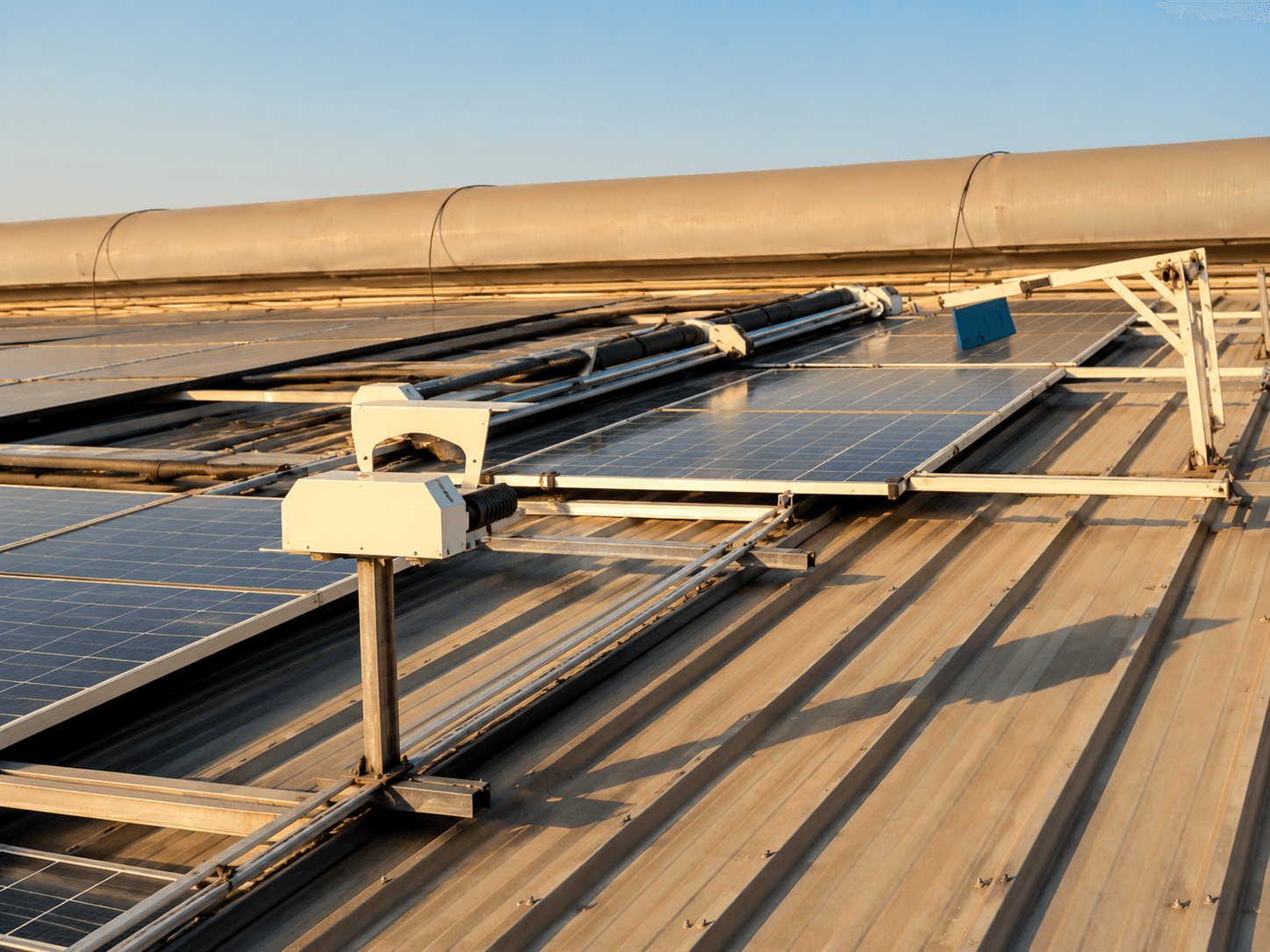
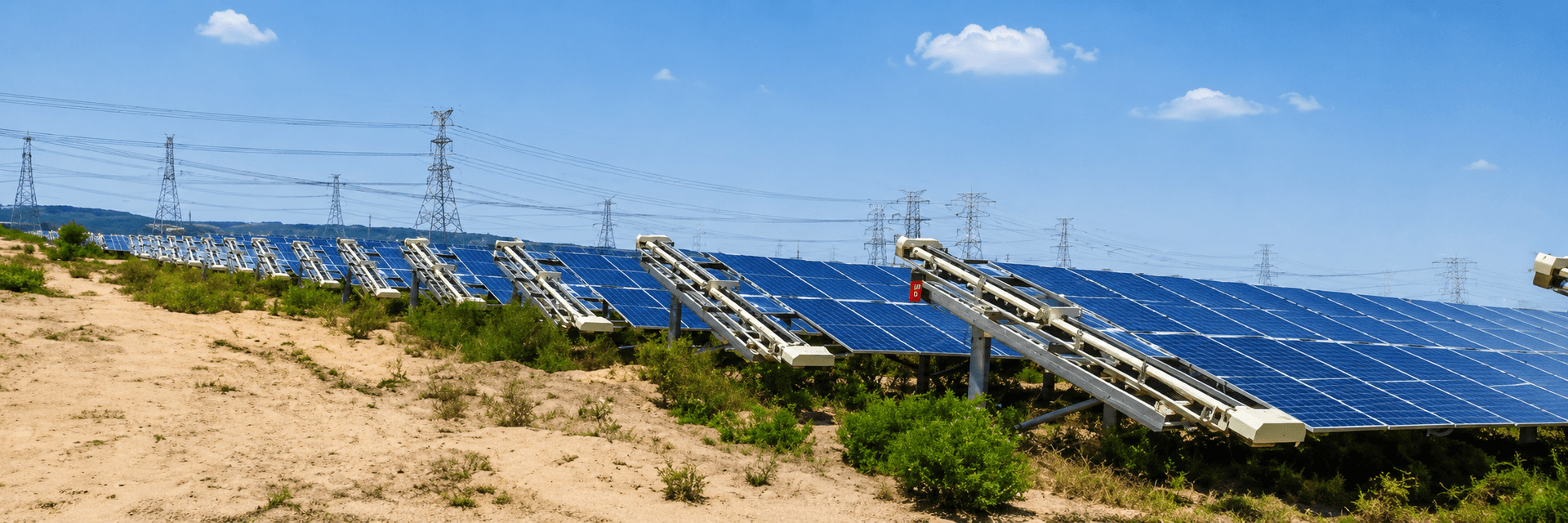
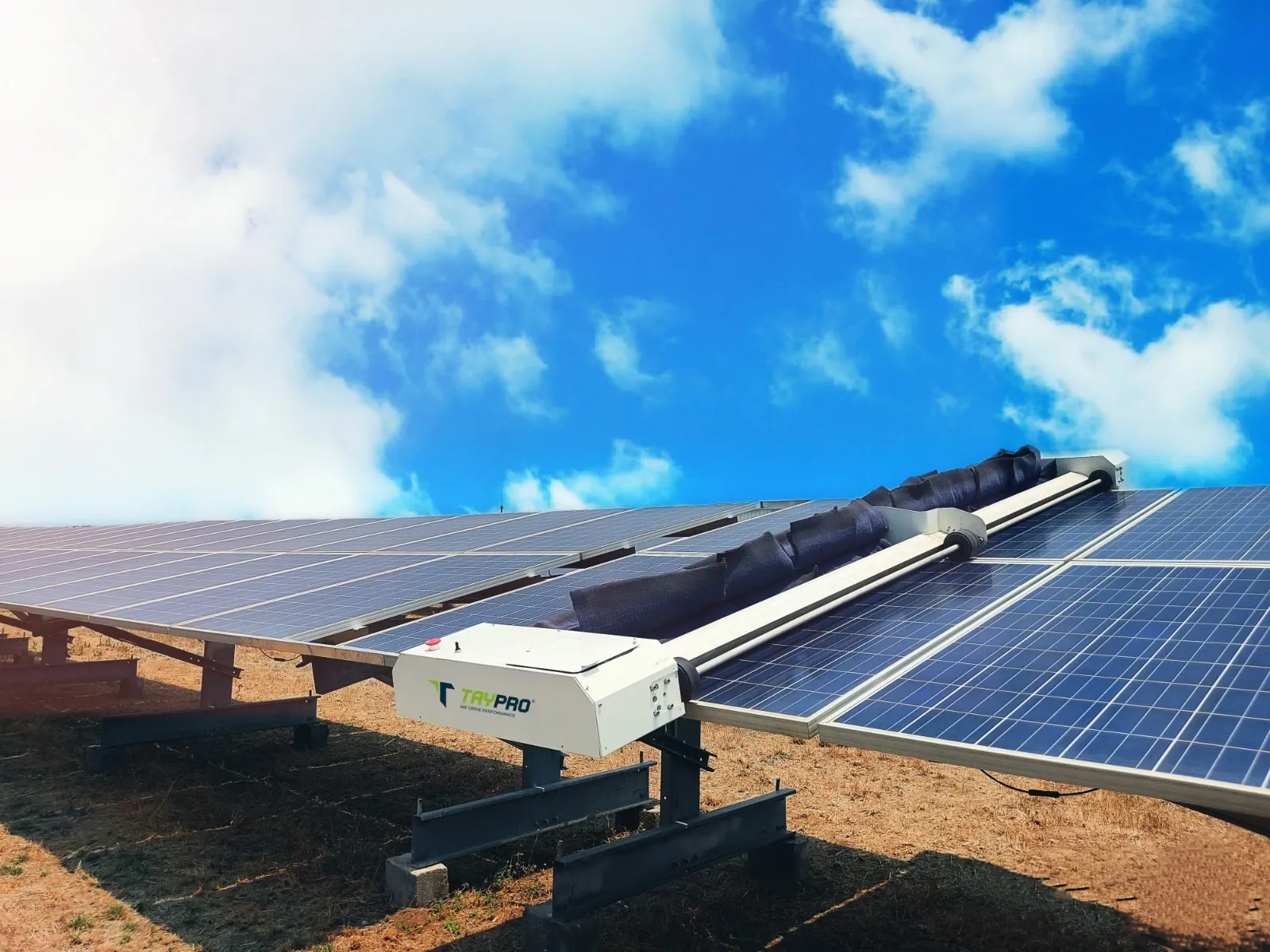
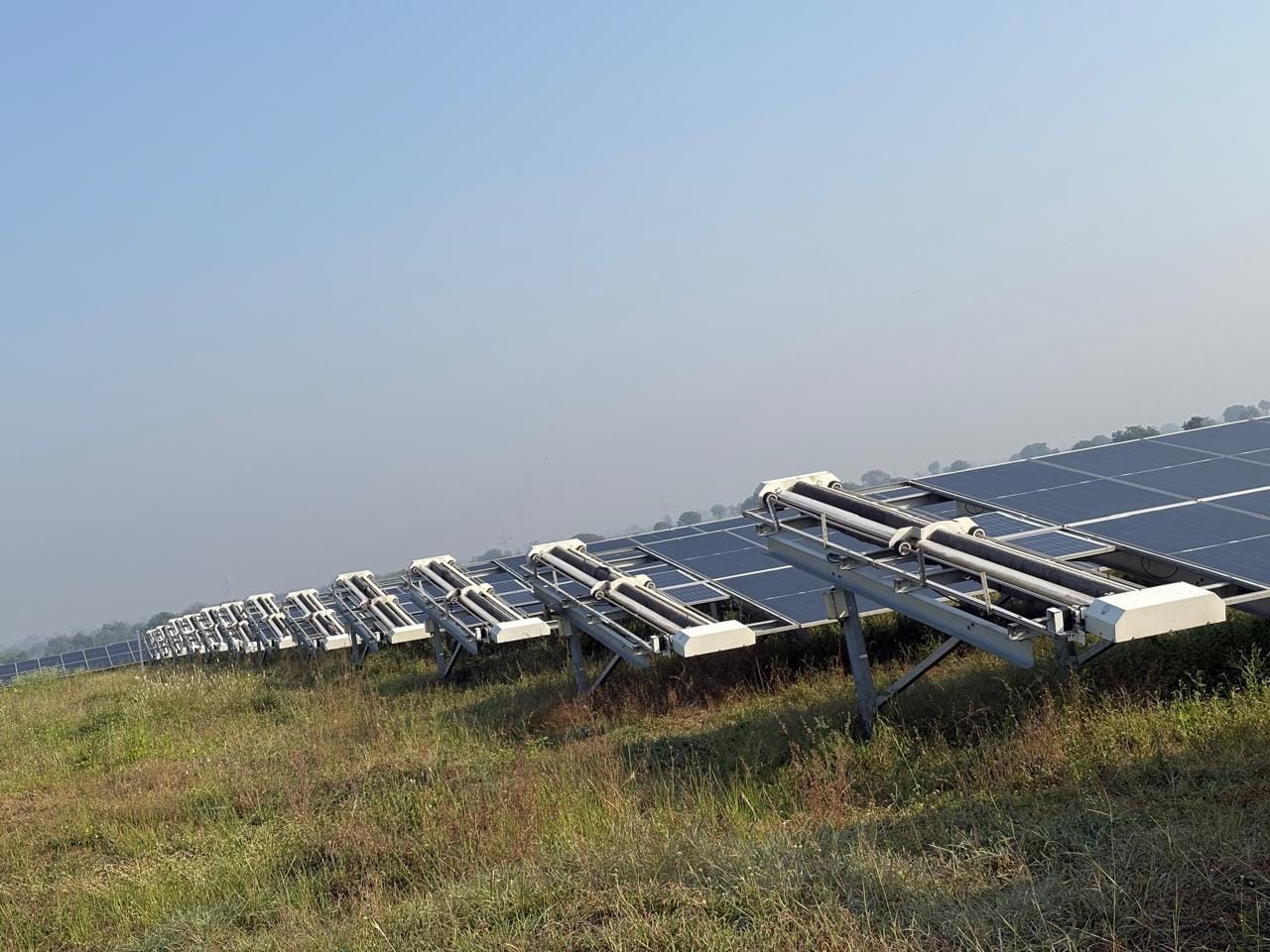
Utility robots assume row repetition, frame paths, night fleet dispatch, and kilometers of identical geometry. Rooftops have setbacks, HVAC shadows, varying tilt, and access stairs. Compact rooftop machines exist in some markets but remain niche in India and still need fall protection for deployment staff.
For method taxonomy, read what is a cleaning robot and robotic vs manual in utility context, then adapt expectations for height and insurance.
Multi-site portfolios: think like a small IPP
Owners with ten or twenty rooftops benefit from utility-style discipline without utility robots:
- Central SCADA or aggregator dashboard across sites.
- Standard cleaning SLA and safety checklist per building.
- Monthly PR or specific yield comparison by site.
- Contractor pool vetted once, deployed regionally.
Large solar carports at industrial parks (3–10 MW) blur the line: logistics approach utility scale while access remains height-sensitive. Compare choosing cleaning systems for power plants for method options, then add fall-protection cost.
Floating and elevated structures
Floating solar on reservoirs and elevated canopy structures at logistics hubs introduce access constraints beyond standard factory roofs. Floating arrays may use specialized boats or platform crews; robots designed for ground-mount rarely apply. Elevated carports may allow ground-based long-reach washing but still require traffic management under live vehicles. Treat each subtype as its own method study rather than copying Rajasthan utility specs.
Insurance and contractor due diligence
C&I owners should verify contractor insurance covers working-at-height and third-party property damage. Method statements should list DC awareness training, not only glass cleaning experience. After incidents, insurers review whether owners used certified contractors. Savings from uncertified daily wage teams rarely survive the first claim.
Document each visit: date, area cleaned, water used, and before/after generation snapshot where monitoring exists. Portfolio managers use logs to prove proactive maintenance in warranty and performance disputes with EPC.
Building management and production continuity
Factory and warehouse rooftops often restrict access during production hours. Schedule cleans on shutdown Sundays or maintenance holidays when possible. Coordinate with facility security for gate passes and material storage. A 1 MW roof clean delayed three weeks because of access bureaucracy can cost more in lost generation than the clean itself at C&I tariffs above ₹5/kWh.
For IT parks and hospitals, noise and water runoff rules may limit pressure washers. Specify low-pressure methods in contracts. Different cleaning methods lists options beyond utility-scale tractor brushes.
Monitoring for C&I without utility SCADA
Many rooftops use inverter-level monitoring only. Facility managers can still track specific yield (kWh per kWp per day) against regional irradiance estimates from public sources or on-site pyranometer. Sudden drops on clear weeks trigger clean tickets before annual losses accumulate. Aggregators serving hundreds of C&I roofs should normalize alerts so operations triage bird-soiled food processing roofs differently from dusty textile mill roofs.
When C&I portfolio exceeds 20 MW aggregate, negotiate centralized cleaning contracts with regional mobilization hubs to mimic utility economies of scale without assuming robots fit every roof.
When to escalate to utility O&M partners
Signs a C&I owner has outgrown local washer contracts: more than ten sites in two states, aggregate capacity above 15 MW, repeated PR disputes with EPC, or insurer mandates for certified height work. Utility-style partners bring SCADA integration, SLA metrics, and safety systems rooftop vendors rarely offer.
Key takeaways
- Do not assume utility robots apply to rooftops without engineering review.
- Budget safety and mobilization, not just labour hours per module.
- Measure loss; urban soiling is uneven block to block.
- Use trigger-based cleans tied to generation data.
- Portfolio owners centralize monitoring and SLAs across sites.
Rooftop portfolios need harness-certified contractors and generation-based triggers, not utility robot specs copied from desert ground-mount sites.
Related resources
Frequently asked questions
Usually no without bespoke engineering. Most utility robots target ground-mount rows with frame paths and night fleet logistics. Rooftops rely on manual crews with fall protection, portable washers, or niche compact machines with strict safety protocols.
Depends on dust, bird droppings, pollen, and nearby construction. Urban industrial belts often need quarterly to monthly attention; moderate cities may run quarterly inspection with clean-on-trigger when generation drops versus irradiance-adjusted baseline. Do not copy Rajasthan utility desert schedules.
Harnesses, parapet protocols, trained contractors, electrical isolation awareness, and weather limits. Never treat rooftop cleaning like ground-mount labour scaling. Insurance and factory safety officers often gate access.
Multi-MW rooftop, solar carport, or distributed portfolios benefit from centralized monitoring, contracted cleaning SLAs, and PR reporting similar to utility O&M, even when cleaning methods remain manual.
Localized losses of 5–15% are common under bird droppings, construction dust, or neglected corners. Uniform 3–5% plant-level loss appears when entire arrays go a year without clean. Measure inverter-specific yield, not assumptions.