Summary for plant managers
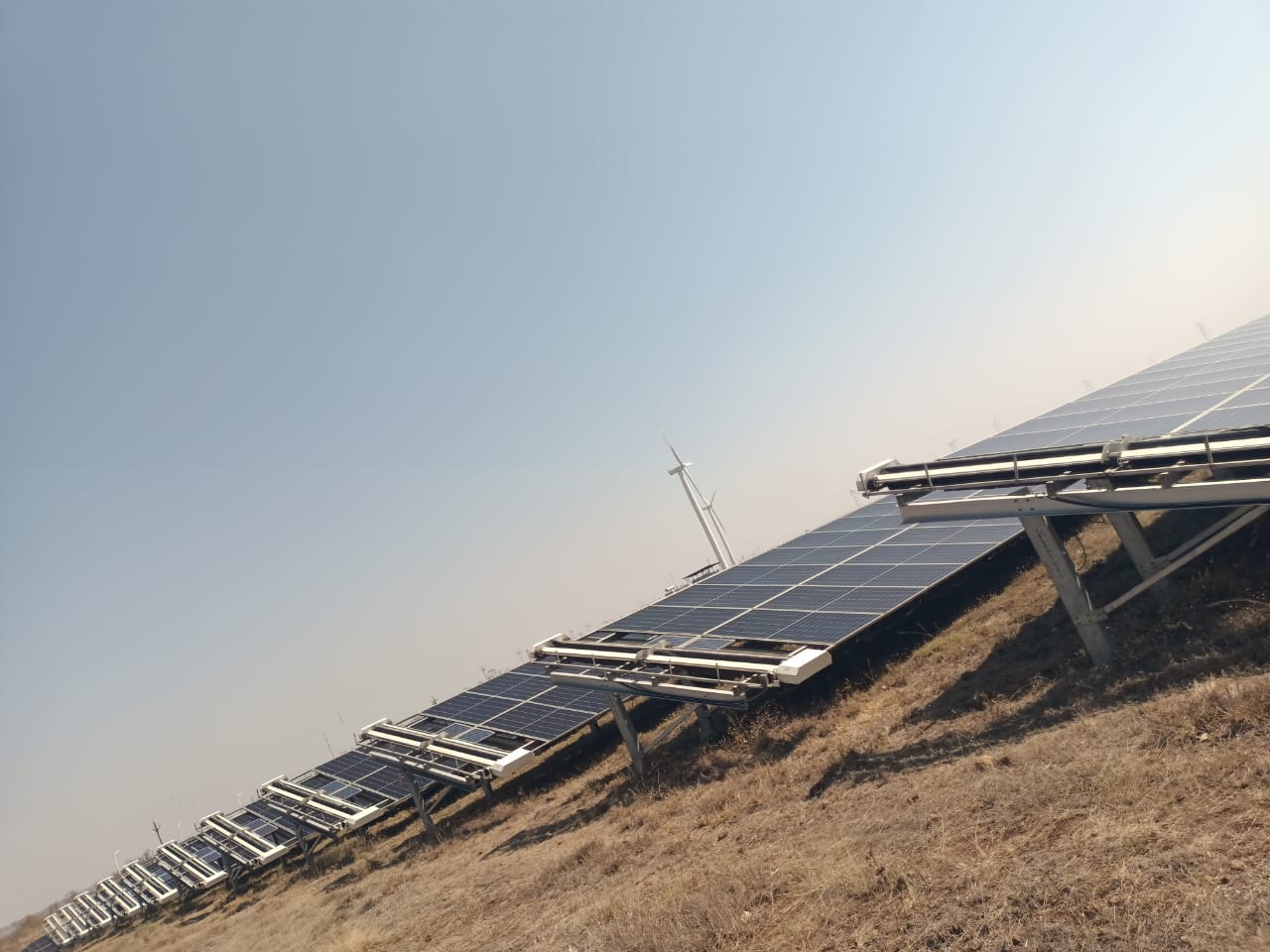
Agrivoltaic sites create unique path planning challenges. Irregular row spacing and canopy interference complicate automated cleaning. Managers must note that these layouts require robots with advanced obstacle detection. These systems manage vegetation growth near module surfaces. Implementing automated workflows recovers energy losses. These losses climb from 8% to 25% in dusty Indian agricultural zones.
- Typical soiling loss: 8–25% based on local crop types and dust levels.
- Path planning requirement: High-precision LiDAR or IMU sensors are necessary. These tools navigate shade-heavy, non-standard agrivoltaic rows.
- Cleaning frequency: Bi-weekly cleaning is recommended during peak dry seasons in West India. This prevents hard soiling layers.
- Operational constraint: Maintain strict ground clearance. This accounts for module tilt cycles and active crop height.
- Robot compatibility: Ensure robots have autonomous obstacle avoidance. This prevents crop damage and robot stalls in dense vegetation.
For IPPs with 5MW+ portfolios, align deployments with planting cycles. Do not use standard fixed-tilt schedules. As noted in our guide on cleaning frequency in India, use data-driven triggers. This protects both power output and crop health. Transitioning to automation reduces water use by thousands of liters. See our performance monitoring stack overview for more details on these systems.
Understanding agrivoltaics cleaning constraints in Indian utility-scale sites
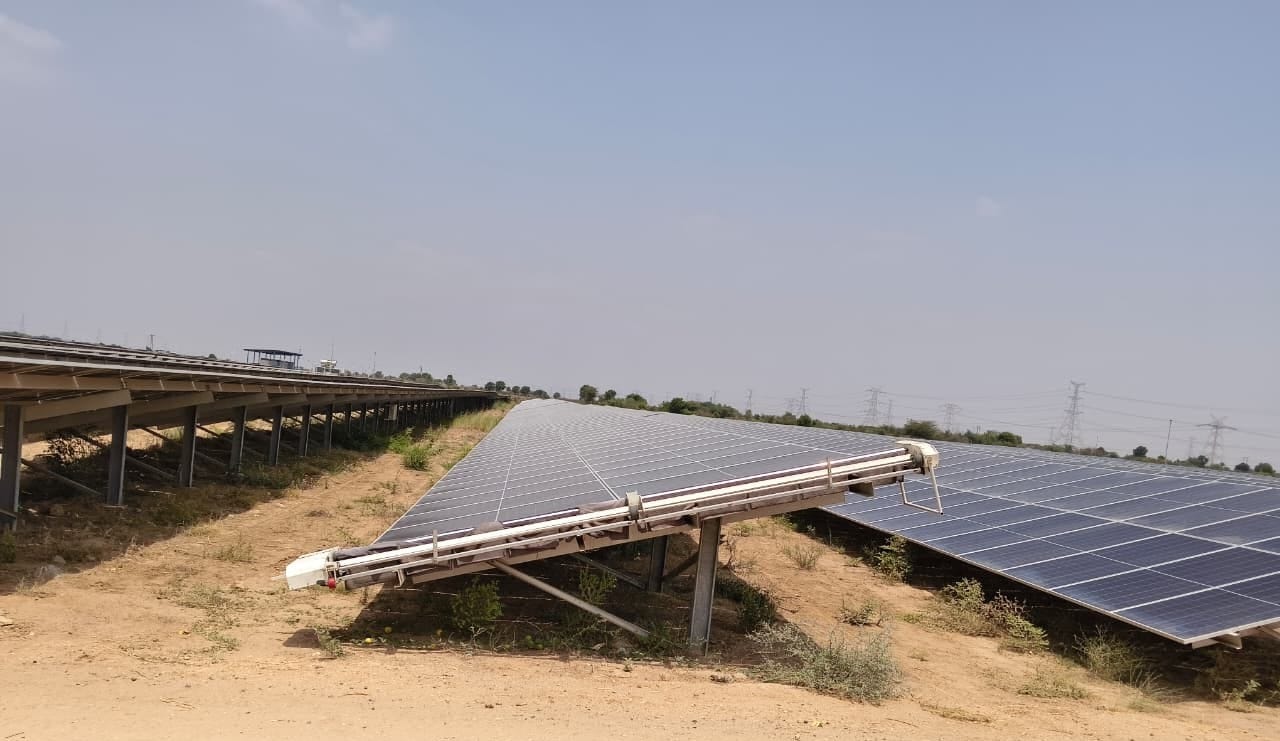
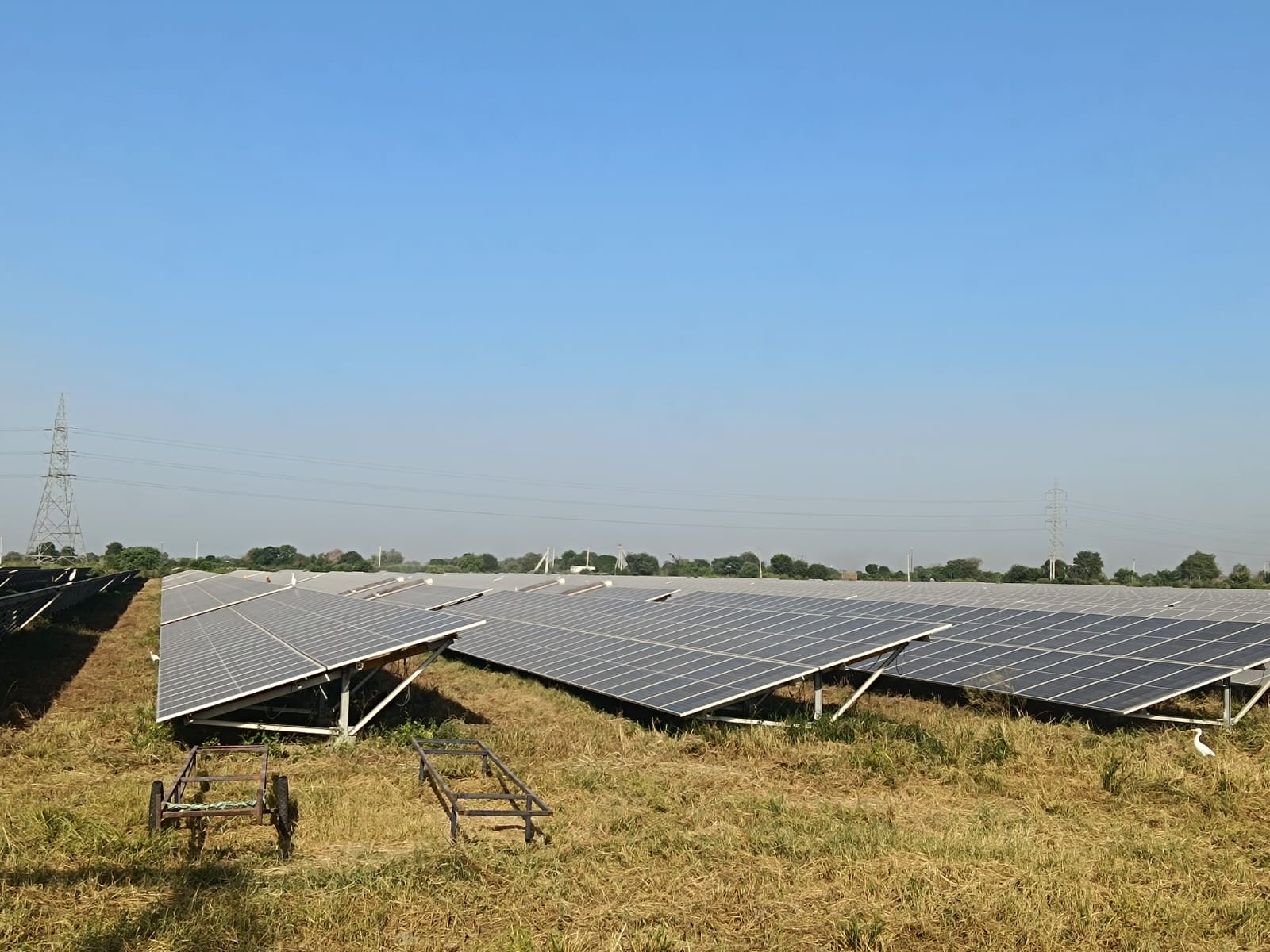
Agrivoltaic systems introduce complex operational constraints. Plants must balance power generation with agricultural yield. In high-density regions like Maharashtra and Gujarat, crop cycles dictate access windows. These windows do not exist in standard solar arrays. Managers must plan for seasonal changes. Crop height impacts module clearance, requiring specific hardware selection and height profiles.
Dust patterns also deviate from standard utility benchmarks. Crop transpiration increases humidity near panels. This turns airborne dust into a sticky film. It is harder to remove than dry soil. This requires aggressive brushes or dual-pass airflow mechanisms. Maintain 99% cleaning efficiency to protect the asset's financial return. For portfolios over 5MW, the constraint involves the boundary where the robot meets the vegetation line.
Site preparation is essential to manage these risks. Ensure end-row clearances and spacing account for robot turning radii. Agrivoltaics use non-standard row spacing to optimize sunlight. This irregularity requires advanced path planning. Standard routes lead to mechanical stalls if robots hit overgrown vegetation. Use a platform like NECTYR to define schedules. This aligns cleaning passes with crop maintenance, minimizing human entry and preserving yield.
How do agrivoltaic layouts impact robot path planning?
Agrivoltaic arrays require a shift from linear pathing to obstacle-aware navigation. Traditional robots follow straight-line maps. Agrivoltaic sites have variable canopy heights that interfere with sensors. Logic must be calibrated to recognize growth patterns. This allows robots to adjust height or bypass rows with excess foliage.
For 5MW+ portfolios in India, LIDAR and ultrasonic sensors are mandatory. These sensors identify pipes, fencing, and vertical trellises. Use an AI-driven fleet portal like NECTYR. Operators can segment sites by crop type and growth speed. This allows intensive cycles in high-soiling zones while maintaining a lighter footprint elsewhere.
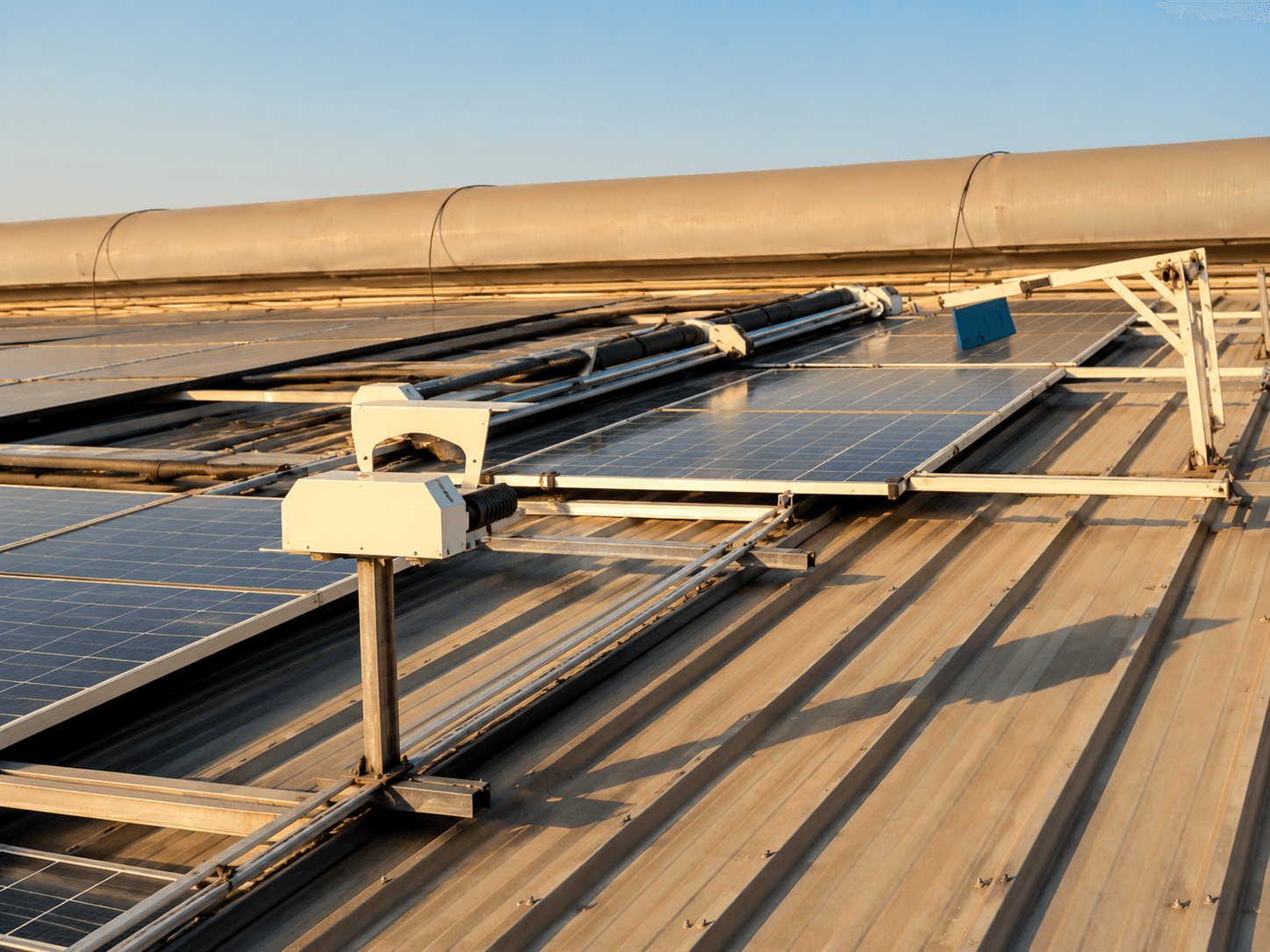
These sites require robust edge detection. Robots must handle dynamic turning radii because module spacing is irregular. Use systems that support row-transfer like the CRADYL. This prevents manual lifting and avoids crop damage. Proper scheduling ensures robots are only in the field when cleaning is justified. This maximizes uptime for both energy and agriculture.
Technical constraints: Navigating crop zones and irregular module geometry
Indian agrivoltaics feature non-standard row spacing to balance light for crops like turmeric or ginger. This disrupts typical grid layouts found in standard plants. It creates unique constraints for cleaning robots. Agrivoltaic designs may incorporate varying row lengths or vertical support structures. Robots require high-precision navigation to avoid colliding with trellises or irrigation.
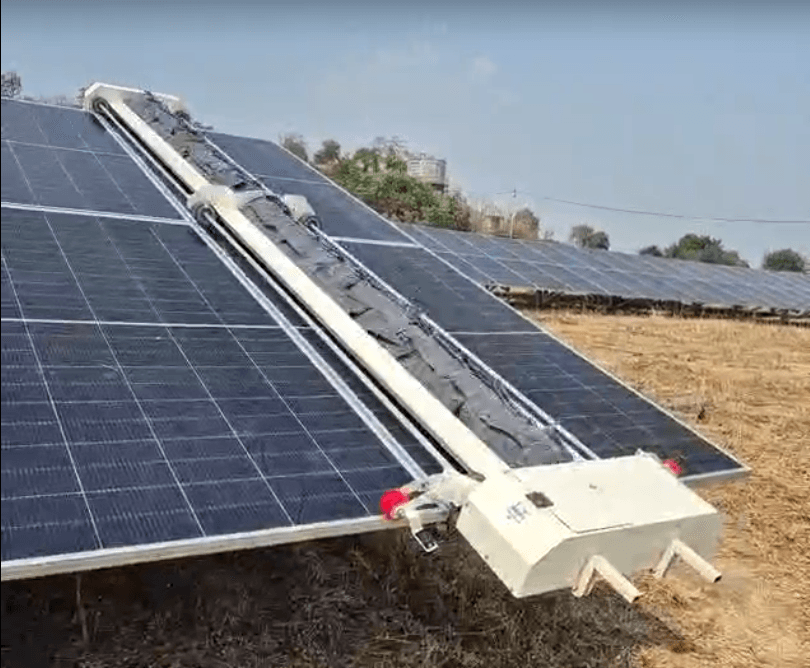
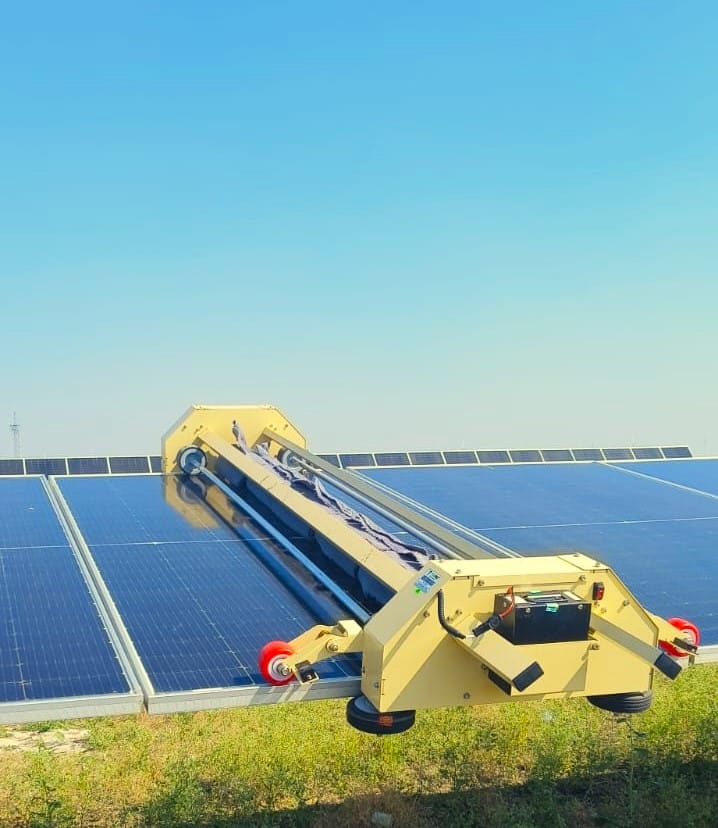
Standard algorithms struggle when sensors detect non-module geometry. This leads to false-positive stalls. For 5MW+ portfolios, use systems with advanced edge detection. Tools like the GLYDE-X use flexible bridge technology. This allows robots to traverse variations in tilt without a layout overhaul. Use row-transfer stations like the CRADYL to move across aisles. This prevents trampling agricultural beds.
Map structural constraints during commissioning. Define 'no-go' zones in the NECTYR portal. Treat agricultural buffers as digital obstacles. The robot optimizes its path to prioritize high-yield rows. This minimizes machine-crop interference. These robots provide 99% cleaning efficiency, which is vital in regions like Rajasthan and Gujarat.
Step-by-step: Implementing an automated cleaning workflow for agrivoltaic farms
Successful integration requires a site-specific protocol. Plant managers must treat the farm as a hybrid ecosystem. Robotic movement needs as much care as irrigation or fertilization cycles.
- Define Digital Boundaries: Use the NECTYR portal to map sensitive zones and trellises. Ensure robots bypass fragile rows.
- Synchronize with Crop Schedules: Coordinate cycles with harvesting. Deploy robots during growth to avoid interaction. Use dormancy for intensive sweeps.
- Utilize Row-Transfer Docking: Deploy systems like the CRADYL to transit between rows. This protects soil and machine integrity.
- Implement Adaptive Routing: Configure routing to follow seasonal light needs. Adjust parameters to handle gaps without false stalls.
- Continuous Performance Feedback: Integrate logs with real-time PR data. Use fleet telemetry to re-route robots to prioritize dirty modules.
By following this approach, O&M teams maintain high performance without compromising agriculture. Technologies like the GLYDE-X ensure cleaning remains an asset rather than a burden.
Optimizing soiling management in high-dust Indian agrivoltaic zones
In Rajasthan and Gujarat, soiling losses can exceed 20% annually. Agrivoltaic sites face a dual challenge. Crop transpiration and soil dust create sticky layers. Using waterless robotic cleaning allows O&M teams to maintain PR. This avoids high water consumption and soil compaction from tractors.
Cleaning frequency must be dynamic. Assets should trigger cycles based on real-time PR thresholds, such as a 2% drop. This ensures robots only enter the field when necessary. This reduces mechanical contact with plants.
Adopt these management strategies:
- Precision Scheduling: Link schedules with crop maintenance. Use the NECTYR portal to lock sectors from access during harvest.
- Waterless Technology Integration: Deploy waterless robots like the GLYDE. Dry cleaning preserves the chemical balance of agricultural soil.
- Performance-Based Path Re-routing: Increase cleaning frequency in humid micro-climates. Prevent permanent soiling stains with targeted passes.
- Sensor Calibration for Obstacles: Calibrate sensors for specific crop heights. This prevents robots from mistaking plants for structural hazards.
Treating cleaning as a surgical intervention bridges the gap between viability and performance. This data-driven approach, supported by NECTYR, maximizes energy while maintaining farmland ecology.
Is a standard solar cleaning robot compatible with agrivoltaic structures?
Most standard robots are not immediately compatible with agrivoltaic sites. Modules are often elevated to allow tractor access. Standard docking stations cannot reach these heights. Furthermore, robots often rely on rail geometries that conflict with irrigation piping.
For utility-scale agrivoltaics in India, compatibility depends on three factors:
- Clearance and Obstacle Navigation: Robots must have high-clearance to avoid crushing crops. Sensor suites must be tuned to ignore low vegetation.
- Bridge and Row Transfer: Standard robots often require rigid end-row steel. These areas often hold sensors or pumps. Use compact, rail-integrated solutions like the CRADYL.
- Terrain Sensitivity: Agrivoltaic soil is softer than graded traditional farms. Robots like the GLYDE-X provide flexible articulation to reduce ground pressure.
Prioritize models with flexible bodies. Rigid industrial layouts increase the risk of collisions. Always ask for ground-clearance ratings and sensor-tuning data for bio-diverse environments.
Key takeaways for O&M leads
Integrating robotic cleaning in Indian agrivoltaics requires moving beyond standard models. Success relies on aligning path planning with agricultural constraints.
- Define Hardware Early: Choose robots based on your specific layout. If crops grow above 1 meter, use flexible robotics like the GLYDE-X.
- Adopt Surgical Scheduling: Utilize NECTYR telemetry to focus on soiled zones. This reduces wear and prevents crop interference.
- Prioritize Soil Integrity: Install charging infrastructure like the CRADYL on reinforced pads. This prevents compaction and protects root health.
- Standardize Sensor Calibration: Tune obstacle sensors for the canopy density at your site. This is the primary factor in preventing robot stalls.
- Balance Yields: Remember that agrivoltaics requires a dual-focus mindset. Verify every cycle against both solar and agricultural outputs.
Sources and further reading
Frequently asked questions
Agrivoltaic sites create unique path planning challenges. Irregular row spacing and canopy interference complicate automated cleaning.
The primary constraints include maintaining a minimum ground clearance that accounts for both the module tilt cycle and the current crop canopy height. Additionally, robots must navigate irregular row layouts without damaging vegetation or getting stuck in dense plant growth.
Yes, waterless robotic systems are suitable for agrivoltaic sites in India. Implementing automated, waterless cleaning is recommended to recover energy losses of 8% to 25% and to preserve water resources, provided the robots are equipped with sensors to navigate around the agricultural canopy.
Agricultural activity can increase soiling rates due to airborne dust and residue. In India, dry seasons often necessitate a cleaning frequency of every 7 to 14 days to prevent the buildup of hard soiling layers, which can significantly reduce energy output if left unchecked.