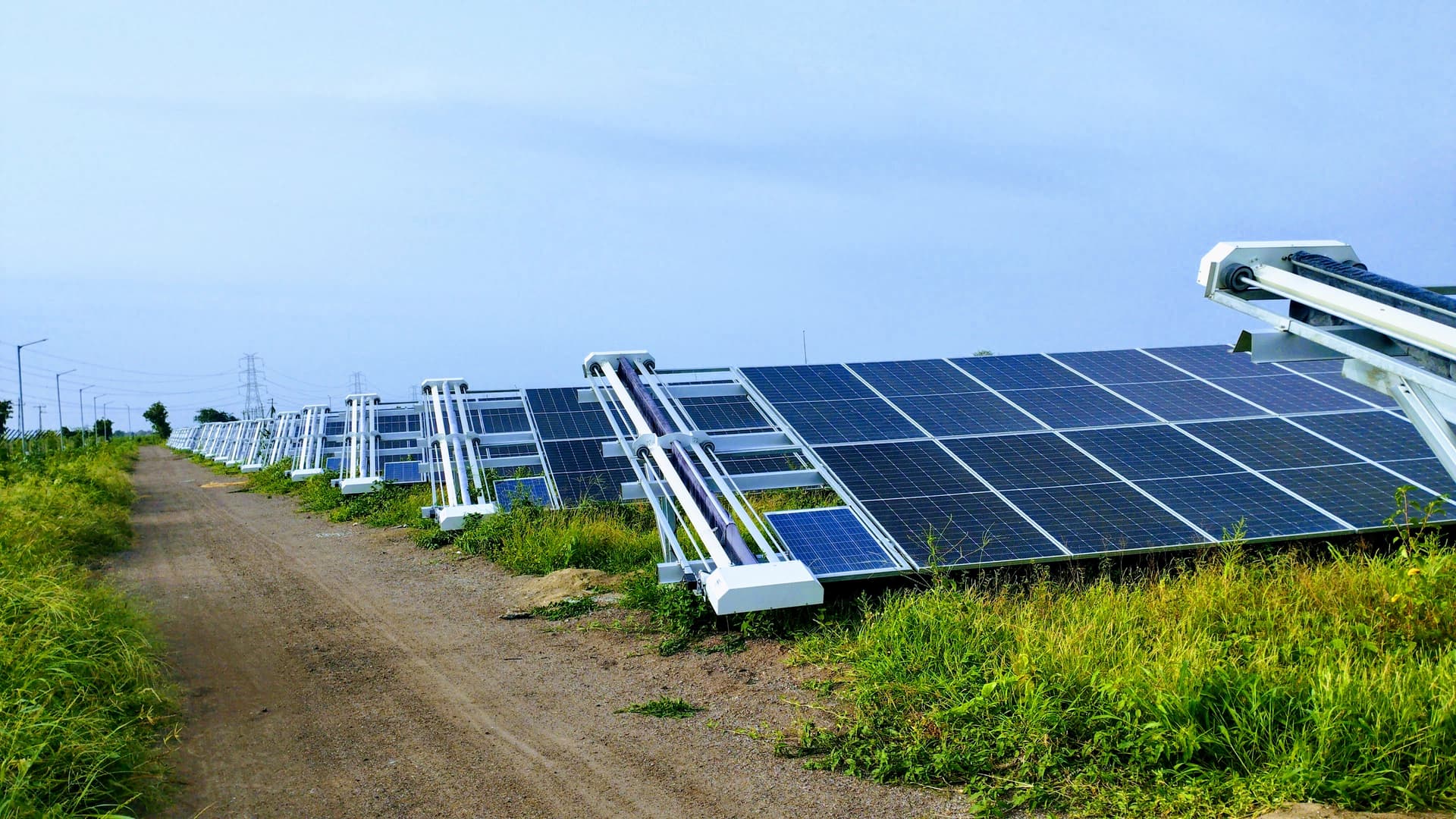

Commissioning a utility solar plant is usually framed around inverters, protection systems, and grid compliance. Cleaning robot integration is often treated as an aftermarket accessory, then becomes a production problem when the first dust season exposes aborted routes, missing OEM paperwork, or control-room blind spots. On 10–100 MW sites, robot commissioning deserves the same punch-list discipline as MV cable testing.
This article provides a practical integration checklist for EPC, O&M, and robot vendors at COD: surveys, tracker stow, communications, safety interlocks, documentation handoff, and acceptance tests aligned with Indian utility practice.
Quick answer
- Survey early: validate aisles and row lengths during construction.
- Stow first: night passes need signed tracker stow programs.
- OEM approval: module cleaning letters before first production pass.
- SCADA map: fault codes and uptime visible in control room.
- Handoff pack: as-builts, spares, firmware, and training records.
Phase 1: Design and construction verification
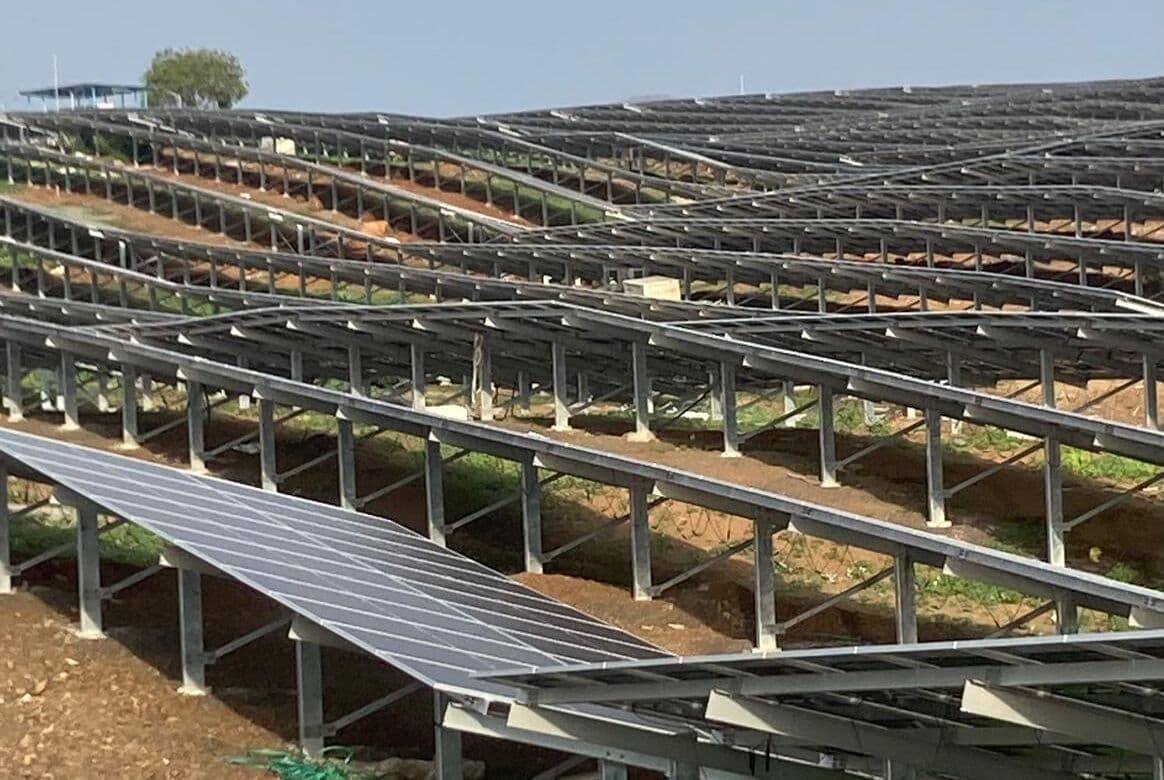
Before robots arrive on site, confirm design drawings match field conditions. Value engineering sometimes narrows aisles or shifts table edges without updating robot simulations.
- Measure minimum aisle width every 100 m on longest rows.
- Record table height, module overhang, and cable tray protrusions.
- Flag blocks with grade change > vendor slope limit.
- Verify drainage channels do not block planned robot paths.
- Confirm combiner and string cable clearance at row ends.
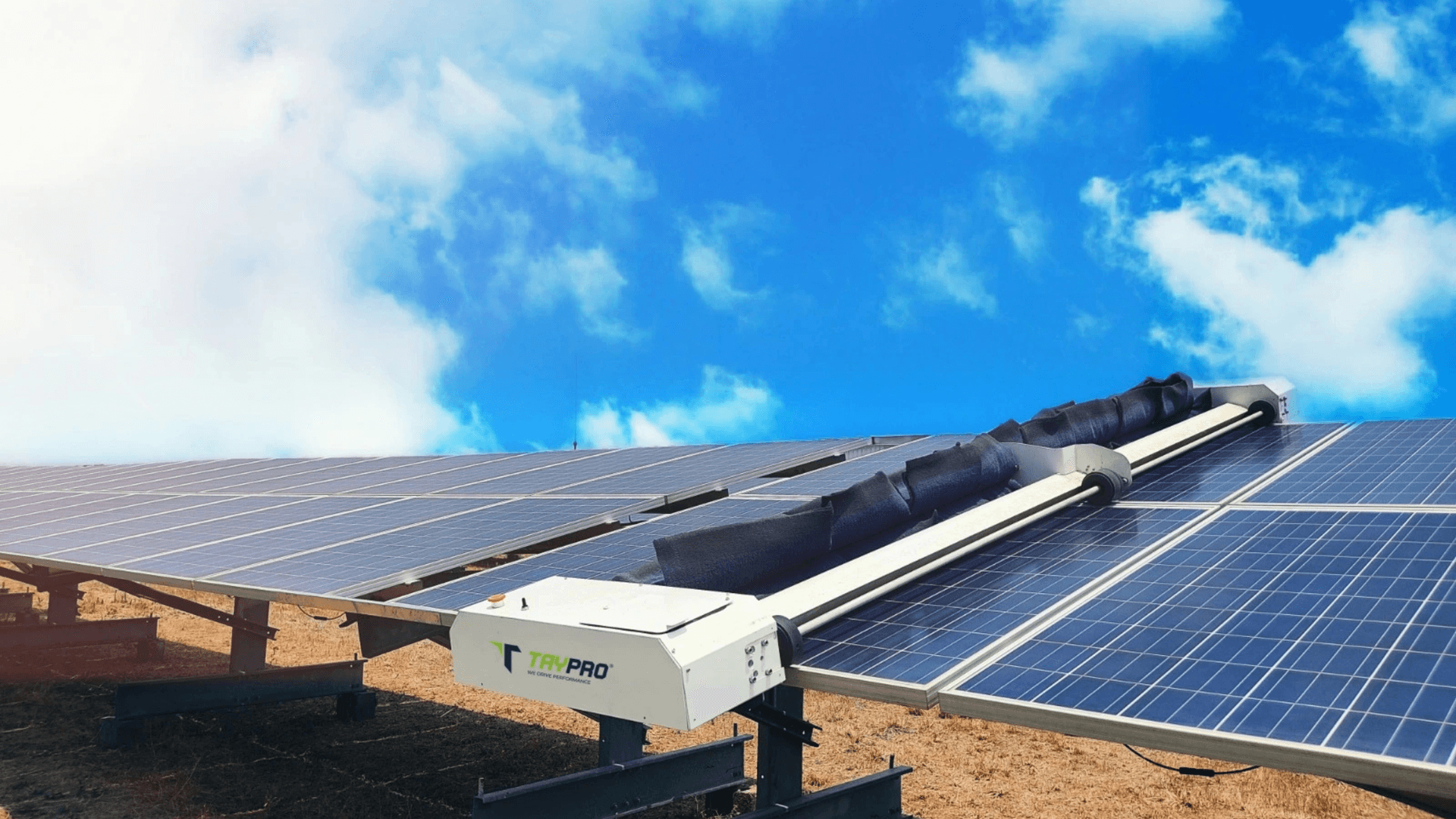
Cross-read robot installation requirements against your as-built survey.
Phase 2: Module and OEM compliance
Utility commissioning cannot skip written module OEM cleaning approval for the specific robot model and brush specification. Warranty teams reject claims when operators cannot produce approval letters tied to module SKU.
Collect batch-specific module datasheets, frame tolerance notes, and any restrictions on automated dry brushing. Store copies in O&M document control, not only EPC procurement folders.
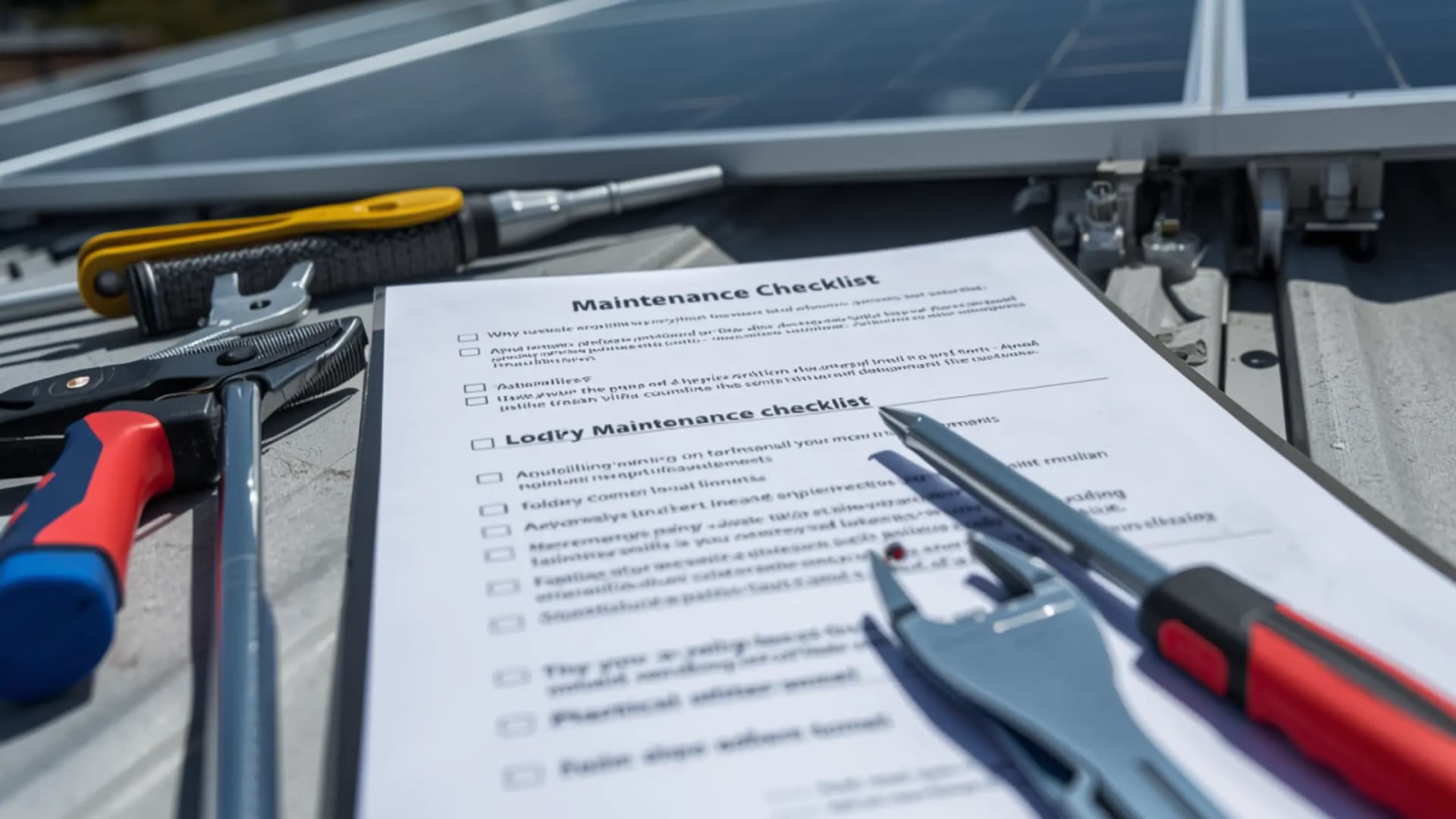
Commissioning checklist by subsystem
| Subsystem | Acceptance test | Pass criteria (typical) |
|---|---|---|
| Mechanical path | End-to-end dry traverse | Zero hard collisions; abort rate <5% on pilot rows |
| Tracker interlock | Stow + wind hold | No tracker motion during pass; E-stop <2 s |
| Brush / pressure | OEM spec verification | Pressure within approved band on sample modules |
| Communications | Mesh or RF soak test | >95% packet success at block corners |
| SCADA integration | Alarm mapping | Faults visible with timestamp in control room |
| Safety | Night ops procedure drill | Operators sign trained roster; LOTO documented |
Phase 3: Tracker stow and night operations
Most utility robot programs on single-axis plants run at night with trackers stowed. Commissioning must include coordinated tests with tracker OEM logic.
Verify wind speed thresholds that inhibit stow release during cleaning windows. Document seasonal stow angle changes if tracker firmware updates. Run three consecutive nights on pilot blocks before fleet-wide scheduling.
See tracker maintenance guide for stow-related O&M context.
Phase 4: Communications and control room
Robots without control-room visibility become ghost assets. During commissioning, map fleet status, battery state, pass completion, and fault codes into existing SCADA or a dedicated dashboard with 24/7 access.
Industry reports on large Indian solar parks highlight mesh networks as common for block-to-block coverage. Commissioning should include failover behavior when a relay node drops, not only best-case line of sight.
Read RF and mesh connectivity patterns for architecture expectations.
Phase 5: Performance baseline for cleaning ROI
Integrate robots during PV performance commissioning so you capture clean baseline PR before soiling accumulates. Install or enable reference strings, soiling stations, or irradiance-normalized PR reporting per block.
Without baseline data, you cannot prove robot passes recover MWh in year-one lender or board reviews. Align with PR calculation methods used in your PPA reporting.
Documentation handoff matrix
| Document | Owner | Recipient |
|---|---|---|
| As-built row CAD / PDF | EPC | O&M + robot vendor |
| Module OEM cleaning approval | Module supplier | O&M + insurer |
| Robot OEM manual + firmware | Robot vendor | O&M |
| Spare parts list + lead times | Robot vendor | Stores team |
| Night ops SOP + training log | O&M contractor | Plant manager |
| Commissioning sign-off sheet | Independent engineer | Lender / asset owner |
Pilot block protocol before fleet release
Select two blocks: one easy geometry, one worst-case row length and slope. Run minimum ten production passes each. Inspect random modules for micro-scratch under agreed sampling plan. Only after pilot sign-off expand scheduling plant-wide.
Pilot scope should mirror cleaning best practices your O&M contract will enforce.
Integration with broader PV commissioning
Robot acceptance should appear on the master commissioning matrix alongside inverter availability tests and grid compliance. Delaying robot sign-off to "season two" strands capex and leaves soiling unmitigated during bankability reporting windows.
Owners consolidating multiple vendors (EPC, tracker, robot, SCADA) should appoint a single integration lead with authority to hold COD payments on failed checklist items.
Who signs off robot integration at a 75 MW plant?
Typical practice: robot vendor confirms mechanical and fleet software acceptance, EPC confirms construction conformity, independent engineer witnesses sample tests, and asset owner O&M lead signs only when OEM module approval, SCADA alarms, and trained operators are in place. Insurers increasingly ask for this trail before covering automated cleaning.
Seasonal commissioning considerations in India
Robot integration timing should account for regional weather windows. Commissioning dry traverses during monsoon may overstate abort rates from wet modules and muddy aisles. Western desert sites often integrate robots between October and February when dust is moderate and night temperatures allow battery cycling without thermal derating. Coastal Gujarat sites should validate salt film behavior on pilot passes before signing seasonal SLA baselines.
Align first production cleaning passes with the plant performance test period where possible so lenders see stabilized PR curves that include realistic soiling management, not optimistic clean-module snapshots only.
Training and operator readiness gates
Commissioning is incomplete without trained night-shift operators and maintenance staff who can replace brushes, swap batteries, and interpret fleet fault codes without vendor escort. Require vendor-led training with signed attendance, recorded procedures for LOTO during tracker maintenance adjacent to robot paths, and a 30-day hypercare period with on-site engineer coverage.
O&M contracts should name minimum operator headcount and certification renewal intervals. Robot fleets without local trained staff revert to manual emergency cleaning within one season on many Indian plants.
Post-COD warranty and defect holdback coordination
EPC defect liability periods often overlap first dry season. Robot integration during DLP means coordinating vendor access with snag lists and module replacement zones. Hold back robot acceptance payments until punch-list rows are cleared or explicitly excluded from initial routes.
Document which blocks remain under EPC control versus O&M so robot schedules do not void EPC warranty on unfinished civil work.
Version control for firmware and route maps
Robot commissioning deliverables should include version-controlled firmware images, route map files, and change logs. Unapproved firmware updates during DLP have caused route abort spikes on industry-reported projects. Lock versions at sign-off and require written change requests for upgrades.
Key takeaways
- Treat robot integration as a commissioning workstream, not an O&M afterthought.
- Validate geometry and tracker stow before first production pass.
- Module OEM approval and SCADA visibility are non-negotiable sign-off items.
- Pilot on easy and hard blocks; inspect modules under a sampling plan.
- File handoff documents where warranty and insurance teams can access them.
A commissioning checklist only works when one integration lead owns the punch-list across EPC, tracker, and robot vendors. Split ownership is how robots sit in the yard while PR drifts through the first dry season.
Related resources
Frequently asked questions
Route surveys and aisle clearance validation should begin during construction, not after grid energization. Final robot commissioning typically runs in parallel with PV performance testing once modules are mounted, trackers are calibrated, and stow programs are verified. Waiting until first dry season loses months of soiling data you could use to tune pass frequency.
As-built row layouts with dimensions, tracker stow angle tables, module OEM cleaning approval letters, communication cabinet locations, and mesh or RF coverage maps. O&M also needs spare parts lists, firmware versions, and escalation contacts. Missing any one item delays insurance and warranty alignment.
Run dry runs at night with trackers in stow, measuring ground clearance at row ends and motor gap zones. Confirm wind stow interlocks prevent movement during passes. Log abort reasons for end-turn failures; they predict fleet uptime more than vendor demo videos.
Yes. Treat robot integration like inverter or SCADA subsystems: define acceptance criteria for pass coverage, communication latency, emergency stop response, and alarm mapping to the control room. Industry practice on large Indian plants increasingly lists cleaning automation in the same punch-list as generation assets.
Undersized aisles after value engineering, missing OEM cleaning approval, poor mesh coverage at block corners, and operators without trained night-shift procedures. Less obvious: SCADA teams not receiving robot fault codes, so downtime is invisible until PR drifts. Checklists below target these gaps directly.