
On a 100 MW site in Gujarat, a cleaning robot without reliable telemetry is a brush on wheels you cannot audit. Communications turn cleaning from anecdote into measurable O&M: which rows ran last night, which aborted for wind, and whether the fleet kept pace with dust that dropped PR 4% in 48 hours after a storm.
Indian utility owners increasingly specify robot fleets alongside SCADA and inverter monitoring. This article explains architecture layers, what to demand in procurement, and how comms gaps show up as PR dips when nobody connected the dots.
Quick answer
- Specify pass logs + alerts in robot procurement, not optional accessories.
- Use mesh, Wi-Fi, or LTE backhaul suited to site geography and block layout.
- Integrate with O&M tickets, not a standalone vendor app silo.
- Correlate comms gaps with PR dips after dust events.
- Test links on farthest blocks before fleet acceptance.
Why comms are part of cleaning ROI
Cleaning economics depend on coverage and frequency. A robot that cleans 80% of rows after a storm performs like an expensive partial manual round. Without row-level confirmation, asset managers discover gaps weeks later in block PR comparisons. Comms infrastructure is not IT overhead; it is how you defend ₹ recovered MWh claims to lenders.
Pair fleet data with performance monitoring beyond cleaning and monthly PR discipline. Robots generate operational data as valuable as inverter fault codes when soiling is material.
Architecture layers on MW plants
| Layer | Role | What to verify at acceptance |
|---|---|---|
| On-robot controller | Row logic, safety stops, local logging | Abort reasons coded; buffer when link drops |
| Field gateway / mesh node | Aggregation at block or inverter pad | Coverage to all rows in block |
| O&M dashboard | Coverage maps, scheduling, faults | Export for asset management reviews |
| SCADA / data historian (optional) | PR correlation, availability context | Timestamp alignment with generation |
| Mobile / LTE backhaul | Remote sites without fiber | Failover when primary link drops |
Mesh networks and large-site geography
Mesh radio networks extend coverage by relaying packets node to node across blocks. They suit sprawling plants where running fiber to every inverter pad is costly and LTE alone is uneven. Design considerations on Indian sites include:
- Repeater placement at high points or inverter clusters with clear line of sight.
- Block segmentation so one dead zone does not blind half the plant.
- Power backup at gateways for night cleaning when grid events occur.
- Antenna maintenance during dust season; accumulated grime reduces margin.
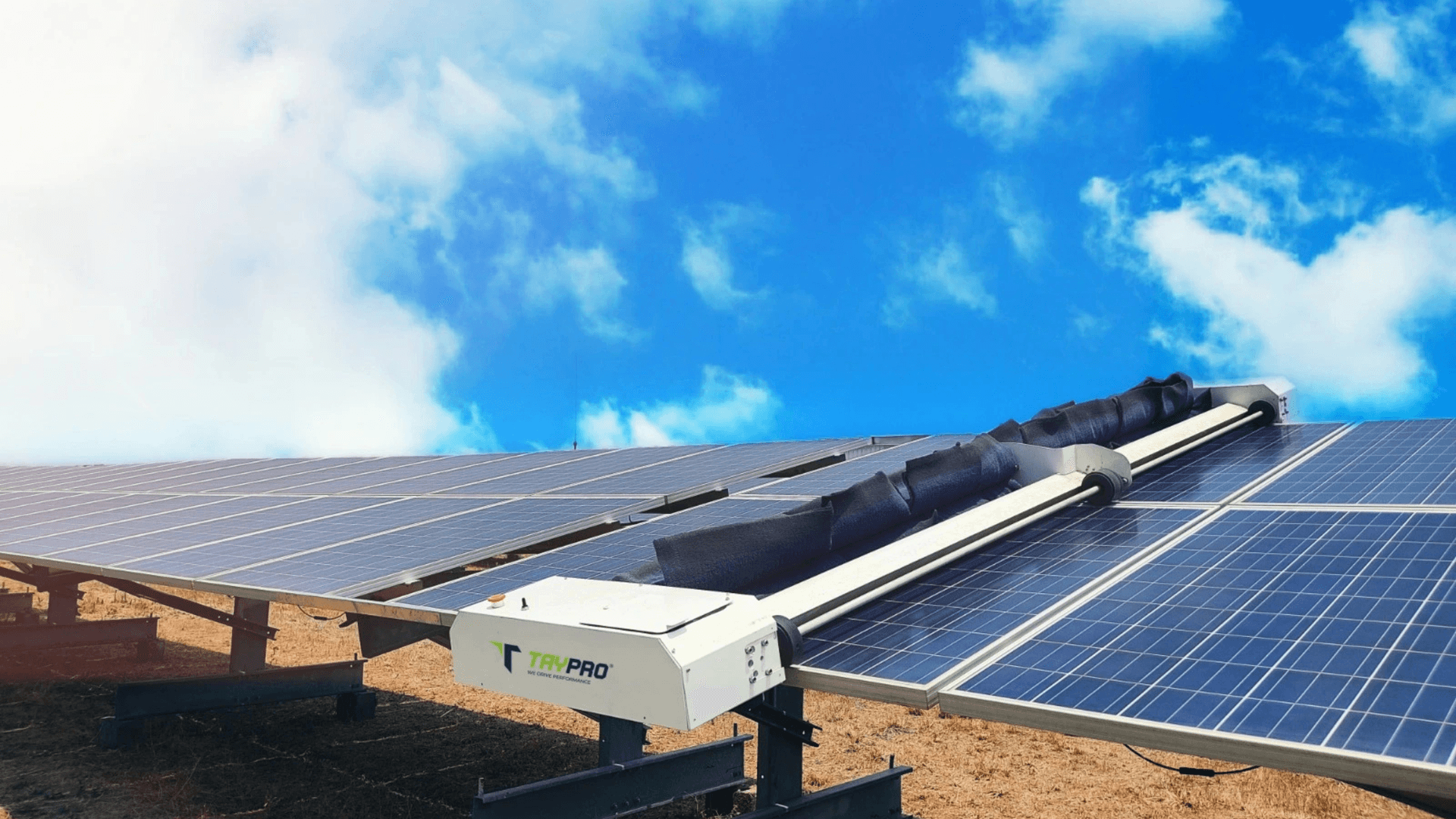
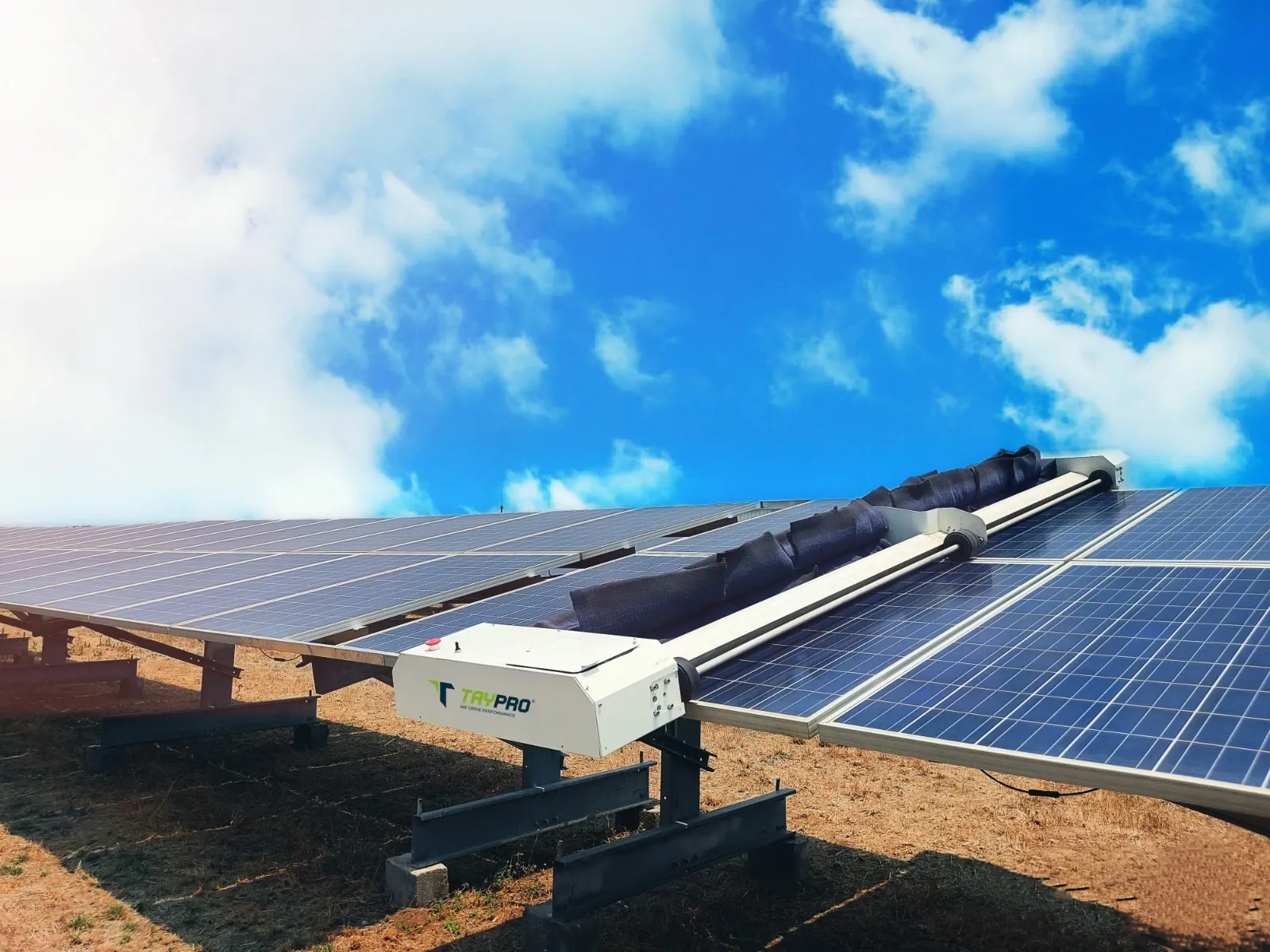
Taypro and similar fleet operators use mesh and gateway layers so robots report pass status in near real time to control-room dashboards, enabling dispatch adjustments when wind pauses a tracker zone. Architecture should be validated on the farthest row, not the parking lot.
What Indian plant managers should specify in RFPs
- Pass confirmation: row ID, start/end time, operator or autonomous mode.
- Offline resilience: store logs onboard; sync when link returns.
- Alert SLA: wind abort, obstacle stop, battery low within defined minutes.
- Integration: API or export to O&M ticket systems, not PDF-only reports.
- Cybersecurity: segmented VLAN, no default passwords, update policy.
- Data ownership: plant owns historical pass data if vendor contract ends.
Context: AI and plant performance often consumes the same telemetry streams robots generate.
Linking comms to SCADA and PR reviews
Generation data alone cannot attribute loss to soiling versus curtailment. When pass logs align with block-level PR recovery, O&M teams build credible root-cause narratives for monthly asset reports. Illustrative workflow:
Advertisement
- Dust event May 12: regional PM10 spike, site PR down 5% by May 14.
- Fleet dispatched May 14–16: pass logs show 92% row coverage block B, 68% block D.
- PR recovery by May 20: block B normalizes; block D lag explains residual gap.
Without block D pass data, block D looks like "mysterious soiling" until someone walks the rows. Dust prediction and smart scheduling depend on the same comms backbone.
What breaks in dust season
- Wind aborts without automatic reschedule alerts; rows stay dirty.
- Dead zones at far land parcels without repeaters commissioned.
- Manual overrides run locally but not logged centrally.
- Vendor app silos that asset management cannot access.
- Commissioning-only tests that never retested after monsoon vegetation growth blocked paths.
Run annual comms audits before April surge. Compare with signs you need automated cleaning when PR and coverage diverge.
Illustrative connectivity budget (50 MW greenfield)
| Item | Indicative range (₹) | Notes |
|---|---|---|
| Mesh gateways + repeaters | ₹8–18 lakh | Depends on block count and terrain |
| LTE backup links | ₹2–5 lakh/year | Often per-site SIM and data plans |
| Integration to O&M platform | ₹3–8 lakh one-time | API work varies by vendor |
| Annual maintenance | ₹1–3 lakh | Antenna checks, firmware |
Bundle comms capex into robot ROI, not a separate IT line easily cut at financial close.
Taypro fleet connectivity in practice
On large Indian sites, Taypro deploys mesh-capable gateways so robots report row completion to O&M dashboards without requiring operators to walk every block at dawn. Field teams see which zones finished overnight, which aborted for wind on trackers, and which need reschedule before the next dust accumulation cycle. That visibility is how cleaning stops being a faith-based activity.
Practical commissioning steps Taypro-style architectures share with other industrial fleets:
- Map block layout against gateway line-of-sight before mounting hardware.
- Run overnight test passes on farthest rows with intentional link drop to verify buffer sync.
- Align timestamp formats with SCADA historian for PR correlation workshops.
- Train shift engineers on alert triage: wind abort is not the same as brush fault.
Mesh is not the only answer. Some sites blend LTE at the substation with local Wi-Fi at inverter pads. The architecture choice matters less than coverage proof on the worst block.
Cybersecurity and vendor lock-in
Robot fleets introduce new network endpoints. Minimum governance for Indian IPPs:
- Segment robot VLAN from corporate and payment networks.
- Change default credentials before first production pass.
- Document firmware update responsibility (owner vs vendor).
- Export pass history in open formats if vendor contract ends.
Data ownership clauses prevent painful migrations when O&M contracts rebid. Historical pass logs support warranty disputes and lender technical reviews during refinancing.
Integration checklist for SCADA engineers
Cleaning data delivers value when timestamps align with generation historians. Minimum integration workshop agenda:
- Confirm NTP sync on robots, gateways, and SCADA servers.
- Map row IDs to block and inverter string groupings in the historian.
- Build dashboard tile: percent rows cleaned in last 7 days by block.
- Alert when block PR drops >2% while clean coverage <80% in same period.
- Archive pass logs for lender technical advisor annual reviews.
Without row-to-inverter mapping, pass logs stay a novelty chart. Dust prediction and smart scheduling consumes the same aligned data streams.
Field troubleshooting guide
When operators report "robot not connecting," triage in order: local e-stop engaged, battery below shift threshold, gateway power lost, antenna obscured by dust, VLAN firewall change after IT update, or wind hold active but not displayed on shift dashboard. Document resolutions in O&M knowledge base so each dust season does not rediscover the same fixes. Spare gateway or mesh node on shelf at 100 MW sites reduces mean time to recovery when lightning damages field hardware during monsoon.
Key takeaways
- Comms are part of cleaning ROI, not optional IT.
- Demand offline resilience, pass logs, and audit exports.
- Test farthest blocks; mesh needs repeaters and maintenance.
- Link robot data to block-level PR reviews after dust events.
- Specify integration and data ownership before fleet orders.
Test robot comms during peak dust season, not only at commissioning. Mesh networks fail under stress when vegetation, metal structures, or firmware gaps appear.
Related resources
Frequently asked questions
Fleet managers need pass completion, fault alerts, wind and stow interlocks, and coverage maps across hundreds of rows. Without reliable comms, robots become unlogged labour substitutes and missed rows stay invisible until monthly PR reviews.
Combinations of industrial Wi-Fi, mesh radios, LTE backhaul, and local edge gateways are common. Site layout, substation distance, and block geography drive architecture. Flat 50 MW sites differ from rolling 100 MW tracker plants split across multiple land parcels.
Missed rows leave soiling loss invisible until PR aggregation. Real-time pass logs let teams prioritize high-loss blocks after dust events and prove cleaning coverage to lenders and asset managers.
Offline buffering, alert SLA, integration hooks to O&M tickets, cybersecurity basics, explicit data ownership, and coverage maps exportable for audits. Require demonstration on farthest blocks, not only near the control room.
Wind aborts without reschedule alerts, dead zones at far blocks without repeaters, manual overrides not logged centrally, and dust on antenna housings reducing link margin. Architecture should assume May storm weeks, not ideal commissioning weather.