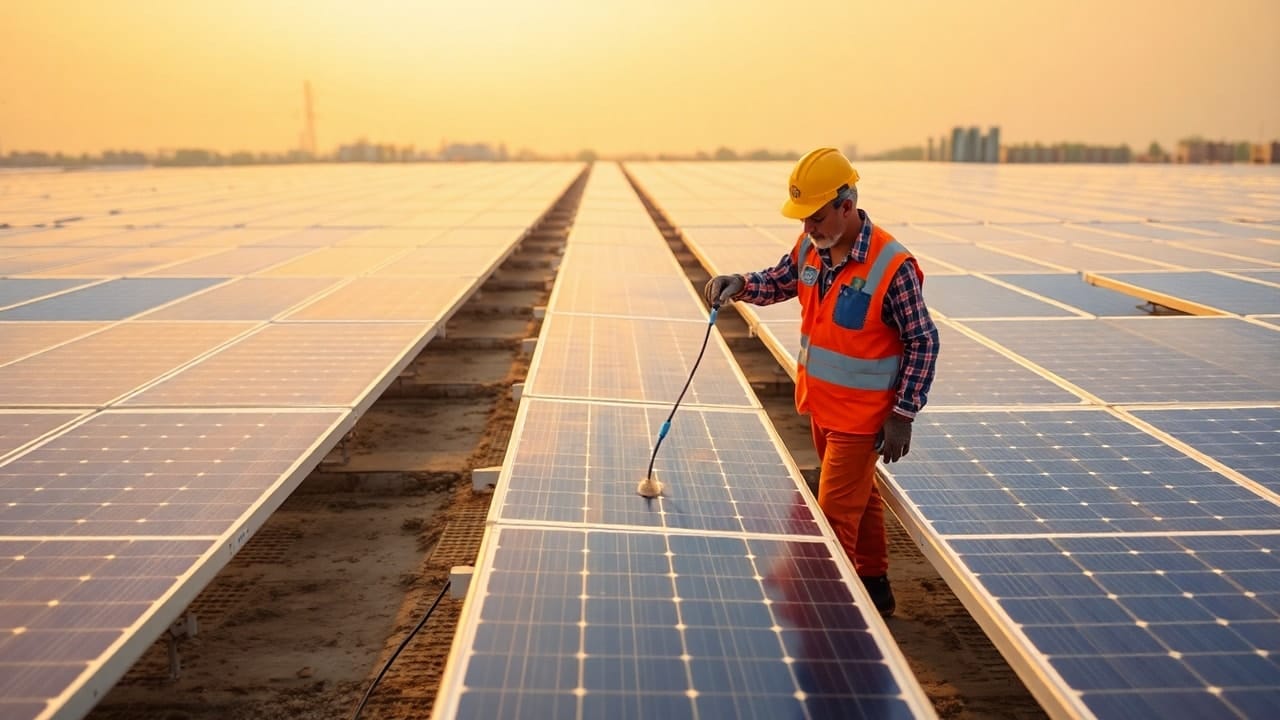
Summary for plant managers
Selecting the best PV modules for utility-scale Indian assets goes beyond comparing datasheet efficiencies; it requires an evaluation of how physical module design impacts the long-term O&M budget and site-wide performance ratio (PR). For MW-scale plants operating in high-soiling zones like Rajasthan or Gujarat, the module is effectively the primary component of your cleaning infrastructure.
- Select modules with anti-reflective, high-durability glass (e.g., 2.0mm+ dual glass) to withstand frequent mechanical cleaning cycles in high-soiling regions like Rajasthan.
- Ensure module frame designs have minimal ledge height (typically <10mm) to prevent dust accumulation that bypasses standard cleaning paths.
- Prioritize modules with high mechanical load ratings (5400 Pa+) to accommodate the weight of specialized O&M equipment and periodic maintenance personnel.
- Plan for a 1.5% to 3% annual degradation allowance when factoring in harsh dust-abrasion environments common in Indian utility-scale utility plants.
What criteria define the best PV modules for Indian site conditions?

In the context of India’s diverse and often extreme climate, the "best" module is one that balances high conversion efficiency with ruggedized physical architecture. For an asset owner, the module is not a static piece of hardware; it is a structural component that must survive decades of thermal cycling, humidity, and the mechanical stress of automated cleaning. When evaluating suppliers, you should prioritize modules that minimize O&M friction.
1. Structural Integrity and Mechanical Loading
Indian utility plants, particularly those in the Thar Desert or dry semi-arid regions, face extreme wind loads and high ambient temperatures. Modules must handle at least 5400 Pa of downward pressure. Beyond the IEC certification, consider the frame thickness and clamping compatibility. Modules with weak frame profiles often sag under the weight of cleaning equipment, leading to micro-cracks that are invisible to the naked eye but catastrophic for the plant's long-term Performance Ratio (PR). As noted in our analysis of utility-scale data advantages, early detection of such structural failures is essential for maintaining site ROI.
2. Glass Durability and Anti-Soiling Compatibility
Glass thickness is a critical factor for O&M logistics. Dual-glass modules (glass-glass) are increasingly favored in India for their resistance to humidity-induced degradation and better mechanical rigidity during the cleaning process. Because waterless cleaning systems, such as those utilizing microfiber or PBT brush technology, rely on constant mechanical contact, the glass surface must be capable of resisting abrasion from wind-blown silica. Modules with high-quality anti-reflective coatings (ARC) must be verified for durability; if the ARC is prone to stripping under mechanical cleaning, you are trading short-term efficiency gains for long-term cleaning maintenance overheads.
3. Junction Box Placement and Cable Management
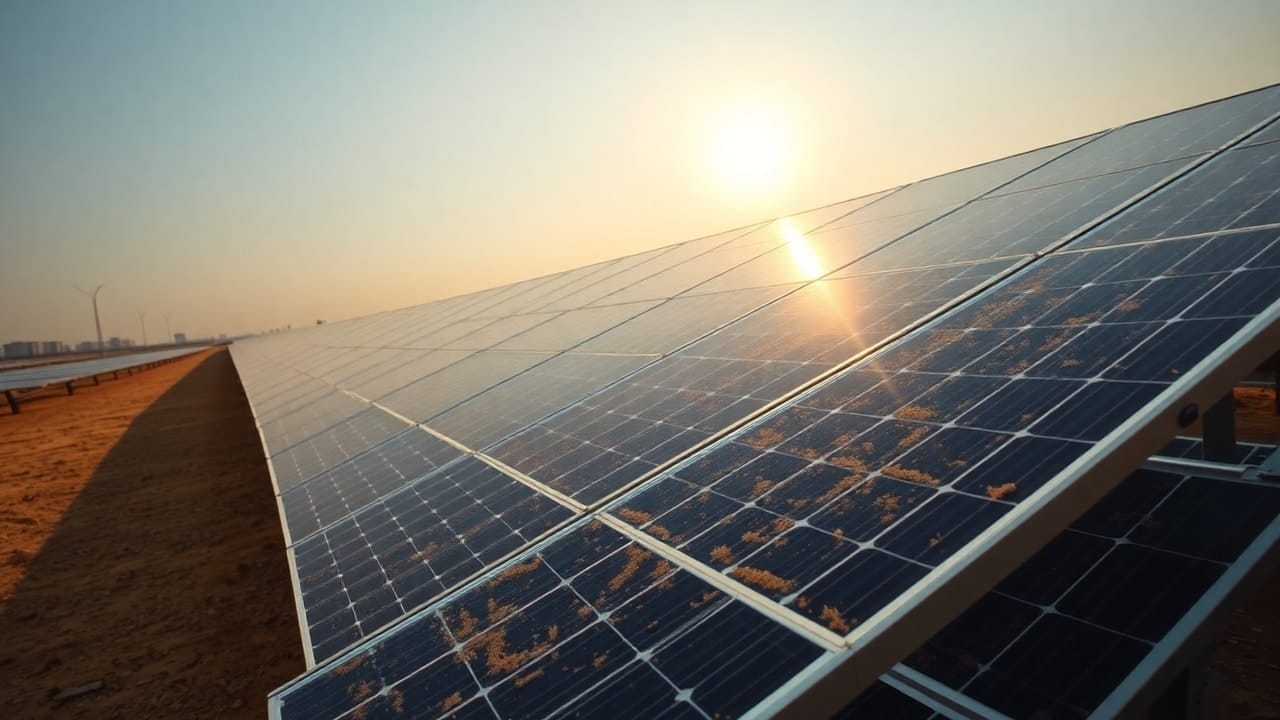
Often overlooked, the position of the junction box and the layout of the cabling directly affect how efficiently an automated cleaning system can traverse a row. Modules with center-positioned junction boxes and recessed cabling are superior for robotic integration. Protruding cables or exposed junction boxes create "no-go zones" for robots, necessitating more complex sensor logic or, in worse cases, preventing the robot from cleaning the entire module surface. This "dead zone" accumulation eventually contributes to the trillion-dollar problem of global solar soiling losses, where small, uncleaned patches on panels lead to disproportionate energy yield drops across the entire string.
4. Thermal Performance and Humidity Resistance
Given that Indian ambient temperatures frequently exceed 40°C, the temperature coefficient of the module is vital. However, do not prioritize this at the expense of moisture-proofing. For coastal or humid inland regions, modules must be rated for high PID (Potential Induced Degradation) resistance. If your module selection fails to account for local humidity, the O&M logistics plan will be dominated by reactive repairs rather than proactive cleaning cycles.
How does module geometry dictate your cleaning and O&M logistics?
Module geometry acts as the primary constraint on your O&M logistics, dictating everything from cleaning cycle speed to the selection of maintenance equipment. The physical layout, frame height, module tilt, and row spacing, determines whether your plant can adopt automated solutions or if you are locked into labor-heavy manual protocols. For utility-scale operators, a standardized module selection is not merely a procurement choice; it is a fleet operational decision that ripples through 25 to 100 MW portfolios.
1. Frame Depth and Mechanical Clearance
Frames with deeper profiles (above 35 mm) can create high-friction edges that catch cleaning brushes or robotic guide wheels. If your module selection features deep-frame geometry, you must ensure that your automated equipment is specifically calibrated to handle these clearance heights without risking frame damage or robot entrapment. This is particularly critical in plants utilizing horizontal single-axis trackers, where the module table rotates throughout the day. If the robotic cleaning system cannot seamlessly navigate the edge profile, the resulting operational downtime often forces a return to manual cleaning, which frequently carries higher long-term risks to the Performance Ratio (PR) due to inconsistent human handling.
2. Inter-Module Gaps and Tracker Topology
In tracker-based installations, the gap between modules determines the "dead zone" for automated cleaners. Smaller gaps often prevent robotic systems from traversing rows, whereas wider gaps may increase the risk of misalignment. When assessing the best PV modules for your site, analyze the gap uniformity across your chosen mounting structure. Standardizing on a module type that features a flush-fit mounting capability across your entire site allows for predictable cleaning travel speeds. As detailed in our analysis of utility-scale data advantages, having a uniform physical topography across your rows is the first step toward achieving a reliable, data-driven cleaning schedule that maximizes site yield.
3. Handling Constraints in Dense Arrays
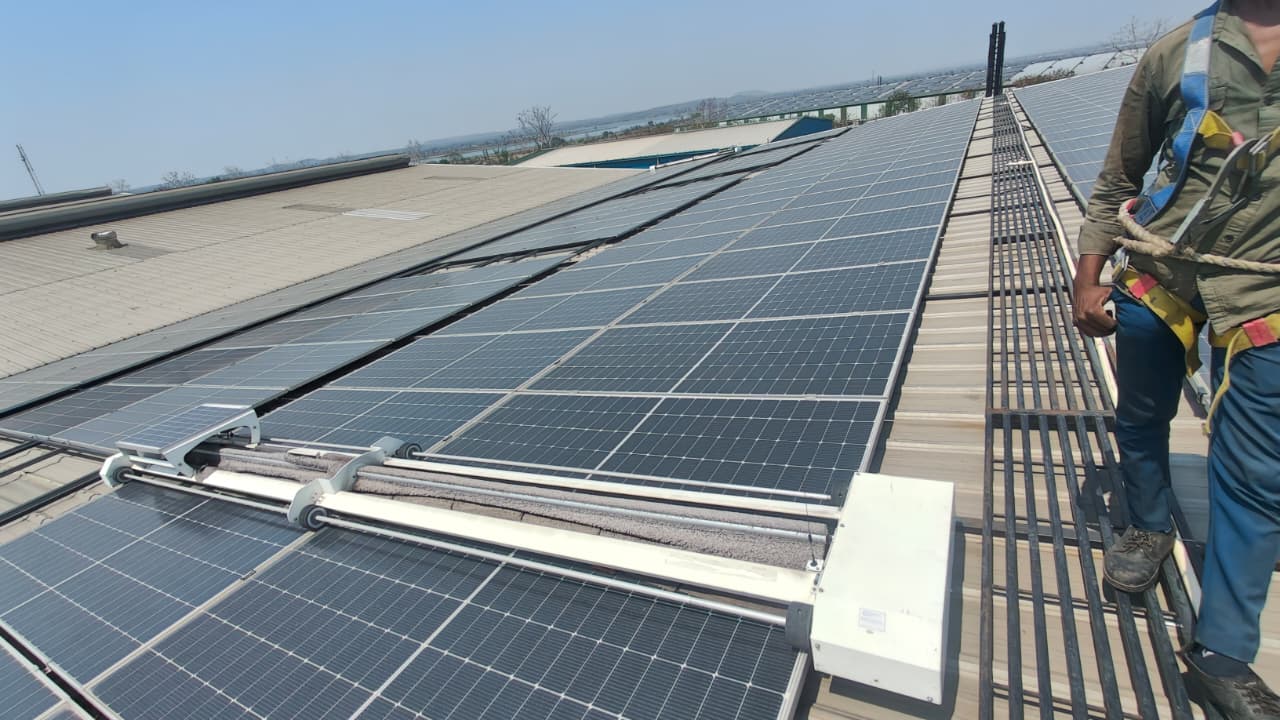
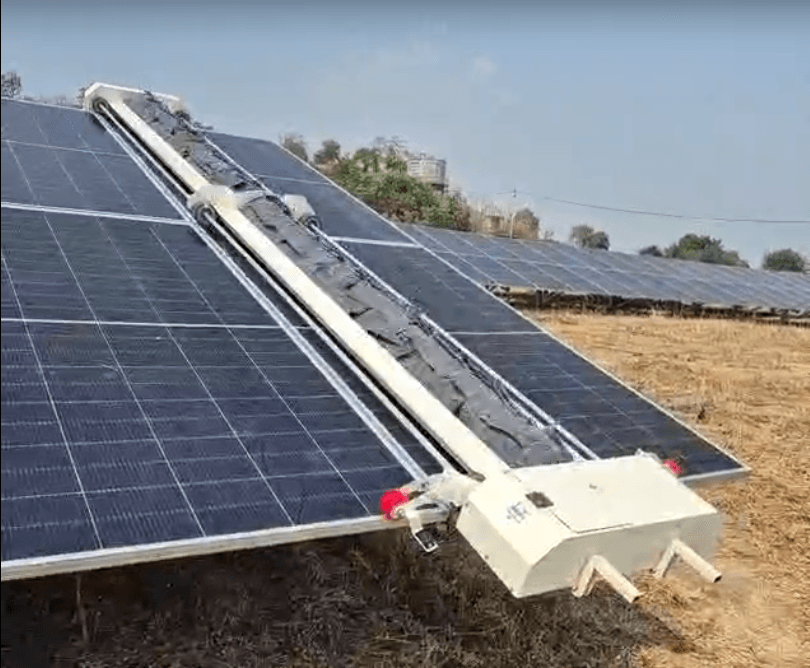
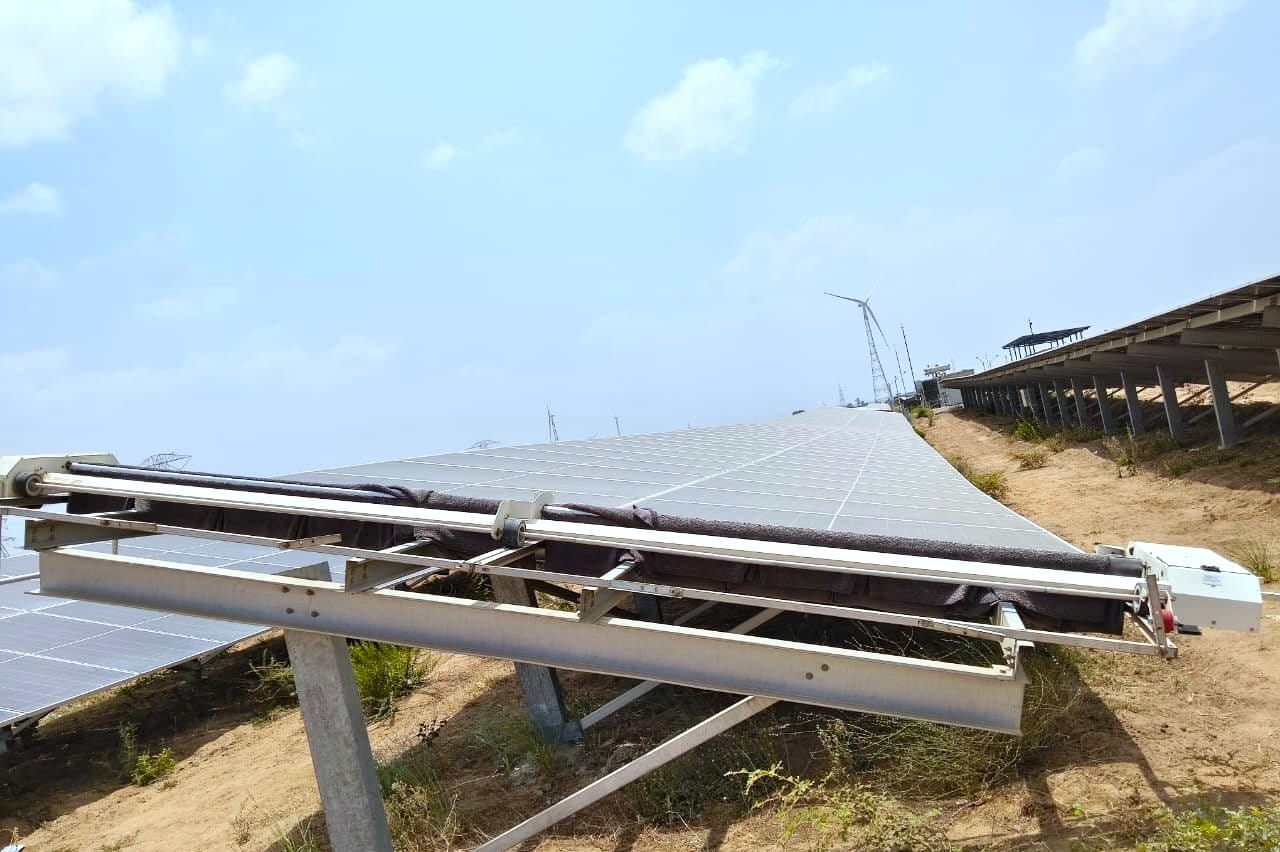
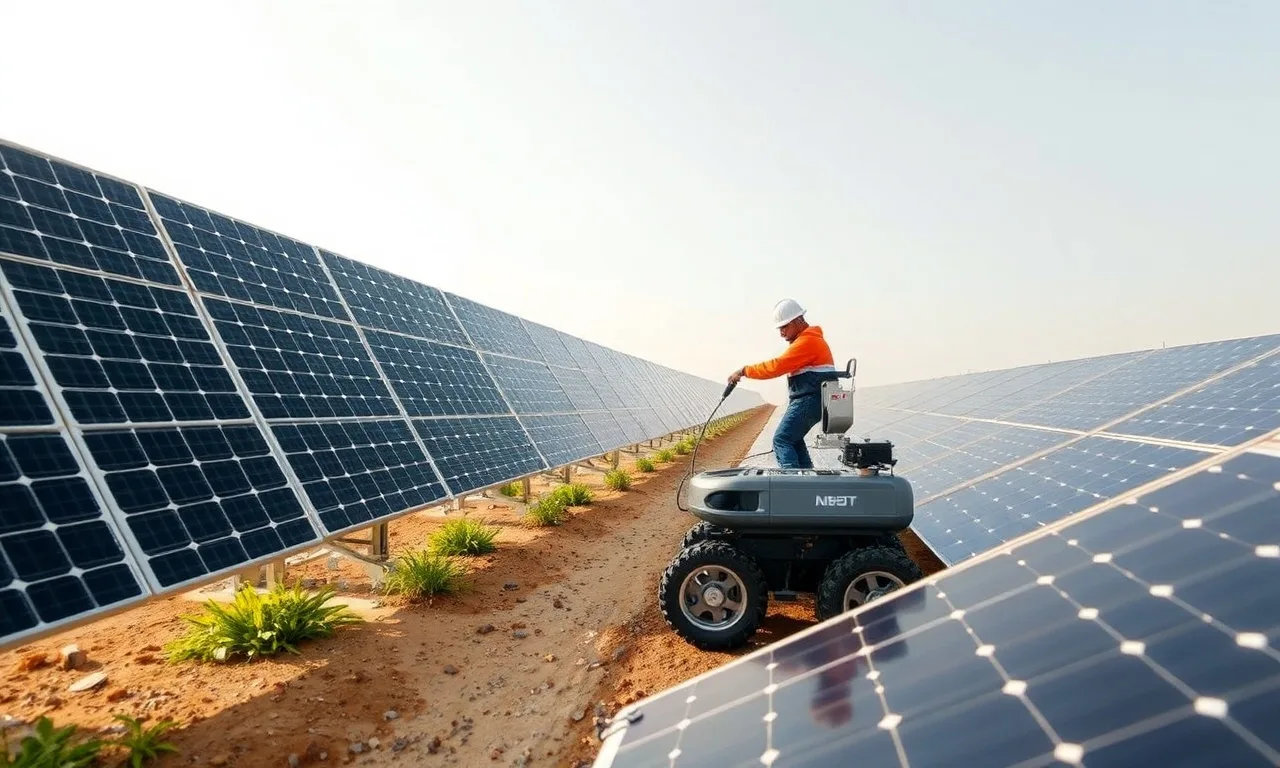
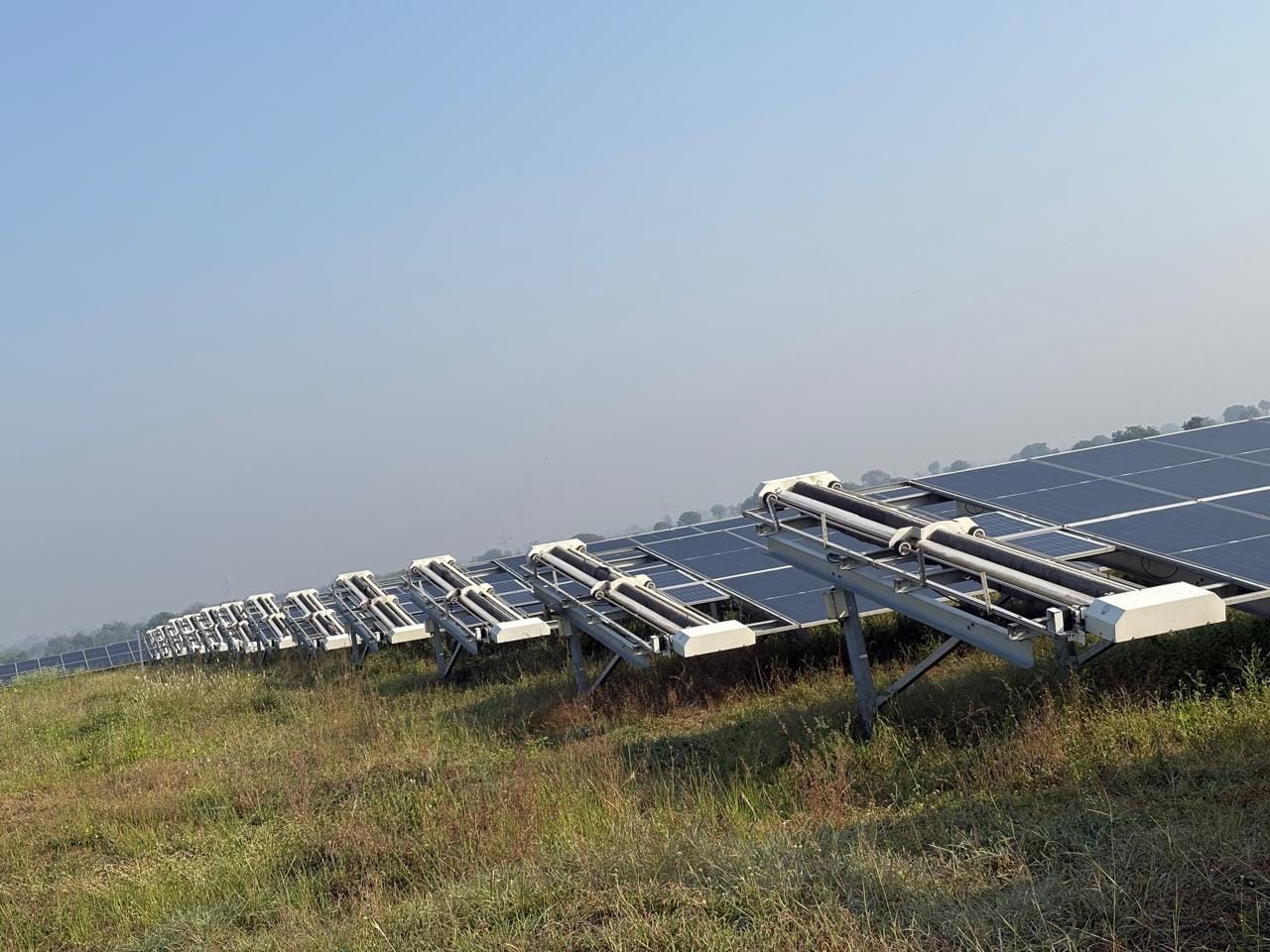
Density is a double-edged sword. While increasing MW capacity per acre boosts ROI, it creates narrow pathways for O&M personnel and equipment. If your module selection includes oversized formats (700W+ modules), the physical size makes manual cleaning physically taxing and prone to safety-related incidents. Automated cleaning robotics, such as the GLYDE-X or NYUMA-X series designed for tracker-based geometry, are generally more effective in these high-density environments because they do not require the same access width as a manual crew. Choosing modules that are rated for automated mechanical contact allows you to maintain these dense configurations without sacrificing cleaning frequency.
Evaluating soiling resistance in bifacial vs. monofacial module deployment
The transition to bifacial modules has fundamentally altered the O&M logistics of utility-scale plants in India. Because bifacial modules capture albedo (reflected light) from the ground, the soiling of the rear side can result in significant energy losses, often exceeding 5–8% in plants with low-reflectivity ground covers. This shift necessitates a rethinking of your maintenance protocol, moving from a front-surface-only focus to a dual-sided cleaning and management strategy.
1. The Impact of Ground Management
With monofacial modules, your cleaning logistics concern only the glass surface. With bifacial modules, your logistics must include ground maintenance, such as gravel spreading or vegetation control, to ensure uniform albedo. If you fail to manage the ground, the rear side of your bifacial modules will experience differential soiling, which creates hot spots and uneven string performance. When planning your O&M budget, allocate resources for both the cleaning of the module rear and the periodic upkeep of the site surface, as this directly determines the effectiveness of your bifacial investment.
2. Cleaning Accessibility for Bifacial Systems
Bifacial modules often feature exposed cell strings or rear-side backsheets that are more sensitive to mechanical abrasion than the tempered glass of a monofacial front. When evaluating the best PV modules for a bifacial plant, prioritize those with high-durability rear glass rather than polymer backsheets, especially if you plan on using autonomous cleaning robots. The trillion-dollar problem of global solar soiling is exacerbated in bifacial designs, as the rear-side losses are often hidden from standard SCADA telemetry until they manifest as a structural performance decline. Ensure your chosen modules have clear documentation regarding mechanical contact limits on the rear side.
3. Logistics of Dual-Side Cleaning
For large-scale bifacial assets, the cost of cleaning the rear side manually is prohibitively high. Asset owners should prioritize module technologies that are compatible with autonomous systems that support under-panel cleaning paths. In the Indian context, where dust accumulation on the rear is often accelerated by convection currents from the hot ground, regular, light-touch cleaning is more effective than intensive, infrequent cycles. Integrating your module choice with a dedicated tracker-based robotic solution allows you to maintain optimal bifacial output without the prohibitive labor costs of traditional cleaning methods.
Managing logistics for long-term module degradation and maintenance
Long-term asset integrity in India requires a clear understanding of how module degradation rates interact with your O&M cycle. Standard industry degradation is typically 0.5% to 0.7% annually, but in high-soiling environments across Rajasthan and Gujarat, improper cleaning methods, such as excessive mechanical brushing or the use of abrasive water-based scouring, can accelerate micro-cracks and potential-induced degradation (PID). When sourcing the best PV modules for a 25-year lifecycle, prioritize units with high-quality frame bonding and robust junction box sealing, as these components are the first to fail under the thermal cycling common in Indian utility-scale plants.
1. Aligning Cleaning Frequency with Degradation Risks
Logistics planning must account for the trade-off between energy gain and mechanical fatigue. High-frequency cleaning increases your immediate PR, but if the equipment used applies excessive lateral force, you risk long-term yield loss. For assets intended to operate for decades, it is safer to utilize dry-cleaning methods that minimize friction. The data-driven advantage of monitoring fleet performance allows you to trigger cleaning based on actual generation loss rather than arbitrary calendars, ensuring you don't subject your modules to unnecessary contact.
2. Structural Integrity and O&M Access
The mechanical design of your modules, specifically the frame profile, determines whether you can successfully integrate autonomous O&M solutions later in the plant's life. Choose modules with standard frame thicknesses that offer sufficient clamping surface for robotic docking. If your module selection includes non-standard frame geometry, you may find that proprietary mounting hardware limits your future ability to switch between manual, semi-automatic, or fully autonomous cleaning services. By selecting modules that adhere to industry-standard dimensions, you maintain the flexibility to adapt your O&M strategy as technology matures.
Is a standardized maintenance protocol viable for heterogeneous module fleets?
Many large-scale Indian IPPs operate portfolios featuring modules from multiple manufacturers, resulting in a heterogeneous fleet. While it is tempting to implement a universal cleaning schedule, this approach often leads to sub-optimal outcomes because different glass coatings and cell technologies respond differently to dust adhesion. A standardized protocol is only viable if it is modular, allowing for fine-tuned parameters based on the specific module characteristics of each plant block.
The Operational Thresholds for Mixed Fleets
For plants combining different module technologies, establish a tiered cleaning protocol. Monofacial modules with standard anti-reflective coatings (ARC) have different soiling accumulation rates than modern bifacial modules with dual-glass construction. Your cleaning logistics should prioritize segments with the highest PR sensitivity, typically bifacial blocks where rear-side dust accumulation can negate the albedo gain. Using a centralized fleet management system, such as NECTYR, is essential to sync these varying requirements without creating operational bottlenecks.
Technical Decision Guide: Standardized vs. Targeted Protocols
| Site Factor | Standardized Protocol Impact | Targeted Protocol Impact |
|---|---|---|
| Cleaning Frequency | Simplifies scheduling; risk of over-cleaning sensitive panels | Maximizes PR; requires complex data-driven scheduling |
| Equipment Wear | Consistent load; potential for long-term stress on specific models | Optimized contact force per module type; extends component life |
| Labour Deployment | Uniform costs; easy to manage manual teams | Variable; higher efficiency in high-loss zones |
Why Integration Matters
When you manage a diverse portfolio, the logistical complexity is often the highest cost driver. By aligning your maintenance cycles with the specific degradation profiles of your chosen modules, you ensure that high-performing assets are not prematurely aged by harsh manual cleaning methods. For operators moving away from manual brushes, the transition to waterless robotic systems provides a standardized mechanical approach that is gentle enough for nearly all tier-1 module types, effectively bridging the gap between heterogeneous hardware and the need for a consistent, scalable O&M strategy.
Key takeaways for asset owners
To optimize your utility-scale solar portfolio in India, your strategy must move beyond simple procurement and into a lifecycle-managed O&M framework. By aligning module technical specifications with your long-term cleaning and maintenance logistics, you minimize performance degradation and maximize energy output across diverse climate zones.
- Prioritize Durability and Compatibility: Select modules with standard frame geometries and proven glass durability to ensure you can utilize modern, automated O&M solutions without proprietary hardware constraints.
- Data-Driven O&M is Mandatory: Avoid generic cleaning schedules. Use site-specific soiling data to trigger cleaning cycles based on performance ratio (PR) drops rather than calendar dates. Tools like NECTYR provide the visibility needed to manage heterogeneous fleets effectively.
- Evaluate the TCO of Cleaning Methods: When comparing manual brush, semi-automatic, and fully autonomous systems, calculate the impact on module longevity. Frequent abrasive cleaning on high-sensitivity monofacial or bifacial panels can lead to micro-cracking and ARC damage, ultimately reducing your 25-year yield.
- Align Logistics with Site Conditions: In high-dust zones like Rajasthan, prioritize waterless systems that eliminate the need for heavy water logistics while maintaining consistent cleaning frequencies to prevent energy losses of 15% or more.
- Scale with Intelligent Operations: Whether managing a 10 MW pilot or a 500 MW portfolio, ensure your O&M provider or internal team has the capability to handle high-frequency cleaning, as the industry shift toward autonomous solar panel cleaning systems is now the standard for protecting Tier-1 module investments.
Ultimately, the best modules for your Indian MW project are those that survive the operational environment, not just the commissioning audit. For operators seeking to refine their approach, integrating advanced fleet monitoring and automated, waterless maintenance is the most effective way to safeguard your asset value over the coming decades.
Frequently asked questions
Selecting the best PV modules for utility-scale Indian assets goes beyond comparing datasheet efficiencies; it requires an evaluation of how physical module design impacts the long-term O&M budget and site-wide performance ratio (PR). For MW-scale plants operating in high-soiling zones like Rajasthan or Gujarat, the module is effectively the primary component of your cleaning infrastructure.
Frame design is critical to minimizing O&M friction. Select modules with minimal ledge heights, typically less than 10mm, to prevent persistent dust accumulation that bypasses standard cleaning paths. High-quality frames prevent sagging under the load of cleaning robotics, which otherwise causes hidden micro-cracks. Reducing these structural vulnerabilities directly lowers long-term repair costs and prevents premature degradation in harsh environmental conditions.
In high-dust regions, modules should feature high-durability, anti-reflective dual glass surfaces designed for repeated mechanical cleaning. These features minimize abrasion and allow for efficient debris removal. Managers should plan for an annual degradation allowance of 1.5% to 3% to account for these specific abrasive environments. Combining these glass specifications with a low-profile frame ensures that automated cleaning systems remain highly effective at maintaining daily energy yields.
Module compatibility ensures that automated cleaning equipment can traverse the array without causing structural damage or missing sections of the glass. Because modules must endure the mechanical stress of cleaning, their frame geometry and load ratings must align with the robot specifications. If a module cannot support the equipment weight or has a design that inhibits cleaning paths, the plant will suffer from increased soiling losses.