OPEX vs CAPEX for Solar O&M Contracts in India: Key Differences and Which Model Suits Independent Power Producers
For utility-scale solar plant owners and independent power producers (IPPs) in India, the choice between OPEX and CAPEX models for operations and maintenance is a genuine financial decision, not a preference. It affects balance sheet structure, IRR calculation, lender covenants, and long-term flexibility. This article lays out the differences clearly, with the financial implications specific to Indian solar IPPs operating under PPA frameworks.
Defining CAPEX and OPEX in Solar O&M Context
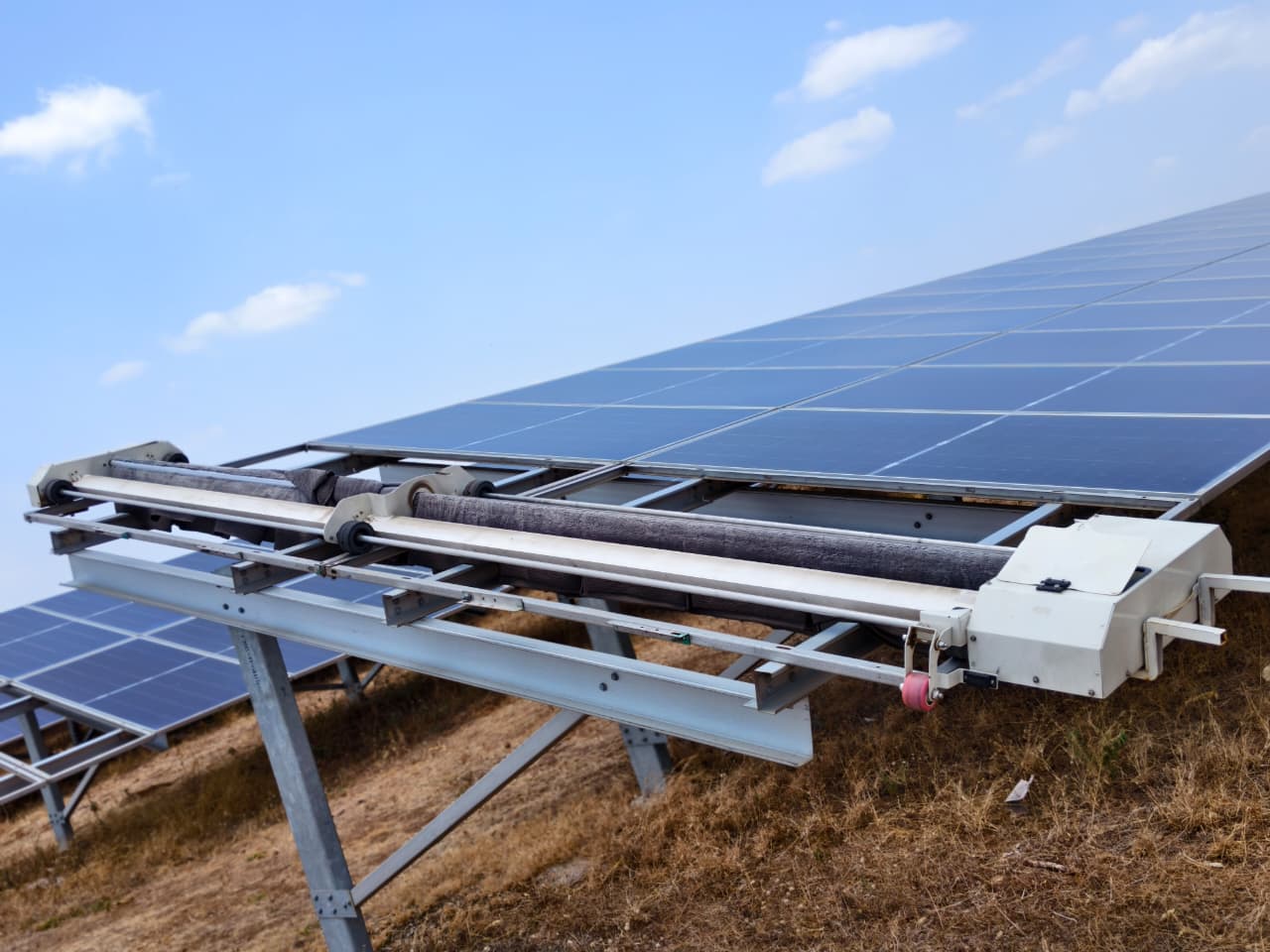
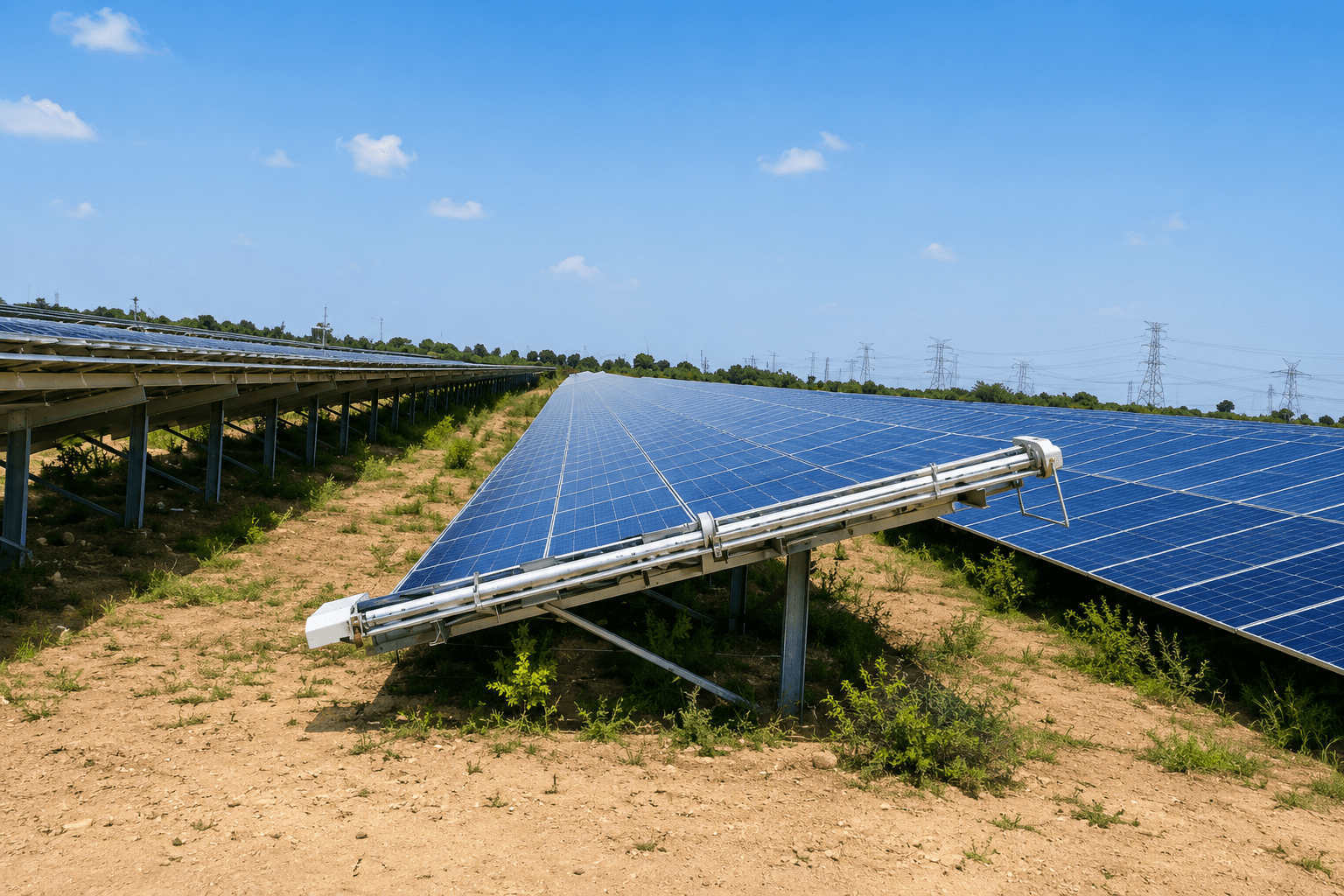
CAPEX O&M model: The plant owner purchases O&M equipment, cleaning robots, monitoring hardware, SCADA systems, spare parts inventory, outright. The asset sits on the balance sheet. The owner contracts for services (labour, AMC, consumables) but owns the productive tools. Capital expenditure is upfront; ongoing costs are primarily operational.
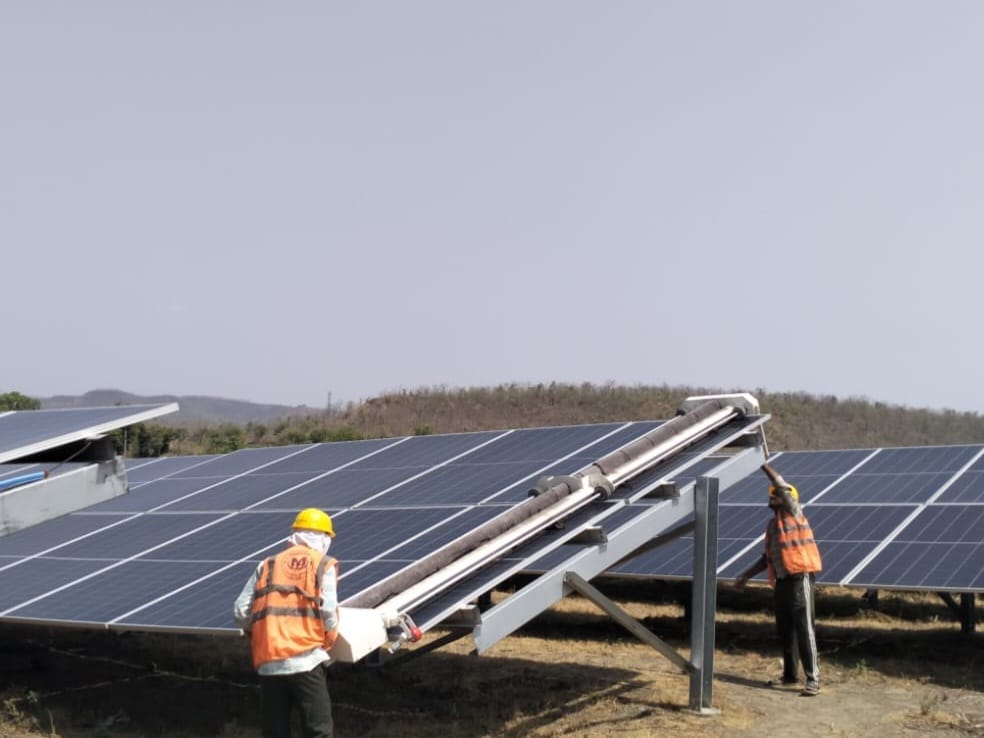
OPEX O&M model: The plant owner pays a periodic service fee to an O&M provider who owns and maintains all O&M equipment. Zero upfront asset purchase. The P&L records a recurring operational expense. Common structures include annual cleaning service contracts, managed O&M AMCs, and performance-based contracts tied to PR guarantees.
In India's solar sector, these models are sometimes presented as mutually exclusive. In practice, most large IPPs use a hybrid approach, CAPEX for core monitoring and control infrastructure, OPEX for cleaning and physical maintenance services.
Key Differences Between OPEX and CAPEX O&M Models
Dimension | CAPEX Model | OPEX Model |
|---|---|---|
Upfront cost | High, full equipment purchase | Zero or minimal, no asset purchase |
Balance sheet treatment | Capitalised as fixed asset; depreciated over life | Expensed in the period incurred; reduces EBITDA |
Tax treatment (India) | 40% accelerated depreciation in Year 1 under Section 32; GST ITC recovery on equipment purchase | Fully deductible in year incurred; no depreciation benefit; GST ITC on service input (18% GST applicable) |
Risk of equipment obsolescence | Owned by plant operator, upgrade risk is owner's | Provider's risk, service contract can include technology upgrade obligations |
Performance guarantee | Owner-controlled; no third-party PR guarantee on equipment | Provider can be held to PR-linked SLA; penalty clauses align incentives |
Lender treatment | Capex adds to project debt service; may require separate financing line | Opex fits within project revenue waterfall; no lender approval typically required for service contracts |
Scalability | Linear cost scaling with fleet size | Volume discounts possible; service provider achieves scale efficiencies |
Long-term cost (10–15 years) | Lower total cost once capex amortised, no ongoing margin to service provider | Higher cumulative cost due to provider margin embedded in service fee |
Control over operations | Full, owner sets schedule, quality standard, frequency | Delegated, dependent on provider SLA and monitoring discipline |
Financial Analysis: What OPEX vs CAPEX Means for Indian IPP Economics
Case: 100 MW Solar Plant, 25-Year PPA at ₹3.50/kWh, Arid Location
CAPEX cleaning robot purchase (one-time): ₹8–17 crore installed. Annual maintenance: ₹80–160 lakh. Depreciation benefit (40% AD Year 1): reduces effective capex to ₹5–10 crore after tax shield. Over 25 years, total cleaning capex + maintenance ≈ ₹28–57 crore.
OPEX cleaning service contract: ₹1.5–3 lakh per MW per year = ₹1.5–3 crore per year for 100 MW. Over 25 years = ₹37.5–75 crore. No tax depreciation benefit. Service fee fully deductible.
Conclusion: Over the full PPA life, CAPEX is financially advantageous for large plants with stable long-term operations, typically ₹10–20 crore cheaper in total cost for 100 MW over 25 years. However, OPEX is advantageous in years 1–4 due to zero upfront capital deployment and better IRR profile in the project's high-leverage early years.
IRR Impact
A well-managed CAPEX solar O&M project can deliver 30% equity IRR with a payback period of approximately 5 years. The 40% accelerated depreciation and GST ITC recovery substantially reduce effective net investment below the headline hardware cost. OPEX contracts, by removing capex from the equation entirely, improve Year 1–3 cash flows but reduce the long-term savings advantage that CAPEX delivers post-amortisation.
Which Model Suits Indian IPPs Better?
The answer depends on three variables: the IPP's capital position, asset tenure certainty, and O&M management capability.
OPEX Is Better For:
IPPs with leveraged balance sheets and limited headroom for additional capex (common in India's tariff-competitive environment where project equity is thinly stretched)
Smaller portfolios (sub-50 MW) where the economics of owning cleaning equipment don't amortise quickly enough
New plants in the first 3–5 years where lender debt service coverage ratios (DSCRs) are tight and additional capex would require lender approval
IPPs that lack internal O&M technical capability and want a single-vendor accountability model with PR guarantees
Plants where technology risk is high, tracker cleaning robots are evolving rapidly, and OPEX transfers technology obsolescence risk to the provider
CAPEX Is Better For:
Large IPPs with portfolios above 200 MW where in-house O&M capability exists and the scale economies of equipment ownership are real
Plants with 15+ years remaining on PPA, where the amortised savings versus OPEX are material
IPPs targeting 40% AD benefit in Year 1, this can significantly reduce effective tax liability for profitable holding companies with other income streams
Plants where operational control over cleaning frequency and quality is critical for PPA performance ratio compliance
The Hybrid That Most Large IPPs Actually Use
India's largest IPPs, Adani Green, ReNew Power, Greenko, Avaada, typically use CAPEX for monitoring infrastructure (SCADA, string-level inverters, weather stations) and OPEX for cleaning and physical O&M services. This captures the long-term ownership benefit of monitoring equipment (which has a 20-year useful life) while keeping cleaning flexible, allowing contract renegotiation as robot technology improves and tariffs evolve.
OPEX for Solar Cleaning: What a Good Contract Must Include
If an IPP chooses OPEX for cleaning services, the contract structure determines whether the model delivers value or creates risk. Critical provisions:
PR-linked performance guarantee: The provider guarantees a minimum post-cleaning Performance Ratio (e.g., ≥80% within 48 hours of cleaning). Financial penalty for underperformance.
Cleaning frequency minimum: Defined minimum cycles per month per zone, with increase provisions triggered by PR deviation above a threshold.
Module damage indemnity: Provider carries full liability for module damage caused by cleaning equipment. Must be backed by adequate insurance.
Compatibility certification: For tracker plants, the provider must supply written OEM compatibility certification covering the tracker and module warranty terms.
Data access: Plant owner retains access to all cleaning logs, PR data, and soiling rate records. These are asset data, not provider-proprietary data.
Exit clause: Right to terminate with 90-day notice without penalty, prevents lock-in as cleaning technology and tariff environment evolve.
Related resources
For procurement and O&M teams evaluating robotic cleaning in India:
- GLYDE-X single-axis tracker cleaning robot
- robotic vs manual solar panel cleaning
- Taypro robotic solar panel cleaning service
Related reading
Frequently asked questions
In solar O&M, the OPEX model means the plant owner pays a recurring service fee to an O&M provider who owns and operates all cleaning and maintenance equipment. No upfront capital purchase is required. The cost is fully deductible as an operating expense in the year incurred.
In the CAPEX model, the plant owner purchases cleaning robots, monitoring systems, and maintenance hardware outright. The asset is capitalised on the balance sheet and depreciated (40% accelerated depreciation in Year 1 available under Indian tax law). The owner controls all O&M operations directly.
OPEX offers better near-term financial flexibility — no capital commitment, no lender approval, exit optionality. CAPEX delivers superior total-cost economics over a 15–25 year PPA life for large plants (100 MW+) with stable operations and available capital. Most large Indian IPPs use CAPEX for monitoring infrastructure and OPEX for cleaning services — capturing the best of both models.
Yes. OPEX cleaning contracts typically include exit clauses (90 days notice is standard). Transitioning to CAPEX requires lender consent if the project has outstanding debt, as cleaning equipment capex may need to be funded from reserve accounts or project equity rather than operating cash flow. The transition is most practical after Year 5 when debt amortisation has reduced lender sensitivity.
Not automatically. Performance depends on the SLA structure, not the financial model. OPEX with a strong PR-linked penalty clause can deliver better-aligned incentives than CAPEX with inadequate internal O&M management. The financial model determines who bears the cost — the SLA determines who bears the performance risk.