Quick answer
To manage cleaning robot noise near residential rooftops, you must follow local rules. You also need to communicate with the community. For large solar sites near towns, follow CPCB (Central Pollution Control Board) standards. This avoids legal trouble and bad public images.
- Maintain daytime noise below 55 dB(A) per CPCB residential standards.
- Stop all robot work at night. The 45 dB(A) limit applies then. This prevents neighbor complaints.
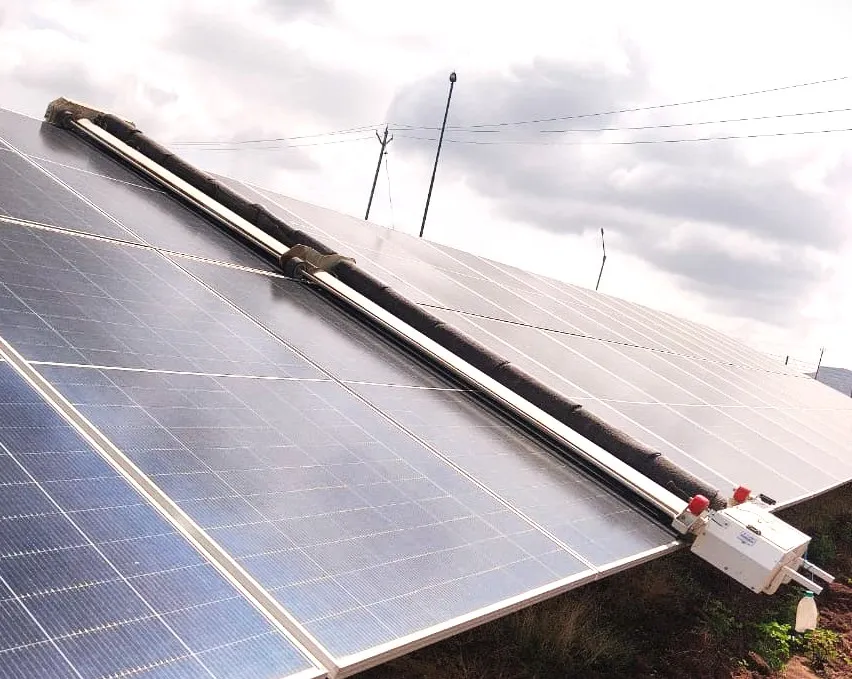
- Use waterless robots for canopy arrays. This reduces noise from heavy trucks and site disturbance.
- Schedule cleaning during peak noise hours (10:00 to 16:00). This helps mask the robot sound.
Plant managers should treat noise management as a key part of O&M strategy. This is vital in areas like Rajasthan or Gujarat. In these regions, homes are moving closer to solar farms.
Using an automatic solar panel cleaning system allows for better scheduling. It keeps cleaning within daytime hours. This protects your social license to operate. It also helps you recover lost energy. For financial details, review our analysis on soiling revenue loss.
Understanding the cleaning robot noise and community impact near residential zones
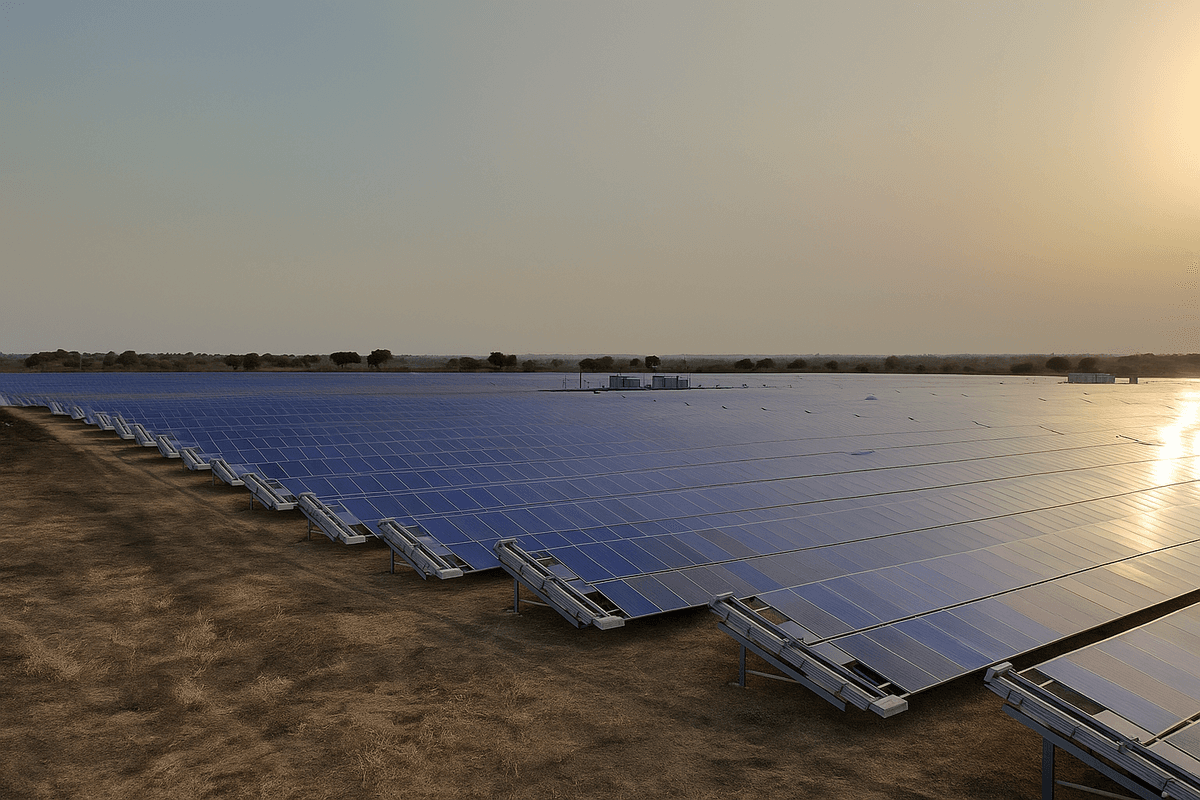
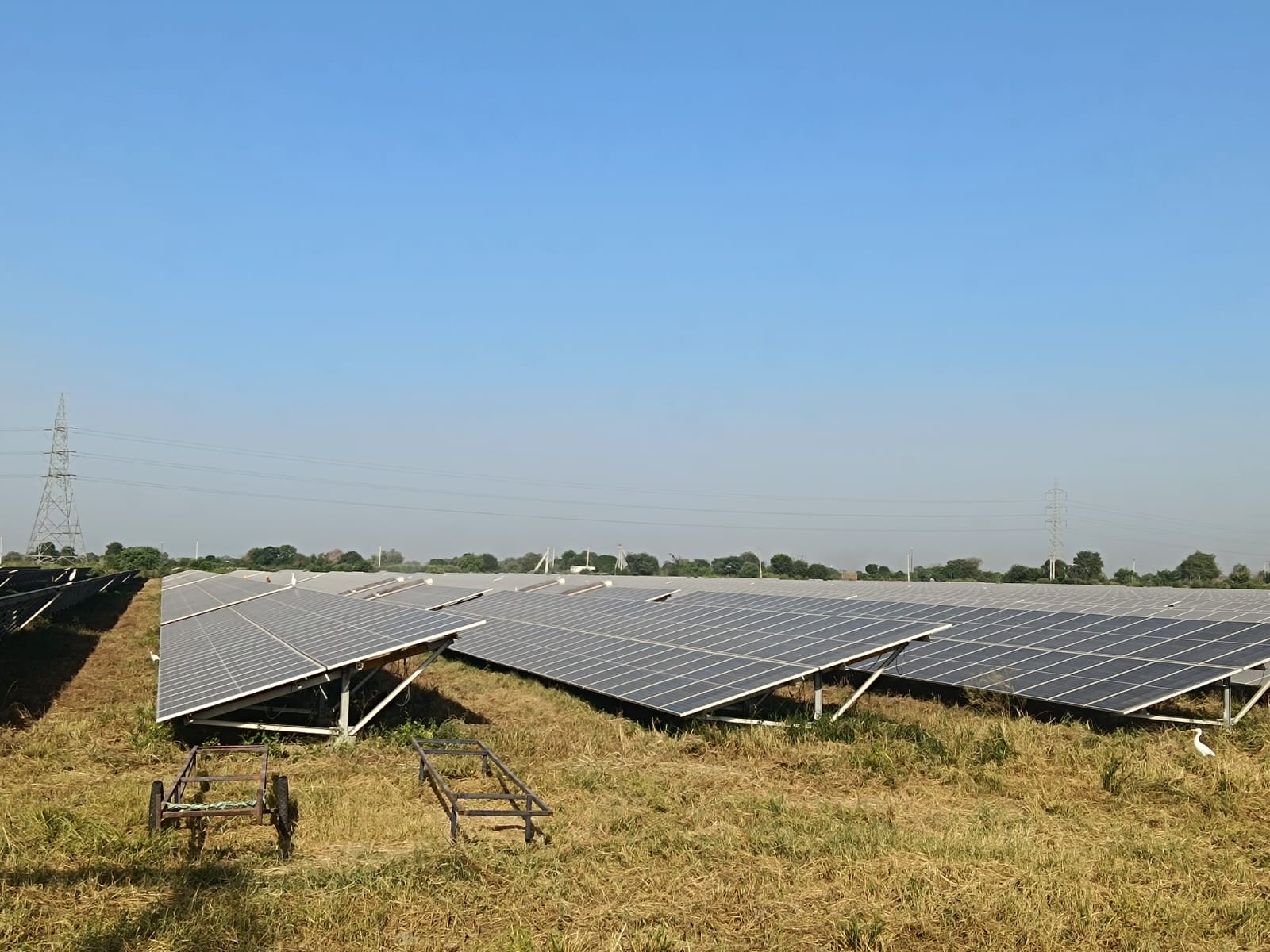
Solar projects in Rajasthan and Gujarat often border rural villages. You must manage the noise from maintenance tools. This helps maintain a good relationship with the community. This is essential for your social license to operate.
Manual cleaning is often irregular and noisy. Automated systems make a predictable, mechanical sound. You must manage this sound to avoid neighbor complaints. The main concern is not just volume. It is also the repetitive sound during early morning or evening hours.
CPCB rules set noise limits to protect residents. Industrial zones allow 75 dB(A) during the day. But, if your site borders homes, you must follow the 55 dB(A) daytime limit. Most cleaning robots run at 50 to 65 dB(A) depending on the motor. Bad scheduling can push your noise levels above the legal limit.
This noise travels far in flat, dry lands. Wind and a lack of trees make it harder to block sound. Managers must check how close solar blocks are to homes. If they are close, use quieter modes. Or, stick to daytime cleaning only to ensure compliance.
Managing community impact is about more than just decibels. Residents find night cleaning annoying. This can lead to disputes over land use or site access. Use an automatic solar panel cleaning system to help. You can program cleaning times to match peak community noise hours.
This makes cleaning a normal daytime task. Failing to manage noise leads to pushback. This can cause work stoppages or forced schedule changes. This eventually hurts your overall soiling revenue recovery.
Rooftop vs ground-mount: Why noise management differs for canopy arrays
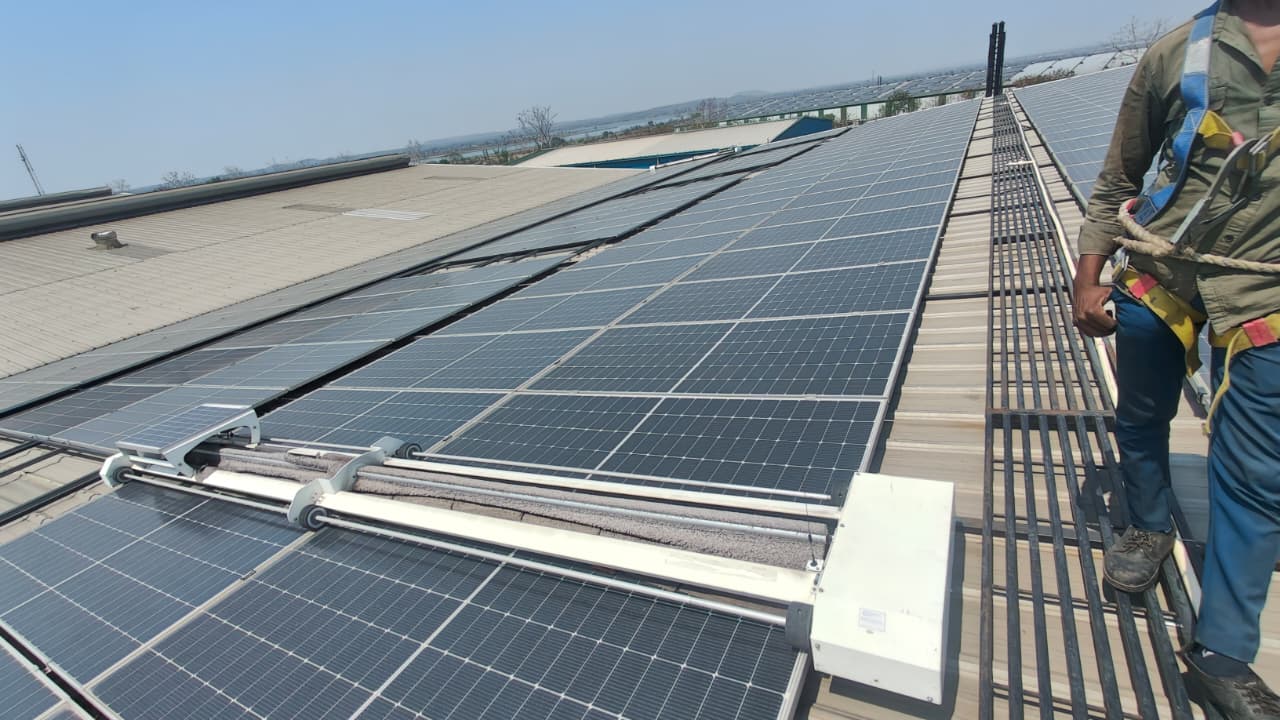
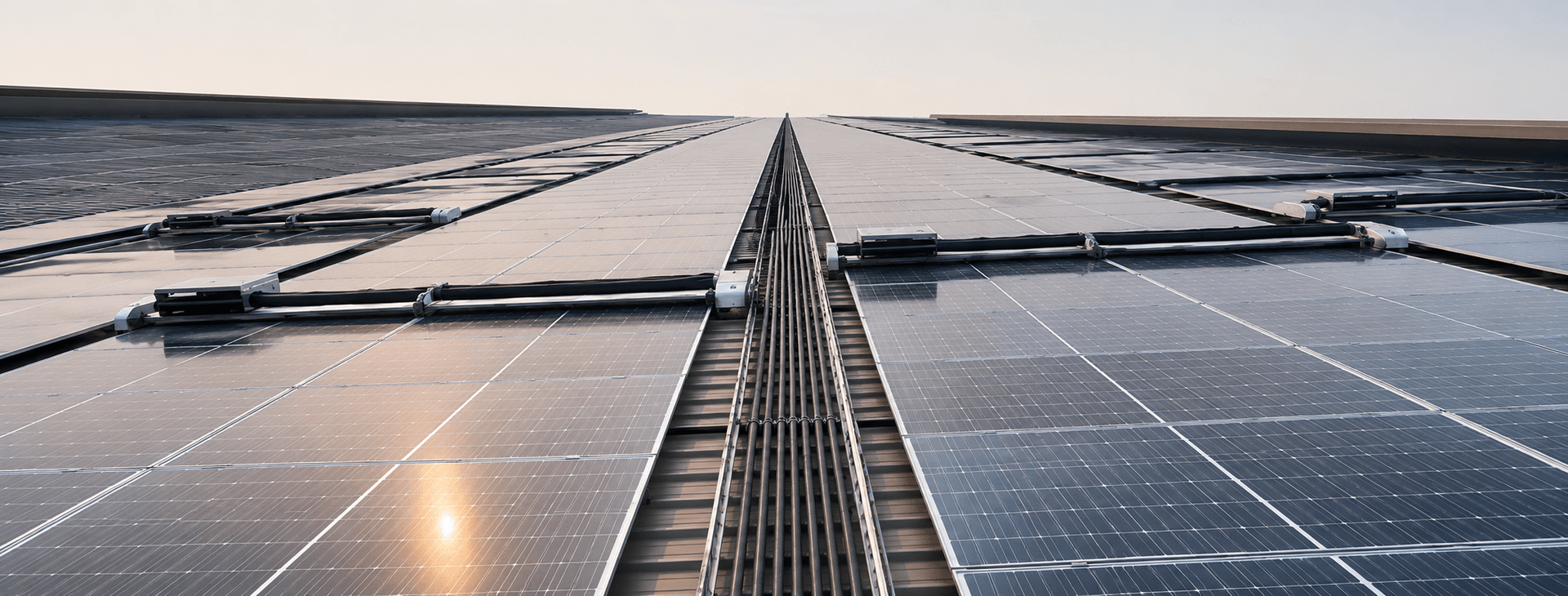
Noise issues change when moving from ground-mount to rooftop or canopy structures. Ground-mount arrays use soil to absorb sound. This helps dampen the noise. Rooftop arrays are different. They often sit on metal or concrete surfaces.
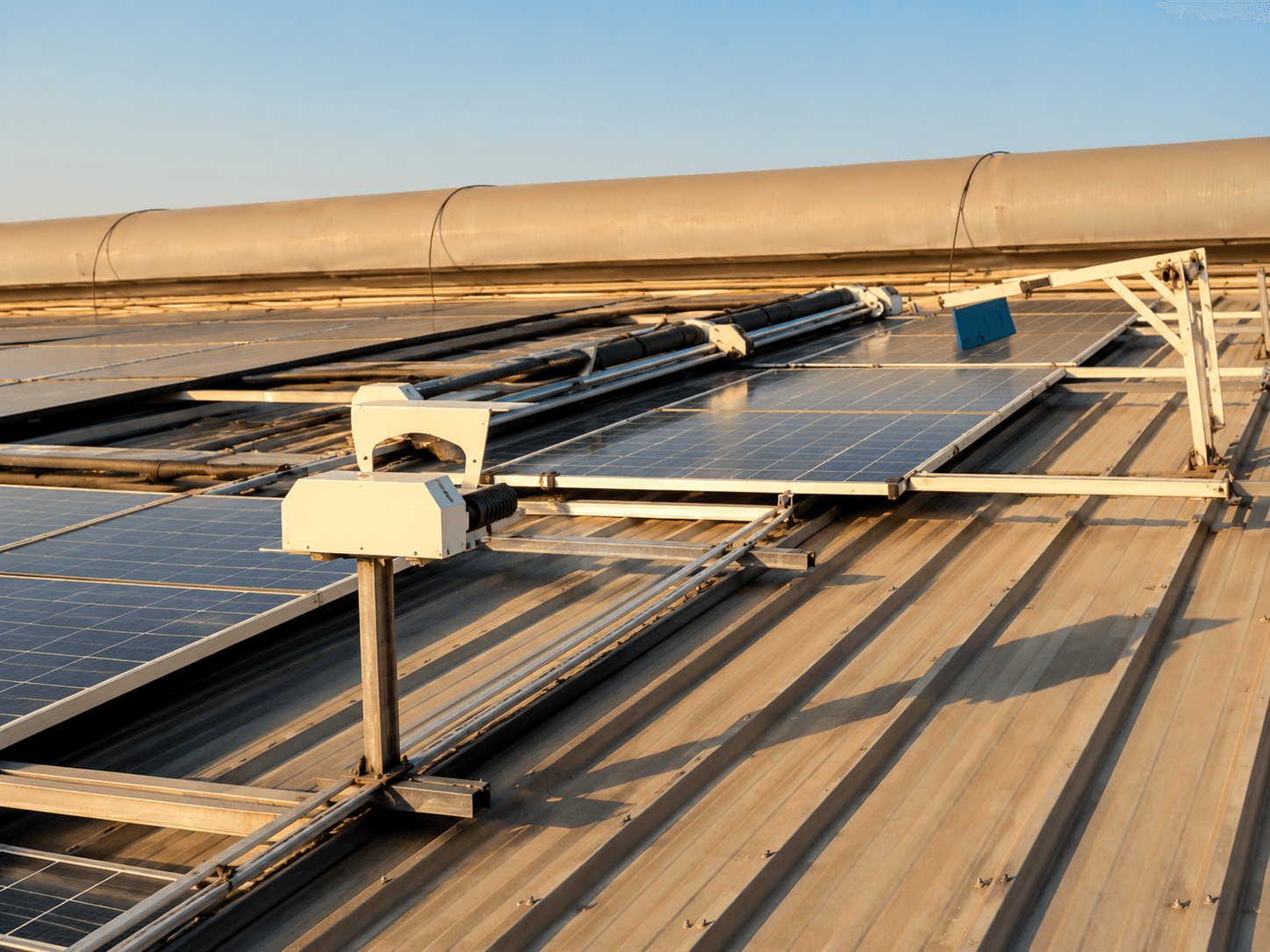
These surfaces can act like speakers. A robot on a canopy creates vibrations. These vibrations travel through the steel frame. This can make the noise louder inside the building below. Choose low-noise robots for C&I projects. This is vital if people live or work nearby.
Safety and access also matter. Rooftops limit your use of heavy equipment. You must use light, portable units. These should work well without constant human help. Keep noise below the 55 dB(A) daytime limit. This prevents complaints from staff or neighbors.
Unlike ground-mount robots, roof robots usually need day-shift work. This ensures safety and allows for quick repairs. Pick robots with high-quality motors. Look for rubber tracks instead of metal ones. Rubber reduces vibrations. This lowers the noise impact compared to older designs.
Using an automatic solar panel cleaning system on a roof requires a noise audit. Check where the robot's sound might echo in the building. Then, schedule cleaning when the building is already noisy. For example, clean during office hours. For more help, see our guide on deployment strategies for high-density environments.
Does robotic cleaning violate Indian CPCB noise regulations?
Solar sites near towns must follow CPCB noise rules. This is vital for legal and PR reasons. CPCB rules say residential areas must stay below 55 dB(A) during the day. They must stay below 45 dB(A) at night.
Most modern robots are quiet. They use brushes or air rather than loud engines. You might break rules if maintenance is poor. Worn parts can cause extra vibration. Also, many robots working near a wall can create too much noise together.
To stay compliant, use robots with dampened motors and rubber treads. If your array is within 50 meters of a home, test the noise first. This ensures the robot does not add much noise to the area. It validates that your site stays within legal limits.
Robots are better than manual labor because they are predictable. You can set an automatic solar panel cleaning system to run only in the light. This keeps you within the 55 dB(A) daytime limit. It also avoids the 45 dB(A) night limit. This stops noise complaints before they start. To integrate robots into your solar O&M services, pick models with low-frequency sounds.
Technical scheduling: Step-by-step implementation for low-impact O&M
For large sites, you must map noise against your daily schedule. Follow these steps to balance energy goals with community rules in high-density zones.
- Baseline Acoustic Audit: Study noise for 24 hours at your boundary. Note the daytime (55 dB(A)) and nighttime (45 dB(A)) levels. This tells you how much noise you can add.
- Zonal Segmentation: Divide your site into acoustic zones. Put louder robots in the middle of the site. Use quieter robots near the fences.
- Daylight-Only Operation: Set your software to work between 08:00 and 18:00 IST. This avoids the 45 dB(A) night limit. It prevents community friction.
- Dynamic Load Modulation: Stagger the start times of your robots. Do not run all robots at once. This prevents noise spikes that breach the 55 dB(A) limit.
- Periodic Mechanical Maintenance: Check motors and tracks every quarter. Worn parts are the main cause of noise in automatic solar panel cleaning systems.
Clean during busy hours to hide the noise. This method is part of our regional O&M deployment guide. It keeps your cleaning technology quiet. It also keeps your MW-scale asset performing well.
Managing community relations and PR during high-frequency cleaning cycles
For sites near towns, community trust is vital. People accept regular, automated cleaning better than random, loud maintenance. Proactive communication helps. It makes cleaning a normal part of daily life.
- Community Engagement Sessions: Talk to local leaders before you start. Explain that you are using quiet, waterless robots. Mention that this saves local water.
- Transparency in Scheduling: Post a cleaning schedule on a notice board. Or, share a digital calendar. If people know you clean from 09:00 to 17:00, they won't complain.
- Visual and Acoustic Branding: Keep your equipment and fences clean. A neat site looks professional. It stops people from thinking your site is a nuisance.
- Responsiveness Protocols: Have a way for locals to contact you. If there is a noise concern, show them your 55 dB(A) compliance report. This stops small issues from becoming big legal fights.
Frame your automatic solar panel cleaning system as a way to save water. This changes the story from "noise" to "sustainability." This is key for sites near homes. Read our regional O&M deployment guide for more. Good scheduling ensures your large-scale solar cleaning is seen as a positive thing.
Comparing manual labour vs robotic cleaning noise profiles
The noise from your cleaning fleet affects how the public sees you. This is true for sites near homes or farms. Manual cleaning uses high-pressure pumps and compressors. These are loud, often between 75 and 85 dB(A).
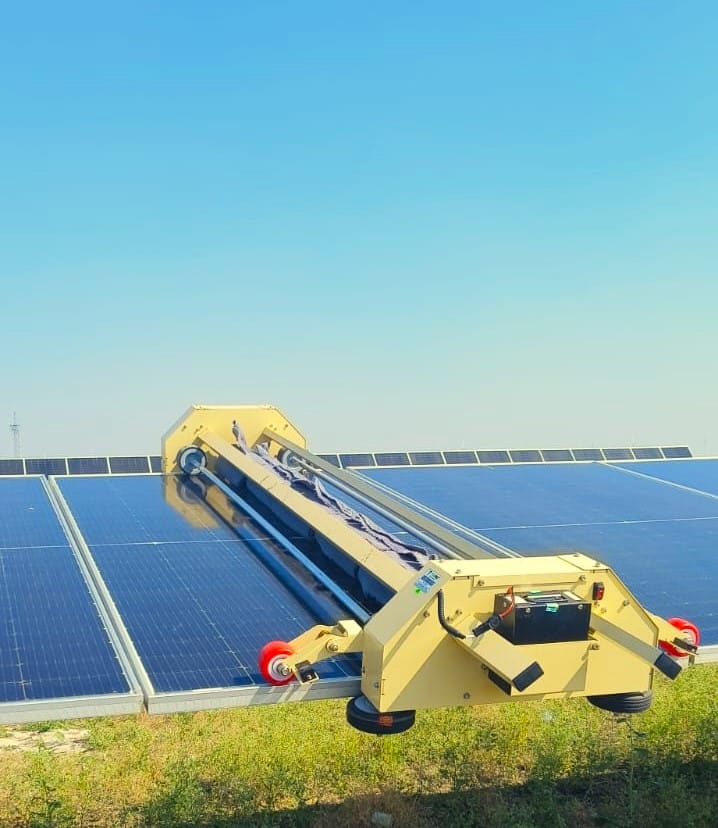
These machines move often. This causes unpredictable noise spikes. These spikes often lead to complaints from nearby residents. Robotic systems like the GLYDE or NYUMA series are much quieter. They use quiet motors. They keep noise below 55 dB(A) at 10 meters.
This meets CPCB daytime rules for residential areas. Using robots also cuts down on loud support vehicles. This includes idling trucks and pump stations. This lowers total site noise. Manual cleaning is fine for small, low-budget sites. But, it is hard to use near homes.
For 5 MW+ plants, a quiet robotic fleet is a vital upgrade. It helps with both performance and community relations. It also makes your maintenance schedule more standard.
What plant managers should do next
Managers near residential areas should move to robotic maintenance. It is a way to reduce risk. Here is an action plan for using systems like GLYDE or NYUMA.
- Baseline Noise Audit: Test noise at your boundary before you start. Ensure robots stay below 55 dB(A) during the day. Use NECTYR to keep logs of these tests.
- Schedule Optimization: Plan cleaning during high-activity times (10:00 AM to 4:00 PM). This masks the sound with existing daily noise.
- Engage Local Stakeholders: Treat your equipment as a community asset. Talk to village heads or local groups. Tell them you are saving water and reducing noise.
- Continuous Monitoring: Use SCADA to track robot health. Fix noisy or vibrating units immediately. This prevents complaints and downtime.
- Fleet Modernization: Move away from noisy water pumps. Use autonomous, waterless units instead. This helps with ESG goals and community relations.
These steps turn your O&M into a sustainable model. You can meet energy targets without community backlash. For equipment tips, see our deployment case studies. Or, use our ROI calculator to see the savings.
Sources and further reading
Frequently asked questions
To manage cleaning robot noise near residential rooftops, you must follow local rules. You also need to communicate with the community.
Solar cleaning robots can be operated safely for C&I plants if they remain below the CPCB daytime limit of 55 dB(A). Using waterless robotic cleaning systems further reduces noise by eliminating the need for loud water-pumping machinery and heavy transport vehicles.
Monitoring involves scheduling operations to align with peak ambient noise hours, typically between 10:00 and 16:00. This strategy helps mask mechanical sounds within the natural background noise of a residential area.
The Central Pollution Control Board (CPCB) sets a daytime limit of 55 dB(A) and a stricter nighttime limit of 45 dB(A) for residential zones. To maintain a social license to operate, you must strictly avoid all robotic cleaning operations during nighttime hours.