
Summary for plant managers
Solar plants in Telangana face high dust and water scarcity. Automated cleaning is now a vital strategy. It protects performance ratios and manages long-term costs. Managers should choose tech that fits local conditions and site needs.
- Typical soiling efficiency loss in Telangana: 15% to 30%.
- Recommended cleaning frequency: Every 7 to 14 days depending on dust.
- Water reduction potential: Up to 90% with robotic dry cleaning.
- Target O&M goal: Maintain Performance Ratio (PR) above 80%.
Large plants are moving from manual washing to robots. This allows for consistent power. Data-driven cycles help stabilize energy generation. They also reduce the need for water tankers. Reviewing local trends helps you find reliable service models. This reduces downtime and keeps modules safe.
Understanding Telangana cleaning services robot adoption trends

Solar capacity is growing fast in Telangana. This growth changes how O&M teams maintain sites. Many owners are moving away from manual washing. Manual washing uses too much water and yields inconsistent results. Instead, they are choosing automated robot fleets.
The state's dry climate makes regular cleaning necessary. Dust storms happen often. Large plants cannot rely on manual labor alone to keep up. Regional trends show that top developers prioritize three things: water neutrality, tracker compatibility, and integrated data.
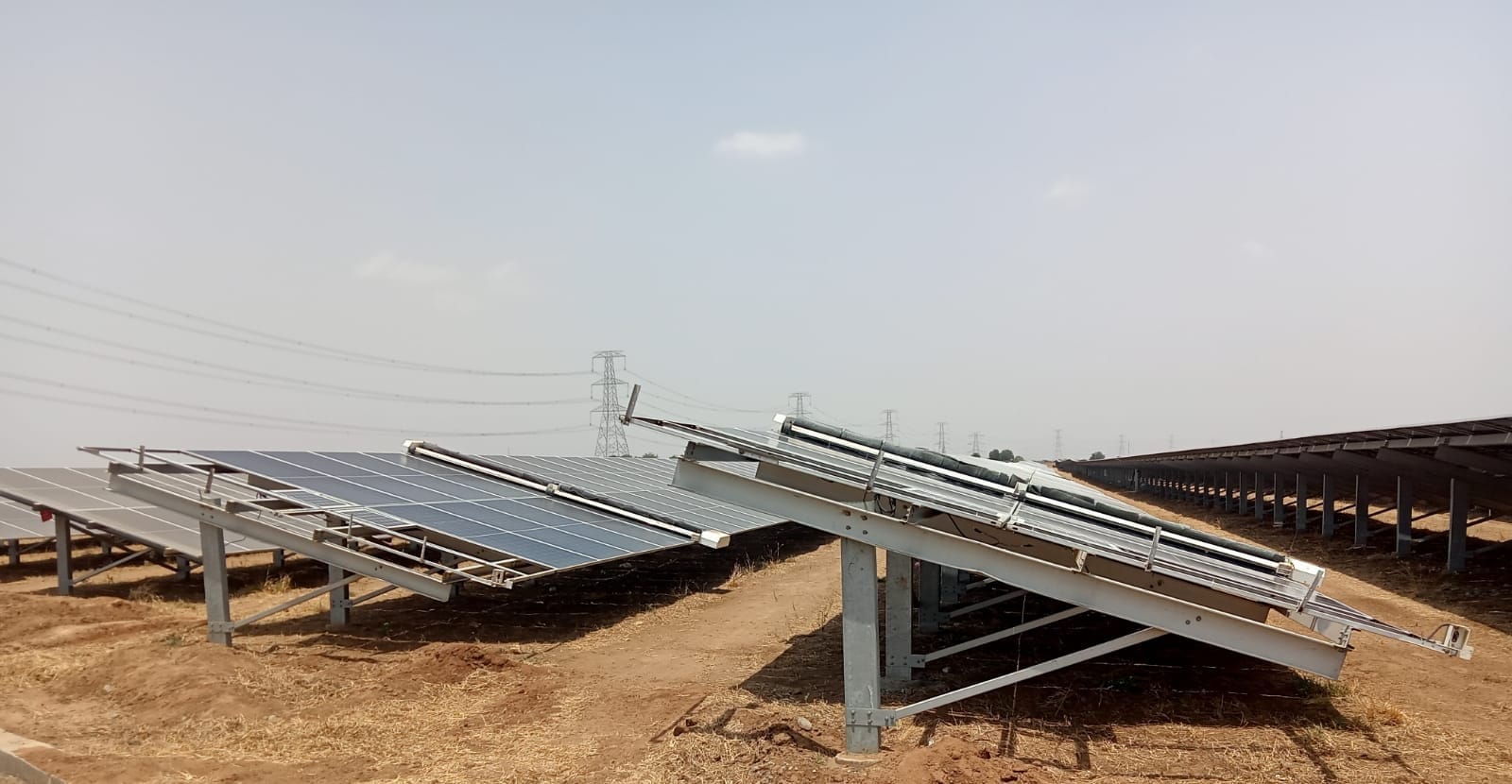
Plants in districts like Mahbubnagar face groundwater depletion. Because of this, local O&M is shifting toward waterless technology. Many use automatic solar panel cleaning systems. These focus on maximizing energy recovery. They also reduce the risk of damage to sensitive module coatings.
Maintenance is also becoming more data-driven. Managers no longer just buy hardware. They now seek integrated services. These services include fleet software and automated logging. In Telangana, professional solar panel cleaning services now focus on reliability. This protects the plant's long-term performance and investment.
How does soiling impact utility-scale solar performance in Telangana?
Soiling is a major problem for solar plants in Telangana. It directly lowers the performance ratio (PR). High dust and seasonal storms cause efficiency losses of 15% to 30%. These losses grow quickly without regular cleaning.
The impact is costly. For a 50 MW plant, a 5% drop in PR is significant. It can result in thousands of lost units of daily power. Bird droppings and pollutants also create 'hot spots.' These spots can heat modules and shorten their lifespan. Manual cleaning every 30 to 45 days is often not enough.
Smart managers now monitor daily soiling rates. They compare real-time data to clear-sky models. This helps them find the best time to clean. Our guide on mitigating soiling for sunlight panels explains this process. Using autonomous systems keeps PR in the optimal 80% to 85% range. This helps maximize the carbon credit potential of the project.
Technical implementation: Step-by-step robotic cleaning integration
Adding robots to a 50 MW+ plant requires a new protocol. You must move from manual tasks to a systematic approach. This includes site mapping, electrical checks, and scheduling through NECTYR.
- Site mapping and topography audit: Map the entire plant array first. Look for slopes, gaps, and obstacles. Good path-planning ensures 95%+ to 99%+ dust removal per cycle (by robot model) even on uneven ground.
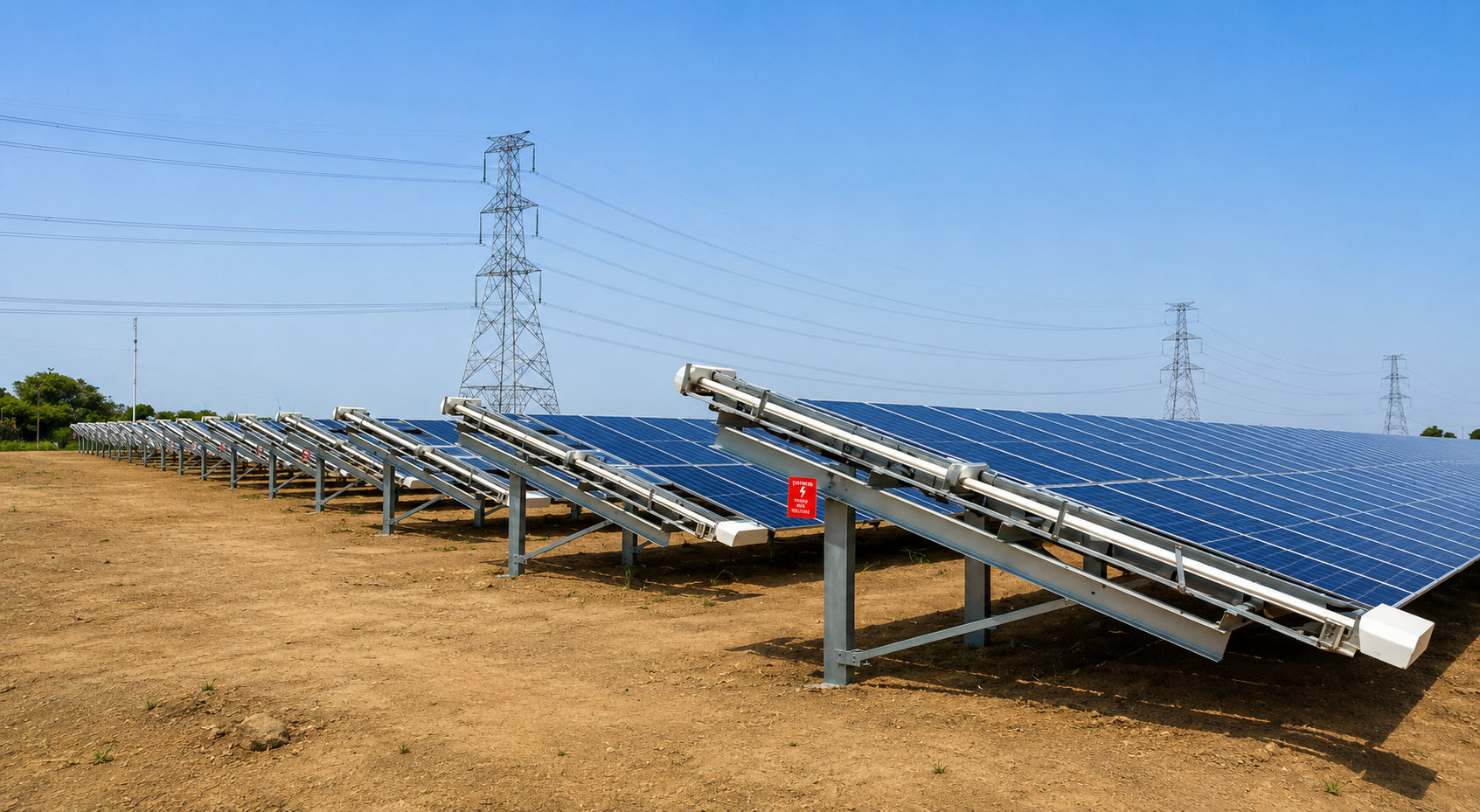
- Infrastructure preparation: Install docking stations or rail systems like CRADYL. This helps robots move between rows autonomously. This step removes the need for manual labor. Ensure all charging hardware is connected to the grid.
- Connectivity and sensor calibration: Use RF mesh or LTE for communication. This allows robots to report battery health and errors in real time. Proper sensor calibration protects module coatings from damage.
- Pilot phase and validation: Start with a small pilot of 2–5 MW. Check how well the robots clean under local dust. Monitor PR recovery for 14 days to calculate energy gain.
- Fleet scaling: Scale to the full site once the pilot works. Use a fully automatic cleaning system to maintain your target PR. Move from manual oversight to an alert-based management system.
For IPPs, this is more than just buying hardware. It is a move toward a data-first solar O&M service model. Standardizing these steps reduces the risk of module damage. It also ensures your Opex is used efficiently.
Waterless vs. manual cleaning: Solving the Telangana water scarcity challenge
Telangana has a dry climate. Operators must choose between energy yield and water use. Manual wet cleaning uses 1 to 2 liters per module. This is expensive and hard to sustain during summer. Water logistics and labor shortages often delay cleaning. It can also cause water spots on hot glass.
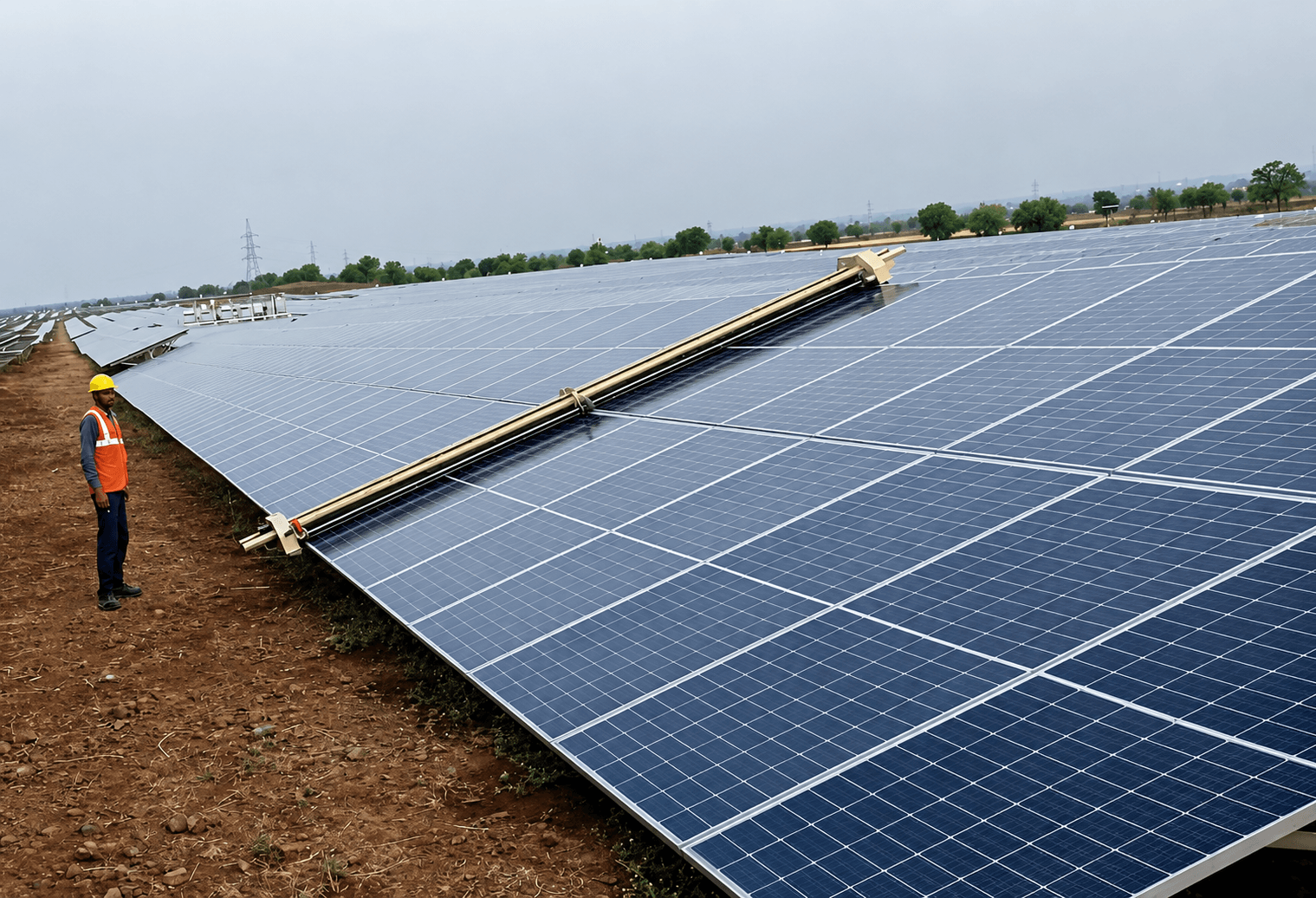
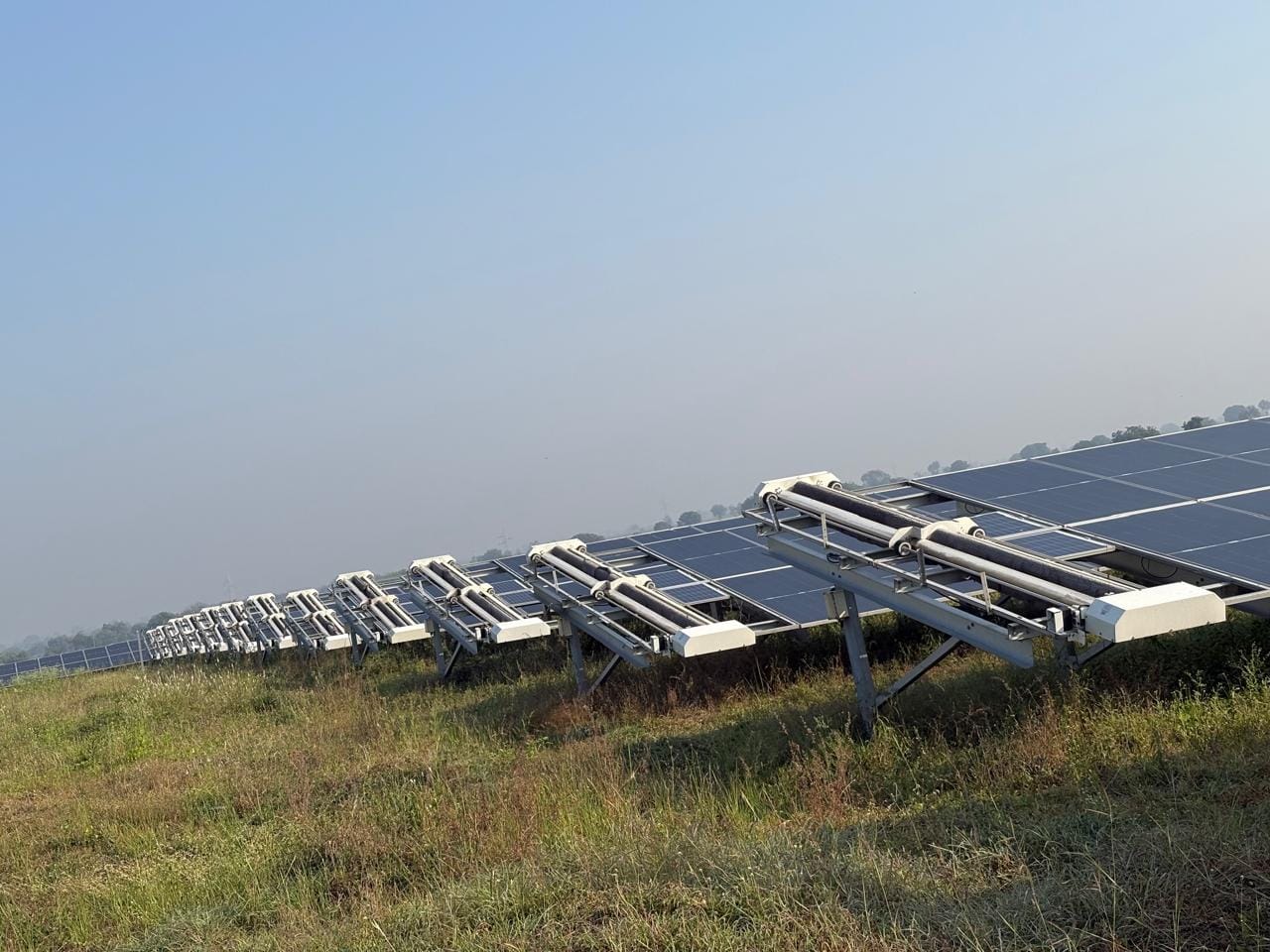
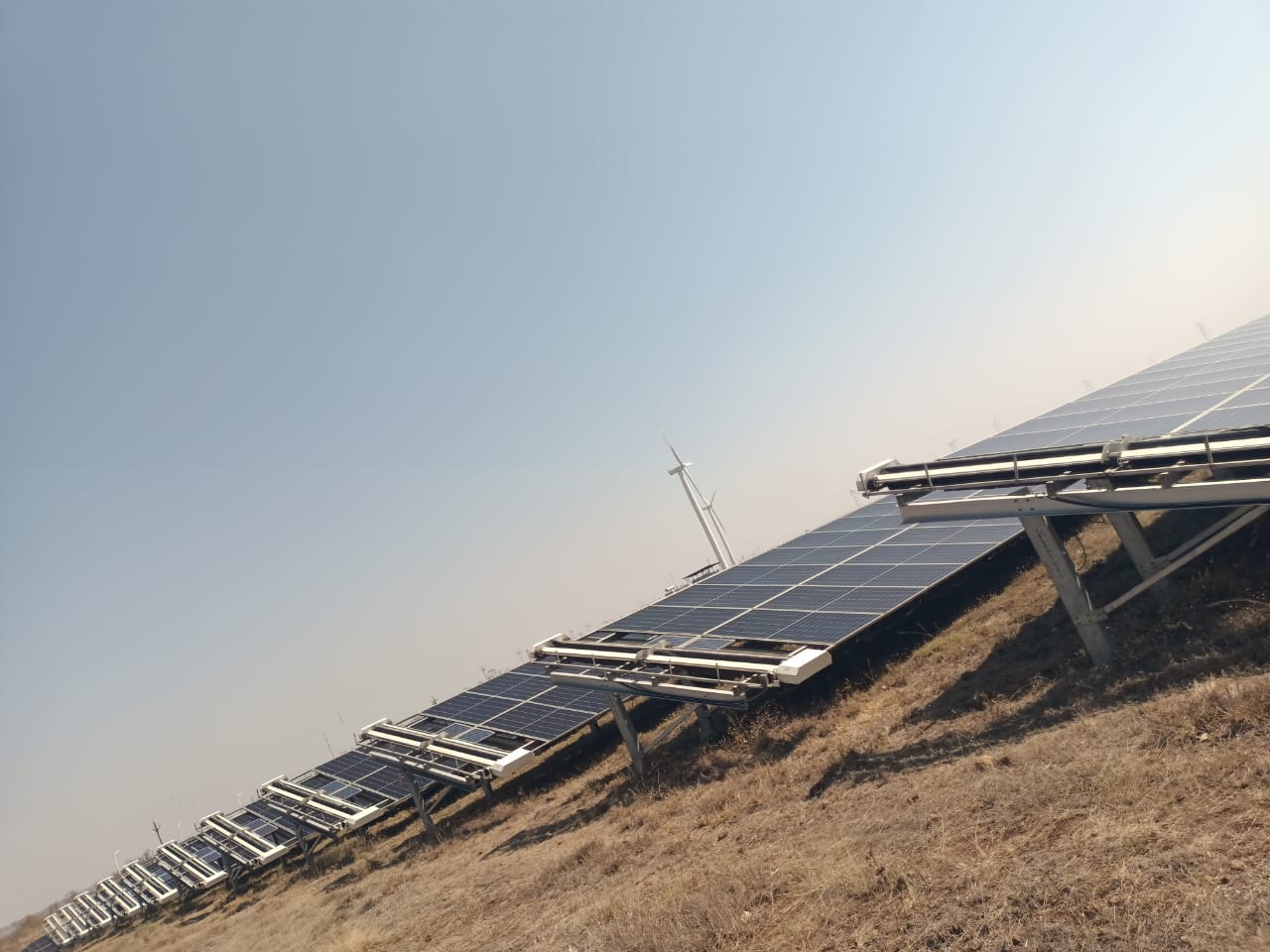
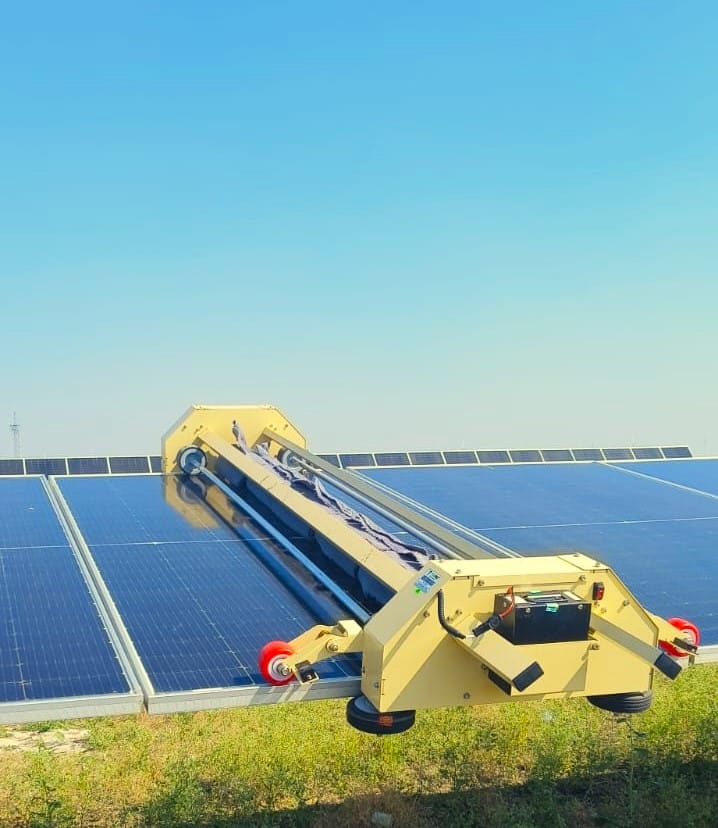
Robotic dry cleaning offers a better way. The GLYDE and GLYDE-X series use dual-pass microfiber systems. These robots use no water. They achieve 95%+ to 99%+ dust removal per cycle (by robot model). They remove fine dust without leaving mineral deposits. This prevents thermal stress on the modules.
| Cleaning Method | Water Usage | Cleaning Frequency | Operational Constraint |
|---|---|---|---|
| Manual Wet Cleaning | High (1-2 L/module) | Sporadic (Labor dependent) | Logistics, water sourcing |
| Robotic Dry Cleaning | Zero | Daily/Sensor-driven | Battery management, pathing |
Autonomous models help you manage dust cycles. Manual crews are hard to move around. However, waterless robots can work in the early morning or late evening. This is when modules are coolest. Using platforms like NECTYR makes this scheduling easy. This reduces labor costs and creates stable maintenance spending.
What are the key metrics for evaluating robotic cleaning service providers?
Do not choose a vendor based only on price. Look at long-term reliability and technical skill. In Telangana, prioritize PR stability over cleaning speed. Evaluate vendors using these four pillars:
- Fleet Telemetry Integration: Use platforms like NECTYR. The system must report battery health and errors in real time. Without automated alerts, you will still need manual oversight.
- Module Compatibility and Safety: Ensure brushes are safe for PERC or bifacial modules. Equipment should have soft-touch contact. It must also prevent falls on tracker-based systems.
- Uptime and SLA Framework: Ask for a clear Service Level Agreement (SLA). The vendor should respond to stalled robots quickly. They must keep spare parts locally to support large sites.
- Waterless Operational Maturity: Check their history with dry-cleaning. A good provider reaches 95%+ to 99%+ dust removal per cycle (by robot model) without water. This prevents mineral deposits and water spotting.
Focusing on these metrics changes your strategy. You move from buying robots to a performance-focused solar O&M service model. This ensures your investment increases energy yield. You can learn more in our guide on mitigating soiling losses.
Operational scheduling and threshold management for MW-scale plants
Fixed cleaning schedules are not enough in Telangana. Dust can cause PR drift of up to 30% during the dry season. Instead, use sensor-driven scheduling. This minimizes downtime and maximizes power output. Set thresholds based on local soiling rates.
For a 50 MW+ plant, use these three technical thresholds:
- Soiling loss threshold: Start cleaning when daily PR drops by 1.5% to 2%. This prevents cumulative yield loss.
- Waterless operation cycle: Run robots from 4:00 AM to 7:00 AM. Lower panel temperatures make cleaning more efficient.
- Battery management: Ensure all robots are charged by 8:00 AM. This prepares the fleet for sudden dust storms.
Use automated fleet telemetry like the NECTYR portal. This lets managers move from weekly manual cleaning to daily autonomous sessions. As noted in our analysis of soiling mitigation strategies, this is much more precise. It helps manage the variable dust in Telangana. This data-driven model ensures your solar O&M service remains efficient.
What plant managers should do next
- Audit your site soiling profiles. Check if losses exceed 15%.
- Review your module mounting. Ensure it is compatible with waterless robots.
- Update O&M contracts. Include clear SLAs for robot uptime and support.
- Talk to technical vendors. Plan a phased move from manual labor to robots.
- Calculate the net impact. Compare water and labor savings against robot costs.
Sources and further reading
Frequently asked questions
Solar plants in Telangana face high dust and water scarcity. Automated cleaning is now a vital strategy.
Switching from traditional water-based washing to robotic dry-cleaning technology can reduce water consumption by up to 90 percent. This is a critical operational strategy for managers in Telangana looking to mitigate water scarcity while maintaining high site productivity.
Automated robotic cleaning is superior for large-scale utility plants because it provides consistent performance, enables high-frequency cleaning cycles that manual labor cannot sustain, and protects against efficiency losses of 15 to 30 percent caused by dust accumulation.
To maintain a performance ratio above 80 percent, a 50MW solar plant in Telangana should be cleaned every 7 to 14 days, depending on the specific dust load and environmental conditions at the site.