Operational visibility: Managing soiling on a 50MW Rajasthan site
Running a 50MW plant in Rajasthan requires clear visibility into real-time soiling rates. Many site managers struggle to differentiate between module degradation and actual dust buildup, leading to inefficient cleaning schedules that waste money. Moving to waterless solar panel cleaning means breaking away from the old calendar-based routine. Instead, you should lean into a data-led approach by mapping local air quality data against your PR monitoring.
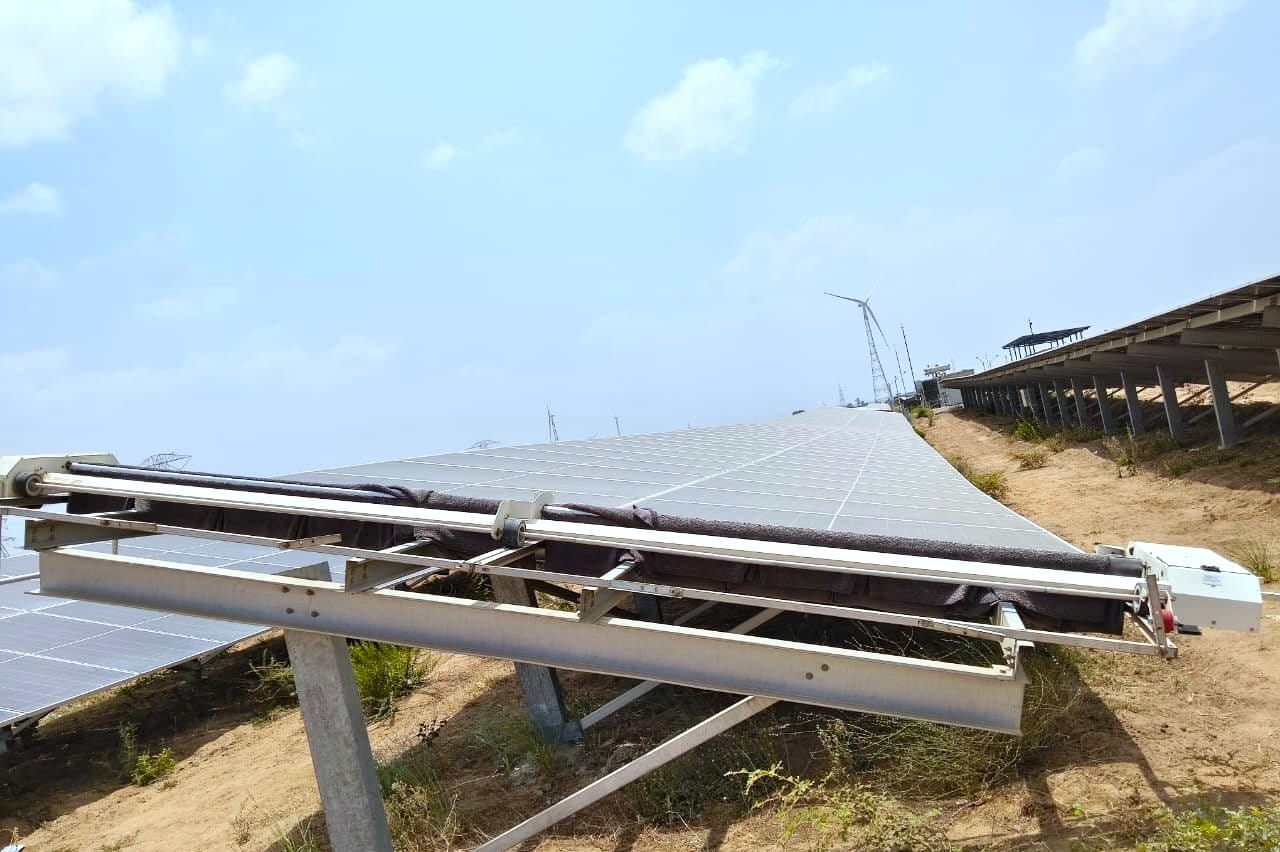
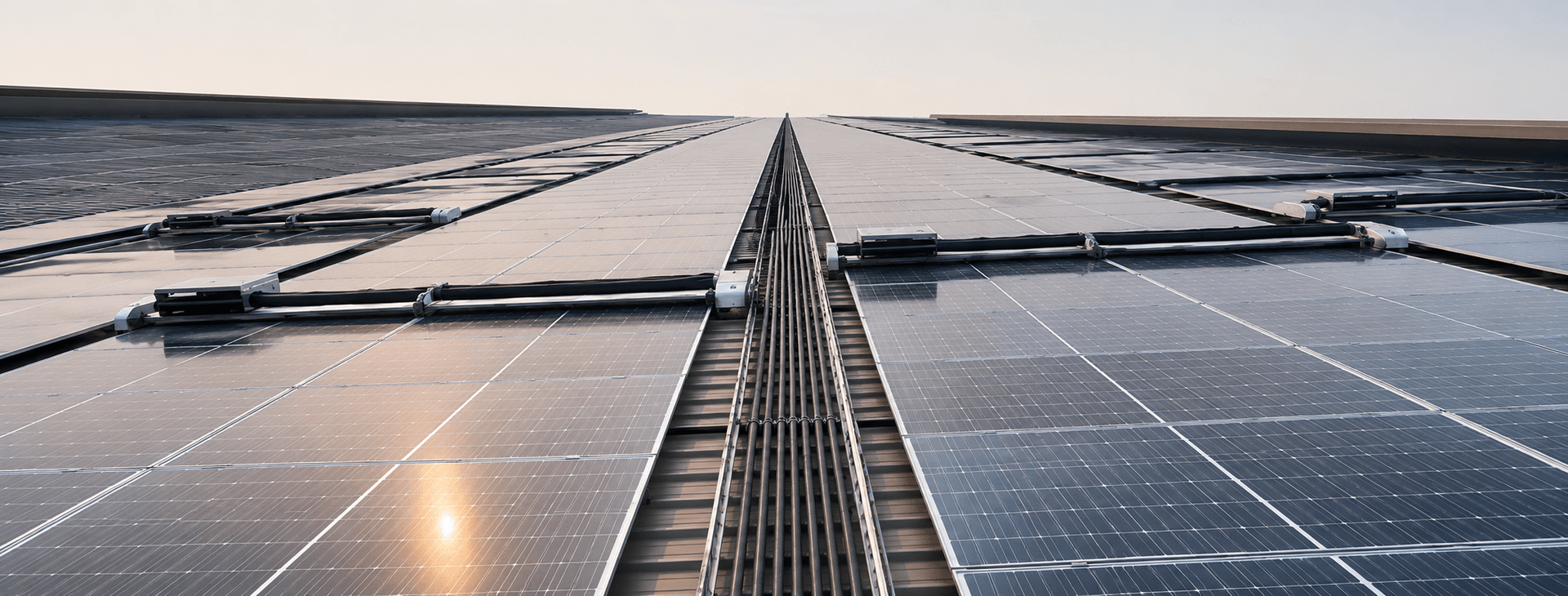
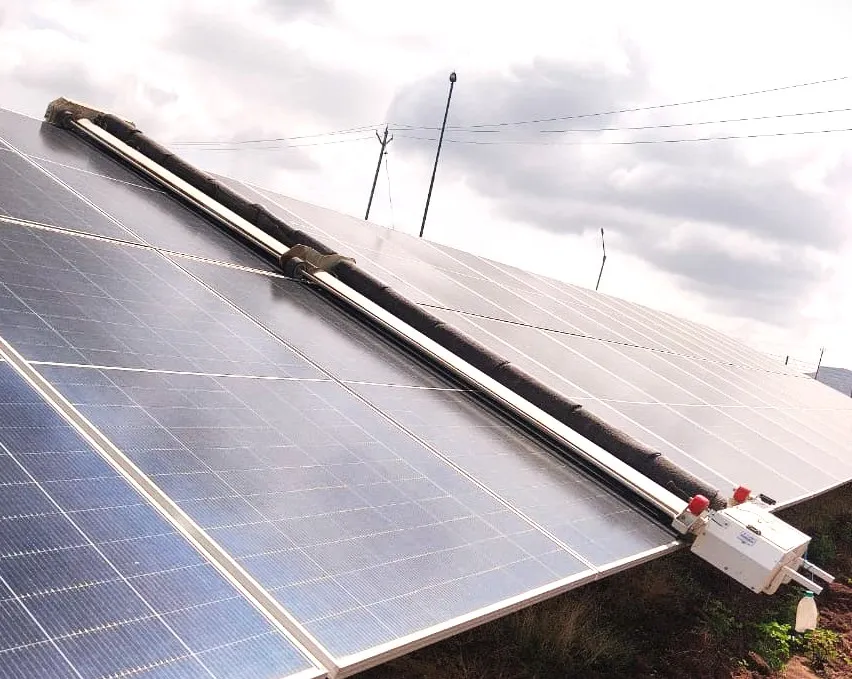
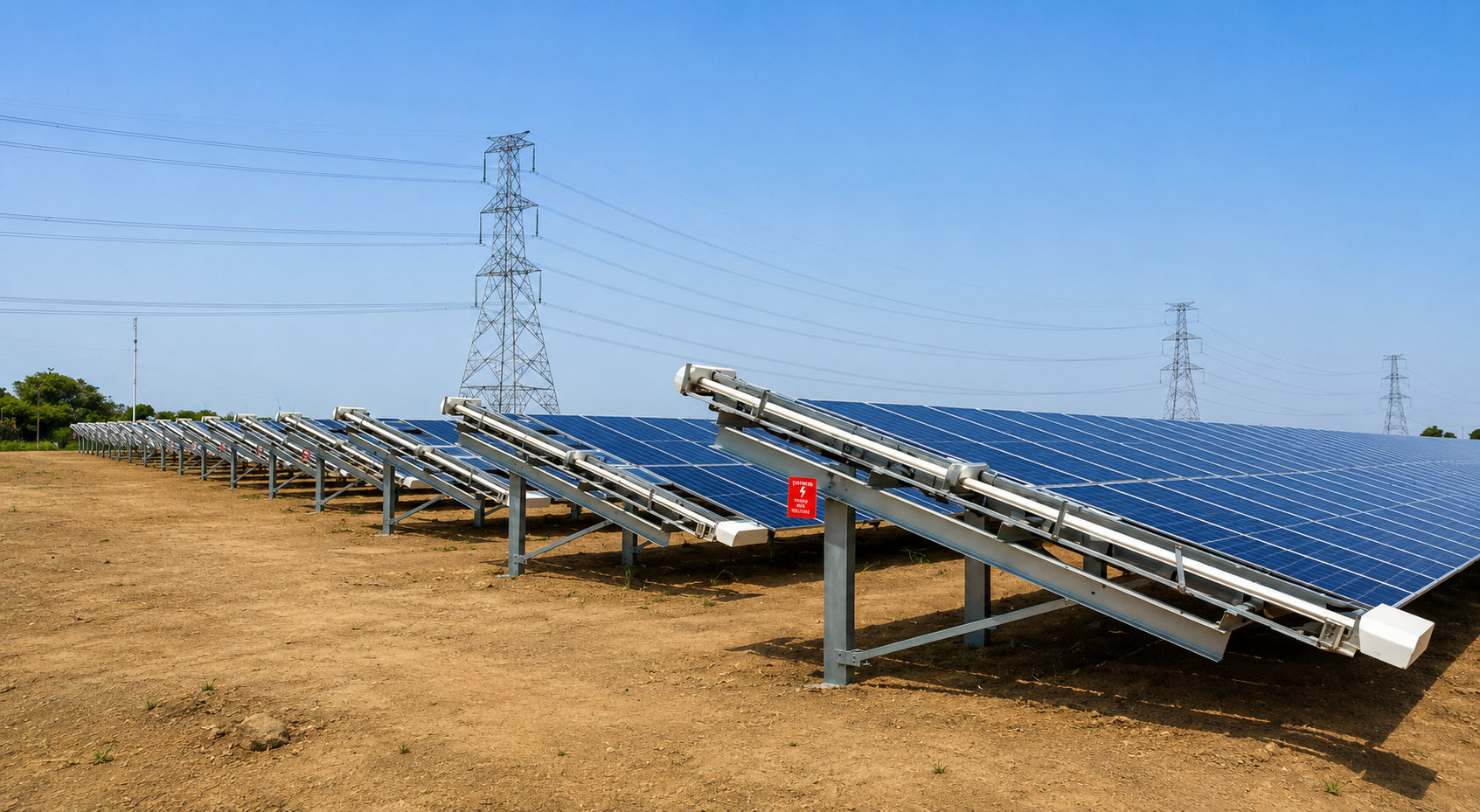
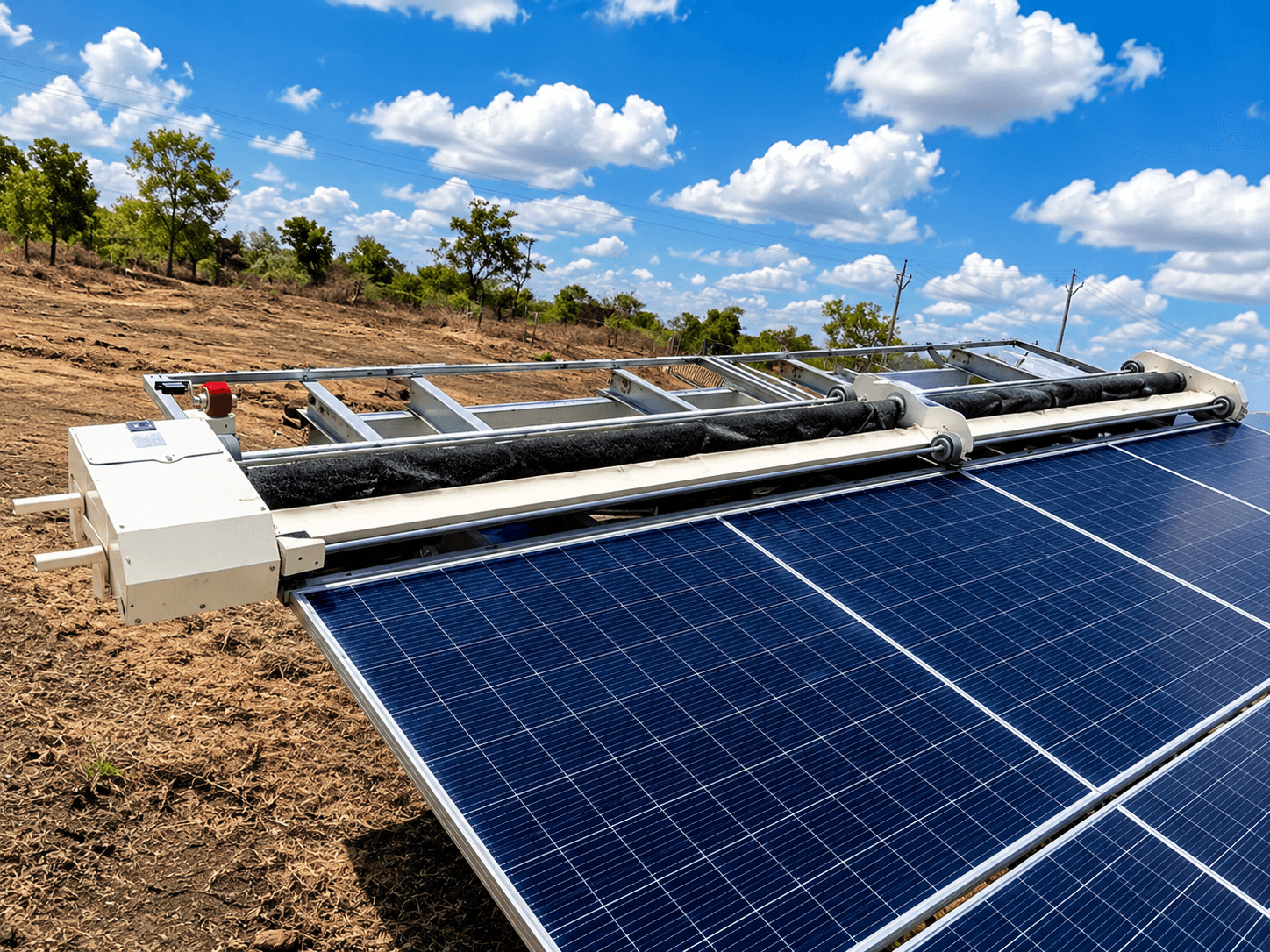
For plants of this size, an automated dry-cleaning fleet is the only way to get consistent results. You simply cannot get that level of row-by-row reliability from a manual crew. A waterless solar panel cleaning strategy eliminates the massive headache of hauling water in arid regions, which preserves scarce groundwater. Plus, you can run these robots during low-irradiance hours like the early morning, avoiding both thermal shock to the modules and the streaking caused by water-spotting.
Modern 50MW sites in India are increasingly using predictive soiling models to trigger cleaning passes. By pulling in satellite feeds and local sensor data, these systems calculate exactly when the energy loss justifies the cost of a cleaning cycle. This minimizes wear and tear on the hardware. The fleet only runs when the math supports the energy spend. For further insight, see our deep dive on predictive soiling models using satellite and AQI data. When you make cleaning a data-driven process, you can typically recover 15% to 30% of your lost energy yield.
Take a hard look at your current O&M strategy. Shifting to dry operations isn't just about efficiency, it is a financial win. Lowering your water footprint is critical for meeting ESG mandates, which is exactly what institutional investors look for in Indian solar projects. Standardizing these protocols helps you keep a tighter grip on OPEX and frees up your crew to focus on real preventive maintenance. Review our analysis on carbon credit calculation from soiling loss reduction to see how this impacts your carbon metrics.
How does waterless solar panel cleaning impact plant performance in arid regions?
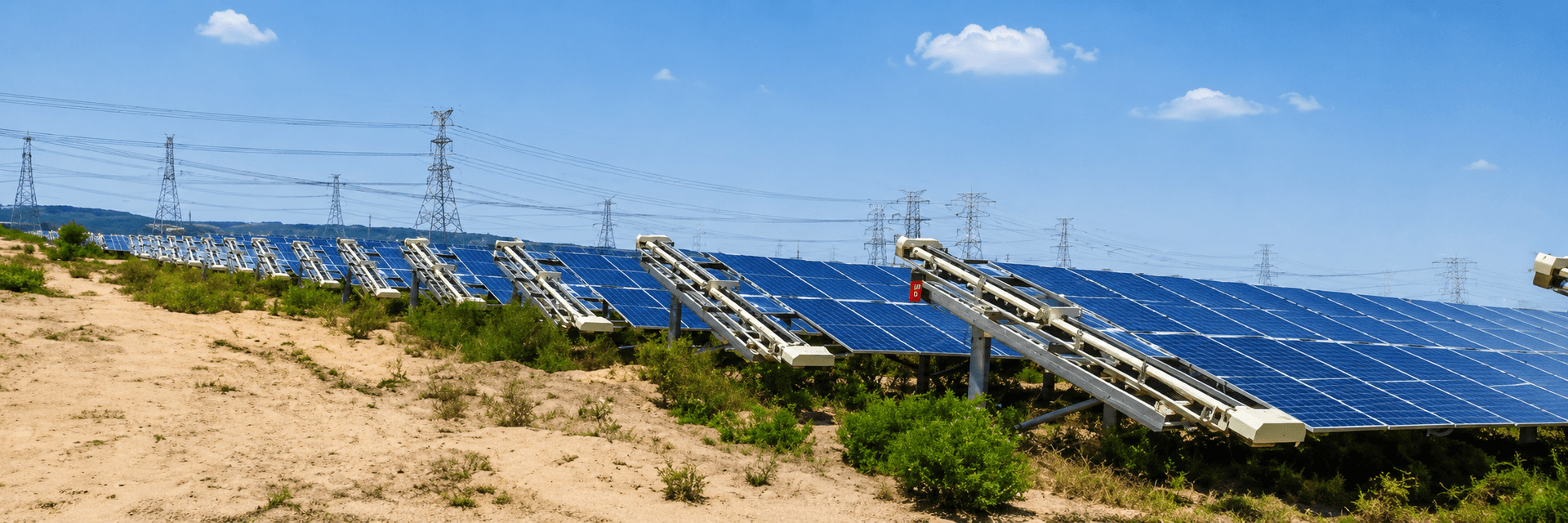
In a place like the Thar Desert, waterless solar panel cleaning is a game changer for yield stability. Wet cleaning methods often leave behind mineral deposits, creating water-spotting that scatters light and degrades the glass surface. Using mechanical airflow and microfiber contact effectively removes this risk of hard-water scaling.
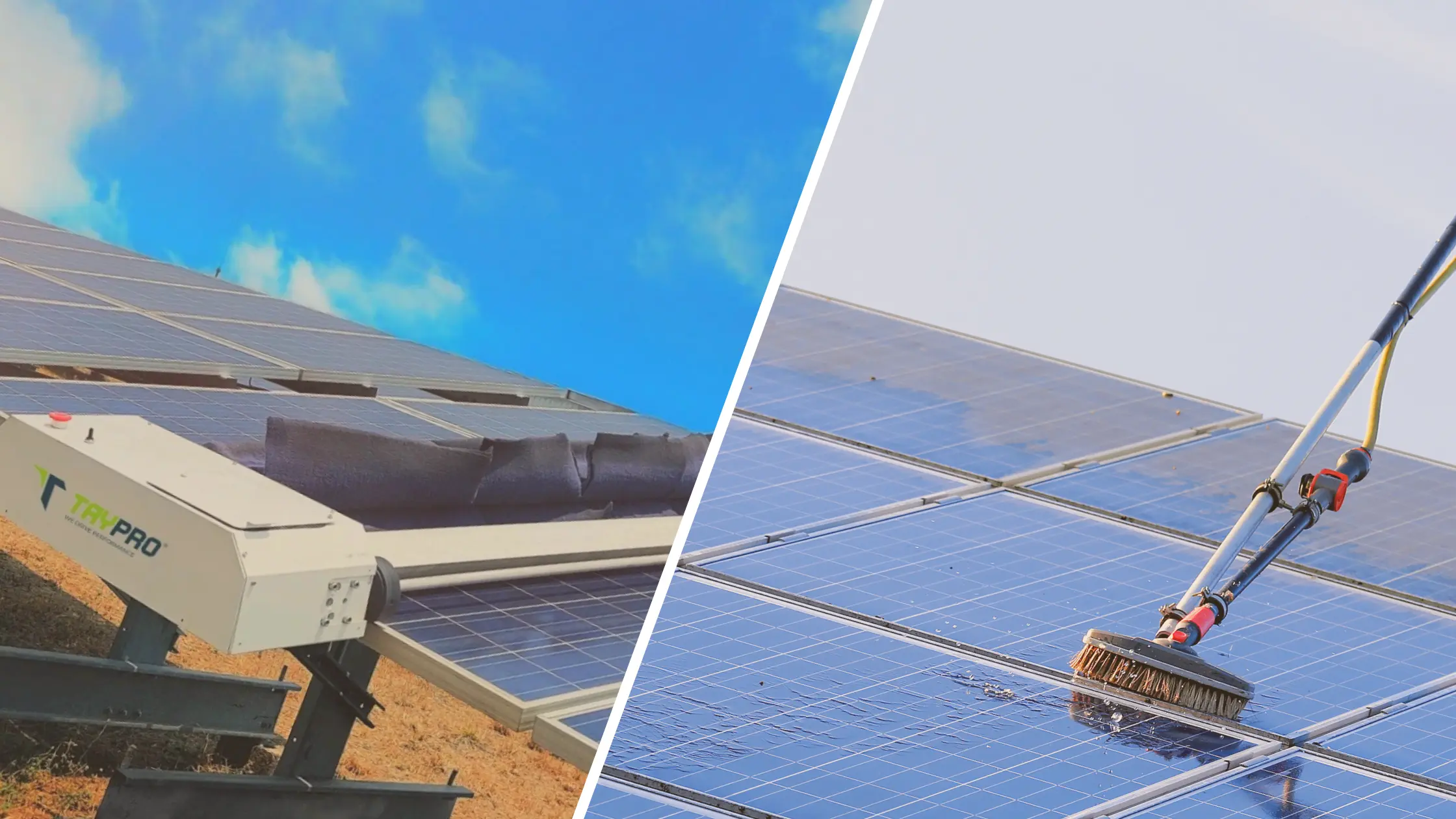
Your PR data usually tells the story; in dusty regions, that particulate buildup can drive power losses between 15% and 30%. A systematic dry-cleaning program allows for frequent, gentle passes without the logistical burden of finding water sources. Since robots use controlled contact pressure, they are much kinder to your anti-reflective coatings (ARC) than high-pressure hoses, resulting in better uptime and revenue. See our assessment of module degradation vs soiling loss data for more.
Going waterless eliminates thermal shock. Dumping water on hot modules is a recipe for micro-cracks. Robotic systems work during pre-dawn hours, keeping your peak production window completely clear. This level of control helps you better manage downtime costs and keeps module transparency at its peak.
Water scarcity and the environmental trade-offs in India’s solar parks
In Rajasthan and Gujarat, using groundwater for cleaning is a significant sustainability liability. A 100 MW site can burn through millions of litres every year, often competing with local farmers for borewell access. This creates a clear ESG risk and can lead to community friction or regulatory heat.
There is also the issue of water quality. Local water is often high in TDS, leaving behind mineral residue that actually makes soiling worse over time. Waterless solar panel cleaning wipes out this environmental footprint and keeps you compliant with MNRE guidelines without fighting for local resources. Read our analysis on carbon credit calculation from soiling loss reduction for details.
Technical workflow for transitioning to waterless systems
Transitioning to waterless solar panel cleaning should be a phased rollout to ensure you don't damage your trackers or cabling. Start with a pilot block of 5 MW to 10 MW to see how the robots handle your specific dust chemistry before you go full-scale. This phase allows the team to gauge the impact on downtime costs and fine-tune your predictive soiling models.
Follow these three steps for a successful integration:
- Site Preparation and Audit: Before you roll out units like GLYDE or NYUMA, secure your tracker end-stops and check that inter-row cabling is snug to prevent snags. Calibrate the tilt range so the robot has a clear operating window.
- Network and SCADA Integration: Connect your fleet to the central ops room using NECTYR. This gives you remote visibility into battery health, cleaning status, and any failed attempts.
- Optimized Cleaning Scheduling: Base your cleaning cycles on PR drift and local weather sensors rather than a calendar. Cleaning during low-light hours protects your revenue.
This systematic approach makes retrofitting safer and provides the documentation you need for ESG reporting. See our notes on carbon credit calculation from soiling loss reduction. Keeping a disciplined sequence adds real value to your asset lifecycle.
Is waterless cleaning effective for high-efficiency TOPCon and HJT modules?
High-efficiency modules like TOPCon and HJT are sensitive. Wet cleaning can be harsh on these surfaces compared to older poly-crystalline panels. Dry-cleaning solutions like the GLYDE-X avoid the microscopic pitting that often comes from abrasive wet brushes and protect cells that are otherwise sensitive to humidity.
For bifacial TOPCon arrays, keeping the ARC pristine is the priority. Manual wet cleaning using untreated water leaves behind deposits that shade cells. Robotic systems use microfiber contact calibrated to be low-impact, avoiding the thermal shock and scrubbing damage associated with hoses.
When selecting solutions for HJT or TOPCon fleets, look for these features:
- Low-Contact Pressure: Ensures weight is distributed across the module frame.
- Chemical-Free Operation: Prevents surfactant residue on passivated surfaces.
- Compatibility with Dual-Bifacial Geometry: Confirms the unit won't scratch the rear glass during transit.
Dry robotic systems are the safest bet for preventing moisture ingress and staining. Protecting your glass now is essential for hitting those 25-year yield targets. See our guide on cleaning strategy for high-efficiency TOPCon and HJT modules to help preserve your asset value.
Quantifying the operational cost of manual wet cleaning vs robotic dry cleaning
Total cost of ownership (TCO) is the main driver for shifting to dry cleaning. When you look at the real numbers, manual cleaning involves recurring costs for water procurement, labor, and logistics, plus the revenue hit from performance decay between cycles. For a 50 MW site, those transport costs usually far exceed the cost of a robot fleet.
Comparing the cost per megawatt (MW) of manual cycles versus an automated rhythm shows the difference clearly. Manual cleaning requires constant human intervention, while waterless robots run a daily schedule, preventing stubborn buildup. Below is a breakdown for a 50 MW project.
| Cost Factor | Manual Wet Cleaning | Robotic Dry Cleaning |
|---|---|---|
| Labour Intensity | High | Low |
| Water Consumption | Very High | Zero |
| Consistent PR | Variable | High |
| Operational Risk | High | Low |
A robotic strategy turns volatile labor-driven OPEX into a predictable line item. As discussed in our CAPEX vs OPEX guide, cutting out water transport can save you 10% to 15% annually, and your anti-reflective coatings will last much longer without constant scrubbing. Refer to our ROI price calculator to model your specific payback period.
Key takeaways for O&M managers and asset owners
- Prioritize waterless systems to mitigate water scarcity and high labor costs.
- Shift from reactive cleaning to data-driven schedules managed by software like NECTYR.
- Check warranty conditions to ensure cleaning prevents pitting on HJT or TOPCon surfaces.
- Integrate performance data into ESG reports to capture the value of recovered generation. See our guide on carbon credit calculation from soiling loss reduction.
- Verify that your row geometry supports robotic docking and transit capabilities.
Sources and further reading
Compare waterless robots, automatic and semi-automatic models, and managed OPEX on Taypro's solar panel cleaning system for utility plants.
Frequently asked questions
Waterless solar panel cleaning utilizes automated fleets of dry-cleaning robots to provide consistent, row-by-row coverage. These systems are triggered by predictive soiling models that analyze satellite data and on-site sensors, ensuring cleaning occurs only when energy loss exceeds the cost of the cleaning pass.
Waterless cleaning prevents thermal shock and water-spotting, as cleaning occurs during low-irradiance windows like the early morning or night. By moving from manual labor to automated dry-cleaning technology, operators can avoid mechanical wear and preserve asset health while avoiding the risks associated with water-based surface scrubbing.
Rather than relying on fixed calendar-based cycles, operators in India should shift to a data-driven approach. Cleaning frequency is determined by correlating local air quality indices with real-time performance ratio monitoring, ensuring maintenance is performed only when the return on investment justifies the operation.
Yes. When implemented as an intelligence-led operation, waterless cleaning systems allow plant managers to consistently recover 15% to 30% of energy yield that would otherwise be lost to dust, effectively matching or exceeding the performance ratio gains of manual wet cleaning.