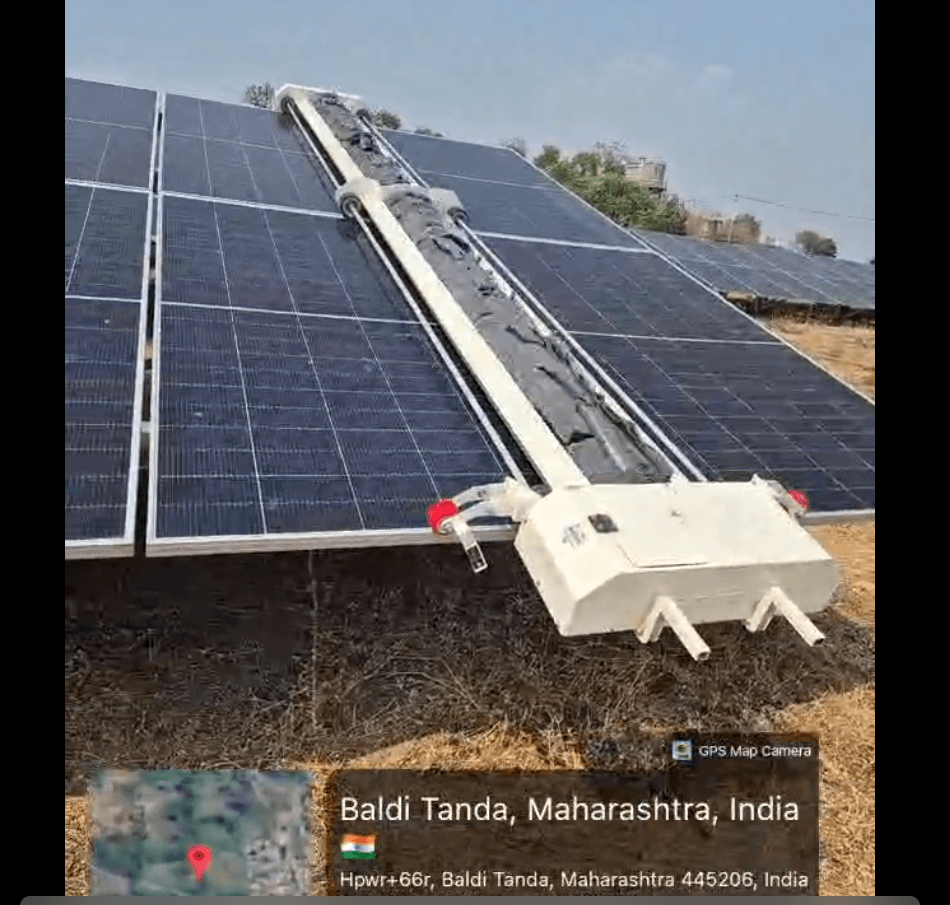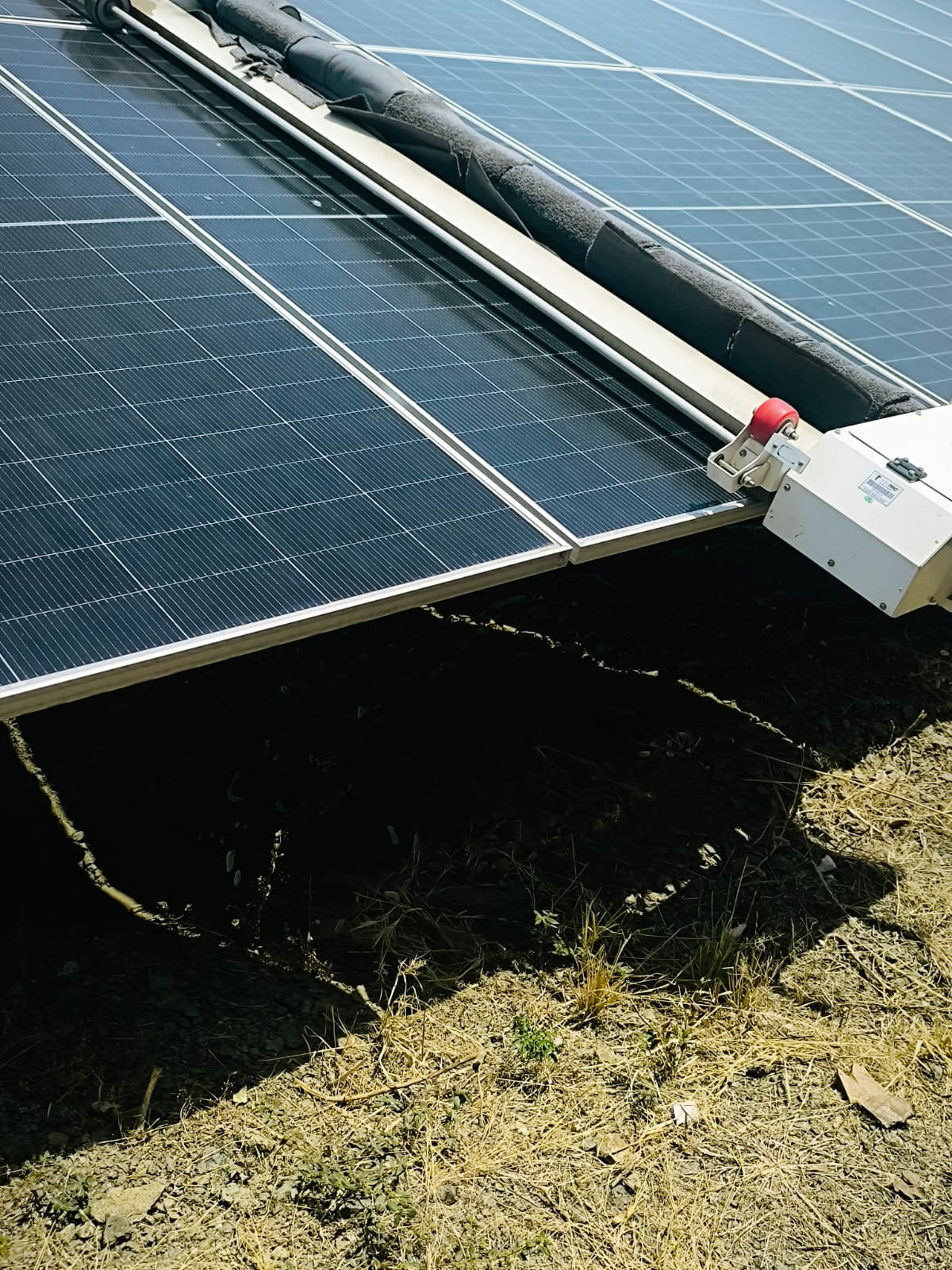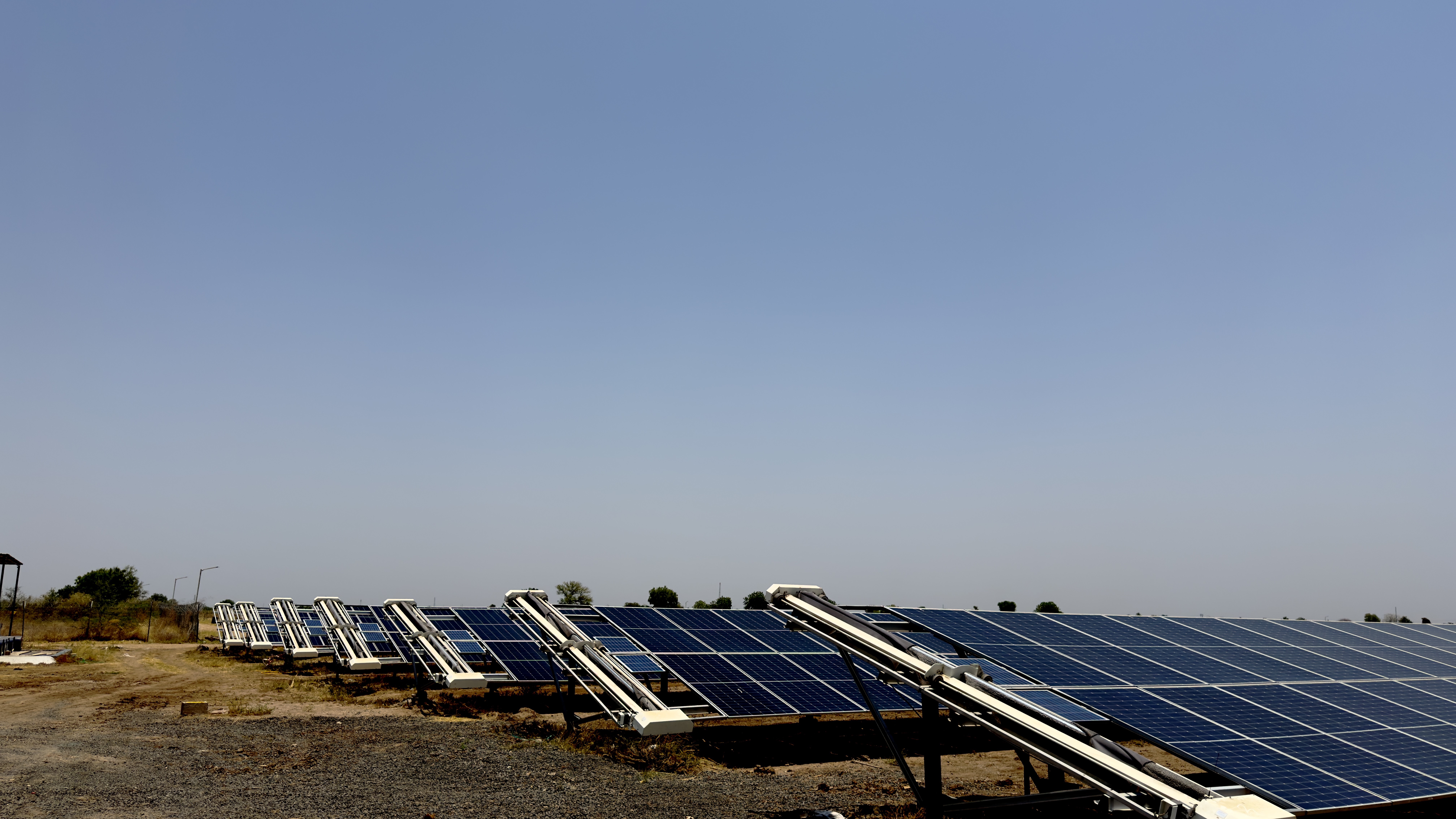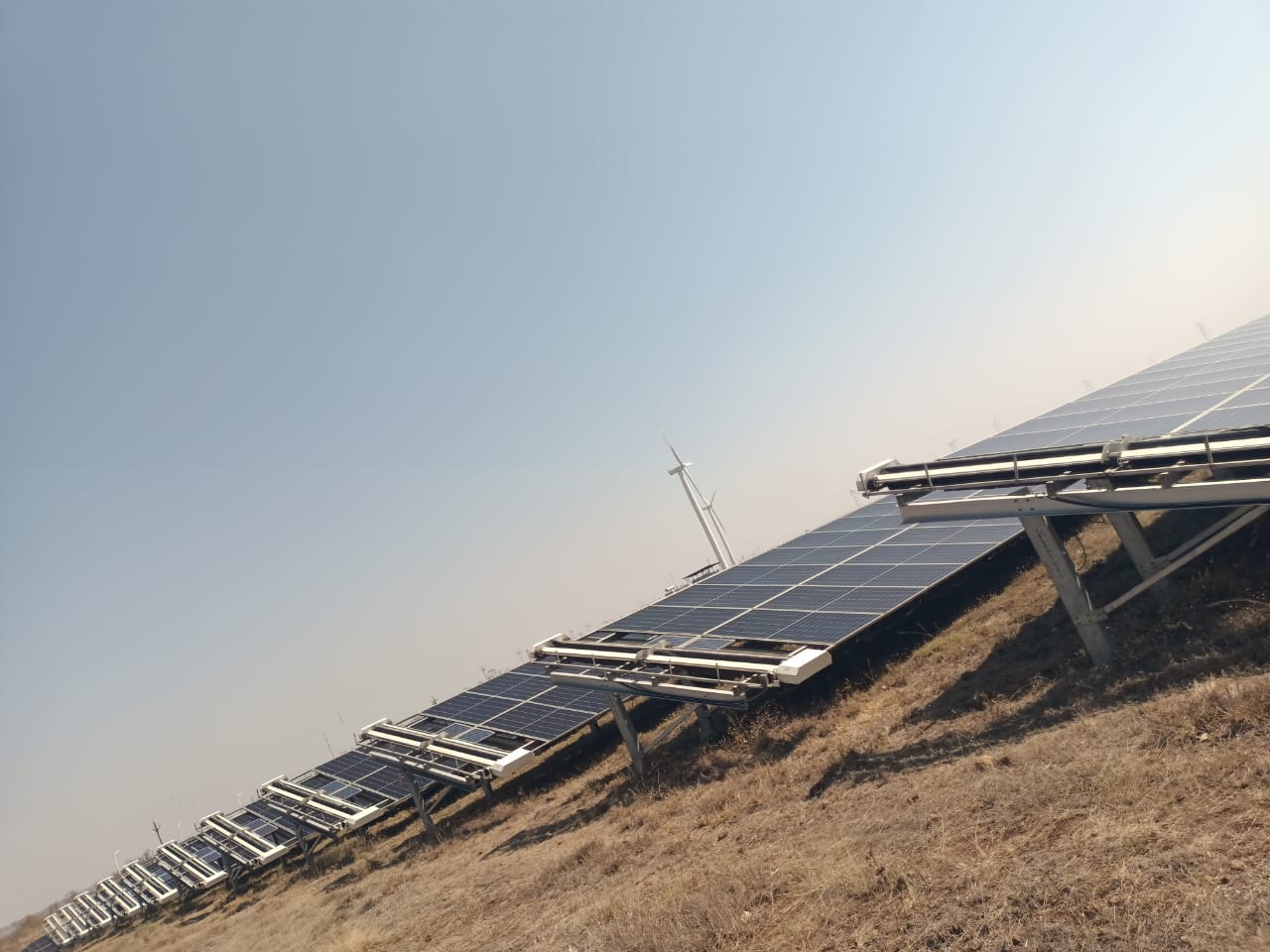
Summary for plant managers
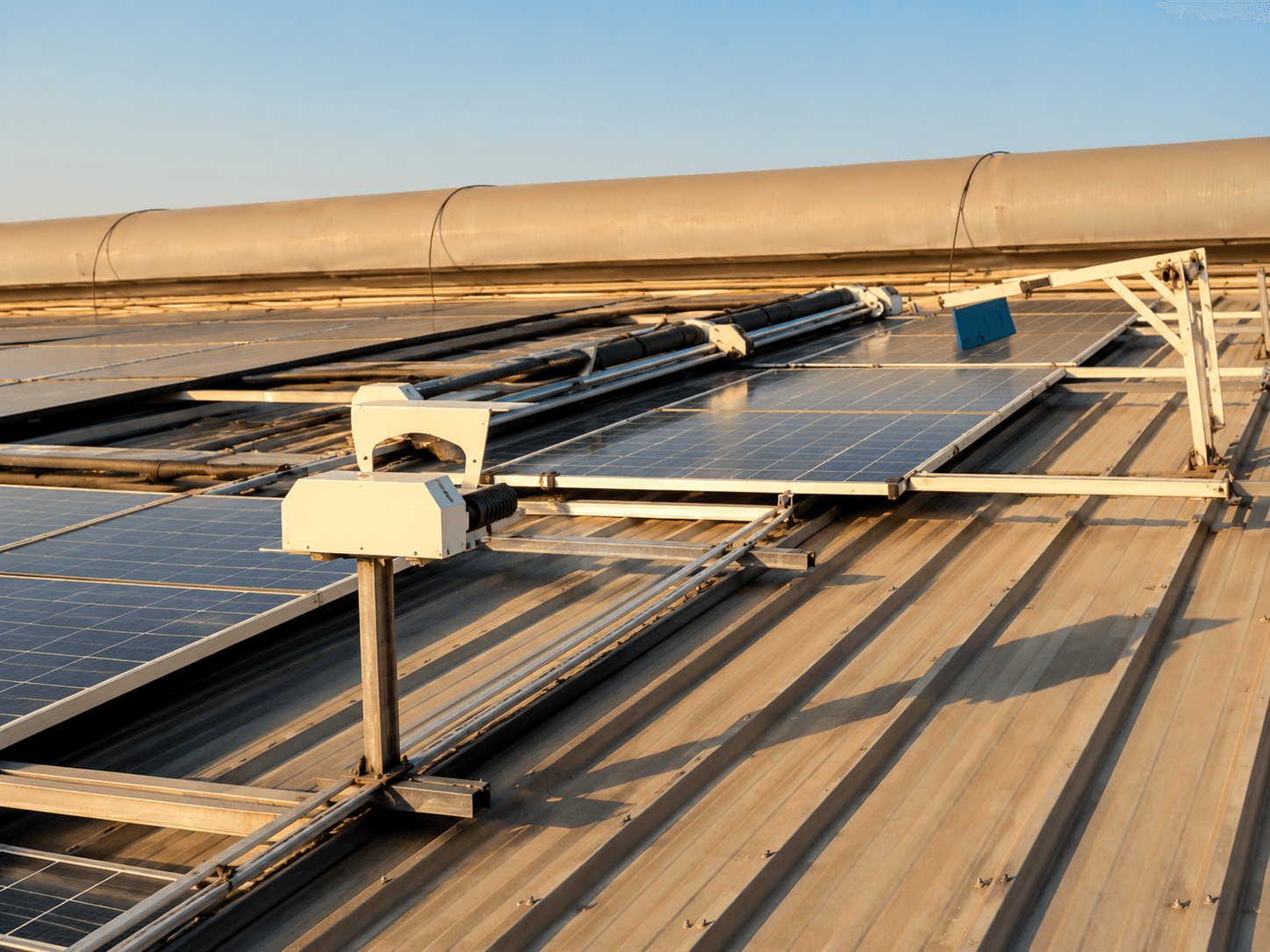
Integrating robots on rooftops requires balancing energy gains against site limits. For large installations, parapet design and robot movement are key factors. Managers must plan clear paths and vertical space during the design phase. This prevents movement limits that lower efficiency and increase manual work.
- Mandatory pathway width: Use at least 75 cm per CEA 2023 rules. This ensures safe access for both robots and people.
- Soiling loss impact: Dusty areas like Rajasthan and Gujarat see daily energy losses of 0.35% to 0.5%. Automated scheduling can help fix this.
- Parapet clearance: Leave enough vertical space between the parapet and the solar array. This protects robot sensors and cleaning brushes.
- Operational efficiency: Tight layouts can increase cleaning times by 20% to 30%. This is slower than ground-mount systems.
- Planning necessity: Plan for robot docking and charging during commissioning. This avoids expensive changes to the roof later.
Managers of 5 MW+ sites often use robots to recover lost energy. Dust deposition can lower performance ratios significantly. When evaluating your site, look at how soiling causes revenue leakage. Often, the energy lost exceeds the cost of fixing roof access. Good planning ensures your automatic solar panel cleaning system runs without downtime. You can use central platforms to track system performance in real time. This helps you separate dust issues from electrical faults.
Understanding rooftop cleaning robot installation constraints: parapet and access
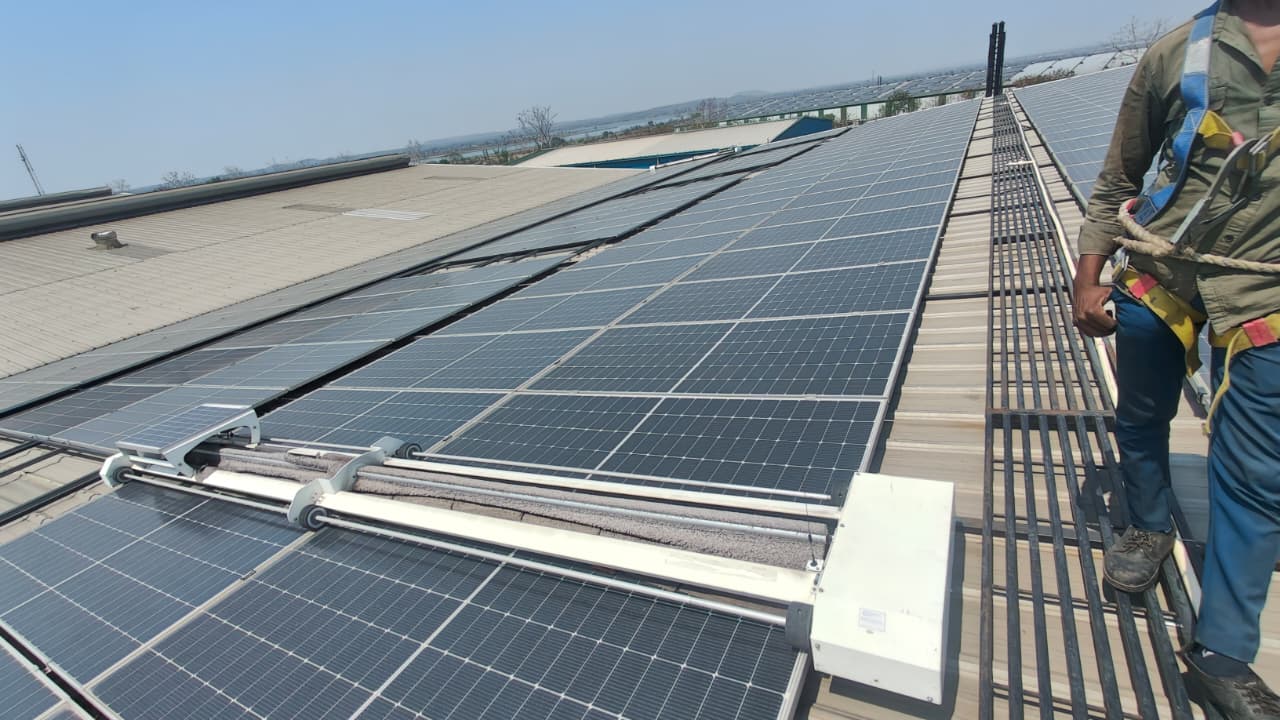
For large solar rooftops in India, the perimeter wall is a major constraint. Parapet walls often create 'dead zones' for standard robots. This leads to dust buildup and energy loss at the edges. Designers must include enough space for the robot to turn. A full 180-degree turn prevents collisions with the wall.
Access paths are the second major bottleneck. CEA 2023 rules require a minimum width of 75 cm. These paths serve two purposes. They act as tracks for autonomous robots and safe routes for technicians. If paths are narrower than 75 cm, robots may struggle to dock. This forces staff to move robots by hand, which wastes time and money.
Rooftop heights must also fit the automatic solar panel cleaning system and its docks. High winds can affect robots near parapet walls. It is best to place docking stations in the shadow of the parapet. This increases stability and protects charging ports from extreme weather. Standardizing these dimensions early avoids high retrofit costs later.
How do parapet walls affect robotic cleaning robot efficiency?
Parapet walls act as physical barriers. They can force robots to stop early or perform risky moves. At 5 MW+ sites in India, these walls create shadow zones. Dust accumulates faster here because airflow is restricted. If the robot is too large for the gap, it cannot clean the end panels. This leads to uneven cleaning and energy drops of 0.35% to 0.5% per day in places like Rajasthan.
Efficiency drops when robots cannot navigate perimeter edges. If a robot needs manual help to bypass a wall, it is no longer truly autonomous. This turns a scheduled task into a slow, manual job. For 99% cleaning efficiency, a minimum setback is vital. We recommend a clearance of at least 1.5 meters from any vertical parapet. This allows for sensor calibration and safe turning.
Poor layout planning creates long-term revenue loss. Managers must weigh design costs against the high cost of manual cleaning. Manual work is often more expensive and riskier for staff. Refer to revenue leakage to see the impact of poor cleaning. Ensure parapet heights do not block module supports. This keeps the line-of-sight clear for obstacle sensors and prevents emergency stops.
CEA regulatory requirements for rooftop solar access pathways
The CEA 2023 (Measures relating to Safety and Electric Supply) rules require clear access paths. Facility managers must follow these rules to stay compliant. All primary walkways must be at least 75 cm wide. These paths are not just for emergencies. They are the basic infrastructure needed for safe robot deployment.
The rules state that paths must remain clear. Do not leave equipment, cables, or debris in the walkways. This 75 cm rule also applies to the robot's working space. If you use a docking station, place it outside the 75 cm walkway. This keeps fire safety and maintenance routes open.
CEA guidelines also require handrails near roof edges or drops. Robot path planning must account for these rails to avoid signal issues. Planning these paths during the commissioning phase reduces the risk of non-compliance. Using a modular walkway design makes it easy to include robots. This ensures the entire array stays accessible for maintenance and inspections.
Technical challenges of cleaning canopy-mounted vs. rooftop arrays
Canopy arrays have different constraints than standard rooftops. Robot weight and anchoring are key concerns. Rooftops usually have solid concrete supports. However, canopy structures often sit on steel posts. This elevation can cause vibrations. These vibrations may cause robots like the automatic solar panel cleaning system to stop by mistake.
The canopy footprint also limits how robots turn between rows. Robots must navigate slopes and uneven surfaces where modules meet the frame. Unlike flat roofs, canopies often have different tilt angles. Robots must match these specific angles. If the robot cannot climb the angle, it may slip or miss spots. This creates localized dust buildup.
Wind speeds are also higher at the edges of canopy arrays. This increases the risk of debris hitting the panels. We find that canopy sites often need more frequent, shorter cleaning cycles. This helps maintain a high performance ratio. Plan for these factors during the design stage to ensure the fleet operates smoothly.
Optimizing cleaning schedules for constrained roof layouts
Constrained roofs need data-driven cleaning instead of fixed schedules. On tight sites, manual cleaning is expensive and risky. Using an autonomous system, like those in our automatic solar panel cleaning system guide, helps. These systems allow for frequent, light cleaning that prevents dust from sticking.
Managers should align cleaning with local dust levels. In Rajasthan, soiling loss can hit 0.5% per day. In these areas, daily light cleaning keeps performance above 98%. In cities, industrial soot may require more frequent cycles. Using NECTYR allows for real-time monitoring. This helps robot fleets adjust their speed to maximize energy harvest.
| Constraint Factor | Impact on Robot Selection | Optimal Mitigation Strategy |
|---|---|---|
| Parapet Height | Deployment safety | Integrated docking stations at low-height sections |
| Access Path Width | Robot transit limit | Dedicated narrow-profile autonomous platforms |
| High Soiling Zones | Cleaning frequency | Increased schedule frequency during dry seasons |
| Surface Slope | Traction/Slippage | High-torque, high-grip cleaning brushes |
How to prepare a site for automated solar cleaning systems?
Preparing for robots means planning for space during the commissioning phase. Conduct a survey to confirm the 75 cm pathway width required by CEA 2023. These paths must be clear of cables, clamps, and debris. This ensures units like the automatic solar panel cleaning system can move freely. For canopy structures, check for vibrations that could disrupt sensors.
Standardize your module tilt and row spacing early. This ensures the robot makes full contact with the panel surface. For sites with high parapets, use integrated docking stations. Place them where the parapet height allows safe transit. This removes the need for dangerous manual lifting. Also, ensure power for docks follows CEA guidelines for outdoor electrical work.
Finally, map your roof for flatness and slope. Robots like the NYUMA work best on steady ground. They operate most reliably when the slope is within 15 degrees East-West. Install safety rails at the end of rows to prevent errors. These steps turn a complex roof into a high-yield, predictable environment.
What plant managers should do next
To support robotic maintenance, start with a gap analysis. Check your current rooftop against CEA 2023 safety standards. Managers should prioritize these actions to prepare for automation:
- Audit all rooftop parapets and walkways: Check if parapet heights block docks. Confirm that paths are at least 75 cm wide.
- Review structural load-bearing capacity: Ensure the roof can hold new charging stations or docking stations.
- Upgrade to a data-driven O&M model: Use real-time soiling data from NECTYR. This optimizes energy use and reduces manual work.
- Update procurement and service contracts: Include clauses that require robot-friendly designs for all future expansions.
- Perform a pilot deployment: For plants over 5 MW, test robots on one block first. This helps calibrate the brushes for local dust.
Moving to an autonomous strategy helps you recover MWh yields. Using an automatic solar panel cleaning system maintains high performance. It also reduces the safety risks of human labor on high roofs. Use a robot ROI calculator to justify these infrastructure upgrades.
Sources and further reading
Frequently asked questions
Integrating robots on rooftops requires balancing energy gains against site limits. For large installations, parapet design and robot movement are key factors.
Yes, under the CEA 2023 regulations, plant managers must provide a minimum access pathway width of 75 cm. This ensures that both robotic systems and personnel can navigate the rooftop safely during operations.
It can, provided the design accounts for vertical clearance between the parapet and the leading edge of the array. Careful planning is required to accommodate docking and charging needs to avoid expensive retrofits.
In dust-heavy regions, daily generation losses range from 0.35% to 0.5%. Furthermore, when rooftop layouts are constrained, cleaning cycle durations can increase by 20% to 30%, which may further impact total energy recovery.