Summary for plant managers
TOPCon and HJT modules need a new cleaning approach. These technologies are sensitive to surface abrasion. They also have unique bifaciality needs. For utility-scale operators in India, the goal is dual. You must maximize energy yield and protect N-type passivation layers.
- Typical annual soiling loss in arid India: 5% to 30%.
- Recommended cleaning trigger: Start cleaning when soiling loss exceeds 2–3% against baseline data.
- HJT Bifaciality Advantage: Keep the rear side clean to capture 80–90% bifacial gain.
- Water strategy: Use waterless or low-moisture methods. This protects N-type layers from mineral buildup and micro-cracking.
On 50 MW+ plants, cleaning is often reactive. High-efficiency modules require a proactive approach to prevent permanent damage. As noted in our analysis of soiling revenue loss, a 3% dip in PR hits revenue hard. Plant managers must treat cleaning as an essential part of the generation guarantee. Use reliable telemetry and consistent data logging. This helps you move away from ad-hoc schedules. See our guide on robot fleet connectivity. Automation protects sensitive TOPCon and HJT modules. It also secures predictable MWh output across your portfolio.
Why high-efficiency TOPCon and HJT modules require a specialized cleaning strategy
N-type modules like TOPCon and HJT differ from traditional PERC panels. Their surface sensitivity requires a precise approach. These modules use delicate passivation layers on both sides. These layers allow efficiency levels of 22% to 26%. Aggressive cleaning or manual scrubbing can cause micro-scratches. This damages the anti-reflective coating and leads to long-term degradation.
HJT modules have a high bifaciality factor of 80% to 90%. This makes rear-side cleanliness a top priority. In legacy systems, rear-side soiling was secondary. For HJT, performance drops if the rear glass is dirty. Dust or bird droppings reduce albedo-based gains. You must clean the rear side as often as the front. This ensures light reaches the cells regardless of tracker angle.
High energy density also changes the risk profile. Even minor soiling causes sharp power losses in these modules. A dusty TOPCon or HJT array loses more kW per square meter. This causes a larger financial hit to your PPA. Manual cleaning is often too infrequent for these plants. A specialized strategy requires consistent, automated cleaning. This maintains surface integrity and prevents rapid PR decay in arid regions.
How often should you clean TOPCon and HJT modules in Indian utility-scale plants?
For N-type modules, cleaning frequency depends on performance ratio (PR) decay. Do not use a fixed calendar schedule. In arid zones like Rajasthan or Gujarat, use a trigger. Start cleaning when soiling loss crosses the 2–3% threshold. For 50 MW+ sites, this may mean cleaning every 10 to 15 days during dry seasons. Monsoon months allow for longer gaps of 30 days or more.
HJT modules need strict schedules. Their 80–90% bifacial gain is very sensitive to rear-side obstructions. If the rear glass is dusty, you lose vital albedo-based generation. This offsets the higher CAPEX of HJT technology. Waiting for a 5% PR drop causes irreversible MWh losses. Managers should rely on real-time data from weather stations and SCADA. See our revenue loss analysis for IPPs for more details.
Determining your site-specific cleaning trigger
Use these technical criteria to optimize your frequency:
- Soiling loss trigger: Start a cycle at 2.5% PR loss. This prevents dust from sticking too firmly.
- Bifaciality monitoring: If rear-side PR drops faster than the front, clean the rear glass more often.
- Dust composition analysis: In coastal areas, salt or organic matter can cause caking. Shorten intervals to 7–10 days to prevent damage.
- Fleet feedback: Use telemetry from robots to track effectiveness. See our guide on robot fleet connectivity for more.
Shift from rigid schedules to data-driven triggers. This protects TOPCon and HJT modules. It also minimizes the number of interventions needed. This precision preserves the module life and helps you meet PPA targets for 25 years.
Step-by-step: Implementing a technical cleaning schedule for MW-scale sites
Plants with 50 MW or more must use data-driven models. Move away from calendar-based maintenance. Your goal is to align cleaning with site-specific soiling rates. This protects cell integrity. Follow these steps for your N-type fleets:
- Baseline mapping: Use sensors to measure power drops from soiling. Set a baseline PR after a thorough manual cleaning.
- Threshold definition: Set SCADA triggers for 2.5% to 3% PR loss. This prevents dust layers from becoming hard to remove. It also prevents heat-spots on cells.
- Frequency synchronization: Schedule automated sweeps every 10 to 12 days in dry regions. Use weather forecasts to pause during heavy rain or high winds.
- Bifacial optimization: Prioritize cleaning for HJT modules to address ground-side obstructions. Track rear-side generation separately to detect albedo loss early.
- Fleet auditing: Use the NECTYR fleet portal to verify every row is clean. Compare reported vs. expected energy recovery daily.
Automation reduces labor for 100 MW+ sites. Rely on real-time SCADA to trigger your soiling mitigation strategy. This keeps generation consistent. It protects N-type assets against harsh Indian dust conditions.
Managing soiling losses and Performance Ratio (PR) for bifacial N-type arrays
Bifacial TOPCon and HJT modules are very sensitive to soiling. Their power comes from both surfaces. Traditional PERC modules rely on the front side. HJT cells can reach 80% to 90% bifaciality. Dust on the rear side acts like shade. This drastically lowers your albedo-based power harvest. In Rajasthan, rear-side soiling is a hidden revenue killer.
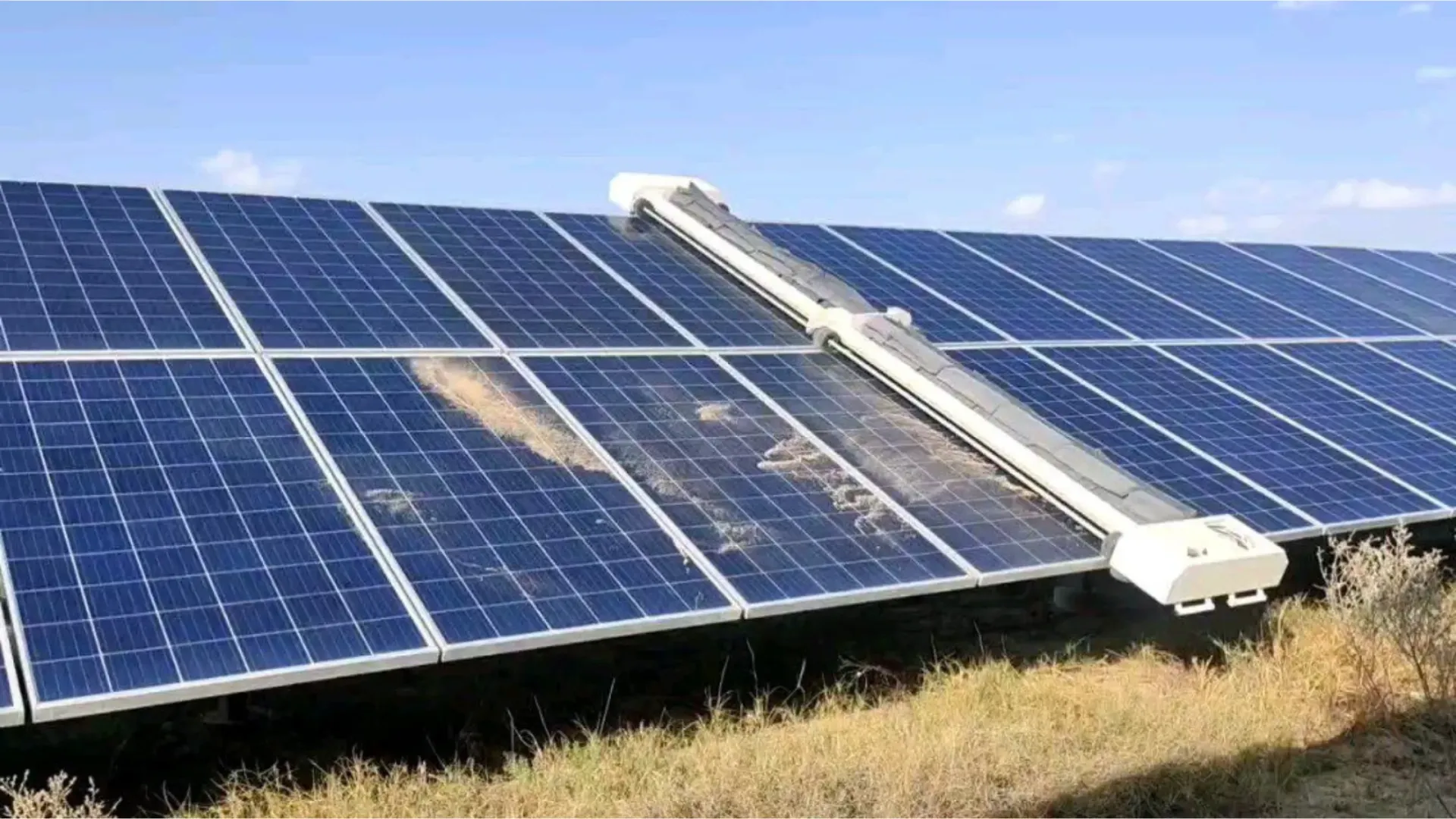
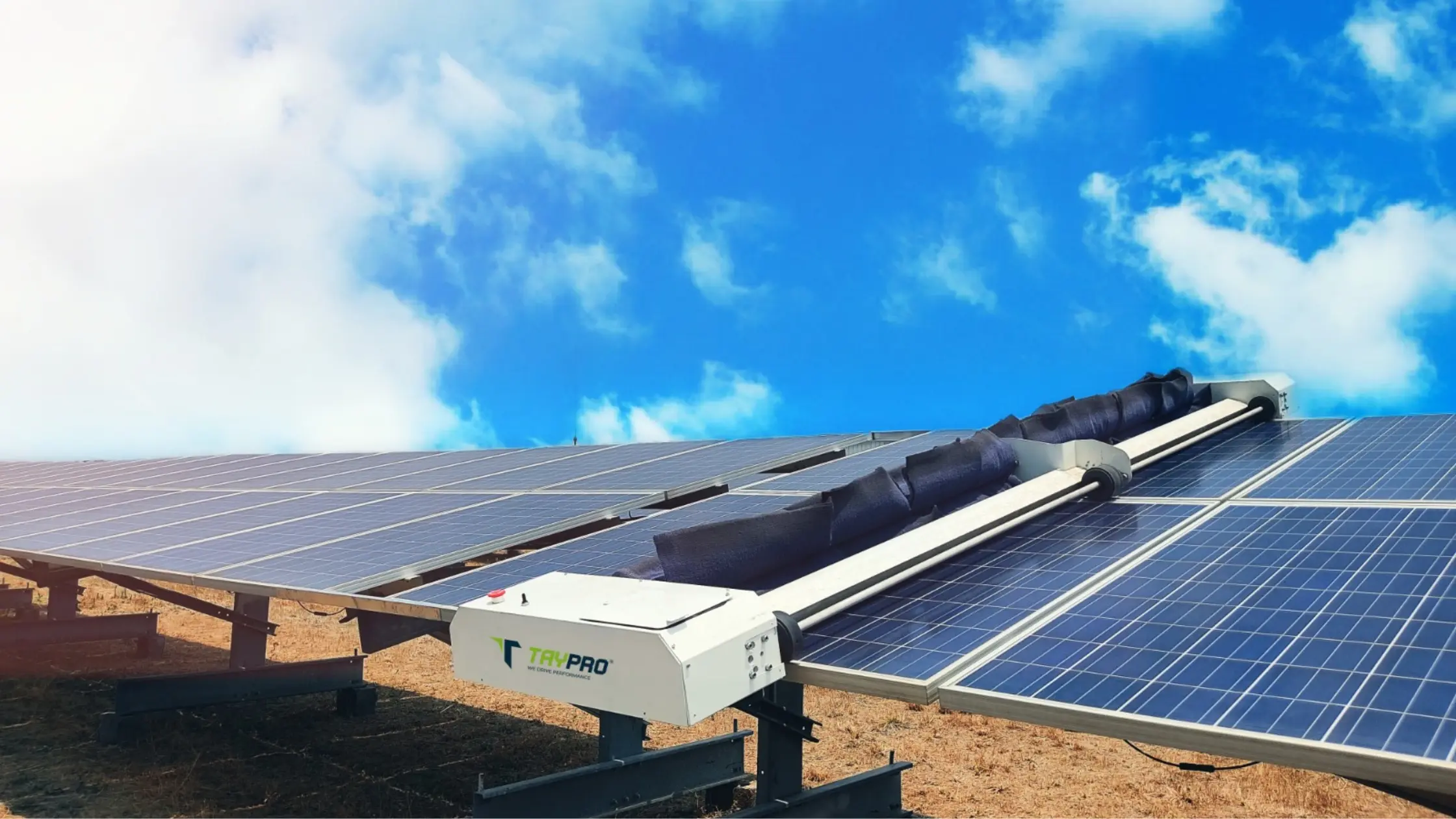
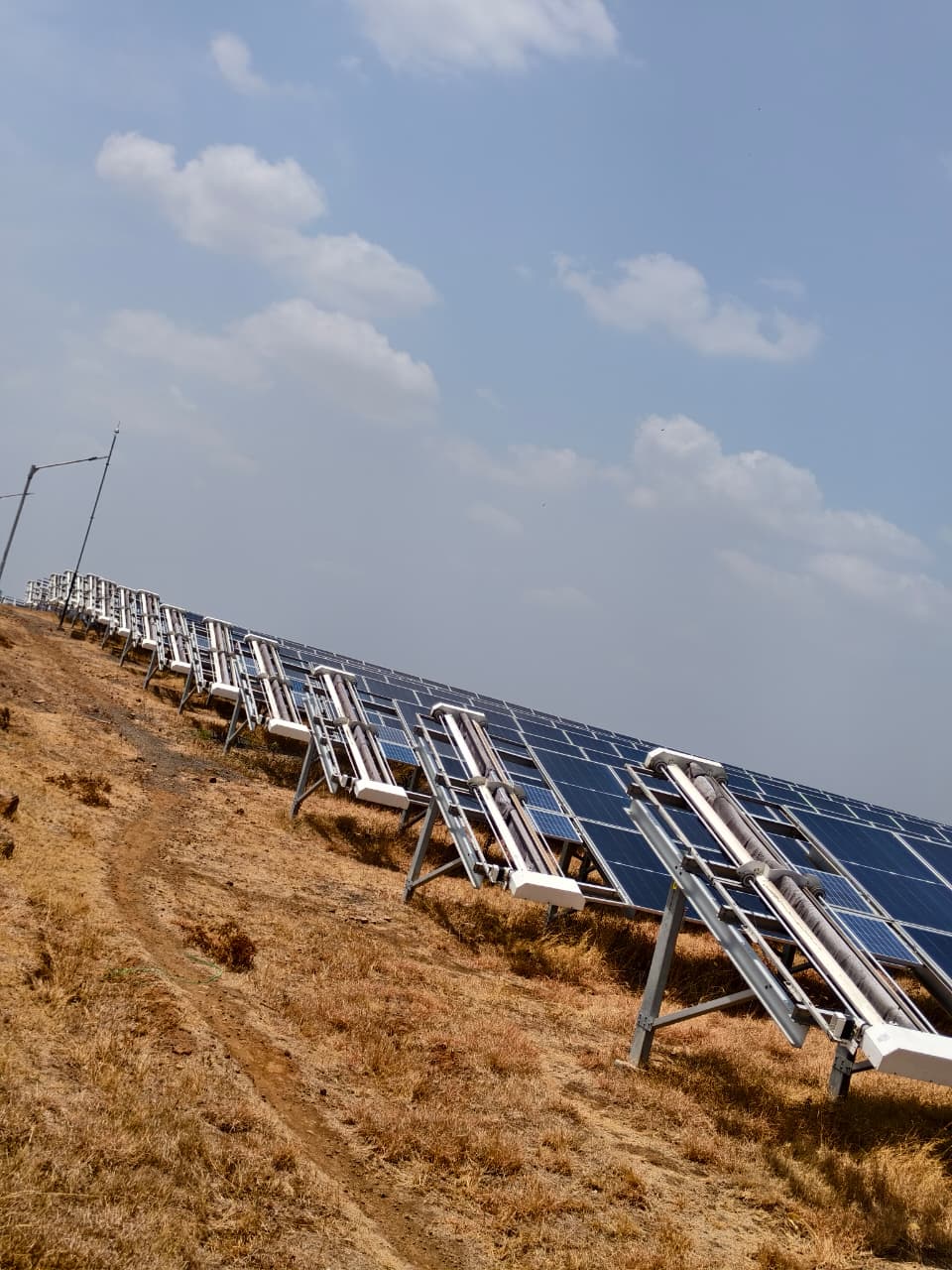
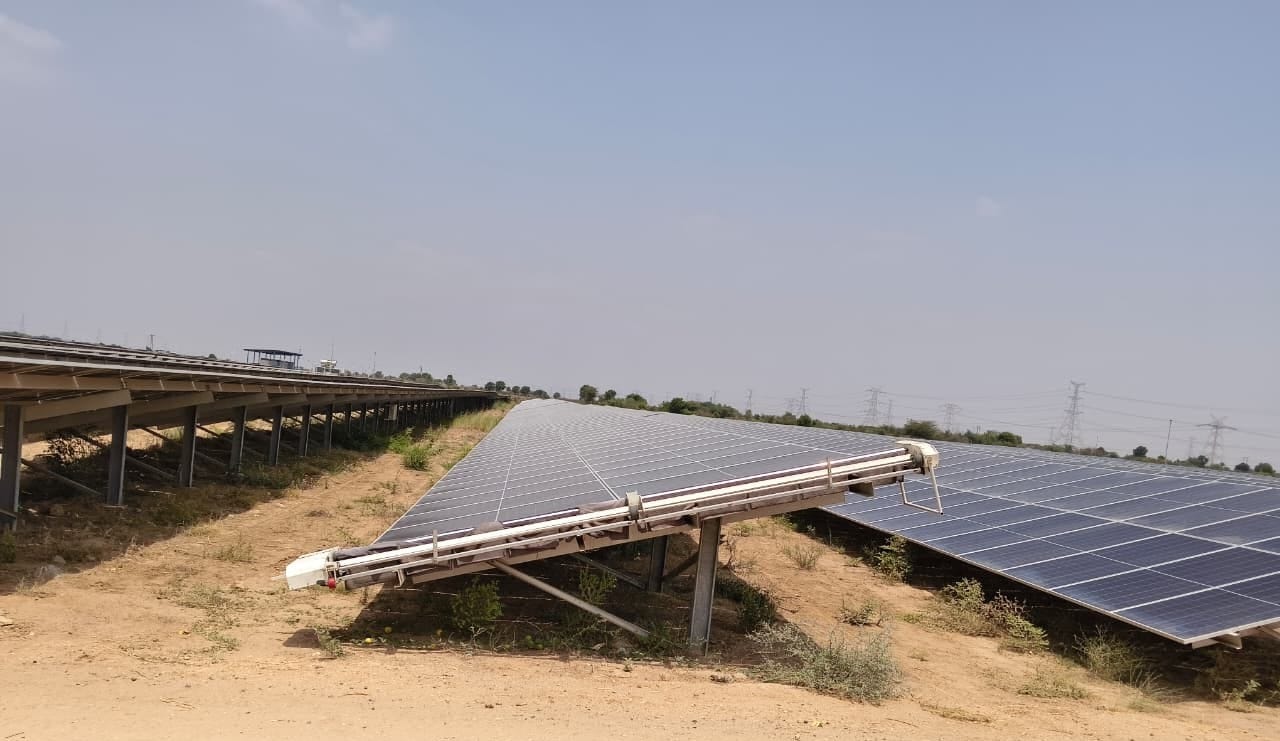
Your O&M team must clean the rear side to maintain PR. Standard manual cleaning often misses the gap between the module and the tracker. Robotic systems like GLYDE-X or NYUMA-X can reach these tight spaces. They keep both sides clear of abrasive dust.
Calibrate your SCADA alerts to isolate bifacial loss. If rear-side generation drops by 4% while the front is stable, your strategy is failing. Use these technical benchmarks:
- Albedo-monitoring: Audit the light reflected from your ground surface. Dust on the ground reduces cleaning effectiveness.
- Pass-through efficiency: Ensure robots cover the full area under the tracker. Non-uniform soiling causes voltage issues in N-type strings.
- Data-driven validation: Use the NECTYR fleet portal to check performance. If energy recovery is below 1.5%, your frequency is too low or brush pressure is wrong.
A high-efficiency strategy minimizes time spent with soiled surfaces. Automate cleaning for both sides. This protects your HJT and TOPCon investment. It ensures bifacial gain stays high all year.
Technical constraints: Water consumption, abrasion risks, and module longevity
N-type modules use sensitive passivation layers. They also have thinner metallization grids. Managers must prioritize coating integrity. Improper brushes or high-pressure water can cause damage. Dry cleaning with tools like GLYDE-X can reduce water use by 90%. This also prevents mineral buildup on the glass.
Abrasion is a major risk in dusty regions. Using abrasive brushes on delicate glass creates micro-scratches. These scratches trap more dust and moisture. This creates a cycle of efficiency loss. Managers should use waterless cleaning methods. These use controlled airflow or soft microfiber. This preserves the glass and keeps HJT efficiency at 23% to 26%.
Robots must stay within the manufacturer's mechanical limits. Follow these standard operating procedures:
- Pressure monitoring: Calibrate contact force to avoid micro-cracking near the frame.
- Chemical neutrality: If using water, ensure it meets pH and mineral standards. This prevents scaling on N-type surfaces.
- Operational rhythm: Use the NECTYR fleet portal to avoid cleaning during peak heat. This prevents thermal shock to the glass.
Balance cleaning frequency with mechanical safety. This ensures your N-type technology delivers its full yield without long-term costs.
Comparison: Manual wet cleaning vs. waterless cleaning for N-type technology
For utility-scale TOPCon and HJT assets, cleaning is a critical performance variable. Manual wet cleaning can harm delicate N-type cells. In contrast, waterless robotic systems provide consistent results. They keep bifacial gains at peak levels.
| Feature | Manual Wet Cleaning | Waterless Robotic Cleaning |
|---|---|---|
| Water Consumption | High (Needs site-specific sourcing) | Negligible (Up to 90% reduction) |
| Abrasion Risk | High (Water hardness + grit) | Minimal (Controlled force) |
| Operational Consistency | Dependent on labour | High (Automated scheduling) |
| N-type Module Impact | Risk of mineral scaling | Preserves coating |
Manual wet cleaning is often inconsistent. Water impurities can cause lime scale. On bifacial modules, even minor scale can trap dust. This hurts rear-side performance. Automated systems like GLYDE-X or NYUMA eliminate these risks. They maintain a strict, non-abrasive schedule.
Waterless solutions also solve logistics issues. You won't need to store or move large amounts of water. This is vital for remote sites. Many Tier-1 suppliers now require documented cleaning standards. They often preclude abrasive wet-brushing to protect warranties. For more, see our guide on CAPEX vs OPEX procurement models.
What plant managers should do next
Start by benchmarking your current performance ratio (PR). Compare it against regional soiling markers. Manual cycles often cause revenue loss. In Rajasthan, soiling can cut output by 2% to 5% in just two weeks. Take these immediate steps:
- Conduct a site-specific soiling audit: Use SCADA data to link power dips to dust or monsoon changes.
- Establish a trigger-based schedule: Use actual soiling thresholds instead of fixed months. This ensures HJT modules hit their 80% to 90% bifaciality targets.
- Audit water and safety protocols: Check if your manual cleaning meets manufacturer warranties. Ensure you avoid micro-cracking and coating damage.
- Scale with proven infrastructure: Look into autonomous solutions. Focus on systems with verified logs and real-time connectivity. See our guide on comparing robotic cleaning to manual labor.
Move from manual cycles to technology-backed cleaning. This protects your TOPCon and HJT yield. It also stabilizes your O&M costs. To align investments with your budget, review our guide on CAPEX vs OPEX procurement models.
Sources and further reading
Frequently asked questions
TOPCon and HJT modules need a new cleaning approach. These technologies are sensitive to surface abrasion.
Soiling can lead to annual losses between 5% and 30% in arid Indian regions. Because N-type modules rely on sensitive passivation layers to achieve high efficiency, even a minor 3% dip in PR due to dust buildup significantly impacts PPA revenue and long-term asset performance compared to traditional panel types.
Yes, aggressive manual scrubbing or the use of harsh cleaning agents can cause micro-scratches on the anti-reflective coating of TOPCon and HJT modules. This physical damage risks compromising the N-type passivation layers, which are essential for maintaining the 22% to 26% efficiency ratings of these modern panels.
In high-dust regions like Rajasthan and Gujarat, relying on fixed, calendar-based schedules is insufficient. Instead, managers should use a proactive approach triggered by real-time telemetry. Specifically, cleaning should be initiated whenever sensors detect a soiling loss exceeding 2–3%, while prioritizing the rear side of HJT modules to capture 80–90% bifacial gain.