How to Improve the Performance Ratio of a Utility-Scale Solar Plant in India: Operational Strategies That Work
Performance Ratio (PR) is the single most important operational metric for a utility-scale solar plant. It determines whether your plant meets PPA performance guarantees, satisfies lender covenants, and generates the returns modelled at financial close. In India, utility-scale plants typically operate at PR of 72–82%. The difference between 72% and 82% on a 100 MW plant is approximately 16 million kWh annually, ₹5.6 crore in revenue at ₹3.50/kWh. This article covers the most impactful strategies to improve PR, with specific attention to inverter efficiency optimisation, the second-largest PR lever after soiling.
What Performance Ratio Measures (and What Hides Inside It)
PR = (Actual Energy Generated) / (Theoretical Energy at STC Irradiance × Plant Capacity)
A PR of 80% means the plant converted 80% of the available solar resource into usable electricity. The remaining 20% was lost to temperature, soiling, inverter losses, cable losses, mismatch, shading, downtime, and curtailment. Improving PR means reducing these losses systematically. Not all losses are equally recoverable, some (like temperature coefficient) are physics, while others (like soiling, inverter underperformance, and mismatch) are operational and fixable.
PR Loss Breakdown: Where Your 15–25% Goes
Loss Category | Typical Contribution to PR Loss | Recoverability |
|---|---|---|
Temperature coefficient (high ambient temp) | 4 – 8% | Low (physics; partially offset by bifacial, module cooling) |
Soiling / dust accumulation | 3 – 12% | High, fully recoverable through cleaning frequency optimisation |
Inverter losses (conversion inefficiency, MPPT error) | 2 – 5% | High, recoverable through inverter optimisation, firmware, and replacement |
DC cable and connection losses | 1 – 2% | Medium, recoverable through connection tightening and cable audit |
Module mismatch and string-level variation | 1 – 3% | Medium, recoverable through restringing and module binning |
Shading (vegetation, row-to-row, near-field) | 0.5 – 3% | High, fully recoverable through vegetation management and layout optimisation |
Grid curtailment and downtime | 0.5 – 2% | Low (external) to Medium (inverter-controllable) |
Tracker misalignment (tracker plants) | 0.5 – 1.5% | High, recoverable through tracker calibration and algorithm update |
Strategy 1: Soiling Management, The Fastest PR Lever
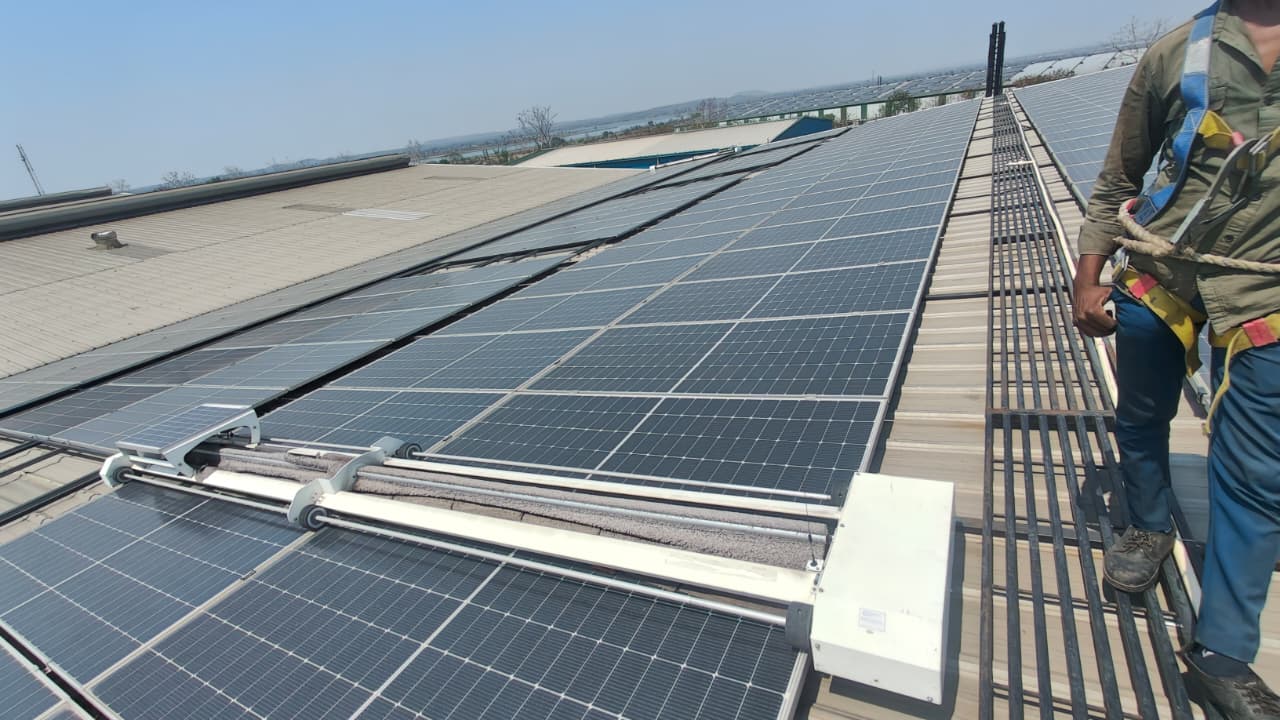
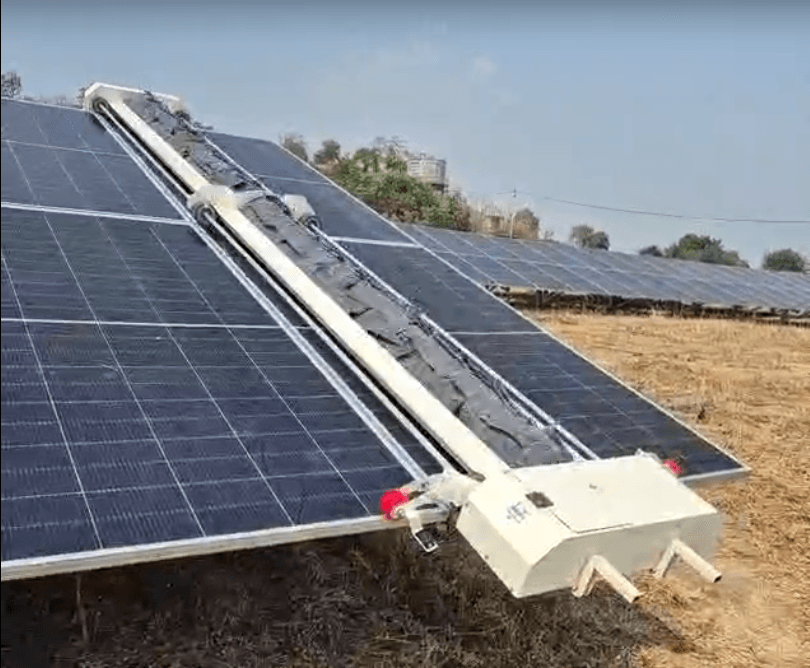
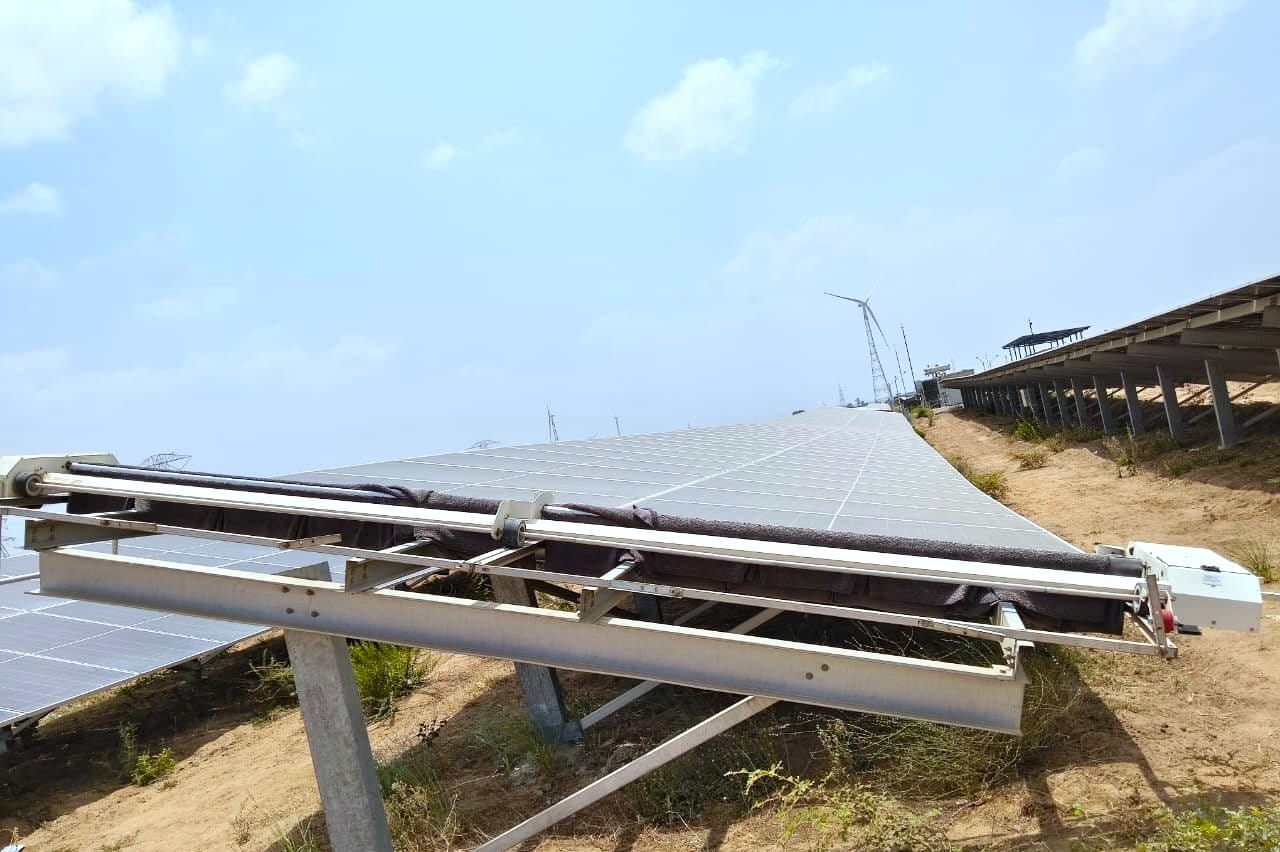
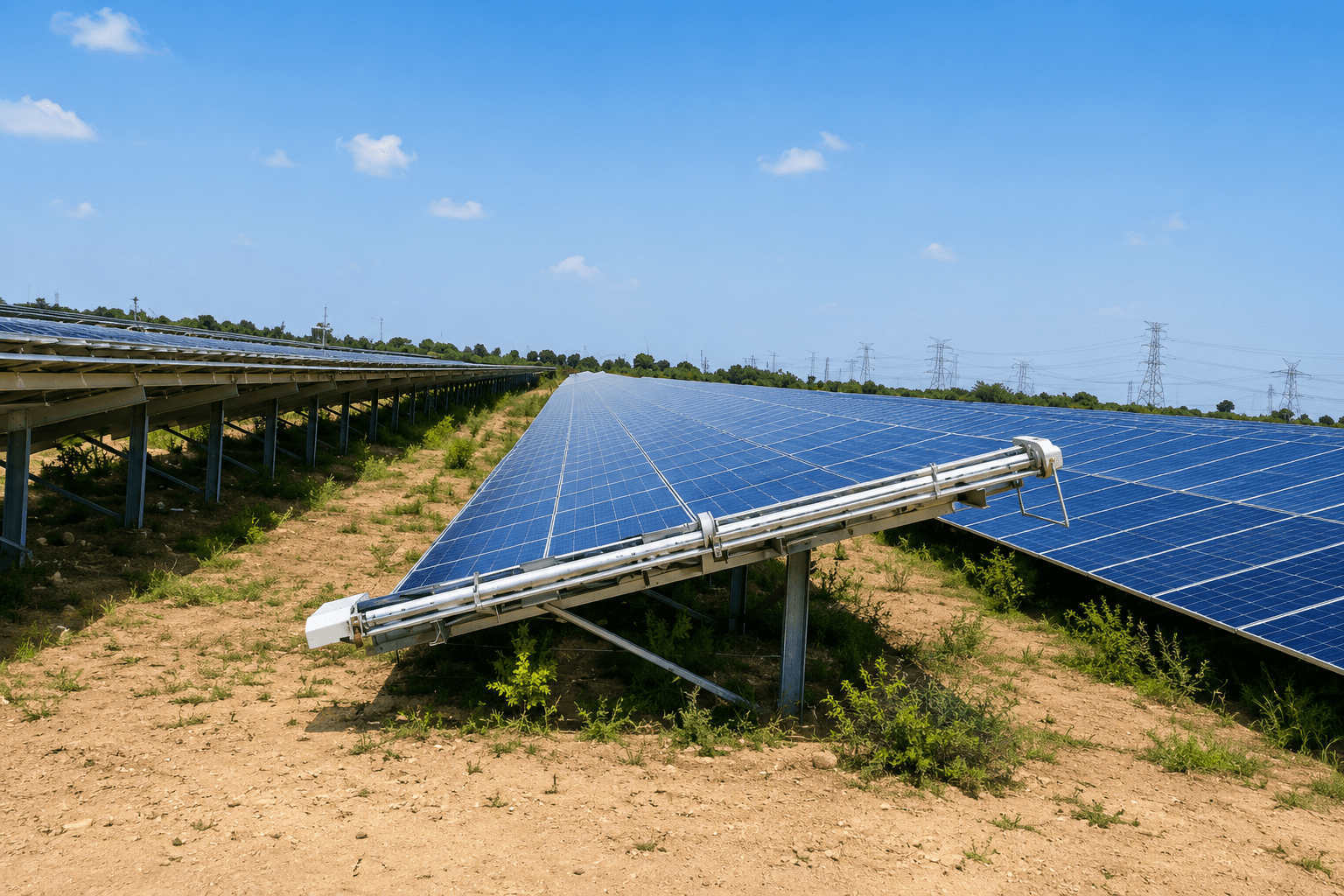
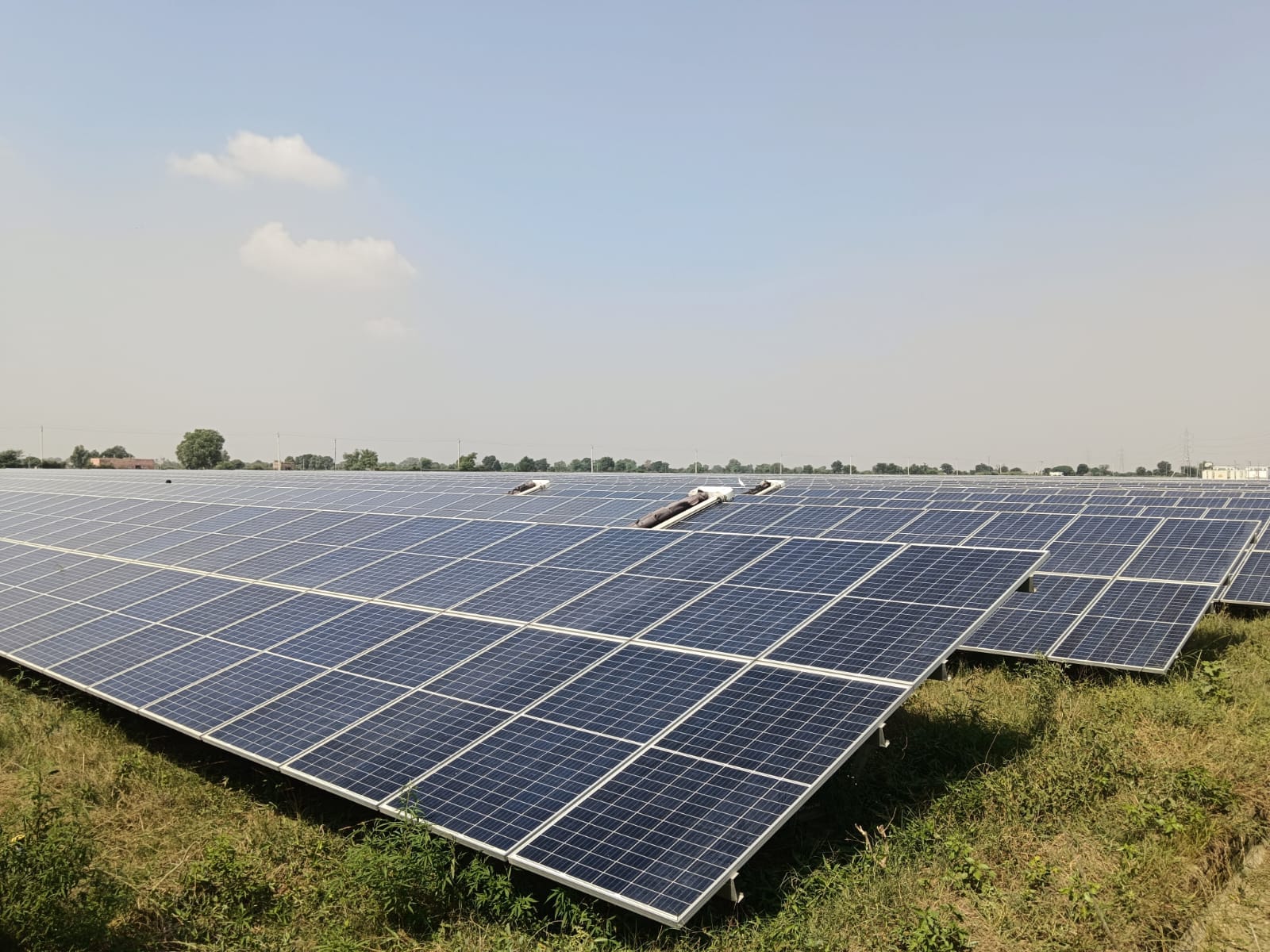
Soiling is typically the largest single recoverable PR loss for Indian plants in arid locations. A plant in Rajasthan with weekly manual cleaning and 5% average soiling loss can recover 3–4 PR percentage points immediately by switching to daily robotic cleaning. This is the highest-return operational intervention available to most Indian plant operators.
The mechanism: daily or near-daily dry robotic cleaning eliminates the soiling accumulation cycle between manual cleaning visits. Instead of a sawtooth pattern (soiling builds all week, cleaned Monday, builds again), the PR curve is nearly flat, soiling loss stays below 1% at all times.
TAYPRO's NECTYR platform measures this directly at string level. Plants that move from weekly manual to daily GLYDE/GLYDE-X cleaning see string-level PR improvement of 3–5 percentage points within the first operating month, without any electrical system change.
Strategy 2: Inverter Efficiency Optimisation
Inverter losses are the second-largest recoverable PR component, contributing 2–5% of typical PR loss in Indian utility-scale plants. The good news: much of this is recoverable through software and operational changes, not hardware replacement.
2a. MPPT Algorithm Tuning
Maximum Power Point Tracking (MPPT) is the inverter's real-time algorithm for finding the voltage/current combination that maximises power extraction from each string. Most central and string inverters are factory-configured with conservative MPPT parameters, wider voltage windows, slower tracking intervals, to prevent fault conditions. In stable irradiance conditions (typical of Indian summer), tighter MPPT parameters can recover 0.3–0.8% additional energy. This requires coordination with the inverter OEM for firmware adjustment and should be validated against the inverter warranty terms.
2b. DC/AC Ratio Optimisation
The DC/AC ratio (also called clipping ratio) defines how much DC generation capacity is connected to each unit of AC inverter capacity. Indian utility plants built before 2020 typically used DC/AC ratios of 1.0–1.1. Modern practice in India uses 1.25–1.35, particularly in high-irradiance arid locations. Increasing the DC/AC ratio by adding modules to existing inverters (within their rated input current) increases annual generation at lower additional cost than adding new inverter capacity. A 1.25 DC/AC ratio increases annual energy yield by 8–12% versus 1.0 ratio, primarily by capturing generation during the morning and evening ramp periods that the inverter would otherwise clip.
2c. Inverter Reactive Power and Power Factor Management
Indian grid operators (DISCOMs and PGCIL) require solar plants to maintain power factor within specified bands. Inverters operating outside this band trigger reactive power compensation penalties and can be curtailed. Ensuring inverter firmware is current, reactive power set-points are correctly configured, and grid parameters (voltage, frequency) are being met reduces forced curtailment, a direct PR improvement.
2d. Inverter Thermal Management
Central inverters in arid Indian locations routinely operate at ambient temperatures of 45–50°C. Most inverters have thermal derating functions that reduce output power when internal temperature exceeds threshold. Inadequate ventilation, dust-blocked cooling fins, or failed cooling fans directly cause derating-related PR loss. A quarterly thermal inspection of inverter rooms (visual, thermocouple, and thermal camera) typically identifies derating events that are recoverable through basic maintenance. Cleaning inverter ventilation grilles and verifying fan operation is a ₹5,000 intervention that can recover 0.5–1% PR during peak summer months.
2e. String Inverter vs Central Inverter Considerations for Existing Plants
Plants built with central inverters (1–2 MW per unit) have lower granularity of MPPT, one tracker per 1,000–2,000 panels. When a portion of the array experiences shading, soiling, or module failure, the entire central inverter's output is dragged down. String inverters (20–100 kW per unit) provide MPPT at individual string level, isolating underperformance. Re-powering studies in India show that replacing central inverters with string inverters can recover 1–3% PR, though the economics depend on remaining PPA life and inverter depreciation status.
Strategy 3: Vegetation and Shading Management
Row-to-row shading at low sun angles is a design-time loss built into the plant layout (ground coverage ratio determines this). Near-field shading from vegetation growth is an operational loss that is 100% recoverable. In Indian utility plants, particularly in Karnataka, Andhra Pradesh, and Tamil Nadu where biomass grows faster, quarterly vegetation clearance at 2–3 metre height around panel rows can recover 0.5–2% PR annually. This is among the cheapest PR interventions available.
Strategy 4: String-Level Monitoring and Fault Response
Advanced monitoring systems equipped with predictive analytics and machine learning can enhance solar power plant performance by up to 15% by anticipating maintenance needs and optimising energy output (PV Magazine India, 2024). The specific mechanism: string-level monitoring identifies underperforming strings that would not be visible at inverter-level SCADA. A string generating 85% of expected output due to a partial bypass diode failure, corroded MC4 connector, or single shaded module drags the entire string and reduces inverter input voltage diversity. Early detection and repair recovers this loss before it compounds.
TAYPRO's ORION AI platform (in development) is designed to correlate string-level PR data, soiling data from NECTYR, and weather data to distinguish soiling-driven PR drops from electrical fault-driven drops, enabling targeted response (cleaning vs electrical inspection) without dispatching crews unnecessarily.
Strategy 5: Tracker Calibration (for Tracker Plants)
Single-axis tracker plants can lose 0.5–1.5% annual energy from tracker misalignment, situations where the tracker algorithm's astronomical positioning differs from actual module orientation due to installation angle error, sensor drift, or firmware bugs. Annual tracker calibration using pyranometer comparison (measuring actual irradiance on module plane versus horizontal reference) and GPS-verified tracker angle verification recovers this loss. For a 100 MW tracker plant, 1% recovery = 1.6 million kWh = ₹56 lakh annually at ₹3.50/kWh.
Implementation Priority: Ranked by ROI
Rank | Intervention | Estimated PR Recovery | Approximate Cost (100 MW) | Payback |
|---|---|---|---|---|
1 | Increase cleaning frequency (robotic daily vs manual weekly) | 3 – 5% | ₹1.5 – 3 crore/year (OPEX) | Immediate, net positive |
2 | Vegetation clearance | 0.5 – 2% | ₹15 – 30 lakh/year | Immediate |
3 | Inverter thermal maintenance + ventilation | 0.5 – 1% | ₹5 – 20 lakh/year | Immediate |
4 | String-level monitoring upgrade | 1 – 3% | ₹30 – 80 lakh one-time | 6 – 18 months |
5 | Tracker calibration (tracker plants) | 0.5 – 1.5% | ₹5 – 15 lakh/year | Immediate |
6 | MPPT algorithm tuning (inverter OEM firmware) | 0.3 – 0.8% | ₹2 – 10 lakh one-time | 1 – 6 months |
7 | DC/AC ratio optimisation (module addition) | 2 – 5% yield increase | ₹50 – 150 lakh | 2 – 4 years |
8 | Central to string inverter re-powering | 1 – 3% | ₹2 – 4 crore | 3 – 6 years |
Related resources
For procurement and O&M teams evaluating robotic cleaning in India:
- GLYDE-X single-axis tracker cleaning robot
- robotic vs manual solar panel cleaning
- Taypro robotic solar panel cleaning service
Related reading
Frequently asked questions
A PR of 80–84% is considered good for a well-operated utility-scale plant in India. Plants in high-temperature arid zones (Rajasthan, Gujarat) typically target 78–82% due to temperature coefficient losses. Plants in moderate-temperature zones (Karnataka, Andhra) can achieve 82–86% with good O&M. PR below 75% indicates significant recoverable losses and warrants an immediate O&M audit.
Soiling is typically the largest single recoverable PR loss in arid Indian locations, contributing 3–12% of PR loss depending on cleaning frequency and location. A plant in Rajasthan with weekly manual cleaning loses 5–7% PR to soiling annually. Switching to daily robotic cleaning recovers most of this — 3–5 PR percentage points — which is the highest-return operational improvement available to most plant operators.
Inverter losses contribute 2–5% of PR loss in typical Indian utility plants. The main levers are: MPPT algorithm tuning (recovers 0.3–0.8%), thermal management to prevent derating (recovers 0.5–1% in summer), reactive power configuration for grid compliance (prevents curtailment), and eventual re-powering from central to string inverters (recovers 1–3%). Inverter optimisation is the second-highest-return PR improvement lever after soiling management.
The three fastest interventions — measurable within 30 days — are: (1) increase cleaning frequency using robotic systems, (2) conduct vegetation clearance for near-field shading, and (3) clean inverter ventilation and verify cooling fan operation. Together, these can recover 4–8 PR percentage points in an underperforming plant without any capital expenditure on new electrical equipment.
Yes. String-level monitoring enables detection of individual string underperformance that is invisible at inverter-level SCADA. Each undetected underperforming string reduces inverter output by 0.5–2% depending on string configuration. A 100 MW plant with 500 strings where 5% of strings are underperforming by 20% is losing approximately 0.5–1% of total plant output. String monitoring with rapid fault response recovers this loss systematically.