Summary for plant managers
Procuring a solar panel cleaning robot for large-scale utility plants in India isn't just about buying hardware; it's about protecting your long-term O&M performance. When drafting your RFP, move past the sticker price and focus on module integrity, cleaning efficiency, and site safety. You need specs that actually hold up against the grit and monsoon humidity found in states like Rajasthan and Gujarat. Look for systems with proven module compatibility and documented warranty protections so you don't end up compromising your PV investment.
- Mandatory IP rating: Aim for at least IP65. You need that level of protection against heavy dust and monsoon moisture at Indian utility sites.
- Warranty protection: Make zero-damage certification a requirement in your RFP. This is the only way to safeguard anti-reflective coatings (ARC) and prevent microcracks.
- Soiling mitigation goal: You should be targeting a 10–15% energy yield recovery, especially in arid zones like Rajasthan and Madhya Pradesh.
- Compliance focus: Ensure all specs align with MNRE guidelines and local safety standards to prevent commissioning headaches.
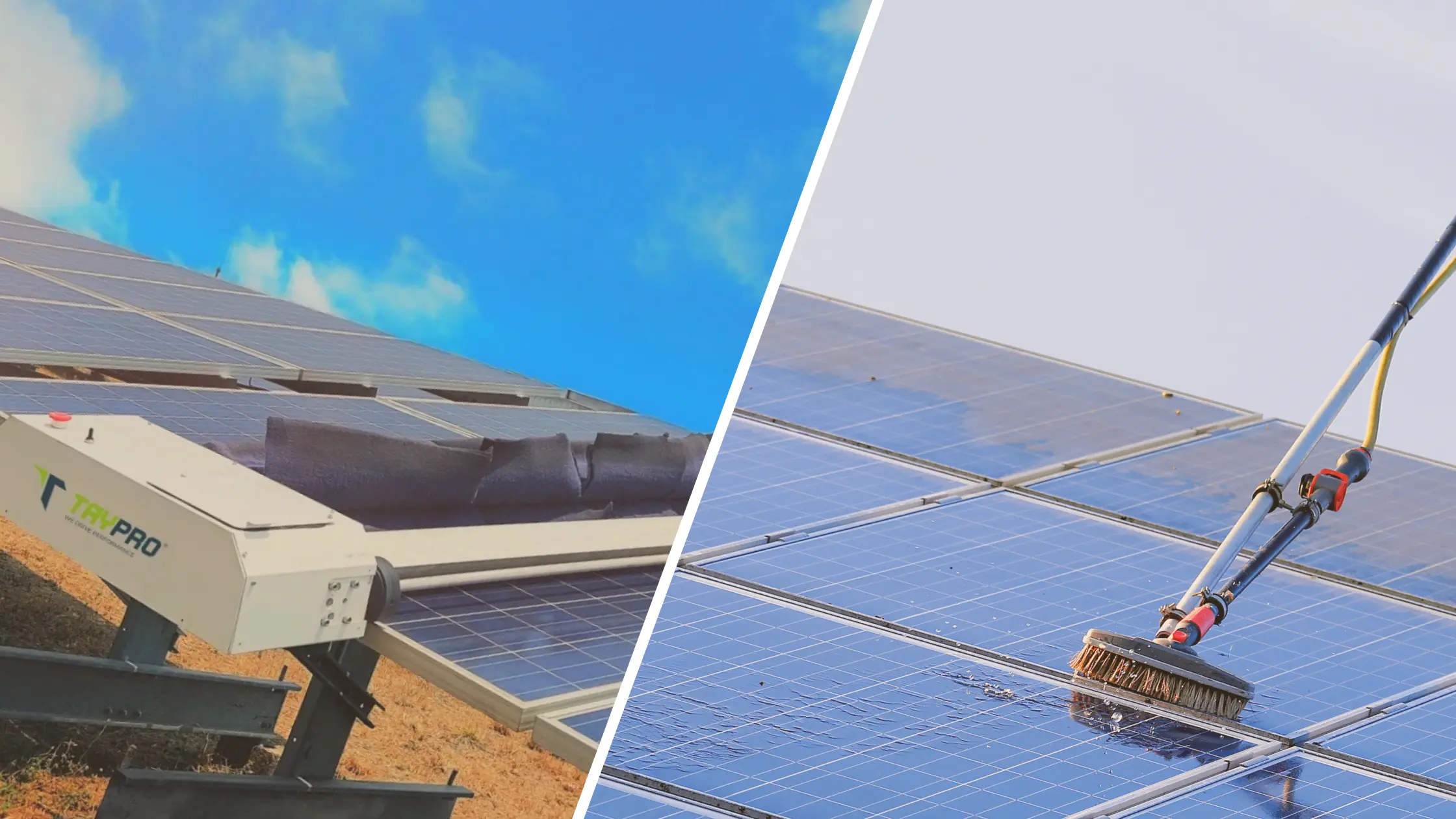
If you're managing a 5MW+ site, you aren't just looking for a tool, you're looking for a partner that fits into your solar plant O&M staffing models. Automation needs to come with transparent uptime SLAs and reliable data. As we've seen in our comparison of manual versus robotic performance ratio recovery, cutting corners during procurement leads to inconsistent cleaning and premature module degradation. Use this template to vet technical performance and ensure compatibility with your specific tracker technology.
Why standardizing your RFP is critical for 5MW+ assets
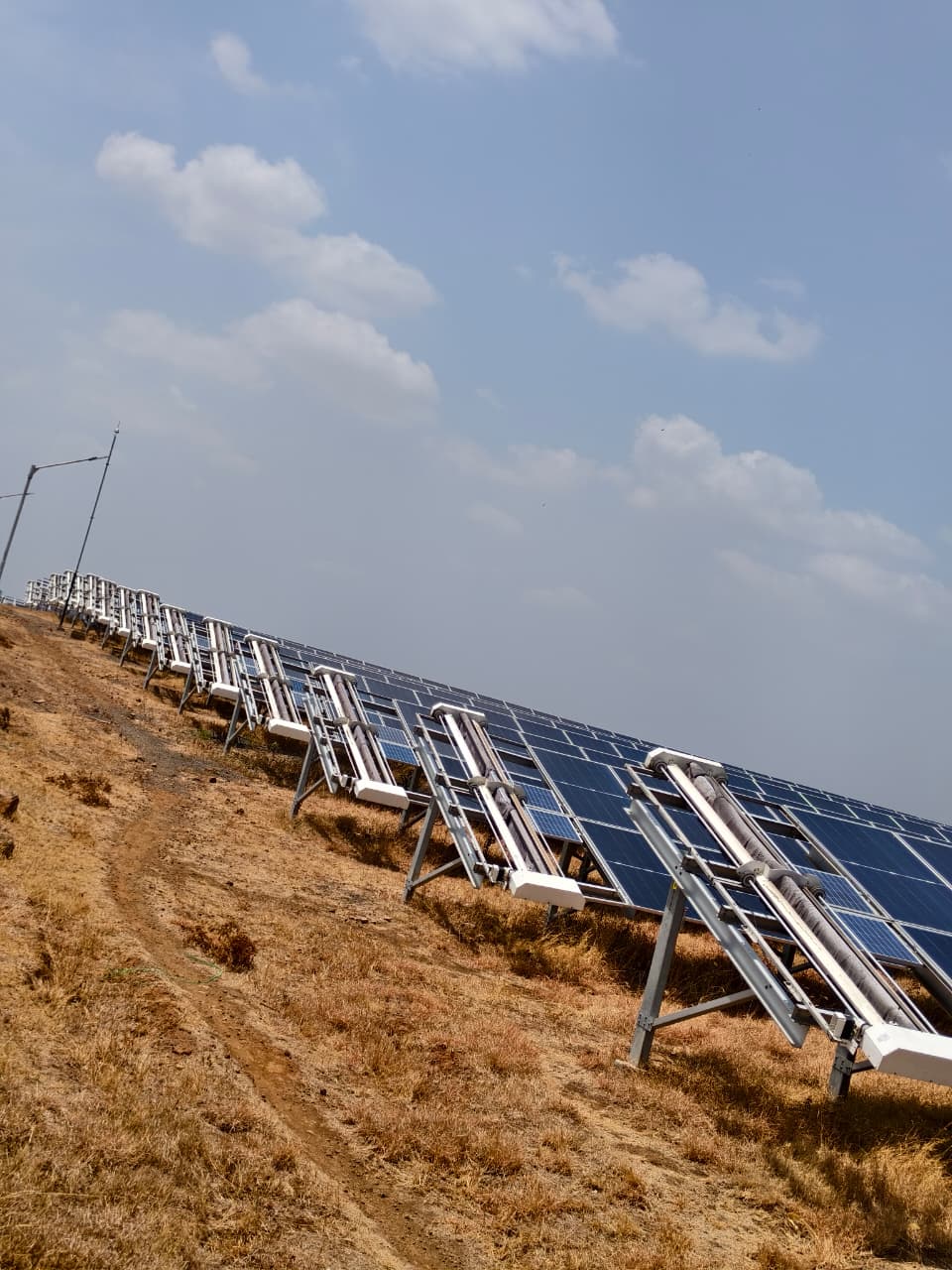
Don't let low hardware costs fool you. In large Indian solar projects, cheap equipment often carries much higher lifecycle costs that quickly wipe out any initial savings. Standardizing your RFP lets you compare vendors on an even playing field, evaluating them on fleet management, downtime risks, and module safety rather than just the upfront quote. For sites over 5MW, the goal is a predictable, autonomous model that integrates directly into your site SCADA framework.
A standardized RFP also stops vendor fragmentation. Managing a mix of different robot types makes O&M training a nightmare and complicates spare parts inventory. By setting hard technical requirements early, you force vendors to be transparent about their service-level agreements (SLAs). Our experience with solar plant O&M staffing models shows that a rigorous procurement process saves money by avoiding expensive technical fixes after deployment.
Standardization also helps address regional soiling profiles. The dust in Rajasthan is a different beast compared to coastal Karnataka. Your RFP must mandate that robots are tested for your specific site chemistry to ensure cleaning stays effective without scrubbing the module surfaces. As discussed in our comparison of manual versus robotic performance ratio recovery, standardizing these cycles helps match cleaning to your plant's actual soiling rates.
Ultimately, a structured RFP is about risk mitigation. It forces partners to provide hard data on power consumption and charging efficiency, ensuring your automatic solar panel cleaning system actually adds value instead of creating new operational bottlenecks. Mandating reporting standards gives you the visibility needed to monitor fleet health remotely and keep on-site team requirements lean.
Essential Technical Specifications for your Solar Panel Cleaning Robot RFP
Your RFP needs specific technical criteria to ensure the hardware survives local conditions. We recommend a minimum IP65 rating to defend against fine dust and heavy monsoon rains. You should also demand certified documentation for corrosion resistance, look for a C3 or higher classification, which is vital for sites in industrial or high-humidity areas.
You also need clear metrics for movement and cleaning efficiency. For 5MW+ sites, specify your required cycle time and the effective cleaning range per charge. Include these mandatory technical requirements in your document:
- IP Rating and Environmental Protection: Minimum IP65 rating is required to ensure the unit is dust-tight and water-resistant for the Indian climate.
- Cleaning Material Compatibility: Require UV-stable, non-abrasive materials. Demand PBT brushes or microfiber drums to prevent micro-scratches on coatings.
- Operational Constraints: Vendors must prove the robot can navigate your specific tilt, terrain, and row spacing.
- Battery and Power Management: Require Lithium-ion packs capable of supporting at least 1.6 km of cleaning on a single charge.
- Connectivity Protocols: Ensure compatibility with existing SCADA or cloud systems via standard interfaces like LTE, Wi-Fi, or RF mesh networks.
Don't forget to demand transparency on the cleaning mechanism itself. Specify whether you require a fully automatic waterless cleaning system or a semi-automatic setup. Set a benchmark for dust removal, such as a 98% removal rate on a single pass. These thresholds shift the burden of proof to the vendor, ensuring the solar panel cleaning robot actually fits your plant architecture.
Finally, avoid generic specs. The robot has to work with your specific mounting systems, whether that's horizontal single-axis trackers or fixed-tilt structures. Use our vendor evaluation checklist to prioritize hardware that has been field-tested. Don't gamble on unverified designs that carry high technical risks.
Cleaning method requirements: Preventing microcracks and soiling buildup
You need to define cleaning methods clearly to protect your PV modules. If you're using a dry cleaning automatic solar panel cleaning system, the robot must use controlled brush pressure to avoid damaging fragile anti-reflective (AR) coatings. In arid regions like Rajasthan, dust can be highly abrasive, so require vendors to prove their brushes are soft or utilize microfiber. High-friction brushes are a recipe for microcracks, which can void your module manufacturer's warranty.
Categorize your requirements based on the cleaning mechanism. Different technologies tackle soiling differently, so specify if you need airflow-assisted systems or direct-contact brushes. For 5MW+ sites, mandate a cleaning efficiency of 95% to 99% per cycle to ensure the equipment handles everything from light dust in Karnataka to heavy industrial soot.
The table below shows how cleaning scenarios impact your procurement strategy:
| Scenario | Soiling Risk | Recommended Cleaning Tech | Key RFP Requirement |
|---|---|---|---|
| Arid (Rajasthan) | High (Silica/Sand) | Dual-pass airflow + microfiber | Non-abrasive contact pressure |
| Industrial (Gujarat/UP) | High (Soot/PM2.5) | Single-pass PBT brush | Uniform brush rotation speed |
| Coastal (TN/Karnataka) | Moderate (Salt/Moisture) | Waterless / Hybrid | C3 corrosion-rated enclosure |
| Large-Scale (10MW+) | High (Uniform) | Autonomous robotic fleet | NECTYR-integrated scheduling |
Also, watch out for dirt buildup in corners and frames. Some robots lack the flexibility to clean these areas, leaving residue that causes localized hotspots. These hotspots directly hurt your Performance Ratio (PR). We recommend requiring a site demo or trial run to verify cleaning quality and ensure no streaks are left behind. If you need to track these specific losses, use a tool for managing performance ratio losses.
Compliance and Warranty: Protecting your PV module investment
Strict warranty clauses are a must in your RFP to prevent robots from voiding your module warranties. Module manufacturers have very specific rules regarding mechanical stress; too much pressure can cause micro-cracks that destroy long-term yields. Require vendors to provide certifications from accredited bodies proving their robots stay within the safe load limits for silicon PV panels.
Mandate built-in sensors for edge monitoring and obstacle detection to prevent physical damage to module frames. This is critical for Indian utility sites where tracker systems often have varying structural tolerances. Your RFP should also include an indemnity clause for coating damage caused by improper brush rotation or excessive force. Check if the vendor has specific experience with TOPCon or HJT modules, as these can be more sensitive than traditional PERC modules.
Make sure your documentation requires compliance with regional electrical safety rules. All outdoor hardware needs IP65 protection; in states like Gujarat, dust storms can easily penetrate weak seals, leading to short circuits in the robot or the modules. Mandating these standards shifts the operational risk back to the supplier. For more guidance, see our vendor evaluation checklist for solar cleaning robots, which covers the necessary safety certifications for the Indian market.
How does automated cleaning impact long-term module reliability?
Automated cleaning can significantly improve long-term module reliability if you prioritize material compatibility. Robots are a safer alternative to aggressive manual cleaning, which often causes surface damage, strips protective coatings, or induces micro-cracking. A robotic system offers a calibrated, repeatable cycle that keeps cleaning activities within the module manufacturer's specified limits.
With high-efficiency modules like TOPCon or HJT becoming standard in 5MW+ plants, maintaining surface integrity is vital to prevent moisture ingress. A high-quality solar panel cleaning robot uses soft, UV-stable bristles to remove dust without applying excessive downward force. Using robots also reduces mechanical fatigue on your structures by eliminating heavy foot traffic and manual handling.
Automated systems also allow for more consistent cleaning schedules, preventing dust from hardening in arid regions. If dust sits too long, moisture can cause permanent surface pitting that's often mistaken for material degradation. Frequent, controlled cleaning preserves the chemical stability of your modules and helps them reach their 25-year design life. Use a tool for managing performance ratio losses to tie your maintenance directly to generation data. Automated, contact-controlled cleaning is one of the best risk mitigation strategies you have.
Integrating robotic cleaning into existing O&M and SCADA workflows
A solar panel cleaning robot provides the most value when it isn't treated as an isolated tool. It needs to integrate with your existing digital ecosystem. Your fleet should interface directly with your SCADA and management software so you can track progress and operational status in real time. This ensures your O&M teams get alerts before minor issues become major problems and allows you to verify PR recovery claims through robot data.
When managing 5MW+ portfolios, look for hardware with modern connectivity like LoRaWAN or mesh RF networks. These are much more reliable across large, sprawling sites and ensure robots can relay battery and status data from distant rows. You can even use bi-directional links to adjust cleaning frequency based on real-time soiling data. For more details, check our guide on solar plant O&M staffing models with robotic cleaning.
Finally, demand that vendors provide an open API or a dedicated dashboard. Tools like Taypro’s NECTYR integrate well with existing stacks, preventing the creation of data silos. When you treat your robot fleet as a sensor array, your strategy becomes truly data-driven. For benchmarking, our report on managing performance ratio losses shows exactly how smart scheduling impacts plant revenue.
What plant managers should do next
Transitioning from manual cleaning to a structured automated process requires a few deliberate steps. Start by analyzing the specific soiling patterns at your site to determine your cleaning frequency. Next, audit your current infrastructure to see if your trackers and rails can handle automated hardware. Use this checklist to formalize your strategy:
- Conduct an internal pilot: Run a 5MW pilot before committing to a full rollout to validate performance against your local dust.
- Standardize technical benchmarks: Demand IP65 ratings and tracker compatibility, and ensure everything is safe for anti-reflective coatings.
- Prioritize integrated O&M: Require open API access for SCADA and use platforms like NECTYR to track progress and battery health.
- Review warranty alignment: Confirm that the robot manufacturer has the necessary safety clearances from your module supplier.
- Evaluate the service model: Decide if a CAPEX purchase or an OPEX managed service better fits your current budget.
An evidence-based model turns cleaning from a cost center into a revenue driver. To see the actual financial impact, review our guide on solar plant O&M staffing models with robotic cleaning or use a tool for managing performance ratio losses. Proactive maintenance is the most effective way to protect your plant's capacity.
Sources and further reading
Frequently asked questions
Buying a solar panel cleaning robot for large solar plants in India requires a careful RFP process. You should look beyond simple equipment purchases.
To protect your module warranty, the RFP must explicitly require zero-damage certification from the manufacturer. This certification guarantees that the robotic system will not harm anti-reflective coatings or cause microcracks during the cleaning process.
The safest cleaning method is one that utilizes robotic automation with verified module compatibility. Systems that avoid abrasive materials and provide documentation for non-destructive operation are essential for maintaining the integrity of utility-scale PV assets across diverse regions like Rajasthan and Gujarat.
Safety compliance should be evaluated by verifying that the equipment meets local electrical safety norms and MNRE guidelines. Additionally, ensure the vendor provides transparent data reporting and uptime SLAs to confirm the system can integrate reliably with your existing O&M staffing models without compromising plant safety.