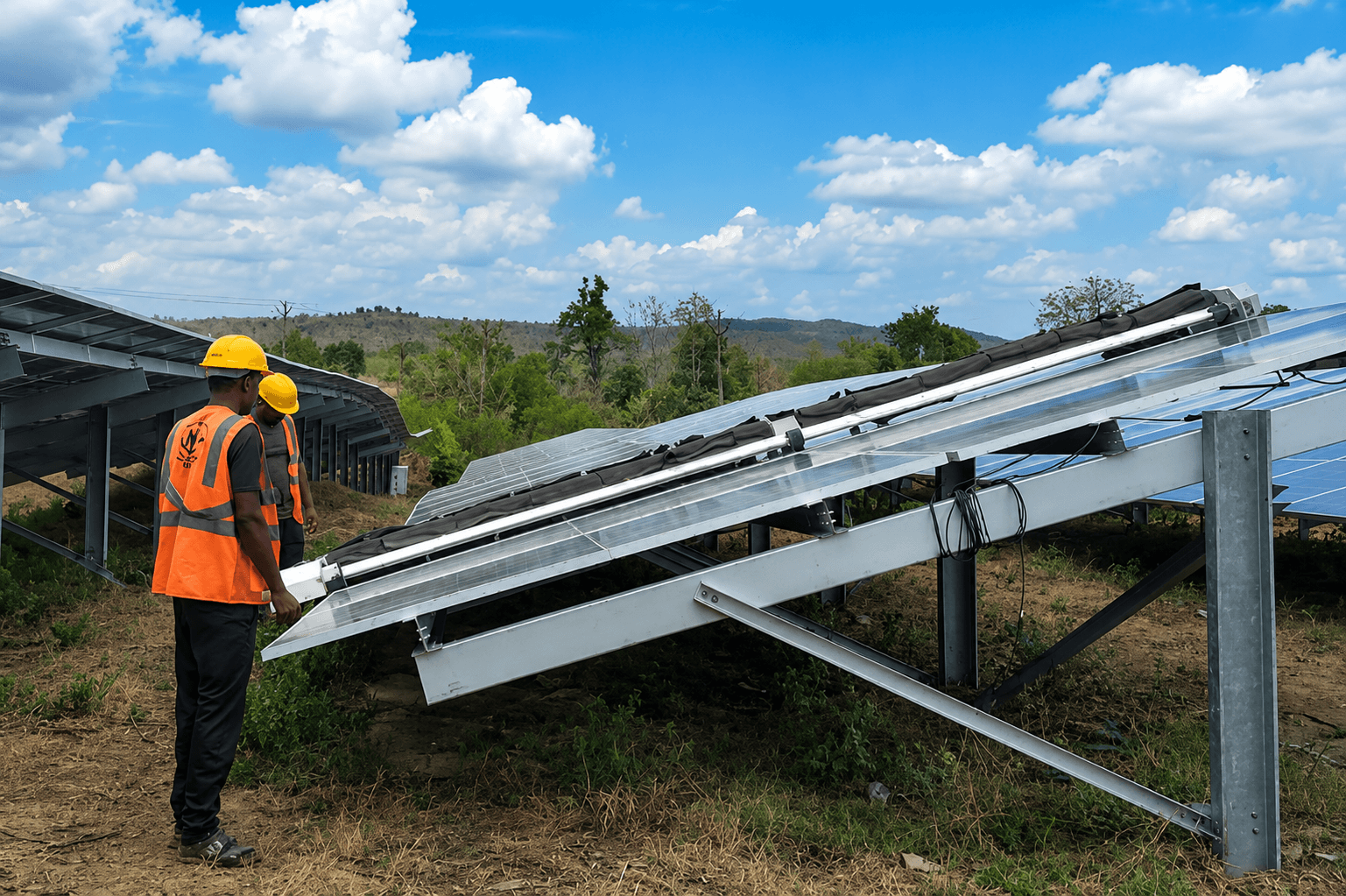
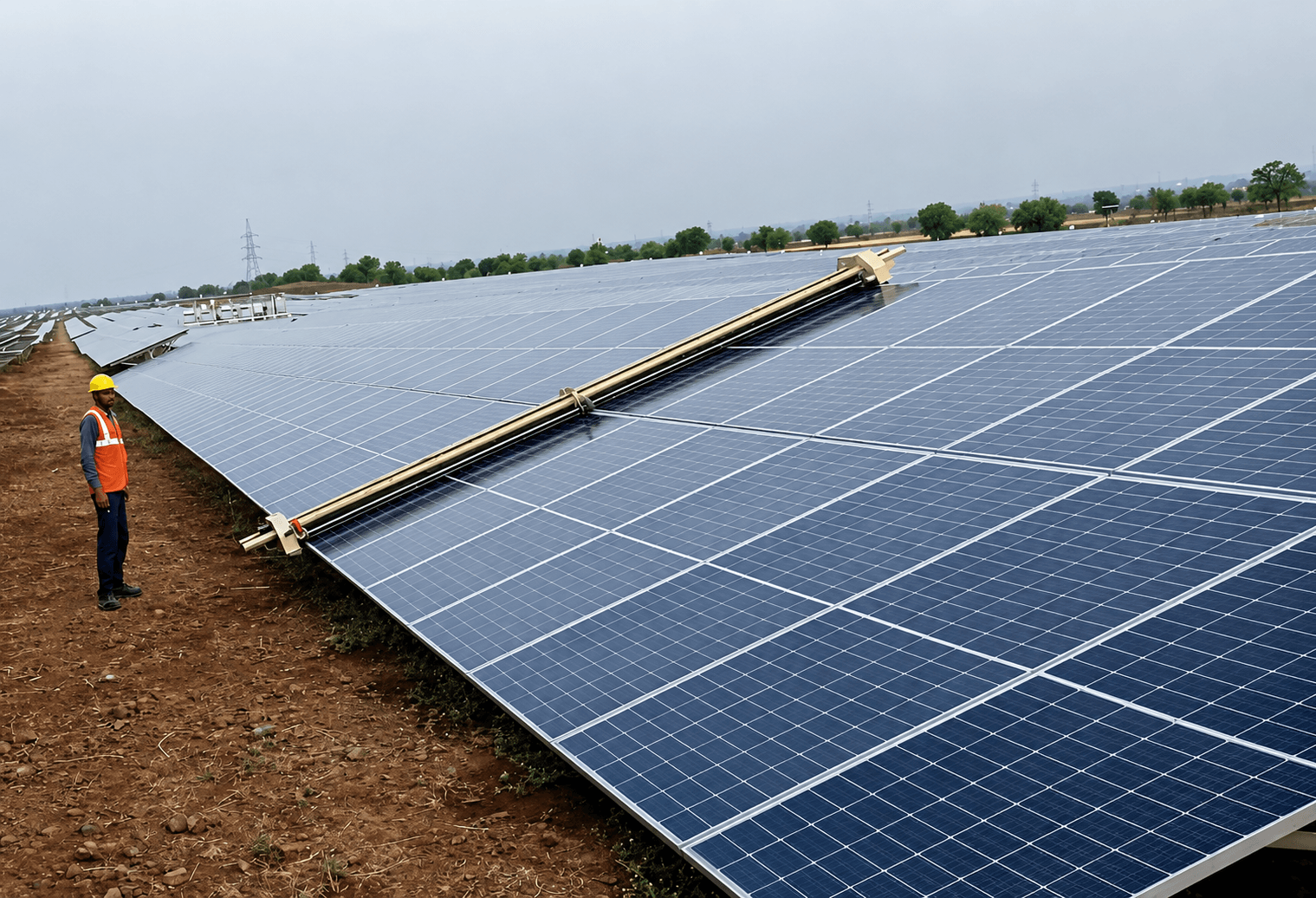
Quick answer
Managing the second life use of cleaning robot components in India requires a switch from reactive disposal to structured maintenance. By reconditioning wear-prone parts like brushes and motors, plant managers can lower their Levelized Cost of Energy (LCOE). This approach also ensures compliance with the E-Waste (Management) Rules of 2022. Owners of 5MW+ sites should use modular parts to keep legacy hardware functional during site upgrades.
- Automated dry-cleaning robots recover 15-25% of energy losses in regions like Rajasthan and Gujarat.
- Critical components typically last 5-7 years, requiring modular upgrades for fleet health.
- A component swap-out program for 5MW+ plants keeps uptime above 99% while cutting costs.
- Compliance with the E-Waste (Management) Rules 2022 is required when retiring electronic modules.
Managing the life cycle of your automatic solar panel cleaning system is as important as its initial deployment. As your site ages, using spare parts and extending the life of components becomes a key lever for steady Performance Ratio (PR) levels. Asset leads should view the robotic fleet as a dynamic asset rather than a static purchase. Maintenance schedules should account for both component wear and local dust levels. You can explore these strategies in our guide on soiling mitigation strategies in India.
How does the second life use of cleaning robot components impact 5MW+ site operations?

For utility-scale assets of 5MW or more, managing component lifecycles shifts the focus toward long-term optimization. A reconditioning program lets operations teams extend the tenure of drive systems and chassis hardware. By refurbishing sensor arrays or motors during downtime, plants keep a high PR and avoid the costs of full-fleet replacement.
This strategy stabilizes maintenance budgets and improves the Levelized Cost of Energy (LCOE). Instead of discarding whole units for minor faults, teams can replace specific items like brush assemblies. This modularity is vital for large sites where small efficiency drops add up to large revenue losses. Using components for a second life ensures that your automatic solar panel cleaning system stays resilient in dusty areas like Gujarat and Rajasthan.
An organized second-life strategy integrates well with fleet management portals like NECTYR. Tracking performance metrics helps O&M managers move from reactive repairs to predictive maintenance. This allows teams to identify failing hardware early. Whether you use GLYDE-X trackers or NYUMA fixed-tilt units, this approach maximizes return on investment. Aligning your strategy with soiling mitigation strategies in India guards your plant against premature obsolescence.
Managing the lifecycle of robotic cleaning systems in Indian arid regions
Arid zones like Rajasthan and Gujarat see daily dust accumulation of 0.3% to 0.5%. Managing the second life of robot parts requires a strict maintenance cadence. Teams should account for temperatures often exceeding 50 degrees Celsius. Moving from calendar-based maintenance to condition-based cycles using NECTYR diagnostics can extend motor and sensor life by 30%.
Site leads should build a staging area for refurbishment on 50MW+ sites. This allows for internal repair of brush shafts and battery enclosures. Following the E-Waste (Management) Rules 2022 ensures that exhausted battery packs are recycled by authorized partners. This strategy lowers the total cost of ownership and prevents the waste of functional sub-systems.
For NYUMA or GLYDE series robots, component life depends on local debris. Fine silica sand acts as an abrasive, so you must clean robot bearings and communication modules regularly. Managers should log every part swap to maintain an audit trail. This aids in compliance and helps predict future failures. Your automatic solar panel cleaning system will then maintain a 99% efficiency rate without needing constant full-unit replacements.
Which maintenance thresholds determine the end-of-life for cleaning robot parts?
Identifying when a part needs a second-life transition is key to high performance. Maintenance should rely on operational data rather than time intervals. For NYUMA or HELYX systems using PBT brushes, replace or refurbish when bristle length drops below 60%. Worn brushes reduce cleaning efficiency and may damage module surfaces through uneven pressure.
Flag drive motors and gears for maintenance when current draw, tracked in NECTYR, increases by 15%. This spike usually indicates mechanical friction or dust buildup. You should move these components to a lighter duty cycle or service them. Check chassis integrity every 2,000 kilometers of travel. Any structural fatigue in the 360-degree bridges on GLYDE-X units requires an immediate safety check.
Use these thresholds to trigger part replacement or repurposing:
- Brush wear: Replace when filaments show a 40% loss in length or uneven thinning.
- Battery health: Test capacity when cycle counts reach 80% of the rated life.
- Sensor degradation: Replace obstacle sensors if the error rate exceeds 3% over 30 days.
- Communication modules: Flag for testing if signal latency increases by 200ms or more.
Following these thresholds prevents unplanned downtime. Documentation of these metrics supports soiling mitigation strategies in India and helps your infrastructure adapt to regional challenges.
Technical integration and replacement protocols for aging robot fleets
Integrating replacement parts into a fleet requires a standard verification process. O&M teams in India should use serial-based tracking to simplify warranty claims and E-Waste reporting. When replacing brushes on NYUMA or GLYDE units, calibrate the new assembly to the specific mounting profile to ensure even contact pressure.
For controllers or communication boards, use the NECTYR portal to update firmware immediately. This avoids sync errors between new hardware and the legacy network. Ensure that updated components meet safety standards for your site, particularly in high-heat zones where thermal tolerance matters.
Follow this protocol for replacing and integrating components:
- Inventory audit: Verify the revision level of the robot body against the spare part ID.
- Component installation: Install per the service guide, ensuring seals meet the IP65 rating.
- Diagnostic handshake: Use NECTYR to confirm signal latency stays below 200ms.
- Operational validation: Run a test cycle to ensure the robot moves at 10–15 metres per minute.
- Lifecycle logging: Record the install date and retired part serial number for E-Waste compliance.
Treating each replacement as a lifecycle event protects your automatic solar panel cleaning system. This oversight is vital for maintaining 99% cleaning efficiency in regions like Rajasthan or Gujarat.
Compliance and environmental considerations for component disposal
India’s solar capacity is moving toward 500 GW, making waste management a top priority. Under the E-Waste (Management) Rules 2022, robot parts are electronic equipment. They require strict recycling and disposal protocols. Asset managers must use authorized recyclers to meet pollution control board guidelines.
For utility-scale sites, the audit trail is as important as the physical disposal. When a component reaches the end of its life, follow these steps to stay compliant:
- Inventory tracking: Maintain a registry of serial numbers for every retired unit.
- Verification of recyclers: Only hire vendors authorized by the State Pollution Control Board.
- Certification of destruction: Obtain certificates for high-value items like LiDAR to satisfy ESG reporting.
- Battery handling: Separate lithium-ion batteries for specialized hazardous waste processing to prevent environmental contamination.
These steps reduce legal and environmental risks. This approach protects owners from penalties and aids sustainability audits. Proper management shows professional maturity in managing 5MW+ site infrastructure. Review our analysis on labor safety compliance and robotic cleaning risks for more operational standards.
What are the best practices for extending the operational life of your robotic fleet?
Extending the lifespan of your robotic fleet at a 5 MW+ site requires proactive, data-driven scheduling. Use telemetry from NECTYR to monitor battery health and drive-train friction. This helps technicians fix minor wear before it leads to a failure that damages modules.
- Implement a predictive lube schedule: Lubricate gears every 500 hours to prevent heat-induced friction in arid zones.
- Monitor battery discharge cycles: Keep robot batteries above 20% charge to preserve lithium-ion lifespan.
- Maintain docking station alignment: Keep docking stations level to prevent strain on guide pins.
- Schedule brush rotation: Inspect and rotate brushes to prevent uneven pressure on module coatings.
- Digital logbook accuracy: Centralize repair logs to spot failure patterns in specific plant blocks.
These practices turn your fleet into a durable performance tool. Adhering to these benchmarks protects your automatic solar panel cleaning system investment while maintaining 99% cleaning efficiency. Reduced component replacement also lowers the total O&M budget. Review our analysis on manual versus robotic cleaning safety compliance to ensure your teams follow the best site protocols.
Key takeaways for O&M leads
Managing cleaning components at a 5 MW+ utility site requires a shift to a systematic, compliance-driven approach. By combining predictive maintenance with E-Waste (Management) Rules 2022, managers can secure energy yields and limit liability.
- Standardize procurement: Keep inventory of high-wear parts to avoid supply issues during peak soiling seasons.
- Monitor degradation metrics: Use NECTYR to track performance and replace brushes before they cause micro-scratches.
- Compliance is non-negotiable: Ensure all retired hardware is processed by authorized recycling facilities.
- Extend asset life: Focus on lubricating gears and leveling docking stations to prevent mechanical failures.
- Data-driven planning: Use performance data to justify O&M budgets and spare part investments.
Following these steps makes O&M a high-performance operation. For more insight, review our analysis on carbon credit calculation from soiling loss reduction or explore how professional O&M strategies improve soiling mitigation in India. Technology-led maintenance is the most effective way to protect your investment for the full 25-year life of the solar park.
Sources and further reading
Frequently asked questions
Managing the second life use of cleaning robot components in India requires a switch from reactive disposal to structured maintenance. By reconditioning wear-prone parts like brushes and motors, plant managers can lower their Levelized Cost of Energy (LCOE).
Critical component life cycles typically span 5 to 7 years. Once these components reach the end of this period, they often require mid-term modular upgrades to ensure the fleet maintains optimal health and performance ratios.
Modular components reduce costs by preventing the need for full system replacements. By refurbishing sub-components, owners can significantly lower the Levelized Cost of Energy and recover 15 to 25 percent of energy losses caused by heavy soiling in regions like Rajasthan and Gujarat.
Yes, compliance with the E-Waste (Management) Rules 2022 is mandatory for all plant operators. These rules must be followed whenever you are decommissioning or upgrading electronic cleaning modules to ensure environmental standards are met.