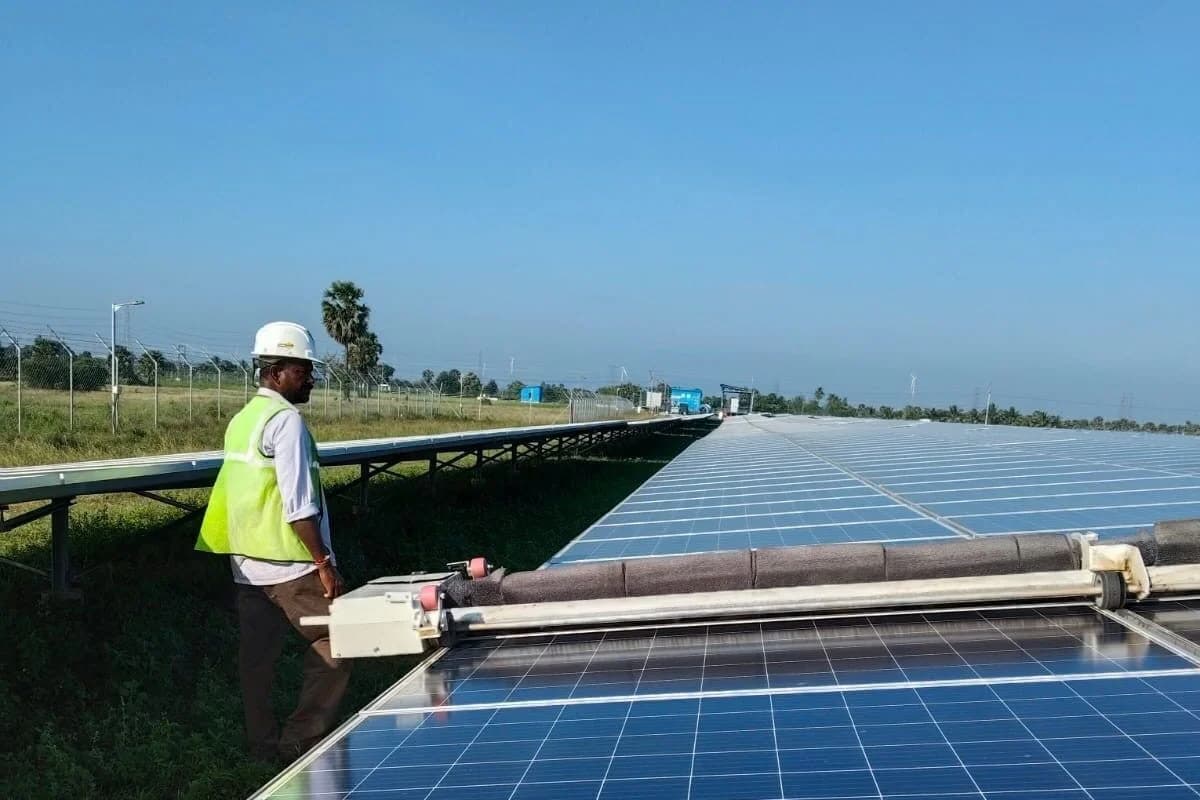
Fifty megawatts is the scale where informal cleaning arrangements break. A vendor that handled 10 MW with two crews cannot automatically mobilize twelve rows of trackers after a Rajasthan haboob without documented surge capacity. Asset owners need procurement discipline: scope, SLAs, OEM compliance, and economics tied to MWh recovery, not lowest per-pass bid.
This guide explains how Indian utility owners evaluate solar panel cleaning services for 50 MW projects: vendor capability proof, contract structure, throughput math, and red flags that predict PR drift in year two.
Quick answer
- Demand OEM-approved methods in writing before award.
- Model five-year TCO, not lowest annual AMC.
- Storm SLA: mobilization hours on priority blocks.
- Coverage proof: fleet logs or QA photos every cycle.
- Pilot first: two dirty blocks before full-plant lock-in.
Why 50 MW changes vendor requirements
Labour, water, and cycle time compound linearly or worse as DC capacity grows. A 50 MW plant in Gujarat may have 120,000+ modules across dozens of blocks. Miss one dry-season week on half the plant and the MWh loss shows in monthly investor reports. Cleaning service selection becomes a production continuity decision.
Vendors should demonstrate prior utility references in similar dust class and geometry, not residential rooftop portfolios.
Vendor capability checklist
- Three utility references >30 MW in last 36 months.
- Module OEM approval letters for proposed tools or robots.
- Documented surge crew or fleet count for post-storm weeks.
- Water sourcing plan with litres-per-MW estimates for wet methods.
- Insurance certificate covering module breakage and third-party liability.
- Supervisor tenure: ask who actually runs ops, not only sales contact.
Manual vs robotic service providers at 50 MW
| Factor | Manual wet service | Robotic waterless service |
|---|---|---|
| Mobilization | Large crew camps; labour availability risk | Fleet + spare batteries on site |
| Throughput | 7–14 day full plant common | 3–7 day target if uptime high |
| Water | High; tanker logistics in arid sites | Minimal routine withdrawal |
| Contract shape | AMC per MW or per pass | Capex/lease + O&M AMC |
| Tracker sites | Slow; safety limits daytime work | Night stow passes if geometry fits |
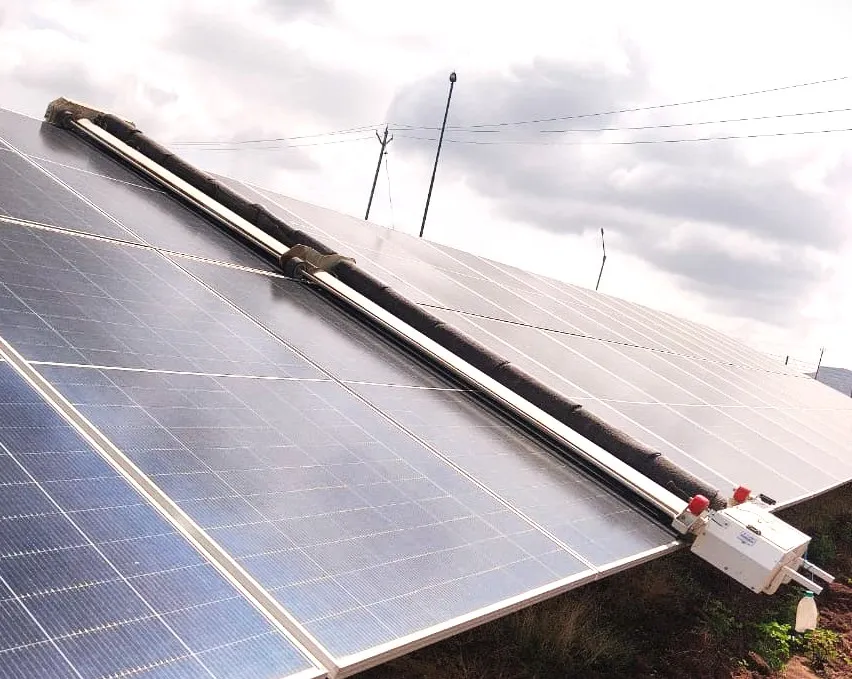
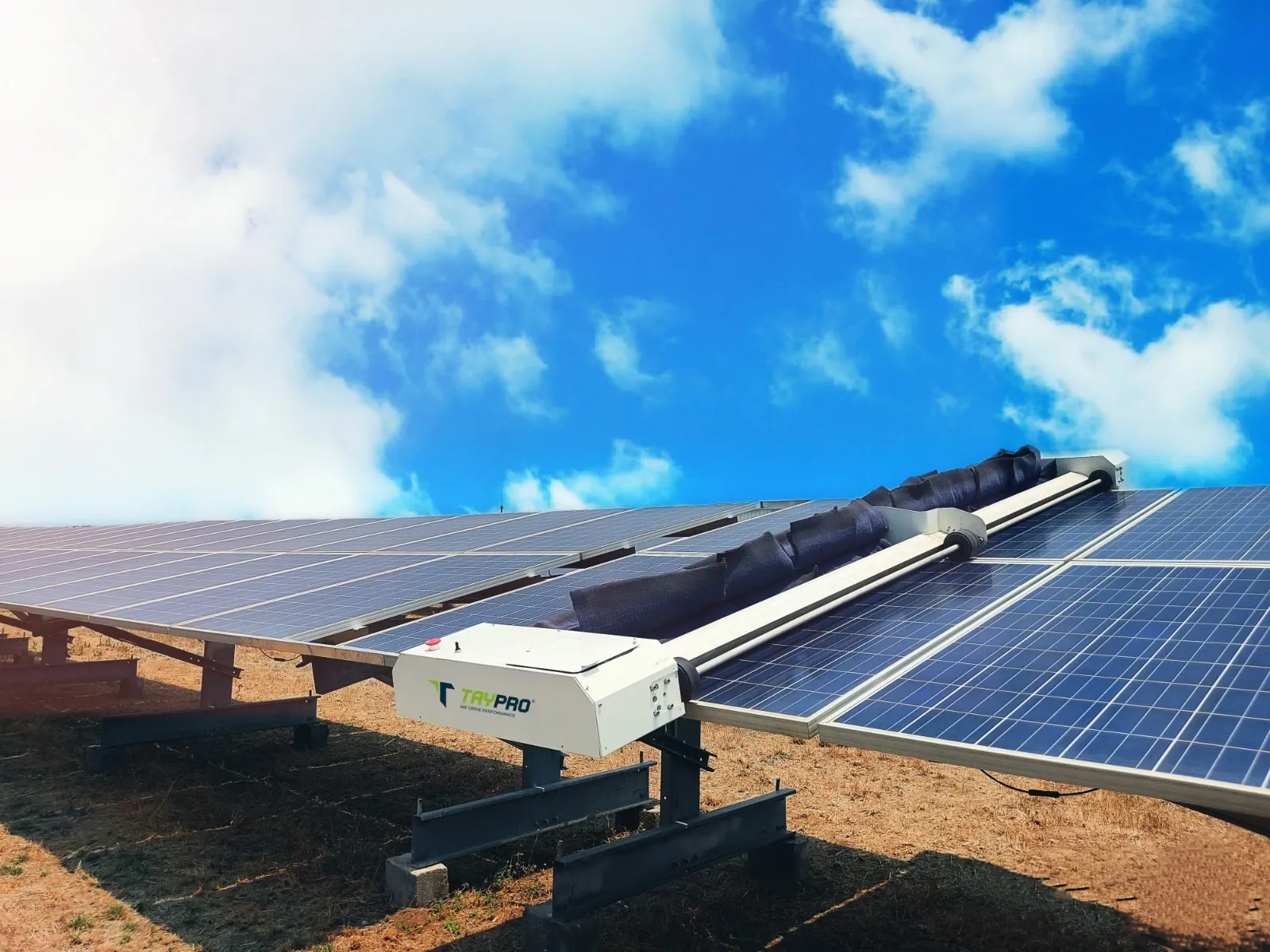
Compare methods in cleaning methods overview and traditional vs robotic comparison.
Five-year economics framing (50 MW illustrative)
| Line (5-year indicative) | Manual wet AMC | Robot program |
|---|---|---|
| Loaded cleaning spend | ₹4.5–7.5 crore | ₹6–10 crore |
| Water + tankers | ₹80 lakh–1.5 crore | Negligible routine |
| PR recovery upside | Baseline if cycles hold | +1–4% MWh if uptime >85% |
| Key risk | Storm mobilization slip | Fleet downtime / spares |
Run site numbers in the ROI calculator with your PPA tariff.
RFP structure that attracts serious bidders
Publish row geometry summaries, module make, tracker type, historical PR dip data if available, and required storm response windows. Ask bidders to price three scenarios: routine dry month, moderate storm, and severe storm week. Hidden low bids that omit surge pricing fail in May.
Include best practices references as technical specification attachments so compliance is contractual.
SLA and KPI clauses that hold
Define measurable KPIs: maximum hours from dust event notification to first pass on priority blocks, minimum monthly coverage percentage for robots, or maximum full-plant cycle days for manual. Tie liquidated damages or renewal options to KPI misses, balanced with force majeure for extreme weather.
Require monthly reporting aligned with PR reporting your asset management team already uses.
Pilot design before multi-year award
Award a 90-day pilot on two high-soiling blocks with identical PR measurement. Compare vendors or methods side by side where safety allows. Measure irradiance-normalized PR before and after, log water and labour hours, and inspect modules per OEM sampling guidance.
Pilot data beats showroom demos. See cleaning system selection framework.
Red flags during vendor diligence
- No utility reference above 20 MW.
- Refusal to provide OEM approval pathway in writing.
- Per-pass pricing without storm surge terms.
- Robot vendor with no local spares warehouse in India.
- Subcontracting to unskilled daily wage pools without training records.
Common mistakes are catalogued in costly cleaning mistakes.
Governance: who owns the vendor relationship
At 50 MW, split ownership between procurement and O&M creates scope gaps. Assign a single plant-level owner with authority over pass scheduling, vendor gate access, and PR escalation. Include that role in quarterly asset management reviews with investors.
Which vendor profile fits a 50 MW Rajasthan fixed-tilt plant?
If water is constrained and full manual cycles exceed ten days after typical storms, shortlist robotic waterless providers with proven fleet uptime in similar parks plus manual backup for edge cases. If water is cheap and crews consistently finish within five to seven days with stable PR, a disciplined manual AMC with surge clauses may still win on NPV. Pilot both if board approval is contested.
Insurance, warranty, and liability at 50 MW scale
Cleaning contracts must specify who bears module breakage risk during passes. At 50 MW, a single incident affecting hundreds of modules can exceed annual AMC value. Require certificates of insurance with asset owner named as additional insured and limits appropriate to module replacement cost. Confirm whether your plant insurer requires notification before automated cleaning begins.
Warranty claims against module suppliers often ask for cleaning logs. Vendors who refuse standardized pass documentation create downstream warranty defense gaps. Include log format and retention period in the contract.
Multi-site portfolio standardization
IPP portfolios with several 50 MW class plants in one state benefit from standardized vendor scopes: identical SLA templates, shared spare pools for robots, and unified PR reporting dashboards. Negotiate portfolio pricing only after one site pilot proves method fit. Avoid forcing one national vendor on Rajasthan dust and Karnataka moderate-soiling sites without block-level validation.
Central asset management should maintain a preferred vendor list with annual requalification based on KPI scorecards, not perpetual exclusivity from a single successful COD.
Water sourcing and discharge on 50 MW wet programs
Manual wet vendors should submit litres-per-module estimates and water source documentation before award. Borewell dependence in arid districts faces seasonal drawdown; tanker contracts need surge pricing tables for May and June. Discharge paths for muddy runoff increasingly appear in state pollution board queries on large solar parks.
Robot-first or hybrid scopes reduce routine withdrawal but still need edge-case wet plans for cemented films. Contract both routine and exception methods with clear triggers.
Transition from construction cleaning to O&M vendor
Construction crews often perform initial module rinse before COD. Define handoff date when O&M cleaning vendor assumes PR accountability. Overlapping responsibility without written transition creates gaps in first dry season when dust accumulates before AMC mobilization is complete.
Performance review cadence after award
Schedule quarterly vendor reviews with PR trends, SLA compliance, and incident logs. At 50 MW, waiting for annual review lets systematic coverage gaps persist through full dry seasons. Tie contract renewal options to review outcomes, not calendar autopilot.
Key takeaways
- 50 MW requires surge capacity and coverage proof, not periodic wipe-downs.
- Compare five-year loaded cost against MWh at your PPA tariff.
- OEM approval and insurance are gate items, not negotiations.
- Structure RFPs with storm scenarios and measurable SLAs.
- Pilot on worst blocks before signing five-year exclusivity.
The reliable cleaning service at 50 MW is the one that survives the first May storm with logged passes, not the one with the smoothest pre-bid presentation. Reference checks in your dust belt matter more than national MW marketed.
Related resources
Frequently asked questions
Written module OEM method approval, defined post-storm mobilization hours, pass coverage documentation, trained crew or fleet operators, and insurance for module damage. At 50 MW scale, vague "periodic cleaning" contracts fail when dust events need full-plant turnaround inside 72–96 hours on priority blocks.
Manual wet programs often deploy 15–25 trained workers for full-plant passes, finishing in 7–14 days depending on row length and dust severity. Robot fleets vary by row geometry; vendors commonly quote 4–8 robots for 50 MW fixed-tilt blocks with high uptime targets. Validate with site survey, not vendor defaults.
Normalize quotes to five-year fully loaded cost: labour escalation, water, fuel, mobilization surges, robot capex or lease, spares, and supervision. Divide by expected MWh recovered using your PPA tariff and measured soiling, not per-pass rupee rates alone.
Define PR verification method (reference strings or soiling stations), minimum pass coverage per month, storm response SLA, and exit terms if targets miss for two quarters. Require photo or fleet logs for audit. Link bonuses to measured recovery where possible, not subjective visual clean.
Single vendor simplifies accountability when geometry is uniform. Split contracts make sense on hybrid fixed-tilt and tracker sites where robots fit one block type and manual crews serve another. Either way, one owner representative should own integrated PR reporting.