
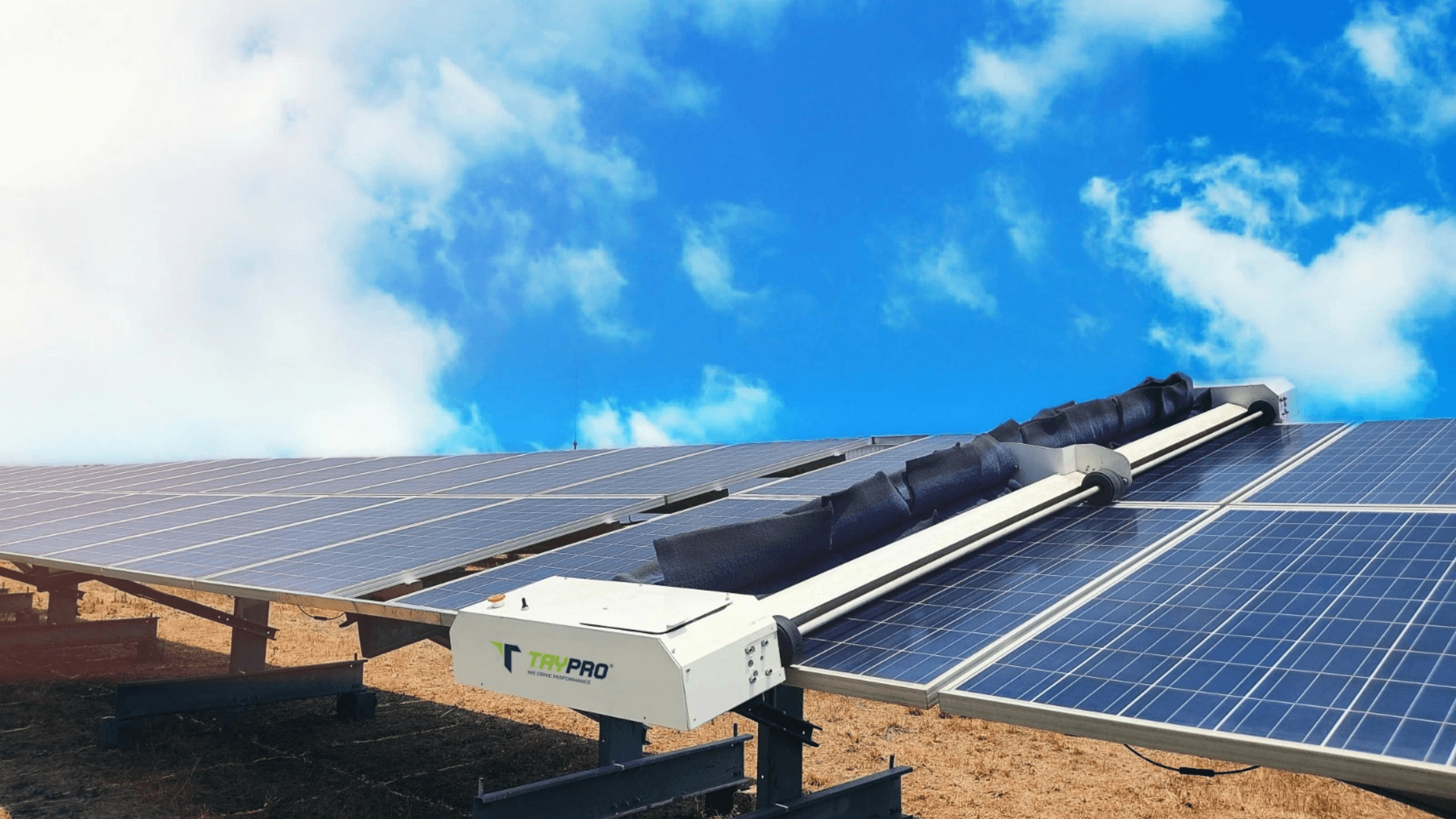
A solar panel cleaning robot is field equipment, not a consumer gadget. On Indian utility plants it is how operators maintain cleaning frequency when labour pools, tanker water, and storm recovery windows cannot scale with megawatts and dust. Understanding what robots are (and what they are not) prevents expensive mismatches between row geometry, module warranties, and O&M expectations.
This article defines cleaning robots for asset owners, EPC teams, and lenders: core components, deployment context on MW sites, and how they differ from manual crews, tractor brushes, and fixed sprinklers.
Quick answer
- Robots traverse module rows and clean glass with OEM-approved heads, often waterless.
- They target utility and large C&I ground-mount, not typical residential rooftops.
- Value comes from throughput plus logged coverage, not automation alone.
- They require row fit, operator training, and fleet O&M like any plant equipment.
- Mechanics explained: how solar cleaning robots work.
Core components of a utility cleaning robot
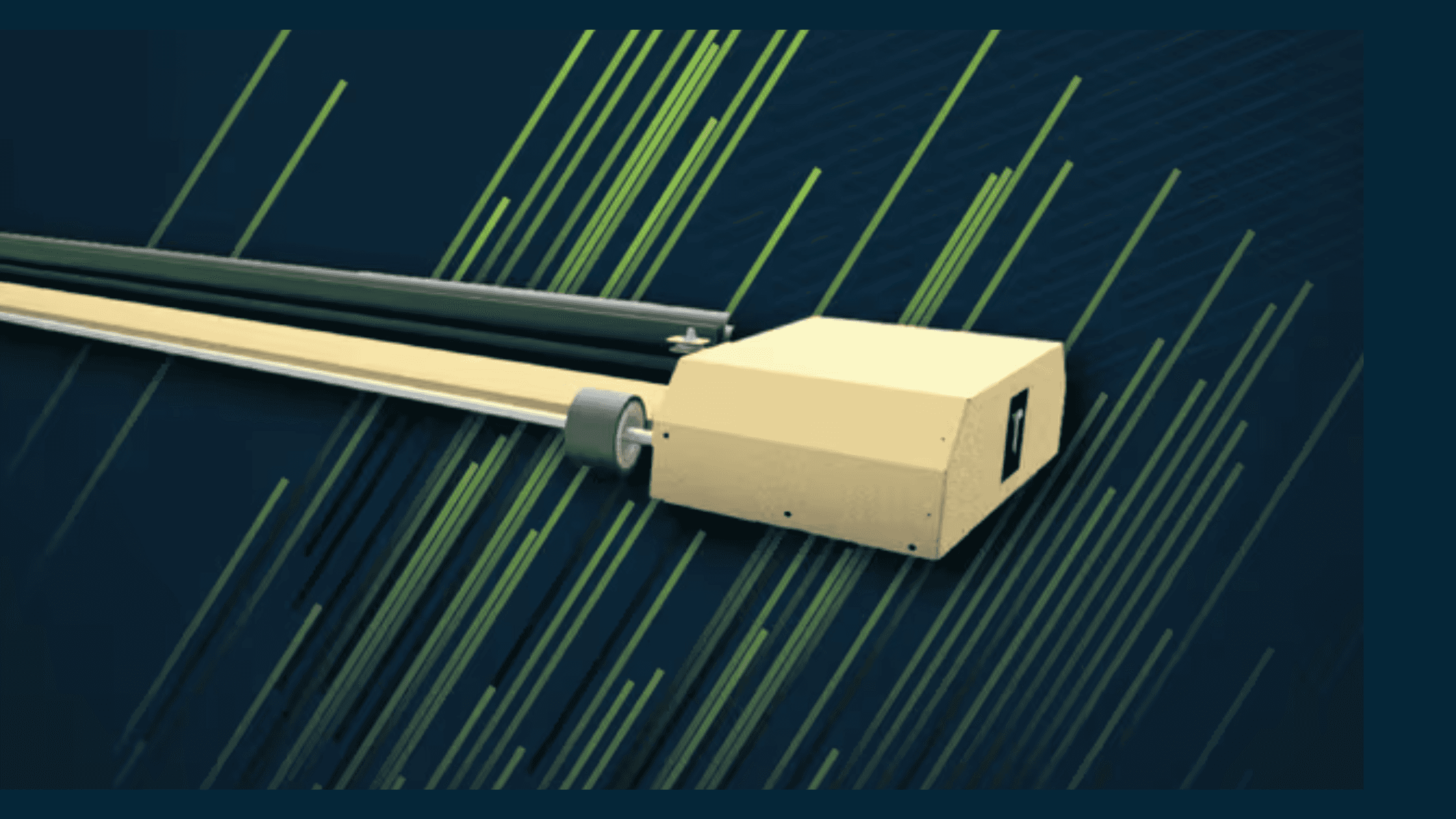
Most utility robots share a common architecture adapted for local dust loads. A drive chassis spans one or two module rows, with wheels or tracks designed for table clearance. Brush assemblies use microfiber, nylon blends, or patented dual-pass heads depending on vendor and soiling type. Power comes from onboard batteries swapped at row ends, or from lightweight tethers on some designs.
Navigation uses row-end sensors, RFID markers, or vision systems to stay aligned. Fleet software schedules runs, records which rows completed, and flags aborts for wind, obstacles, or communication loss. Control room integration varies by vendor but increasingly exports pass logs for asset management reviews.
Installation context: how PV cleaning robots are installed on greenfield and brownfield sites.
Robot vs other cleaning approaches
| Approach | Mobile? | Typical scale | Water use | Pass logging |
|---|---|---|---|---|
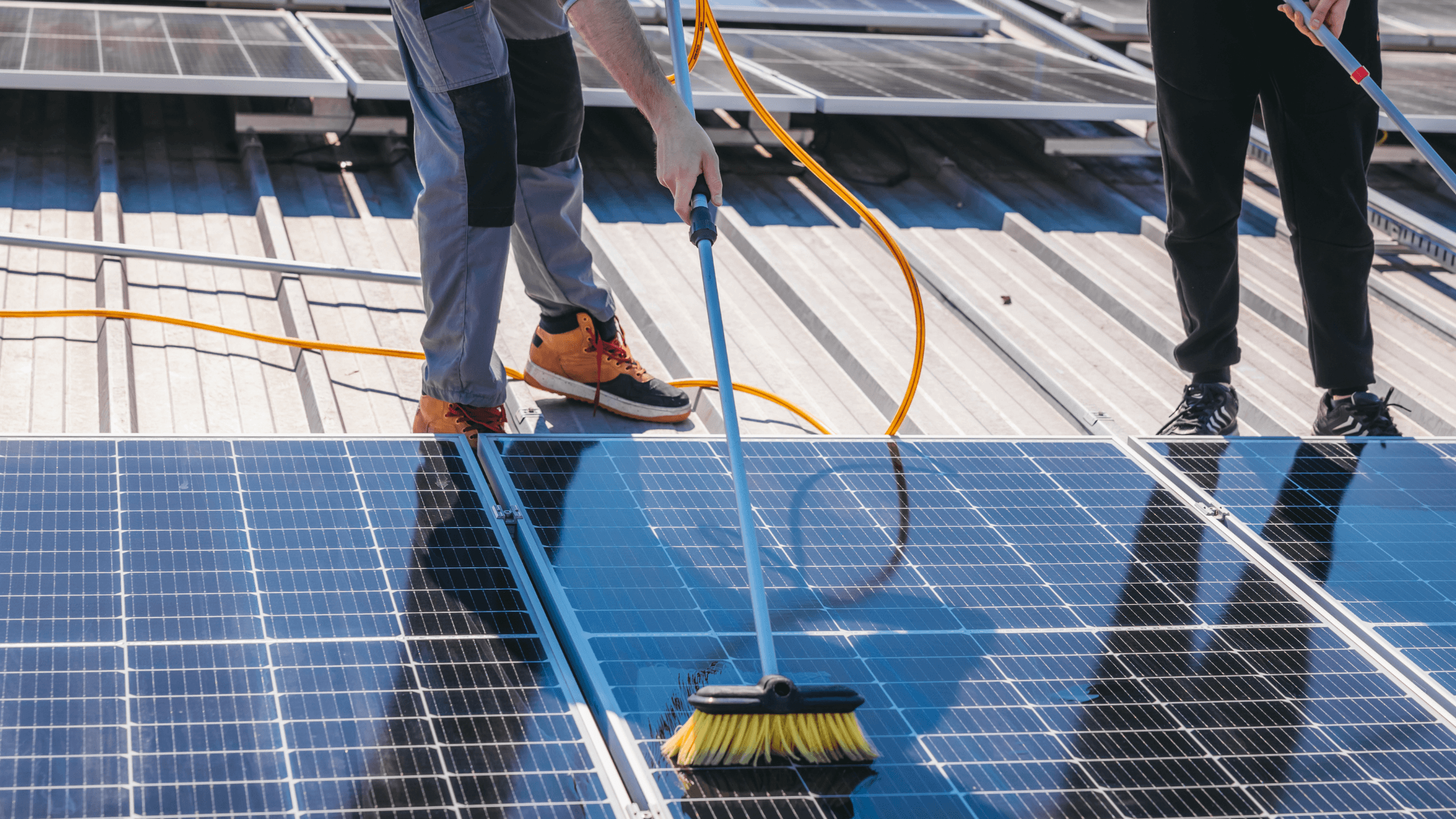
| Manual crew with poles | Yes | All sizes | Often high (wet wash) | Rare unless manual QA |
| Tractor-mounted brush | Yes | Large fixed-tilt | Moderate to high | Minimal |
| Fixed sprinkler system | No | Designed-in at EPC | High | Timer-based only |
| Autonomous cleaning robot | Yes | 10 MW+ utility common | Low (waterless designs) | Digital row logs |
What problems robots solve on Indian MW plants
Dust belts in western India can depress PR several points between infrequent manual rounds. Tanker queues and worker mobilization after haboob events stretch planned weekly cleans into ten-day cycles while untouched blocks bleed MWh. Water scarcity and discharge scrutiny make wet-only programs expensive on paper and in ESG reporting.
Robots address throughput and frequency: multiple passes per month on priority blocks, often at night, with lower water withdrawal. They do not eliminate O&M. Operators must manage batteries, brush wear, firmware updates, and storm aborts like any critical plant subsystem.
Worked example: 10 MW plant considering a robot fleet (illustrative)
Consider a 10 MW fixed-tilt site in Rajasthan, dry-season soiling depressing PR 4 to 6% between manual rounds executed every 10 to 14 days. A robot fleet targeting 2 to 3 passes per week on high-soiling blocks might hold average PR 1.5 to 3% closer to clean baseline, depending on uptime and coverage.
| Factor | Manual wet (illustrative) | Robot fleet (illustrative) |
|---|---|---|
| Full-plant pass cycle | 7 to 14 days | 2 to 5 days (multi-robot) |
| Water litres per MW per month | Thousands (site dependent) | Near zero (waterless) |
| Annual loaded O&M | ₹45 to 80 lakh | ₹35 to 65 lakh (incl. capex amortization) |
| Audit trail | Invoice and photos | Row-level pass logs |
Ranges are not quotes. Model your tariff and soiling with the ROI calculator and 10 MW cost comparison.
Fixed tilt vs tracker deployment
Fixed-tilt robots face simpler geometry: consistent row width, predictable end turns, fewer stow interlocks. Tracker robots must operate at approved night stow angles, respect wind limits, and navigate longer rows with cable trays and motor humps. Not every robot certified for fixed tilt is approved for your tracker OEM.
See tracker-compatible automatic cleaning and operational challenges on trackers.
What robots are not
Robots are not sprinkler replacements you install once and ignore. They are not guaranteed PR fixes without coverage discipline. They are not automatically approved for every module type: obtain written OEM cleaning approval for brush type, pressure, and chemistry (if any). They are not rooftop tools for typical 20 kW installs where labour already suffices.
Marketing terms like "AI-powered" matter less than uptime percentage, rows completed after dust storms, and verified PR recovery on reference modules.
When does a 10 MW plant need robots versus manual crews?
If manual full-plant passes keep pace with your economic soiling window, water is cheap, and geometry is simple, robots may not clear hurdle rate. If storms routinely outrun crew cycles, water costs dominate, or tracker rows slow manual throughput below acceptable PR floors, pilot robots on dirty reference blocks before portfolio orders.
Benefits deep dive: benefits of cleaning robots in solar plants. Pricing context: cleaning robot price guide for India.
Fleet sizing and operator roles on Indian utility sites
A single robot rarely covers 50 MW before the next dust event. Owners model fleet size from row length, nightly window hours, battery swap time, and target cycle days. A 10 MW site might run two to four robots; 50 MW might need eight to fifteen units or phased zone deployment.
Operators manage battery logistics, brush wear, firmware updates, abort triage, and wind stow coordination. Budget one operator per shift per fleet cluster plus shared mechanical support.
Safety, insurance, and HSE on MW robot programs
Night operations require aisle lighting, traffic plans, and lockout coordination with testing crews. Insurance should cover robot-related module damage with understood sub-limits. Treat robots as industrial equipment in HSE risk registers with vendor training certificates on file.
Integration with plant SCADA and asset management systems
Modern fleets export CSV or API feeds of row completion, abort codes, and battery cycles into O&M platforms. Lenders reviewing monthly packs want to see cleaning coverage percentage alongside PR, not robot hours alone. Specify data export format in procurement RFPs before vendor selection locks proprietary dashboards.
Lifecycle: commissioning, year three, and repower
Commissioning includes path mapping, OEM approval filing, and operator certification. By year three, brush wear patterns and battery degradation should inform replacement budgets. Repower with new module sizes may require chassis upgrades; treat robot fit as repower line item, not afterthought.
Robot types you will see in Indian RFPs
Utility RFPs may specify rail-mounted robots on fixed tilt, autonomous row crawlers on trackers, or tractor-pulled brush systems marketed as semi-automated. Each has different coverage proof, water use, and night-window requirements. Crawlers dominate new Rajasthan and Gujarat tracker phases; rail systems persist on older fixed tables.
Ask vendors which category they sell and demand video or visit proof on geometry matching yours, not a different plant type.
Key takeaways for buyers
- Define robots by O&M outcomes: frequency, coverage, water, and PR recovery.
- Pilot on representative dirty blocks before fleet procurement.
- Demand module OEM approval and pass logs in vendor contracts.
- Match robot type to fixed tilt or tracker geometry explicitly.
- Compare five-year TCO to manual wet, not robot list price to one invoice.
Procure robots only after row-fit survey and OEM sign-off. Hardware that cannot complete your longest tracker row is a partial solution at full price.
Related resources
Frequently asked questions
A solar panel cleaning robot is an autonomous or semi-autonomous machine that travels along module rows using engineered brush heads or waterless cleaning systems to remove dust and soiling. On utility plants it is typically scheduled at night to avoid daytime generation loss and to align with tracker stow positions where applicable.
No. Sprinklers are fixed plumbing installed at EPC stage with zone timers. Robots are mobile platforms with batteries or tethers, navigation sensors, brush assemblies, and fleet software. Water use, coverage logging, and economics differ sharply between the two approaches.
Robots are most common on 10 MW and larger utility sites in dusty, water-stressed regions such as Rajasthan and Gujarat. Adoption grows on single-axis tracker plants where manual row throughput is slow. Smaller C&I rooftops rarely justify fleet economics.
Row geometry fit, module OEM cleaning approval in writing, pass coverage logs, wind and stow interlocks on trackers, spare parts and battery strategy, and a five-year total cost of ownership model versus manual cleaning at your soiling frequency.
Both remove dust mechanically. Robots add repeatable speed and pressure, night scheduling at scale, and digital pass records for audits. Manual crews offer flexibility on irregular layouts but struggle to maintain frequency on 50 MW plus sites after dust storms.