Summary for plant managers: Balancing O&M efficiency and module health
For utility-scale solar asset owners in India, the choice of PV modules and the corresponding maintenance strategy directly dictate the project internal rate of return (IRR). Balancing long-term module health with the high O&M costs inherent in our dusty climate requires a shift from labor-intensive manual methods to data-driven, automated operations. By integrating consistent cleaning schedules with the right hardware, operators can mitigate soiling losses that often reach up to 25% in regions like Rajasthan and Gujarat.
- Typical O&M costs for utility-scale plants in India: Range from Rs 4 lakh to Rs 8 lakh per MW per year depending on site location and cleaning frequency.
- Soiling impact: Uncleaned PV modules can suffer monthly energy output losses of 12%–24% in high-dust regions.
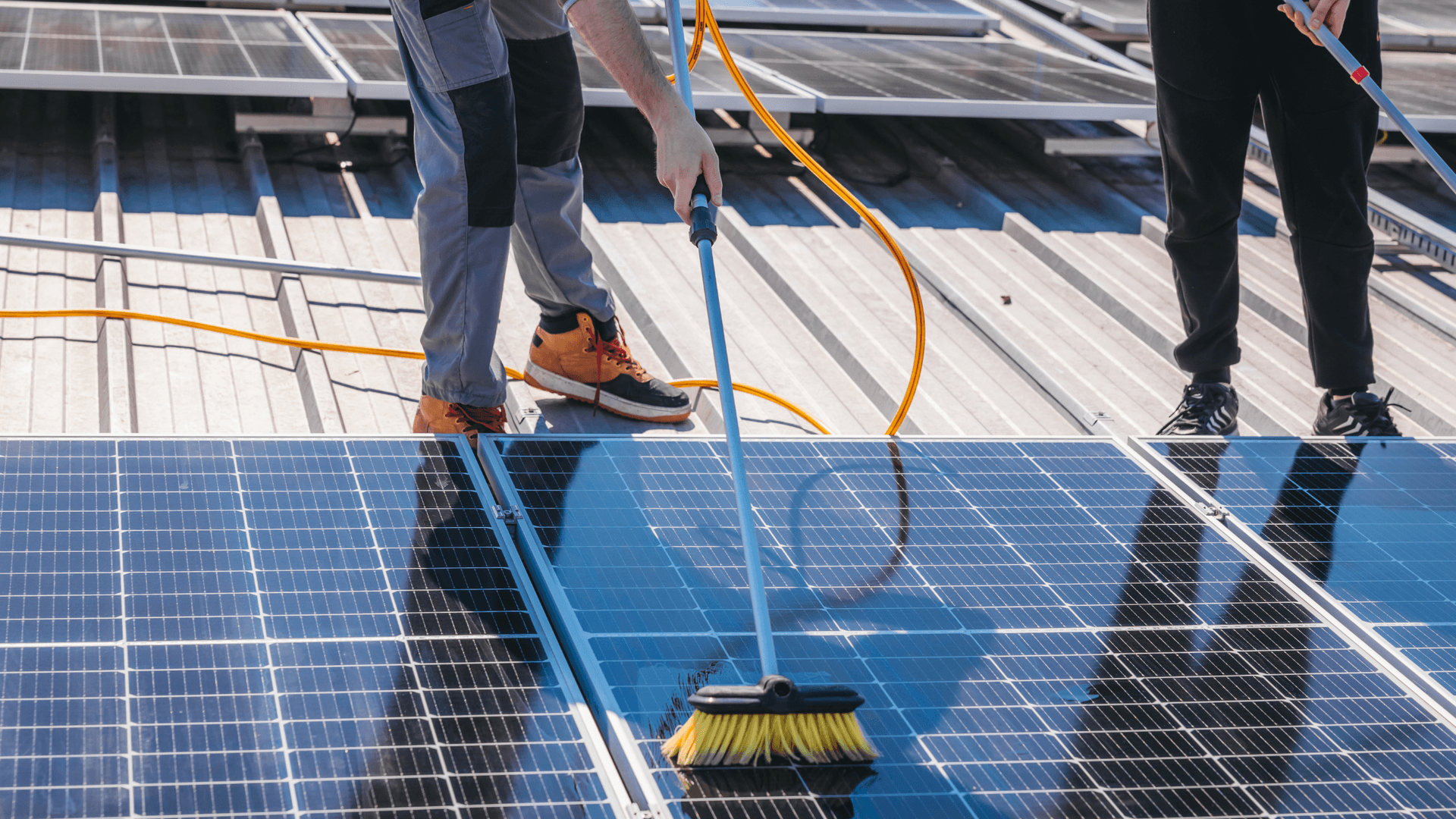
- Manual cleaning risks: Costs can climb to Rs 750,000 per MW annually, with significant risk of micro-cracks on modules due to improper brush pressure or excessive water mineral buildup.
- Automated waterless advantage: Robotic cleaning can save approximately 12,800 liters of water per 1 MW plant monthly while potentially increasing generation by up to 7% compared to manual wet cycles.
How does the choice of PV module impact long-term O&M costs in India?
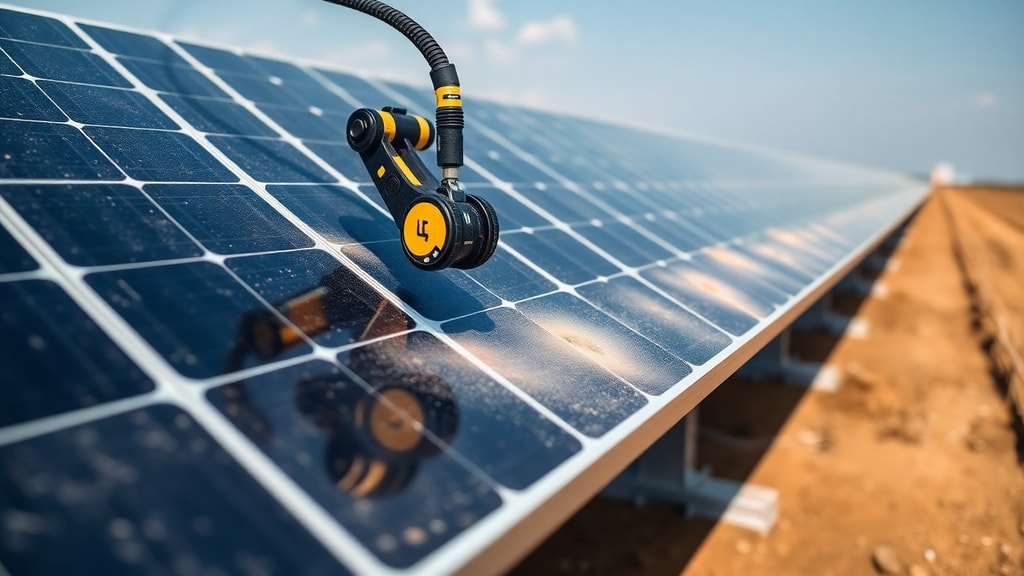
The technical specifications of PV modules, specifically cell technology, surface coating, and mounting geometry, are no longer just procurement considerations; they are O&M drivers. Modern utility-scale projects increasingly feature bifacial modules with anti-reflective coatings (ARC), which significantly change how cleaning systems interact with the glass surface. Choosing a module without considering its cleaning compatibility can lead to irreversible damage to the ARC or degradation of the module bypass diodes and encapsulation over time.
When selecting modules for a new MW-scale project, plant managers must evaluate two specific factors: surface roughness and structural frame durability. Modules equipped with specialized hydrophilic or hydrophobic coatings require gentler cleaning contact to avoid surface scratching, which can decrease the module light-harvesting efficiency over its 25-year lifespan. For further insights on how these specs correlate with maintenance, read our guide on shortlisting PV panel suppliers based on operational impact.
Furthermore, the physical design of the module frame impacts the speed and efficiency of automated systems. Modules with high frame profiles can cause mechanical friction for robotic cleaners, necessitating precise hardware selection. Given the harsh climate, the degradation rate, typically 0.5% to 1% annually, can be accelerated by poor cleaning practices that leave residue or induce mechanical stress. Operators should treat the module-to-robot interface as a critical design choice during the EPC phase to ensure long-term site viability, as detailed in our analysis of seasonal soiling impacts.
Ultimately, the objective is to harmonize the module technical capabilities with an O&M strategy that preserves the Performance Ratio (PR). While manual cleaning might appear as a lower upfront expenditure, the cumulative costs of labor turnover, water scarcity management, and potential panel damage make automated, low-water, or waterless solutions more predictable for long-term financial modeling.
Comparison of solar cleaning methods: Manual, tractor-mounted, and robotics
Choosing an O&M cleaning method at the megawatt scale requires a granular look at the trade-off between labor dependencies and mechanical precision. For utility-scale assets in India, where soiling from dust, bird droppings, and industrial particulates is high, the cleaning method selected often determines the longevity of the modules. Below is a comparison of the primary methods currently deployed across MW-scale plants in the region.
| Criteria | Manual Cleaning | Tractor-Mounted | Autonomous Robotics |
|---|---|---|---|
| Water Usage | High (15–20 liters/MW daily) | Moderate to High | Zero / Waterless |
| Cleaning Frequency | Periodic (Monthly/Bi-monthly) | Periodic | High (Daily/On-demand) |
| Module Integrity Risk | High (Micro-cracks, ARC damage) | Moderate | Low (Controlled pressure) |
| Labor Dependency | Extremely High | Medium | Minimal |
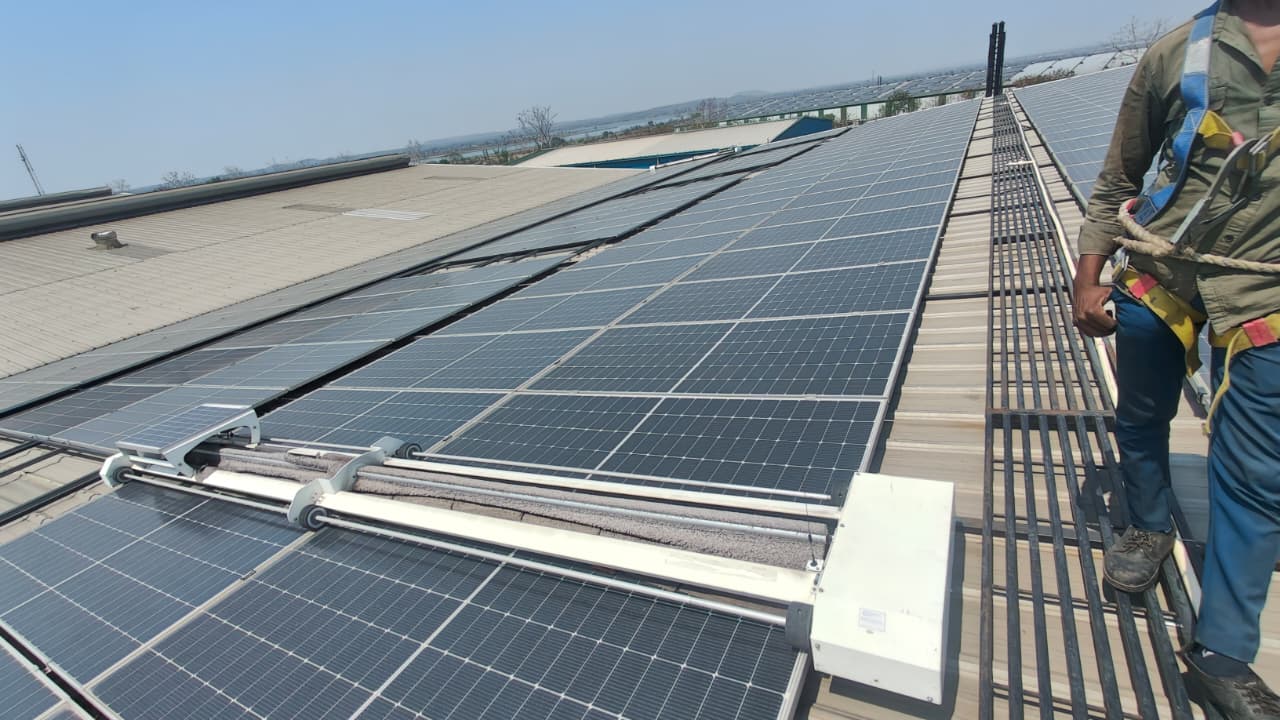
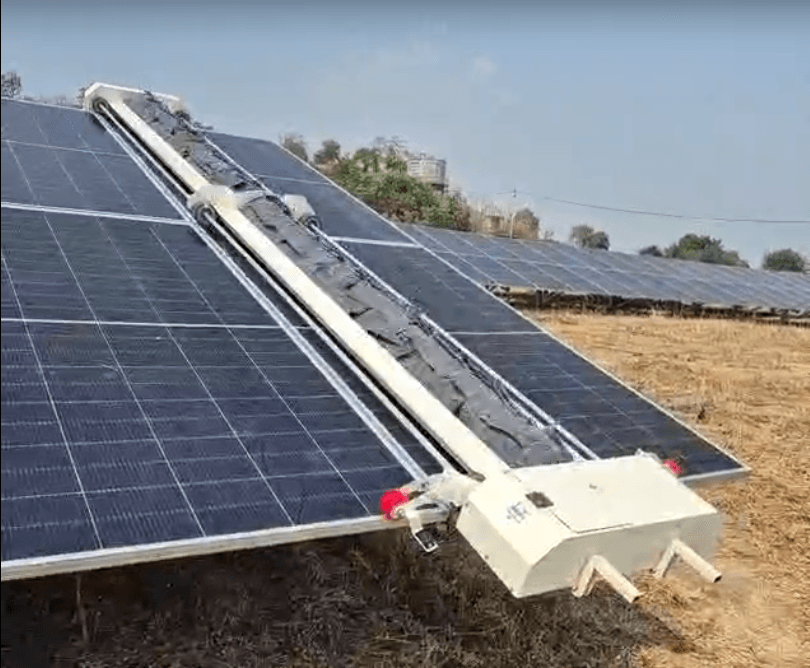
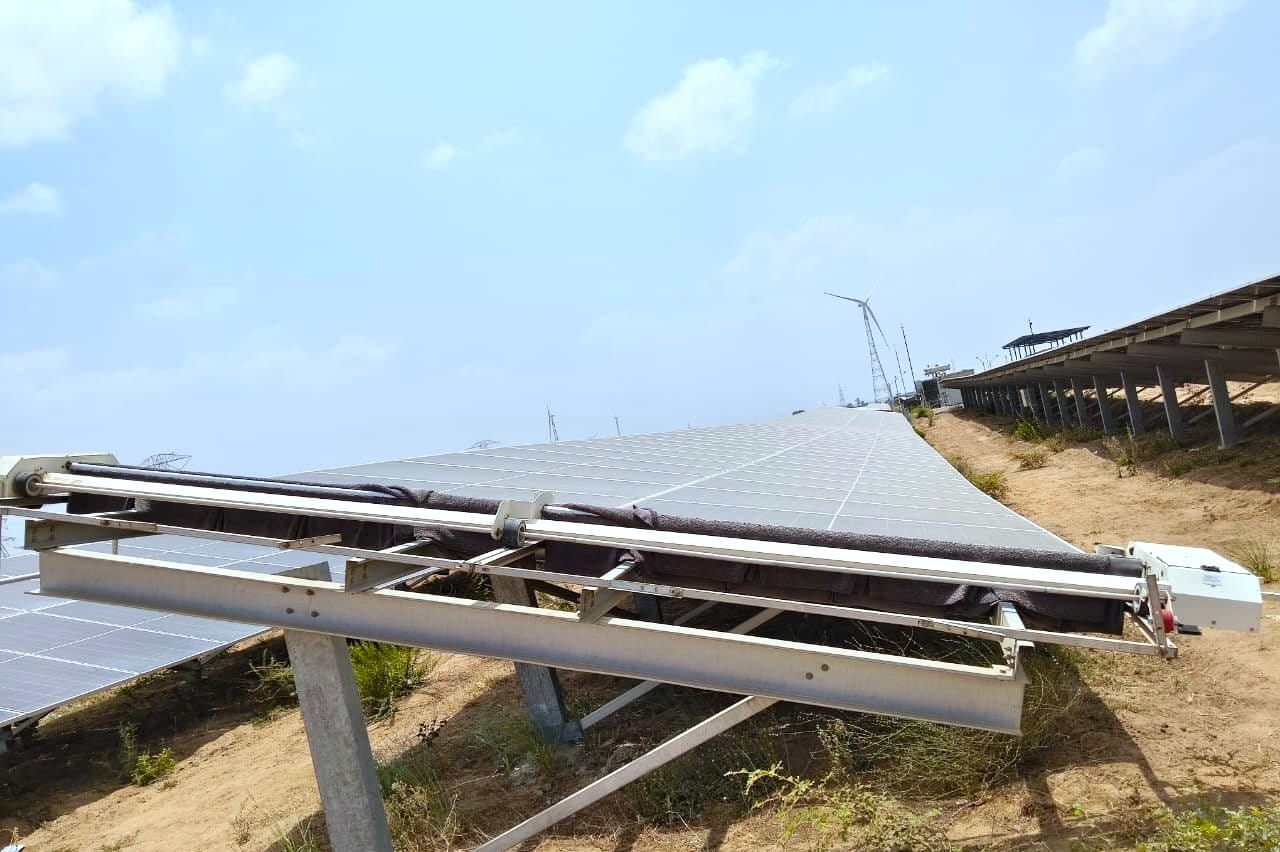
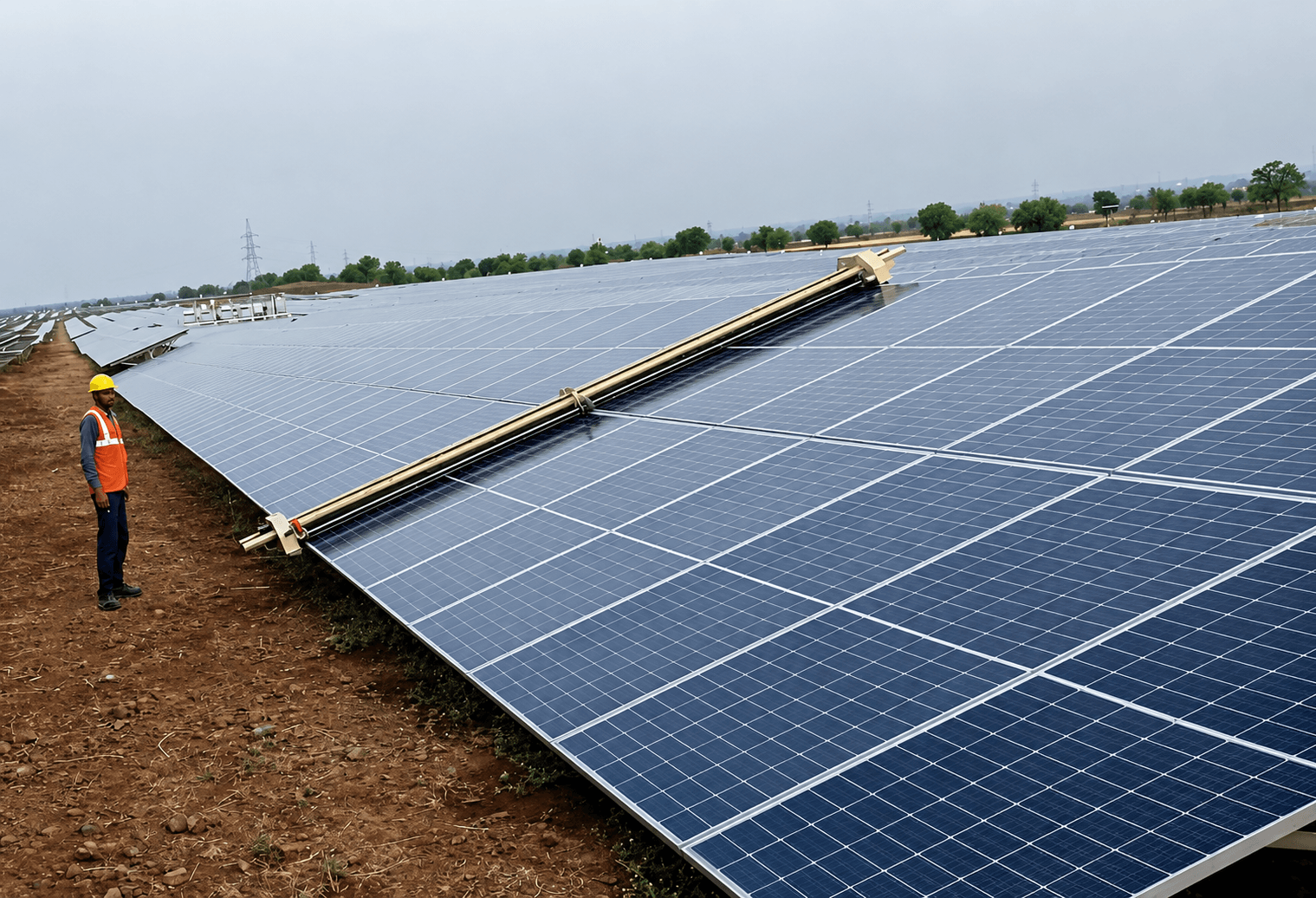
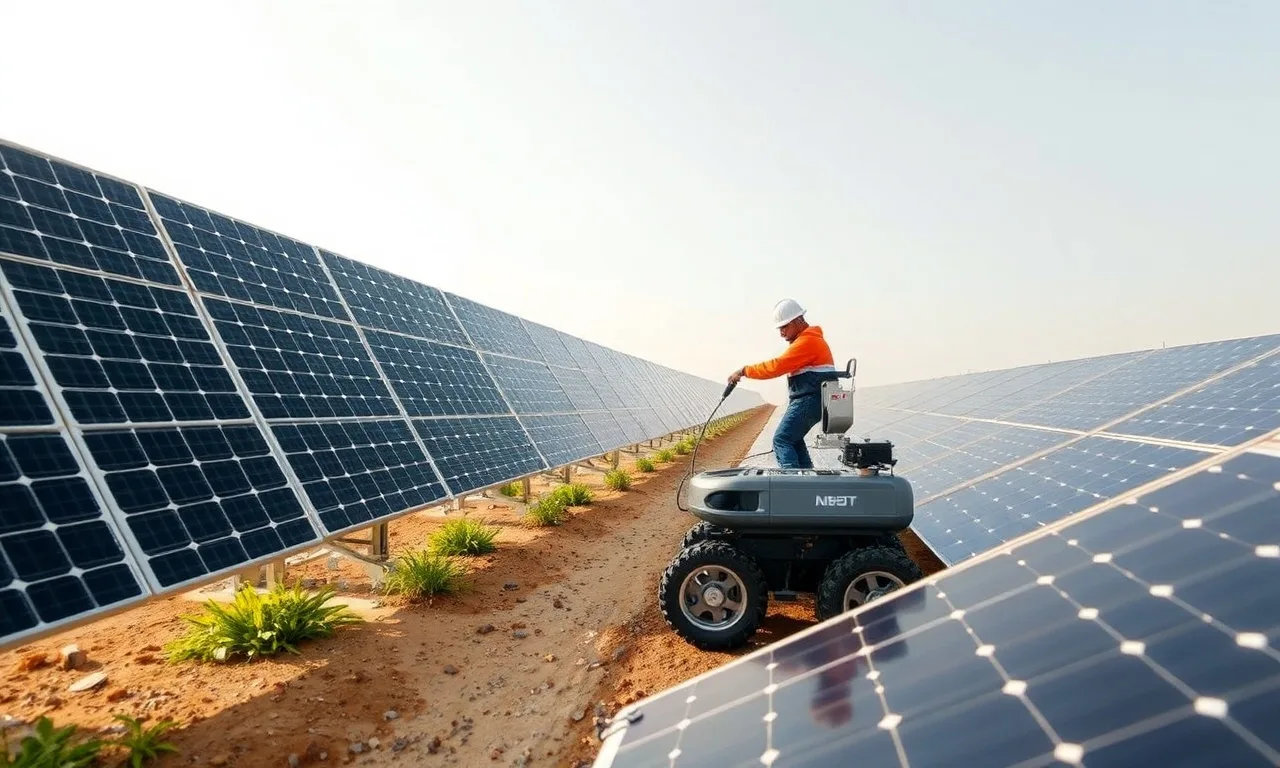
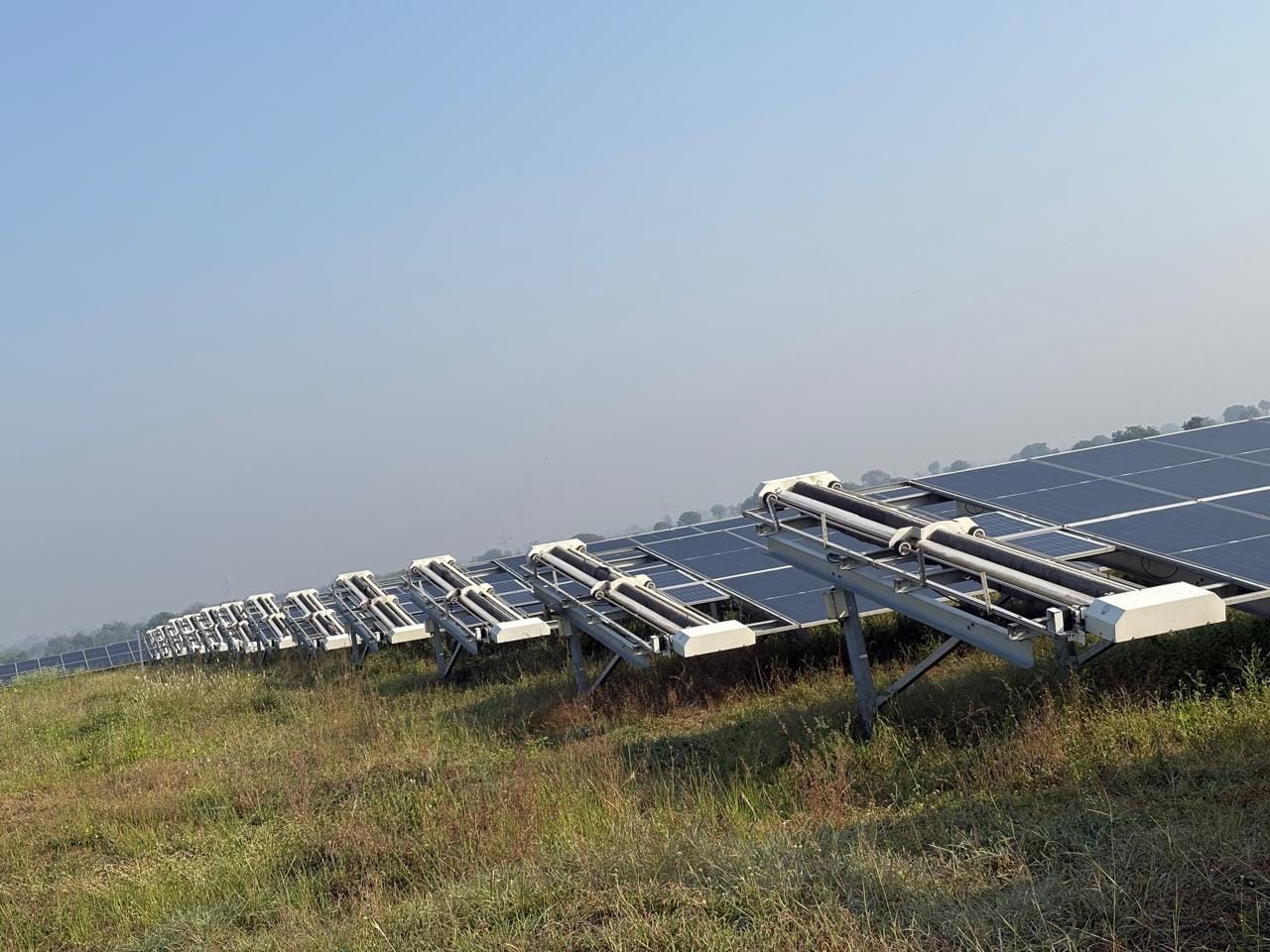
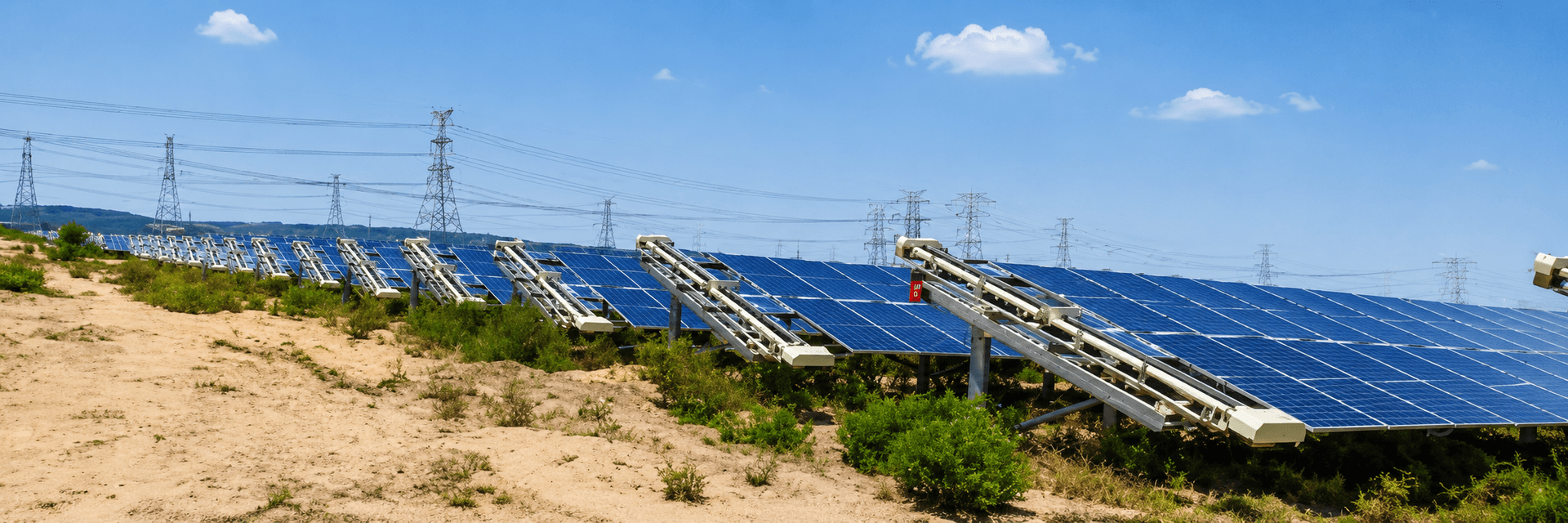
Manual cleaning remains the industry baseline in many older sites, yet it exposes assets to significant risk. The variability in manual labor pressure, often resulting in microscopic scratches on Anti-Reflective Coatings (ARC), can reduce light transmission over time. Tractor-mounted systems improve consistency but are often constrained by site topography and the need for dedicated access paths that can reduce the effective ground coverage of a solar farm. Autonomous robotic systems, such as the waterless technologies increasingly adopted by large IPPs, mitigate these issues by operating in sync with the plant production schedule. These systems, particularly when utilizing dual-pass microfiber or high-quality PBT brushes, ensure that cleaning is performed at a uniform pressure, safeguarding the integrity of the PV modules while maintaining a higher average Performance Ratio (PR).
Capex vs. Opex: Budgeting for utility-scale cleaning
The financial framework for cleaning utility-scale solar projects in India has evolved from simple headcount-based budgeting to long-term performance-linked Opex models. For a 10 MW to 50 MW plant, the decision to invest in robotic infrastructure versus relying on manual service contractors centers on the total cost of ownership (TCO) and the predictable recovery of energy yields.
The economics of capital investment
Capex-Heavy Approach: Investing in a fleet of robots requires an upfront budget, typically up to Rs 4 million per MW. This model is preferred by asset owners who prioritize long-term asset control and want to avoid the inflationary pressure of rising rural labor wages. The ROI in this scenario is driven by consistent uptime and the reduction in module degradation caused by abrasive, low-quality cleaning tools. As highlighted in our previous analysis of Performance Ratio management, the yield uplift of 5% to 7% achieved through daily robotic cleaning cycles can substantially shorten the payback period for capital-intensive equipment.
Service-based operational expenditure
Opex-Driven Service Model: Conversely, the Opex model, often utilizing a per-cycle or fixed annual fee, allows operators to offload the burden of maintenance logistics. This model is increasingly attractive for newer plants where the budget is strictly ring-fenced for annual operational expenditure, which typically ranges between Rs 4 lakh to Rs 8 lakh per MW per year in India. By outsourcing the cleaning, operators transfer the operational risk, including machine uptime, spare parts management, and personnel training, to specialized O&M firms. This allows the plant management team to focus on grid integration and inverter efficiency, which remain the primary drivers of revenue stability outside of soiling mitigation.
How often should you clean solar panels on a 50 MW plant?
For a 50 MW utility-scale plant in high-dust regions like Rajasthan, cleaning frequency should be determined by daily real-time soiling sensors rather than a rigid calendar schedule. Optimal performance is typically achieved through an on-demand cleaning cycle occurring every 5–10 days during the dry season, whereas during monsoon periods, the frequency may drop to zero as natural precipitation provides sufficient washing. Data-driven triggers are essential to prevent over-cleaning, which consumes unnecessary battery life and increases robotic wear, while simultaneously avoiding under-cleaning that results in significant daily energy loss exceeding 0.5% of total plant capacity.
Integrating robotic cleaning with diverse module technologies
Modern utility-scale projects are no longer monolithic in their equipment selection. EPCs are increasingly mixing and matching PV modules to optimize for land use, grid capacity, and local climate performance. Integrating robotic cleaning systems into a fleet containing high-efficiency bifacial PERC, TOPCon, and heterojunction (HJT) modules requires a nuanced approach to surface compatibility and structural constraints.
Bifacial modules, for example, often utilize glass-on-glass designs that offer higher durability against standard environmental weathering. However, their reliance on rear-side irradiance means that soiling on the rear glass is a significant performance liability in high-albedo environments. Robotic systems must be selected not only for the front-side row-based cleaning but also for their mechanical clearance, ensuring that the robot chassis does not damage the sensitive backside wiring or tracking sensors found on these sophisticated modules. For developers looking to maintain warranty compliance, the use of non-abrasive, dry-contact materials, such as high-quality PBT brushes or microfiber pads, is a technical prerequisite for avoiding the degradation of the Anti-Reflective Coating (ARC) common on these panels.
Furthermore, the physical dimensions of newer, larger-format modules (often exceeding 2,300 mm in length) place added strain on standard cleaning robots. When integrating robotics into a fleet, asset managers must prioritize hardware that supports adaptive tilt ranges to ensure consistent pressure across the entire module surface. This is particularly relevant when navigating the varying incline angles of single-axis trackers, where a robot must maintain constant contact regardless of the tracker rotational position. The integration of fleet management software, such as NECTYR, allows operators to synchronize cleaning schedules with site-specific inverter data, ensuring that robots only engage when the yield loss exceeds the operational cost of the cleaning cycle.
Analyzing site-specific constraints for robotic deployment
Implementation of robotic cleaning is not a plug-and-play scenario; it requires a detailed site audit focused on infrastructure readiness. For instance, plants utilizing fixed-tilt structures often benefit from automated robotic systems that can traverse between rows if inter-row spacing exceeds 3 meters. In contrast, trackers require robots that are fully compatible with the specific tracking algorithm used by the plant controller. If the robot enters the row while the tracker is at a steep angle, it risks stalling or damaging the module glass. Advanced O&M teams now require a software handshake between the robot and the tracker controller to ensure safe movement during cleaning windows.
Beyond the structural constraints, ground soil stability plays a massive role in long-term robotic performance. In regions with loose, sandy soil, the vibration from robotic travel can eventually lead to minor settling of the tracker post, which in turn causes misalignment of the entire array. Consequently, selecting lightweight, high-traction robotic units that distribute their weight evenly across the module frame is crucial for preventing mechanical strain. By analyzing the structural integrity of the module support system during the O&M planning phase, operators can choose equipment that minimizes long-term maintenance overhead.
Key takeaways for asset managers and EPCs
- Prioritize Opex predictability: Move beyond fluctuating manual labor costs by benchmarking against long-term, performance-linked Opex models that guarantee a specific, water-neutral cleaning output per MW.
- Protect the ARC: Microscopic damage to module coatings from abrasive brushes is a permanent yield loss factor; mandate the use of soft-contact cleaning methods (microfiber or specialized PBT) to extend the lifecycle of your PV assets.
- Align technology with topology: Not all robots suit every site. Evaluate your plant specific terrain, fixed-tilt vs. single-axis tracker, and choose cleaning systems that account for module tilt ranges and inter-table movement requirements.
- Data-driven O&M: Integrate robotic fleet diagnostics with your existing SCADA or monitoring platform. Cleaning should be performed as a function of measured soiling losses, not just a calendar frequency, to maximize the ROI of every cycle.
- Sustainability mandates: With stricter MNRE guidelines on water usage in arid regions like Rajasthan and Gujarat, transitioning to dry, autonomous cleaning is not just an efficiency gain but a regulatory necessity for future-proofing your plant operational license.
As the Indian solar sector continues to scale, the transition toward intelligent, autonomous O&M is the defining factor in long-term revenue stability. By selecting cleaning solutions that complement your specific PV module technology and site geography, you transform maintenance from a reactive cost center into a core pillar of your plant energy yield strategy. For asset owners aiming to improve their Performance Ratio (PR) with precision, modern robotic O&M offers a reliable, low-water pathway to operational excellence.
Frequently asked questions
For utility-scale solar asset owners in India, the choice of PV modules and the corresponding maintenance strategy directly dictate the project internal rate of return (IRR). Balancing long-term module health with the high O&M costs inherent in our dusty climate requires a shift from labor-intensive manual methods to data-driven, automated operations.
Automated waterless robots improve IRR by reducing labor-intensive O&M costs, which typically range from Rs 4 lakh to Rs 8 lakh per MW annually. By increasing generation by 5% to 7% and eliminating the high recurring cost of water logistics and manual workforce management, these systems provide a stable and predictable pathway to higher plant performance.
While robotic cleaning is highly adaptable, it must be matched to your specific mounting system. For fixed-tilt plants, robot maneuverability between rows is key, whereas for single-axis trackers, the robot must be compatible with the tracking software to ensure safe operation across varying tilt angles without damaging the module or the tracker mechanics.
Manual cleaning in India typically requires 15–20 liters of water per MW daily, creating significant sustainability challenges in arid regions. In contrast, autonomous robotic cleaning systems are designed for waterless operation, saving approximately 12,800 liters of water per 1 MW plant monthly while maintaining consistent module cleanliness.