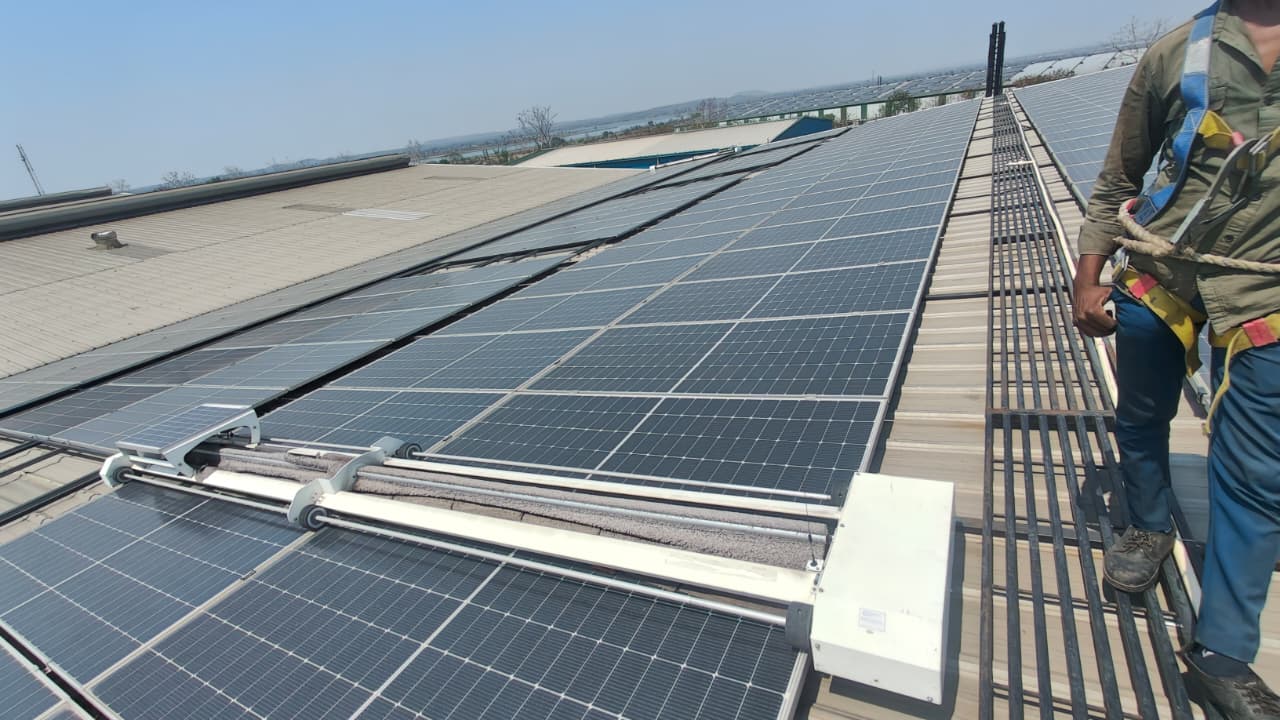
Quick answer
Successful deployment of a case study rooftop cleaning robot deployment requires strict adherence to structural weight limits and access protocols. For Indian C&I portfolios, these robots offer a scalable way to mitigate soiling losses that typically range between 10% and 30% depending on the site environment.
- Energy yield loss from soiling in Indian C&I plants averages 10–30% without consistent cleaning programs.
- Structural load-bearing capacity must be certified by a structural engineer before deploying any cleaning robot on a rooftop array.
- Waterless robotic cleaning reduces water consumption by up to 90% compared to traditional manual bucket or pressure wash methods.
- For 5MW+ portfolios, schedule robotic maintenance every 30–45 days to balance soiling accumulation against operational expenditure.
- Automated fleets significantly improve the Performance Ratio (PR) by eliminating human safety hazards on high-pitch or restricted commercial roof surfaces.
Adopting an autonomous approach is not merely about replacing labor; it is about establishing a predictable cleaning cadence that guards the PPA revenue against dust-induced output decay. As seen in various utility-scale soiling impact studies, managing these losses effectively is the most reliable way to stabilize generation. For larger portfolios, linking this cleaning strategy to automated monitoring systems allows plant managers to trigger cycles based on real-time data rather than fixed, arbitrary intervals.
Site assessment: Rooftop vs ground-mount deployment
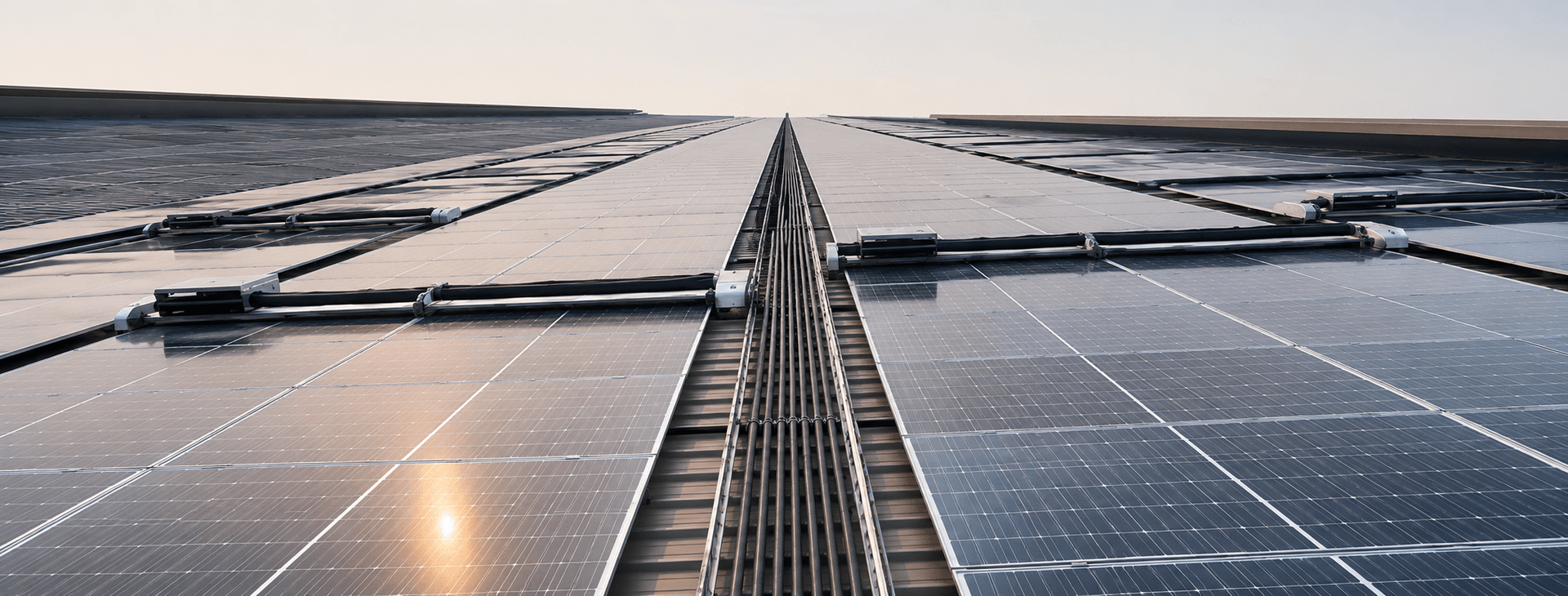
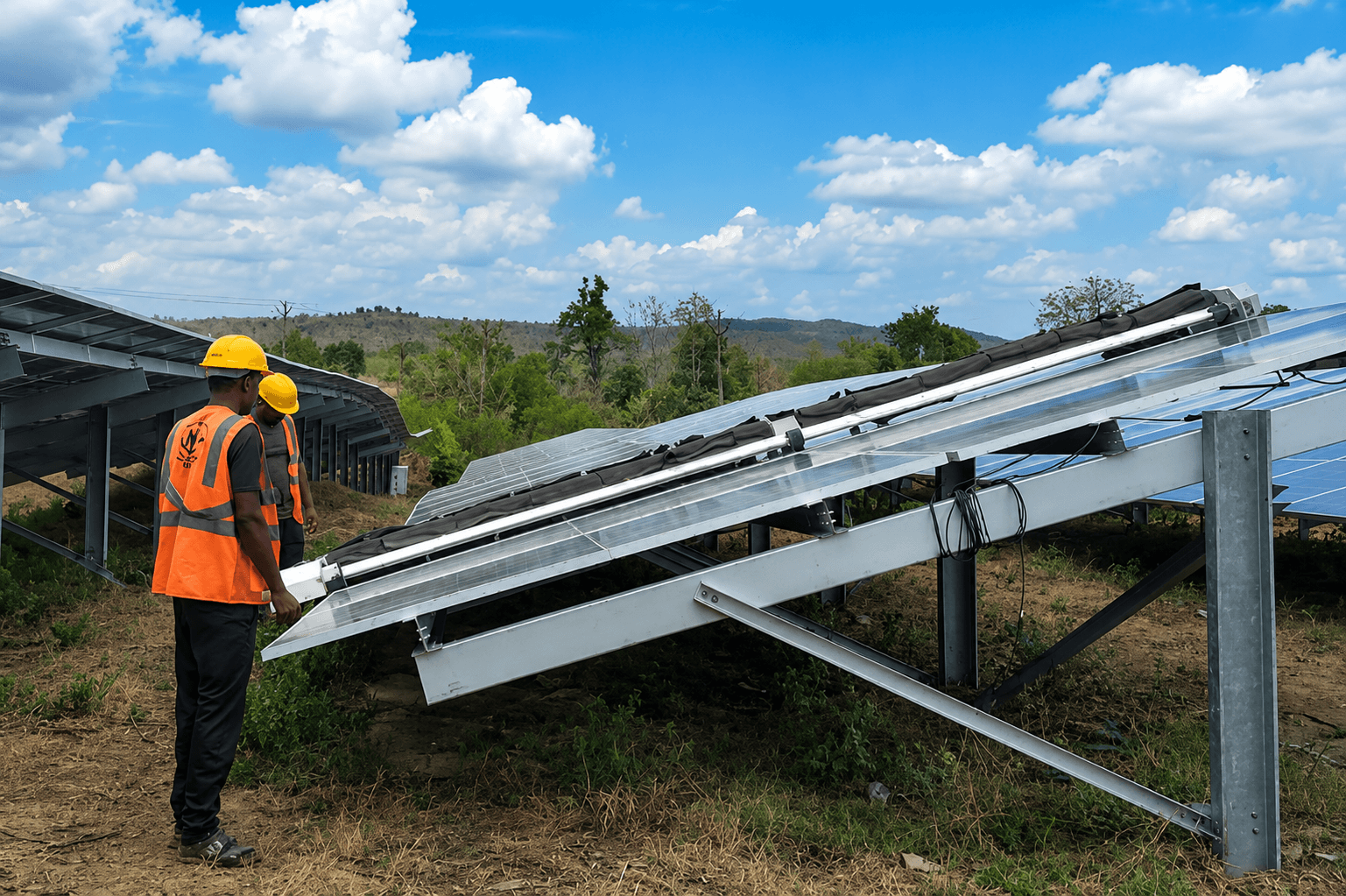
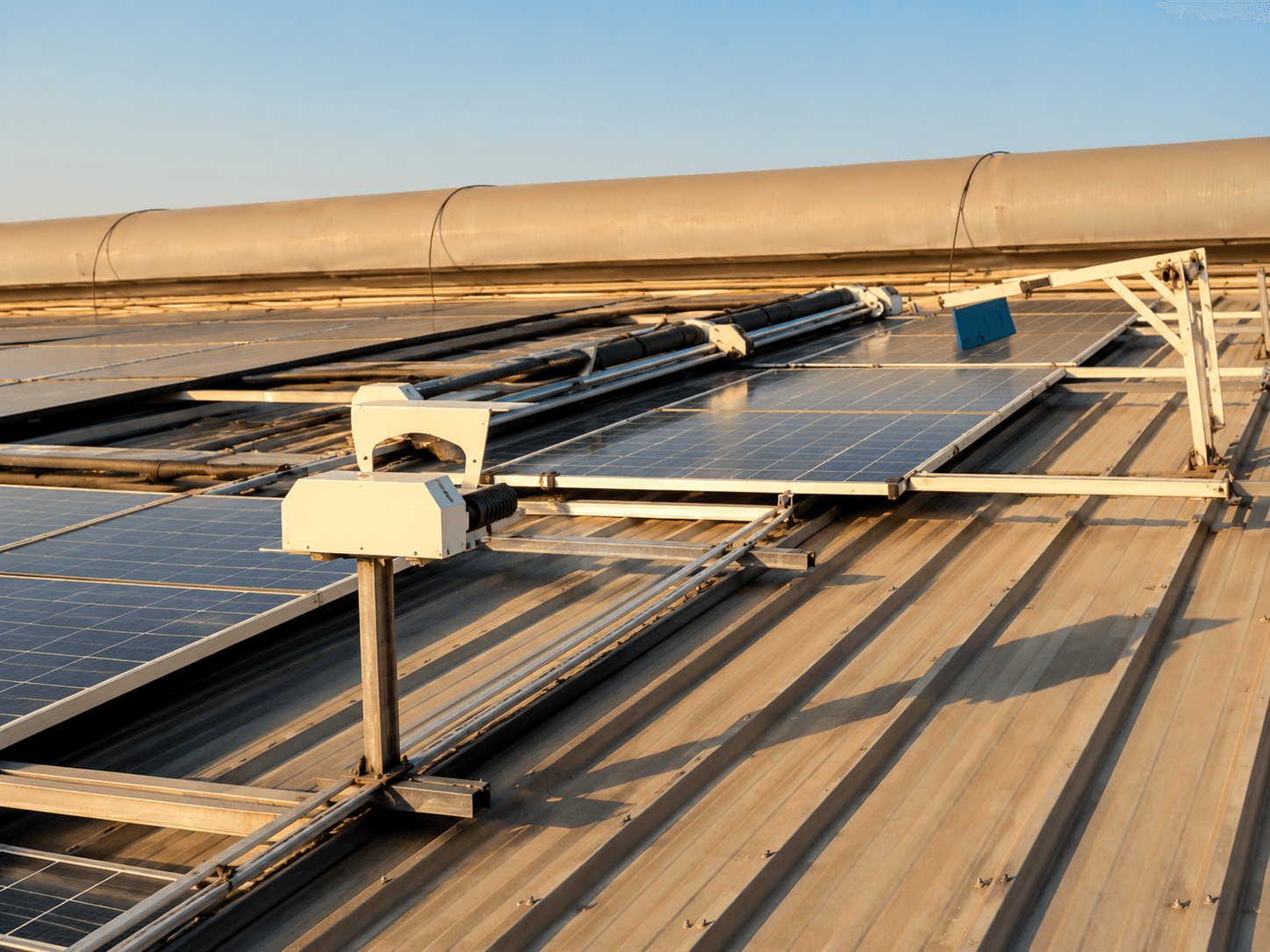
Deploying a cleaning robot on a rooftop C&I site introduces constraints absent in ground-mount plants. Ground-mount arrays typically rely on standardized row spacing and gravel or earth surfaces that accommodate heavy docking stations. In contrast, rooftop systems often feature limited weight-bearing capacity and restricted roof access points. A successful case study rooftop cleaning robot deployment must begin with an structural audit by a licensed engineer to verify that the robot and its ballast, if required, fit within the building design limits. Beyond weight, site managers must evaluate the edge protection and safety barriers near the array perimeter to ensure safe maintenance staff movement.
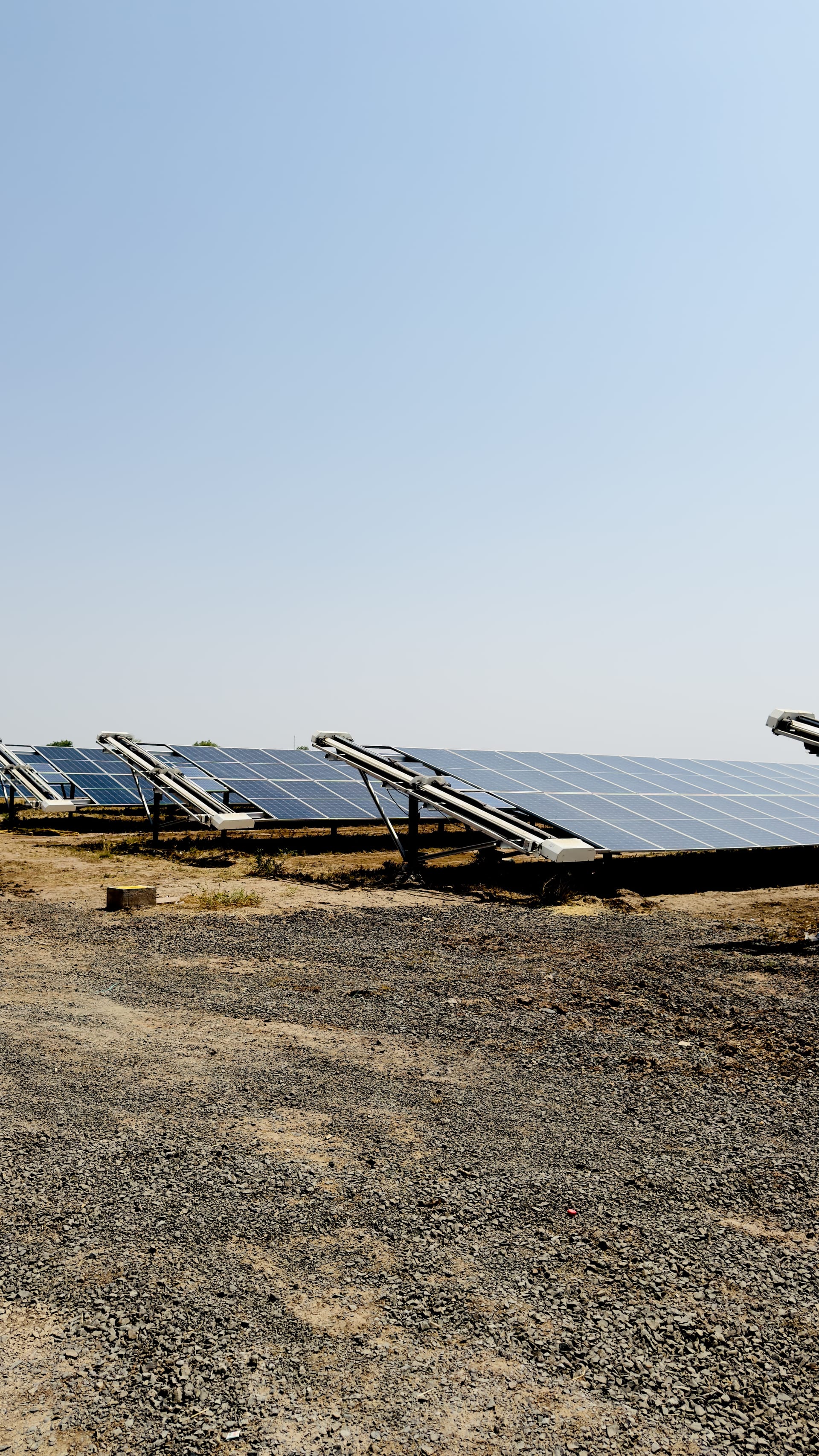
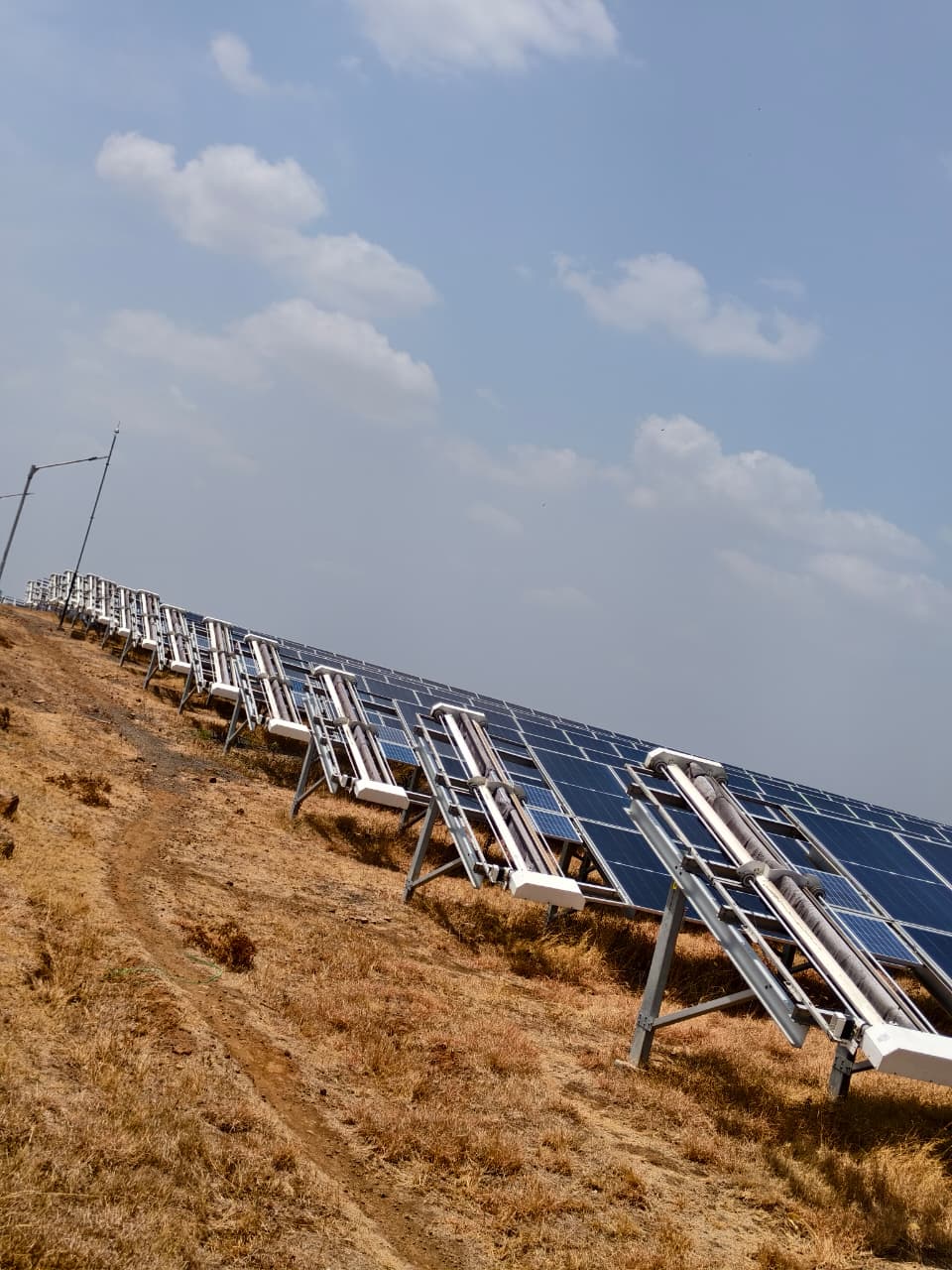
The physical layout of rooftop solar also limits deployment flexibility compared to utility-scale farms. Rooftop arrays often feature higher tilt angles or are distributed across multiple independent roof levels with varying orientation. These design factors determine if a robot needs to handle complex maneuvers or if a simpler, lightweight model like the MINY platform is required. While ground-mount sites often utilize larger robots with rail-based docking systems, rooftop environments typically prioritize compact robots that can move between rows without needing structural modifications to the roof surface. Planning for robot charging is equally critical; in ground-mount utility sites, power is drawn from the strings or dedicated chargers. On commercial roofs, identifying existing power access points for robot charging stations is essential to ensure operational continuity without tripping building circuit breakers or requiring extensive new cabling.
How do you safely deploy cleaning robots on C&I rooftop arrays?
Safe deployment begins by confirming the structural integrity of the roof and the specific module tilt angles against the robot chassis specifications. Unlike ground-mount sites, rooftop C&I projects often utilize varying mounting systems that can obstruct travel, so the commissioning team must first conduct a physical clearance check to identify cable trays, vents, or mounting clips that could snag the robot. Every robot path must be verified for edge safety, ensuring that mechanical stops or physical buffers are installed if the system lacks automated drop detection.
For C&I rooftop arrays, weight distribution is the primary constraint. You must ensure the robot operational weight, including any portable docking stations or cleaning media, does not exceed the point-load capacity of the roof structure. A common mistake in Indian C&I deployments is failing to account for the additional weight of debris and dust buildup during the monsoon or pre-monsoon phases, which can add transient load. Prior to deployment, coordinate with your structural engineer to map the load-bearing beams beneath the solar panels, ensuring the robot travel path aligns with these support points.
Once the physical path is cleared, the electrical integration phase requires dedicated commissioning. While industrial-grade robots often utilize local charging stations, you must ensure that these stations are wired into the site electrical system with surge protection to handle voltage fluctuations common in commercial grids. For projects larger than 5MW, it is advisable to integrate the cleaning robot control network with the plant SCADA or a dedicated monitoring system like automated performance monitoring. This ensures that the robot activity does not conflict with inverter maintenance windows or manual inspection schedules. Finally, ensure all personnel receive rigorous safety training on robot emergency-stop protocols, especially since roof access is inherently more hazardous than ground-level operations.
Step-by-step commissioning for 5MW+ sites
Commissioning a robotic cleaning fleet on a 5MW+ C&I rooftop requires a phased integration to avoid disrupting power generation or damaging module coatings. The process begins with a base-line performance audit, where you map the site soiling rate against current energy yield, typically using a 30-day monitoring period to establish a site-specific cleaning threshold. Once the structural survey confirms weight limits and mounting compatibility, proceed with these integration steps.
- Staged hardware installation: Start with a pilot row to verify robot-to-panel contact pressure and sensor reliability on your specific rack type.
- Network and SCADA integration: Connect robot charging docks to existing site electrical panels, ensuring surge protection is in place. Sync individual robot telemetry with your predictive maintenance analytics stack via NECTYR to ensure the cleaning schedule aligns with peak load hours.
- Pilot trial period: Operate the robots under manual supervision for the first week. Monitor for error triggers caused by inter-row obstructions like cable loops, conduits, or uneven roof transitions.
- Full-fleet transition: Move from manual to autonomous scheduling only after achieving a 99% successful cleaning run rate over five consecutive days.
For C&I portfolios, do not treat every roof as a uniform environment. Distributed sites often exhibit localized soiling variation due to building ventilation or industrial emissions. Use the performance data from your initial pilot to adjust the cleaning frequency for specific roof zones. By treating your 5MW+ portfolio as a single integrated fleet, you can optimize battery cycles and reduce the wear on individual robots while maintaining a consistent performance ratio, as outlined in our analysis of soiling revenue loss. Ensure all onsite technicians are trained in emergency extraction procedures to prevent downtime during critical generation windows.
Operational constraints and cleaning scheduling
For C&I rooftop arrays, the cleaning schedule must be decoupled from fixed calendar dates and instead driven by real-time soiling loss. While utility-scale ground plants often employ a 15–30 day cleaning cycle during dry seasons, rooftop sites exhibit higher variance due to site-specific environmental factors like HVAC exhausts, industrial chimneys, or surrounding foliage. A fixed schedule frequently results in either over-cleaning, which increases mechanical wear on robot components, or under-cleaning, which allows dust to bake into solar glass and degrade your Performance Ratio (PR).
To manage this effectively, integrate your robotic cleaning logs with your plant monitoring portal, such as NECTYR. This allows the system to trigger a cleaning sequence only when the gap between the actual PR and the theoretical yield exceeds a pre-defined threshold, typically 2% to 3%. This targeted approach optimizes battery cycle life and minimizes the energy expenditure required for daily travel. For portfolios exceeding 5MW, it is critical to distribute the load across multiple robots to prevent downtime if a single unit requires maintenance or if a specific roof section is blocked by debris.
- Define site thresholds: Set an automated alert for a 2% drop in PR, which signals the optimal window for a cleaning run.
- Factor in seasonal extremes: In the pre-monsoon phase, schedule a deep cleaning to remove heavy accumulation, followed by light touch-ups once rainfall begins to prevent mud streaks.
- Monitor component health: Track the battery health and motor current of each robot through your fleet dashboard to proactively schedule maintenance before a hardware failure stops a cleaning run.
- Align with maintenance windows: Ensure that your autonomous cleaning schedules do not coincide with inverter shutdowns or site-wide electrical inspections to prevent communication errors in the robotic control network.
Ultimately, a successful deployment on a large-scale rooftop portfolio relies on the ability to treat cleaning as a data-driven process rather than a labor-management task. By leveraging automated fleet telemetry, you can reduce the onsite manual intervention required, as explored in our guide on Taypro's green AI advancements, and ensure that your O&M expenditure directly correlates with recovered energy generation.
Performance impact and PR monitoring
For C&I rooftop arrays, the Performance Ratio (PR) is the most objective metric to validate your cleaning investment. Robotic deployment allows for real-time adjustments based on actual generation, preventing the performance degradation often seen in static, schedule-based cleaning models. A clean-run PR gain of 3% to 5% is standard for sites with high localized soiling from industrial emissions, while desert or dusty rooftop zones may see improvements exceeding 7%. Operators should focus on the delta between the reference strings and the actual generation to isolate soiling losses from inverter downtime or grid-side curtailment.
Integrating your robot logs with a portal like NECTYR provides the granular data required to justify the expenditure. By tracking the time-stamped performance improvement following every autonomous cleaning event, you can build a library of site-specific yield recovery rates. For a 5MW portfolio, this telemetry proves essential when local micro-climates or factory ventilation create uneven dust distribution across the roof. If the PR does not recover as expected after a scheduled pass, your O&M team can immediately investigate module-level faults, such as bypass diode failures or cable damage, rather than assuming the system is simply dirty. As explored in our analysis of soiling revenue loss, the transition from periodic manual cleaning to data-triggered autonomy directly protects the financial viability of PPA-backed rooftop assets.
Key takeaways for plant managers
- Audit roof structural limits: Before commissioning, confirm the point-load capacity of your rooftop to ensure the selected robot weight aligns with safety regulations and structural integrity.
- Adopt a data-driven trigger: Shift from calendar-based to PR-based scheduling; use your plant monitoring software to trigger cleaning runs only when yield loss hits a 2% to 3% threshold.
- Prioritize site-specific integration: Ensure robotic routes are mapped to avoid roof obstructions like ventilation stacks and HVAC units, as detailed in our guide on monitoring solar performance.
- Standardize for scalability: Treat your multi-site C&I portfolio as a single fleet, using centralized logs to balance battery health and maintenance intervals across all rooftop assets.
- Validate with PR analytics: Use the post-cleaning generation delta to calculate the actual recovery, ensuring your O&M spend correlates directly with energy generation gains.
Key Takeaways for C&I Plant Managers
Transitioning from a manual cleaning regime to a robotic deployment for rooftop C&I sites requires more than just equipment procurement; it requires an overhaul of your O&M logic. Successful deployment centers on shifting from labor-intensive schedules to data-triggered autonomy.
1. Prioritize Structural and Safety Validation
Unlike ground-mount installations, rooftop environments present unique point-load challenges. Before finalizing your case study rooftop cleaning robot deployment, conduct a formal structural audit. Ensure the rooftop's dead load and live load capacities can accommodate the robot's weight (typically 25–40 kg) along with any moisture buildup. This is critical for maintaining the long-term integrity of commercial buildings and complying with Indian safety standards for rooftop solar installations.
2. Operationalize the Soiling Threshold
Avoid the trap of calendar-based cleaning. In the Indian context, where dust accumulation varies wildly between the monsoon and pre-monsoon seasons, cleaning on a fixed date leads to either unnecessary OPEX or significant revenue leakage. Implement a threshold-based trigger: initiate a cleaning cycle only when your plant monitoring software indicates a 2% to 3% drop in the Performance Ratio (PR) relative to your reference strings. This ensures that every rupee spent on cleaning translates directly into recovered MWh, as discussed in our analysis of ESG reporting for utility solar.
3. Plan for Complex Rooftop Topography
Commercial rooftops are rarely flat, unobstructed planes. They are often crowded with HVAC units, ventilation stacks, and electrical conduits. A successful deployment requires detailed path planning. For 5MW+ portfolios, use fleet management tools like NECTYR to map these obstacles into the robot's navigation logic. This prevents collision risks and ensures that the robot does not become stuck, which would negate the efficiency gains of automation.
4. Scalability via Fleet Telemetry
For managers overseeing multiple distributed sites, the goal should be centralized visibility. Do not treat each rooftop as a silo. By integrating robotic logs with your primary monitoring portal, you can treat a scattered portfolio as a single, manageable fleet. This allows for optimized battery management and a standardized approach to reporting yield recovery, similar to how we approach monitoring solar performance at scale.
5. Audit Financial Recovery
Finally, always close the loop with financial validation. Use the post-cleaning generation delta to calculate your actual Return on Investment (ROI). If your cleaning cycles are consistently recovering 3% to 7% of potential yield, the transition to a robotic system is technically and economically justified. This data is essential for justifying the shift from manual labor to automated solutions in long-term PPA-backed contracts.
Sources and further reading
Frequently asked questions
Successful deployment of a case study rooftop cleaning robot deployment requires strict adherence to structural weight limits and access protocols. For Indian C&I portfolios, these robots offer a scalable way to mitigate soiling losses that typically range between 10% and 30% depending on the site environment.
You must hire a licensed structural engineer to conduct a formal audit of the roof. This ensures the array and the weight of the cleaning equipment stay within the original building design load-bearing limits before you initiate any deployment.
Waterless robotic systems are designed to be safe for modules, often reducing water consumption by up to 90% compared to traditional wet methods. Always verify with your module manufacturer that the specific robot brush material and operating pressure comply with their warranty maintenance guidelines.
For 5MW sites, you should account for robot maintenance every 30–45 days. This frequency helps balance local dust density against operational expenditure and ensures consistent mitigation of the 10–30% energy yield loss typically caused by soiling.