Quick answer
- Integrate cleaning infrastructure at the design stage to secure a 1–2% CAPEX allocation for O&M; failing to do so often leads to a 10–30% yield loss in high-soiling regions.
- Commissioning must include a 100% validation of water pressure, row-end robotic docking, and communication signal coverage for automated fleets.
- Deploy soiling sensors or predictive analytics to trigger cleaning cycles at 3–5% PR loss thresholds to optimize ROI.
- Ensure cleaning systems are compatible with tracker tilt ranges to prevent mechanical collisions, specifically testing at 5% of the total array area before COD.
Integrating cleaning infrastructure during commissioning ensures that your plant maintains its design PR from the first month of operation. A robust plant commissioning checklist including cleaning infrastructure must cover water supply logistics, electrical power distribution for robotics, and row-end accessibility to avoid operational bottlenecks. By aligning your module specifications with O&M strategy during the build phase, you can ensure long-term site reliability.
Integrating cleaning infrastructure during project design
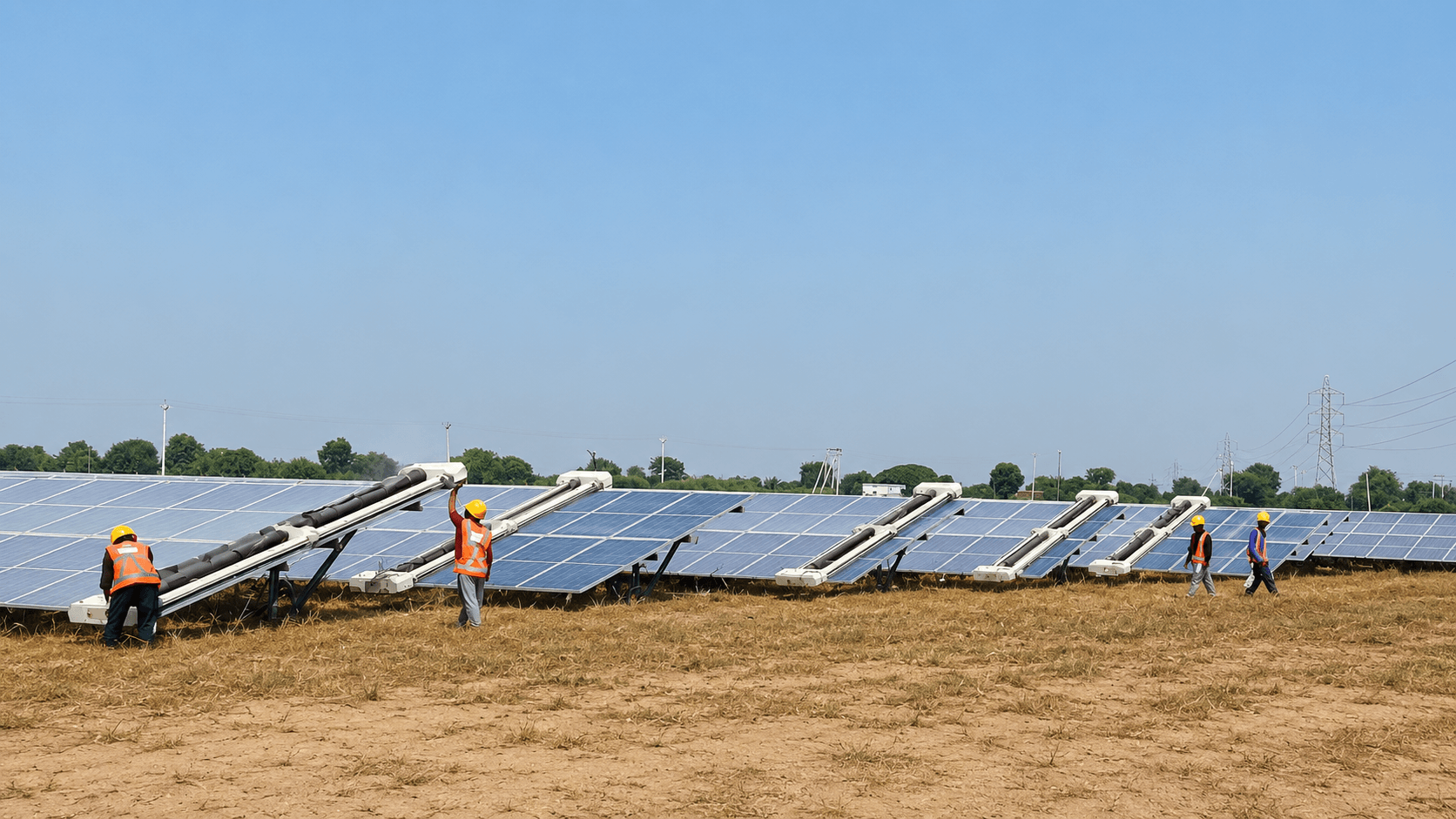
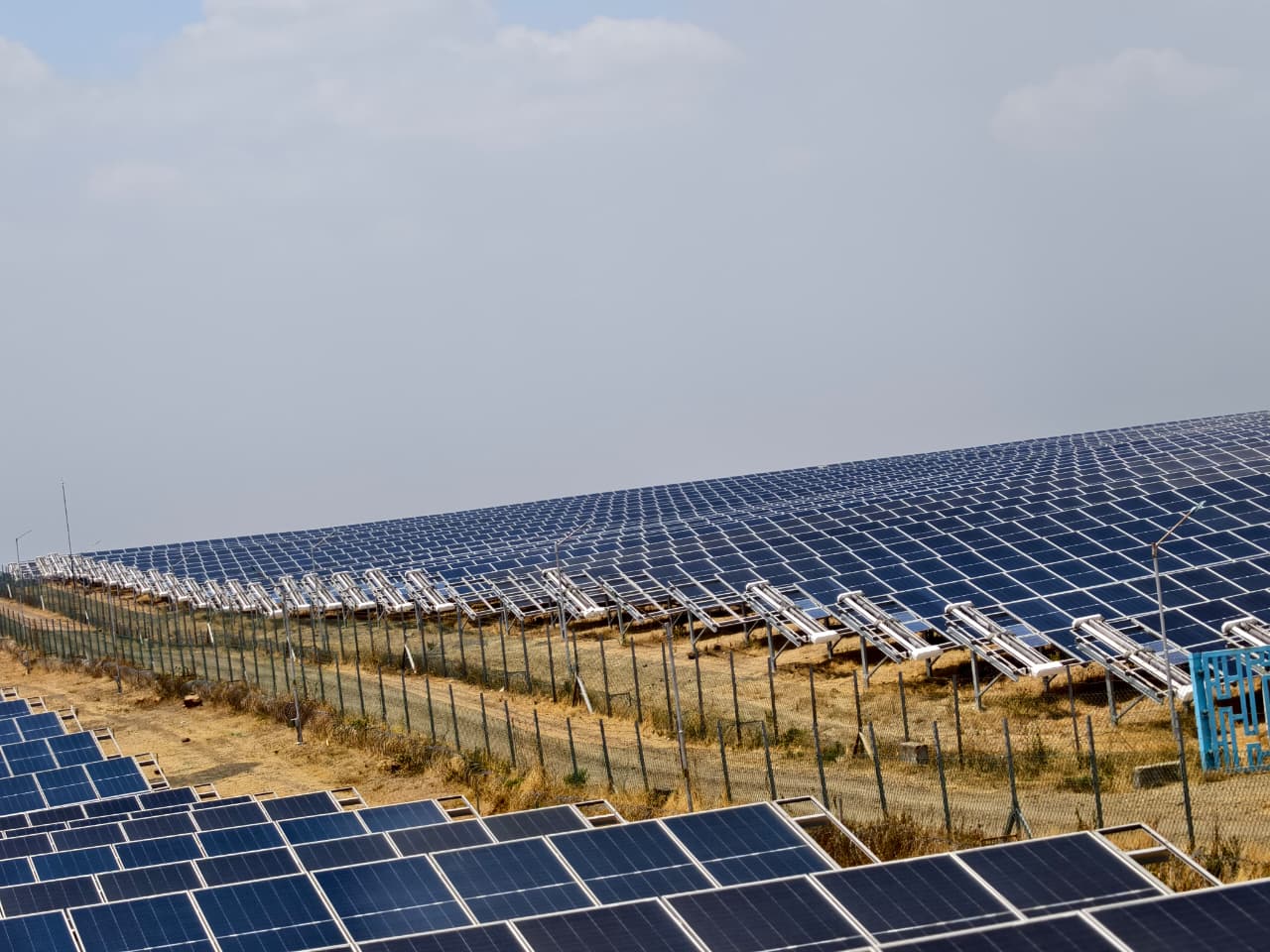
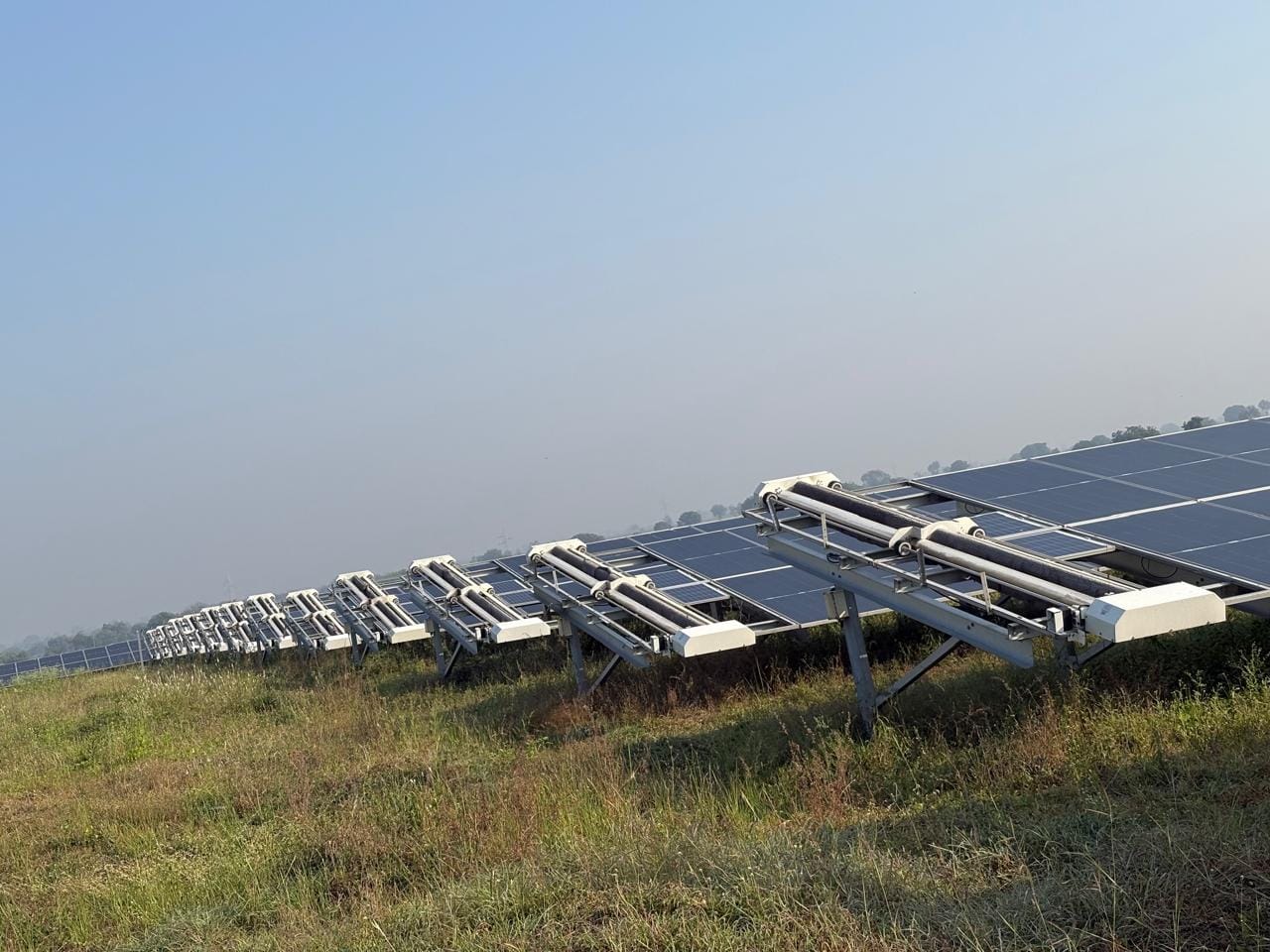
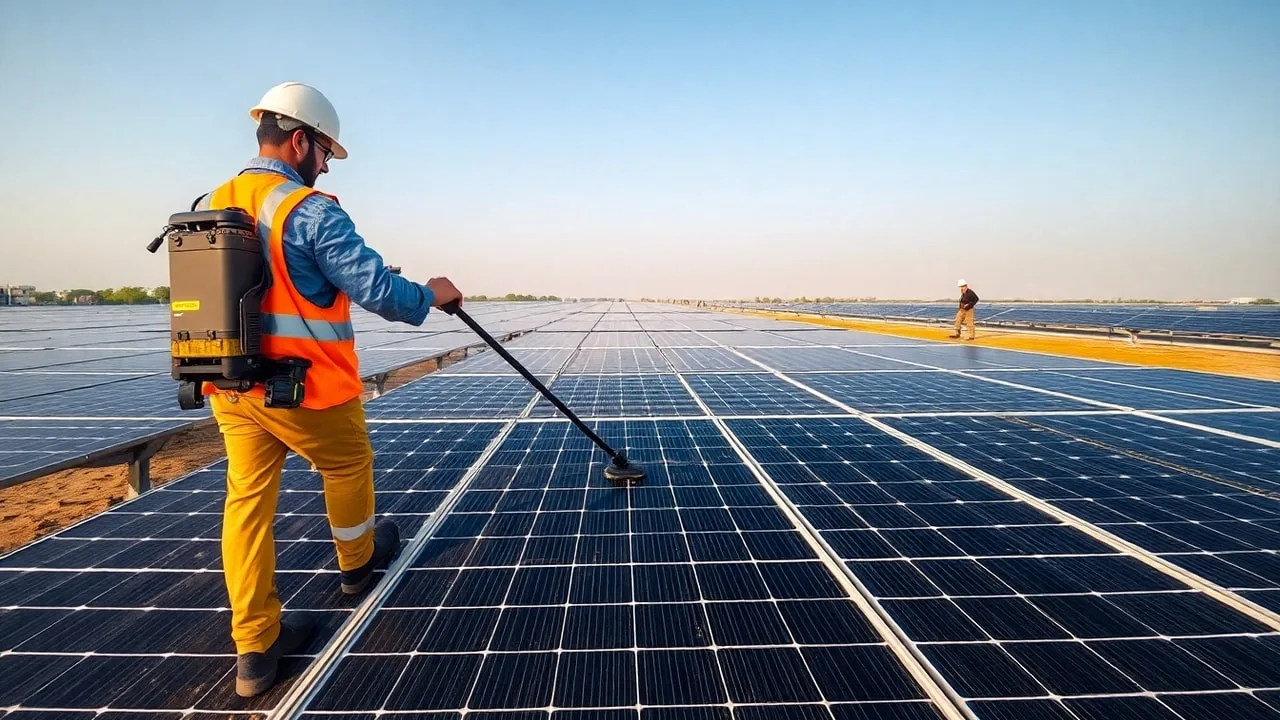
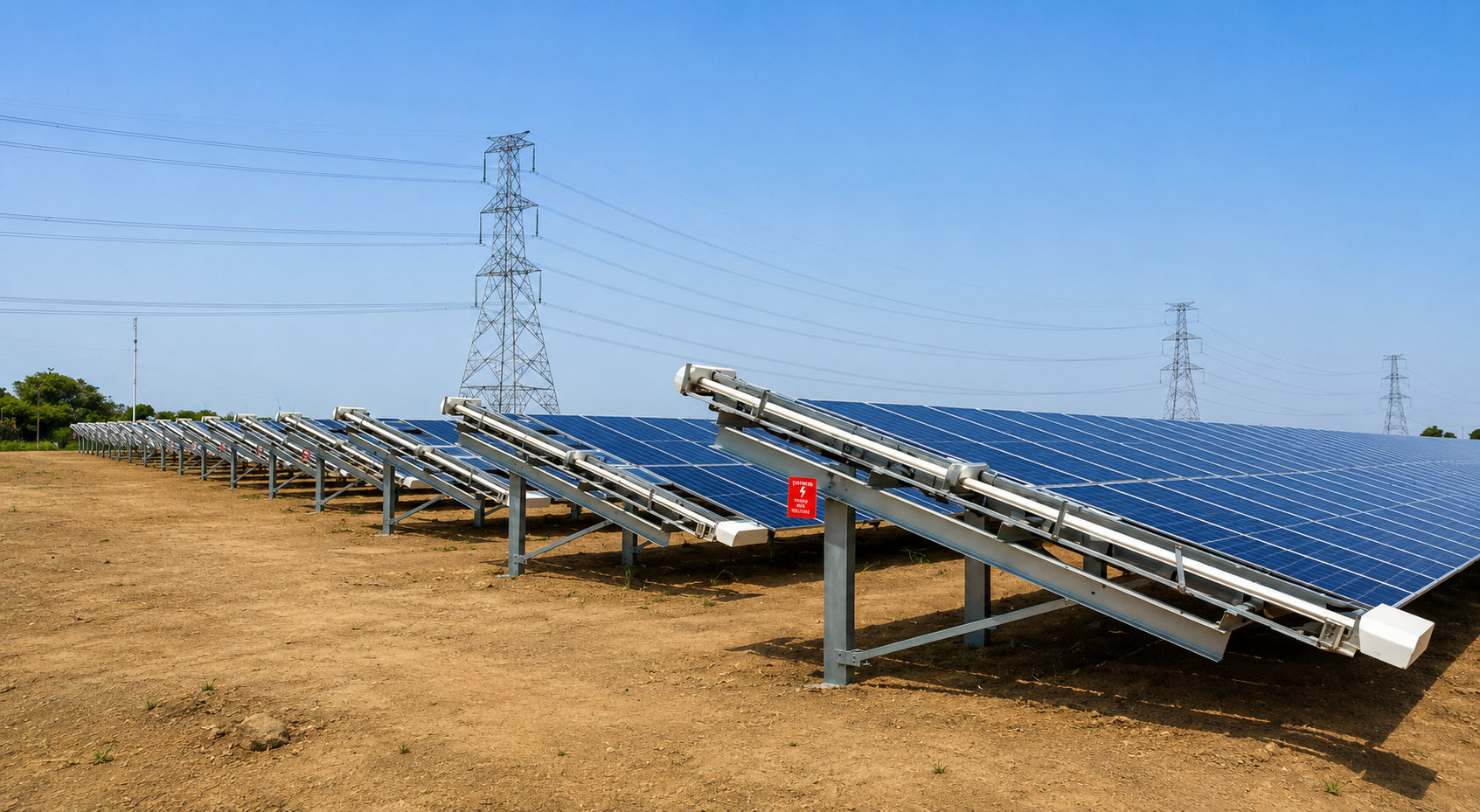
Too often, cleaning logistics are treated as an afterthought during the commissioning phase. For a 50 MW+ plant in India, waiting until after COD to determine how panels will be cleaned often leads to higher operational costs and increased safety risks. Designers should evaluate if the site will rely on water-based manual washing or automated waterless solutions before the civil work begins. If robotic cleaning is the chosen pathway, infrastructure such as row-end docking stations or specific tracker maintenance modes must be pre-configured. Integrating these systems early allows for site-wide power and communication cabling to be laid alongside the main electrical infrastructure. This minimizes rework and protects the long-term integrity of your assets. For more guidance on aligning your setup, refer to our guide on robot fleet sizing for utility plants.
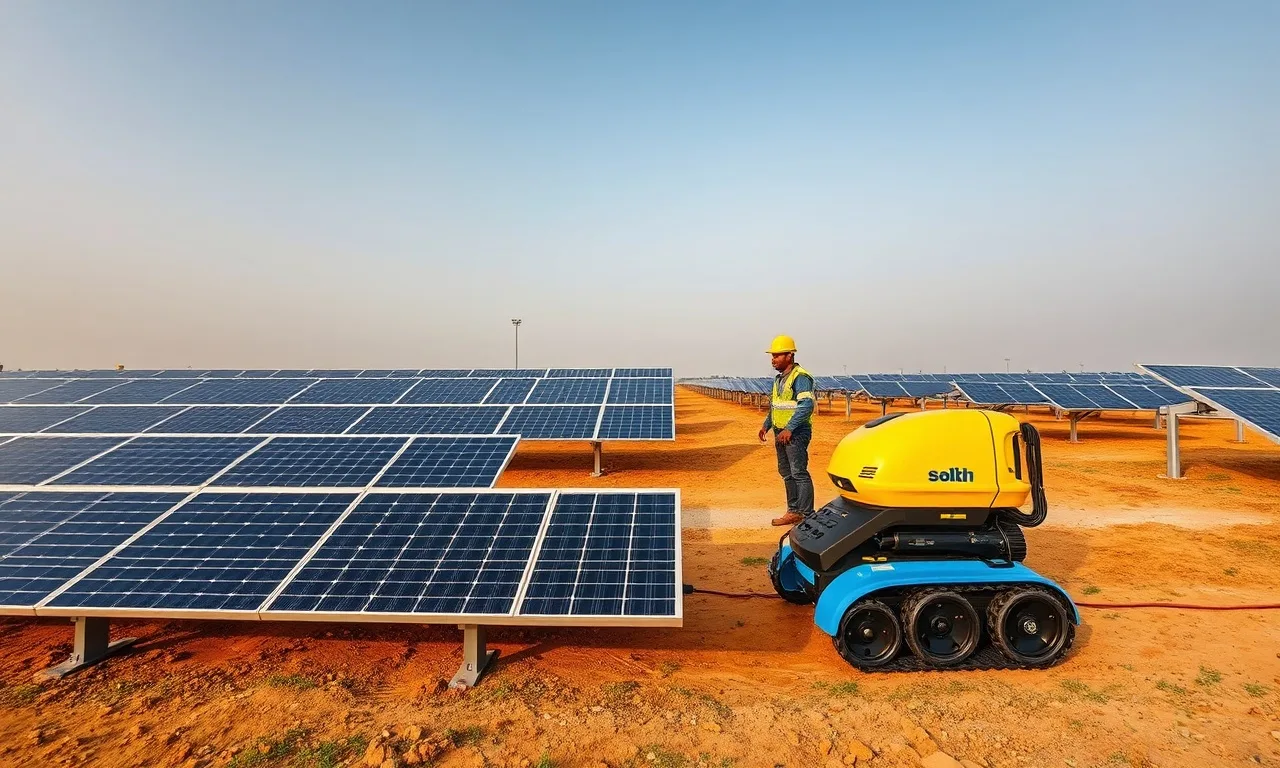
When planning for large-scale deployments, the civil layout must account for the turning radius of cleaning equipment and the weight distribution of mobile water tankers. In regions like Gujarat, where loose sandy soil is common, the design of access roads must support the weight of heavy cleaning vehicles to prevent them from sinking during the wet season. Furthermore, electrical cabling at the row ends must be buried at a sufficient depth or protected by concrete curbing to withstand the repetitive transit of autonomous robotic platforms. By simulating the full operational workflow during the design phase, stakeholders can avoid the high cost of site remediation which, in many Indian utility projects, has been found to add 15–20% to the initial O&M budget setup if retrofitted post-COD. Implementing long-term O&M and soiling cost management early is critical to maintaining a healthy project IRR.
What specific infrastructure must be included in the commissioning checklist?
Your commissioning checklist for cleaning infrastructure must be as rigorous as your electrical testing. Operators should prioritize these four pillars:
- Power and Connectivity: Verify that robots have consistent power access, whether through self-charging solar modules or grid-tied docking stations, and that the site signal (LTE/Wi-Fi) covers 100% of the arrays for fleet management systems.
- Row-End Accessibility: Confirm that tractor-trailers and field crews can safely access row ends without damaging sensitive cabling or ground equipment.
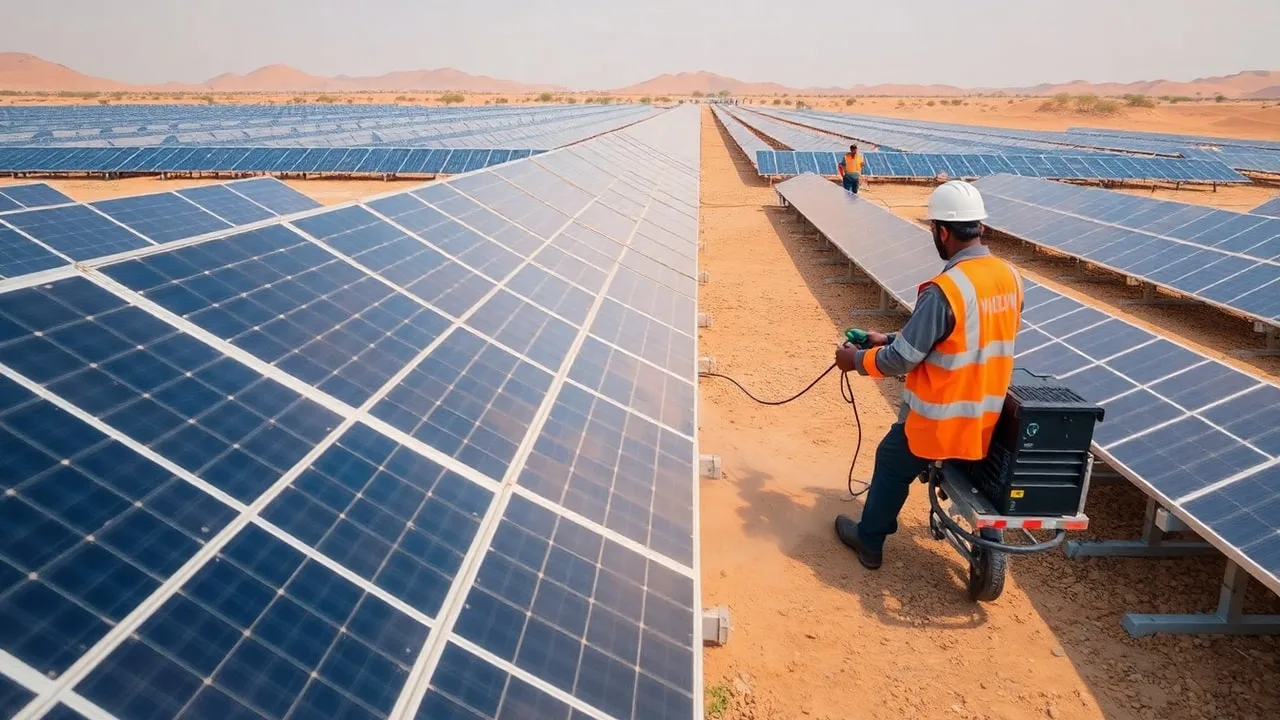
- Water Logistics (if applicable): For plants still using wet-based cleaning, ensure water storage tanks are sized for local desert-belt drought conditions and that pumps provide consistent pressure at the furthest row of the field.
- Mechanical Integration: Validate that tracker tilt ranges are fully compatible with your selected cleaning equipment to prevent mechanical collisions during active cleaning cycles.
Beyond these pillars, technical managers should document the electrical load of the entire cleaning fleet during a stress test. For a 100 MW site, the charging infrastructure must be load-balanced to prevent a voltage dip on the auxiliary transformer. Furthermore, cybersecurity validation is essential: ensure that the fleet communication network is isolated from the plant's main control system to prevent unauthorized access. A detailed commissioning sign-off should include a document of compliance for each robotic unit, confirming that the communication handshake with the central monitoring server is successful at 100% of the site's geo-fenced coordinates.
Comparison of cleaning infrastructure methodologies
| Feature | Manual Water-Based | Automated Waterless Robotic |
|---|---|---|
| Operational Cost (Annual) | High (Labor + Water) | Low (Maintenance Focused) |
| Water Consumption | High (1–2 liters/m2) | Zero (Negligible) |
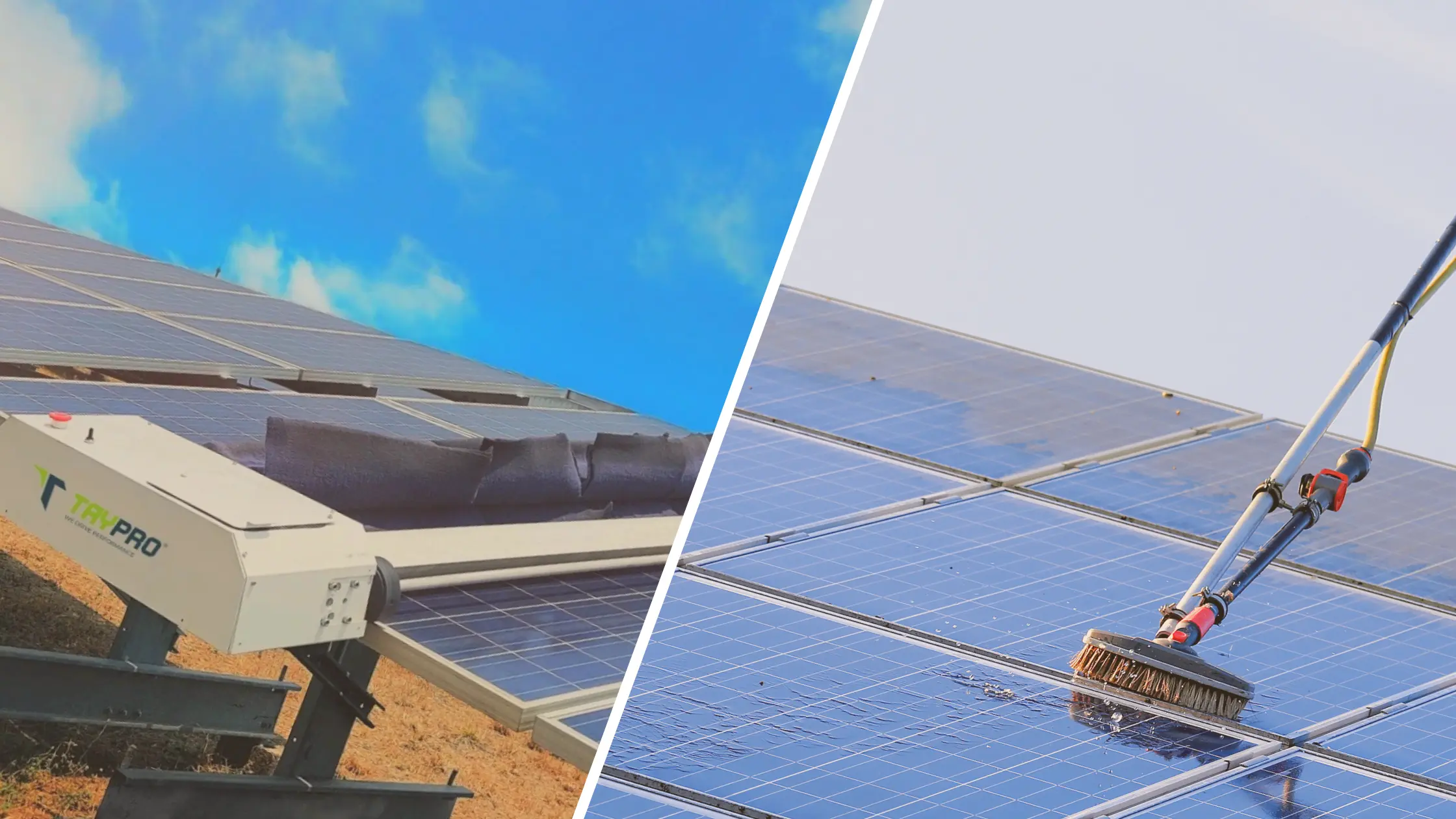
| Efficiency Recovery | 8–12% | 6–15% |
| Deployment Speed | Slow (Manual Labor) | Fast (Autonomous) |
| Initial CAPEX | Moderate | High |
How often should you plan cleaning cycles for a 50 MW+ utility plant?
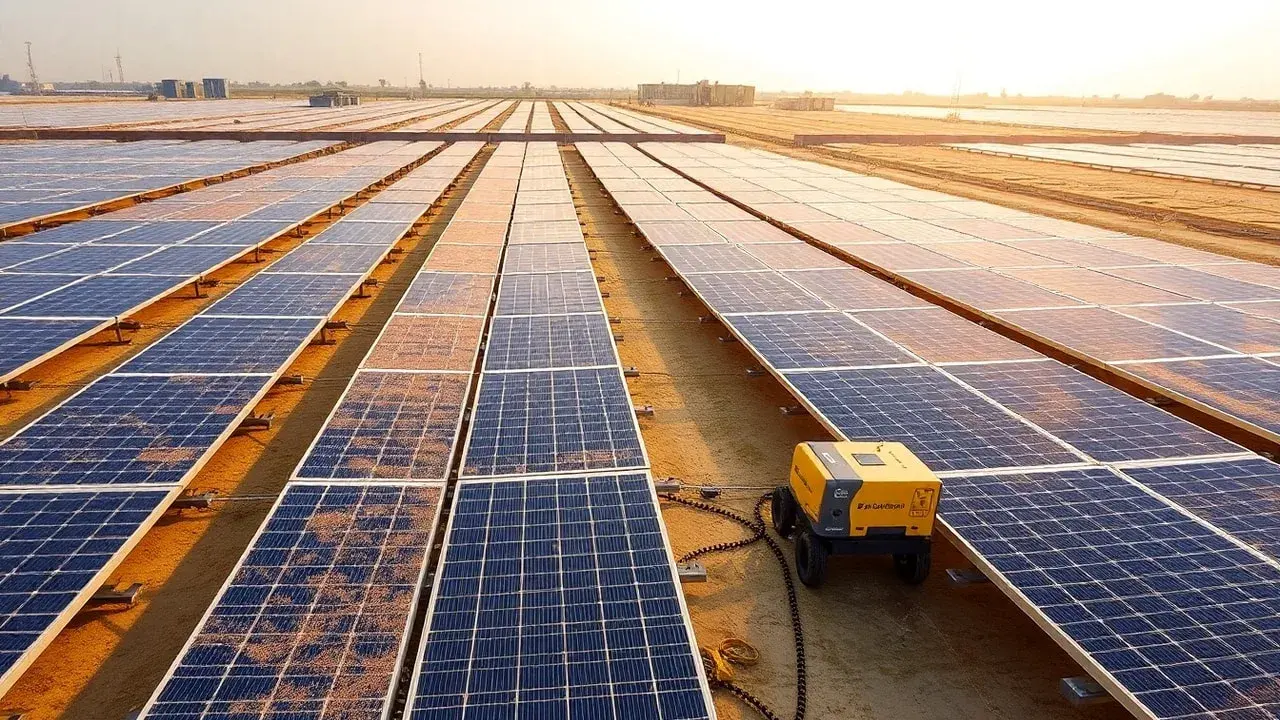
Cleaning frequency for utility-scale plants in India is not a one-size-fits-all metric. It depends heavily on the local dust profile, seasonal weather patterns, and the specific soiling rate of your site. For a typical 50 MW plant in an arid region like Rajasthan or Gujarat, industry-typical benchmarks suggest that accumulated dust can cause a 0.5% to 1% daily power generation loss.
Without a structured cleaning schedule, monthly yield losses can range from 10% to 30%. To prevent this, plant managers should move away from fixed calendar-based cleaning and toward data-driven schedules. A common threshold for triggering a cleaning cycle is when the soiling loss reaches 3% to 5% of the design Performance Ratio (PR). This approach balances the cost of cleaning against the revenue lost from reduced generation. For sites with high-intensity dust or sandstorms, weekly cycles might be necessary during the dry season. Conversely, during the monsoon, cleaning frequency often drops significantly as natural rain provides periodic washing. Integrating predictive soiling models allows you to optimize these cycles, ensuring you only clean when the ROI is positive.
Data analysis indicates that sites located near industrial clusters or agricultural fields with high particulate matter require more frequent intervention. In these instances, relying on visual inspection is insufficient. Asset managers should leverage high-resolution weather data to predict soiling events and proactively deploy cleaning robots before the dust layers harden, as hardened dust significantly increases the friction coefficient and energy consumption of robotic brushes, potentially reducing the lifespan of the cleaning equipment by 20–30%.
Managing water access and storage at arid project sites
In many parts of India, water scarcity is a primary operational risk for solar IPPs. If your commissioning checklist includes water-based cleaning infrastructure, you must account for more than just the presence of a water source. You must validate the long-term availability and the logistics of moving that water across a large-scale site.
- Storage Capacity: Ensure that on-site water storage tanks are sized for peak dry season demand. If your plant relies on external water tankers, calculate the logistics of truck turnaround times to ensure cleaning doesn't stall during a drought.
- Pressure and Distribution: For large MW-scale sites, water pressure often drops at the furthest rows of the array. During commissioning, test the pump capacity and pipe diameters to ensure consistent pressure reaches every module.
- Water Quality: High mineral content in local groundwater can lead to hard water scaling on the glass, which may cause permanent degradation of anti-reflective coatings. Test water samples before finalizing your cleaning methodology.
- The Waterless Alternative: To mitigate these risks entirely, many developers are shifting toward waterless robotic solutions. Moving to a waterless model can reduce water consumption by up to 90% compared to manual washing, which is a critical factor for projects in water-stressed states.
Deciding between a water-intensive or waterless strategy is a major CAPEX/OPEX trade-off. If your site is located in a high-dust, low-water corridor, investing in waterless cleaning infrastructure during the design phase is often more economical than managing the rising costs of water procurement and logistics over a 25-year lifecycle. For a deeper look at these economic trade-offs, see our guide on CAPEX vs OPEX models for solar cleaning.
Validating cleaning infrastructure performance before COD
Testing the infrastructure is only useful if it accurately simulates your expected operational environment. During the pre-operational phase, conduct a stress test of the cleaning fleet across at least 5% of the total array area to identify potential edge-case failures. During this validation phase, measure the speed of robot deployment, the success rate of auto-docking, and the data latency between the robots and the fleet monitoring dashboard. If your strategy involves a mix of manual washing and robotics, ensure that the water pressure at the most remote rows of the plant is tested under full load. Inconsistent water distribution is a leading cause of performance degradation in water-based systems. Refer to regional best practices for O&M strategies and soiling mitigation to refine your testing protocols. Documenting these performance baseline figures at commissioning provides the reference point for all future O&M performance audits.
Key takeaways for plant managers
- Integrate early: Design cleaning infrastructure into your plant layout during the initial EPC phase to avoid costly retrofits or row spacing limitations later.
- Validate logistics: Ensure on-site water storage and robot charging networks are stress-tested for peak demand before declaring Commercial Operation Date (COD).
- Data-driven O&M: Deploy fleet monitoring platforms to convert manual cleaning cycles into predictive, automated schedules based on real-time soiling data.
- Scale for performance: Use industry-standard fleet sizing metrics to ensure your cleaning density matches your site's specific soiling rates, typically targeting a 6% to 15% PR recovery in high-dust regions.
Sources and further reading
Frequently asked questions
Integrate cleaning infrastructure at the design stage to secure a 1–2% CAPEX allocation for O&M; failing to do so often leads to a 10–30% yield loss in high-soiling regions. Commissioning must include a 100% validation of water pressure, row-end robotic docking, and communication signal coverage for automated fleets.
Designers should pre-configure tracker maintenance modes and row-end docking stations before civil work begins. This ensures that power and communication cabling can be laid alongside the main electrical infrastructure to avoid costly future rework.
Utility-scale sites in India face potential yield losses of 10–30% monthly without a structured cleaning plan. Integrating these systems before the Commercial Operation Date protects the asset from immediate performance degradation and prevents high operational costs later.
Yes, the checklist must validate the technical requirements for waterless solutions, such as battery charging connectivity and signal coverage for robot fleet management systems. Budgeting for these systems as part of the 1–2% O&M CAPEX allocation is recommended.