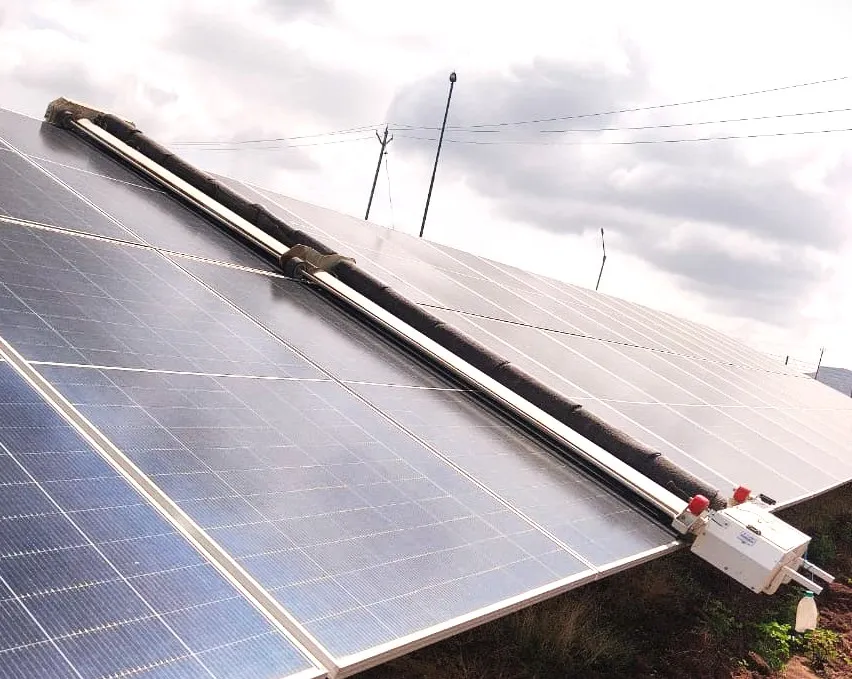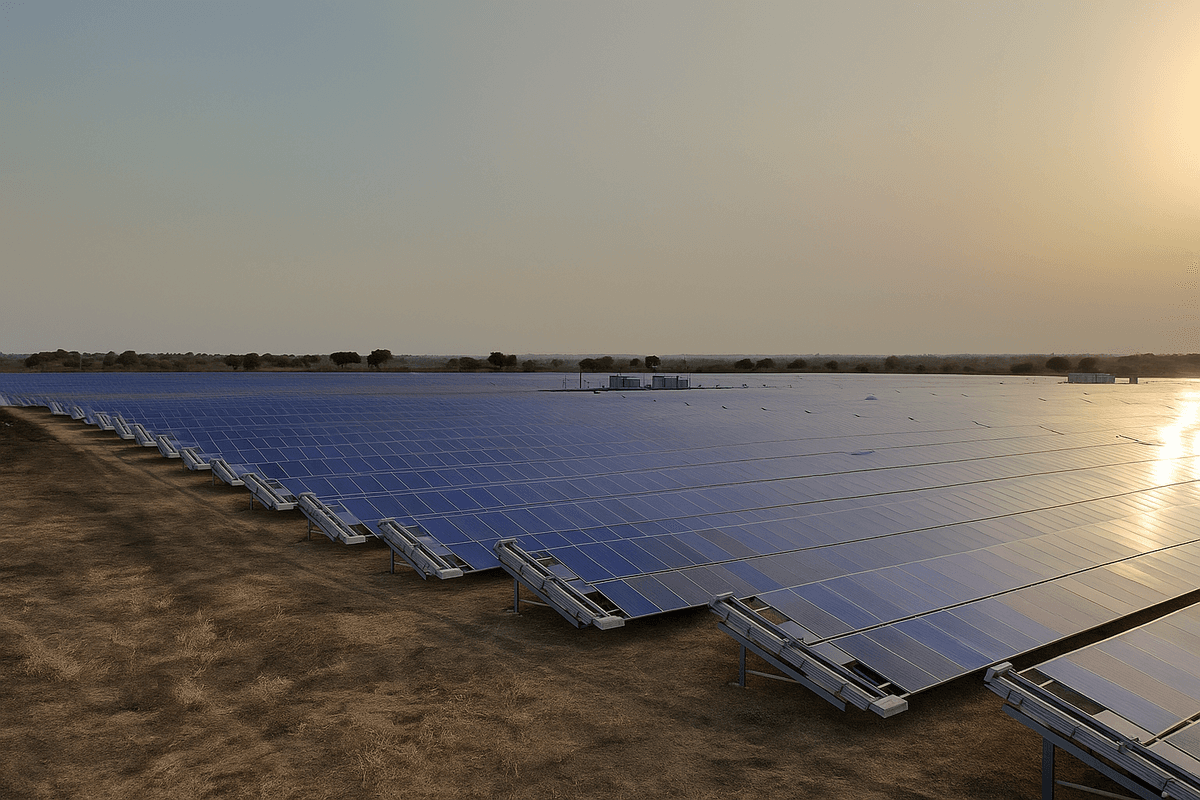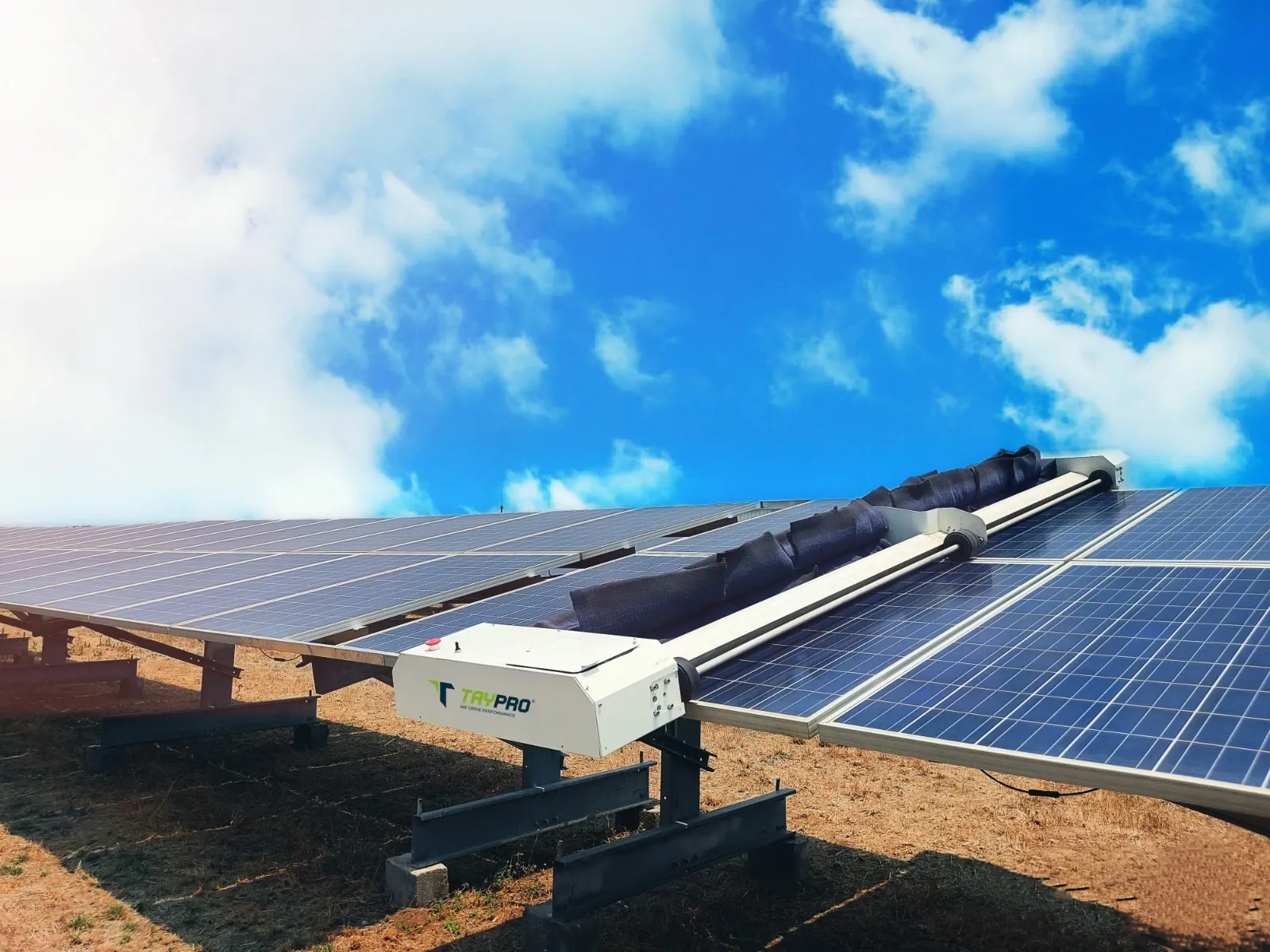
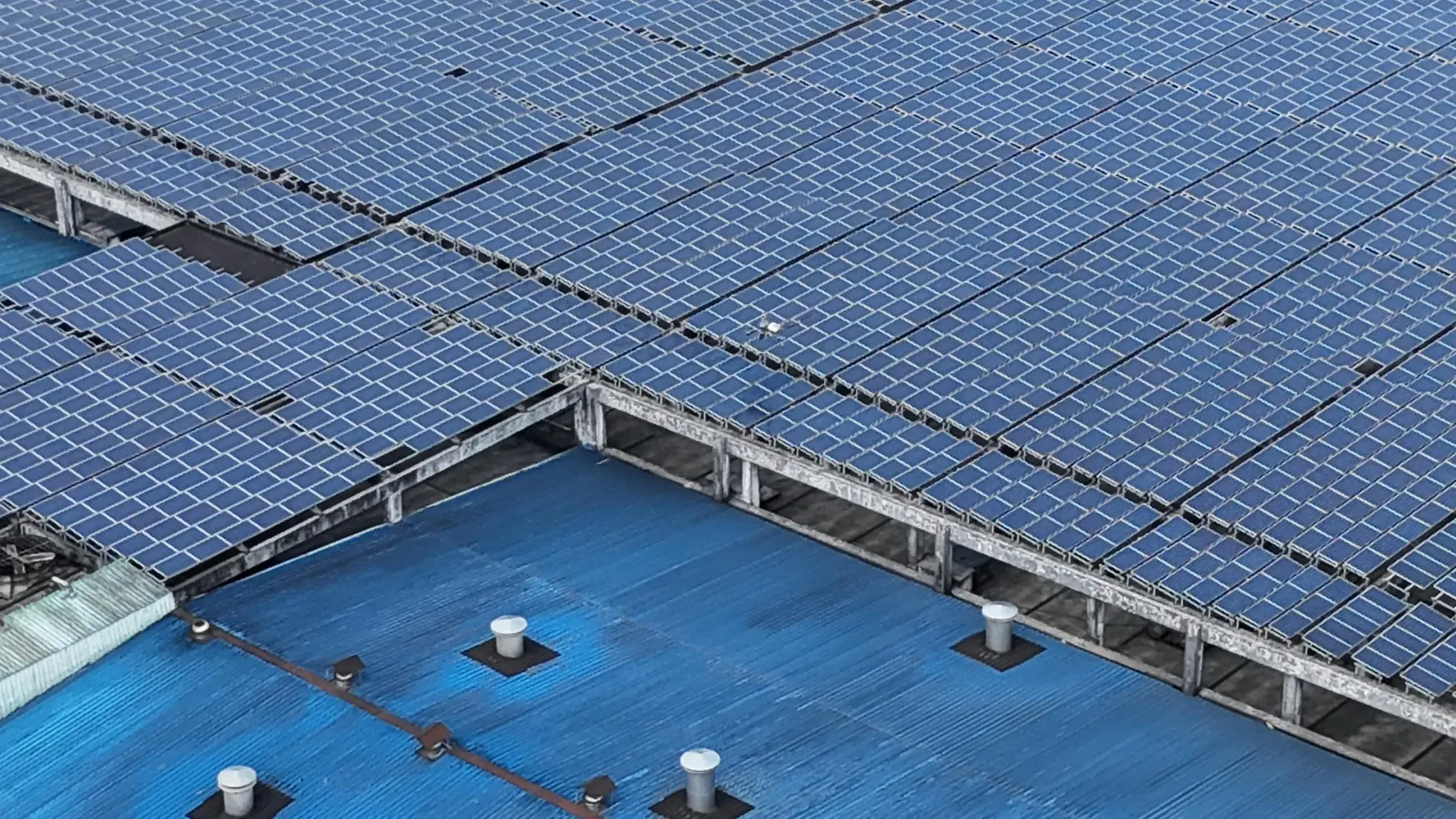
Utility solar design in India is often judged on capex per MW and P50 energy at financial close. Operations teams live with the result for 25 years: whether robots fit the rows EPC built, whether monsoon mud pools under tables, and whether cleaning crews can reach every block three days after a May dust storm.
This guide focuses on design choices that lock in O&M and cleaning economics. Electrical design matters; this article covers the civil and layout decisions EPC manuals treat as one-line "periodic cleaning" specs until PR bleeds in year two.
Quick answer
- Design roads and turning radii for cleaning equipment and tankers early.
- Plan water or waterless cleaning before land acquisition closes.
- Validate tracker + robot clearance on sample rows before bulk procurement.
- Place reference soiling and weather stations in representative blocks.
- Hand O&M a cleaning scope map, not a generic spec clause.
Design is an O&M contract in concrete
Every row spacing choice, drain invert, and road width becomes a recurring cost or PR limit. Plants designed without cleaning logistics often spend ₹50 lakh to ₹2 crore retrofitting docks, laying extra pipe, or regrading roads for robots that cannot turn at block ends. Those costs rarely appear in EPC variance reports because they hit O&M budgets years later.
Owners commissioning 10–100 MW in Rajasthan, Gujarat, and Madhya Pradesh should require cleaning design review at 30% and 90% engineering stages, not at punch list.
Layout choices that affect cleaning
- Row spacing vs shadowing: tighter rows may save land but complicate robot docking and manual pole reach on end modules.
- Drainage: monsoon mud splash onto lower modules creates cleaning triggers EPC energy models ignore.
- Substation and inverter pads: avoid permanent shading or mud traps that become no-go zones for crews.
- Access roads: tankers and robot service vehicles need turning radii at block ends; dead-end rows add minutes per pass at scale.
- Dust from construction: haul roads near arrays during EPC phase pre-soil modules before COD if not protected.
Seasonal context: seasonal maintenance and weather impact on cleanliness.
Tracker vs fixed-tilt O&M design
| Design element | Fixed-tilt | Single-axis tracker |
|---|---|---|
| Primary cleaning method | Manual crews common | Robots or specialized rigs |
| Night cleaning windows | Flexible | Stow + wind rules required |
| Commissioning test | Sample wet clean + PR | Robot pilot row + production meter |
| Cable tray layout | Simpler paths | Critical for robot clearance |
| Typical row length | Shorter tables | Long rows; throughput math changes |
Resources: tracker cleaning systems and tracker maintenance guide.
Water planning: the assumption that breaks models
EPC models often assume borewell yield or canal allocation that shrinks in operation. When water caps wash frequency, soiling loss rises unless owners shift to waterless robots or accept PR gaps. Design phase should document:
- Peak litres per MW per full wet clean.
- Storage tank sizing and fill time from borewell.
- Discharge permits and evaporation pond capacity.
- Waterless robot path alternative if permits tighten.
Compare waterless vs water-based cleaning at design stage, not after tanker queues appear.
Robot-ready design checklist (greenfield)
- Simulate robot end-turns on longest rows with stow angles.
- Place charging or swap points with road access and security lighting.
- Plan mesh gateway locations with line of sight across blocks.
- Reserve OEM-approved cleaning method in module procurement specs.
- Budget robot capex or manual water O&M explicitly in financial model.
How robots work: cleaning robot mechanics. Comms: fleet communications.
Instrumentation at design stage
Reference soiling modules, pyranometers aligned with SCADA, and block-level metering pay back in year one PR disputes. Place soiling stations in high-dust and sheltered blocks, not only near the control room. Weather stations should feed both energy modeling validation and dust event response playbooks.
Read PR calculation and monitoring beyond cleaning.
Illustrative design-stage O&M capex (50 MW greenfield)
| Item | Illustrative range (₹) | Notes |
|---|---|---|
| Internal roads for tankers/robots | ₹1.5–3 crore | Often in civil BOQ; verify width |
| Water storage + distribution | ₹40–90 lakh | Skip if waterless-only strategy |
| Robot docks + gateways | ₹25–60 lakh | If robotic path chosen |
| Soiling + weather instrumentation | ₹15–35 lakh | Amortized across lender life |
Cost context: utility installation cost and cleaning ROI calculator.
EPC handover package for O&M
- Block-level as-built with cleaning access and no-go zones marked.
- Water source capacity tests and discharge permits.
- OEM-approved cleaning method statement for module type.
- Baseline PR and soiling assumptions used in P50 model.
- Robot simulation report or manual crew time study per block.
- First-season cleaning calendar hypothesis with trigger metrics.
Common EPC omissions that hurt year-two PR
Design reviews often catch electrical issues but miss operational geometry. Recurring problems on Indian greenfield sites include:
- Narrow service roads that block tanker turnaround at block ends, adding 20–30 minutes per row group at scale.
- Drainage toward arrays instead of away, creating monsoon mud splash on lower modules.
- Cable trays at robot brush height on trackers, discovered only at robot pilot.
- Soiling stations placed only near control room, misrepresenting far-block dust.
- Water BOQ based on commissioning-year yield without stress-year tanker scenario.
Each omission is cheaper to fix on drawings than after COD. Owners should attach O&M reviewer sign-off at 90% civil design, not only electrical FAT.
Financial model alignment
P50 energy models assume cleaning frequency and method. If EPC specifies quarterly wash but operations need biweekly manual or robotic equivalent in dust belt, year-one PR miss becomes a model error, not weather. Align financial advisor, EPC, and O&M on:
- Soiling percent assumption by month in the model.
- Cleaning method and litres per MW if wet.
- Robot capex and O&M if waterless path chosen.
- Reference module or soiling station in commissioning scope.
Cost-benefit analysis of cleaning services helps bridge EPC and asset management assumptions before financial close.
Stakeholder handoff matrix
| Stakeholder | Design deliverable | Why it matters at year 5 |
|---|---|---|
| EPC civil | Road widths, drains, dock pads | Robot and tanker access without retrofits |
| EPC electrical | Cable tray heights on trackers | Brush clearance and safety |
| O&M | Cleaning method statement | Warranty and PR accountability |
| Asset management | Soiling assumptions in model | Budget and lender covenant alignment |
| Lender TA | Instrumentation list | PR dispute resolution data |
Design reviews that include all five rows prevent the classic gap where civil drawings show 4 m roads while robot vendor needs 5 m for service vehicle and dock trailer.
Post-COD design changes that help cleaning
Not every plant gets cleaning right at greenfield. Retrofits that still pay before robot orders include: grading drainage away from lower modules, widening critical block dead-ends, adding water storage if wet program continues, and installing reference soiling stations in far blocks. Each retrofit should update the as-built cleaning scope map filed with asset management.
Maintenance checklist 2025 and choosing cleaning systems support post-COD reviews when year-two PR misses model.
Key takeaways
- Design locks cleaning economics for 25 years; treat it like electrical BOQ.
- Trackers need robot or specialized rig validation on sample rows.
- Water assumptions must include stressed-district scenarios.
- Instrument soiling and PR at commissioning, not after lender questions.
- Hand O&M actionable maps and method statements, not one-line specs.
Specify cleaning logistics at 30% design: water, roads, robot clearance, and reference instrumentation. Retrofits cost more than line items on EPC drawings.
Related resources
Frequently asked questions
During layout and BOS design, not after COD. Internal roads, water points, robot docks, tracker row clearance, and drainage should appear on the same drawings as inverter placement. Retrofits cost multiples of greenfield planning.
Yes. Single-axis rows need verified brush or robot paths, stow compatibility, cable tray gaps, and wind interlocks. Fixed-tilt manual crew assumptions do not translate directly to tracker night cleaning windows.
Assuming unlimited borewell or canal water in arid states. Many sites later shift to waterless robots or rationed wet cleans when tanker costs spike or district rules tighten five years after commissioning.
Shading, drainage mud splash onto lower modules, inverter siting, road dust from construction traffic, and cleaning access drive sustained PR as much as module tier selection.
Block-level as-builts with cleaning access marked, water source capacity and permits, OEM-approved cleaning method statement, baseline PR and soiling assumptions used in the financial model, and robot path simulations if applicable.