
Quick answer: Implementing dust storm early warning systems for plants
For utility-scale solar asset owners in India, early warning systems are essential. They protect revenue against erratic regional weather. Integrating real-time dust storm forecasting into your O&M workflow helps managers. You can shift from reactive schedules to proactive, performance-based interventions. This mitigates soiling losses before they cement onto module surfaces. Data-driven protocols save plants from output degradation during peak summer months.
- Industry-typical soiling loss reduction: 15% to 30% annually with optimized warning integration.
- Threshold guidance: Trigger preemptive cleaning when aerosol optical depth (AOD) or wind speed exceeds 30 km/h.
- Data latency requirements: Real-time alerts must process within 15 minutes of detection for utility-scale sites.
- Investment focus: Integrate low-cost API-based meteorological services with site SCADA rather than proprietary hardware.
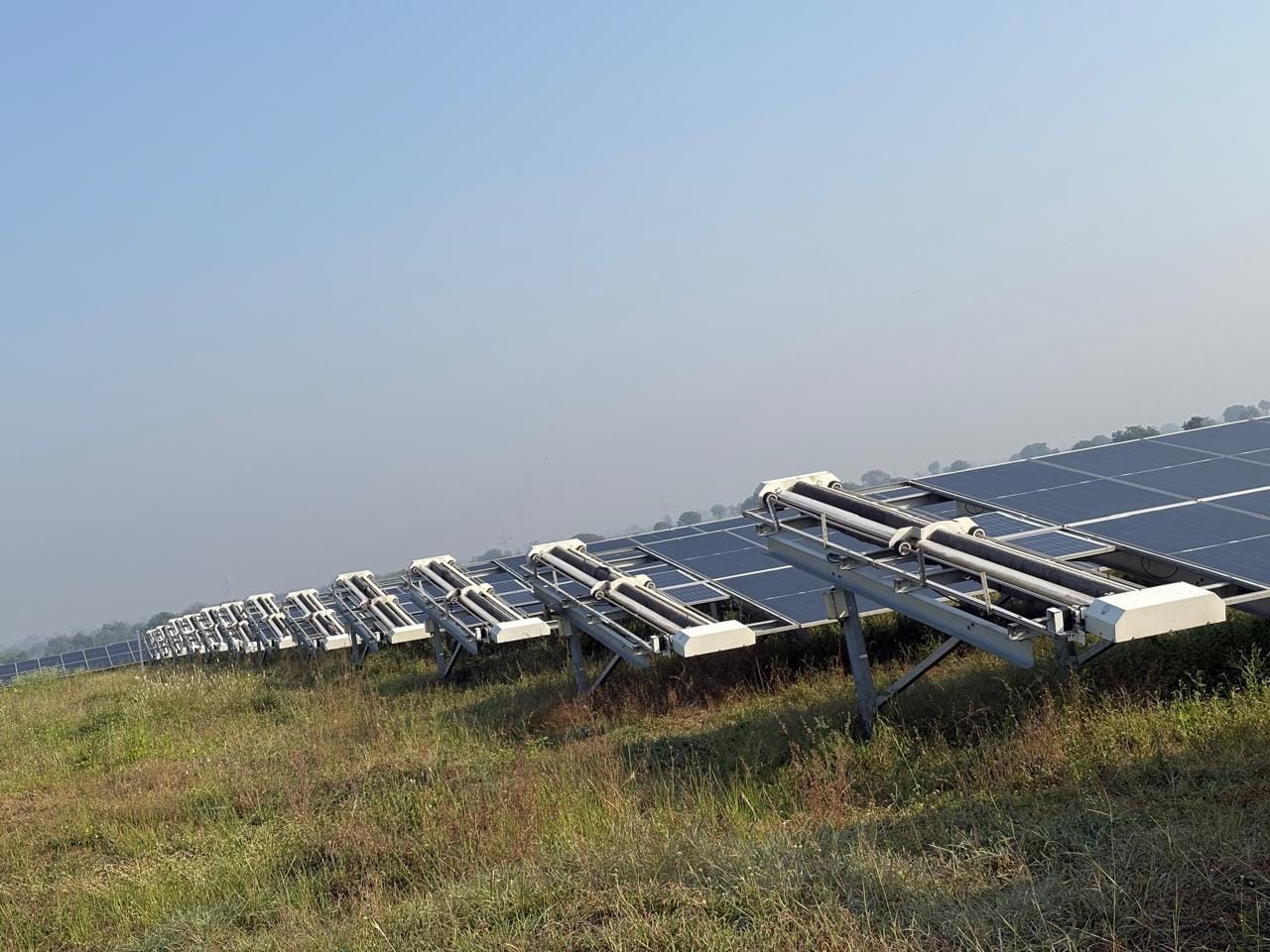
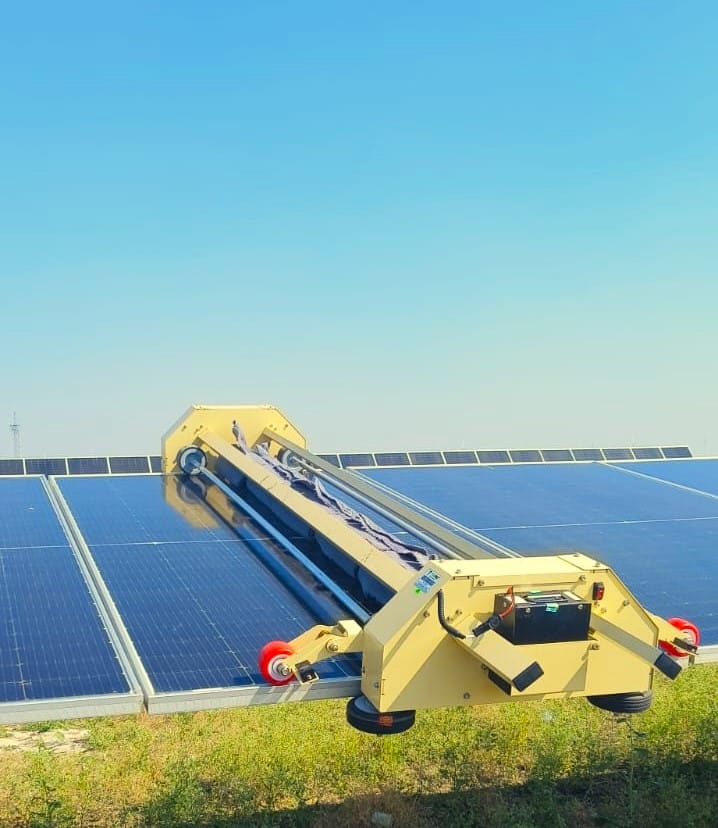
Monitor meteorological indicators like humidity drops and barometric pressure shifts. You can automate alert triggers within SCADA integration for cleaning robot fleets. For 5MW+ sites, this helps robots maximize cleaning cycles before storm events. This reduces cleaning debt significantly. Proactive management reconciles the gap between expected and actual generation. Learn more about differentiating between module degradation and soiling loss. Integrating weather feeds helps teams optimize labor and robot fleet deployment. This protects annual yield in volatile zones like Rajasthan and Gujarat.
How does a dust storm early warning system function on a 5MW+ site?
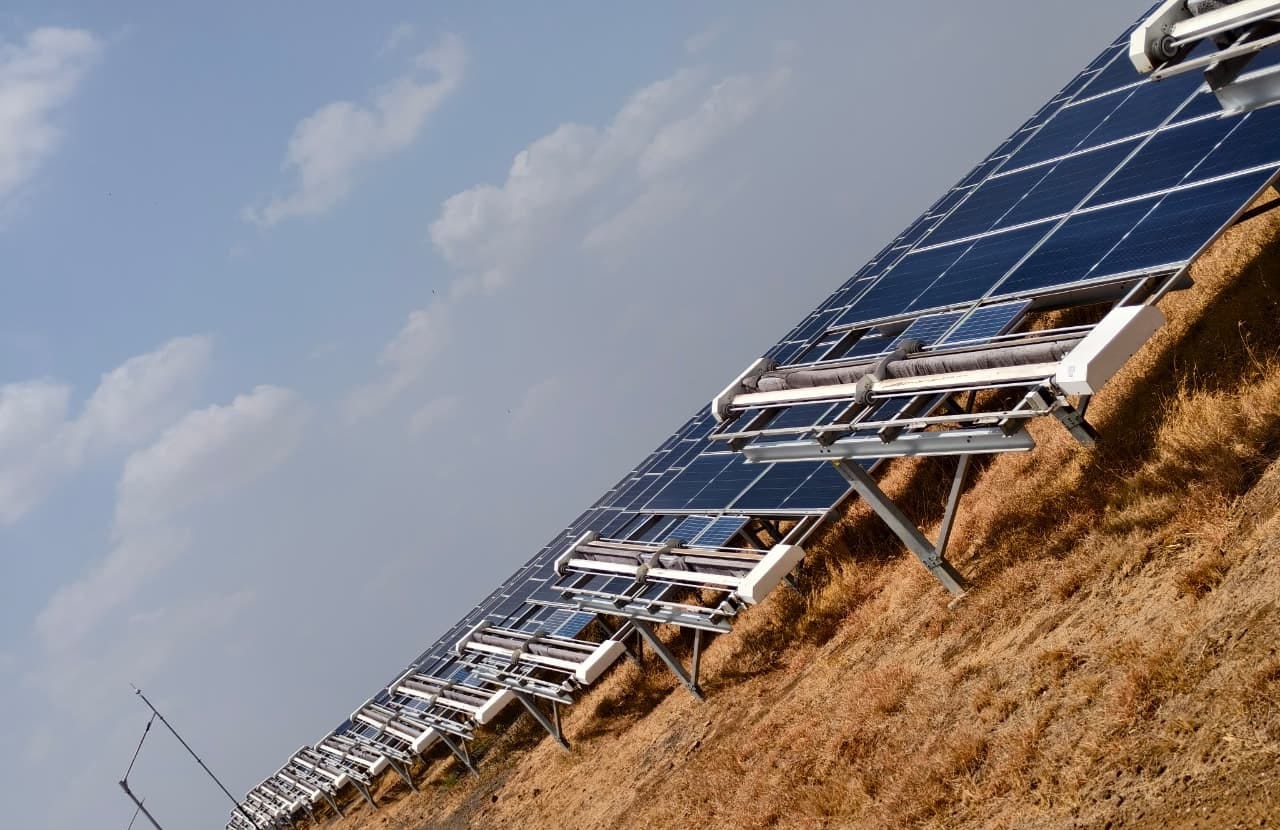
Effective early warning systems synthesize data streams into a unified site protocol. For 5MW+ installations, the process starts at the ingestion layer. Real-time feeds from satellites, PM2.5/PM10 sensors, and anemometers are aggregated. These systems monitor for indicators like temperature spikes or sudden barometric shifts that precede convective dust events.
Once the platform detects a threshold breach, it triggers an automated alert through your SCADA gateway. This notification acts as a digital interface between environmental risk and operational response. For large-scale assets, this integration is vital. Human oversight alone cannot catch the micro-climate variations that trigger soiling at the plant boundary.
Data synchronization and alert thresholds
- Sensor integration: Deploy low-cost local meteorological stations at the plant periphery to validate regional satellite feeds.
- Threshold settings: Configure SCADA to trigger 'Pre-storm Mode' when AOD values rise 15% above the 7-day rolling average.
- Latency management: Ensure all data pipelines have sub-15-minute latency to allow for robotic or manual deployment before storms arrive.
Connect warnings to a centralized portal like NECTYR. Managers can visualize the predicted path of dust deposition across specific blocks. This granular visibility allows for targeted deployment. It optimizes power consumption for your robot fleet and prevents mechanical wear. This data-first approach protects the Performance Ratio (PR) of bifacial and high-efficiency modules. These modules are susceptible to performance drops when dust creates shading or hotspots.
How often should you adjust cleaning cycles based on weather warning data?
In high-dust regions like Rajasthan or Kutch, static cleaning schedules are rarely cost-effective. Managers should transition to event-driven cycles. Frequency should adjust based on the severity of incoming weather. For a 5MW+ site, the primary trigger should be a 72-hour forecast combined with real-time PM2.5 data. If the forecast predicts significant wind shifts, initiate cleaning before the storm arrives. This prevents the formation of hardened soiling layers.
As outlined in our guide on cleaning frequency optimization, managing robot deployment can lower O&M costs. When a moderate storm is detected, target a 3% to 5% soiling loss threshold. If data indicates a high-intensity event, move your robot fleet deployment schedule forward. This reduces mechanical stress on robots, such as those using single-pass or dual-pass technology. They perform better when dust is loose and dry.
Recommended schedule adjustments by event type
- Low-dust alerts: Maintain the standard, site-specific cleaning rotation.
- High-particulate warnings: Shift cleaning to 12 hours before expected peak winds to minimize soiling time.
- Post-storm recovery: Perform a rapid diagnostic scan using your NECTYR dashboard to prioritize affected blocks.
Integrating meteorological data with your existing SCADA infrastructure
Modern farms exceeding 50 MW require a link between sensors and SCADA to manage dust threats. Integrate hardware like pyranometers and PM2.5 sensors into your SCADA using standard Modbus TCP/IP protocols. This hardware provides baseline ground-truth data. Cross-verify this against commercial satellite feeds to filter out errors. Normalizing this stream creates a single source of truth that triggers alerts before reaching a 5% performance loss.
Ensure your network supports sub-15-minute latency between the weather gateway and the plant controller. This speed is critical when deploying autonomous cleaning robots. If the system flags an event, your fleet management dashboard, such as NECTYR, must trigger deployment automatically. This prevents reliance on static, non-responsive schedules that fail in arid regions like Rajasthan.
Consider these technical requirements for data pipeline integration:
- Protocol compatibility: Ensure weather stations support Modbus or OPC-UA to prevent data-siloing.
- Data redundancy: Use dual-path telemetry, such as LTE/4G combined with a satellite link, to maintain flow during network interference.
- Threshold logic: Program SCADA to execute cleaning only when sensors confirm both a light drop and a particle spike.
Automating data ingestion transitions you from reactive troubleshooting to a proactive O&M strategy. This protects your investment by cleaning when it is most efficient. It extends the life of your fleet and prevents the buildup of cement-like dust layers.
Managing resource deployment: Pre-storm vs post-storm cleaning protocols
In high-risk regions, the O&M team must move from static scheduling to event-driven response. If the system predicts a significant particulate spike within 24 hours, initiate a full site cleaning cycle. This proactive sweep ensures modules start the event clean. It prevents the mixture of dew and dust from forming a calcified layer that is hard to remove.
Post-storm deployment follows a diagnostic hierarchy. After the storm, use the NECTYR dashboard to analyze PR drops across string blocks. Instead of blanket re-cleaning, deploy your robotic cleaning fleet to blocks showing generation loss greater than 3%. This targeted recovery ensures 5MW+ sites return to optimal output quickly.
Consider this standard resource deployment framework:
- T-minus 12 to 24 hours: Full site sweep to prevent dust bonding with humidity.
- During the storm: Keep autonomous robots docked to prevent damage from high-velocity gusts.
- T-plus 0 to 6 hours: Perform remote scans to identify 'hot spots' of localized soiling.
- T-plus 6 to 24 hours: Direct cleaning fleet to high-impact rows first.
Moving away from calendar cycles to this risk-based model extends hardware lifespan. This is effective for plants using robotic cleaning solutions that adapt to site conditions.
Operational risks and compliance in dust-prone regions like Rajasthan
Operating in high-dust regions introduces compliance challenges. Asset managers must align automated protocols with Central Electricity Authority (CEA) standards and manufacturer warranties. Harsh chemicals or abrasive materials are prohibited. They can strip anti-reflective coatings, voiding warranties and reducing yield by 2% to 4%. Select waterless cleaning solutions that feature TUV-certified brush pressure settings to maintain surface integrity.
Deploying robotic hardware in regions with high-velocity gusts creates a risk of structural damage. Verify that all robots and docking stations meet IP65 ingress protection ratings to prevent sand infiltration. During high-risk periods, the O&M protocol must prioritize parking robots in end-row docking stations. This minimizes the risk of units being blown across rows, which causes equipment loss and string damage.
Risk mitigation also extends to grid-balancing. When systems trigger mass-cleaning, manage the change in output through your SCADA to avoid frequency deviations. Ensure your software can stagger cleaning activation across different inverter blocks. This maintains a stable ramp-up in generation. By integrating this intelligence, you protect your operational budget from grid-side penalties while maximizing recovered energy.
Key takeaways for plant managers
- Risk-based scheduling: Use dynamic, data-driven cleaning cycles to prevent soil-cementation on modules.
- Hardware safety: Secure all robotic cleaning equipment in end-row docking stations during high-velocity wind alerts.
- Performance protection: Activate cleaning immediately after a storm, prioritizing windward rows to recover yield losses.
- Compliance and longevity: Use TUV-certified, waterless cleaning solutions to protect module coatings and warranty terms.
- Integrated intelligence: Stagger cleaning activation via SCADA to avoid sudden power spikes and grid penalties.
Implementing these protocols helps managers maintain consistent PR values across 5MW+ portfolios. It minimizes operational costs while maximizing the longevity of robotic assets. Effective early warning integration acts as a bridge between passive monitoring and active revenue protection. Your site remains prepared for the unique climatic challenges of the Indian utility-scale environment.
Sources and further reading
Frequently asked questions
For utility-scale solar asset owners in India, early warning systems are essential. They protect revenue against erratic regional weather.
These systems integrate by funneling real-time meteorological alerts directly into your SCADA system. This allows site managers to automate cleaning robot deployment within 15 minutes of detection, ensuring that panels are cleaned just before a storm event, which can reduce annual soiling losses by 15% to 30%.
Select tools that prioritize low-cost API-based meteorological data feeds that provide real-time alerts with processing latencies of 15 minutes or less. The system should be capable of monitoring specific indicators like barometric pressure shifts and wind speeds that exceed your site-specific safety thresholds of 30 km/h.
Implementing predictive cleaning helps protect your annual yield and reconciles the gap between expected Performance Ratio and actual generation. By reducing the depth of cleaning debt through preemptive interventions, you minimize soiling-related output degradation, which supports your ability to meet PPA generation guarantees in volatile dust zones.